
Eddie Pensier writes:

Jean-Baptiste Lallemand, Arrest of de Launay, 1790
Happy Bastille Day to all our readers.
Eddie Pensier writes:
Jean-Baptiste Lallemand, Arrest of de Launay, 1790
Happy Bastille Day to all our readers.
Pale Retiree writes:
Now under construction on W. 28th St. in Manhattan, a new apartment building by international superstar/curse Zaha Hadid:
 This is part of the High Line District, an area that’s been turned into a playground for trendy starchitecture. Much as I enjoy the occasional breezy walk on the High Line, I find the new buildings around it appalling. The area doesn’t look like a city to me, it looks like a glossy jumble; I find it about as appealing as Clearance Day at a chic kitchen-appliance store.
In case you’re wondering what a city looks like when it’s been under sustained assault by today’s big-name architects, I give you a recent view of London’s financial district:

How anyone can find that anything but an aggressively repellent mess I have no idea. Why do we celebrate people who are ruining our cities?
Related
Sax von Stroheim writes:
One of the lazier ideas that currently holds sway among folks who consider themselves to be film cognescenti is that Michael Bay is simply the worst director ever. I’d argue that while he’s no genius, he has made quite a few entertaining blockbusters over the years (Bad Boys, The Rock, the first Transformers movie), a flat-out masterpiece (the dumb-ass criminals on steroids movie (Pain & Gain), and a nutty, personal sci-fi film maudit (The Island). And, of course, he did make at least one movie that really is as bad as his detractors would have it (Pearl Harbor).

His newest movie, Transformers: Age of Extinction falls somewhere between “entertaining blockbuster” and “nutty, personal sci-fi film maudit”, although as it was a big commercial smash, it can’t have been very maudit. It’s big, loud, and goofy. Like the rest of the Transformers movies, it’s unevenly paced (the middle section goes on too long), but unlike the last two installments, it has a point-of-view that’s close to Joe Dante’s style of low satire – albeit Joe Dante-style satire on steroids: dumber and louder than in Joe’s movies, though still managing solid hits on deserving targets (i.e., the dronification of the U.S. military, the dangers of unrestrained libertarianism). It’s also a lament over the death of analog (film-not-video, machines-not-programs, people-not-drones) culture: a blockbuster movie about the obsolescence of blockbuster movies. (The movie practically opens in a decaying movie theater that Our Hero, an inventor, is picking over, looking for parts for his inventions. And it actually opens with the extinction of the dinosaurs).
It’s also an improvement over the last two installments in that it has replaced Shia LaBouef, and his child-actor’s, always-on mania, with Mark Wahlberg, by default, Our Greatest Male Movie Star.

Filmmaking at this scale, especially this kind of fx-driven filmmaking at this scale, must be kind of crushing to the creative spirit. What separates Michael Bay from the other big blockbuster guys is that at their best, they get everyone to show up in the right place. Bay, though, is also a great image-maker. And it’s those images, and his seeming delight in coming up with them, that drives his best movies. (Here, I especially liked the side-of-a-Hong Kong apartment building chase: it more than one-ups the top-of-a-building chase from the third Bourne movie).
The reflexive dislike of Michael Bay has more to do with a political stance against this type of movie than anything else. That is, I’m not sure why it’s so silly to take Michael Bay seriously and not just as silly to take, say, J.J. Abrams seriously.
Snowpiercer, on the other hand, is a nutty sci-fi movie that critics are taking seriously. It’s the first film in English by Bong Joon-ho, the Korean filmmaker who made the monster movie The Host. The intent of the movie seems to be to cross a phantasmagoric allegorical Terry Gilliam sci-fi film with a video-game inspired sci-fi Paul W.S. Anderson actioner, but the sci-fi allegory here is boneheaded and tone-deaf. It’s another movie that tries to play up the conflict between the 99% and 1%, but its insights seem limited to the same kind of platitudes we’ve been hearing for years.

It’s one of those movies that, while watching it, all I could think about were other, similar-but-better movies that I’d rather be watching, like Brazil or Resident Evil: Retribution. Even the part I liked the best, a well-choreographed fight scene in a sauna, reminded me of the fight in the baths in David Cronenberg’s Eastern Promises and thinking of that movie reminded me of Cronenberg’s Cosmopolis, a better takedown of “the 1%” which also features a character on a linear journey through a sci-fi allegory.
Related
Fabrizio del Wrongo writes:
Fenster writes:
Karrin Allyson’s excellent version of Some Other Time can be found in streaming audio here.

Eddie Pensier writes:
“All I Care About Is Love” from Kander & Ebb’s Chicago, performed by the peerless Jerry Orbach on the 1976 Tony Award telecast.
Billy Flynn was charmingly and winningly played on screen years later by Richard Gere, who in my humble opinion displayed more charisma in that role than in the entire rest of his oeuvre combined. Orbach, of course, became famous as the prototypical New York police detective on “Law & Order”, but it’s surprising how many people outside NYC don’t know about his stellar musical comedy career. If you’re one of them, consider this a belated introduction to this essential theater artist.
Paleo Retiree writes:
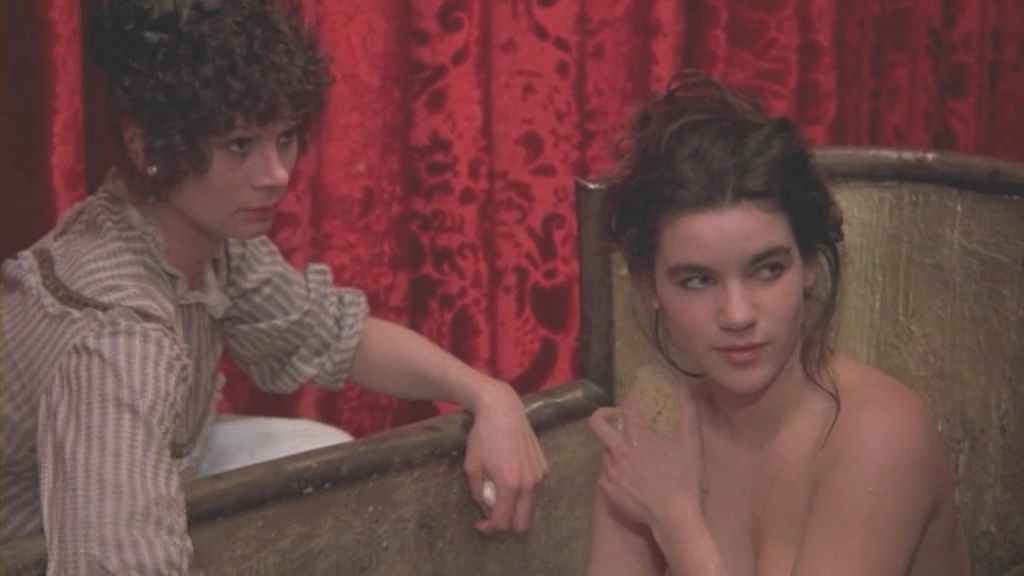
When I announced “I’m perfectly happy” as we were watching this erotic costume drama, my wife gave a giggle — she knew exactly what I meant. “Nana” isn’t simply a fuck film or an exploitation movie. It has a pedigree; it’s loosely — very loosely — based on a Zola novel. The lighting, the costumes, the cast, the score and the settings all have some genuine class. Yet at the same time the main reason you watch the movie is for its erotic content. It’s a well-produced arty sex film that’s doing a decent-enough job of pretending to be a real drama — that’s its genre. And, in the way that nearly every movie fan has a favorite genre or two — they’re content just to be watching a Western, or a rom-com, or a sci-fi movie — I can be extremely happy when I’m having an arty-’70s-sex-film genre experience.
These films often played at art-house theaters, filling up the weeks in between the prestige releases; if going to art-house theaters was a regular part of your life in those years, you wound up seeing dozens of these movies. The genre seemed commonplace at the time — we took this filler for granted, god knows. But in the decades since it has all but vanished from the scene. It’s funny/peculiar, and rather hard to explain, that while hip young filmmakers have revived and ripped-off a lot of ’60s and ’70s movie genres in recent years, they have so far left this one untouched. Why?
“Nana” isn’t a great example of its genre, but who cares, it’s good enough. Although it was released in 1982 it’s very much a 1970s-type movie — yes, there are a lot of zooms. It’s sort of “Emmanuelle,” sort of Laura Antonelli, very early Golan-Globus … It feels like a movie from Nastassja Kinski’s or Valerie Kaprisky’s teens, from the years before they became stars. The performers, female and male, represent loads of quirky physical types — hey, back in those days we sought out and relished quirkiness. And the actresses flaunt (Peter Rosa alert) exuberant bushes, which are put on display not as flaws or monstrosities but as erotic talismans. Imagine that. When I checked out reactions to the movie online, I ran across more than a few people raising their eyebrows about how dismayingly “natural” the women onscreen in “Nana” are. Youngsters these days, eh? Life, and maybe moviegoing too, can be a lot more fun when you’re not so put off by basic physical realities.
I found the movie’s final 10 or 15 minutes lame, and it’s debatable how much of an enchantress Katya Berger, the film’s young lead, really was. I rather liked her klunkiness. Good acting, and even great looks, aren’t always required of a sex star, you know? Otherwise, I enjoyed myself without reservations. The legit stretches pass the time more-than-engagingly. The Belle Époque era is well-evoked; the plot twists aren’t bad; the Ennio Morricone score is sweeping and lavish; the settings — mansions and lakesides, a festive house of ill repute — are elegant … It’s all well-enough done to make you forget for a minute or two that you’re watching a sex film. (That’s part of the fun of the genre.) The ooo-la-la erotic passages and moments deliver as well; they’re numerous, god knows, and they’re naughty and spirited enough (“hard R” is how we used to think of these boundary-pushing scenes) to make you wish you’d been one of the movie’s extras. Trigger warning: a few scenes involving a black guy foreground the exotic element in interracial sex in a way that’s likely to give the PC-brainwashed a huge case of the vapors.
The film also has a few wonderfully bizarre real-life elements. (Reading up and musing about a movie after watching it can be a big part of movie-enjoyment generally, right?) Was Katya Berger 18 or — gasp! — 16 when filming took place? No one seems to know for sure. The woman playing Nana’s partner/maid is Mandy Rice-Davies, famous for her role in the real-life British political scandal known as the Profumo Affair. How did the distinguished Jean-Pierre Aumont, who plays one of the many men Nana entrances and then ruins, feel about appearing in a sex-film project? Why did Katya Berger quit movies so soon after “Nana” was released? One of the film’s beautifully dressed and coiffed blondes turns out to be Annie Belle, who showed a daring gift as well as a lot of flesh in numerous non-porn sex films of the era. Best of all: the actress who plays Nana’s Charlotte Rampling-like lesbian lover was Katya Berger’s real-life half-sister. Ah, it was the ’70s …
Related
Fabrizio del Wrongo writes:
The amusing thing about this is that it’s intended as pro-woman. Tex even preemptively scolds men for being turned off by the idea of women avoiding work in order to give them massages and make coffee. 1967.
Related
Blowhard, Esq. writes:

1. Ahhh, the old peanut butter and dog story. A staple of suburban folklore.

2. Doesn’t that mousy female CO, Fischer, look a lot like Kate Micucci from Garfunkel and Oates?
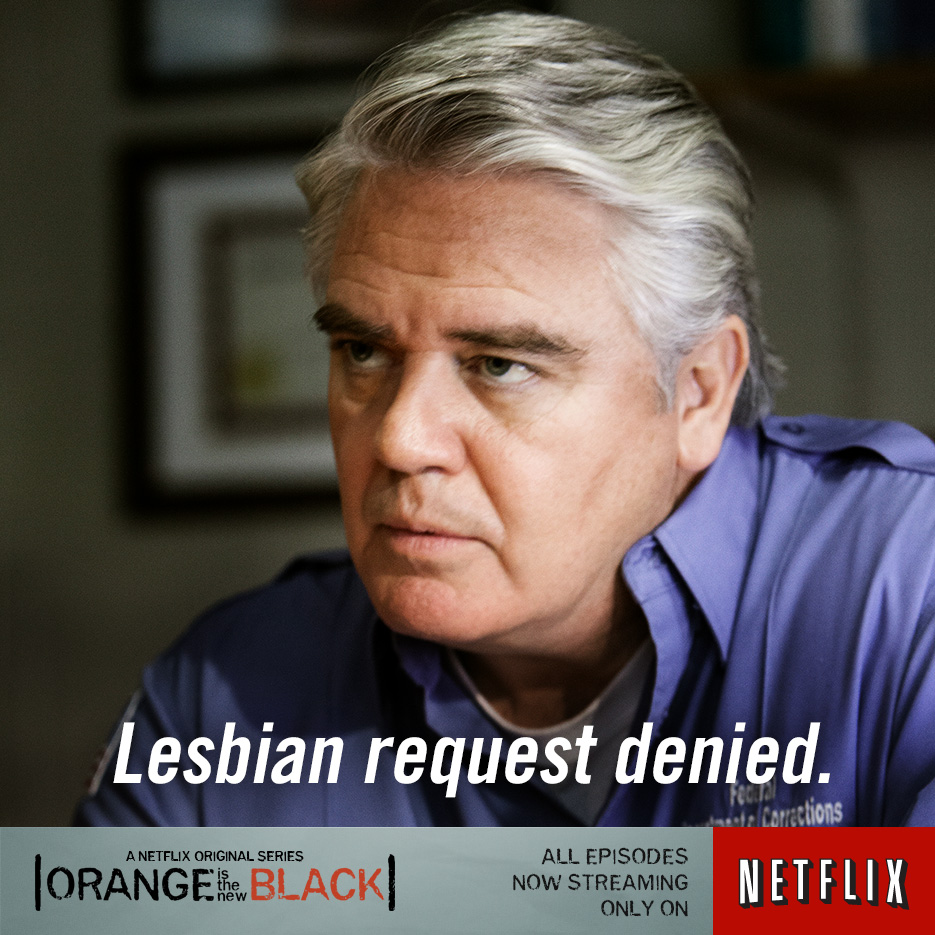
3. I really like Healy’s arc. He started out as the good guy and slowly changed into Chapman’s nemesis. Didn’t realize that Michael Harney was in TRUE DETECTIVE.
4. Litchfield is a federal prison, right? I don’t know how any prison system works, but it’s weird how the warden — at least the person with that title — has never appeared on screen. Instead, Natalie is the de facto head of the prison.
5. We got the funny scene with Larry and his father at the gay bath house (“It was a Groupon”) thereby providing some man-on-man action and full-frontal male nudity. Hope you enjoyed it, ladies!
6. “I made her come vaginally, do you know how hard that is to do?”

7. Really enjoyed the scene between Red and her son on visiting day. Do you think Captain Janeway’s Russian accent is convincing or are we in John Malkovich in ROUNDERS territory?

8. Liked all the shots of Polly’s boobs, too.
9. This is the second episode in a row where shitting was a significant plot point. I have to think the writers are doing that intentionally, i.e. people crapping — and especially women crapping — is not something that’s dealt with in TV much so they’re bringing it into the foreground.

10. Good Lord, Pennsatucky’s pre-dental work teeth were gross. Hats off to the makeup people.

11. Is it racist for me to say the black characters are my favorite?
Sir Barken Hyena writes:
Damn that’s some picking!
 Blowhard, Esq.
 Callowman
 Sherbrooke
 Eddie Pensier
 Enzo Nakamura
 Epaminondas
 Fabrizio del Wrongo
 Fenster
 Brundle Guy
 Glynn Marshes
 Paleo Retiree
 Atypical Neurotic
 Question Lady
 Sax von Stroheim
 Sir Barken Hyena
 The Mistaken
