Amahl and the Night Visitors

Eddie Pensier writes:

I hope all our readers had a merry Christmas.

Gian Carlo Menotti’s Amahl and the Night Visitors was the first opera composed especially for television. It was commissioned by NBC for a Hallmark Hall of Fame presentation in 1951, and became a holiday standard not long afterwards. It is still a staple of community theaters for both its inspirational story and its (uncharacteristic for 20th-century opera) straightforwardly tonal melodic style.

Hieronymous Bosch, Adoration of the Magi. The painting that inspired Menotti to write Amahl.

Hieronymous Bosch, Adoration of the Magi. The painting that inspired Menotti to write Amahl. (click to enlarge)

The original NBC production, originally aired live, was shown annually throughout the 50s and 60s but went out of vogue. In 1978, a new production was filmed, starring Canadian soprano Teresa Stratas, American bass-baritone Giorgio Tozzi, and Anglo-Jamaican bass Willard White, conducted by Spaniard Jesús López-Cobos. The interior scenes were shot at London’s Pinewood Studios, while the exteriors were filmed on location in Israel.

Ignore if you can the poor sound quality, which desperately needs remastering, and focus on the gorgeous music which owes debts to Ravel and Barber (Menotti’s real-life partner), and the stunning vocal performances. The subsequent five parts are also on YouTube. Fans of the Bosch pictured above will be tickled to note that the Magi in the movie are dressed exactly as they are in the painting.

In one of the great epic fails in moviemaking history, the BBC filmed and edited a completely new version of Amahl in 2002. It was awaiting broadcast before it occurred to someone to ask if the copyright had been secured before shooting started. It hadn’t, as it turned out. So there is a multi-million-dollar film of this opera that won’t see the light of day for another 50 years or so.
Posted in Art, Music, Philosophy and Religion | Tagged , , , , , , , | 7 Comments

Fagen o’ th’ Day

Fenster writes:

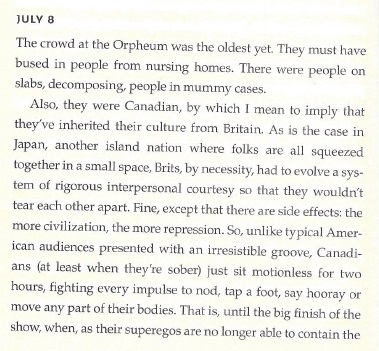
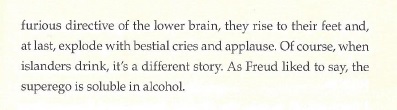
From Eminent Hipsters.  On a recent concert in Canada.

fagen1

fagen2

Posted in Music | Leave a comment

Movie Still Du Jour

Blowhard, Esq. writes:

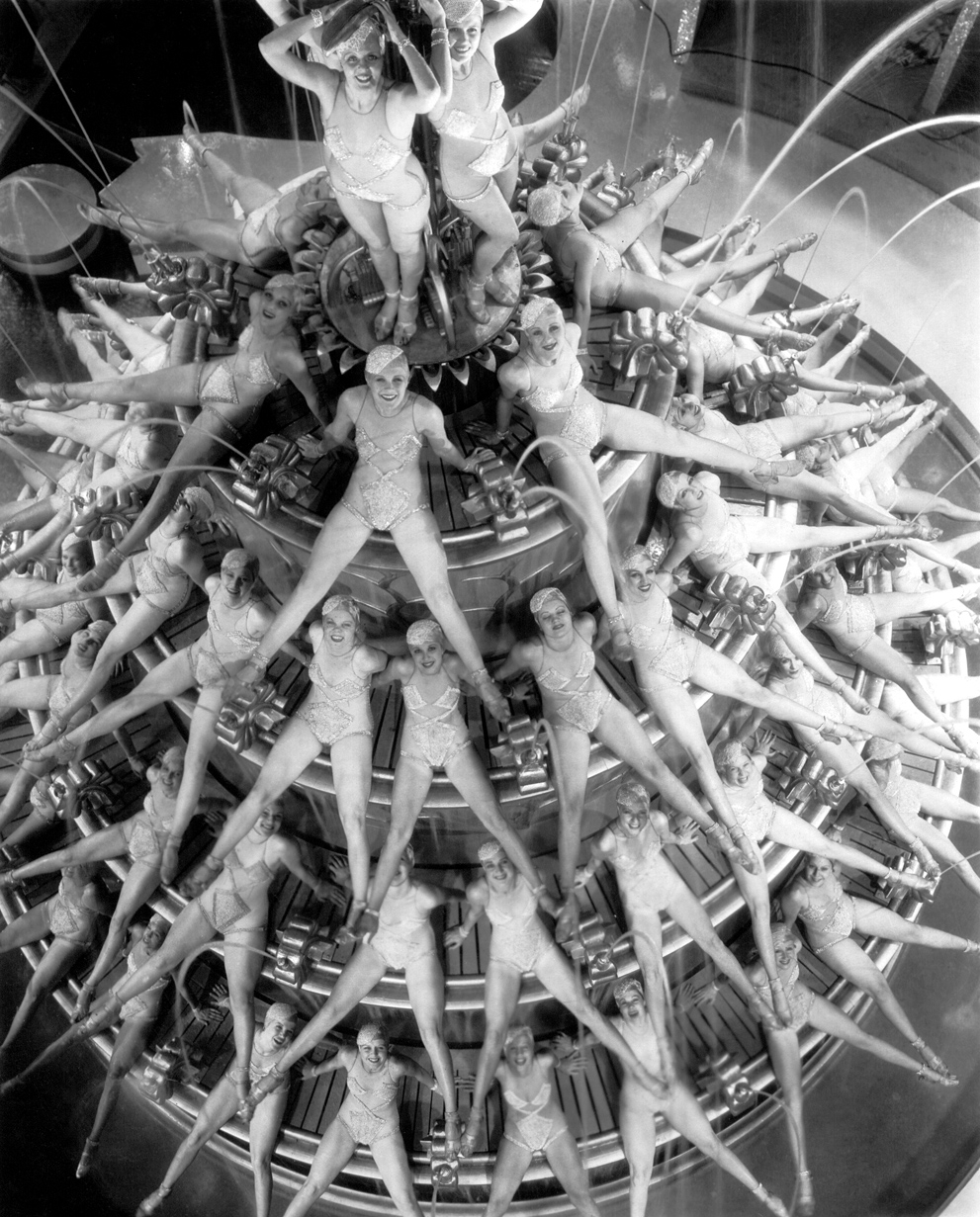
Click on the image to enlarge.

footlightparadeFOOTLIGHT PARADE, 1933. Choreography by Busby Berkeley, natch.

Posted in Movies, Sex | Tagged , | 1 Comment

Art Du Jour

Blowhard, Esq. writes:

Click on the image to enlarge.

Alfred Rethel Nemesis“Nemesis” (1837) by Alfred Rethel

Posted in Art | Tagged , , | 1 Comment

Betty Boop Shorts

Fabrizio del Wrongo writes:

And to think folks in the ’60s thought they were being wild and trippy . . .

Related

  • Now available on DVD from Olive Films. See here and here.
  • I wrote a bit about popular surrealism here.
  • I wrote about animation pioneer Winsor McCay here.
Posted in Humor, Movies, Sex | Tagged , , , , , , | 4 Comments

In the Mail

Paleo Retiree writes:

Thanks for keeping it discreet, guys.

ne_nyc_2013_12_home_sex_ad_mail01

Posted in Humor, Photography, Sex | Tagged , , , , | 2 Comments

Tropes of Popular Culture: Candles, Women and Bathtime

Paleo Retiree writes:

I often marvel at the way certain situations, characters and setups establish themselves so thoroughly that they become part of our shared cultural landscape. Think of how often we’ve watched shiny new cars zooming across the Great Salt Desert or winding their way down California’s Highway One, for instance. How weird that these particular images have become as familiar to all of us as they have.

From a poster that caught my eye on the subway the other day, here’s another example:

ne_nyc_2013_12_ad_bath_with_candles01The woman-in-a-bubblebath-with-candles-by-her-side trope: Once you start noticing it, it’s everywhere — in ads, in TV shows, in chickflicks … Apparently this image has resonance of some kind. But why? Does it reflect anything in the way of reality? Or is it just an appealing fantasy? What’s the history of “the woman who relaxes in a bubbly bathtub with candles by her side” image anyway? Has it gained in popularity as more and more women have entered the workplace? (In other words: as women grow more overextended and more tired, do they dwell ever more on fantasies of relaxing?) Does the trope exist in other cultures? Guesses, speculations, insights and experiences will be enjoyed and appreciated.

Posted in Commercial art, Personal reflections | Tagged , , , , | 10 Comments

Christmas Ducks

Fenster writes:

DUCK 1:

Over at Salon, Matthew Bruenig takes on “free speech hypocrites” of all stripes.  He argues, with some truth, that the Duck Dynasty dust-up is more or less the Dixie Chicks dust-up in reverse, with the same offenses and complaints. Concerning Robertson’s “offenses”:

 . . . we have here a perfect analogue to the Dixie Chicks spectacle: a popular entertainer said something offensive and outrageous to many, and an economic actor punished him for doing so.

Concerning the complaints, a kind of symmetry as well.  Liberals cried foul when the Dixie Chicks got whacked, and now it is fowl the other way round.  His conclusion: no one really cares about content neutral rules and each side is only out to win.

Everyone else has a substantive agenda and merely stakes out the short-term positions on content-neutral procedural justice that further that agenda. Filibusters are good when they block what I dislike, but bad when they block what I like. States rights are good when states do what I like, but bad when they do what I dislike. Private economic coercion of expression is good when it shuts down comments I dislike, but bad when it shuts down comments I like. And so on.

Given this reality, why do we even play the game where we pretend to believe in some sort of content-neutral procedural justice rules? Who are we trying to fool? What’s the use of having shell arguments about process that everyone knows are driven by core disagreements on substantive agendas? I don’t get it.

Maybe this is tongue in cheek and he doesn’t really get it.  But I don’t think it is hard to get.  Of course people are hypocrites.  They are not required to be other than that, to play fair or to support the other side when it scores a point.  What is required is free speech.  That’s all.

It is OK to make hypocritical and incorrect statements that one’s free speech rights have been abridged.  That’s free speech too.  What is not OK is the abridgment of free speech.  And that hasn’t happened in either of the above cases.  I hardly feel as though all as well in the Republic.  It would be nice to have less toxicity and hypocrisy.  But as to free speech, both the Dixie Chicks and Phil Robertson can say what they want.  They are not entitled to a megaphone, or a platform or a column in the New York Times.

Free speech is hard enough.  It shouldn’t have to carry the burden of things it is not.

DUCK 2:

And as long as we are talking about ducks at Christmas, a quick shout-out to Kalle Anke is in order.  God Jul!

Posted in Politics and Economics, Uncategorized | Tagged , , , , , , | 10 Comments

Fagen o’ th’ Day

Fenster writes:

From Donald Fagen’s Eminent Hipsters, his crankypants but still quite witty semi-memoir.

On film nowadays:

The movies are so bad now that I usually pass out just after catching the first glimpse of the flesh-eating death-mist (or whatever), even before the archetypal hero has accepted the Campbellian Call to Adventure.

In which regard.

Posted in Movies, Music, Performers | Tagged , | 2 Comments

Merry Christmas!

epiminondas wrties:

The epiminondas household would like to wish you all a very merry Christmas.

Image

Posted in Personal reflections | Leave a comment