Fenster writes:
As Fenster predicted back in 2012, while online education can be conducted at less cost than bricks and mortar versions, universities running online programs are now being charged with price gouging where online is concerned.
These days, two out of three students attending on-campus programs receive some form of generous subsidy or discount, while their online counterparts, generally ineligible for such assistance, foot the full sticker price even though they do not benefit from all the amenities of the revered campus life, do not take up parking spaces, inflict wear and tear on facilities, or take up as much instructor time. Instead of embracing these online learners who produce considerable incremental revenue for institutions, colleges and universities are penalizing them, which has troubling implications not only for students’ bank accounts, but also for universities’ own vaunted views of fairness. Read more: http://www.insidehighered.com/views/2014/07/03/essay-calls-end-charging-online-students-same-person-students#ixzz36YSlK8Xg Inside Higher Ed
The nest of cross subsidies that defines modern higher education is left in place to benefit “regular” students, when more often than not online students are expected to pay their own way, or even pay a premium to actual costs. Discussing Clayton Christenen’s optimism about lower cost on-line models, Fenster wrote:
I also worry that there is a more fundamental problem with Christensen’s analysis, one dealing with subsidies. Let’s stipulate that he is correct that traditional universities can’t cover their costs but that on-line approaches can. He takes that insight to a possible conclusion: universities could be comprised of a combination of both approaches, with on-line subsidizing traditional. But is that in itself a sustainable model? Students currently put up with their tuition dollars subsidizing other things for a bunch of reasons. There is often no transparency in cost allocations and subsidies so they don’t know. They don’t have the luxury of unbundling their tuition if they figure it out. They can’t help but be attracted by the reputational buzz of college X and figure they have to put up with it. And the activities they subsidize are local and visible and they may (say, if they go to football games) recognize some sort of value for payments made. But those conditions are less likely to apply in the case of a student who is predominantly, or exclusively, engaged in an online capacity. Why should that student want to pay a tuition charge that is higher than needed so that a traditional student can enjoy the whole panoply of services and amenities that characterize the “college experience”? That’s not only unfair but likely to be regressive as well, since the more privileged are likely to continue with a traditional education under this view, with the less privileged consigned to a lower cost model. Granted if a college with a mixed approach could show that its mixed nature contributed to a better online experience that would be one thing. But how likely is that to happen? Given the institutional constraints discussed above, doesn’t it seem more likely that a new entity devoted to the best that on-line could offer would be able to mount a worthwhile program more effectively and expeditiously than a traditional university struggling in the face of inevitable faculty hostility and resistance to reinvent itself?
OK, the clash between the two modes of delivery was correctly predicted. But the prediction in the last paragraph–that the oil-and-water nature of the two modes as regards finance will lead to superior programs that dispense with bricks-and-mortar–has not yet happened. Whether it does or not remains an open question. I suspect yes, and that the reason it has not yet happened is mostly a tribute to the successful conservatism of the higher education sector. But taking a page from Montaigne, this I do not know.

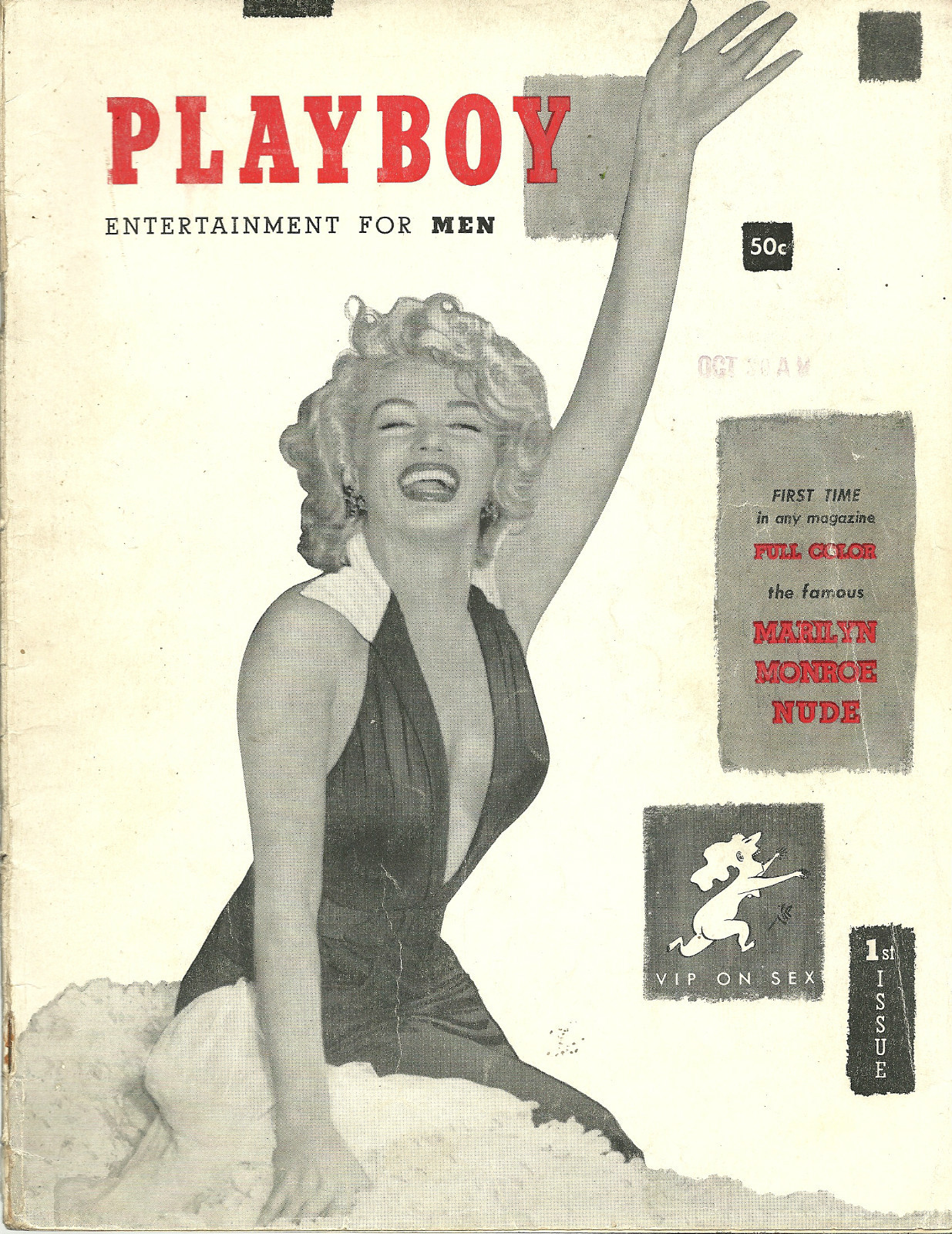 Author D.R. Haney traces the history of Playboy magazine, provides a character sketch of founder Hugh Hefner, and charts the fortunes of a number of Playmates in this 9,000-word essay. A fascinating bit of cultural history.


 Blowhard, Esq.
 Callowman
 Sherbrooke
 Eddie Pensier
 Enzo Nakamura
 Epaminondas
 Fabrizio del Wrongo
 Fenster
 Brundle Guy
 Glynn Marshes
 Paleo Retiree
 Atypical Neurotic
 Question Lady
 Sax von Stroheim
 Sir Barken Hyena
 The Mistaken
