Quote Du Jour: Joan Didion on J. Paul Getty

Blowhard, Esq. writes:
gettyvilla2

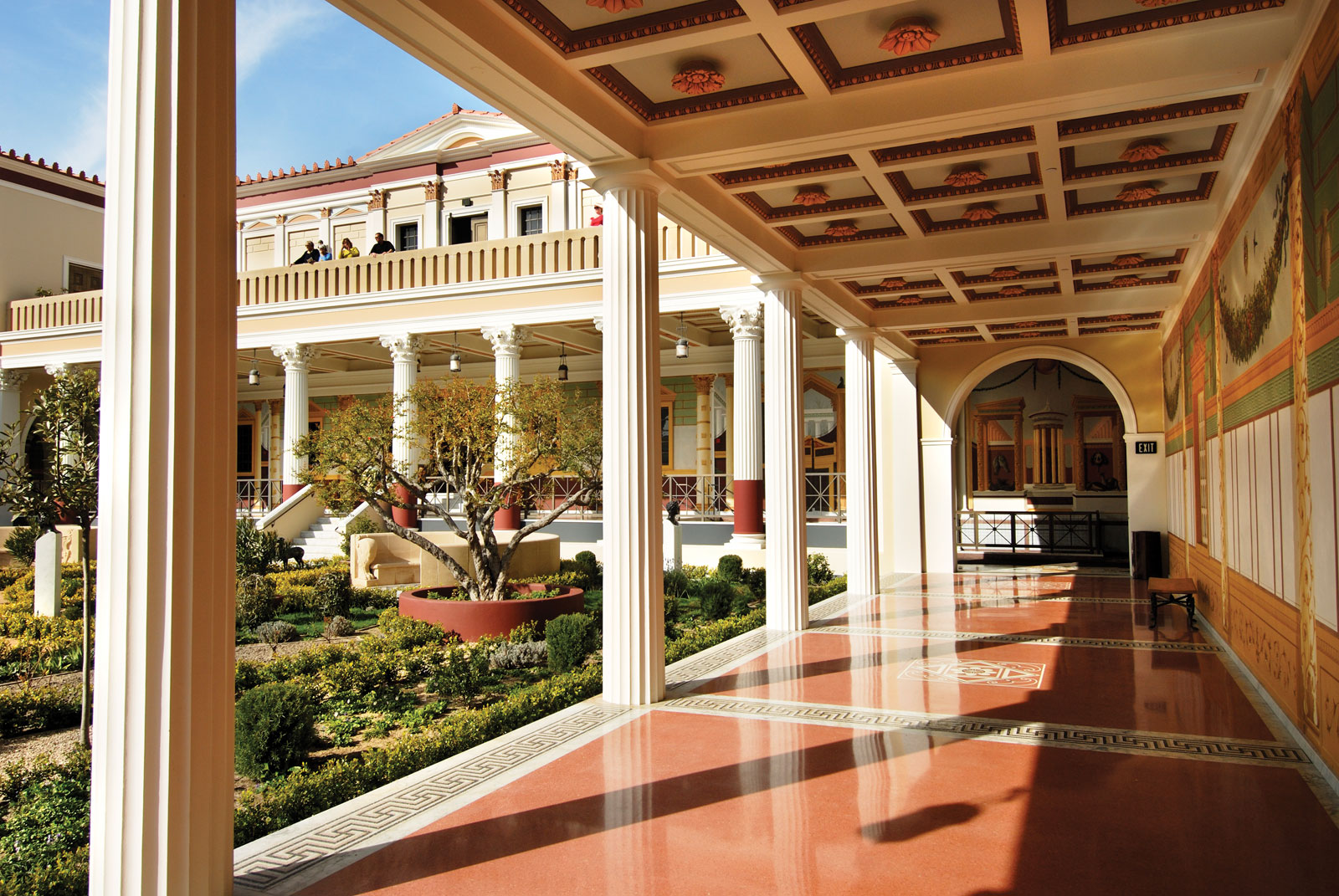
In a way [J. Paul Getty] seems to have wanted only to do something no one else could or would do. In his posthumous book, As I See It, he advises us that he never wanted “one of those concrete-bunker-type structures that are the fad among museum architects.” He refused to pay for any “tinted-glass-and-stainless-steel monstrosity.” He assures us that he was “neither shaken nor surprised” when his villa was finished and “certain critics sniffed.” He had “calculated the risks.” He knew that he was flouting the “doctrinaire and elitist” views he believed endemic in “many Art World (or should I say Artsy-Craftsy?) quarters.”

Doctrinaire and elitist. Artsy-craftsy. On the surface Getty would appear to have been a case of he-knew-what-he-liked-and-he-built-it, a tax dodge from the rather louche world of the international rich, and yet the use of that word “elitist” strikes an interesting note. The man who built himself the Getty [Villa] never saw it, although it opened a year and a half before his death. He seems to have liked the planning of it. He personally approved every paint sample. He is said to have taken immense pleasure in every letter received from anyone who visited the museum and liked it (such letters were immediately forwarded to him by the museum staff), but the idea of the place seems to have been enough, and the idea was this: here was a museum built not for those elitist critics but for “the public.” Here was a museum that would be forever supported by its founders alone, a museum that need never depend on any city or state or federal funding, a place forever “open to the public and free of all charges.”

As a matter of fact large numbers of people who do not ordinarily visit museums like the Getty [Villa] a great deal, just as its founder knew they would. There is one of those peculiar social secrets at work here. On the whole “the critics” distrust great wealth, but “the public” does not. On the whole “the critics” subscribe to the romantic view of man’s possibilities, but “the public” does not. In the end the Getty [Villa] stands above the Pacific Coast Highway as one of those odd monuments, a palpable contract between the very rich and the people who distrust them the least.

— Joan Didion, “The Getty” from The White Album

gettyvilla1

Posted in Architecture | Tagged , , , , , , | 2 Comments

Sunday Jazz Selection

Fenster writes:

Some Dirge, from A Genuine Tong Funeral (1967), Carla Bley and Gary Burton

Posted in Music | Tagged , , | Leave a comment

Federer/Djokovich in Monte Carlo

Paleo Retiree writes:

Lots of clay court magic to be enjoyed in this recent Roger/Novak battle, with Roger showing almost as much sparkle, wit and athletic resourcefulness as he routinely did when he was in his middle 20s.

Previous Federer highlight reels: here, here, and here.

Posted in Sports | Tagged , , | Leave a comment

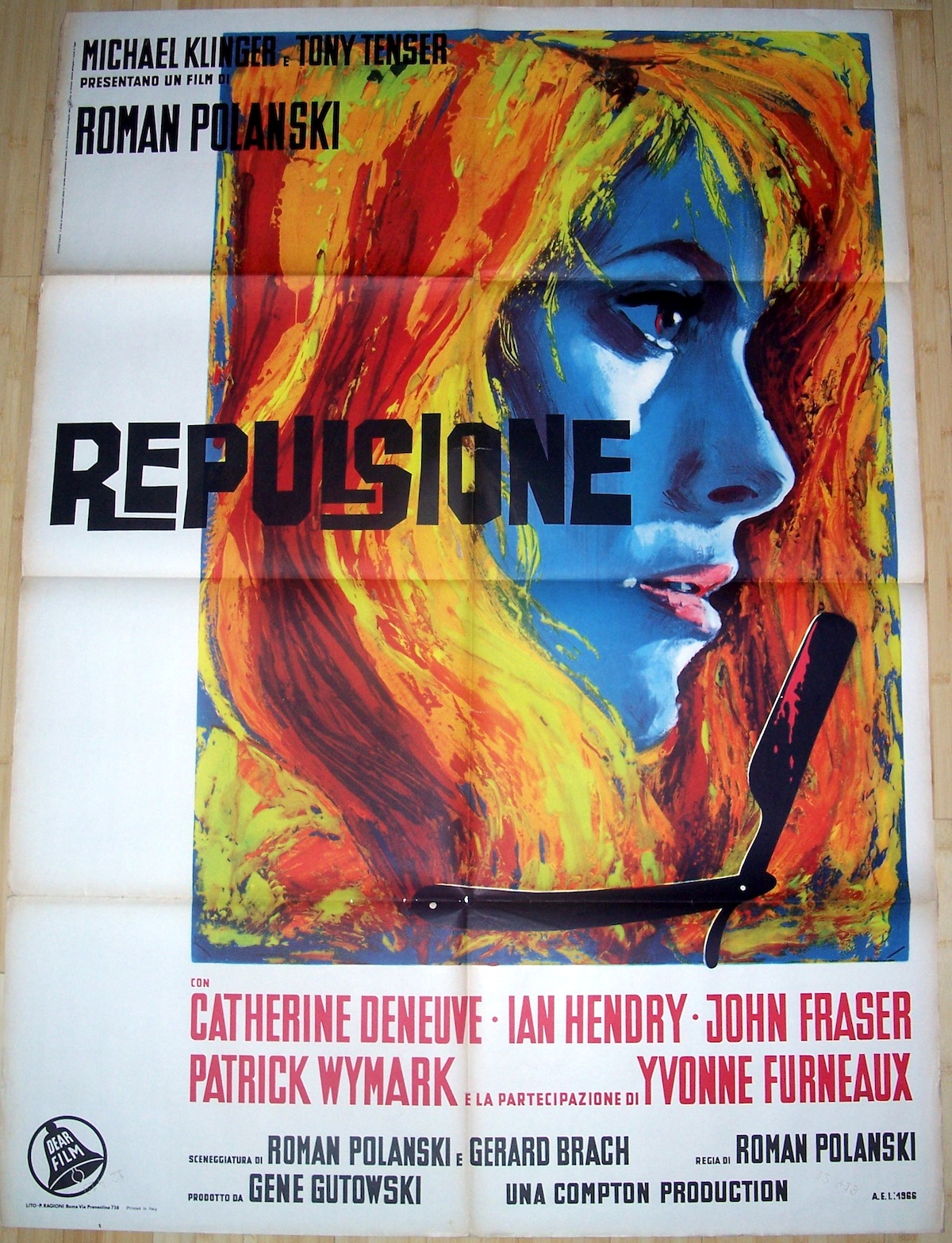
Movie Poster Du Jour: “Repulsion”

Fabrizio del Wrongo writes:

100_7927

Posted in Commercial art, Movies | Tagged , , , , , , | 1 Comment

Andrew Dice Clay in 1987

Paleo Retiree writes:

(Do NOT play this video if you’re at work. It’s about as NSFW and un-PC as can possibly be.)

Andrew Dice Clay in his prime makes the very daring Bill Burr, my current favorite comedian, look sheepish and apologetic. The basic joke in his act is that this pudgy Jewish guy (born Andrew Clay Silverstein) is playing the role of the kind of leather-loving Italian hood who worships black guys for being so big, so strong and so cool. Somehow that lends him the license to give voice to all kinds of insults, jokes and outrageous thoughts. The clip I’ve linked to, by the way, is the seven-minute 1987 performance at Dangerfield’s that really kicked Andrew Dice Clay into the limelight.

To my mind it’s a really vivid reminder of how uninhibited life, or at least comedy, could be in an era before people became obsessed with their own thin skins, and convinced that anything that caused them offense not only deserves to be outlawed but is an enemy of freedom. Because, as far as I can tell, the word “freedom” has come to be redefined. No longer does it mean, roughly, “a relatively large amount of latitude to think, say and do as you please.” Instead it signifies “the ability to get through life without my feelings ever being hurt.”

But it’s not as though even in 1987 Andrew Dice Clay got a free ride from respectable society. The tasteful and the tastemakers were both up in arms about him — something really needed to be done, don’t you know? Women’s groups were particulary outraged; MTV banned him for many years; and in 1990, when he was asked to host an episode of Saturday Night Live, both Nora Dunn and Sinead O’Connor refused to appear on the show. Meanwhile I was chortling happily at his cartoonish bravado, his loutish assertiveness and his high-spirited outrages.

I had some arguments, er, friendly and civilized disagreements about Clay with work colleagues, nearly all of them of the upper-middle-class white-liberal persuasion. What I struggled hardest to understand were their moral objections to Clay. How could people who had learned to enjoy Lenny Bruce and Richard Pryor object on moral grounds to Andrew Dice Clay?

Flurries of reasons were thrown at me, but I couldn’t make sense of them until I woke up to the fact that nearly all the objections were class-based. While Bruce peddled Greenwich-Village-style hipster attitudes and Pryor’s act was hipster, lovable and black, Clay was a guy from the boroughs targeting a mainly working-class, white-ethnic audience. I saw Clay live once and I can report that 1) 90% of the audience really was working-class, and 2) the women in the audience laughed as hard as the guys did. The show was basically a celebration of hearty, uninhibited working-class camaraderie, as well as of defiance of bourgeois good taste. It was a celebration of vulgarity in the old sense — “the common people” — as well as in the current one.

Clay’s moment didn’t last long. He was everywhere you looked … and then, after about five years, political correctness caught up with him and did him in. His career collapsed; he’s been making failed and semi-failed comebacks ever since.

Incidentally, if you don’t get a kick out of Clay, it’s OK with me. As far as I’m concerned, The Diceman was one of the great comedy creations of the ’80s, right up there with the Cameron Crowe / Amy Heckerling / Sean Penn creation Spicoli from “Fast Times at Ridgemont High.” But tastes — maybe especially in comedy — certainly differ. My aim here is simply to point up how uptight American culture has gotten in recent years and to demonstrate how much rowdier it once was. Has this change really been for the better? Does nurturing hypersensitivity really solve anything, or does it simply lead to ever more absurd excesses of hypersensitivity? And isn’t it weird how — despite PC, and despite 21st century neo-Puritanism — crude hiphop is allowed by the official class to be? Anyone got an explanation for that?

Related

Posted in Humor, Performers, Politics and Economics, Sex | Tagged , , , , , | 27 Comments

A Day at the Bowers Museum

Blowhard, Esq. writes:

bowersAlthough I’ve lived within 10 minutes of it for almost a decade, it was only within the past month that I finally made it over to Orange County’s Bowers Museum, an art and cultural history institution located in Santa Ana, California. I picked a great day to go, as the museum almost seemed custom-tailored to my interests, with exhibits on ancient Egypt, Academic art, Beethoven, and the art of Oceania.

Continue reading →

Posted in Architecture, Art | Tagged , , , , , , , , , , , , , , , | 3 Comments

“And Meanwhile What Do We Eat?”

Eddie Pensier writes:

‘The only thing we can do is sell the rooster,’ said the woman.
‘We can also sell the clock.’
‘They won’t buy it.’
‘Tomorrow I’ll try to see if Alvaro will give me the forty pesos.’
‘He won’t give them to you.’
‘Then we’ll sell the picture.’ ` When the woman spoke again, she was outside the mosquito net again. The colonel smelled her breath impregnated with medicinal herbs.
‘They won’t buy it,’ she said.
‘We’ll see,’ the colonel said gently, without a trace of change in his voice. ‘Now, go to sleep. If we can’t sell anything tomorrow, we’ll think of something else.’

He tried to keep his eyes open but sleep broke his resolve. He fell to the bottom of a substance without time and without space, where the words of his wife had a different significance. But a moment later he felt himself being shaken by the shoulder.

‘Answer me.’

The colonel didn’t know if he had heard those words before or after he had slept. Dawn was breaking. The window stood out in Sunday’s green clarity. He thought he had a fever. His eyes burned and he had to make a great effort to clear his head.

‘What will we do if we can’t sell anything?’ the woman repeated.
‘By then it will be January 20th,’ the colonel said, completely awake. ‘They’ll pay the twenty per cent that afternoon.’
‘If the rooster wins,’ the woman said. ‘But if he loses. It hasn’t occurred to you that the rooster might lose.
‘He’s one rooster that can’t lose.’
‘But suppose he loses.’
‘There are still forty-four days left to begin to think about that,’ the colonel said.

The woman lost her patience.

‘And meanwhile what do we eat?’ she asked, and seized the colonel by the collar of his flannel night shirt. She shook him hard.

It had taken the colonel seventy-five years – the seventy-five years of his life, minute by minute – to reach this moment. He felt pure, explicit, invincible at the moment when he replied:

‘Shit’.

–last lines of No-one writes to the colonel (El coronel no tiene quien le escriba), Gabriel García Márquez

rooster

Posted in Books Publishing and Writing | Tagged | 2 Comments

Soft Spots

Fabrizio del Wrongo writes:

luis-bunuel-022891137-zoom

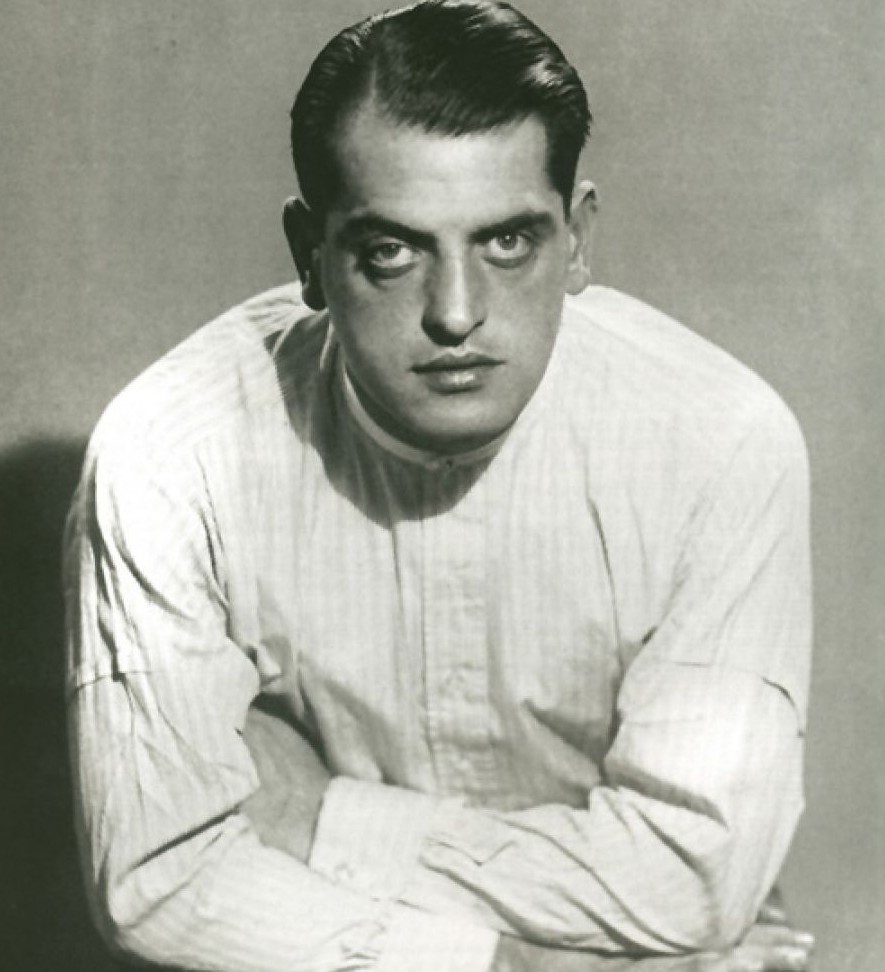
I have a soft spot for secret passageways, bookshelves that open into silence, staircases that go down into a void, and hidden safes. I even have one myself, but I won’t tell you where. At the other end of the spectrum are statistics which I hate with all my heart.

— Luis Buñuel

Posted in Art, Movies | Tagged , , , | 1 Comment

Movie Du Jour: “The Naked Kiss” (1964)

Blowhard, Esq. writes:

Cheap, lurid, corny, sensational, sentimental, blunt, and perverse, Sam Fuller’s THE NAKED KISS opens with a bald hooker beating her pimp. After winding up in Squaresville, USA she decides to go straight, lands a job as a well-respected nurse, and snares the town’s rich and sophisticated scion. But can she escape her past? And is the man of her dreams too good to be true? One of Scorsese’s favorites, it also clearly influenced David Lynch, who swiped its placid-suburbia-with-corrupt-underbelly for BLUE VELVET and brothel across the river for TWIN PEAKS. The screenplay is a bit creaky — the movie loses most of its momentum with the second act climax — but it’s hard to beat the authentic early 60s B-movie noir seediness. You can watch the whole thing on YouTube.

Related

  • The film reminded me of Donald Westlake’s Memory which I recently read and Fenster reviewed here.
  • Back here I took a look at some process footage of late 40s L.A. shot for the movie Shockproof, co-written by Fuller.
Posted in Books Publishing and Writing, Movies | Tagged , , | 1 Comment