
Blowhard, Esq. writes:
Click on the image to enlarge.
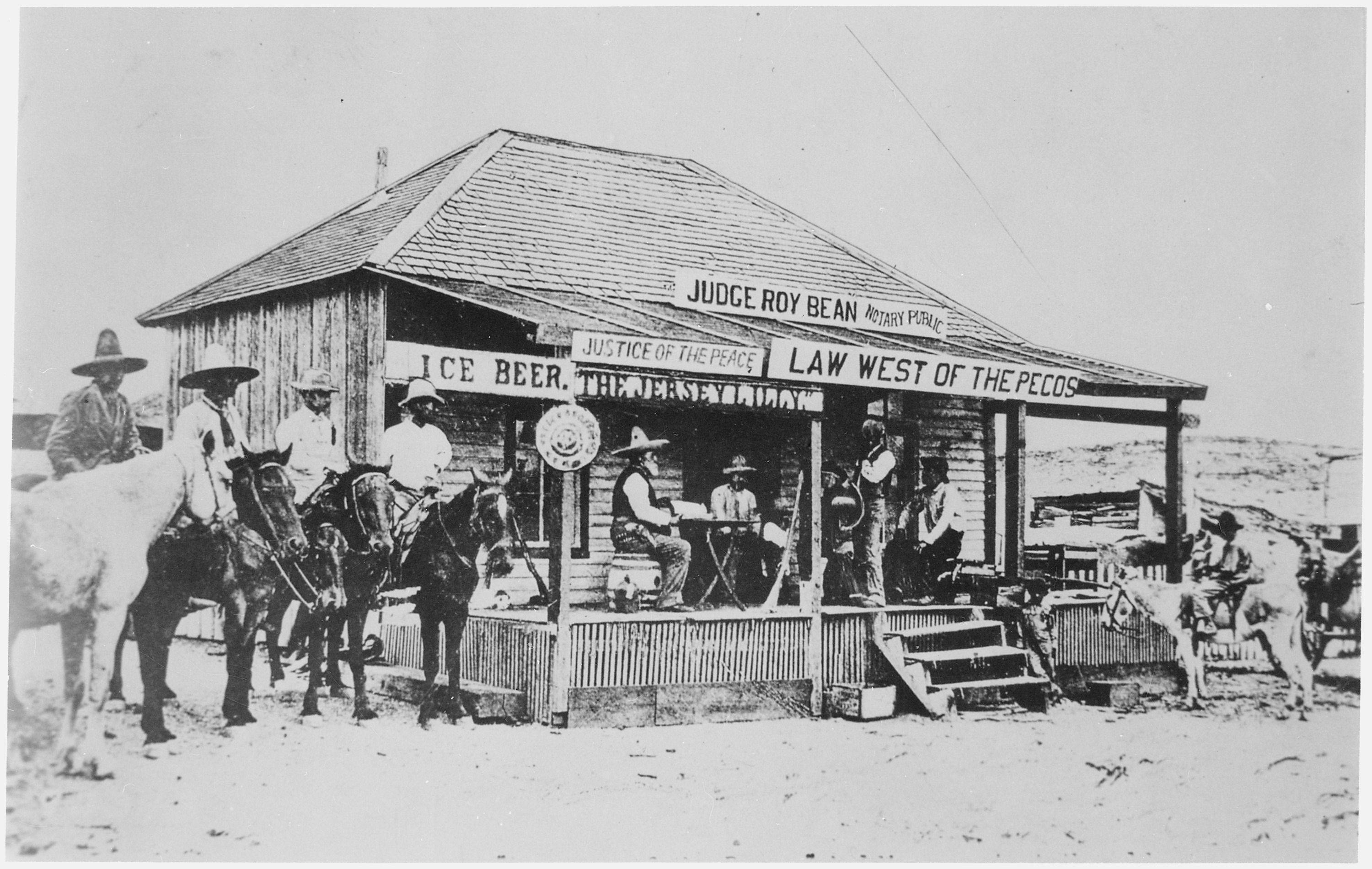
Judge Roy Bean, known as the “Law West of the Pecos,” holding court in the town of Langtry, Texas in 1900. Pictured is the trial of a horse thief. The courthouse doubled as a saloon.
Blowhard, Esq. writes:
Click on the image to enlarge.
Judge Roy Bean, known as the “Law West of the Pecos,” holding court in the town of Langtry, Texas in 1900. Pictured is the trial of a horse thief. The courthouse doubled as a saloon.
Paleo Retiree writes:
Fenster writes:
Eddie quotes Cole Porter. My rejoinder: Ersatz Cole Porter.
PARIS IN THE OFF-SEASON
I
The Prices
I ask for another stiff boisson
when a seafood repast que nous choissisons
almost breaks my whole bank-ly,
deux mille francs! I say, “francly,
one man’s fish is another man’s poisson”.
II
The Weather
In Paris it’s really quite rainya
than the proverbial plainya in Spainya.
But it couldn’t be better!
After all we’d be wetter,
if we’d traveled the ship Lusitania.
III
Ensemble
So though Paris is lovely and fair,
for more francs and soleil do I care.
And though it may embarrass,
here’s my Judgment of Paris:
Although it’s not sunny, it’s cher.
Blowhard, Esq. writes:

Time for a little hatethink, you guys! Did you hear the story about the dude in Ohio going around trying to steal peoples’ homes? He claimed the owners, some of whom were on vacation, had abandoned them and thus he was free to take ownership via a legal concept called adverse possession. Now, adverse possession is a valid cause of action, but the statutory period for asserting a claim is usually many years. In the case of Ohio, an owner must not use his property for 21 years before someone else may adversely possess the property.
But this criminal-trespassing troll’s misunderstanding of the law isn’t what interested me. As this other story points out, the troll is a member of the Sovereign Citizens movement. Huh? That was a new one to me, so I followed the link to the Southern Poverty Law Center to read about this extremist group.
Sherbrooke writes:
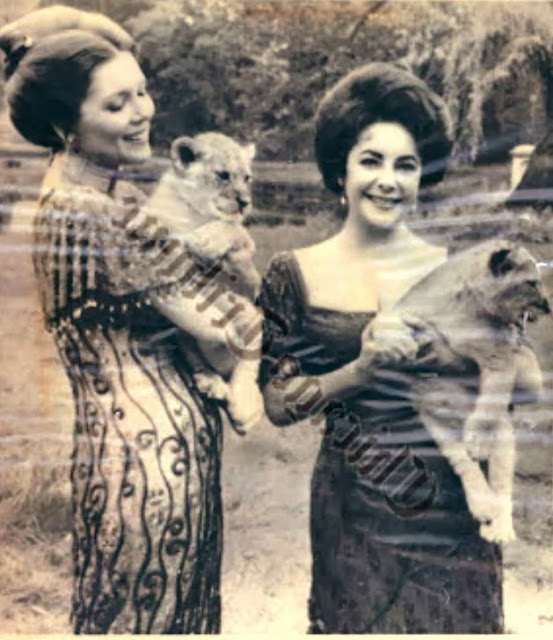
Records of why this photo was taken remain undiscovered, but surely the cause of Big Cats was involved. Diana Rigg and Elizabeth Taylor (meeting for the first time?) show the kitties some love.
Blowhard, Esq. writes:
Click on the image to enlarge.
 Cobb Hall at the University of Chicago
Related
epiminondas writes:
Yes, I understand that different cultures communicate ideas in ways that sometimes seem strange to us. Particularly when taken out of context. Recently, while traveling in Chile, I stopped at a gas station and saw this ad in a brochure. Whoa! “Lubrax” sounds like “lube racks”…and these gals have ’em.

Fenster writes:
It helps in planning, as in life, to have a sense of identity. And I don’t mean “brand”, although in practice branding and identity exercises are often comprised of the same interchangeable BS. At least in terms of connotation, branding summons up an image of an hot iron stuck on you by someone else

whereas identity, done right, ought to signify an expression of who you really are. Yes, you can get lost navel gazing in an identity search
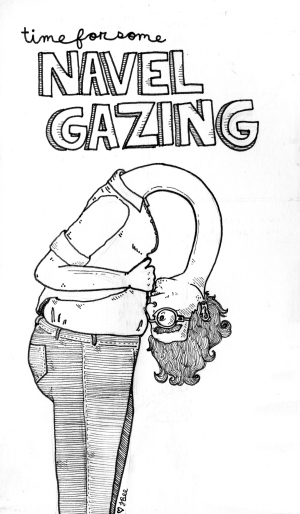
but reflection is an integral part of good planning. It is fine to have a goal that is ambitious when starting planning, but it is not OK to have a self-image that is fanciful.
But identity-finding can sometimes be hard. When that’s the case planning can be hard, too.
In that regard this is a story about planning at Rutgers, the quintessential identity-challenged university. As to why identity-finding is hard at Rutgers, you have to start with history.
Blowhard, Esq. writes:
Men really have strange emotions and behave in the most bizarre ways. Sometimes a man will leave a very pretty woman to marry an ugly one. Surely a gentleman who frequents the Palace should choose as his love the prettiest girl of good family he can find. Though she may be of such high standing that he cannot hope to make her his wife, he should, if he is really impressed by the girl, languish for her unto death.
Sometimes, too, a man will become so fascinated by a girl of whom he was heard favorable reports that he will do everything in his power to marry her even though they have never even met.
I do not understand how a many can possibly love a girl whom other people, even those of her own sex, find ugly.
I remember a certain woman who was both attractive and good-natured and who furthermore had excellent handwriting. Yet when she sent a beautifully written poem to the man of her choice, he replied with some pretentious jottings and did not even bother to visit her. She wept endearingly, but he was indifferent and went to see another woman instead. Everyone, even people who were not directly concerned, felt indignant about this callous behavior, and the woman’s family was much grieved. The man himself, however, showed not the slightest pity.
— The Pillow Book of Sei Shōnagon, c. 1002, translated by Ivan Morris
Eddie Pensier writes:

…Joan Fontaine (22 October 1917 − 15 December 2013)
 …Peter O’Toole (2 August 1932 – 14 December 2013)

 Blowhard, Esq.
 Callowman
 Sherbrooke
 Eddie Pensier
 Enzo Nakamura
 Epaminondas
 Fabrizio del Wrongo
 Fenster
 Brundle Guy
 Glynn Marshes
 Paleo Retiree
 Atypical Neurotic
 Question Lady
 Sax von Stroheim
 Sir Barken Hyena
 The Mistaken
