
Paleo Retiree writes:
Paleo Retiree writes:
Blowhard, Esq. writes:

Playboy playmate Elizabeth Ostrander is a bit too fond of makeup contouring for my taste, which gives her an alien or blowup doll appearance at times, but hey, I guess there are worse fashion trends. It appears that Ms. Ostrander only did a few nude spreads and videos for Playboy before getting married and abandoning nude modeling. Too bad. When Trump abolishes the NEA, NEH, PBS, Department of Education, Department of Energy, and NASA, maybe we can convince him to devote those government resources to cloning her.
Freckled ginger bosomy nudity after the jump. Happy Friday.
Fabrizio del Wrongo writes:
Fabrizio del Wrongo writes:
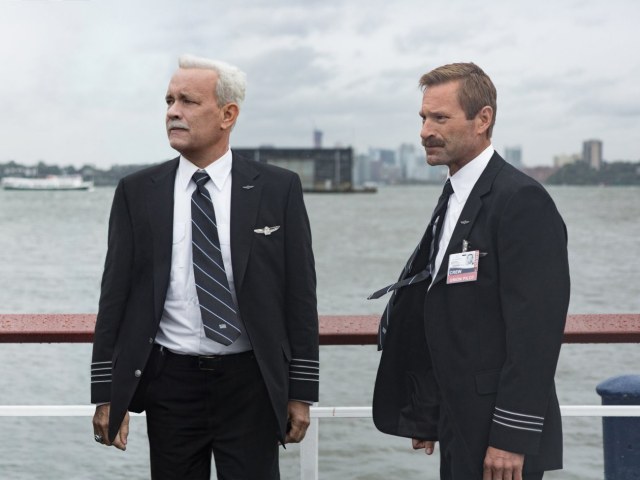
Perhaps it took an older director, and one with the conservative impulses of Clint Eastwood, to make the story of Chelsey “Sully” Sullenberger into a movie about the heroism of dutifulness. Though “Sully” is set in Manhattan and features a few big effects sequences, it has the modesty and compactness of a chamber drama. Doubtless, Todd Komarnicki’s screenplay (based on Sullenberger’s book) contains its share of hackneyed elements, including some rather facile stuff set among the passengers of Sully’s plane; but the picture’s themes are so clearly presented, and its pacing so insistent, that it succeeds by dint of efficiency. “Sully” is never boring, even when it’s stuck in boardrooms. The key to the movie’s peculiar air is lead actor Tom Hanks. His Sullenberger has the energized placidity of an ER surgeon — a placidity edged with gravity and alertness. As Sully is shuttled from room to room, and repeatedly asked to explain his in-air actions, Hanks lets you feel rather than see the tenuousness of his composure. It’s a subtly expressive performance. (Aaron Eckhart, as Sully’s co-pilot, provides Hanks with a suitable foil; his anxiousness is all on the surface.) Cannily structured so that the backstory falls into place when it’s needed to elucidate the post-flight narrative, “Sully” culminates with a safety-board hearing in which man is indicted by model. It’s contrived, like a courtroom drama, but by that point the story and characters have inertia. It’s hard not to root for Sully’s vindication.
Fabrizio del Wrongo writes:
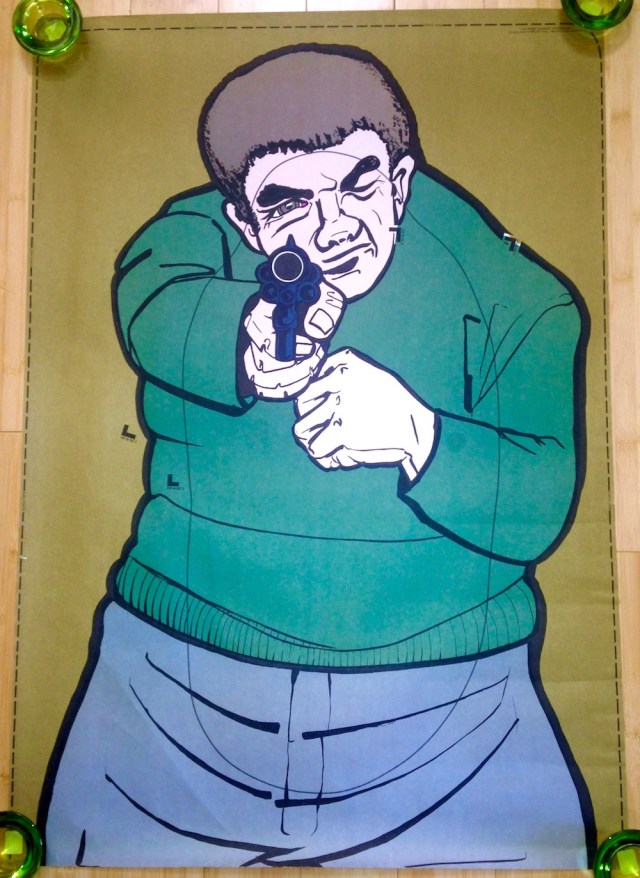
These days, I suspect the targets used by shooting ranges aren’t nearly so dramatic.


Paleo Retiree writes:

Fabrizio del Wrongo writes:
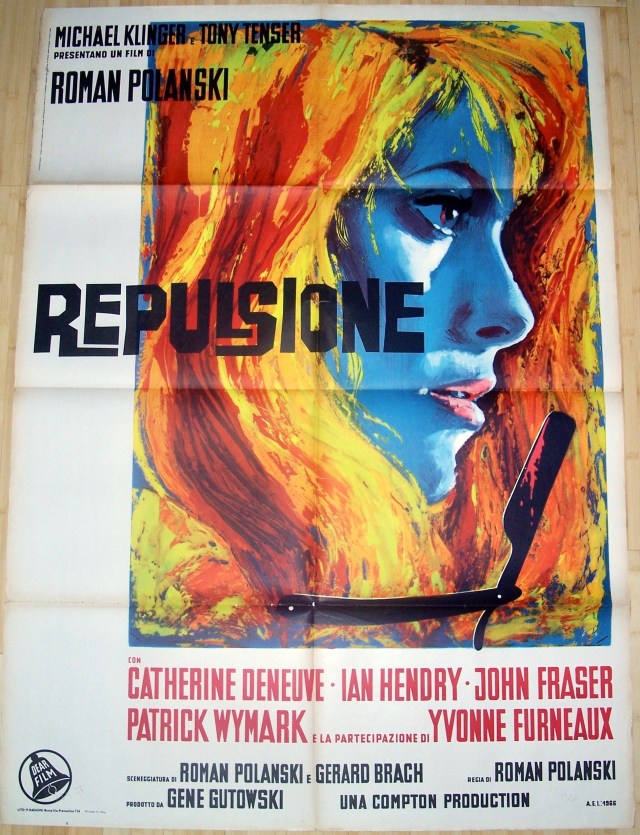
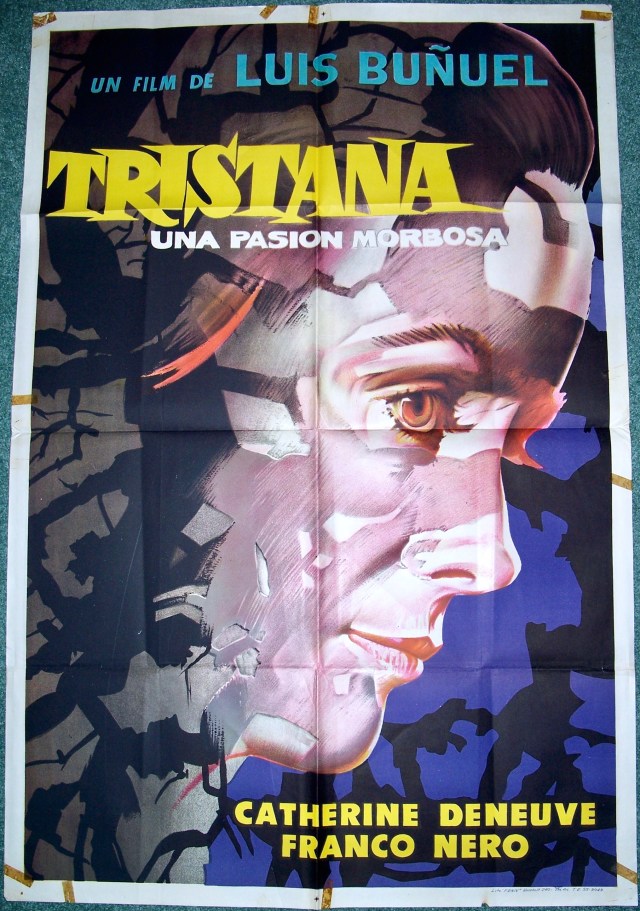
What is it about Catherine Deneuve that prompts desecration? It sometimes seemed as though her directors needed to spoil her in order to properly venerate her. Perhaps it’s the placid opaqueness of her beauty that encouraged filmmakers to treat her like a canvas — a screen onto which they could project their most perverse urges. Or maybe she was just attracted to weirdos…
Whatever it was, the artists who created posters for her movies of the ’60s and ’70s were just as alive to it as her directors.
Italy, 1965.
Czechoslovakia, 1970.

Argentina , 1970.
Paleo Retiree writes:


 Blowhard, Esq.
 Callowman
 Sherbrooke
 Eddie Pensier
 Enzo Nakamura
 Epaminondas
 Fabrizio del Wrongo
 Fenster
 Brundle Guy
 Glynn Marshes
 Paleo Retiree
 Atypical Neurotic
 Question Lady
 Sax von Stroheim
 Sir Barken Hyena
 The Mistaken
