Crap Space 2

Paleo Retiree writes:

A return to my ongoing project of documenting what I think of as architectural “crap space” — bits (as well as sometimes, alas, huge stretches) of our designed-and-built environment that have zero life whatsoever.

First off, I’d like to admit that I have an agenda, and I’d like to spell it out. Whether something we call “life” is present or not in a cultural creation hardly qualifies as a technical, let alone a quantifiable, matter, yet — especially where buildings, neighborhoods, towns and cities go — it’s something just about anyone with common sense can detect.

Pushed to the wall, in fact, I’d argue that the presence or absence of life may well be the most important factor where any cultural creation goes. Life — or maybe better “livingness” — can be a debatable thing, of course, especially when put under a microscope and fought-over by sophists, cynics and opportunists. But, as far as I’m concerned, that isn’t a reason to ignore the question — let alone to dismiss it as as a laughably woo-woo thing — but to discuss it in an ongoing way. Why? Because the presence of livingness promotes and attracts further life, while the absence of livingness depresses and repels further life. Yet it seems to me that 90% of discussions about culture fail to wrestle with this basic livingness-or-not question. Instead they either fall into the trap of discussing indisputable things — brilliance, flashiness, efficiency — or they tumble into relativity and subjectivity of the “well, I dug it, but you may not” sort.

I’ll get to the snapshots after making one further point, which is that, while livingness’ presence or absence might be, in some cases, rather debatable, in other cases it’s hyper-obvious. Hence my focus here on crap space. Plus, hey: maybe there’s something to be learned from examples where livingness is flagrantly absent.

So here’s today’s carefully curated selection of crap space. What are the giveaways that this space — a stretch in front of a Manhattan apartment building — lacks livingness? And what are the factors that contribute to this non-livingness? If this space could talk, what would it be saying to you?
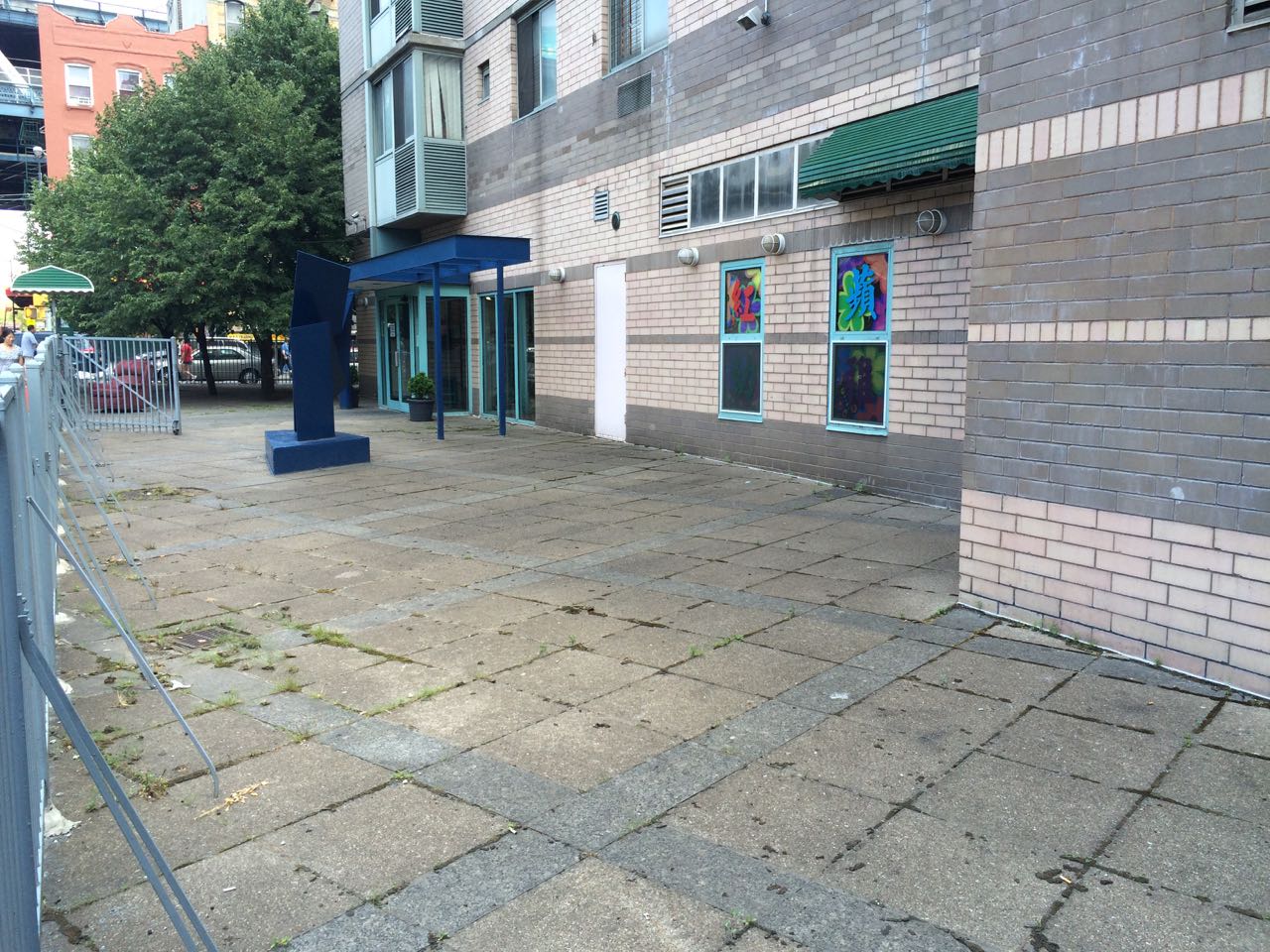
Does it say “KEEP OUT — Danger!” Or does it say “Enjoy yourself”?

One reason this space seems dead is that, despite a perfectly pleasant day, it’s unused. Another is that its intended purpose seems rather hard to grasp. What did someone once imagine the benefit or the point was of emptying out all this square footage?
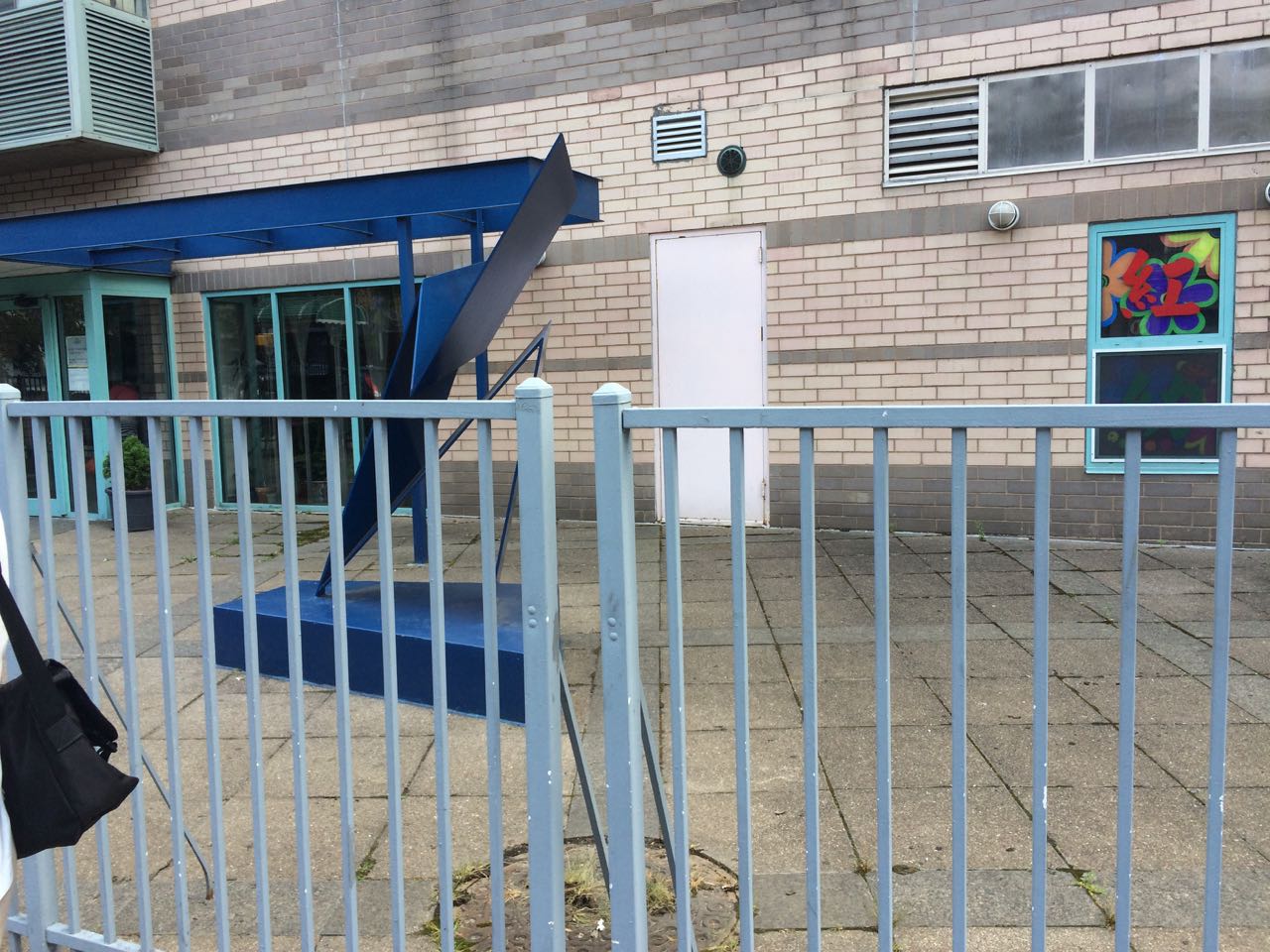
To my mind the ugly/cheery blue metal fence radiates half progressive elementary school and half country-club prison.
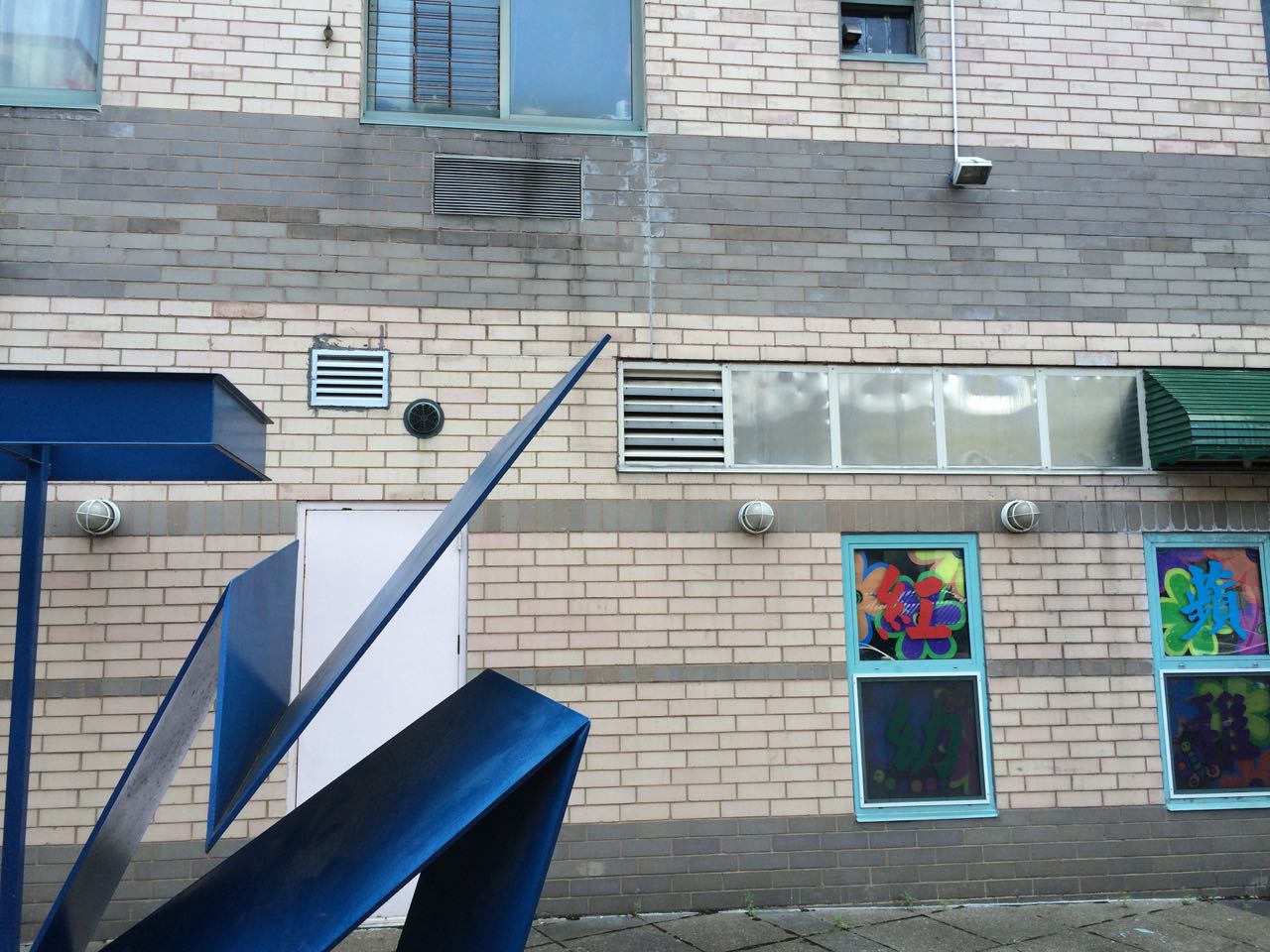
If you’re at all like me, the blank white utility door and the ventilator grille above it scream “Avoid this space.” And isn’t it interesting how often lifeless empty spaces feature an abstract modernist sculpture at the middle of them? Could it be that approaching urban space and form as though they bear (or should bear) any relationship whatsoever to contemporary art galleries is just a flat-out bad idea?

Not hard to see the lifelessness here. Cracked and stained concrete, a ripped-off stretch of the neighboring building’s side wall (which was obviously never intended to be put on display), and a general ashtray/garbage-pit-like atmosphere prevail. All for what? What has been gained by the designer and the developer having pulled their building 15 or so feet back from the sidewalk? General building-in-a-city rule: unless you have a very good reason to do otherwise, always build your structure out to the sidewalk.

Where our cities, blocks, neighborhoods and buildings go, why do we go on repeating the same simple mistakes? And why is the modernist design-and-development establishment as devoted as they are to refusing to learn from the past?

Related

  • If the people who make these decisions played by David Sucher’s “3 Rules,” 90% of urban-planning-style mistakes could be avoided. Two funny things about architecture and urbanism: 1) it ain’t rocket science, and 2) we already know how to do it well.
  • Back at my old blog, I interviewed David Sucher: Part One, Part Two. Buy David’s supergood guidebook here.
  • Christopher Alexander is one of the great minds of this way of looking at the built world. Start with this book and with this debate between Alexander and arch-modernist Peter Eisenman.
  • The mathematician and architecture theorist Nikos Salingaros is an associate of Alexander’s and is a very brilliant guy in his own right. Some years ago I interviewed Salingaros: Part One, Part Two, Part Three, Part Four, Part Five.
  • Nobody makes the dreariness of so much American architecture and urbanism as vivid as James Kunstler. Here’s his blog, here’s the best book of his to start with, here’s his fun Eyesore of the Month feature.
  • Alexander and Salingaros take the position that “livingness” doesn’t just exist but can be more or less scientifically established. The Luxembourgeois architect and polemicist Léon Krier is equally eye-opening and certainly plays on the same team, but he takes a poet’s approach to the question. Roger Scruton praises Krier; Salingaros maintains a page devoted to Krier and published an interview with Krier; I reviewed a wonderful book by Krier. Here’s a decent overview of Krier from The Guardian.
  • Eddie Pensier had some laughs at the expense of trendiness in Sydney. Get a look at that absurd, dumb bench.
  • My previous Crap Space posting.
  • Blowhard, Esq. and I visited the 9-11 Memorial in lower Manhattan. Both of us were moved by the site itself but found the memorial overflashy and devoid of life. Blowhard Esq.’s posting; mine.
Posted in Architecture | Tagged , , | 3 Comments

Sean Connery With A Cat Du Jour

Eddie Pensier writes:

sean-connery-with-cat

Posted in Animals, Performers | Tagged , , | Leave a comment

L’Ecole Restaurant at the International Culinary Center

Blowhard, Esq. writes:

lecoleicc

Before Paleo Retiree and the Question Lady headed to their Fortress of Solitude for the winter, we met up for lunch at L’Ecole, the student-run restaurant of the International Culinary Center in SoHo. While the front house staff are professionals, the kitchens chefs are studying at the ICC school located on the floors above the restaurant. PR had been bugging me to go for weeks, touting it as one of the best deals in the city — a three-course lunch for $32. In the New York of 2015, that basically qualifies as a miracle, at least for any restaurant south of, oh, 168th St. It’s almost too good to be true.

Continue reading →

Posted in Food and health, The Good Life | Tagged , , , | 4 Comments

Naked Lady of the Week: Hitomi Tanaka

Blowhard, Esq. writes:

htcover

If Russ Meyer ever did a live-action remake of “Sailor Moon,” I’m pretty sure that Hitomi Tanaka would be at the top of his casting list. Tanaka’s improbable proportions and demure manner have made her the queen of Japanese porn stars in the United States. (I recall a friend saying that the way Japanese girls whimper during sex is “one of the great contributions to world culture.”) Most of the photos are taken from Score, so be sure to check them out for more and as well as the tube sites for videos of her spirited performances.

Big Asian boobies after the jump. Happy Friday.

Continue reading →

Posted in Performers, Sex, The Good Life | Tagged , , , | 1 Comment

Lloyd’s Memorial

Blowhard, Esq. writes:

LWF-Memorial-Service-1

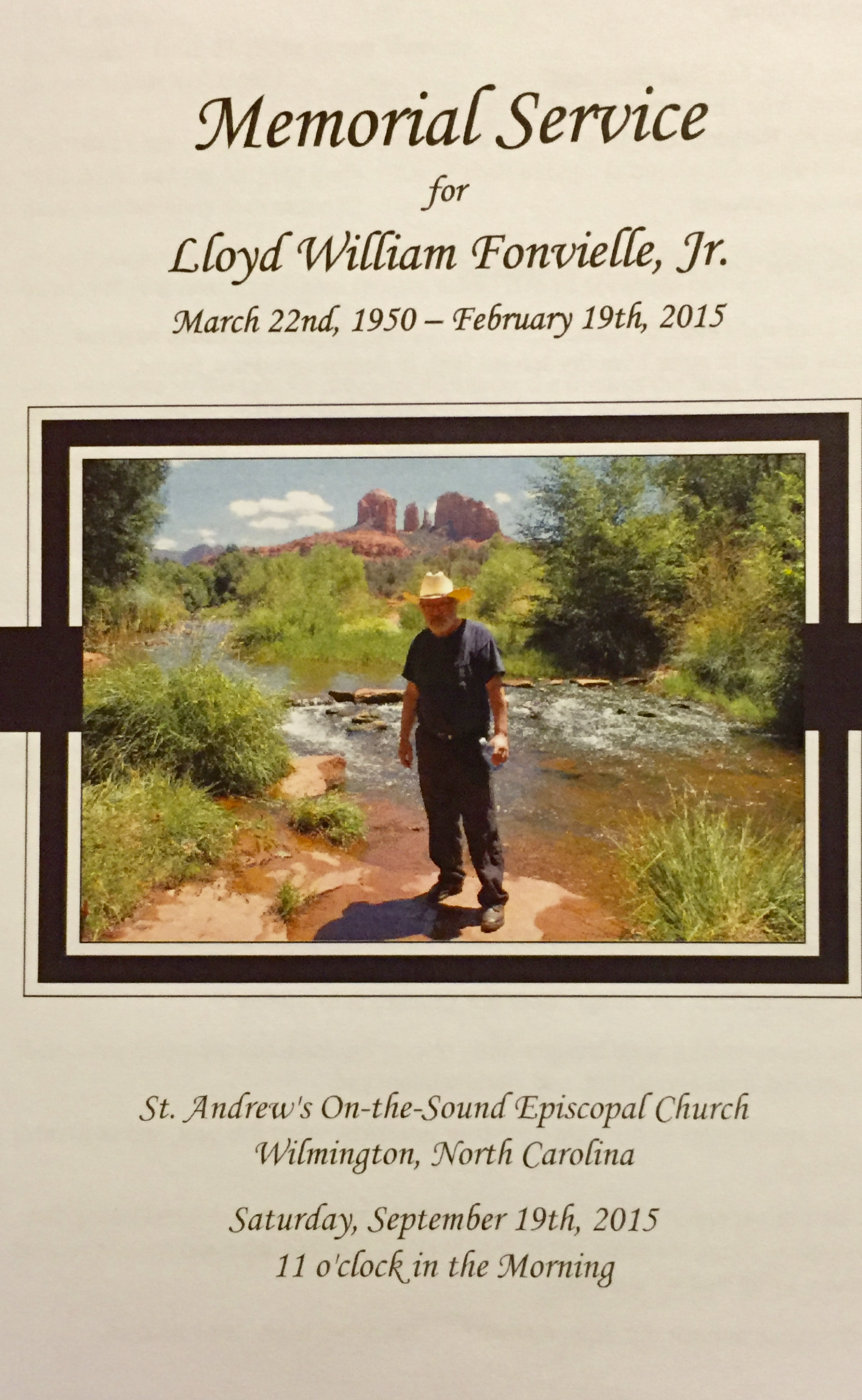
Head over to Lloyd’s blog for the program from his memorial service, some beautiful remarks by his friend the Reverend Paul Zahl, and a recording of “Dark Harbor,” a song Lloyd co-wrote.

Posted in Uncategorized | Tagged | Leave a comment

Eddie’s Spirit Chronicles: Stolen Rum Coffee & Cigarettes

Eddie Pensier writes:

New Zealand brand Stolen Rum has a hipster origin story for the ages: inspired by a Jim Jarmusch movie.

coffeeandcigarettes

Instead of the usual fruitcakey sorts of spices that flavor a spiced rum, Stolen decided to make theirs smell of  what I imagine the back-bar of a grungy 70s downtown rock club smelled like at 6am…rum, coffee and cigarettes, just like it says on the bottle. Definitely not your average spiced Sailor Jerry or Captain Morgan. This is surely no sophisticated pipey “tobacco” note but rather the grey, ashy smell of cheap or badly handmade cigarettes with too high a ratio of paper to tobacco.

What a surprise then, that the coffee note is the smooth player in this mix. Not bitter overroasted coffee, but a nice medium-roast that when combined with the rum’s own inherent caramel-molasses-vanilla notes produces an interesting Frappucino-ish effect. Imagine a 38% alcohol Frappuccino into which you have accidentally extinguished your Marlboro, but you, you badass rock star you, wouldn’t let something like that ruin your drink.

It should be noted that the Coffee & Cigarettes I’m drinking is the censored version. Australia apparently gave Stolen some grief over the wording on the label, so in a fit of pique combined with a marketing masterstroke, they scribbled out the label and renamed it “Spiced”. They underproofed it too: this one has 37.5% abv, too weak to legally be sold as “rum” in the USA.

stolenspiced

I’m enjoying my Stolen Coffee & Cigarettes Spiced over ice or splashed with soda, but I’m going to start mixing it with stuff soon. Time will tell if it manages to overcome the “hey, this isn’t as gross as I thought it would be!” novelty hurdle.

Available in Australia at Dan Murphy’s and BYS, and in the USA at these joints.

Posted in Food and health, The Good Life | Tagged , , , , | 4 Comments

Scott’s Crosstown Pizza Walking Tour

Blowhard, Esq. writes:

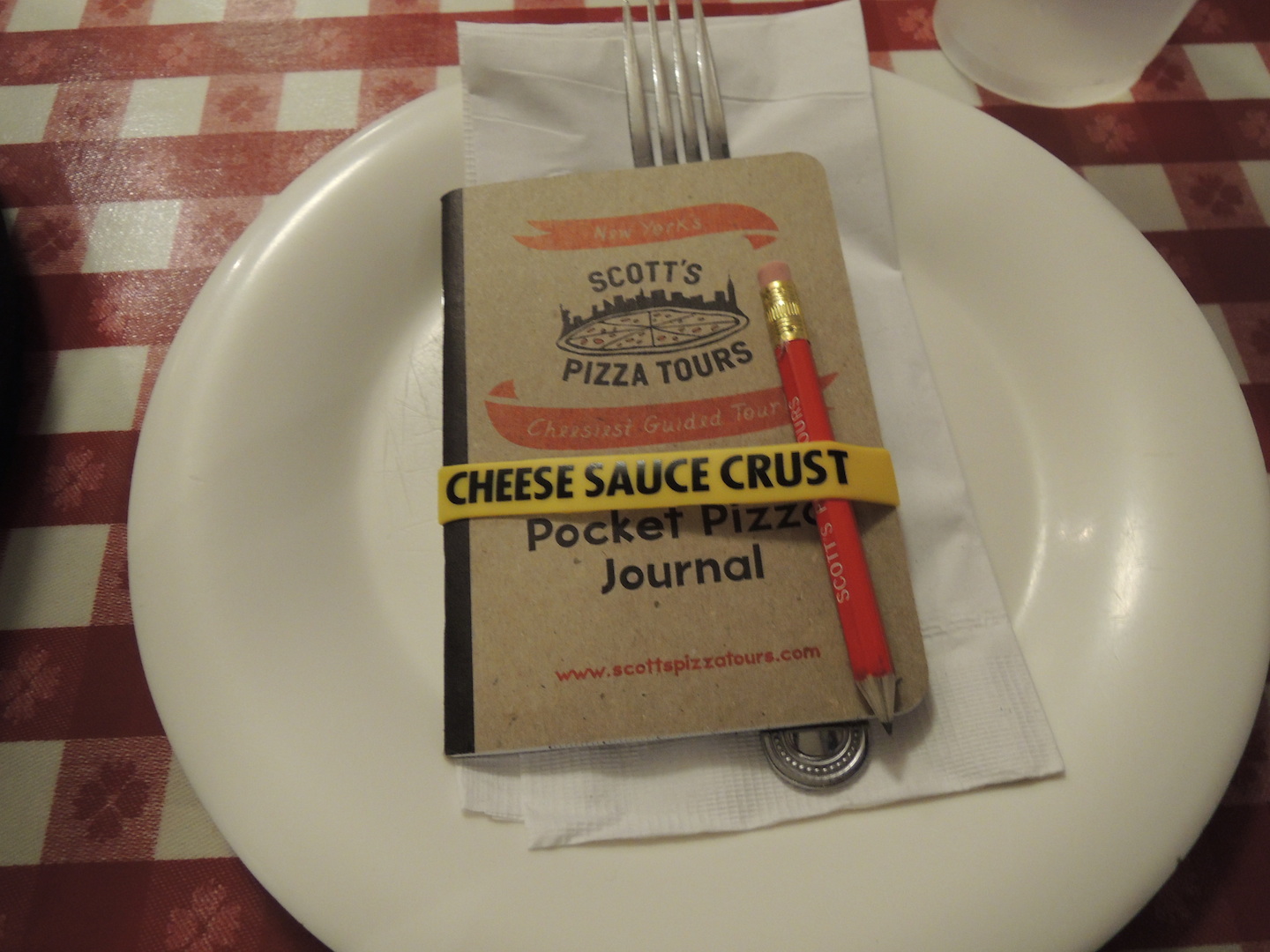
pizzajournal

Paleo Retiree should probably avert his eyes from this post. See, he had the inspired idea of going on a pizza walking tour and made the reservations for us, then — tragically! — the day before the glorious event he got so sick he was unable to attend. A good friend probably would’ve insisted that we reschedule for another time, but I am not a good friend. No, I soldiered on bravely without him because I care about you, the reader. (I choose that word deliberately as I realize there’s only one reader out there. Hi Mom.)

Thus, on a recent Friday morning, a friend who was more than happy to attend in PR’s place accompanied me to the Lower East Side for one of Scott’s famous tours to learn about New York City’s storied pizza history while eating our way through it.

Continue reading →

Posted in Food and health, The Good Life, Travel | Tagged , , , , , , , , , , | 5 Comments

Quote Du Jour: Selling Out The Provincials

Blowhard, Esq. writes:

fall-of-rome

Because the military position of the imperial government in the fifth century was weak, and because the Germanic invaders could be appeased, the Romans on occasion made treaties with particular groups, formally granting them territory on which to settle in return for their alliance. Four such agreements were recorded in fifth-century Gaul: with the Visigoths, who were given part of Aquitaine, in 419; with the Burgundians, settled on the upper Rhône near Lake Geneva in about 443; with a group of Alans, granted ’empty lands’ around Valence in about 440; and with another Alan group some two years later, settled in an unspecified part of northern Gaul.

In recent scholarship these treaties have received a disproportionate amount of attention, and have been paraded as evidence of a new-found spirit of cooperation between incoming Germanic peoples and the Romans, both those at the centre of power and those in the provinces. But is it really likely that Roman provincials were cheered by the arrival on their doorsteps of large numbers of heavily armed barbarians under the command of their own king? To understand these treaties, we need to appreciate the circumstances of the time, and to distinguish between the needs and desires of the local provincials, who actually had to host the settlers, and those of a distant imperial government that made the arrangements.

I doubt very much that the inhabitants of the Garonne valley in 419 were happy to have the Visigothic army settled amongst them; but the government in Italy, which was under considerable military and financial pressure, might well have agreed to this settlement, as a temporary solution to a number of problems. It brought an important alliance at a time when the imperial finances were in a parlous condition. At the same time it removed a roving and powerful army from the Mediterranean heartlands of the empire, converting it into a settled ally on the fringes of a reduced imperial core. Siting these allies in Aquitaine meant that they could be called upon to fight other invaders, in both Spain and Gaul. They could also help contain the revolt of the Bacaudae, which had recently erupted to the north. It is even possible that the settlement of these Germanic troops was in part a punishment on the aristocracy of Aquitaine, for recent disloyalty to the emperor. …

The interests of the centre when settling Germanic peoples, and those of the locals who had to live with the arrangements, certainly did not always coincide. The granting of some Alans of lands in northern Gaul in about 442, on the order of the Roman general Aetius, was resisted in vain by at least some of the local inhabitants. ‘The Alans, to whom lands in northern Gaul had been assigned by the patrician Aetius to be divided with the inhabitants, subdued by force of arms those who resisted, and, ejecting the owners, forcibly took possession of the land.’ But, from the point of view of Aetius and the imperial government, the same settlement offered several potential advantages. It settled one dangerous group of invaders away from southern Gaul (where Roman power and resources were concentrated); it provided at least the prospect of an available ally; and it cowed the inhabitants of northern Gaul, many of whom had recently been in open revolt against the empire. All this, as our text makes very clear, cost the locals a very great deal. But the cost to the central government was negligible or non-existent, since it is unlikely that this area of Gaul was any longer providing significant tax revenues or military levies for the emperor. …

The imperial government was entirely capable of selling its provincial subjects downriver, in the interests of short-term political and military gain. In 475, despite earlier heroic resistance to the Visigoths, Clermont was surrendered to them by the imperial government, in exchange for the more important towns of Arles and Marseille. Sidonius Apollinaris, bishop of Clermont and a leader of the resistance to the Visigoths, recorded his bitterness: ‘We have been enslaved, as the price of other people’s security.’ Sidonius’ opposition to this policy of appeasement proved correct — within a year, Arles and Marseille had fallen back into Visigothic hands, this time definitively.

— Bryan Ward-Perkins, The Fall of Rome and the End of Civilization

Posted in History | Tagged , , , | 1 Comment

Now with Extra Han Solo: Critiquing the Star Wars Posters

Fabrizio del Wrongo writes:

16

If you haven’t been living in a cave (i.e. away from social media), and you’re at all interested in this type of thing, you’ve seen the trailer and poster for the new Star Wars movie, entitled “The Force Awakens.” It’s the latest blockbuster-type thing to use its marketing campaign to draw fawning, quasi-hysterical reactions from a yearning-to-be-milked base of nerds and superfans. For years people have joked that movies are turning into excuses for their trailers. In the post-“Fury Road” world, where the sell seems the raison d’être of popular culture, it’s less a joke than a serious criticism. When director J.J. Abrams delivers the finished product, will it live up to its two-minute commercial? If it doesn’t, will the faithful be able to admit it without collapsing their worldviews?

But enough of that. The point of this post is the poster. The first regular-release poster (what used to be called the “one-sheet”) for “The Force Awakens” is pictured above. What do you think? My first reaction was something along the lines of, “Wow, too complicated.” Though the design seems intended to evoke the style of Drew Struzan, it has none of his signature clarity or texture. Character likenesses pile up in a confusing, digitally-worked-over-looking mass, which culminates in a portrait of heroine Daisy Ridley. That image of Ridley is, I suppose, the chief thing to which your eye is drawn, but it’s not highlighted or emphasized in a manner that would encourage you to linger on it. But then it’s hard to emphasize a graphical element when the work in question doesn’t have a background. Just about everything in this design seems like a foreground element. It’s all vying for your attention.

In case you’re wondering, the poster depicts 13 characters, provided you count the white stormtroopers (are they still called stormtroopers?) as only one character.

That gives it a character score of 13 (more on that later).

Continue reading →

Posted in Commercial art, Movies | Tagged , , , , , , , | 9 Comments

Spicy Chicken, Ugly Buildings, and Freddie Mercury

Eddie Pensier writes:

A recent business trip to Sydney brought some fantastic culinary experiences and some regrettable architectural ones. I made a pilgrimage to the Central Park shopping centre in Chippendale to visit (among other things) Daiso, that marvelously kooky Japanese version of a dollar shop.
Central Park is a Very Important Building in Sydney. It has won all manner of awards for its cutting-edge design, “sustainability”, and “green living” features.

It is also, to the naked eye, worryingly covered with mold.

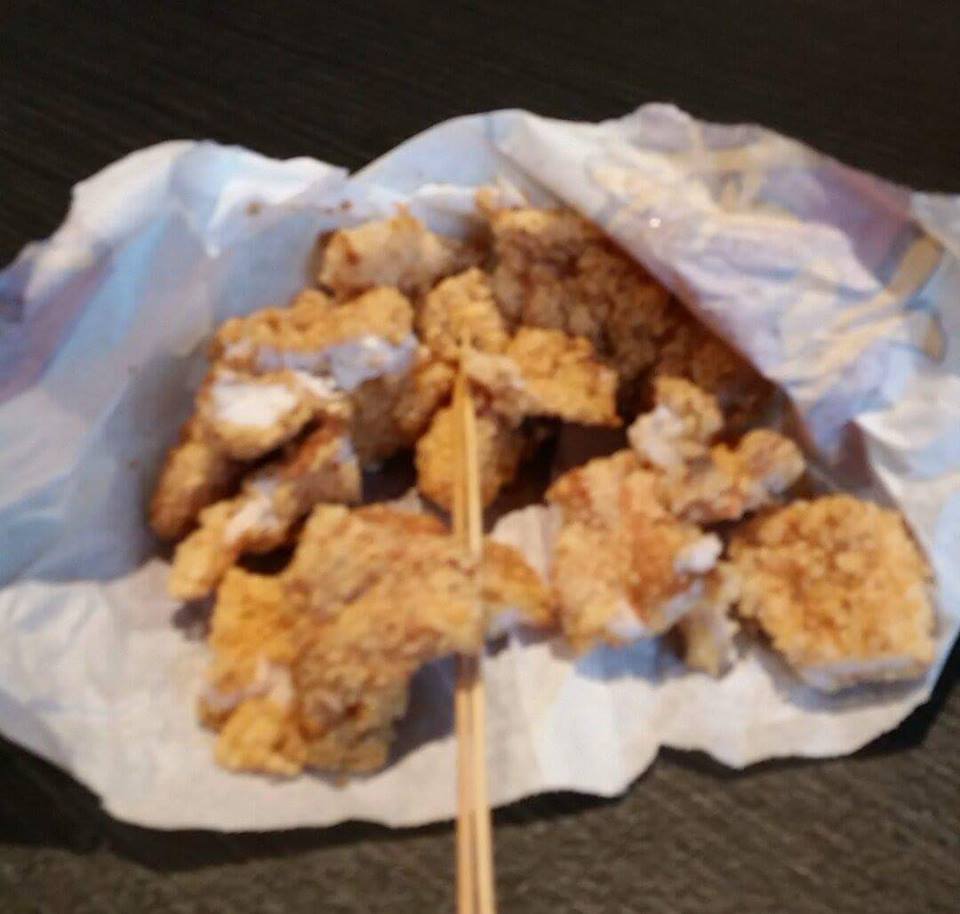
The Central Park food hall contains one of my favorite Sydney food vendors: a Taiwanese fried-chicken stall called ShihLin. For not a great deal of money, one may purchase a deep-fried chicken breast, doused with a pleasingly assertive chili-pepper seasoning salt, sliced into strips with a pair of office scissors, and served to you in a paper bag with bamboo skewers serving as makeshift forks. It was so tasty I couldn’t even operate the focus on my phone properly.

shihlin

I wolfed this down in Central Park’s eerily empty food court while the PA system played Rhythm Del Mundo’s salsa cover of Bohemian Rhapsody. Worth a listen if you’ve never heard it.

Continue reading →

Posted in Architecture, Food and health, Travel | Tagged , , , , , , , , , , | 7 Comments