Obvious Things

Blowhard, Esq. writes:

ChestertonIn the red circle of the desert, in the dark and secret place, the prophet discovers the obvious things. I do not say it merely as a sneer, for obvious things are very easily forgotten; and indeed every high civilisation decays by forgetting obvious things.

— G.K. Chesterton, “The New Jerusalem”

charles-bukowski-hulton-gettythe important
thing
is
the obvious
thing
that
nobody
is
saying

— Charles Bukowski, “Always”

Posted in Books Publishing and Writing | Tagged , , | 1 Comment

Haven’t You an Adventurous Soul, Mr. Bayliss?

Fabrizio del Wrongo writes:

cruise_ship_deck

He had scarcely seen her to speak to since the beginning of the voyage. When she was not walking with Rolly or playing shuffle-board with Twombley, she was down below ministering to the comfort of a chronically sea-sick aunt, referred to in conversation as “poor aunt Nesta”. Sometimes Jimmy saw the little man–presumably her uncle–in the smoking-room, and once he came upon the stout boy recovering from the effects of a cigar in a quiet corner of the boat-deck: but apart from these meetings the family was as distant from him as if he had never seen Ann at all–let alone saved her life.

And now she had dropped down on him from heaven. They were alone together with the good clean wind and the bracing scud. Rollo, Clarence, Dwight, and Twombley, not to mention Edgar or possibly Teddy, were down below–he hoped, dying. They had the world to themselves.

“I love rough weather,” said Ann, lifting her face to the wind. Her eyes were very bright. She was beyond any doubt or question the only girl on earth. “Poor aunt Nesta doesn’t. She was bad enough when it was quite calm, but this storm has finished her. I’ve just been down below, trying to cheer her up.”

Jimmy thrilled at the picture. Always fascinating, Ann seemed to him at her best in the role of ministering angel. He longed to tell her so, but found no words. They reached the end of the deck, and turned. Ann looked up at him.

“I’ve hardly seen anything of you since we sailed,” she said. She spoke almost reproachfully. “Tell me all about yourself, Mr. Bayliss. Why are you going to America?”

Jimmy had had an impassioned indictment of the Rollos on his tongue, but she had closed the opening for it as quickly as she had made it. In face of her direct demand for information he could not hark back to it now. After all, what did the Rollos matter? They had no part in this little wind-swept world: they were where they belonged, in some nether hell on the C. or D. deck, moaning for death.

“To make a fortune, I hope,” he said.

Ann was pleased at this confirmation of her diagnosis. She had deduced this from the evidence at Paddington Station.

“How pleased your father will be if you do!”

The slight complexity of Jimmy’s affairs caused him to pause for a moment to sort out his fathers, but an instant’s reflection told him that she must be referring to Bayliss the butler.

“Yes.”

“He’s a dear old man,” said Ann. “I suppose he’s very proud of you?”

“I hope so.”

“You must do tremendously well in America, so as not to disappoint him. What are you thinking of doing?”

Jimmy considered for a moment.

“Newspaper work, I think.”

“Oh? Why, have you had any experience?”

“A little.”

Ann seemed to grow a little aloof, as if her enthusiasm had been damped.

“Oh, well, I suppose it’s a good enough profession. I’m not very fond of it myself. I’ve only met one newspaper man in my life, and I dislike him very much, so I suppose that has prejudiced me.”

“Who was that?”

“You wouldn’t have met him. He was on an American paper. A man named Crocker.”

A sudden gust of wind drove them back a step, rendering talk impossible. It covered a gap when Jimmy could not have spoken. The shock of the information that Ann had met him before made him dumb. This thing was beyond him. It baffled him.

Her next words supplied a solution. They were under shelter of one of the boats now and she could make herself heard.

“It was five years ago, and I only met him for a very short while, but the prejudice has lasted.”

Jimmy began to understand. Five years ago! It was not so strange, then, that they should not recognise each other now. He stirred up his memory. Nothing came to the surface. Not a gleam of recollection of that early meeting rewarded him. And yet something of importance must have happened then, for her to remember it. Surely his mere personality could not have been so unpleasant as to have made such a lasting impression on her!

“I wish you could do something better than newspaper work,” said Ann. “I always think the splendid part about America is that it is such a land of adventure. There are such millions of chances. It’s a place where anything may happen. Haven’t you an adventurous soul, Mr. Bayliss?”

No man lightly submits to a charge, even a hinted charge, of being deficient in the capacity for adventure.

“Of course I have,” said Jimmy indignantly. “I’m game to tackle anything that comes along.”

“I’m glad of that.”

Her feeling of comradeship towards this young man deepened. She loved adventure and based her estimate of any member of the opposite sex largely on his capacity for it. She moved in a set, when at home, which was more polite than adventurous, and had frequently found the atmosphere enervating.

“Adventure,” said Jimmy, “is everything.”

He paused. “Or a good deal,” he concluded weakly.

“Why qualify it like that? It sounds so tame. Adventure is the biggest thing in life.”

It seemed to Jimmy that he had received an excuse for a remark of a kind that had been waiting for utterance ever since he had met her. Often and often in the watches of the night, smoking endless pipes and thinking of her, he had conjured up just such a vision as this–they two walking the deserted deck alone, and she innocently giving him an opening for some low-voiced, tender speech, at which she would start, look at him quickly, and then ask him haltingly if the words had any particular application. And after that–oh, well, all sorts of things might happen. And now the moment had come. It was true that he had always pictured the scene as taking place by moonlight and at present there was a half-gale blowing, out of an inky sky; also on the present occasion anything in the nature of a low-voiced speech was absolutely out of the question owing to the uproar of the elements. Still, taking these drawbacks into consideration, the chance was far too good to miss. Such an opening might never happen again. He waited till the ship had steadied herself after an apparently suicidal dive into an enormous roller, then, staggering back to her side, spoke.

“Love is the biggest thing in life!” he roared.

“What is?” shrieked Ann.

“Love!” bellowed Jimmy.

He wished a moment later that he had postponed this statement of faith, for their next steps took them into a haven of comparative calm, where some dimly seen portion of the vessel’s anatomy jutted out and formed a kind of nook where it was possible to hear the ordinary tones of the human voice. He halted here, and Ann did the same, though unwillingly. She was conscious of a feeling of disappointment and of a modification of her mood of comradeship towards her companion. She held strong views, which she believed to be unalterable, on the subject under discussion.

“Love!” she said. It was too dark to see her face, but her voice sounded unpleasantly scornful. “I shouldn’t have thought that you would have been so conventional as that. You seemed different.”

“Eh?” said Jimmy blankly.

“I hate all this talk about Love, as if it were something wonderful that was worth everything else in life put together. Every book you read and every song that you see in the shop-windows is all about Love. It’s as if the whole world were in a conspiracy to persuade themselves that there’s a wonderful something just round the corner which they can get if they try hard enough. And they hypnotise themselves into thinking of nothing else and miss all the splendid things of life.”

“That’s Shaw, isn’t it?” said Jimmy.

“What is Shaw?”

“What you were saying. It’s out of one of Bernard Shaw’s things, isn’t it?”

“It is not.” A note of acidity had crept into Ann’s voice. “It is perfectly original.”

“I’m certain I’ve heard it before somewhere.”

“If you have, that simply means that you must have associated with some sensible person.”

Jimmy was puzzled.

“But why the grouch?” he asked.

“I don’t understand you.”

“I mean, why do you feel that way about it?”

Ann was quite certain now that she did not like this young man nearly as well as she had supposed. It is trying for a strong-minded, clear-thinking girl to have her philosophy described as a grouch.

“Because I’ve had the courage to think about it for myself, and not let myself be blinded by popular superstition. The whole world has united in making itself imagine that there is something called love which is the most wonderful happening in life. The poets and novelists have simply hounded them on to believe it. It’s a gigantic swindle.”

A wave of tender compassion swept over Jimmy. He understood it all now. Naturally a girl who had associated all her life with the Rollos, Clarences, Dwights, and Twombleys would come to despair of the possibility of falling in love with any one.

“You haven’t met the right man,” he said. She had, of course, but only recently: and, anyway, he could point that out later.

“There is no such thing as the right man,” said Ann resolutely, “if you are suggesting that there is a type of man in existence who is capable of inspiring what is called romantic love. I believe in marriage. . . .”

“Good work!” said Jimmy, well satisfied.

” . . . But not as the result of a sort of delirium. I believe in it as a sensible partnership between two friends who know each other well and trust each other. The right way of looking at marriage is to realise, first of all, that there are no thrills, no romances, and then to pick out some one who is nice and kind and amusing and full of life and willing to do things to make you happy.”

“Ah!” said Jimmy, straightening his tie, “Well, that’s something.”

“How do you mean–that’s something? Are you shocked at my views?”

“I don’t believe they are your views. You’ve been reading one of these stern, soured fellows who analyse things.”

Ann stamped. The sound was inaudible, but Jimmy noticed the movement.

“Cold?” he said. “Let’s walk on.”

Ann’s sense of humour reasserted itself. It was not often that it remained dormant for so long. She laughed.

“I know exactly what you are thinking,” she said. “You believe that I am posing, that those aren’t my real opinions.”

“They can’t be. But I don’t think you are posing. It’s getting on for dinner-time, and you’ve got that wan, sinking feeling that makes you look upon the world and find it a hollow fraud. The bugle will be blowing in a few minutes, and half an hour after that you will be yourself again.”

“I’m myself now. I suppose you can’t realise that a pretty girl can hold such views.”

Jimmy took her arm.

“Let me help you,” he said. “There’s a knothole in the deck. Watch your step. Now, listen to me. I’m glad you’ve brought up this subject–I mean the subject of your being the prettiest girl in the known world–”

“I never said that.”

“Your modesty prevented you. But it’s a fact, nevertheless. I’m glad, I say, because I have been thinking a lot along those lines myself, and I have been anxious to discuss the point with you. You have the most glorious hair I have ever seen!”

“Do you like red hair?”

“Red-gold.”

“It is nice of you to put it like that. When I was a child all except a few of the other children called me Carrots.”

“They have undoubtedly come to a bad end by this time. If bears were sent to attend to the children who criticised Elijah, your little friends were in line for a troupe of tigers. But there were some of a finer fibre? There were a few who didn’t call you Carrots?”

“One or two. They called me Brick-Top.”

“They have probably been electrocuted since. Your eyes are perfectly wonderful!”

Ann withdrew her arm. An extensive acquaintance of young men told her that the topic of conversation was now due to be changed.

“You will like America,” she said.

“We are not discussing America.”

— P.G. Wodehouse

Posted in Books Publishing and Writing | Tagged , | 6 Comments

Crap Space 1

Paleo Retiree writes:

For no doubt perverse and disgraceful reasons I enjoy snapping photos of architectural goofs. One of the mistakes I’m most drawn to noticing and documenting is what I think of as “crap space” — pockets of in-betweenness (or out-in-frontness, or just plain overlooked-ness) that might have had some life had they been conceived of and created with care and respect, but which in reality weren’t and so just don’t.

Modernism, you’ll be stunned to learn, has been spectacularly successful in the generation of crap spaces — plazas no one lingers in, parks the public avoids, indentations that collect windy swirls of garbage, etc. This particular tendency of modernism — its disastrously bad record where the spaces in between its art-thing buildings go — used to be openly  acknowledged even by modernists themselves. But that was back in a more lively, open and rowdy era. As the architectural establishment has reasserted its dominance over the public discussion of buildings and urbanism, that simple and self-evident fact — apparent to anyone with eyes and instincts — seems to have vanished down the memory hole. It’s time to pull it out and proclaim it loud, sez I. So today I kick off a new series: crap spaces. Let’s acknowledge that they exist; let’s talk about what may have gone wrong.

Today’s example strikes me as a primo example of something all too common: a new, or newish, park that simply isn’t working. I passed by and snapped it on a beautiful summer day. Why is almost no one using it? Despite the fact that it’s a handy shortcut between two streets, no one’s even walking through it. Why?

My own hunch is a very general one: it’s because nothing about this park really says “park.” Instead, despite the efforts that have been made to humanize it with furniture and greenery, this crap space declares itself to be pretty much what it almost certainly is: empty space that’s been inserted between two buildings for the sake of earning a developer a tax break. You can pretty much see the proposal’s checklist laid out in front of you: X number of square feet, X amount of vegetation, X number of benches, X touches of liveliness and playfulness, X pieces of movable furniture … According to current academic/urbanistic theory, the above list should, when translated into actual fact, all come together to equal “an inviting and user-friendly park.” Yet for some reason it doesn’t. The recipe remains a recipe, and never turns itself into a dish. A park is something more — something more traditional and more organic — than an empty space that has been filled up with a checklist of items that committees associate with parks.

Curious to hear what others’ hunches are about the failure of this crap space.

Related

  • To my mind, Christopher Alexander and Leon Krier explain better than anyone else why some buildings and spaces have life and some don’t. (As far as I’m concerned, in fact, Alexander and Krier both qualify as Major Geniuses of Our Era.) The best Alexander book to start with is this one. This is the Krier to start with. Both books are easy to read; they’re also complete mind-blowers with implications for all the arts, not just architecture. Read and be amazed. I reviewed the Krier book for Salon.
  • Back at my old blog, I did several interviews with the mathematician and architectural theorist Nikos Salingaros, an associate of Christopher Alexander’s. He’s very brilliant and clear. Start with this interview: Part One, Part Two, Part Three, Part Four, Part Five.
  • David Sucher’s “City Comforts” is a down-to-earth distillation of a lot of wisdom about how to create better towns and cities. Buy a dozen copies and give them to whoever it is who’s in charge of development in your town, county or city. I interviewed David at my old blog: Part One, Part Two.
  • It’s a mystery why the architecture-and urbanism-world doesn’t spend more time revisiting its creations and evaluating how well they work or don’t work. (Imagine a chef who takes no note of whether people enjoy his food …) William Whyte was an urbanist who did exactly that. His book “City” (which he co-wrote with Paco Underhill) was the result of his studies, and it’s full of fascinating looks at things like parks and street corners.
  • The Project for Public Spaces is a “placemaking” organization inspired by Whyte’s work.
Posted in Architecture | Tagged , , , , , , , | 11 Comments

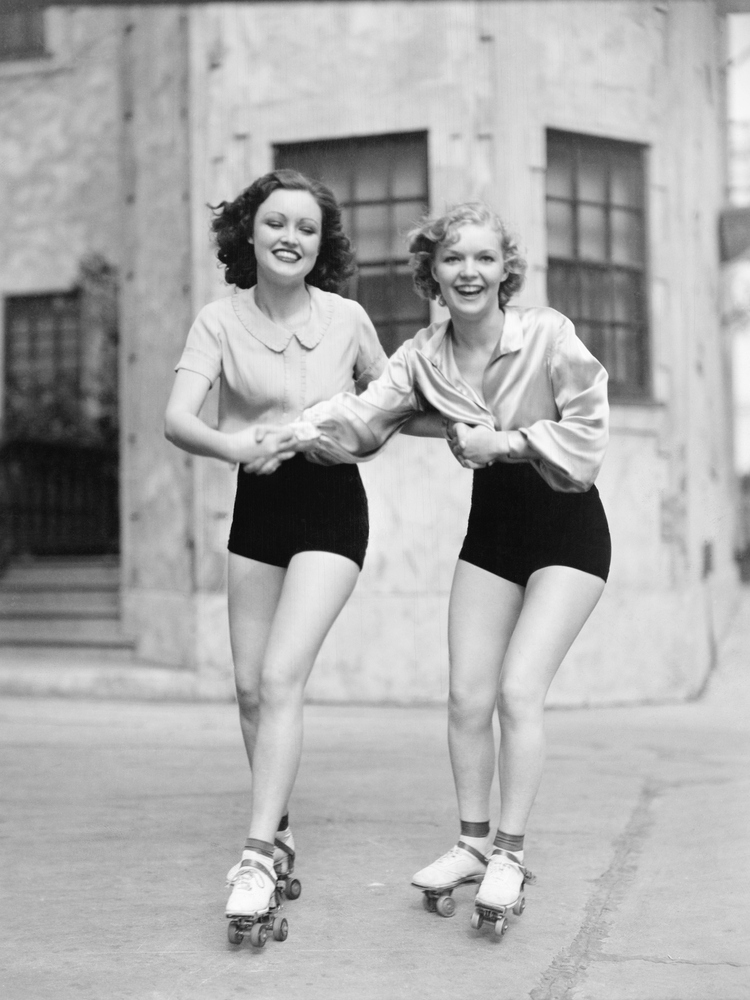
Roller Girls, ’30s-Style

Blowhard, Esq. writes:

rollerskating1930s

Click on the image to enlarge.

Posted in Sex, Women men and fashion | Tagged , | 5 Comments

Linkage

Blowhard, Esq. writes:

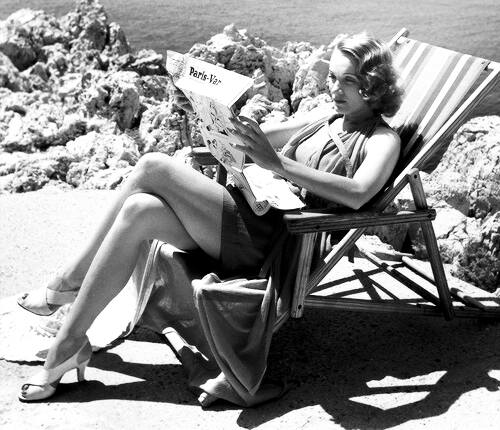
mdreadingpaper

Posted in Linkathons | 2 Comments

Architecture Du Jour: The Morgan Library & Museum

Blowhard, Esq. writes:

morgan1

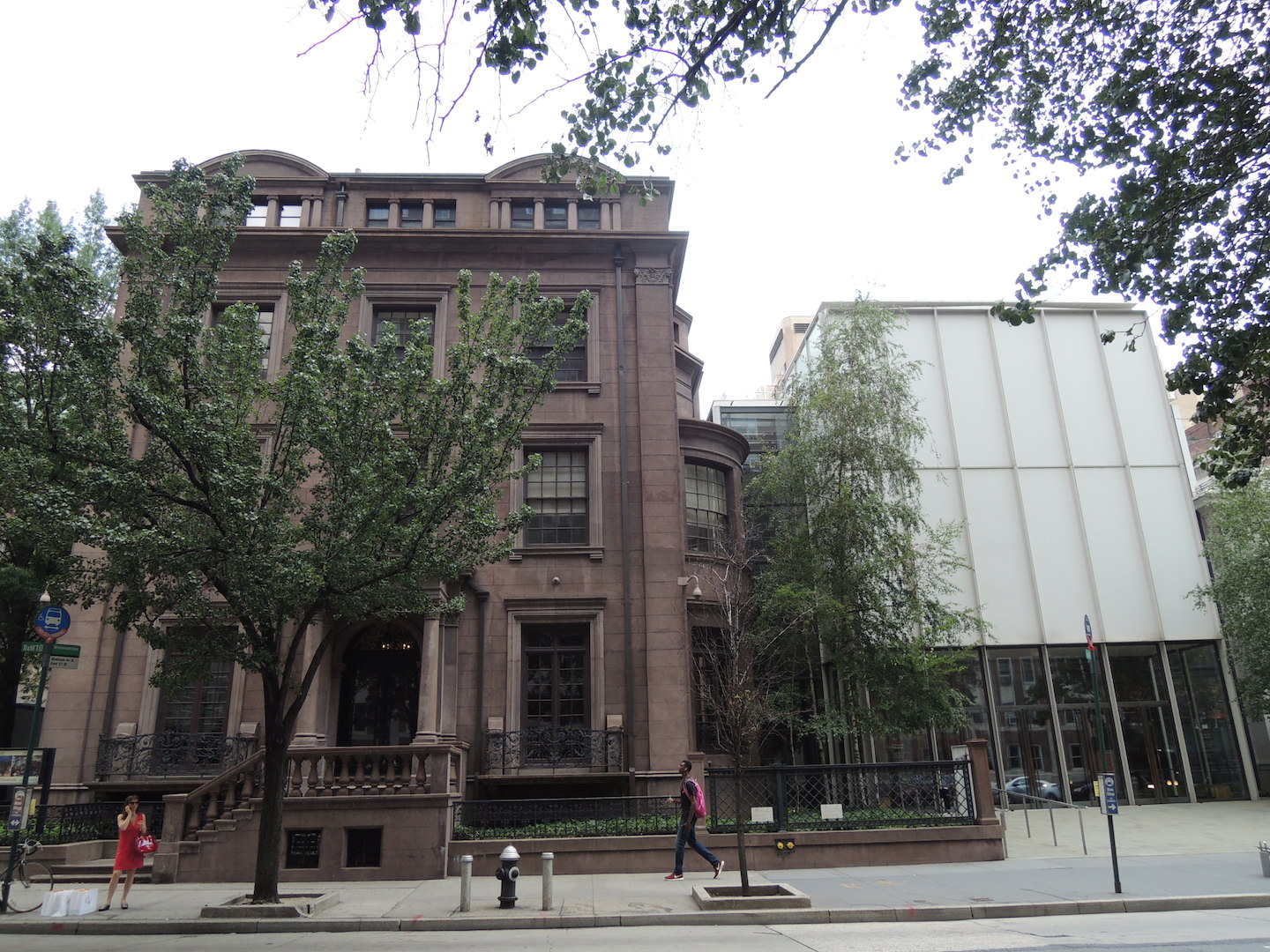
This past weekend I made it over to the Morgan Library & Museum to check out complex and a few of the current exhibitions. When I turned off 37th onto Madison Avenue, I was struck by one of those architectural contrasts people are always going on about. On the left is a brownstone designed by Isaac Newton Philips in the Italianate style that was purchased by J.P. Morgan in 1904. On the right is the recent addition by Renzo Piano in the Boring Ugly Bullshit style that opened in 2006. Below is the wooden proof of concept model built by Piano’s studio. The addition encloses a former courtyard between the pre-existing buildings. It looks like a shed on stilts.

morgan2

Piano looked at this crap and said, “Renzo, you genius, you’ve done it again!”

The actual Morgan Library is housed in a Palladian Classical Revival building designed by Charles McKim. Below are pictures of the rotunda, which Wikipedia notes was inspired by Raphael.

Off the rotunda is Morgan’s former study. The last picture in this series is of the vault he had specially designed to protect the most valuable books, manuscripts, and other pieces in his collection.

Opposite Morgan’s study, back through the rotunda, is his former library. The room is stunning. Notice there are no ladders going from one floor to the other. There’s a secret spiral staircase hidden behind one of the bookshelves.

You exit the library back into the Piano atrium, which looks like a chic, airy mall food court or an airport terminal. The colored glass is a temporary art installation.

Posted in Architecture, Art | Tagged , , , , , , , | 3 Comments

Notes on “Let’s Go Native”

Fabrizio del Wrongo writes:

b97ef9372bda60f80e8c773a0567da52

Like many early talkies, the 1930 “Let’s Go Native” is so effortlessly weird it serves as proof an innate American tendency toward surrealism. Jeanette MacDonald — still in her lingerie-naughty, pre-MGM phase — plays a Broadway costume designer who oversleeps one morning, leaving the leggy showgirls in her outfit confused as to which color panties they should wear. (An intertitle describes the show as “an hour of panting whirls and whirling pants.”) The production is about to move to Argentina, but MacDonald can’t go: she’s broke, and her furniture is being repossessed by a group of movers on break from a Mack Sennett two-reeler. The head repo man is played by the frog-throated Eugene Pallette, one of the eminent grotesques of American films. Every time he warns his underlings against breaking something, he promptly turns around and knocks over a clock, a wardrobe, or a piano. 

None of this stops MacDonald from obtaining passage on an ocean liner to Buenos Aires. She’s joined on the vessel by her amour (James Hall), an heir whose father disapproves of the relationship, and two guys involved in a dispute over a traffic accident. One member of the latter party, played by Jack Oakie, bears the unlikely name of Voltaire McGinnis. The first name, he explains, is a corruption of “Walter,” the naming official present at his birth having been Jewish. Also on the ship is a legion of leggy showgirls (the movie takes leggy showgirls to be a societal constant), and every now and then the other characters join them in singing and dancing. (Though assisted by kaleidoscopic camera tricks, the choreography is rudimentary at best.) Kay Francis is present too. She’s playing the society gal of MacDonald’s beau — the gal deemed worthy by his father. The fellow gets one look at her slinky maleficence and he’s conflicted: Does he choose the angelic MacDonald or the devilish Francis? The two women are like better-dressed versions of those representatives of good and evil that materialize on the shoulders of indecisive cartoons. They present a sweetly sexy dilemma.

Before he can make a decision, the ship wrecks on an island. Fortunately, it’s inhabited by natives. Even more fortunately, the natives are played by (what else?) leggy showgirls wearing afro wigs. Their ruler is the previous shipwreckee (Skeets Gallagher), a funny little guy from Brooklyn who has all the gals speaking fluent Brooklynese — they’re opening “ersters” to look for “poils.” Here and there are more musical numbers, including one set in the imagination in which MacDonald frolics in the snow before turning into an ice sculpture. Having experienced enough of this nonsense, the island then blows up, at which point all present throw up their hands in exasperation and agree to live happily ever after.

Incredibly, director Leo McCarey keeps the whole thing tonally consistent. Despite the zaniness, nothing in “Let’s Go Native” feels hurried or frenetic; it’s permeated by that cool, unencumbered quality one expects of a McCarey film. McCarey had a knack for making physical comedy seem an inevitable upshot of the interaction between actors and the spaces surrounding them. And this predilection toward what might be described as a kind of naturalism often bled into his players’ characterizations: The figures in McCarey’s films are among the most tactile in American movies. McCarey summed up his approach in an interview given to “Cahiers Du Cinema” during the 1960s:

I have a theory…with a very exact name: “the ineluctability of incidents,” which is applied to the construction of all of my films. To formulate it another way: if something happens, some other thing inevitably flows from it. Like night and day follow each other, events are linked together, and I always develop my story in this way, in a series of incidents, of events which succeed each other and provoke each other.

Related

  • “These girls are slightly Amazon, I look swell with pajamas on.”
Posted in Movies, Performers | Tagged , , , , , , , , , | 3 Comments

Naked Lady of the Week: Marina Visconti

Blowhard, Esq. writes:

mvcover

Although she has a name fit for an Italian aristocrat, Marina Visconti hails from Russia, that magical land of light-eyed, dark-haired beauties. Are nude models and porn stars Russia’s #1 export to America? (Am I unintentionally revealing too much about my viewing habits merely by posing that question?) If she looks a little shy or demure in these photos, don’t worry, you can find plenty of uninhibited hardcore at the tube sites.

Nudity below the fold. Happy Friday.

Continue reading →

Posted in Sex | Tagged , , , | 1 Comment

Summer Drinks 1: Cold-brewed Coffee

Paleo Retiree writes:

cold_brew_in_cafes

Cold-brewed coffee — often referred to by fans, stores and baristas simply as “cold brew” — seems to be everywhere these days. It’s certainly gaining rapidly in popularity. It’s featured at most upscale coffee bars and cafes, at least here in NYC, and bottles of prepared cold brew are available at many grocery-type stores. (Standard supermarkets often don’t carry it, but TJ’s does, and most health-food stores and Whole Foods-style stores do too.) The guy behind the counter at a nearby Stumptown told me that he’s serving five times as much cold brew as he was just last year, and the people behind counters at other coffee places have confirmed that rough figure to me.

Continue reading →

Posted in Food and health, Shopping | Tagged | 11 Comments

Carcassonne for Android

Blowhard, Esq. writes:

carcassonne

I decided to take a dormant Nexus 7 and turn it into a casual gaming machine. I haven’t been too impressed with the offerings in the Google Play store, but one game I’ve quickly become addicted to is Carcassonne, one of the most popular of the German-style board games. Some reviewers have complained that the game is buggy or crashes on certain platforms but it runs wonderfully on my tablet. The graphics are attractive, the animations are smooth, and there’s multiple AI opponents of varying ability to choose from. I miss the tactile qualities of the actual board game — it’s fun playing the pieces — but it’s hard to beat the convenience, flexibility, and price of the electronic version. The base game is only $5 and there are five expansions available for a few bucks more each. It’s also available for iOS.

Which are your favorite games to play, be it on your tablet, phone, or actual tabletop?

Related

  • I really want to like Ticket to Ride, but I’m just not clicking with it.
  • There’s a Gold Rush edition of Carcassonne I may have to buy. The South Seas one looks fun, too.
  • Anyone know why Hasbro/Parker Bros doesn’t make an electronic version of Risk? An Android version of Civilization 2 or 3 would be nice too.
Posted in Games | Tagged , , | 5 Comments