A Typical Routine Day

Fabrizio del Wrongo writes:
bond

It was the beginning of a typical routine day for Bond. It was only two or three times a year that an assignment came along requiring his particular abilities. For the rest of the year he had the duties of an easy-going senior civil servant — elastic office hours from around ten to six; lunch, generally in the canteen; evenings spent playing cards in the company of a few close friends, or at Crockford’s; or making love, with rather cold passion, to one of three similarly disposed married women; week-ends playing golf for high stakes at one of the clubs near London.

He took no holidays, but was generally given a fortnight’s leave at the end of each assignment — in addition to any sick-leave that might be necessary. He earned £1500 a year, the salary of a Principal Officer in the Civil Service, and he had a thousand a year free of tax of his own. When he was on a job he could spend as much as he liked, so for the other months of the year he could live very well on his £2000 a year net.

He had a small but comfortable flat off the Kings Road, an elderly Scottish housekeeper — a treasure called May — and a 1930 4 1/2-litre Bentley coupé, supercharged, which he kept expertly tuned so that he could do a hundred when he wanted to.

On these things he spent all his money and it was his ambition to have as little as possible in his banking account when he was killed, as, when he was depressed, he knew he would be, before the statutory age of forty-five.

— Ian Fleming

Related

Posted in Books Publishing and Writing, The Good Life | Tagged , , | 2 Comments

A Photo 4 the Day

Fenster writes:

新娘是不高興,因為有在沙灘上沒有空間。, or “The Bride is Unhappy Because There is No Space on the Beach”.

xingdao bride

Posted in Photography | 5 Comments

The Fog

Fenster writes:

Yesterday a morning fog rolled into New York City.  The HuffPost published some nice photos from the air showing a clear and bright sky with the Brooklyn and Manhattan Bridges poking  through clouds.

o-NEW-YORK-CITY-FOG-900

Down at ground level it was a different story.  8 AM in Brooklyn Heights seemed like it could be 3 AM.  Looking towards the East River it was grayer than a bad day in Beijing, and that’s saying a lot.  Looking east, though, you got the slightly Magritte-ish view of dark night on the streets, complete with headlights from a lone approaching car, with a nearby apartment tower bathed in morning sunlight.

fog2

Posted in Photography | Tagged , | Leave a comment

Art Du Jour

Blowhard, Esq. writes:

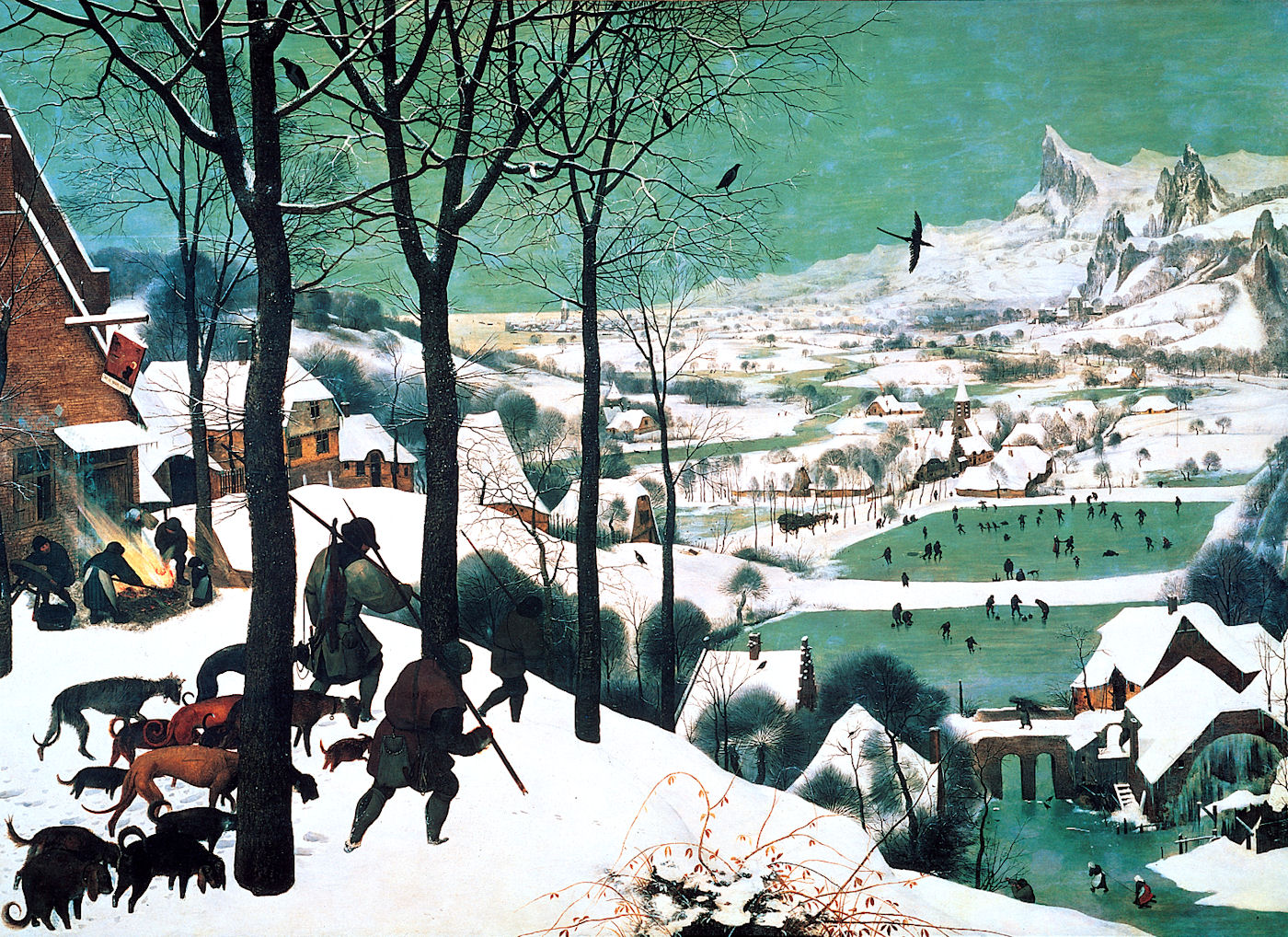
huntersinthesnowPieter Bruegel the Elder, “The Hunters in the Snow,” 1565.

Click on the image to enlarge.

Posted in Art | Tagged , , | 3 Comments

Linkage

Eddie Pensier writes:

  • The “worth” of a man, explained.
  • How to make snake oil palatable to the masses? Chucking in the word “quantum” helps.
  • A registered sex offender tells his story.
  • Los Angeles Opera’s 2014-15 season will include three operas featuring Beaumarchais’ Figaro: Rossini’s Il Barbiere di Siviglia, Mozart’s Le Nozze di Figaro, and John Corigliano’s The Ghosts of Versailles.  All are worth seeing if you never have, but only one has instrumentation calling for a synthesizer and 50 kazoos.
  • Ken White of Popehat reminds us of the two things to do when talking to the police:

–Shut up

–oh you dumb son of a bitch will you for the love of God shut up

  • The debacle surrounding the University of South Australia’s Male Studies course that will never be, from the irreplaceable JudgyBitch.
  • Prick With A Fork goes on a righteous tear about alcohol service laws and prohibitionist culture.
  • A romantic remake of 1984 starring Kristen Stewart? Please, just shoot me now.
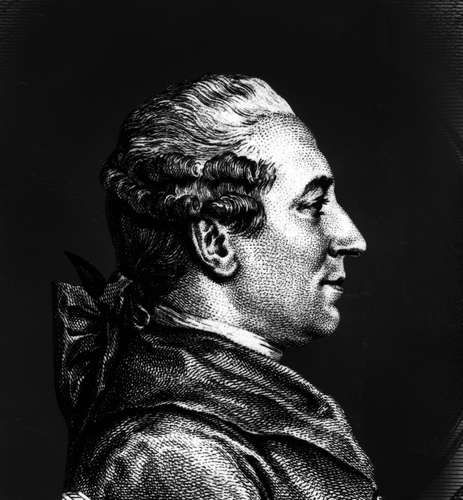
Pierre-Augustin Caron de Beaumarchais (1732-1799), author of the Figaro trilogy of plays

Pierre-Augustin Caron de Beaumarchais (1732-1799), author of the Figaro trilogy of plays

Posted in Linkathons | 8 Comments

Cocktails Du Jour (Limoncello Edition)

Eddie Pensier writes:

I have not, as I threatened, gotten around to making my own limoncello. On the other hand, I have been drinking quite a lot of it. I’ve acquired two brands: the Italian Limoncello di Capri and the Australian boutique/artisanal/(insert currently trendy word for “small” here) Ambra. They’re not too terribly different, although if pressed I’d say the Capri is more lemon-juicy and the Ambra is more lemon-zesty.

Lemon-lover that I am, I was at first pouring my ‘cello over an ice cube straight out of the freezer. But soon my insatiable tinkering instinct took over and I started making cocktails with it. It’s quite the nice little mixer, as it happens.

Expect further refinements at a later date, but for now, these two cocktails will refresh delightfully (especially in hot weather).

The ‘Cello Concerto

1 oz. limoncello

1/2 oz. ginger cordial

soda water

a few gratings of fresh ginger

Shake the limoncello, ginger and cordial in a cocktail shaker with ice. Strain into a glass and top with soda. (If you don’t have ginger cordial, or know what it is, here’s a recipe for ginger syrup which is similar. If you really can’t be bothered, replace the cordial and soda with bottled ginger ale. Not as good, but perfectly drinkable.)

The Pink Pucker

1 oz. limoncello

1 oz. cranberry juice

a few squeezes of fresh lime

soda water

Combine in the customary manner. Doubling of quantities is acceptable and encouraged.

cellococktails

Posted in The Good Life | Tagged , | 2 Comments

“Edouard et Caroline”

Fabrizio del Wrongo writes:

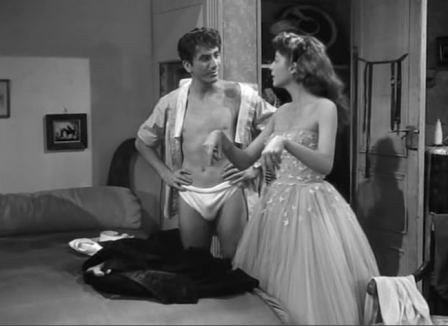
edcar

Directed by Jacques Becker in 1951, this concise, smartly worked-out marital farce is a cynical companion piece to Becker’s earlier “Antoine et Antoinette.” When Daniel Gelin’s Edouard allows his wife Caroline to talk him into giving a piano recital for her rich uncle, he knows he’s in for trouble. But he doesn’t anticipate the chain of disasters that follows in the wake of his slapping Caroline in the heat of an argument. Caroline immediately goes on the warpath, disrupting the party and resuming a flirtation with her dandy cousin. Edouard would talk to her, apologize to her, explain his feelings to her — if only he could catch up with her. Where love is concerned, he’s hopelessly outclassed.

There’s a Guitry-like blockiness to the scenario, which often feels like something developed for the theater. Becker’s style, though, derives from the movies. It’s especially reminiscent of silent comedy, particularly the work of filmmakers like Buster Keaton, Harold Lloyd, and Leo McCarey, men who knew how to amplify gags into complex narrative streams. Most of the action in “Edouard et Caroline” is organized around physical bits of business — the reworking of a gown, characters dressing and undressing, Edouard trying to focus on the piano. These Becker and his actors complicate and expand upon, revealing the movie’s characters in the process. (For Becker, the smallest actions reveal character. Everyone remembers the bit in “Touchez Pas au Grisbi” wherein Jean Gabin, while hiding from his enemies, coolly smears pâté onto a cracker.) To this end, the picture proceeds in something close to real-time, and the actors are often framed by plenty of space. Their actions are thus connected to their settings, their contexts. It’s a marvelously controlled movie: no shot feels out of place, no cut ill-judged.

As written by Becker and Annette Wademant (the latter went on to contribute to Ophuls’ great  “Madame De…”), the movie captures something essential about the nature of male-female relationships. Caroline creates crises, hoping to jolt Edouard out of complacency, and Edouard does what he can to bring order to the chaos engendered by her scheming — though, more often than not, his bungling only worsens the situation. (It takes a boorish American to finally set Edouard straight regarding women.)

As Caroline, Anne Vernon is whipsmart and devilish; when Edouard slaps her she responds to his hasty apology with a flurry of overhand blows, then bites the air, snapping like an over-teased spaniel. Years later Vernon would bring a similar tartness to her role as Catherine Deneuve’s mother in “The Umbrellas of Cherbourg.” She’s a delightful actress. Naturally, all ends well. The movie concludes with  a tonic variant of the conclusion of “The Awful Truth.” The couple’s reconciliation is the kind of happy accident that results from careful, if unadmitted, planning.

Related

  • Though “Edouard et Caroline” is not available in the States on DVD, Criterion has released Becker’s “Le Trou,” “Touchez Pas au Grisbi,” and “Casque d’Or.” I especially love the first two.
  • A recent re-release of Becker’s “Antoine et Antoinette” met with rave reviews.
  • Becker’s son Jean directed one of the most idiosyncratic (and sexiest) French films of the ’80s, “One Deadly Summer.” I know Paleo Retiree is a big fan. Available on DVD here.
Posted in Movies, Performers | Tagged , , , , , , , , | 2 Comments

“Romulus, My Father”

Eddie Pensier writes:

The debut directorial effort by actor Richard Roxburgh, Romulus, My Father (2007) is a grave and beautiful, if flawed, movie based on a real-life memoir.

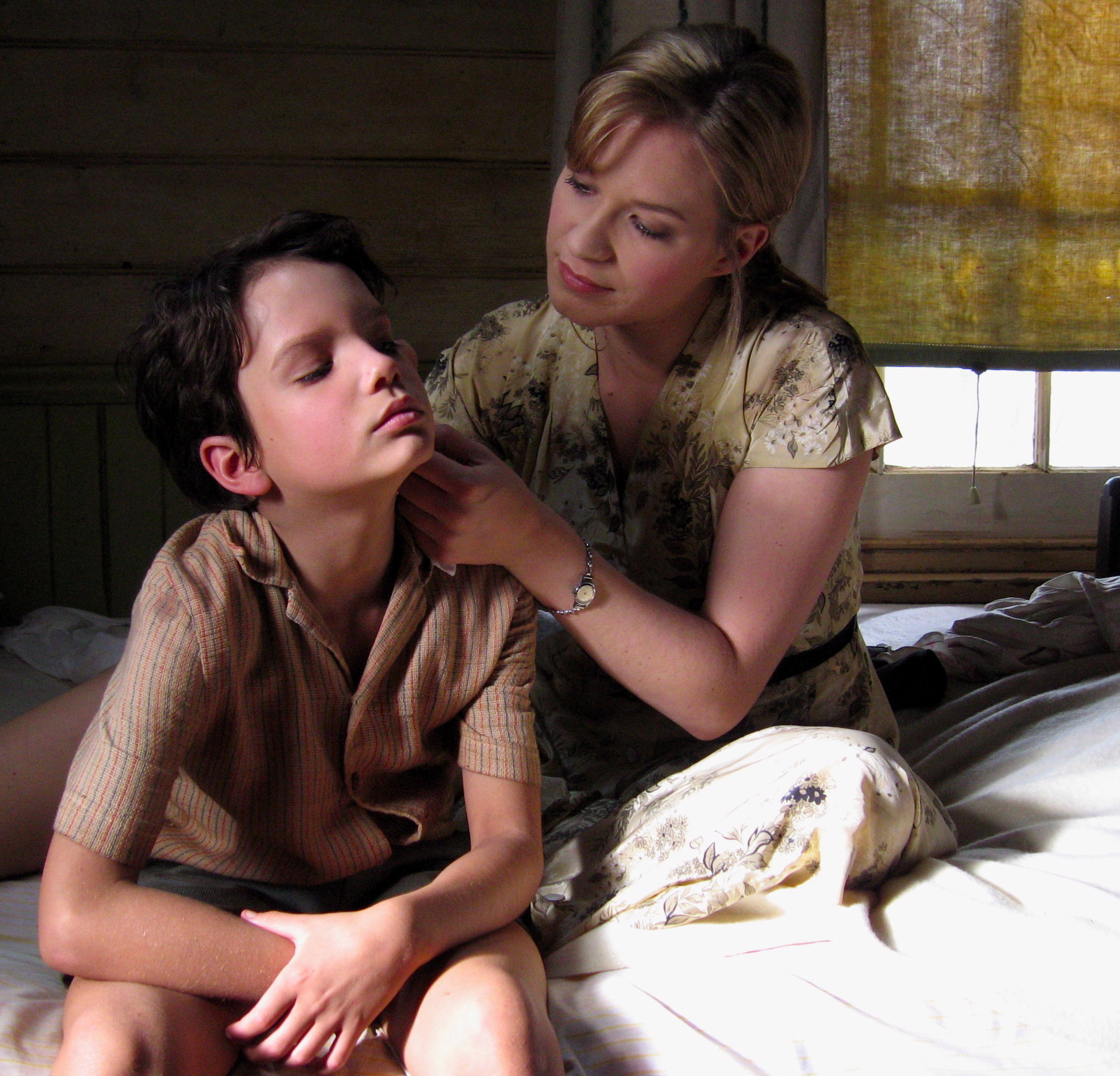
Romulus Gaita (Eric Bana) is a Yugoslav immigrant to 1960 Australia with a hardworking ethic that he passes on to his son Raimond (the luminously gifted Kodi Smit-McPhee). Unfortunately both of them are in thrall to Rai’s beautiful mother Christina (Franka Potente), who today would probably be diagnosed with bipolar disorder. She drops in at the Gaita homestead in rural Victoria at odd intervals for days or weeks at a time, then leaves, to the disappointment of Rai–who craves affection–and Romulus–who loves her despite her issues. After she has a daughter by her new lover Mitru (Russell Dykstra), she plummets into glassy-eyed depression. When she attempts suicide by sleeping-pill overdose, Romulus returns to the home and tells Rai (who has been sleeping on the porch waiting for news), “She’s going to be okay”, and the looks they exchange at that point tells us they both aren’t sure if that’s a blessing or a curse.

Smit-McPhee is just sensational as Rai, who idealizes his parents but is forced to face their human frailties. Bana has few lines but brilliantly communicates the stoic anguish of Romulus, whose new life in a new land isn’t working out how he’d hoped (the eventual toll it takes is shocking to watch). Franka Potente does a good job in making us understand how the monstrously narcissistic Christina could ensnare her men with alluring charm, then alienate them with reckless self-destruction.

romulus1

Roxburgh and his cinematographer Geoffrey Simpson put some gorgeous images on the screen. It took me a while though, to decide whether the visual palette of bleached-out tans and ivories was soothing and serene or merely boring. (I still can’t pick.) The occasionally stuttering, fragmented pace of the storytelling doesn’t help either. Still, this is a worthy movie with some amazing performances. Seek it out for an interesting, if depressing, diversion.

Related

Posted in Movies | Tagged , , , , , | 3 Comments

If You Insist

Blowhard, Esq. writes:

comebemyslaveArtist and date unknown.

Click on the image to enlarge.

Posted in Art, Books Publishing and Writing, Sex | Tagged , , | 2 Comments

A Day at the Races

Blowhard, Esq. writes:

hollywoodpark1954Hollywood Park, Los Angeles, CA, 1954. More info about the photo here.

Click on the image to enlarge.

Posted in Photography, Sex, Women men and fashion | Tagged , | 1 Comment