
Blowhard, Esq. writes:

Blowhard, Esq. writes:
Fabrizio del Wrongo writes:

This oddball meditation on transience is like one of Eric Rohmer’s “season” movies filtered through “Sans Soleil.” The title refers to Lisbon, the Portuguese capital. An alluring hodgepodge of a port city, Lisbon admits to a long history of occupiers — everyone from the Celts to the Moors. All of them contributed to the city’s character: even the look of the place seems achieved through accretion. Writer-director Alain Tanner is attracted to these very qualities. Swiss by birth, Tanner has a good understanding of the places where cultures overlap and blur, and his outsider’s view informs the movie. I’d compare it to a travelogue if its effects weren’t so dependent on an air of aimlessness.
The plot, such as it is, concerns Bruno Ganz’s Paul. He’s a sailor, equal parts rube and satyr, who washes up in Lisbon a tourist, then morphs into a castaway, roaming the cobblestone streets seemingly without purpose. The conflict emerges when Paul becomes attached to a chambermaid named Rosa. Played by Teresa Madruga, Rosa exhibits a combination of guilelessness and reserve that may be unique to Portuguese women; she guards her soft parts like a she-wolf does her litter. It’s her self-assuredness — her weight — that Paul is attracted to, probably because it makes him feel less indeterminate. Yet he can’t bring himself to allow a deeper connection (perhaps he lacks the capability). Clumsily, he compares himself to an axolotl, a Mexican salamander that never develops past the larval state, forever remaining part fish, part amphibian. Rosa reacts as you’d expect: by distancing herself.
When he’s with Rosa Paul is like a character in a more conventional movie, but when he’s alone the film is all mixed up with his subjective experience. Here Tanner gives us long sections of Paul’s home movies, which are dropped into the picture like the scene-setting montages familiar from products of Hollywood. Some of these Paul sends to a former lover in Switzerland, along with letters filled with ruminations on emptiness and alienation. In a way these women complete Paul by providing him with an object on which he can train his consciousness. Without them he’s like an unmoored intelligence, a wayward ship forever seeking harbor. At the end of the movie Paul is on a train (moving again), and he fixes his gaze on a new woman — a new Rosa. Tanner skips to the grainy film stock of Paul’s home movies. She’s already an image from memory.
It’s a highly impressionistic movie, one so light that it just about slips out of consciousness once it’s over. What remains are its subtly lapping rhythms, its melancholy. I wish Tanner had found a less obtrusive way to sever the connection between Paul and Rosa; it’s about the only thing that feels mechanical. Also, a clock that runs backwards is too cute by half. Yet these flaws don’t spoil the overall effect of the picture. I can think of few movies that so potently evoke the peculiar out-of-timeness of tourism, or that so shrewdly liken it to our contemporary malaise — a condition that has proliferated in the absence of root, of place, of tradition.
Related
Fenster writes:
A good book from 2004, first edition:
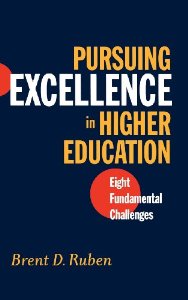 The second edition, 2013, pared down and more to the point:

Fenster writes:
A while back, the Chronicle of Higher Education ran a piece by Mark Bauerlein, a professor of English at Emory. The article describes a recent research project of his, one that deals only tangentially with his area of expertise. Bauerlein makes the argument–a not uncommon one in this day and age–that a good deal of research goes essentially unread, being accomplished in the main for the sake of career rather than in the confirmed belief that the world will be a better place with the research published.
Actually, to his credit Bauerlein does more than speculate. He actually makes a serious attempt to understand the extent to which humanities research at several notable universities went beyond life in the printing press, and made it out into the real world it intends to benefit. His “unfortunate” conclusion: “the overall impact of literary research doesn’t come close to justifying the money and effort that goes into it.”
He acknowledges his research is not complete and not without various methodological problems. Still and all, the study, however limited, has the virtue Dr. Johnson attributed to a dog’s ability to walk on its hinder legs: that even if it not done well, you are surprised to find it is done at all. That’s because higher education is assiduous at not measuring what it does not want to know. Like Richard Vedder’s faculty productivity study at the University of Texas, Bauerlein’s piece is a start, and all the more meaningful because it is, at this late date, just a start.
epiminondas writes:
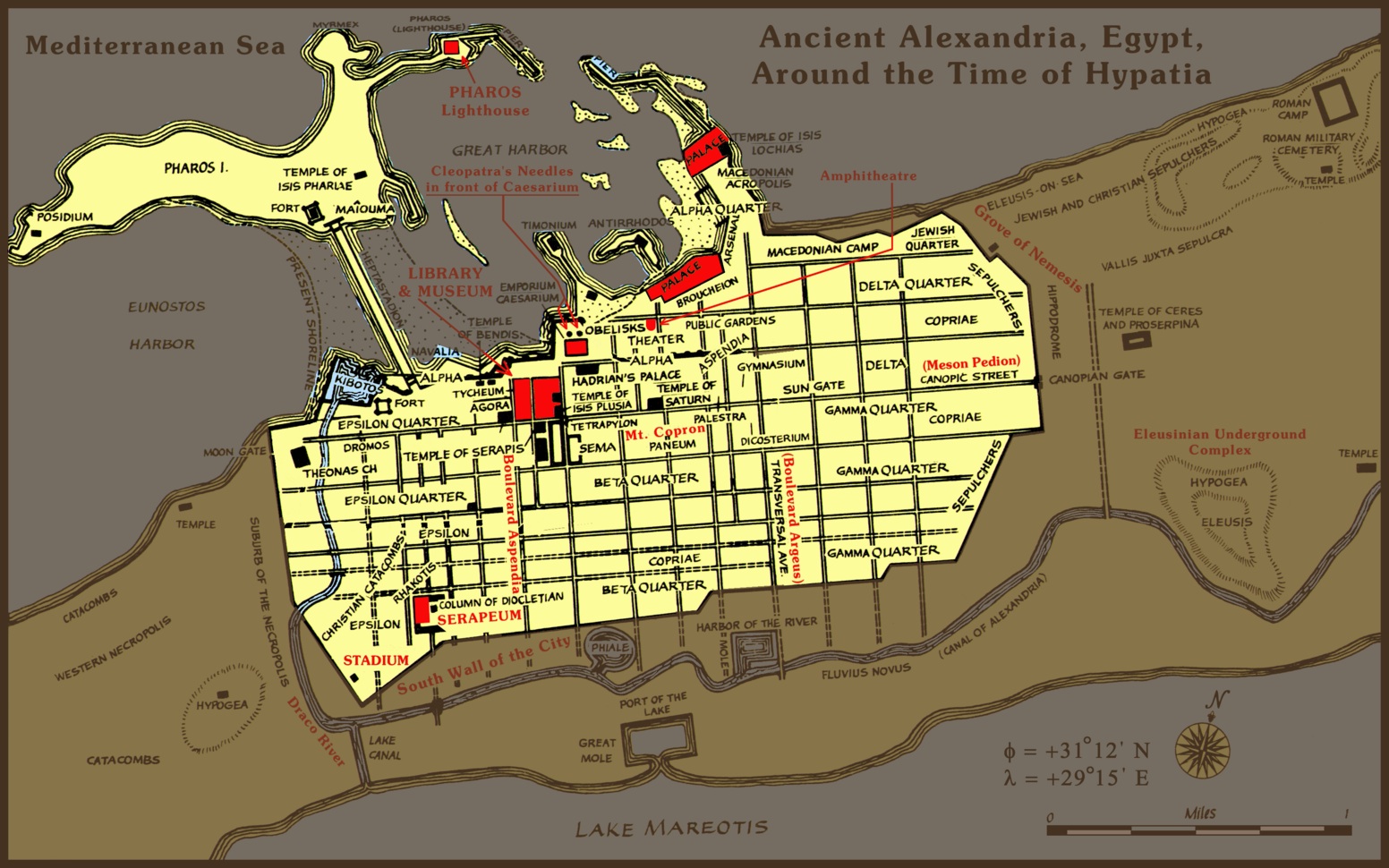
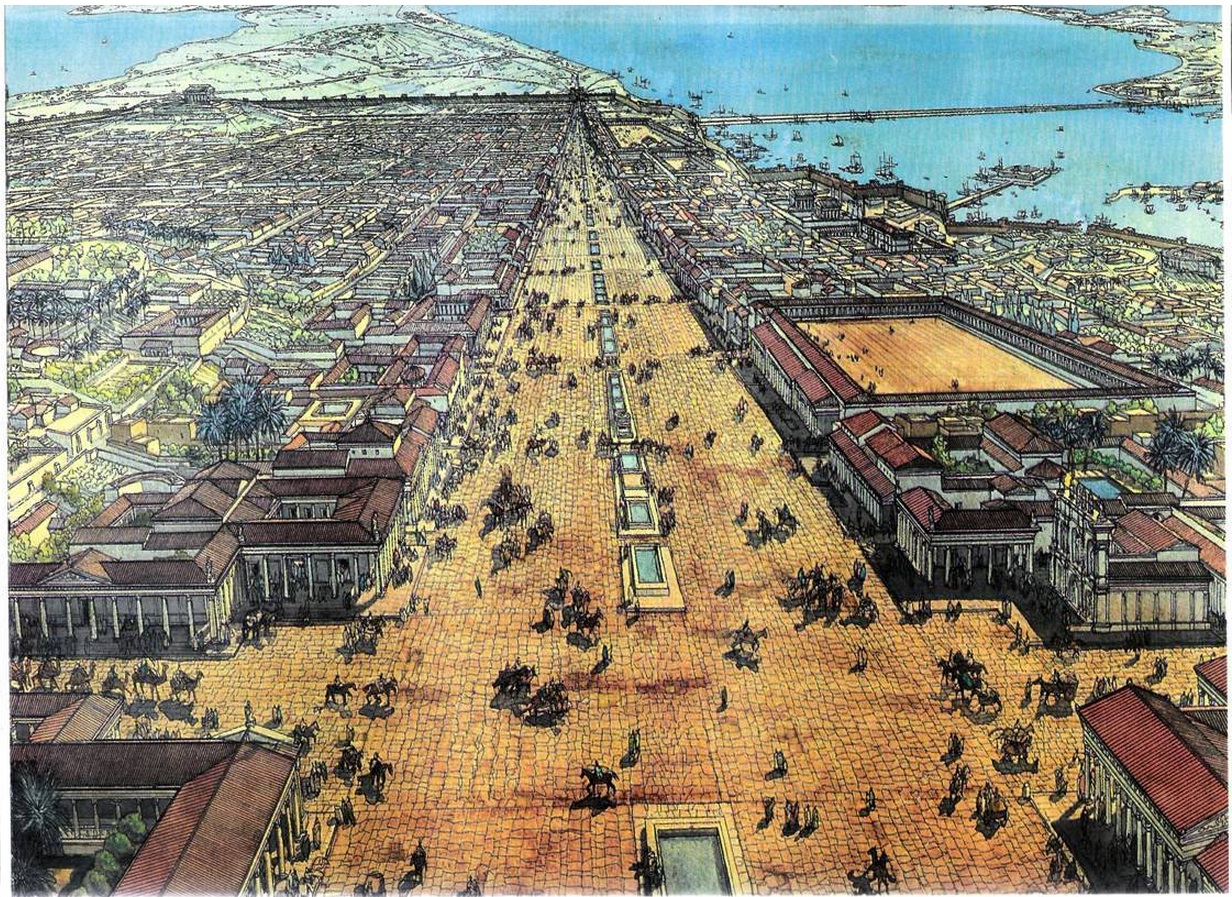
There are a lot of theories about what happened to the great Library and Museum of Alexandria. In fact there are three main theories. But what is even more speculative are the fanciful ideas about what this library may have looked like…


Fenster writes:
We just hit on Salinger, an author whose work people may know about more through cultural osmosis than scholarship.
An old friend just sent a note that connected with that thought. He’s not a blogger here, but since he likely values anonymity I will dub him Midnight Chimes, and add his comments below:
Midnight Chimes writes:
Been reading a lot of Norman Mailer lately, what with the new J. Michael Lennon biography, ‘Norman Mailer: A Double Life,” and a new collection of selected Mailer essays, “Mind of an Outlaw.” His take on JFK in 1960, “Superman Comes to the Supermarket” continues to resonate. In a recent New Yorker, Louis Menand says that “the critical decorum that observes a boundary between the work and the person that wrote it doesn’t apply in Mailer’s case.” This brings to mind comedian Rob White’s observation of Mailer that “He drank to excess every day, he smoked pot, he was married six times, he stabbed his second wife. I’ve never read his books, but I gotta tell ya, I’m a huge fan.”
Blowhard, Esq. writes:
The old Cincinnati library. It was demolished in 1955.
 BuzzFeed has more photos here.
Sherbrooke writes:
Kirsten Dunst in “Marie Antoinette” (2006). That smile is as dazzling as the dress and and decor.

Fabrizio del Wrongo writes:

A life-of-Salinger documentary, directed by Shane Salerno, recently became available on Netflix Instant. It’s called simply “Salinger.” I took a chance on it. For a movie about a writer who was active for only 25 years, it’s pretty long — over two hours. And if you’re at all cynical about Salinger’s reputation (as I tend to be), the stench of all the incense burning can get pretty thick. The early portions are primarily devoted to Salinger’s celebrity fanboys — guys like Philip Seymour Hoffman and Edward Norton, along with some academic types — gushing about their hero. They say things like, “Salinger’s idea of perfection is really perfection and shouldn’t be tampered with,” which as a critical statement isn’t too far removed from “Batman roooooollllzzzz.” It’s long been my suspicion that more stupid things have been said and thought about Salinger than any other cultural figure of the twentieth century. Nothing presented in “Salinger” caused me to reexamine that impression.
But as the doc became focused on Salinger’s private life, a large portion of which was devoted to his hermitage in rural Connecticut New Hampshire, my interest was piqued. Who isn’t intrigued by the bizarro affectations of a cultural icon? Much of what was presented about Salinger the man struck me as pretty interesting.
A few points/observations:
While discussing the film (and Salinger) with co-blogger Paleo Retiree, he pointed me towards a few recent articles about the author. You can read one of them here. The guy who wrote the article is a smart guy, and he makes a bunch of good points. He also seems to be an eminent expert on Salinger. But the take expressed in the linked-to piece — that it’s folly to compare Salinger with his most famous character, Holden Caulfield — strikes me as a tad overstated. Granted, any such analogy is going to be overly simplistic. But as simplistic analogies go, the Salinger-Caulfied one is pretty potent, no? According to the folks interviewed for the documentary, Salinger spent his later years hiding from the world while watching old movies (including “Lost Horizon,” a picture dealing with eternal youth) and courting teeny boppers. Of the those who managed to become close to him, at least one claims to have been advised by Salinger to renounce the phoniness of public life. She also claims that Salinger believed that the only person capable of portraying Holden in a movie was himself. Provided all this is true (and who knows if it is?), why shouldn’t we see Holden as being a partial reflection of Salinger? It sure would explain some things . . .
The doc also caused me to reconsider a question I’ve been pondering since first reading “The Catcher in the Rye” back in eighth grade. Namely: What in the hell do people see in this lame book? Back then my take was that Holden was a sorry little shit — the biggest phony in the novel — and that Salinger, while not explicitly endorsing Holden’s point of view, was far too willing to treat it with kid gloves — to elevate Holden’s woe-is-me, it’s-all-bullshit pose to a kind of naive heroism. But maybe that’s an unfair take. It’s been a while since eighth grade, after all.
My experience is that many people who love the book view Holden as a sort of larval saint; they look up to him. Further, my vague sense is that Holden’s point of view — and Salinger’s treatment of it — held considerable appeal for the post-war audience. To that audience the idea that a young person might see through the corruptness of traditional America — might pierce the veil separating society from the golden light of truth — was a mighty powerful one, even if the “truth” in this case amounted to little more than Holden blowing mouth farts at the system.
Seen in this light Holden (and, I guess, Salinger) is similar to James Dean or John F. Kennedy, two men who remain famous more for what they represented (youth, change, great hair) than for what they accomplished. Modern Americans and their idols, eh? It’s all about intentions and potential — about what you say and represent. And if you’re gone before you have a chance to live up to your image, so much the better — it’s further proof of just how rotten everything is. I wonder: Is it a coincidence that Salinger, like Dean and Kennedy, was effectively taken from us before his potential (whatever that might have been) could be fully realized?
Anyway, I’m curious how UR readers take “Catcher.” As a great novel? The alienated blurt of a generation? A dopey forerunner of YA fiction? And why are people still talking about it 60 years after it was published?
Related
Blowhard, Esq. writes:
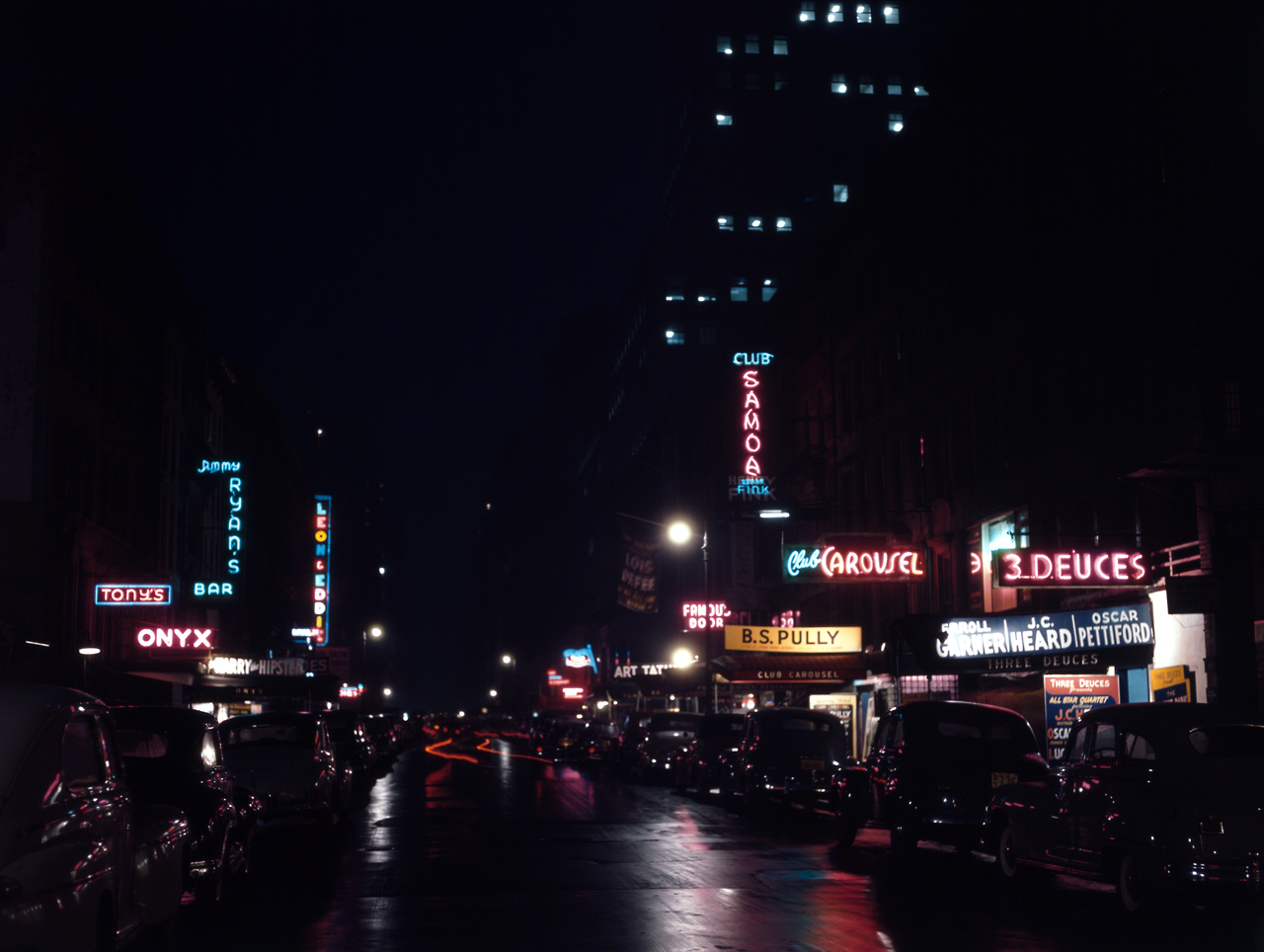
Click on the image to enlarge.
 Blowhard, Esq.
 Callowman
 Sherbrooke
 Eddie Pensier
 Enzo Nakamura
 Epaminondas
 Fabrizio del Wrongo
 Fenster
 Brundle Guy
 Glynn Marshes
 Paleo Retiree
 Atypical Neurotic
 Question Lady
 Sax von Stroheim
 Sir Barken Hyena
 The Mistaken
