The Law is a “Propaganda Weapon,” Says Former Supreme Court Justice

Blowhard, Esq. writes:

In today’s New York Times editorial page, former Supreme Court Justice John Paul Stevens calls for the repeal of the Second Amendment. In doing so, he attacks the majority decision in DC v. Heller written by Scalia:

In 2008, the Supreme Court overturned Chief Justice Burger’s and others’ long-settled understanding of the Second Amendment’s limited reach by ruling, in District of Columbia v. Heller, that there was an individual right to bear arms. I was among the four dissenters.

That decision — which I remain convinced was wrong and certainly was debatable — has provided the N.R.A. with a propaganda weapon of immense power.

So binding legal precedent, arrived at by following the well-established rules of due process, is nothing but a “propaganda weapon”? Good to know. The next time someone cites the majority holdings in Griswold, Roe, and Planned Parenthood — or Lawrence and Obergefell — I’ll follow Justice Stevens’s lead and airily dismiss them as mere propaganda weapons.

Posted in Law, Politics and Economics | Tagged , , | 2 Comments

Speckalatin’

Fenster speckalates:

1.

Trump did not unearth a hidden majority–only a large and neglected minority. The Dems could have found a way to reach out to him over common issues but instead adopted a scorched earth policy.

There were solid political reasons for this. Trump was toxic on culture, identity politics, and PC; and many Dems had become elitist without knowing it. So it would have been hard for the Dems immediately post-campaign to look for common ground, or even to articulate Trump-like positions on manufacturing, middle America, immigration and trade– reliable Dem go-to issues in the past.

So then came the Resistance.  But it perhaps was not completely a move of desperation.  It could have been in part a calculated risk.

The policy of Resistance left Trump with nowhere to go but to the Rs, who have in the manner of the scorpion crossing the river bitten the host frog on the journey–a murder-suicide because the scorpion could not help being a scorpion (Republicans own the name The Stupid Party for a reason).

Trump might have cured the Rs and if he had the party might have emerged as a real threat. Maybe the wiser Dems decided that the Republicans could not help but be stupid, reasoning that the Republicans would eventually stab Trump in the back and weaken themselves in the process.  They can then pick up the pieces–gingerly, hypocritically but probably successfully.

2.

Ah, but what of the Great Populist Moment?

The US was maybe fortunate to have avoided the occasion for socialism. Europe seems so nice to us in retrospect but it had a terrible history. Could be that where populism is concerned Europe will once again catch a deathly flu, owing to the EU’s stranglehold and the near inevitability of more mass migration from the Middle East and Africa? And that America will catch a nasty cold but, owing to its different political conditions and its geographic remove, it will get over it?

Many were surprised at the strength of the anti-elite mood in this country in 2016 but the surprise of it makes it easy to overstate the phenomenon. The fact is that while the most fortunate globalists are the 1% they have an awful lot of cooperative handmaidens. They got too big for their britches and will likely try to adjust them.

The parties have usually found a way to adjust policies and constituencies to arrive a near parity. Maybe this time they won’t make those adjustments on the traditional big government small government divide but on the new elite versus populism divide. The Dems don’t have to move that far to appeal to Trump voters (witness the midterms), especially if the Rs are determined to stay stupid. So this could be one more finesse, larger then usual but still a finesse, followed by a new normal.

3.

Ah, but can the Dems pivot, or are they too much hostage to their constituencies to even embrace parts of Trumpism without Trump?

Could be they are captive of identity politics.  But seems to me that identity politics in the first instance is for the most part eye candy.  Sure there are real things stuck in there but for the most part it is symbolic in nature.

Do the Dems do much for African-Americans? Does BLM? Blacks may not be able to look forward to full employment and stable communities but they can look forward to pride, attitude and the celebration of their culture.

That comes cheap in many ways to political and business elites.  Indeed in a post-industrial future it seems a reasonable though craven path to take.  Why bother integrating blacks into the workforce when they can be sidelined with bread and circus follies, with any blue collar jobs remaining after the impact of technology going to another wave of immigrants willing to work for even less,  and not complain, and vote Democratic to boot?

The Left has always had a problem squaring the white deplorables with minorities. But while that is a difficult problem it is not impossible. I am not sure the Dems have to publicly wean themselves of identity politics. Clinton had his Sister Souljah moment and everyone kind of got along after that for a while. Why can’t the Dems do a modified Sister Souljah on the one side and a modified Trump middle America on the other? Politics is mostly about messaging in our era and has stopped being mostly about real things. Couldn’t a master messenger figure out how to capture a good deal of populist energy without losing the identitarians completely?

In any event if the Rs self-destruct and Trump implodes the table will be set and we will see what happens.  It is quite possible that the twin collapse of mainstream Republicanism and the Trumpist challenge –if that occurs–will leave the so-called Trump coalition with few alternatives, and they can be had for cheap.  Buy low, sell high.


Posted in Uncategorized | 4 Comments

Juxtaposin’: Boom

Fabrizio del Wrongo writes:

leonardo

Posted in Art, Movies | Tagged , , , , , , | 1 Comment

Open v. Closed

Fenster writes:

Cheers! The Economist is willing to acknowledge that there are limits to the open border concept!

Few people support entirely open societies: it would be perverse, for example, to allow Ebola victims to cross borders unimpeded.

Actually, though, quite a good article. Bagehot does a very good job looking under the hood at the motivations of the champions of openness and finding quite a bit of hypocrisy, self-serving behavior, and rent-seeking there.

My main objection to the article is that it looks at life through the lens of . . . well, of an Economist I suppose. For instance:

(P)eople’s support for openness and closedness is dependent on their interests and circumstances—they support openness in so far as it advances their economic interests and, with the exception of a few ideologues or idealists, no further.

Culture? Tradition? Shared values? The non-economic prerequisites for common culture, law and institutions? No mention.

In turn the article makes no distinction between opposition to immigration of Europeans within Europe and migration from the rest of the world. Hello?

Posted in Uncategorized | 2 Comments

Juxtaposin’: The Works of Man

Fabrizio del Wrongo writes:

Posted in Art | Tagged , , , | 1 Comment

Note to M—, on Brooksie

Fenster writes:

Dear M—–,

You and I have an ongoing dialogue going over David “Brooksie” Brooks.  I was once a fan, especially on his culture stuff.  Even second-rate Tom Wolfe can be excellent, and Brooks often was.  And he can still hit it out of the park every now and again.  But his Times sinecure has brought out the worst in him.   His cultural commentary was often generous in spirit but his newfound power brings out the scolding side.  And his New York City biases show, despite his professed effort to see America whole.

His latest column is Brooksie at his blinkered, New York-centric worst.  In it, he argues that his trademark earnest approach to guns–show some respect and everyone will get along!–may have been in error and that progressives may be on to something in applying their hyper-aggressive culture war tactics to the gun battle.

As always he is observant and notes some things that are inarguable.  For instance: a culture was is a kind of war and it is fought across different kinds of terrain and with different weapons.  Check.

But what he comes close to saying–no, what he actually, really says–is that the kind of scorched earth practices we have seen on campuses, and are increasingly seeing in HR departments and in the banning of YouTube videos, might profitably be employed in the battle over guns.  And that that will be a good thing since it will help seal progressive victories across the board.

Mind you, this is from one of the Times’ alleged conservatives.  Go progressives!

Brooks cites Andrew Sullivan’s observation that leftish thought control has  begun to migrate from the academy to the broader culture.  But Sullivan, another writer who can swing both ways politically, does not like the trend.  Brooksie thinks is is just capital!

Sure, he puts in one sentence so as to maintain some credibility:  dear progressives don’t be too fascistic about your tactics– it’s not sporting, and I have a reputation to protect as an echt-reasonable, intellectually serious spinmeister.  But the gist of the article is unmistakable: pathologizing the opposition on guns could be an effective strategy so why not?

So let’s be clearer about what is going on.

Brooks’s side has an inordinate amount of ordnance it can and does use in the culture wars.  His side has the commanding heights of the media, academia and conventional politics.  And we see that ordnance in use all the time.  We see social media companies happily censoring voices they do not like on the web. We see a magical “children’s crusade” after the Parkland school shooting essentially scripted, organized and funded by their progressive elders. We see companies penalizing employees who don’t fall into line on right thought and behavior.

OK.  I get that.  Politics ain’t beanbag, as the saying goes.

Let’s be honest, however, about what it is: strong arm tactics on the part of those with the whip hand.

But two can play this game, and if there is war on I expect opposition.  And given the different circumstances of the two sides, the opposition is likely to mount guerilla attacks rather than form a line.

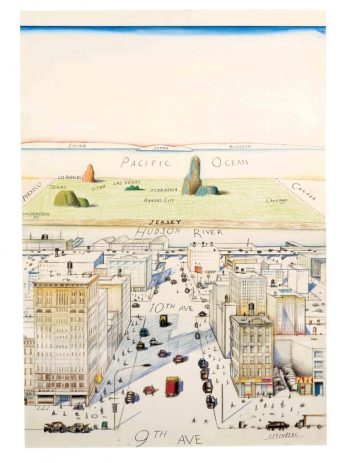
Brooks seems to downplay or underestimate that pushback.  He’s like that Saul Steinberg New Yorker cover–if it doesn’t happen on this side of the Hudson it doesn’t really count.

saul

And so he writes “conservatives have zero cultural power, but they have immense political power.”  Really?  What . . . .ummm . . .  does he make of Trump’s election, the very distillation of a latent cultural power that was completely overlooked east of the Hudson?

OK, he might acknowledge, Trump won and maybe the coastal people missed that.  But in the interim Trump conservatism has “self-marginalized”.   It has become a “a separatist subculture that participates in its own ostracism.”  All progressives have to do now is deliver that one big punch, one that will “cut what’s left of the conservative movement off from mainstream society.”

It’s all very apocalyptic, martial and triumphalist.  But is it remotely true?  With Trump’s approval ratings at 50%, higher than Obama’s at this time in his presidency?  And this, when he has the entire array of the establishment, including the so-called mainstream media, against him?

When the Dems have dug a hole on the tax cut and immigration, and keep on digging?

When Trump has shown himself to be an able general in the culture war what with the pounding he delivered to the NFL?

When blue collar employment and wages are on their way back not on their way down?

When Wall Street financiers fret about tariffs but gruff heads of manufacturing firms emerge from the White House to laud the president (if you can catch the momentary video of this on the nightly news)?

When Trump himself has moved to a moderate position on gun legislation?

On domestic policy at least Trump is getting more Bannonite in Bannon’s absence than he was when Bannon was present.

Both sides are moving to capture the so-called mainstream and it is still a jump ball.

To say Trump has self-marginalized a movement that is now surrounded on all sides is to evidence a truly Steinbergian boneheadedness.

That is not to say it is the other way around, and that Trump has Manhattanites on the run.  It is, as Brooks notes, a war.  It is just not a war that is anywhere near over.


Posted in Politics and Economics, Uncategorized | Tagged , , | 4 Comments

David Fuller’s “A Glitch in the Matrix”

Paleo Retiree writes:

This isn’t the dazzling Chris Marker/Erroll Morris/Adam Curtis doc about the present moment that we might dream of, but it’s admirable and thoughtful anyway. David Fuller, a British video journalist turned life coach, uses Cathy Newman’s recent Channel 4 interview with Jordan Peterson as a pretext for weaving together a lot of what’s in the air these days: old media vs. new media; Trump and Brexit; red vs. blue; #metoo and the Alt Right … Could be better, sure, and adjust your expectations to enjoy something no-budget and largely homemade. Slickness isn’t the point. But to my knowledge there’s nothing else out there like it — and you’ll certainly find nothing comparable in the MSM.

Watching the vid is like hanging out in the livelier reaches of Twitter or in certain private groups on Facebook. You’re among people who are sharp, tuned-in and far ahead of the usual pundits; you’re wondering with them about what the hell’s going on around us, connecting some dots; you’re venturing ideas, reactions and thoughts … I do wish the video were more irreverent and lighthearted. It’s as earnest as an ol’ ‘90s “men’s movement” talk, and it could definitely do with a few blasts of Milo. But what the hell, it’s genuinely personal, it’s smart and it’s dealing with live topics and issues.

One impish thought? No disrespect meant to Jordan Peterson, Bret Weinstein, Eric Weinstein, Gad Saad and the other courageous, good people who make up today’s Intellectual Dark Web — but what’s really new about all this? 20 (!) years ago, a lot of smart people started doing end-runs around traditional media in order to swap ideas, information, jokes, observations and even thoughts online. They used a technology called “blogging,” and good lord if the blogworld wasn’t a lively and freewheeling scene. Are we to pretend that blogging never happened? Are we to consider the new Intellectual Dark Web a more serious thing than blogging because its stars are mostly professors? Or do we just shrug and marvel once again at how long it takes some people to catch on?

Related

Posted in Media, Personal reflections, Philosophy and Religion, Politics and Economics, Science, Technology | Tagged , , , , , | 4 Comments

Wildness and Savage Majesty Reigned

Fabrizio del Wrongo writes:

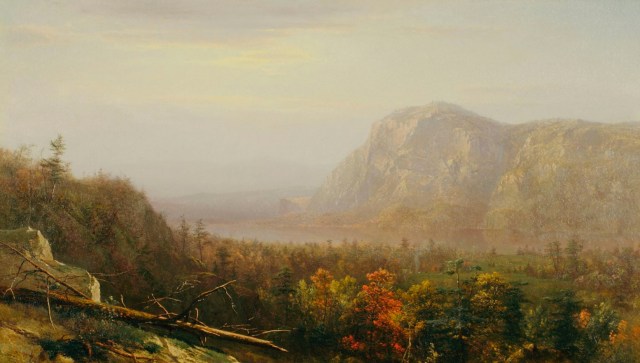
storm king

Now did the soft breezes of the south steal sweetly over the genial face of nature, tempering the panting heats of summer into genial and prolific warmth; when that miracle of hardihood and chivalric virtue, the dauntless Peter Stuyvesant, spread his canvas to the wind, and departed from the fair island of Manna-hata. The galley in which he embarked was sumptuously adorned with pendants and streamers of gorgeous dyes, which fluttered gayly in the wind, or drooped their ends into the bosom of the stream. The bow and poop of this majestic vessel were gallantly bedight, after the rarest Dutch fashion, with figures of little pursy Cupids with periwigs on their heads, and bearing in their hands garlands of flowers, the like of which are not to be found in any book of botany; being the matchless flowers which flourished in the golden age, and exist no longer, unless it be in the imaginations of ingenious carvers of wood and discolorers of canvas.

Thus rarely decorated, in style befitting the puissant potentate of the Manhattoes, did the galley of Peter Stuyvesant launch forth upon the bosom of the lordly Hudson, which, as it rolled its broad waves to the ocean, seemed to pause for a while and swell with pride, as if conscious of the illustrious burthen it sustained.

But trust me, gentlefolk, far other was the scene presented to the contemplation of the crew from that which may be witnessed at this degenerate day. Wildness and savage majesty reigned on the borders of this mighty river — the hand of cultivation had not as yet laid low the dark forest, and tamed the features of the landscape — nor had the frequent sail of commerce broken in upon the profound and awful solitude of ages. Here and there might be seen a rude wig-wam perched among the cliffs of the mountains with its curling column of smoke mounting in the transparent atmosphere — but so loftily situated that the whoopings of the savage children, gamboling on the margin of the dizzy heights, fell almost as faintly on the ear as do the notes of the lark when lost in the azure vault of heaven. Now and then, from the beetling brow of some precipice, the wild deer would look timidly down upon the splendid pageant as it passed below, and then, tossing his antlers in the air, would bound away into the thickets of the forest.

Through such scenes did the stately vessel of Peter Stuyvesant pass. Now did they skirt the bases of the rocky heights of Jersey, which spring up like everlasting walls, reaching from the waves unto the heavens, and were fashioned, if tradition may be believed, in times long past, by the mighty spirit Manetho, to protect his favorite abodes from the unhallowed eyes of mortals. Now did they career it gayly across the vast expanse of Tappan Bay, whose wide-extended shores present a variety of delectable scenery, — here the bold promontory, crowned with embowering tress, advancing into the bay, — there the long woodland slope, sweeping up from the shore in rich luxuriance, and terminating in the upland precipice, — while at a distance a long waving line of rocky heights threw their gigantic shades across the water. Now would they pass where some modest little interval, opening among these stupendous scenes, yet retreating as it were for protection into the embraces of the neighboring mountains, displayed a rural paradise, fraught with sweet and pastoral beauties; the velvet tufted lawn — the bushy copse — the tinkling rivulet, stealing through the fresh and vivid verdure — on whose banks was situated some little Indian village, or, peradventure, the rude cabin of some solitary hunter.

The different periods of the revolving day seemed each, with cunning magic, to diffuse a different charm over the scene. Now would the jovial sun break gloriously from the east, blazing from the summits of the hills, and sparkling the landscape with a thousand dewy gems; while along the borders of the river were seen heavy masses of mist, which, like midnight caitiffs, disturbed at his approach, made a sluggish retreat, rolling in sullen reluctance up the mountains. At such times all was brightness, and life, and gayety, — the atmosphere was of an indescribable pureness and transparency, — the birds broke forth in wanton madrigals, and the freshening breezes wafted the vessel merrily on her course. But when the sun sank amid a flood of glory in the west, mantling the heaves and the earth with a thousand gorgeous dyes, then all was calm, and silent, and magnificent. The late swelling sail hung lifelessly against the mast; — the seaman, with folded arms, leaned against the shrouds, lost in that involuntary musing which the sober grandeur of nature commands in the rudest of her children. The vast bosom of the Hudson was like an unruffled mirror, reflecting the golden splendor of the heavens excepting that now and then a bark canoe would steal across its surface, filled with painted savages, whose gay feathers glared brightly, as perchance a lingering ray of the setting sun gleamed upon them from the western mountains.

But when the hour of twilight spread its majestic mists around, then did the face of nature assume a thousand fugitive charms, which to the worthy heart that seeks enjoyment in the glorious works of its Maker are inexpressibly captivating. The mellow dubious light that prevailed just served to tinge with illusive colors the softened features of the scenery. The deceived but delighted eye sought vainly to discern in the broad masses of shade, the separating line between the land and water, or to distinguish the fading objects that seemed sinking into chaos. Now did the busy fancy supply the feebleness of vision, producing with industrious craft a fairy creation of her own. Under her plastic wand the barren rocks frowned upon the watery waste, in the semblance of lofty towers, and high embattled castles, — trees assumed the direful forms of mighty giants, and the inaccessible summits of the mountains seemed peopled with a thousand shadowy beings.

Now broke forth from the shores the notes of an innumerable variety of insects, which filled the air with a strange but not inharmonious concert, — while ever and anon was heard the melancholy plaint of the whippoorwill, who, perched on some lone tree, wearied the ear of night with his incessant moanings. The mind, soothed into a hallowed melancholy, listened with pensive stillness to catch and distinguish each sound that vaguely echoed from the shore — now and then startled perchance by the whoop of some straggling savage, or by the dreary howl of a wolf, stealing forth upon his nightly prowlings.

Thus happily did they pursue their course, until they entered upon those awful defiles denominated the Highlands, where it would seem that the gigantic Titans had erst waged their impious war with heaven, piling up cliffs on cliffs, and hurling vast masses of rock in wild confusion. But in sooth very different is the history of these cloud-capt mountains. These in ancient days, before the Hudson poured its waters from the lakes, formed one vast prison, within whose rocky bosom the omnipotent Manetho confined the rebellious spirits who repined at his control. Here, bound in adamantine chains, or jammed in rifted pines, or crushed by ponderous rocks, they groaned for many an age. At length the conquering Hudson, in its career towards the ocean, burst open their prison-house, rolling its tide triumphantly through the stupendous ruins.

Still, however, do many of them lurk about their old abodes; and these it is, according to venerable legends, that cause the echoes which resound throughout these awful solitudes, — which are nothing but their angry clamors when any noise disturbs the profoundness of their repose. For when the elements are agitated by tempest, when the winds are up and the thunder rolls, then horrible is the yelling and howling of these troubled spirits, making the mountains to rebellow with their hideous uproar; for at such times it is said that they think the great Manetho is returning once more to plunge them in gloomy caverns, and renew their intolerable captivity.

But all these fair and glorious scenes were lost upon the gallant Stuyvesant; naught occupied his mind but thoughts of iron war, and proud anticipations of hardy deeds of arms. Neither did his honest crew trouble their heads with any romantic speculations of the kind. The pilot at the helm quietly smoked his pipe, thinking of nothing either past, present, or to come — those of his comrades who were not industriously smoking under the hatches were listening with open mouths to Antony Van Corlear, who, seated on the windlass, was relating to them the marvelous history of those myriads of fireflies that sparkled like gems and spangles upon the dusky robe of night. These, according to tradition, were originally a race of pestilent sempiternous beldames, who peopled these parts long before the memory of man; being of that abominated race emphatically called brimstones; and who, for their innumerable sins against the children of men, and to furnish an awful warning to the beauteous sex, were doomed to infest the earth in the shape of these threatening and terrible little bugs, enduring the internal torments of that fire, which they formerly carried in their hearts and breathed forth in their words, but now are sentenced to bear about for ever — in their tails!

And now I am going to tell a fact, which I doubt much my readers will hesitate to believe; but if they do, they are welcome not to believe a word in this whole history, for nothing which it contains is more true. It must be known then that the nose of Antony the Trumpeter was of a very lusty size, strutting boldly from his countenance like a mountain of Golconda; being sumptuously bedecked with rubies and other precious stones, — the true regalia of a king of good fellows, which jolly Bacchus grants to all who bouse it heartily at the flagon. Now thus it happened, that bright and early in the morning, the good Antony, having washed his burly visage, was leaning over the quarter railing of the galley, contemplating it in the glassy wave below. — Just at this moment the illustrious sun, breaking in all its splendor from behind a high bluff of the highlands, did dart one of his most potent beams full upon the refulgent nose of the sounder of brass — the reflection of which shot straightway down, hissing-hot, into the water, and killed a mighty sturgeon that was sporting beside the vessel! This huge monster being with infinite labor hoisted on board, furnished a luxurious repast to all the crew, being accounted of excellent flavor, excepting about the wound, where it smacked a little of brimstone; — and this, on my veracity, was the first time that ever sturgeon was eaten in these parts by Christian people.

When this astonishing miracle came to be made known to Peter Stuyvesant, and that he tasted of the unknown fish, he, as may well be supposed, marveled exceedingly; and as a monument thereof, he gave the name of Antony’s Nose to a stout promontory in the neighborhood; and it has continued to be called Antony’s Nose ever since that time.

But hold: whither am I wandering? By the mass, if I attempt to accompany the good Peter Stuyvesant on this voyage, I shall never make an end; for never was there a voyage so fraught with marvelous incidents, nor a river so abounding with transcendant beauties, worthy of being severally recorded. Even now I have it on the point of my pen to relate how his crew were most horribly frightened, on going on shore above the highlands, by a gang of merry roistering devils, frisking and curveting on a flat rock, which projected into the river — and which is called the Duyvel’s Dans-Kamer to this very day. But no! Diedrich Knickerbocker, it becomes thee not to idle thus in thy historic wayfaring.

Recollect that while dwelling with the fond garrulity of age over these fairy scenes, endeared to thee by the recollections of thy youth, and the charms of a thousand legendary tales, which beguiled the simple ear of thy childhood, — recollect that thou art trifling with those fleeting moments which should be devoted to loftier themes. Is not Time — relentless Time! — shaking, with palsied hand, his almost exhausted hour-glass before thee? Hasten then to pursue thy weary task, lest the last sands be run ere thou hast finished thy history of the Manhattoes.

Let us, then, commit the dauntless Peter, his brave galley, and his loyal crew, to the protection of the blessed St. Nicholas; who, I have no doubt, will prosper him in his voyage, while we await his return at the great city of New Amsterdam.

— Washington Irving

Posted in Books Publishing and Writing, History | Tagged , , , , , | 2 Comments

Linkage

Paleo Retiree writes:

Posted in Linkathons, Uncategorized | Leave a comment

Guns Again

Fenster writes:

In The Nation, Katha Pollitt suggests that in a new generation the NRA may have finally met its match.  Could be.  A spate of recent polls indicate a spike in support for some kind of action.  If those polls indicate a permanent shift Pollitt may be on to something, though even then it is far from clear whether a shift in favor of so-called common sense regulation really signifies an emerging revulsion against guns and gun culture and the death of the NRA, both led by the young.

While there could well be a turn of sorts on the margin it could well be among all age categories.  If I am suspicious of anything about Pollitt’s argument it is the breathless Age of Aquarius implication, so characteristic of Boomer vanity, that a child will lead us, just as America was delivered by a youthquake in Pollitt’s formative years.

It is true that polling data suggests that support for the NRA is lowest among younger Americans.  But the fight over the NRA as a proxy for the fight over guns is also generationally-inflected.  Boomers like Pollitt have been fighting the NRA/gun battles for decades and may not see that new generations are not just shock troops to be conscripted for one’s own side but are also going to bring to the broad question their own idiosyncratic views.

Unless one thinks that youth has suddenly been galvanized as whole–remotely  possible but evidence please–this could well be a case of a slice of youth having louder mouths, with megaphones and podiums graciously provided by the media.  This also reflects Boomer history.  Even today a small slice of youth stands in for the whole in cultural memory of the Sixties and early Seventies.

So while keeping one eye on the newer polls and where they go is important it is worth looking back at past polling data, too.  There, the issue of guns and youth is decidedly mixed.

While being less partial to the daddy’s NRA today’s youth have been somewhat less in favor of gun restrictions than their elders and are significantly more likely to think concealed carry will result in more safety.  The rate of gun ownership is lower but guns are take seriously recreationally and in terms of safety by those that do own them.

Things change to be sure but they do not change on the two-dimensional axis that constitutes the default worldview of those getting on in years.  Rachel Wolfe writes in Vox that “it’s possible that being born after the Columbine High School shootings and experiencing mass shootings as a routine event will change how (the young) think.”  True, but what kind of change?

Will it necessarily signal gun revulsion in line with the Pollitt agenda?

Or might it be in favor of some restrictions but lack the underlying desire—palpable among many now both under and above the surface—for something like confiscation?

Or might it even reflect a mature consideration of the need for guns for self-protection, for the need to harden schools as targets, for the wisdom of arming teachers?

In other words is it possible that when the younger generation grows up a bit they will take this problem, left unresolved by decades of distrust from the edges, and solve it from the center out?  Gun control and abortion are both issues that have been stuck in gridlock for decades, with partisans unwilling to give an inch for fear of slippery slopes to the other edge.  The best way of stopping a slippery slope all the way to the other edge is to empower the center, and to bulk up the belly of the bell curve.

I can imagine a political and legal environment in which gun rights advocates feel that their backs are well protected against reinterpretation of the Second Amendment. And a social environment that reflects a general consensus against confiscation or anything like it. Perhaps in that environment we could see the kind of legislative debate we see with most other issues, with a reasonable muddling through of this or that weapon, this or that definition of mental illness, this or that process for buying or being precluded from buying.

That environment would meet the anti-gun advocates desire for some kind of action. The problem is that the conditions for it would otherwise be anathema: no progressive president, a judiciary remade under eight years of Trump, a Supreme Court not tempted to alter settled Second Amendment law and interpretation.

A less toxic environment would be healthy overall.  It would expose the hardliners on both sides for what they are.  That would mean marginalizing right-wing loonie holdouts.  But it would also mean, as I pointed out in a previous post, shining a light on “liberal dogmatists who talk about guns because they don’t want to talk about inner city pathologies, deinstitutionalization or radical Islam.”

One can only hope that a rising generation might solve the gun problem from the center outward.  Pollitt may gripe that we remain a country with too many deplorables from which she is culturally alienated.  The NRA may find its membership drops and that is had less control over the terms of the debate.  But I don’t see the gun war subsiding until the culture war recedes, and we may be a crisis or two away from that happening.
——————————-
Earlier posts on guns and the Second Amendment here and here.
Posted in Politics and Economics, Uncategorized | Tagged , , , | 2 Comments