
Blowhard, Esq. writes:
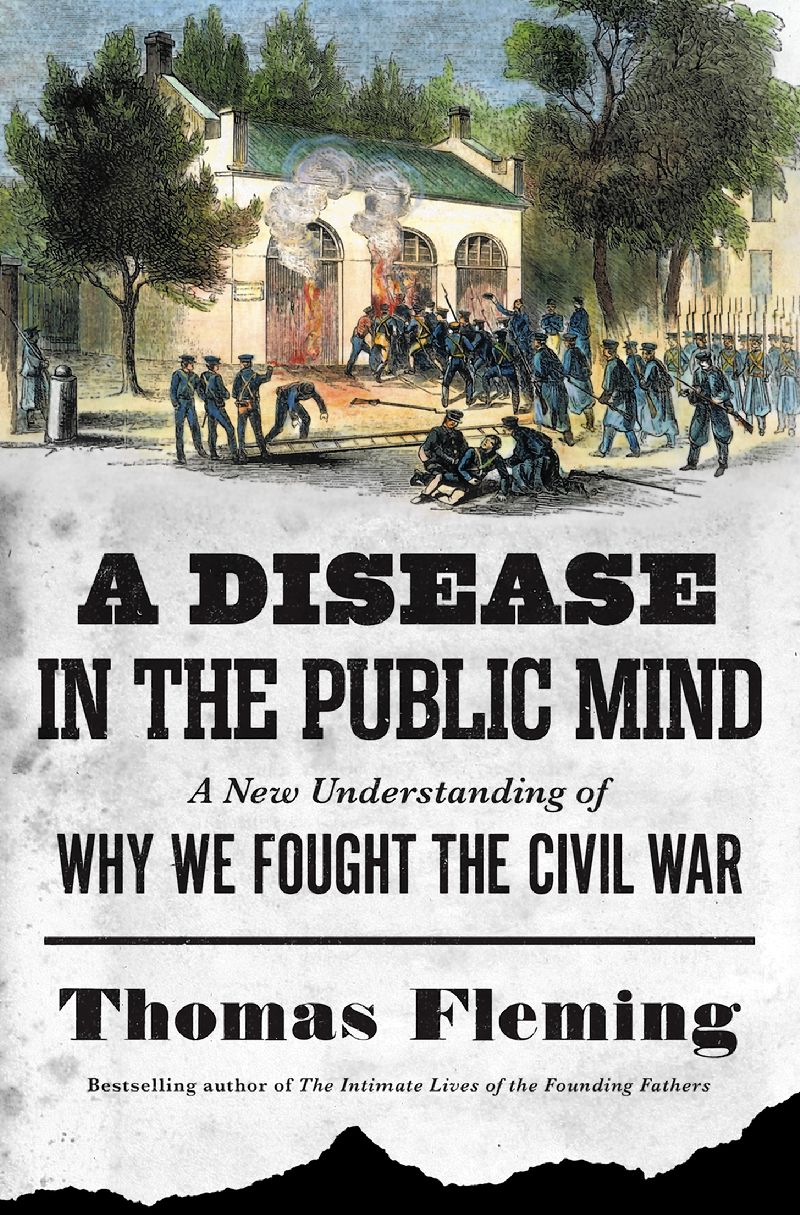
All of the brouhaha over Confederate statues has rekindled my interest in the Civil War, so I decided to work my way through some of the books that have been cluttering my shelves. The first one is this volume by Thomas Fleming on the intellectual origins of the War Between The States. Actually, “intellectual origins” sounds too highfalutin. It’s more like a chronicle of the propagandistic origins of the war. Fleming traces the history of thinking about slavery and abolitionism in the United States from the colonial era until the surrender at Appomattox. Seeded throughout are vivid profiles of key actors like John Quincy Adams, John Brown, William Lloyd Garrison, Theodore Weld, and Harriet Beecher Stowe. In Fleming’s view, the war resulted from a clash of two great narratives: the Northern fear of the Southern “Slave Power” versus the Southern fear of slave insurrection or, to put it bluntly, race war.
Both narratives were based in fact yet each side allowed its reason to be overwhelmed by emotion. In the South, the great fear was emancipation would lead to the kind of race war that ensued in Saint Domingue (Haiti) after the slave revolt led by François Dominique Toussaint-Louverture and Jean-Jacques Dessalines. While Toussaint-Louverture was a moderate, Dessalines was a radical who slaughtered as many white French as he could. Jefferson, who previously supported the gradual emancipation of slaves, switched to supporting the continuation of slavery out of fear that similar race war would erupt in the United States. His resistance to abolitionism would color Southern attitudes for generations, even if many Southerners admitted that slavery was an evil institution.
The North, on the other hand, was gripped by the righteous religious fervor of abolitionism. Puritan ideas about the North’s moral and spiritual superiority compared to the South dominated. Northerners refused to sympathize with their Southern brethren and saw it as their holy mission to bring the corrupt, decadent society to heel. Compromise, say compensated emancipation or permitting slavery in new territories, was anathema. I liked this bit about Garrison, publisher of the abolitionist newspaper The Liberator:
He did not analyze and refute his opponents’ arguments; he denounced them, sneered at them, dismissed them. He found no conflict between this style and his religious beliefs because they both nicely complemented the prevailing attitude of New England Federalists. They were inclined to believe in the moral depravity of anyone who disagreed with them.
This attitude was deeply rooted in the New England soul, thanks to the sermons they and their ancestors had heard for the previous century. A Puritan preacher’s favorite rhetorical form was the “jeremiad,” a shorthand term for style and content inspired by the biblical prophet Jeremiah. Jeremiads combined lamentation and condemnation of the spiritual and moral shortcomings of a people for their sinfulness and selfishness. Only a handful of mankind, stained by Adam’s primary sin, would ever merit salvation.
Although abolitionists provided the moral justification that fueled the war, they were nevertheless despised by many of their fellow Northerners. Boston-born brahmin Oliver Wendell Holmes Jr., a Union captain and later associate justice of the Supreme Court, reflected after the war that, “Communists show in the most extreme form what I came to loathe in the abolitionists — the conviction that anyone who did not agree with them was either a knave or a fool.”


A common propagandistic, er, journalistic technique in the 19th century press was lying, er, embellishing the truth. For example, the New York Tribune, a leading abolitionist newspaper, reported that John Brown, on his way to the gallows, kissed a black child as a sign of his deep, Christ-like affection for black people. Lithographs of the incident became popular, one of which was published by Currier & Ives. The Quaker poet John Greenleaf Whittier immortalized it in verse. Too bad it was a complete fabrication that never happened. Thankfully, this sort of fake news from the mainstream press, along with all-or-nothing fanaticism from the North, are relics of a less enlightened age that we contemporary Americans need not worry our pretty little heads about.
Related
- Fleming talks about his book in a short radio interview. Here he reads from his book and then follows it up with a Q&A from the audience.
- Sad to hear that Fleming died last month.








 Blowhard, Esq.
 Callowman
 Sherbrooke
 Eddie Pensier
 Enzo Nakamura
 Epaminondas
 Fabrizio del Wrongo
 Fenster
 Brundle Guy
 Glynn Marshes
 Paleo Retiree
 Atypical Neurotic
 Question Lady
 Sax von Stroheim
 Sir Barken Hyena
 The Mistaken
