“Buona Sera, Mrs. Campbell”

Paleo Retiree writes:

buona

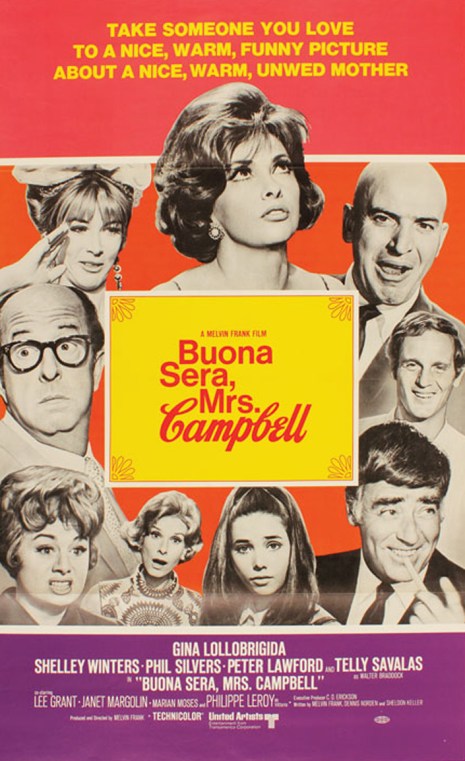
A brightly-colored, super-polished confection starring Gina Lollobrigida that crosses two genres of its era: the marriage-is-impossible farce and the Americans-touring-Europe-by-bus comedy. (I watched in on this disc.) My wife hated it, and we both wondered if it might not be the squarest movie we’ve ever sat all the way through. But I also got fascinated by the film and eventually felt rather touched by it. It’s a perfect artifact of our parents’ generation — the Greatest Gen/WWII crowd.

A surprise for us was how late “Buona Sera, Mrs. Campbell” was made. It feels like it’s from 1959 or 1961 but in fact it was released in 1968, a year after “Bonnie and Clyde” and a year before “Easy Rider” and “Bob & Carol & Ted & Alice.” It’s a useful reminder of how many square, old-fashioned movies were still being made at that point — and would go on being made. I sometimes find myself thinking that someone should do a piece about the square movies from that otherwise hip era. Enough already with Peckinpah, Altman, Coppola, etc, you know?

Continue reading →

Posted in Movies | Tagged , , , , , | 5 Comments

Art Du Jour (Anzac Day 2016 Edition)

Eddie Pensier writes:ANZAC12_1

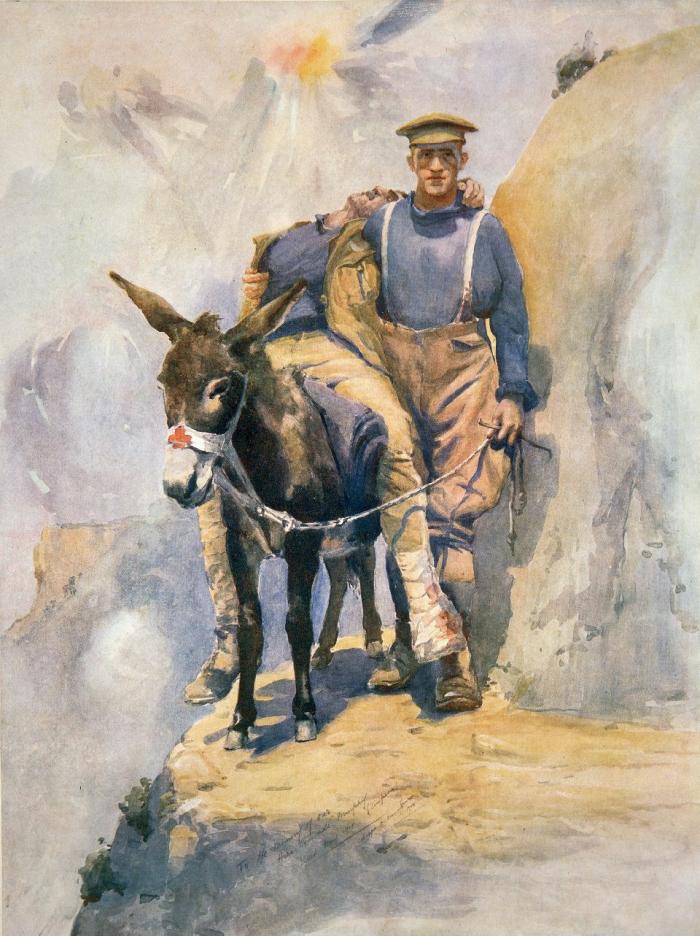
Horace Moore-Jones, Simpson And His Donkey (1918)

Related

  • Previous ANZAC-themed AdJ here, and here.
Posted in Animals, Art, History | Tagged , , , | 1 Comment

Linkage

Paleo Retiree writes:

Posted in Linkathons | Tagged , , , , , , , | 3 Comments

“The Birth of Saké”

Paleo Retiree writes:

sake

This film (which recently appeared on Netflix Instant) isn’t an informative, clear, traditional documentary. It isn’t an expressive cine-essay, like “Sans Soleil” or “Be Here to Love Me,” either. Instead, it’s an impressionistic, reverential, dark thing — almost a mood piece — about several seasons at a brewery in the northern part of Japan where sake is made in the old way, with lots of hands-on crafting and fussing. Basically, you’re hanging out at a brewery with a small sake-making crew while the filmmaking team does what, back in film school, we used to call “pot-shooting” — recording a lot of near-random this and that.

The sake makers (they’re all guys) wear white uniforms; they polish the rice; they rush around attending to emergencies; they haul bags of rice and pieces of equipment from room to room … It turns out that traditional sake-making is a 24 hour a day job for six months, followed by six months off. So we also hang with the guys as they bathe, share meals, and horse around together during down hours.

There are some attempts to isolate a few story lines and highlight some of the individuals: a few scenes with guys back at their houses, with their families, during the off months, as well as some talks with the brewery’s old brewmaster about his sake-making philosophy, and some time with the young man who’s going to inherit the brewery. He hopes to be able to keep the business going in the face of a lot of industrial-style competition and a decreasing interest in sake on the part of Japanese consumers. But, seriously: the film is mainly a lot of moody shots and sounds. Most of the time I had zero idea why I was being shown what I was being shown.

The film is also oppressively, almost bizarrely, solemn. It’s obviously meant as a tribute to artisanal-style craftsmanship (especially of a meticulous, ultra-Japanesey sort), and — speaking as a locavore/Paleo-eating/farmers-market-shopping kinda guy, as well as a sake-lover — I can totally get on board with that. But what this intention translates into in practice is endless turgid, hyper-closeup shots of guys staring at measuring instruments, examining rice, and sniffing mash. (What are they looking for? We’re never told. We’re watching them do things — but what? And why?) The tone is in fact so heavy that it’s almost Bresson-like in its gloomy, austere religiosity. Let’s just say that, for reasons I certainly couldn’t figure out, the filmmakers go very light on the joy of creativity, as well as on the sensuality of pleasure.

Sourpuss verdict: Childish in its ideas about how to be a documentary (it’s one big montage, basically); uninformative about its overt topic; but impressively super-sophisticated and up-to-date where technical filmmaking stuff goes. Lordy, the lustrous imagery! The ripe and precise sounds!

My wife wanted to stop watching early on but I got perversely fascinated by the film. I fought sleep and annoyance, and we took three evenings to make it through the movie. But I also found myself feeling curious, and wondering if this is the new style, one we’ll be seeing more and more of as youngsters who grew up on digital media (and who seem to have zero background in the traditional arts) continue transforming movies into something that suits them.

Continue reading →

Posted in Food and health, Movies, The Good Life | Tagged , , , | 4 Comments

Eddie’s Spirit Chronicles: Angostura 1824 Rum

Eddie Pensier writes:angostura1824

I picked up this pricey Trinidadian sipper because I had a gift card to a local bottle shop. I’d been hoping for a Diplomatico or a Zacapa but this one was the best one on the shelf for the amount I had to spend.

Unfortunately it turned out not to be worth the price (technically zero, but you know what I mean). The initial nose featured the alarmingly bitter off-notes of blackstrap molasses with none of the clean spicy sweetness. The first sip was spirity, anisey and medicinal, like a cough syrup. Further sipping did not improve matters: an unusual herbal sagelike note popped up and would not go away, even with the addition of an ice cube. Pepper, potting soil, and road tar further blighted the profile. It remained spirity in the aftertaste, rather odd considering it was only 40% ABV.

It turned out to be an excellent ingredient in rum old-fashioneds, where the bitters and citrus disguised some of the regrettable flavors, and the lack of sweetness was a feature rather than a bug. I will certainly be using up the rest of my bottle as a rather expensive cocktail ingredient.

I wish I’d enjoyed Angostura 1824 more than I did. It’s an elegant-looking beverage with a wonderful pedigree, and I have tasted and enjoyed their splendid Number One superluxe variant. But this one is not, in my opinion, worthy of its premium price tag.

If you choose not to take my word for it, try Angostura at your local well-stocked spirit bar before plunking down AU$103 for it at First Choice. American buyers can order from Astor Wine and Spirits, or visit their excellent New York shop.

Posted in Food and health, The Good Life | Tagged , , , | 2 Comments

Naked Lady of the Week: Viola Bailey

Eddie Pensier writes:

viola10

Viola Bailey, or Viola O, or Violet H, or Vanea is either our third or fourth NLOTW from Latvia, depending on whom you believe. This buxom, green-eyed strawberry blonde will have you checking airfares to the Baltic, wondering if all the girls there can look alternately kitten-sweet and depraved, depending on the moment. Viola (I’ll stick to her Shakespearean pseudonym, although it’s hard to imagine anyone believing for a moment she’s actually a man) models for Femjoy and MetArt. She’s also branched out into hardcore–found at the expected places–where you can see this doe-eyed beauty unleash her full potential.

Lush and bosomy nudity below the break. Enjoy.

Continue reading →

Posted in Sex, The Good Life | Tagged , , , , , , , , | Leave a comment

“30 For 30: Fantastic Lies”

Paleo Retiree writes:

The accusees

The accused

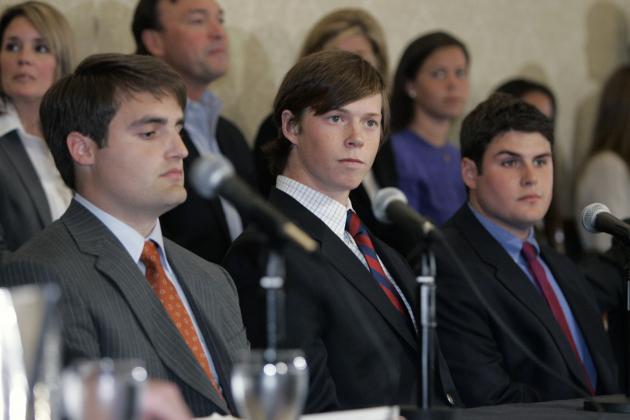
Marina Zenovich’s new documentary about the 2006 Duke lacrosse case, which is currently available on Netflix Instant, is a perfectly adequate run-through of that fascinating, distressing episode. If you didn’t follow the story closely at the time, the film is a fine way to catch up with it, and even if you were reading beyond the era’s headlines the movie is still an easy and informative way to re-riff through the events and meet some of the personalities involved. Recommended, especially for those of us who are perplexed by our era’s mania for civil rights-inflected sexual witch hunts. Zenovich turns up amazing footage from the archives. She talks to a couple of Duke lacrosse team members, to the parents of the three boys who were almost brought to trial, to the lawyers who defended the boys, and to some journalists who were involved in the news stampede around the case. See the movie. Discuss and enjoy.

All that said, and hoping that I’m not being ungrateful, a few things about the movie struck me as unsatisfying and even a bit weird. Unjust bitch-fest incoming, in other words. Please keep in mind that, despite the misgivings I’m about to self-indulgently share, I’m still recommending the movie. Hey, if fair and even-handed is what you’re looking for, you’re visiting the wrong blog.

Continue reading →

Posted in Movies, Politics and Economics, Sex | Tagged , , , | 6 Comments

“The First Monday in May” (2016)

Blowhard, Esq. writes:

TheFirstMondayInMay

I semi-enjoyed this new documentary about the annual exhibition and fundraising gala for the Metropolitan Museum’s fashion wing. Every spring The Costume Institute mounts a major exhibit that opens on May 1st with a lavish party attended by A-listers from the fashion, movie, and music worlds. The movie follows The Costume Institute’s two key players — curator Andrew Bolton and Vogue editor-in-chief/Institute patron Anna Wintour — as they produce, finagle, and fuss over China: Through the Looking Glass, the Institute’s 2015 show about the influence of Chinese art on Western fashion.

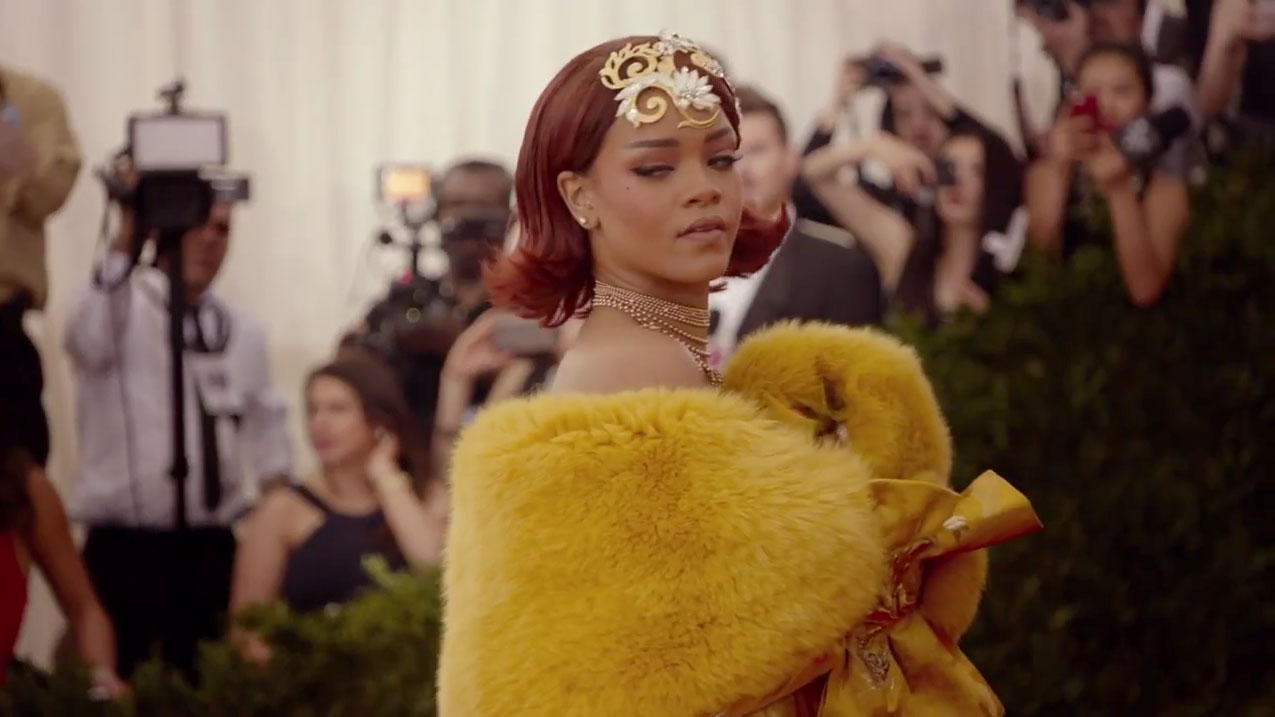
Director Andrew Rossi, a Yale and Harvard Law School graduate whose last two films have looked at higher education and The New York Times, seems to be focusing his career on profiling eminent, grey lady institutions. But, for good and for ill, Rossi’s film is an authorized portrait. In exchange for access to the principals there’s certain PBS-pledge-week stodginess to the proceedings. Rossi’s film glides smoothly without any of Nick Broomfield’s impish snark or Frederick Wiseman’s microscopic intensity. Instead, we get a mini-bio of Bolton, footage of La Wintour intimidating everyone in her Chanel glasses, and a sense of the political juggling necessary when putting on fashion exhibition at an august museum. There are Met officials to placate (the show mustn’t be too “Disney”) and the Chinese government itself must be appeased. No mention is made that the show was originally titled Chinese Whispers: Tales of the East in Art, Film, and Fashion and was changed only after the inevitable sniveling from cultural appropriation crowd. Rossi gets in some ruminations on the chin-scratching “Can art be fashion?” issue, but the movie wisely sidesteps spending too much time on airy academic debate. I guess it’s hard to care about 19th-century conceptions of what constitutes “fine art” when Rihanna is regally ascending the steps of a red carpet in a couture gown while making bedroom eyes.

the-first-monday-in-may-14865-large

Posted in Movies, Women men and fashion | Tagged , , , , , | 1 Comment

No Man Needs Nothing

Fabrizio del Wrongo writes:

David Lean’s “Lawrence of Arabia” is unusual in that it attempts to build a character-based epic around an enigma. I am not among those who find this strategy unproblematic. In fact, I think the movie loses steam as it progresses in large part because its Lawrence is never more than a device to keep the action moving. (The role made Peter O’Toole a star, yet it’s a merciless one. By the movie’s end he has little to convey but moral agony.) But “Lawrence” does have one great character: Alec Guinness’ Prince Faisal. Guinness made his name as a comic actor, and his broad caricatures are among the acting treasures of the immediate postwar period. You can sense that inclination towards caricature in the performance featured in this clip. Guinness plays up the cunningness, the archness, the exhaustion, the Arabness of Faisal in ways that, in another context, might come across as ham-handed. Every movement, every dart of the eyes, seems over-calculated. By making us feel his performance in this manner Guinness makes us feel the performance of Faisal, a man whose leadership position is in a state of constant negotiation. (Theatricality is part of Faisal’s personality toolkit; he can’t afford to stop acting.) With his Faisal characterization I think it’s fair to say that Guinness accomplishes something rare: he arrives at subtlety via a process of exaggeration. The clip also demonstrates how, working together, an actor and director can create something memorable. Having directed Guinness in some of his greatest roles, Lean knew exactly how to showcase him. Note how, after Faisal rebukes Lawrence with a veiled insult at about the 2:36 mark, Lean dispenses with shot/countershot techniques, and allows the scene to proceed without cuts. From that point on Guinness controls everything: the dramatic beats are conveyed solely by his position in the frame and his intonation. In fact, Guinness literally acts around O’Toole, both receding into the shadows at the back of the image and walking into close-up in the right portion of the frame. He’s sizing the Englishman up, drawing him into his plan, and Lean lets us feel the implications of that. It’s my favorite scene in the movie.

Posted in Movies, Performers, Uncategorized | Tagged , , , , , | Leave a comment

Eddie’s Spirit Chronicles: Bruichladdich Octomore

Eddie Pensier writes:

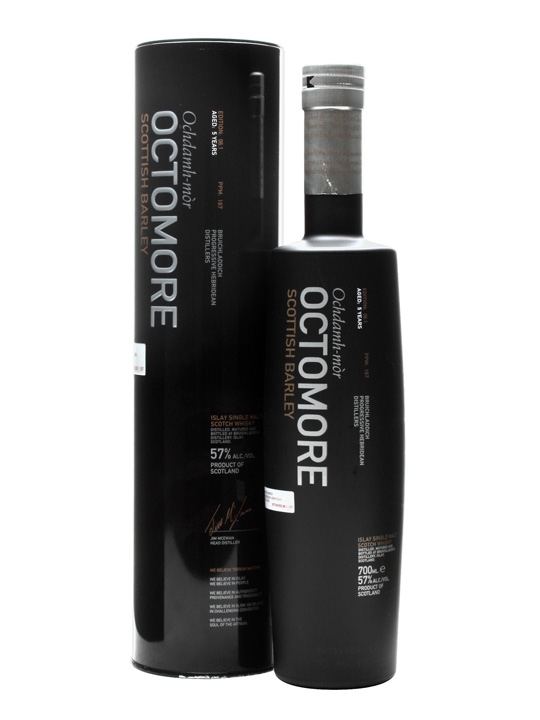
octomore

My most recent trip to New York resulted in an invitation to a free Bruichladdich tasting at the excellent Upper East Side Scotch bar Caledonia, and this was the last dram–the self-proclaimed “peatiest whisky in the world”. I was expecting a forest-floor tastebud bulldozer like Ardbeg or Laphroaig, and boy was I shocked. Yes it is peaty, outrageously so, when sipped neat,  but a few drops of water brings out unexpected complexity. Beyond the phenol (which inevitably brings to mind the Chloraseptic used on sore throats, and with as much time as I’ve spent in the opera business you’d better believe I am intimately familiar with that smell/flavor) it had a thoroughly delightful undertone of pastry. Cake, danish, possibly donuts, but something desserty. Also, this is the first peat-bomb whisky that doesn’t put my gustatory sense into hibernation for hours. Other highly phenolic whiskies have such an oily aftertaste that it practically requires a tooth-brushing to get rid of the taste, assuming you wanted to, of course.

The other expressions (Scottish Barley, Islay Barley, and Port Charlotte) were fine and elegant whiskies as is to be expected from Bruichladdich, but honestly any memories I have about the specifics have faded behind the intense, fetishistic love I have developed for Octomore. It’s a bruiser of a dram, but unexpectedly complex.

Australians can pick a bottle up at Dan Murphy’s Online. New Yorkers should visit Caledonia and tell Trevor, the friendly and knowledgeable bartender, that Eddie sent you. Online, try Whisky Shop USA.

(Disclaimer: There are annual releases of Octomore, each claiming to be vastly different from the last and completely irreproducible. Whether this is true or marketing bullshit is anyone’s guess. I’m guessing that the one I tried is the current 2015-16 release, since that would be available in stores to purchase, but I cannot confirm that.)
Posted in Food and health, The Good Life | Tagged , , , , , | Leave a comment