
Blowhard, Esq. writes:
While in Vegas, I was lucky enough to get a guided tour of the downtown area from a long-time resident who works for the Nevada Gaming Commission and I talked with another friend who’s a writer with a great working knowledge of the city. Both got me interested in the area’s history and the latter recommended a few books:
- The Money and the Power: The Making of Las Vegas and Its Hold on America by Sally Denton and Roger Morris
- Air Guitar by Dave Hickey
- Las Vegas: An Unconventional History by Michelle Ferrari and Steven Ives
(Sidebar: I wanted to pick one of these up right away, so I pulled out my iPhone to find a book store. Even though I was in the heart of the Strip, near a number of hotels and 100s of shops, there wasn’t a single book store close by. All were out in the suburbs.)
One book that had been on my to-read list for years was Learning from Las Vegas: The Forgotten Symbolism of Architectural Forms by Robert Venturi, Denise Scott Brown, and Steven Izenour. A short book with lots of pictures? Sold!
Venturi’s book [1] was originally published in 1972, so it’s dated in many ways. The Strip they observed was a mishmash of hotels, motels, and gas stations.

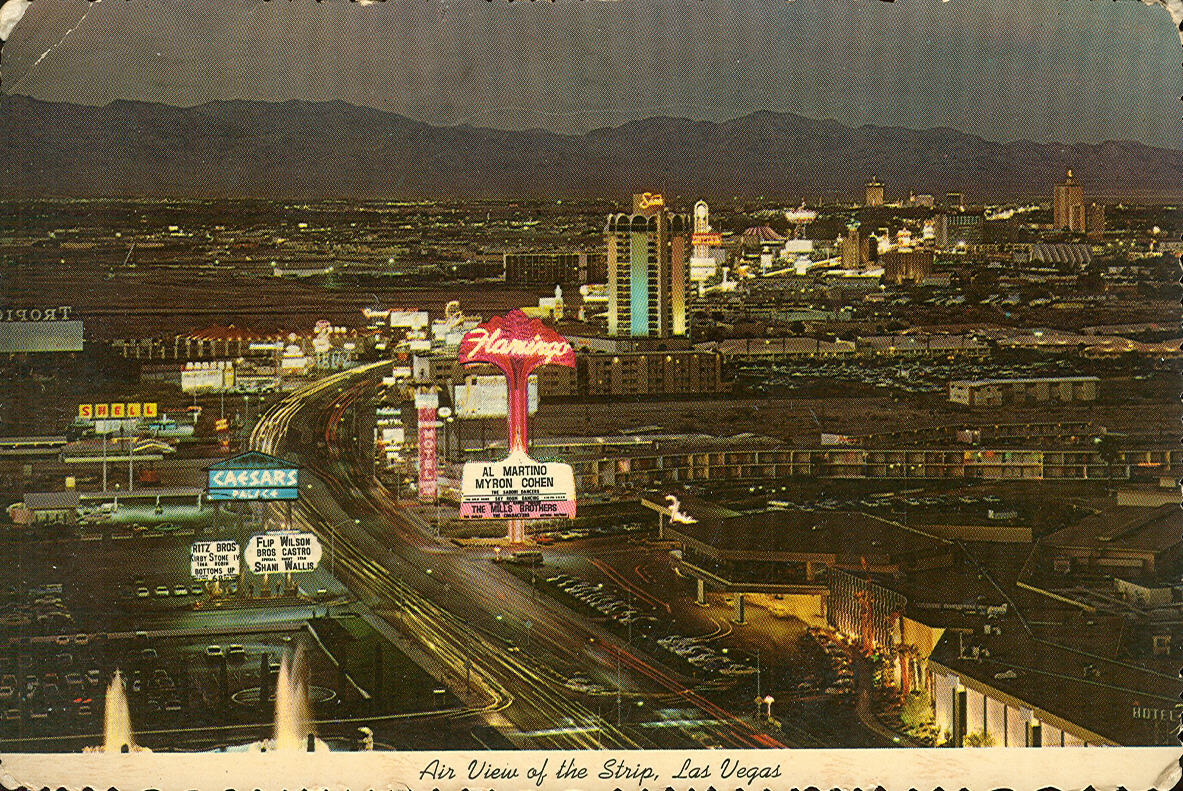 Notice the parking lots in front, how isolated the buildings are from one another. Today’s Strip is more pedestrian-friendly and, given the value of the land, all the smaller motels, gas stations, and other minor businesses have been banished to the streets behind the huge resorts. Here’s more what it looks like today.

 But even if certain elements are dated, and even if some of the theory and history went over my head, Learning from Las Vegas is a worthwhile read for its attack on architectural pretension and appreciation of vernacular.
The commercial strip, the Las Vegas Strip in particular…challenges the architect to take a positive, non-chip-on-the-shoulder view. Architects are out of the habit of looking nonjudgmentally at the environment, because orthodox Modern architecture is progressive, if not revolutionary, utopian, and puristic; it is dissatisfied with existing conditions. Modern architecture has been anything but permissive: Architects have preferred to change the existing environment rather than enhance what is there.
But to gain insight from the commonplace is nothing new: Fine art often follows folk art…We look backward at history and tradition to go forward; we can also look downward to go upward. And withholding judgment may be used as a tool to make later judgments more sensitive. This is a way of learning from everything.
Later in the book, Venturi introduces a dichotomy that was new to me, the Duck and the Decorated Shed, to compare and contrast the Modern architects against the more conventional architects.
1. Where the architectural systems of space, structure, and program are submerged and distorted by an overall symbolic form. This kind of building-becomes-sculpture we call the duck in honor of the duck-shaped drive-in, “The Long Island Duckling,” illustrated in God’s Own Junkyard by Peter Blake.
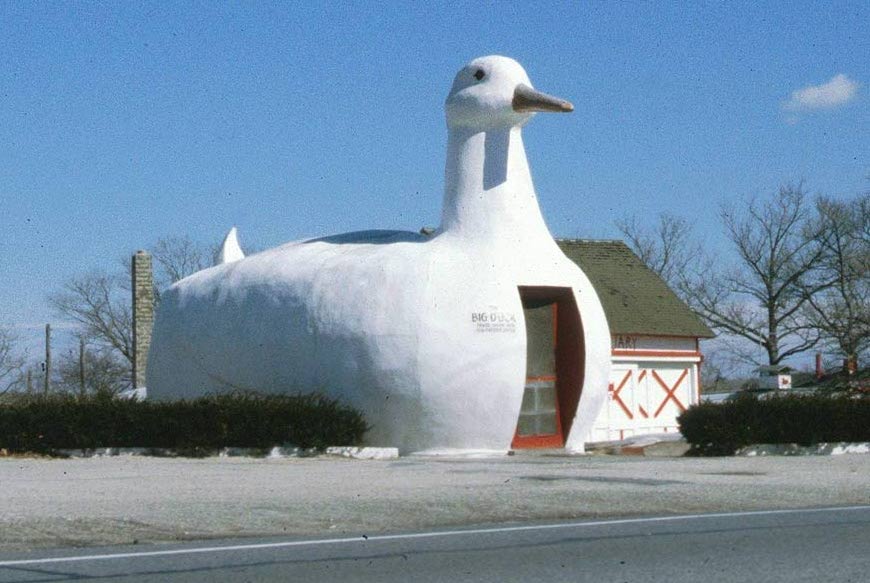
2. Where systems of space and structure are directly at the service of program, and ornament is applied independently of them. This we call the decorated shed.
Let’s look at the characteristics of each.
|
Duck |
Decorated Shed |
| An architecture of expression | An architecture of meaning |
| Implicit “connotative” symbolism | Explicit “denotative” symbolism |
| Expressive ornament | Symbolic ornament |
| Integral expression | Applied ornament |
| Pure architecture | Mixed media |
| Unadmitted decoration by the articulation of integral elements | Decoration by the attaching of superficial elements |
| Abstraction | Symbolism |
| “Abstract expressionism” | Representational art |
| Innovative architecture | Evocative architecture |
| Societal messages | Architectural content |
| High art | High and low art |
| Revolutionary, progressive, anti-traditional | Evolutionary, using historical precedent |
| Creative, unique, and original | Conventional |
| New words | Old words with new meanings |
| Extraordinary | Ordinary |
| Heroic | Expedient |
| Pretty (or at least unified) all around | Pretty in front |
| Consistent | Inconsistent |
| Advanced technology | Conventional technology |
| Tries to elevate client’s value system and/or budget by reference to Art and Metaphysics | Starts from client’s value system |
| “Interesting” | “Boring” |
| Promoted by experts | Promoted by sales staff |
| “Correct” life-style | Popular life-style |
| Modern style | Historical style |
| Uses original creations | Uses typological models |
| Architects like | Architects don’t like |
| “Total Design” | Vital mess |
| Building for Man | Building for markets |
| The image of the middle-class intelligentsia | Heterogenous images |
| The difficult image | The easy image |
| The difficult whole | The easy whole |
A Gallery of Ducks
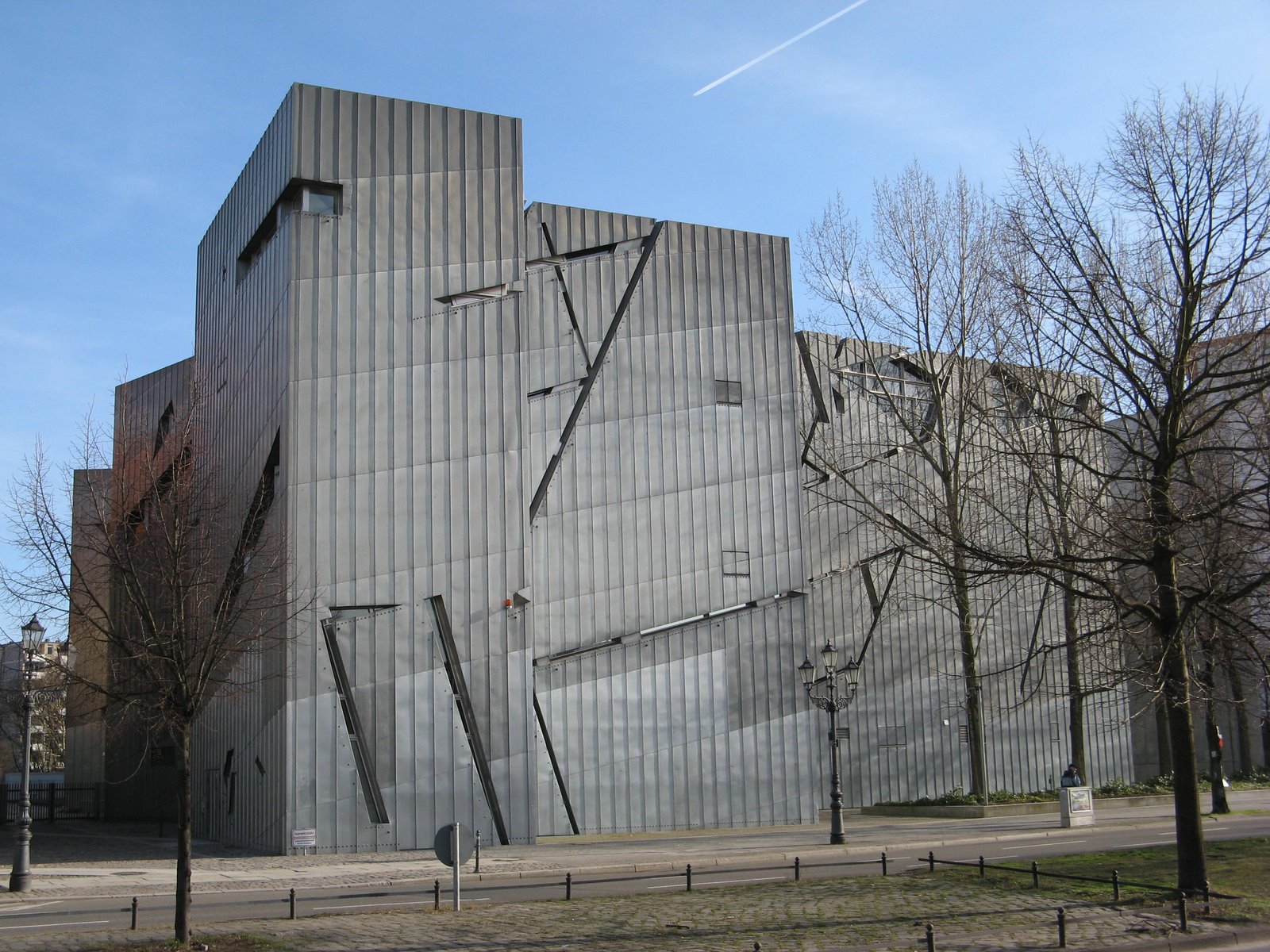
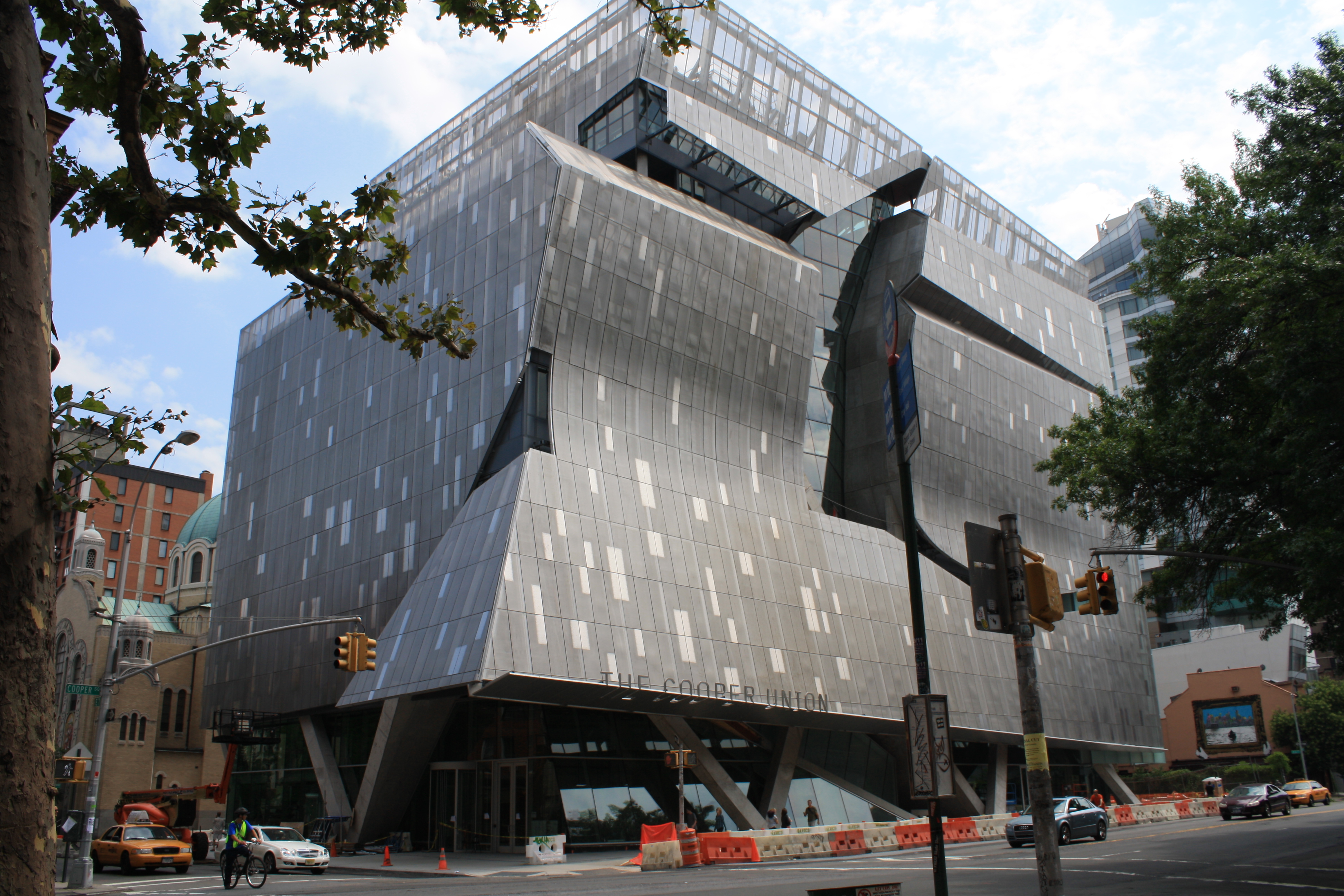
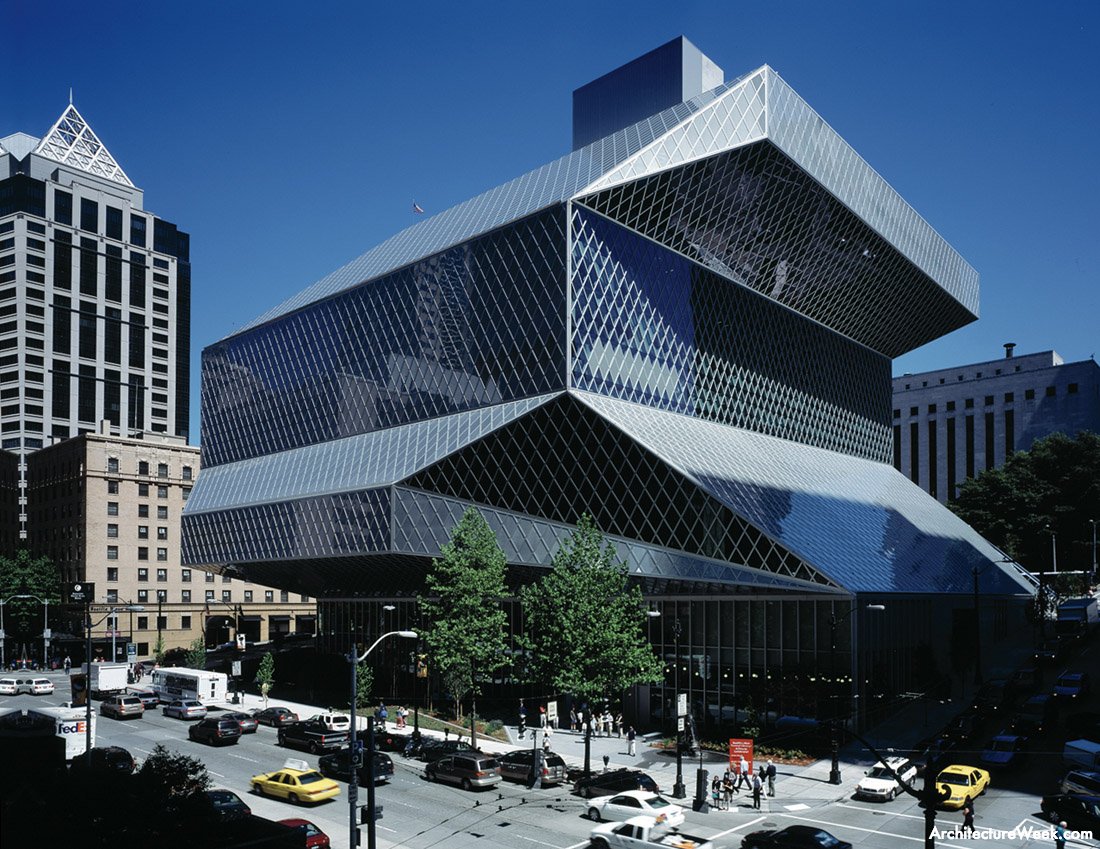

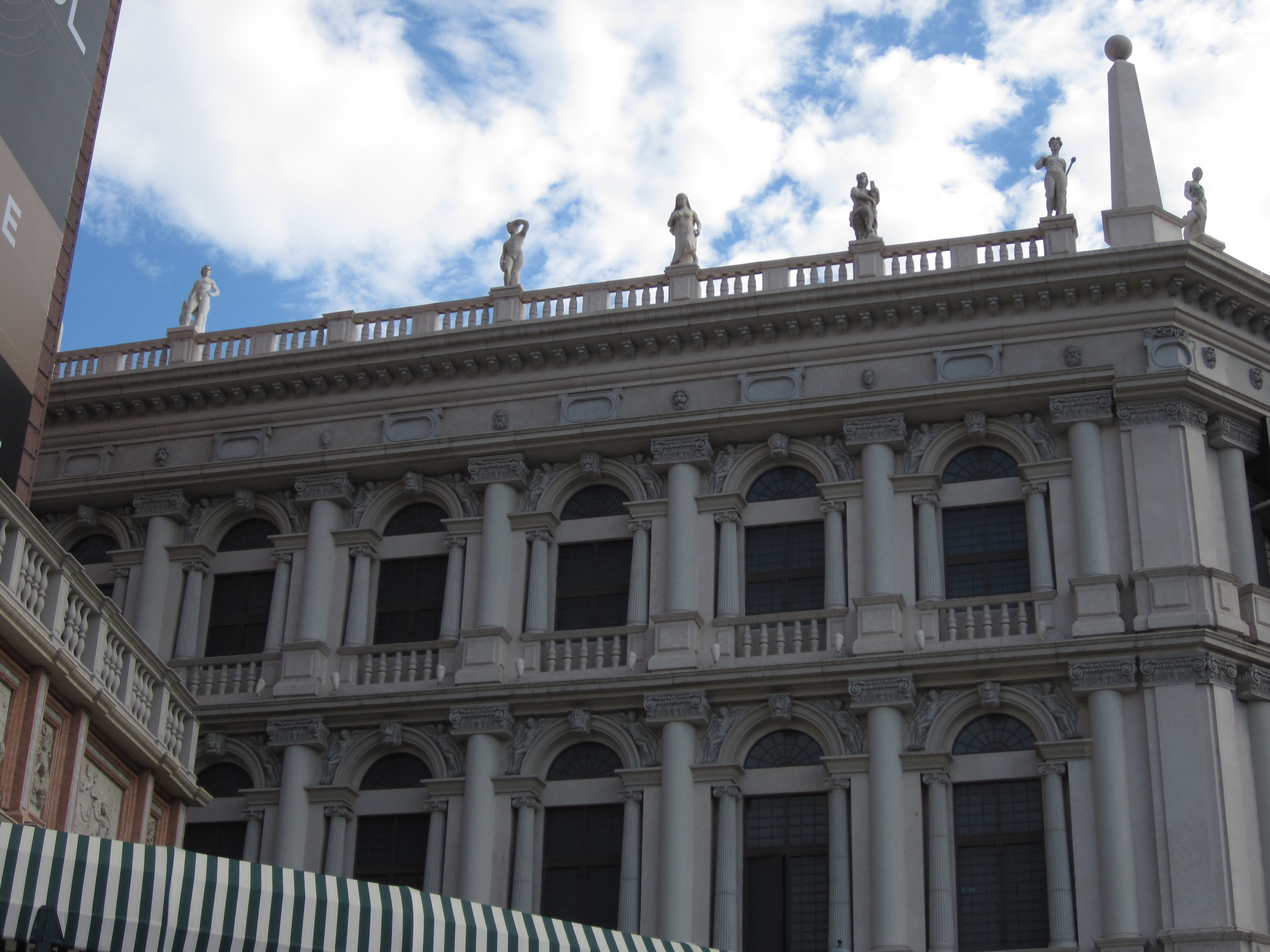
A Gallery of Decorated Sheds
Caesars Palace


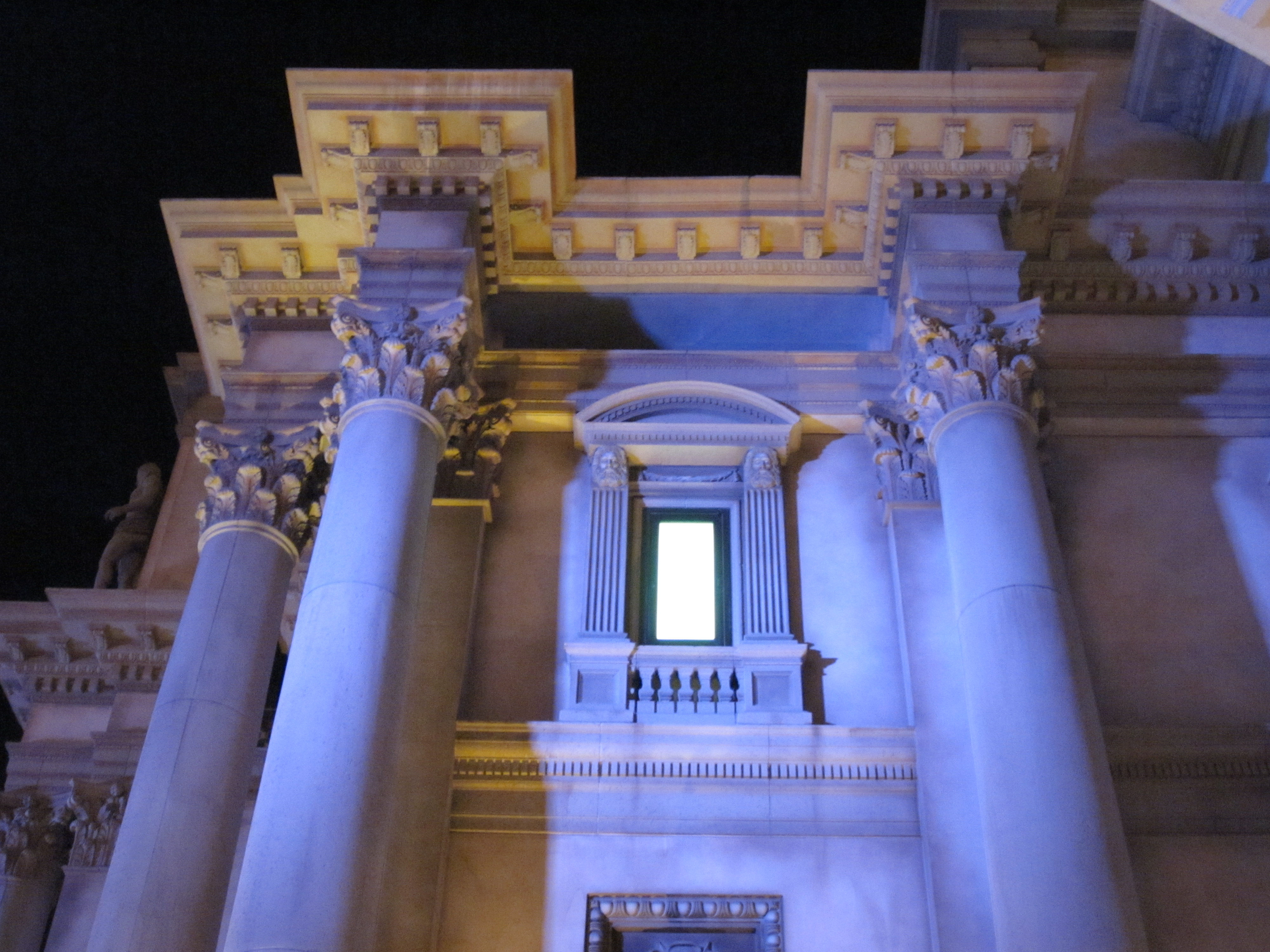
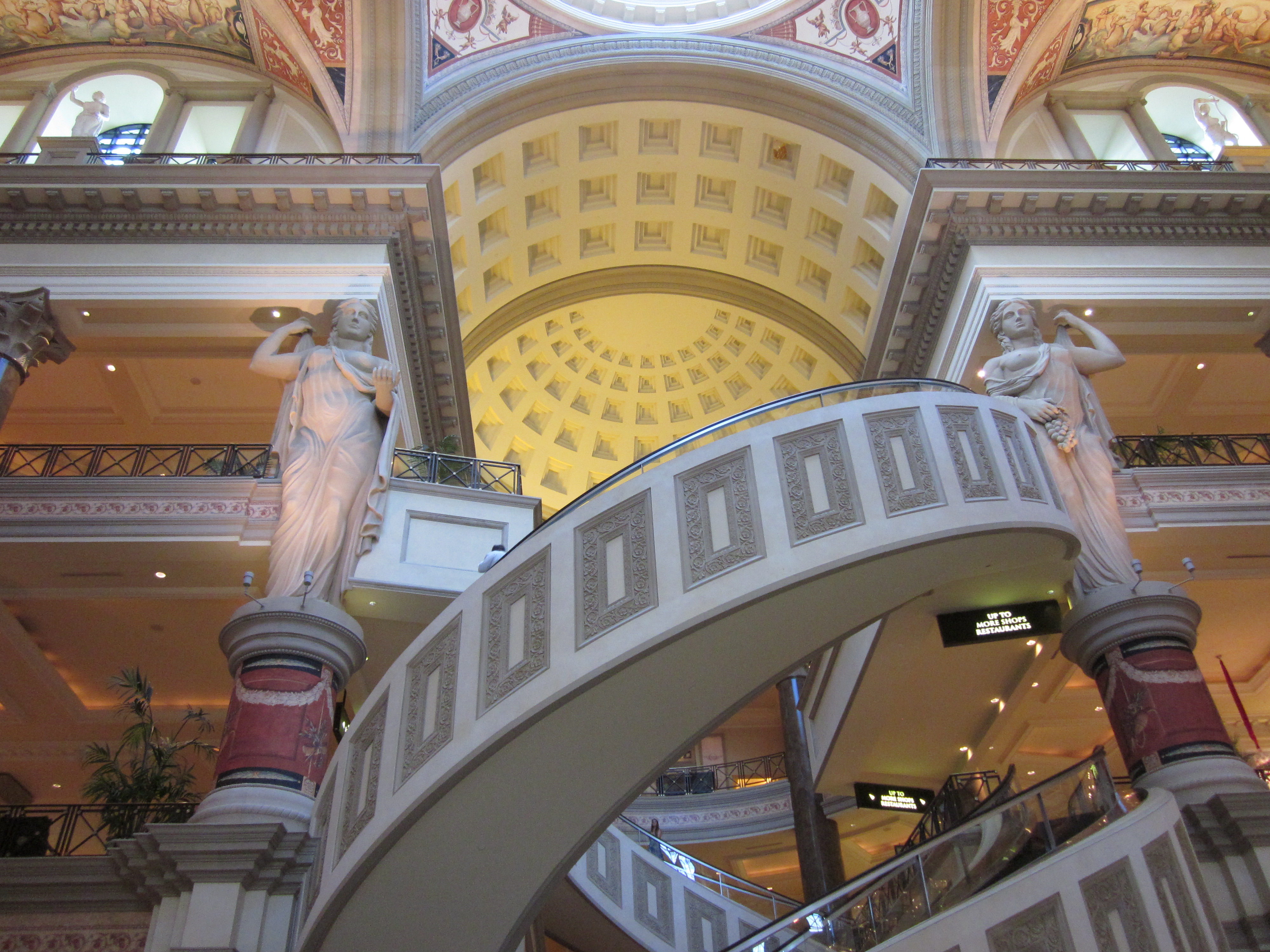
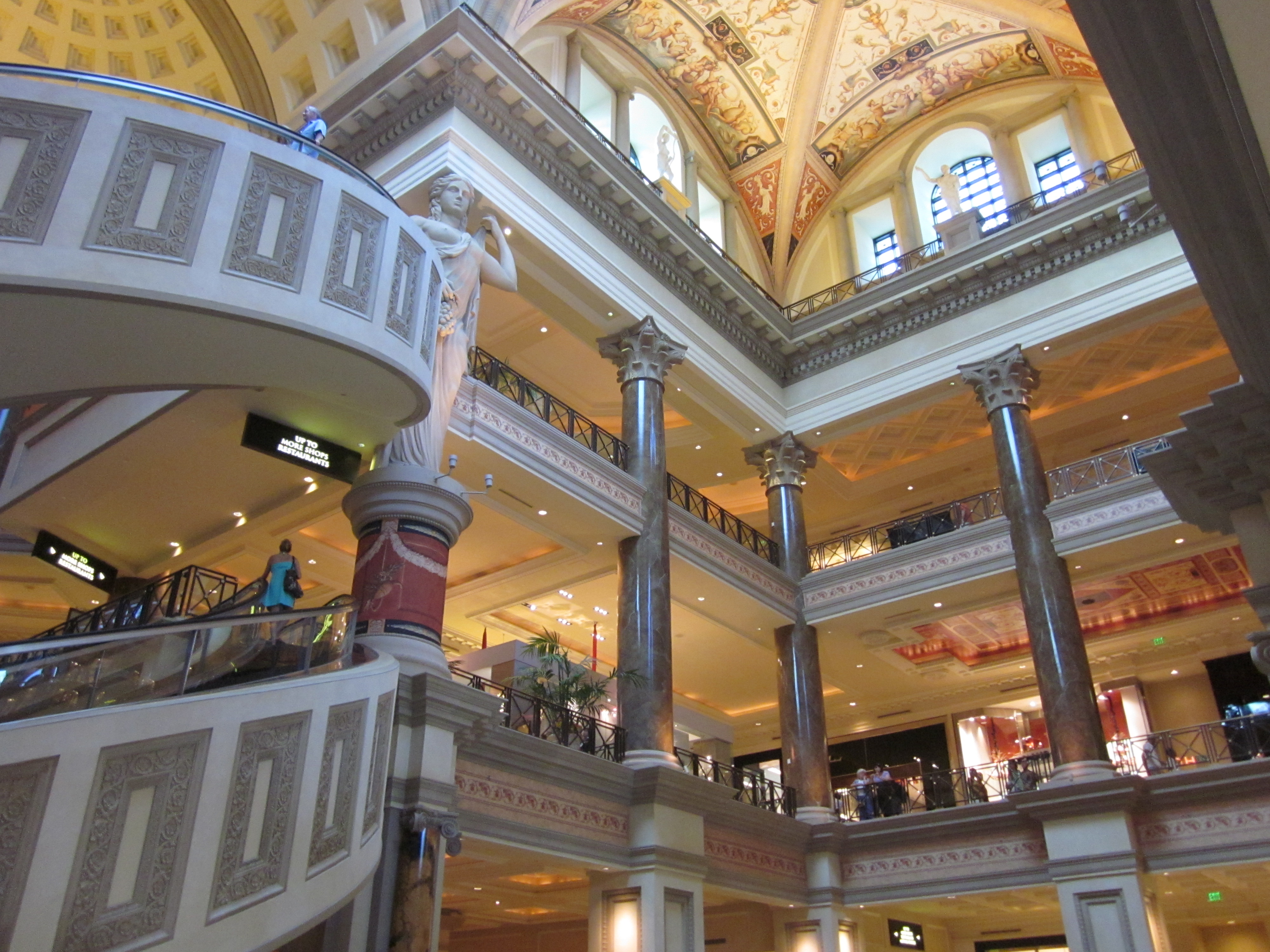
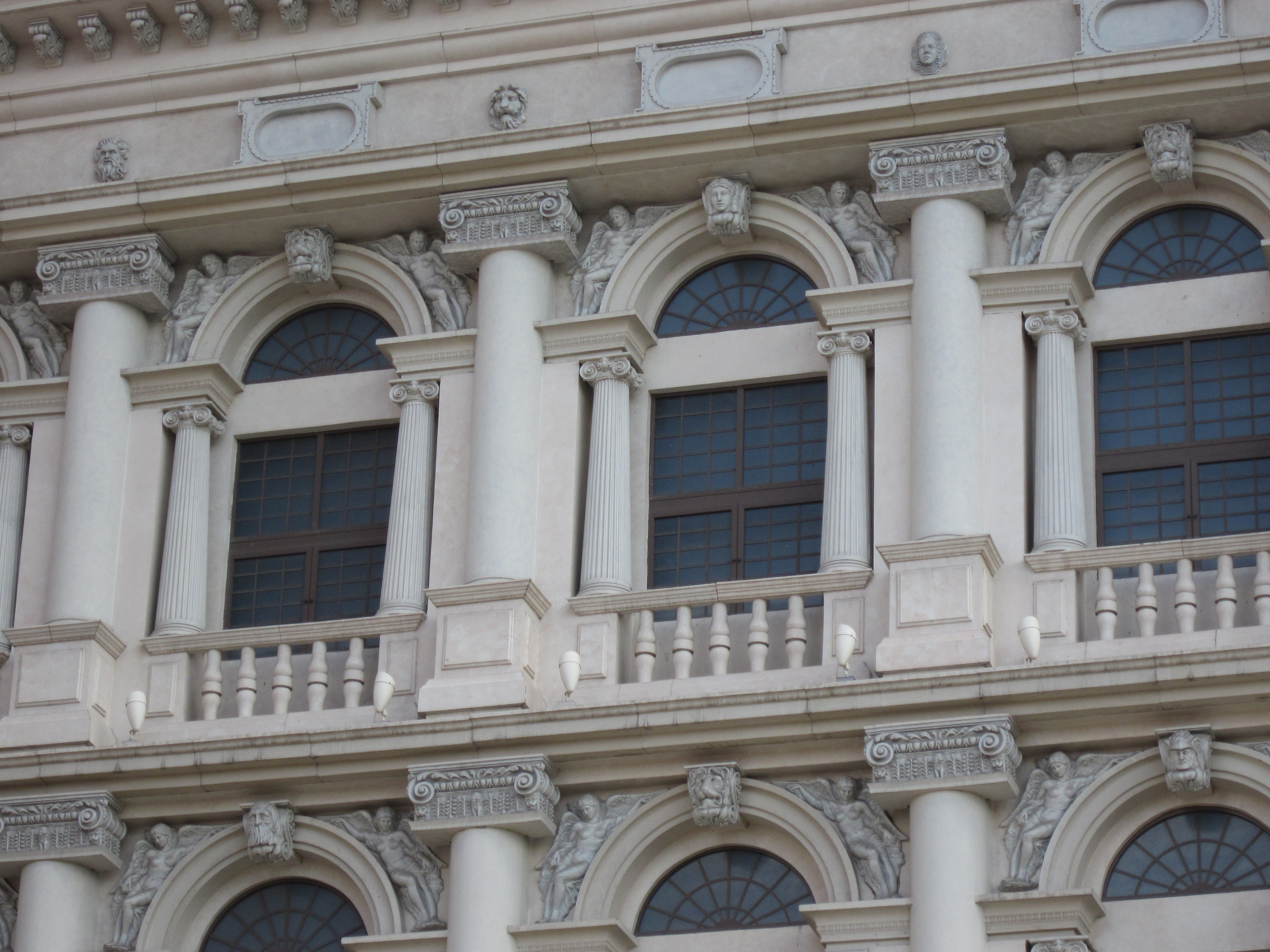
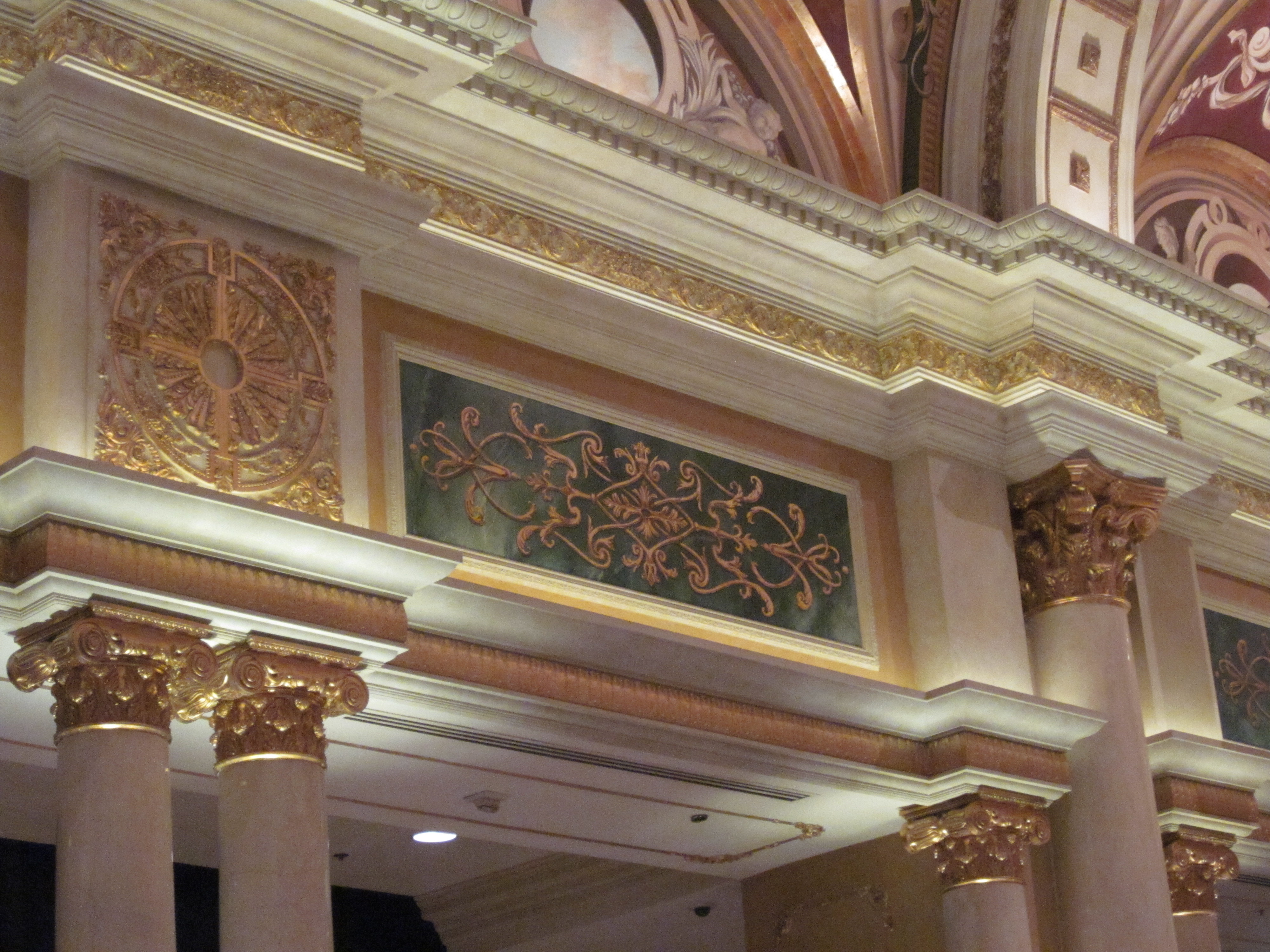
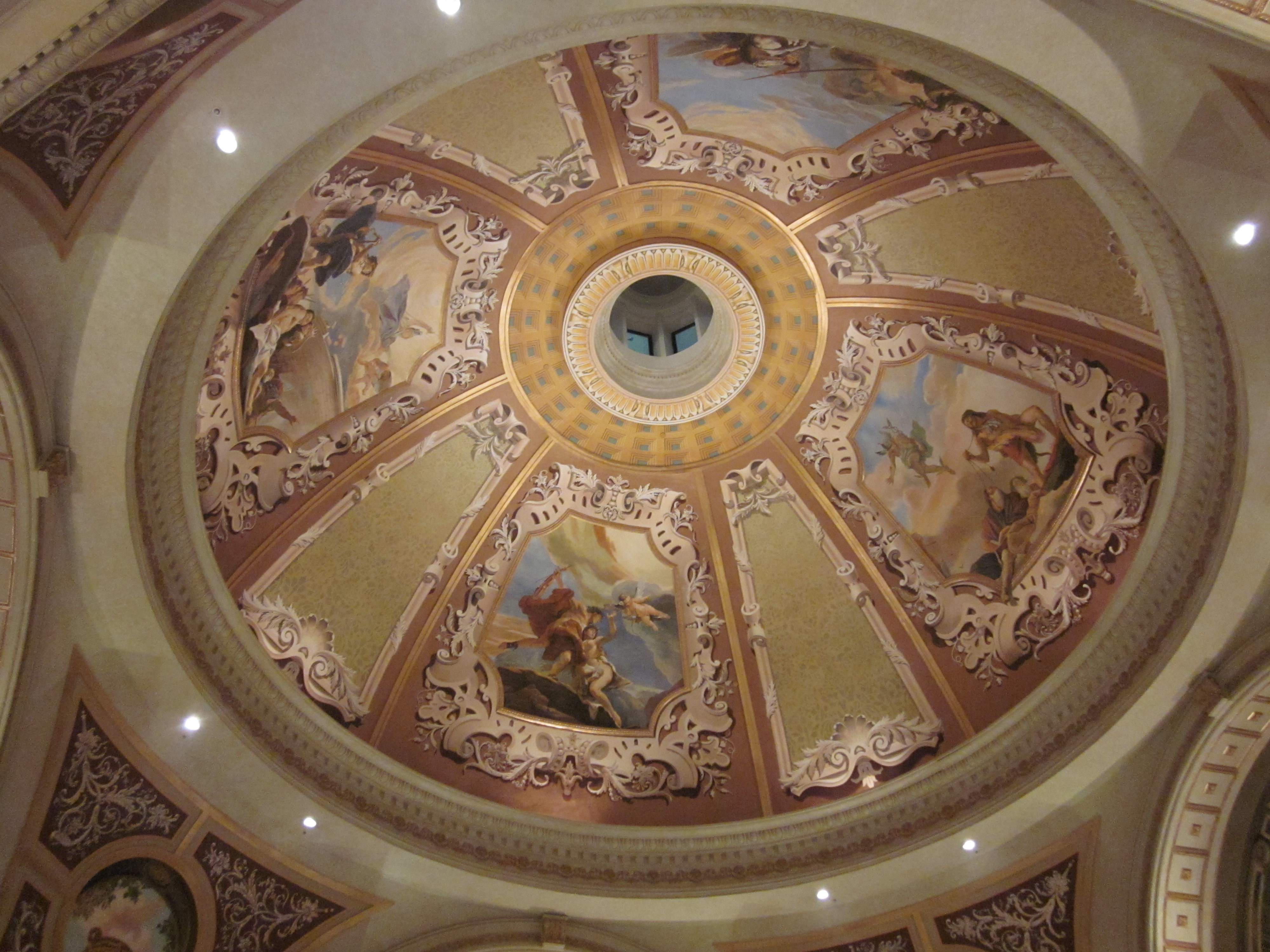
Details from The Venetian

An interview with Robert Venturi and Denise Scott Brown. Venturi says, “I don’t read much about architecture these days, because in general I am bored by or disagree with what is written. I’m not happy with current architecture and I don’t like Neomodernism. But I love to look at historical architecture and the everyday. Therefore on the train or driving I am constantly looking. And, although I don’t like ‘MacMansions,’ I love and learn from the commercial vernacular. I love walking down Main Street, driving Root [sic] 66. I’m a pervert!”
The New York Times review of Thom Mayne’s Cooper Union. “The new academic building at the Cooper Union for the Advancement of Science and Art is yet more proof that some great art was produced in those self-indulgent times. Designed by Thom Mayne of the Los Angeles firm Morphosis, it is not a perfect building, but it is the kind of serious work that we don’t see enough of in New York: a bold architectural statement of genuine civic value. Its lively public spaces reaffirm that enlightenment comes from the free exchange of ideas, not just inward contemplation.”
[1] For simplicity’s sake, I refer solely to Venturi as the author. I don’t mean to slight the contributions of Scott Brown and Izenour.

 Blowhard, Esq.
 Callowman
 Sherbrooke
 Eddie Pensier
 Enzo Nakamura
 Epaminondas
 Fabrizio del Wrongo
 Fenster
 Brundle Guy
 Glynn Marshes
 Paleo Retiree
 Atypical Neurotic
 Question Lady
 Sax von Stroheim
 Sir Barken Hyena
 The Mistaken
 Uncouth Reflections
Re the greater density and ped-friendliness of the Strip today, I flew past Las Vegas recently and thought it looked like a tourist-processing machine, or maybe a giant aircraft carrier in the desert. Unlike the main airports of most cities, which are out in the exurbs, McCarran is right behind the tallest part of the strip. It looks like a quay. Indeed, from 40,000 feet, it looks like you could take the people-mover straight out to the Strip or up into your hotel. Looks like the increased density is forcing the city in the direction of decorated sheds, too.
The thing I remember most from the Venturi book is the diagram of a suburban house, showing how its features symbolize the elements of a grand manor. Does that make it a duck masquerading as a shed?
Incidentally, that flight was from Phoenix to Portland, which has got to be one of the prettiest routes in America.
LikeLike
Approaching Vegas from the East can be interesting too. First, one of nature’s great wonders, the Grand Canyon. Then the lake and fun city’s power supply, Hoover Dam. Then man’s too obvious attempt at burning off all that excess energy (and water), Welcome to Las Vegas!
LikeLike
is that denotative or detonative?
LikeLike
Learning from Las Vegas was this student’s favorite book. Still relatively fresh in the mid-70s, it was the first architecture manifesto that I fully ‘got’.
I didn’t get to Vegas until 20 years later and yes, the buildings he described were overgrown my a newer Vegas which has been since been redone again. As I recall the classic Vegas casino/fun house he described was a big 1 story box, the same kind now championed by Walmart, Costco and every other big box store. The theme was applied to the outside, air conditioning efficiently blasted inside and the lighting set up so the people and games were lit while the container fell away in the dark. You hang a tower of rooms to it for sleep, a pool for cooling if you must, and acres of parking. A decorated but totally utilitarian shed. Reno still has lots of that.
Vegas then took up Disney in a serious way with Eiffels and Pharoahs and fanciful castles taking over the skyline… a skyline rarely seen except during transport in and out.
The latest iteration of Vegas to my eye is more duck-ish than shed-like. The Venetian, Belagio and the Wynn are fully worked symbols of excess with more marbled stairways, painted vaults and for chrissakes even real canals and 24/7 sunsets. You can actually see the walls and ceilings which are fully reflective of the palace you saw as you landed. I have no idea what the Wynn is like inside but it could pass for a highly polished table top cigarette lighter on the outside. Quack Quack
The street life confuses me. During the day it’s just too hot. At night, it’s just too tacky. I guess if you don’t have enough money to stay inside full time you can take to the ‘streets’ for some free entertainment. Or I’m just confused.
None of my professors had much to say about Venturi’s work but many of the students loved it.
LikeLike
Thanks for the insider’s comments. Are you an architect? What did your fellow students like about the book?
LikeLike
I’m not an architect. My undergrad major was architecture so I just got a light dusting.
The book that I was actually referring to was:
The two books have merged in my memory. The reason my fellow mid-70s students loved it was 1) they were both short, 2) they were both well illustrated, 3) C&C in A was a contemporary architectural manifesto of sorts. The kind of bold, overstated work that is always attractive to students. We were mostly steeped in early 20th century modern with losts of Corbu and Mies but this was a contemporary work. And the writer had more of his work built than our studio masters, in particular one Michael Graves.
I found most of his early built designs somewhat unattractive and crude but they were consistent with his (and his cohort’s) writing. However, I look at his more current work and I see very sensible plans and elevations with only minor gestures to his more edgy academic stuff. He always had a particular eye for “shingle style”. As a result, his current work can often be seen as a simple structure with a thin skin wrapped around it. Windows and doors tend to be part of the skin with little articulation. The skins are decorated but again with few insets or protrusions other than sweeping curves. Very shingle style and incidentally, very cost effective. One may not think they are great duck-like objets d’art but they can be seen as vernacular pieces that never disturb or startle like some of his earlier buildings. If you don’t care for the “Great Architect”, I think Venturi can be quite enjoyable.
One of the highlights of my 2 years in studio was being awarded an honorable mention for a design competition held in conjunction with a Venturi visit to Princeton. The for-fun competition involved a redesign of the Architecture building. In a tip of the hat to his Guild House, a senior citizen’s home with a gold anodized TV antenna on top, I put a T-square over the entrance to our Architecture building. Both incredibly ugly solutions though I think my design was less puke inducing. I wish I still had the drawing.
http://philaphilia.blogspot.com/2011/06/butt-fugly-building-of-week-june-14th.html
LikeLike
Fun that you got a chance to look at the book while actually in Vegas.
As for me, I’m a real sourpuss. I liked the book when I first read it back in the ’70s but it came to seem less and less interesting (and more and more academic) the more I ran across people like Jacobs, Krier, Alexander, Salngaros, Rudovsky, Colin Ward, David Watkins, Roger Scruton, James Kunstler, Duany & Plater-Zyberk and some others.
And while the notion of the “decorated shed” is a fun one to play with (and I can see why some architects were liberated by it), I’m not sure that in practice it works out too well. Buildings — and especially trad buildings and trad urban forms — aren’t just decorated sheds, IMHO. They’re more like evolved (and evolving) biological organisms.
Venturi and Scott-Brown’s own buildings are pretty dispiriting, I find — they’re like modernist shoeboxes with a bunch of dumb shapes jigsawed out of them and whimsical “design” stenciled onto them. Check ’em out. I think their stuff has taken the beauty of the Princeton campus down a few notches, for example. Beats a gleaming, stark glass and steel shoebox, I guess — but shouldn’t we expect more?
As for the Thom Mayne … I’ll be posting a little something about that monstrosity one of thse days. Funniest thing: it’s supposed to be contextual. Hahahahahahahaha.
LikeLike
The “duck” and “decorated shed” descriptions seem like more of an attempt to be provocative than anything. I found the table of characteristics to be more useful.
I also thought the academic tone off-putting and, yeah, the examples of Venturi, et. al.’s work in the book do not inspire confidence: http://www.flickr.com/photos/mikewebkist/2736466193/
The Cooper Union is contextual? Oh, Good Lord, I’d love to hear that argument. Next time I’m in downtown L.A. I’ll try to get some shots of his Caltrans building.
LikeLike
Nice post. Always fun to delve into Vegas-style tackiness. I haven’t put a whole lot of thought into this, but my rough sense, gleaned from architectural history classes, PBS-style docs on architecture, and reading that Wolfe book on modern architecture, is that Venturi is as big a boob as any modern architect. Kudos to him for finding a way to differentiate himself from the other boobs, I guess. But that doesn’t change the fact that he designs big, ugly, modernist buildings.
Isn’t it hilarious how strenuously these guys pat themselves on the back for just eversoslightly tweaking the Bauhaus program? I guess when you’ve convinced yourself that only glass boxes are appropriate for modern building, you can make yourself seem like Prometheus by simply adding a colorful little dongle onto your building and justifying it by pointing to Vegas.
BTW, the guy in this arena I’ve always enjoyed the most is Robert Margolies. He’s more of a collector/historian than a builder/priest. His photographs documenting commercial art and architecture constitute a real cultural treasure — and I want to say he was an influence on Venturi and Johnson (though maybe my timing is off there).
LikeLike
>>But that doesn’t change the fact that he designs big, ugly, modernist buildings.
The edition of Learning from Las Vegas that I read is actually the revised edition that was published to make the material more accessible to the public. That is, the first edition was a lavish hardcover that was quite expensive. The revised edition cut out a lot of material, mostly stuff documenting the work of Venturi & Scott Brown. Good riddance, I say, b/c the stuff that made the cut in the revised edition, like the Guild House, does not inspire confidence.
>>BTW, the guy in this arena I’ve always enjoyed the most is Robert Margolies.
Has Margolies published any books of his photos? I searched for the name on Amazon and goodreads but didn’t come up with anything.
LikeLike
Shit! The first name is John. Sorry. I had Robert Venturi on the brain. Try this one:
He’s a pretty talented photographer in addition to being an interesting dude. He also has books focused on miniature golf architecture, movie theaters, diners, roadmap art, and other things.
LikeLike
Thanks for the recommendation. I scored a copy from the bargain table at my local B&N; book is right up my alley. Reminds me of the summer trips my family would take from L.A. to Texas.
LikeLike