
Sherbrooke writes:
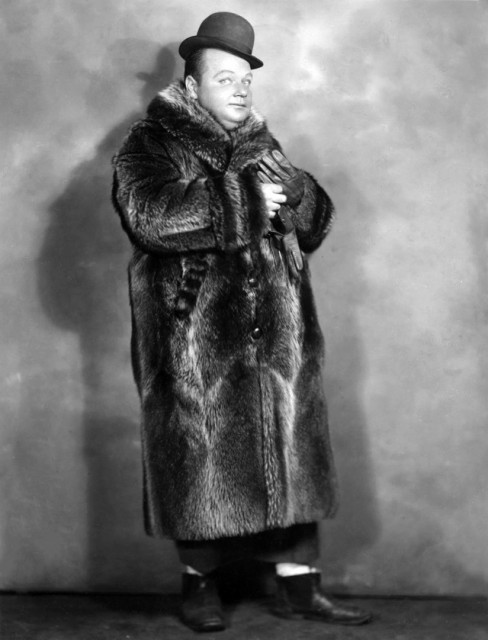
This is Roscoe (“Fatty”) Arbuckle in the 1910s. In his shorts, he was playful and often brilliant. And in some, he had a real sense of anger, outraged dignity and sadness. (See “He Did and He Didn’t,” 1916.) Now those qualities seem prophetic. At the time this was taken, he could not have known he would shortly become film’s unluckiest actor.
 Blowhard, Esq.
 Callowman
 Sherbrooke
 Eddie Pensier
 Enzo Nakamura
 Epaminondas
 Fabrizio del Wrongo
 Fenster
 Brundle Guy
 Glynn Marshes
 Paleo Retiree
 Atypical Neurotic
 Question Lady
 Sax von Stroheim
 Sir Barken Hyena
 The Mistaken
 Uncouth Reflections
It’s been decades since I explored his work, but when I did watch his films Fatty struck me as really brilliant, both in his performing and his filmmaking.
LikeLike
Agreed. … I think that some young people are repulsed by the fact that he’s a “fatty” (he hated that nickname, but knew its professional value) and his heavy make-up, typical of early clowns. (It’s not that extreme, but it still looks like Chris Farley ran into a mascara wand.) I also love how much human suffering, dignity and suppressed rage turn up (and not comically) in a movie like “He Did and He Didn’t” (1916–I promote that film relentlessly) and in other moments throughout his work. His work could be very, very broad (hysterical imitation of Theda Bara) or feel completely modern (his subtlety and tenderness with Mabel Normand). Some silent fans love him simply for having filmed his dog Luke, an American Staffie and a big fave of mine. In fact, I think R.A. was at his best when either supported by Normand, or by Keaton and that ragtag dog.
LikeLike