
Fabrizio del Wrongo writes:
Released in 1957, “Untamed” is an episodic account of a woman’s semi-voluntary trudge towards independence, one that uses the Westernization of Japan as its backdrop. (It’s set during the Taisho period of the early 20th century.) Hideko Takamine — probably Japan’s greatest movie actress — plays the central character, Oshima, as a woman whose lingering adolescence is all mixed up with her moxie; at times it’s not clear whether her willfulness is an outgrowth of immaturity or the result of some deeper drive towards unconventionality. Takamine makes good use of her experience as a child star — she was known as Japan’s Mary Pickford — by allowing hints of the moppet to leak through the adult facade. As she becomes more self-sufficient (and more elegantly coiffed), her mien grows steelier, but it’s hard to pinpoint the exact moment at which the girl disappears. Spread over a years-long narrative, with little padding to separate the individual episodes, the performance is like a series of variations, albeit a constrained one; it reminded me of Takamine’s great turn in “Floating Clouds,” but with the peaks and valleys lopped off.
Typically, director Mikio Naruse negotiates the dramatic premise in a novel way. (The screenplay is by Yōko Mizuki, from a novel by Shusei Tokuda.) You might even say that he sabotages it. For the first two-thirds of the film we get bits of meetings and break-ups, as the comely but difficult Oshima is shunted from caretaker to caretaker. This de-emphasizes the meat of the relationships, the stuff of day-to-day connectedness, and highlights the crises that tend to serve as culminating moments within a typical dramatic program. It’s as though Naruse views relationships as mere vehicles for conflict. The director playfully encapsulates his strategy during a scene in which Oshima and her married lover Hayama attend a movie. The sequence begins with a cut onto a foggy exterior, which is revealed as an image on a movie screen when Naruse cuts to Oshima and Hayama sitting in the audience. The lovers in the film-within-a-film have a quarrel, at which point the nitrate abruptly stops and melts, leaving their argument without context — a fragment left stranded in the mind.
“Untamed” doesn’t work towards decontextualization, exactly, but it resists temporal and geographical resolution. At times a dissolve will move us months forward in the story, at others a few hours. And it’s sometimes hard to predict where any single cut will leave us: we blip into and out of locations, the main ones being Tokyo, a rural farm, and a snow-set lodge in the mountains. Of course, this underscores the unpredictability of Oshima’s situation, but it also provides “Untamed” with a suspense that is lacking in the hodgepodge-y storyline — a suspense that derives from the movie’s form rather than its narrative. As he did in the aforementioned “Floating Clouds,” as well as in “The Stranger Within a Woman,” which I wrote about here, Naruse achieves unusual effects by boldly moving through time, thereby bringing one moment into energized contact with another; it’s possible this approach allows him to draw meanings from the performances that would not be accessible otherwise. Certainly, it serves to enhance Takamine’s presence: as she’s our only entry point into this story, we hang on her every reaction.
The discombobulating effect is heightened by the peekaboo way in which Naruse reveals (or obscures) the characters; their connections to one another grow harder to resolve the more we delve into their lives. Everyone seems to have a parent who is not actually a parent (Oshima herself was dealt into adoption, leaving her with two sets of parents), or a romantic partner who is complicated in some crucial way. Take, for example, Oshima’s first husband, a sour-faced divorcee played by Ken Uehara: He keeps a mistress in another part of the country. When we’re led to believe we will meet her, it turns out that the woman we’re introduced to is actually a friend of Uehara’s character. Yet he’s had a crush on her for many years, a fact that both preserves the scene’s air of betrayal and turns the expected love triangle into something harder to diagram. (A love parallelogram?) And when the woman reappears at the end of the movie, as the mistress of Oshima’s second husband, it’s a coincidence that’s only reconciled by reference to the patchy dream logic that seems to rule this social ecosystem.
“Untamed” settles into a more conventional pattern once Oshima meets Onoda, a tailor played by the impish Daisuke Katō. (He was the round-faced mercenary in “The Seven Samurai.”) The two enter into a business arrangement, and at some point they marry. It’s the first relationship in which Oshima is a partner rather than a hired hand. But this fails to relieve her difficulties: her problems simply become those of a proprietor rather than those of an employee. Though Naruse doesn’t show the marriage ceremony, he does give us the handshake deal that inaugurates the economic venture. It’s an acknowledgment that money, not love, is the driving force behind this union.
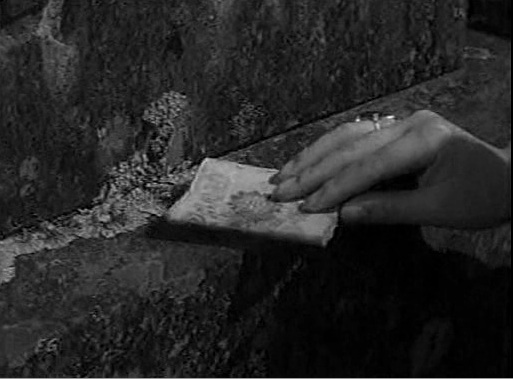
No filmmaker in history has gotten more than Naruse out of money as a metaphor for the harsh realities that undergird social bonds. In “Untamed” all of Oshima’s relationships either develop out of or devolve into monetary affairs. When Hayama visits Oshima in Tokyo on a second occasion — though she’s now married, he still carries a torch for her — she tramples on the moment by requesting a loan to sustain her business. You can see the heartbreak flit across Hayama’s face as he realizes that he’s lost her. Later, when Oshima learns Hayama is dying, she travels to his home in the mountains, explaining to Onoda that the loan must be repaid. It’s a measure of Oshima’s knottiness that it remains unclear whether this is a ruse designed to allow her to bid farewell to her former lover or if her intent really is fiduciary. (Takamine gives you glimpses of the interior process by which Oshima squelches her softer impulses, though it’s hard to say exactly how she does it — her will seems to hang about her like an aura.) Upon learning that Hayama has died while she was en route, Oshima travels to his burial site, at which point Naruse gives us a wonderfully cynical image of her hand depositing a wad of cash on his gravestone. The relationship has melted away, leaving only a residue of money.
There are no heroes in “Untamed,” and though Oshima’s various suitors are certainly flawed, they are presented more as people acting out of self-interest than as out-and-out villains. Oshima acts out of self-interest, too. Tellingly, a scene in which she meets Hayama’s widow abuts her confrontation of a woman with whom Onoda has been dallying. Whereas the widow handled the situation with quite acquiescence, Oshima flies into a fury, physically attacking her rival. It’s a juxtaposition intended to force a comparison of Oshima’s behavior with the Japanese feminine ideal of placid conformity. But Naruse refuses to impose a judgement, and he never valorizes Oshima the way Mizoguchi does the titular victim of his superficially similar “The Life of Oharu” (a great movie in its own right). He’s too cynical for that. Instead he invites us to consider Oshima as a collection of impulses, desires, and needs, one that is forever evolving into new and hard-to-pin-down configurations. It’s probably not an exaggeration to say that Naruse’s best characterizations are like Cubist portraits: the harder you scrutinize them, the more they seem to reorganize before your eyes.
But there’s no doubt that Naruse intends us to appreciate Oshima’s gumption. At a time when Japanese women rarely drew attention to themselves, she’s a real live wire, and some of the movie’s most genial — I hesitate to call them “happy” — scenes are those in which she is shown pushing the social envelope. In particular, a satirical section in which Oshima and Onoda advertise their Western pretensions has a rosiness that almost passes for nostalgia. The image of Takamine wearing a Western dress and Victorian-style ankle boots while Katō pushes her along on a bicycle is one I won’t soon forget.
“Untamed” ends on an unsettled note as Oshima, now a successful entrepreneur, leaves Onoda for a handsome employee, played by a young Tatsuya Nakadai. Naruse downplays the triumphal aspects of this display of independence in favor of a tone rich in unease and doubt. Oshima enlists the Nakadai character from a distance, calling him on a local merchant’s telephone, a device that seems disjunctively futuristic in this context. And of course her proposition is economic rather than romantic — she asks him to go into business with her. Will this relationship have a happier ending?
The closing image is one of those summing-up gestures for which Naruse is justly famous. As rain pours down, Oshima opens a newly purchased umbrella and carefully strides into the flooded street. First she walks towards the tracking camera, which is the norm in a Naruse walking scene (the director is a sort of poet of walking), but the next shot shows her back as she recedes into the distance, her face finally obscured from view. Like Hayama and Onoda, we are shut out of her inner life. It’s hard to know where she’s headed.
Related
- Though it didn’t make the cut for a nomination, “Untamed” was Japan’s 1957 entry for the Best Foreign Language Film Oscar, meaning it was chosen over movies like Kurosawa’s “Throne of Blood” and Ozu’s “Tokyo Twilight.”
- I wrote about a couple of Naruse films here.
- I wrote about other films starring Takamine here and here.
- Some of the themes in the movie recall the early Danish silent “The Abyss,” which I wrote about here.
- “Untamed” is not available on video, but Criterion has released Naruse’s “When a Woman Ascends the Stairs” on DVD, as well as an Eclipse set containing some of his ’30s work. Several of his films are also available to stream on Hulu+.

 Blowhard, Esq.
 Callowman
 Sherbrooke
 Eddie Pensier
 Enzo Nakamura
 Epaminondas
 Fabrizio del Wrongo
 Fenster
 Brundle Guy
 Glynn Marshes
 Paleo Retiree
 Atypical Neurotic
 Question Lady
 Sax von Stroheim
 Sir Barken Hyena
 The Mistaken
 Uncouth Reflections
Pingback: Notes on “Every-Night Dreams” | Uncouth Reflections