Linkage (Chocolate Edition)

Eddie Pensier writes:

Posted in Food and health, Linkathons | Tagged , | 8 Comments

Art Gallery of New South Wales: Europeans

Eddie Pensier writes:

Another batch of paintings from my visit to the AGNSW, this one focusing on European and British artists. I’m particularly fond of Strutt’s coolly triumphal David’s First Victory, the barely suppressed sexuality under the surface of Sallé’s The Anatomy Class at the Ecole des Beaux-Arts, and  Rivière’s Requiescat, which might be conventionally sentimental, but it works, damn it.

A bit o’ nudity (and other stuff) after the break.

Continue reading →

Posted in Art, Travel | Tagged , , , , , , , , , , , , | 2 Comments

Architecture Du Jour

Blowhard, Esq. writes:

peabodylibrarymd

The Peabody Library at Johns Hopkins University, Baltimore, MD. Source.

Click on the image to enlarge.

Posted in Architecture | Tagged , , , , | 1 Comment

The Culture That Is Japan

Blowhard, Esq. writes:

Daiso Japan is a Japanese-based retailer that specializes in cutesy cheap crap — curios, stationary, toys, kitchen supplies, cosmetics, toiletries, seasonal goods, etc. It’s an Asian Dollar Tree, with few exceptions, everything in the store is $1.50. The company has a few thousand stores in Japan and about 30 in the United States, most of which are in California, specifically here in SoCal. Their mission statement is “Constant self-denial, to improve stores and products.” Here are a few pictures I took at one of their bright, white-and-pink, fluorescent-lit stores. Like EP, I encountered some weird stuff.

They sell the usual good luck totems and tchotchkes.

japancuriosI have not met a woman who didn’t think these are a brilliant idea.

chairsocksHey, for all I know it works well.

horsefatThis was in the toy section. Would make a great party favor at the neighborhood kid’s birthday.

fakeboobsNo idea what this is, but it was also in the toy section. You’ll be the silliest sex offender on the block!

lolwtf

Related

Posted in Humor, Shopping, Travel | Tagged | 7 Comments

Questions Du Jour

Eddie Pensier writes:

I spotted this on the shelf at a local bookstore. I’m putting the photos below a page break because I suppose they might be considered NSFW, even though the subject in question was out in the open at eye-level in a public bookstore in the “Health” (?!) section, clearly visible to any browsing moppet.

Continue reading →

Posted in Books Publishing and Writing, Humor, Personal reflections, Sex | Tagged , , , , , | 3 Comments

Art Du Jour

Blowhard, Esq. writes:

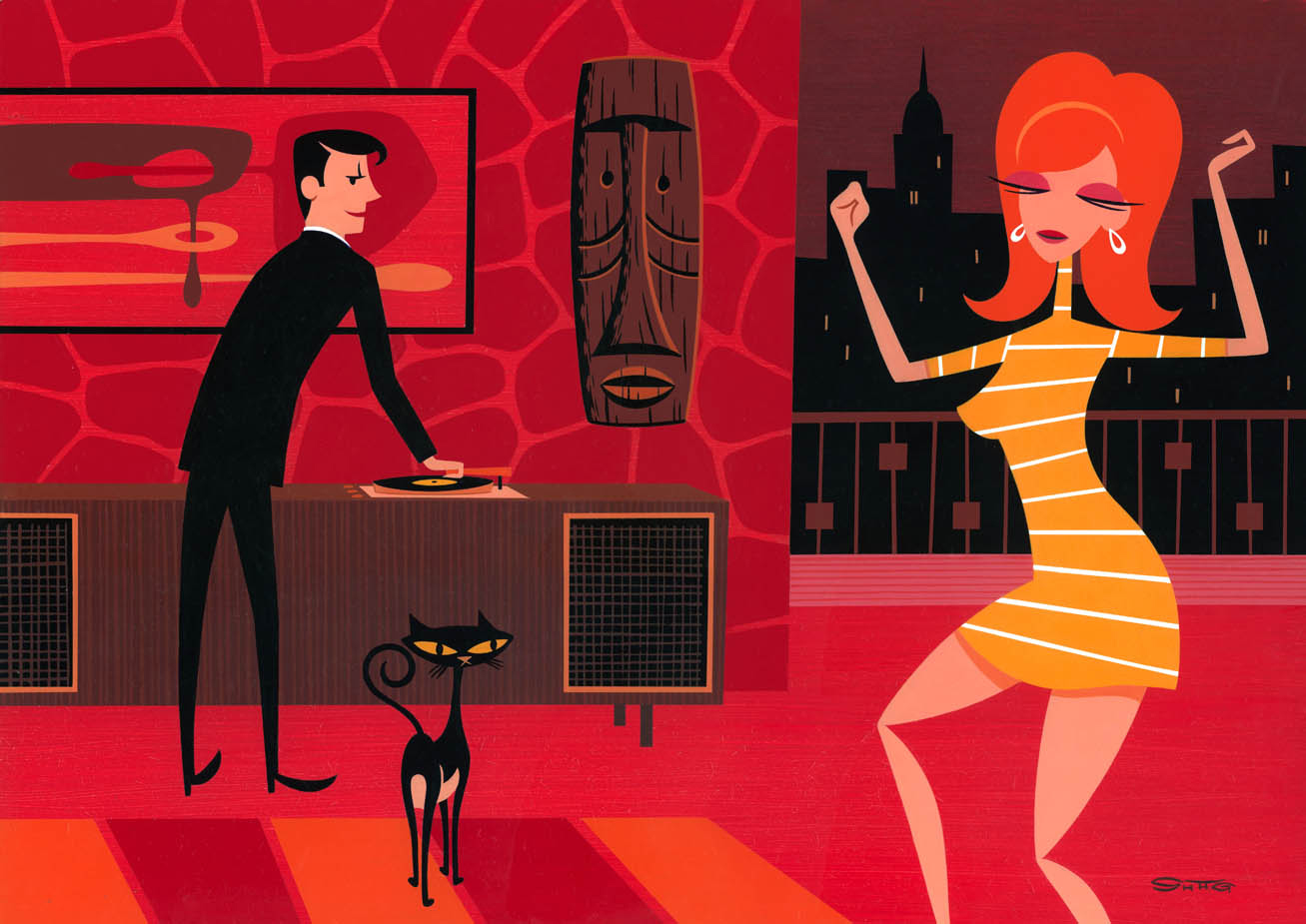
HerSecondNightInTheCity

SHAG (aka Josh Agle), “Her Second Night in the City,” 2013

Click on the image to enlarge.

Posted in Art | Tagged , , , , | 22 Comments

Notes on “The Company’s in Love”

Fabrizio del Wrongo writes:

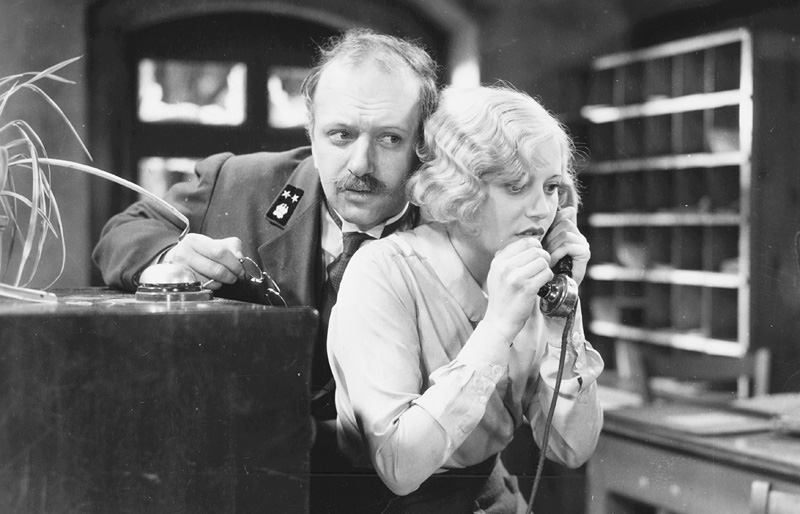
968full-the-company's-in-love-screenshot

Max Ophuls’ first feature, released in 1932, seems a conscious emulation (and sort of send-up) of Lubitsch. Not only is it set partly in the Bavarian Alps, the setting of several early Lubitsch films, it features operetta elements, and when its characters describe a stereotypical movie director, he’s portly, smokes a cigar, and has a “touch.” The picture is of the movies-about-making-movies genre: It focuses on a Bavarian girl who skis into a location shoot, then is considered for the lead role when the star of the production quits. The entire film crew pays court to the ingénue. The cinematographer promises to make her beautiful. The composer promises to write great songs for her. The writer promises to give her great lines — and is promptly told to shut up, because who cares what writers think?

Ophuls gives the picture a glancing, slapdash quality that’s a far cry from the silky elegance of his mature style; yet it’s confident, light on its feet, and pretty sharp about the way in which movie making tends to be all mixed up with sex and titillation. The movie is probably at its cleverest when poking around issues of fame and celebrity. When the girl — she has the comically un-Hollywood name of Gretl Krummbichler — boards the train that will take her to Berlin, the whole town sees her off; her association with movies has transformed her from a routine postal worker into a sort of aristocrat. Realizing this, Gretl’s onetime suitor wears a rueful expression. He’s waving goodbye to a dream.

Surprisingly, the screenplay undermines the fantasy inherent in its premise. It gradually becomes apparent that Gretl’s lack of talent is insurmountable, and she’s fired while shooting a musical number on an opulent, Venice-inspired soundstage. When the original lead actress returns — she’s made up with her costar husband — everything finally clicks, both in the fictional movie and in the one we’re watching. Ophuls signals this with a long, complicated tracking shot — hey, a Max Ophuls shot! — that brings together the crew members in a way that emphasizes their shared professionalism and dedication to the craft of movies. The shot reminded me of the one surveying the orchestra in Sturges’ great “Unfaithfully Yours.” Both reveal secondary players as essential cogs in highly functioning systems.

The system here is the film crew, and it’s a system that’s incapable of assimilating the unrefined, workaday Gretl. But she eventually finds her place. In the final scenes she departs Berlin with a new lover. They go not to Bavaria but to Venice — the real one this time. They’re a truly modern couple: Their lives reflect the movies even as they remain apart from them.

Related

  • “The Company’s in Love” shares some themes with “Thomas Graal’s Best Film,” which I wrote about back here.
Posted in Movies | Tagged , , , , , , | Leave a comment

Architecture Du Jour: The Hallenhaus House Barn

Blowhard, Esq. writes:

Once found in a wide arc right across the eastern Netherlands and northern Germany, the Hallenhaus is a form of wood-frame house barn that contained, under one roof, living quarters, stables, and crop store. It was in the use from the fifteenth to the twentieth centuries and numerous fine examples survive to this day. The basic three-aisle form of the Hallenhaus possibly developed from an early longhouse of the seventh to tenth centuries, to which the aisles were gradually added. Although there is a great deal of regional styling and variation in construction details, the basic form of the Hallenhaus remained consistent throughout.

The support system for the central nave of the building was constructed in a post-and-truss form, with long beams running across the top of parallel rows of posts, capped with a wood framework. This wide hall space (Diele), which was covered with large floorboards, was used for all important tasks, including the threshing in wintertime. On either side of the Diele were the stables and stalls, for cattle and horses…

— Building Without Architects: A Global Guide to Everyday Architecture

Posted in Architecture | Tagged , , , | 2 Comments

Showtune Saturday: “Well, Did You Ever?”

Eddie Pensier writes:

The combined nonchalant swingin’ coolness of Bing Crosby, Frank Sinatra and Cole Porter may cause swooning fits of “why can’t I be that awesome?” nostalgia.

From High Society (1956), the Charles Walters-directed musical adaptation of The Philadelphia Story. Also features Grace Kelly in her last film role, as well as Celeste Holm and Louis Armstrong.

Related

Posted in Movies, Music | Tagged , , , , | 3 Comments

Movie Poster Du Jour: “Devi”

Fabrizio del Wrongo writes:

100_8323

Satyajit Ray famously designed the posters used to advertise his movies. He had a knack for it.

Related

Posted in Commercial art, Movies | Tagged , , , , , | 4 Comments