
Blowhard, Esq. writes:

“Dawn Attack” by Frank Frazetta.
Click on the image to enlarge.
Blowhard, Esq. writes:
“Dawn Attack” by Frank Frazetta.
Click on the image to enlarge.
Blowhard, Esq. writes:
The chattel houses of Barbados and other parts of the British West Indies date back to the nineteenth century, and are possibly the world’s first mobile homes. The word “chattel” means “moveable property” and derives from “cattle” — at one time, this was the only significant piece of property a man would own…
Chattel houses were built entirely of wood and assembled without nails to make them simple to disassemble and move from place to place…As the family expanded and perhaps became more settled, owners often added a couple of rear rooms, or even another house, onto the back.
— Building Without Architects: A Global Guide to Everyday Architecture


Fenster writes:
Must have been a labor of love to put together:
Paleo Retiree writes:
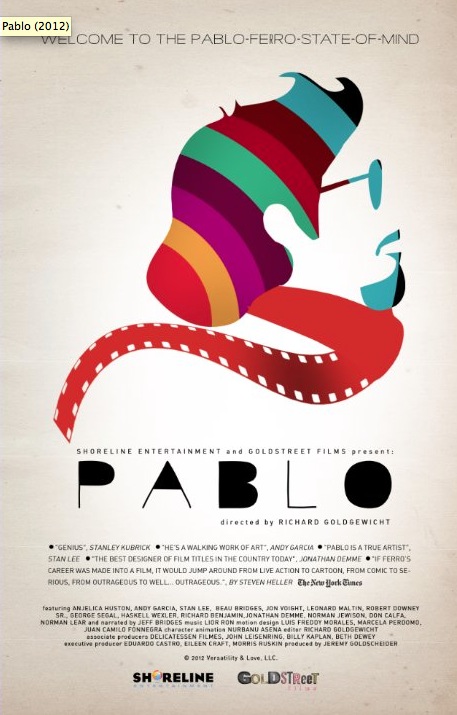
Episode three in my current series of writeups of documentaries-about-movies that I’ve enjoyed recently. Episode one concerned “Free Radicals“; episode two was about “Big Joy.” Today:
Blowhard, Esq. writes:
Blowhard, Esq. writes:
The mountainous areas of western Fujian province in southwest China are home to a unique form of rammed-earth building known as tulou — large defensive structures designed to contain and protect one family clan…
…These enclosed fort like buildings, which could take seven years to build, have rounded stone foundations and a base of large stones, plastered with clay, which support 6-foot-thick earth walls, reinforced with bamboo canes. The building’s interior is a largely wood structure of beams, decks, and columns, which contains 250 small uniform dwelling units, housing some eighty families. These face a central communal courtyard, in which an ancestral shrine provides a focus for the entire community…
– Building Without Architects: A Global Guide to Everyday Architecture


Blowhard, Esq. writes:

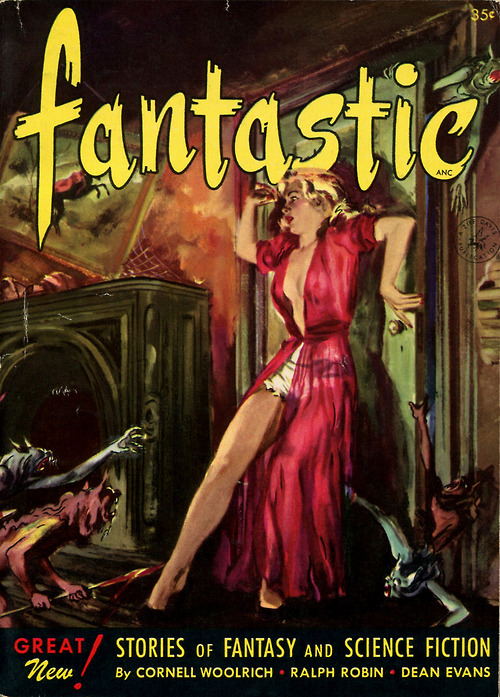
Published in 1966. From the back cover: “Where did he go? OUT. What did he do? EVERYTHING. He started with an ex-girl friend and then kept right on going. He didn’t care where — discotheques, cocktail parties, un-husbanded apartments — as long as there were women. Lots of women; enough to make him forget the seven long years he’d spent with only one. New York was a city of a thousand-and-one delights — and John Deale was determined to try them all…”
Fabrizio del Wrongo writes:
 Even more than “Star Wars” or “Raiders of the Lost Ark,” this cheery travesty from the Cannon Group seems to start in the middle. The hero, Allan Quatermain, is given no introduction, and the details of his mission — such as it is — are daubed in perfunctorily between bursts of silly action. In some ways it beats Lucas and Spielberg at their own game: It’s structurally looser, more improvisatory in feel, than anything the Bearded Duo ever came up with. (The movie can be taken as a spoof of ’80s blockbusters.) The screenplay, developed by Gene Quintano and James R. Silke, dispenses with most of the architecture of its source material, the 1885 novel by H. Rider Haggard; the plot is just one damn thing after another. But the movie’s knowingness and its honesty concerning its own dumbness are often fairly compelling. I particularly enjoyed a languorous bit in which the heroine, played by a young Sharon Stone, lounges in the jungle clad in lingerie. The “Penthouse”-style lighting makes her look gift-wrapped, and the tribe of ersatz Ubangis attending her has some of the cheek of the early Weissmuller Tarzan films, still the gold standard for ludicrous jungle fare. Here, at the start of her career, Stone is distinguished by a gangly American obliviousness. From a traditional acting standpoint her performance isn’t much, yet her physicality and diligence are memorable — she’s like a cheerleader giving her all for her team. (When she wants to communicate urgency she rapidly bobs up and down like she has to pee, and when attempting to fly a plane she throttles the controls and yells, “I’m drivin’ a car — vrooom!”) Veteran director J. Lee Thompson sustains a uniform tone and keeps everything moving at a brisk tempo. The gags are well-timed, and the energy doesn’t flag until the end, when the action becomes strained. In the role of Quatermain, Richard Chamberlain maintains an admirable blandness even while saying things like, “It’s right there between your legs! Pull on it!”
Fabrizio del Wrongo writes:

Related
Eddie Pensier writes:
I’ve started a few arguments in my day (and given people cause to question my sanity) by stating that Sky Masterson in Guys and Dolls (1955) is my favorite Marlon Brando screen performance. It makes more sense when taken in total against the backdrop of other roles he’s more famous for. Between the tormented, the agonized, the mad, the brutish, what would be the least Brando-ish thing you could possibly imagine him doing?
The romantic lead in a musical comedy, perhaps?
And he’s fantastic as smooth, suave Sky, with a voice that isn’t “good” exactly, but his technique and delivery are assured. Same goes for Jean Simmons as the prim and uptight Sarah Brown…who lets loose with surprisingly sweet sounds. Sarah may mock Sky’s concept of “chemistry” when he sings that that’s how he’ll know his love, but Simmons and Brando have a boatload of it in this scene.
The moment at the end when Brando grabs Simmons and plants one on her lips…she struggles and eventually melts for him…today’s morality police would certainly call it rape, or at least not within the spirit of “affirmative consent”. I call it sexy as all hell.
Trivia: supposedly Marilyn Monroe desperately wanted to play Miss Adelaide on screen. Monroe, Sinatra, Brando, Simmons…how’s that for a marquee?
BE watched the film a couple weeks ago, so let’s see what he has to say.
Blowhard, Esq. writes:
While I agree with Eddie that Brando and Simmons are appealing, I was underwhelmed overall. At two and a half hours, a musical should have a hell of lot more story than a dude trying to stage a crap game and another guy trying to woo a lady. The Sinatra scenes lack any dramatic or narrative drive — she wants to get married, he does not, and there is nothing standing in their way. At least with the Brando story you have the perennial jousting and parrying of opposites who are attracted to one another.
Furthermore, other than “Luck Be A Lady,” I did not think any of the songs were that memorable. On the other hand, a film in which a young Brando is dressed in a suit and seducing Jean Simmons through song and dance is not a thing to sneeze at. I also enjoyed the stylized Times Square and especially the opening number that deftly juggles a bunch of petty criminals plying their trade. I am glad I watched it, and I would recommend it to any musical fans if only because it is a Broadway favorite, but as Pauline Kael noted, while the Broadway version may be legendary “the movie provides no clue as to why.”

 Blowhard, Esq.
 Callowman
 Sherbrooke
 Eddie Pensier
 Enzo Nakamura
 Epaminondas
 Fabrizio del Wrongo
 Fenster
 Brundle Guy
 Glynn Marshes
 Paleo Retiree
 Atypical Neurotic
 Question Lady
 Sax von Stroheim
 Sir Barken Hyena
 The Mistaken
