Salve Regina

Eddie Pensier writes:

Opening tableau of John Dexter's production of Poulenc's Dialogues of the Carmelites, from the Metropolitan Opera

Opening tableau of John Dexter’s production of Poulenc’s Dialogues of the Carmelites, from the Metropolitan Opera

Francis Poulenc’s Dialogues of the Carmelites is a strange opera, and not an easy one. It weaves complex themes of devotion, martyrdom, fear, and politics around the storyline of a Carmelite convent during the French Revolution. It’s very talky, and the action, such as it is, is pretty minimal. But it has a final scene that might be the greatest in the history of musical theatre.

The nuns have been sentenced to death by the Revolutionary Tribunal. and are gathered in the square awaiting execution. They begin singing a hymn.

Salve, Regina, Mater misericordiæ,
vita, dulcedo, et spes nostra, salve.
Ad te clamamus exsules filii Hevæ,
Ad te suspiramus, gementes et flentesin hac lacrimarum valle.

One by one, they walk up to the scaffold, and one by one, their voices are cut off by the grotesque sound of the guillotine, until only one voice remains. It belongs to Constance, the chirpy optimist of the convent. Her ascent to the scaffold is interrupted by a moment of terror.  Blanche, a  troubled noble girl whose motives for taking the veil were always murky, and who escaped before the arrest and sentencing, emerges from the crowd at Constance’s moment of despair. They embrace (the orchestra breaks into bright, happy major-tonal chords here), and Constance resumes her walk to the blade (orchestra resumes stomach-churning chant). Blanche herself then offers her life, singing the last verse of Veni Creator Spiritus:

Deo Patri sit gloria,
et Filio qui a mortuis
Surrexit, ac Paraclito,
in saeculorum saecula.
Amen.

Curtain.

It’s difficult to overstate the emotional impact of this scene. Even if you have nothing invested in the story of “a bunch of nuns who get their heads chopped off” (as I once flippantly described it to a friend), between the stoicism of the women meeting their fate and the sheer coup-de-thêatre-ness of the religious singing being violently interrupted by the slicing blade, you’re more likely than not to be in tears at the end of it, or at least extremely shaken up. The fact that the guillotine sound effect is usually amplified to the best of the venue’s capabilities makes it even more unnerving.

This video is from the Metropolitan Opera’s famous John Dexter production of the late 70s. It’s a great example of a production that can present interesting and innovative visual ideas while still maintaining respect for the work’s  spirit (the opera was only about 25 years old at the time). Jessye Norman plays Madame Lidoine.

Here’s another video of the scene, even starker and more abstract. The women simply line up, step forward one by one, and then collapse. The provenance of the production is unknown to me, but seeing the nuns’ faces as they approach death with serenity, anger, fear, or simply insecurity, is shattering. All these singers deserve acting awards.

I need to go watch some cartoons now.

Related

  • The Martyrs of Compiègne, on whose story Poulenc and his dramatist Georges Bernanos based Dialogues.
  • Poulenc requested that the whenever the opera was performed, that it  be translated into the language of its audience. This wish was heeded at its première (at Milan’s La Scala, in Italian, in 1957) and in most subsequent productions. Nowadays, of course, the composer’s intentions rarely matter.

Posted in History, Music | Tagged , , , , , | Leave a comment

Elvgren Du Jour

Blowhard, Esq. writes:

pinup-bbq-1964

Click on the image to enlarge.

Posted in Art, Sex | Tagged , , , | 1 Comment

Architecture Du Jour

Blowhard, Esq. writes:

palaisdujusticebelgium

Palais de Justice, Brussels, Belgium.

Click on the image to enlarge.

Posted in Architecture | Tagged , , | 3 Comments

Movie Poster Du Jour: “The Palm Beach Story”

Fabrizio del Wrongo writes:

100_8303

Posted in Commercial art, Movies | Tagged , , , , , , , , | 3 Comments

Sunday Jazz Selection

Fenster writes:

Thanks, Jim, for playing Swiss Movement back in 1969.

Les McCann and Eddie Harris, Compared to What?

The President, he’s got his war
Folks don’t know just what it’s for
Nobody gives us rhyme or reason
Have one doubt, they call it treason
We’re chicken-feathers, all without one nut. God damn it!
Tryin’ to make it real — compared to what?

Posted in Music, Performers | Tagged , | 4 Comments

Couldn’t Do It Today

Fabrizio del Wrongo writes:

I see Eddie Murphy’s “Delirious” has recently been added to Netflix Instant. I watched part of it and was struck by the bit you see above, which occurs right at the start of the performance. You couldn’t do it today, of course. Frankly, I’m a bit surprised it hasn’t been retconned out of existence, like the Jacques Cousteau-Louis Malle documentary “The Silent World” or Disney’s “The Song of the South.” (Actually, I see that “The Silent World” has finally been released on Blu-Ray. Worth taking a look, especially if you have an interest in fishing with dynamite.)

So was Murphy some kind of anti-gay monster or have the lines of the playing field simply been redrawn? If the latter, are the new lines fair or too restrictive? And how do we judge the folks who played under the old rules, using the old lines?

I don’t have the answers. But I enjoy stuff like this. It reveals the loose threads of culture past, threads our present tailors can’t quite account for or explain.

This IMDb thread makes for interesting reading.

I love the guy who says: “I’d like to watch this but I’m not really into watching the homophobia section. Running Time-wise what part should I skip?”

Oh, dearie me, I’d love to read ‘Huckleberry Finn.’ Can you tell me which pages contain the N-word so I can endeavor to skip over them?

This one’s a hoot as well: “How is it honesty? Just because he says what he’s thinking? Its homophobia and homophobia is the result of poor education and bigotry in society.” 

Do you reckon this guy always speaks in public service announcements?

Remember: Only you can prevent bigotry in society!

The 1983 version of Eddie Murphy would have mocked these guys, probably using that clenched-ass voice he was fond of using when skewering white people. The post-80s Murphy simply apologizes. It’s hard to blame him.

Related

Posted in Humor, Language, Performers, Politics and Economics, Sex | Tagged , , , , , , , , , , | 12 Comments

Architecture Du Jour

Blowhard, Esq. writes:

hirschhorn

Hirschhorn, Germany.

Click on the image to enlarge.

Posted in Architecture | Tagged , , , | 2 Comments

The Burgers of America

Eddie Pensier writes:

Vegetarians, look away.

Here’s a list of the best hamburgers in the USA, state-by-state. They run the gamut from gourmet delicacies to fast-food to pub food. Toppings range from the common (cheese, pickles, bacon) to the outrageous (pastrami, crabcakes, foie gras). I defy you to read it without serious hunger pangs and wanderlust ensuing in short order.

Have any UR readers or bloggers tried these meaty masterpieces? Agree or disagree with the list’s picks? Let us know in the comments.

Link thanks to DC Thornton.

Hamburger from the Tolly-Ho in Lexington, Kentucky: dressed with the world’s most infelicitously named condiment: “Ho Sauce”.

Related

Posted in Food and health, The Good Life, Travel | Tagged , | 16 Comments

Linkage

Blowhard, Esq. writes:

XDIErkp

Posted in Linkathons | Tagged , , , , , | 7 Comments

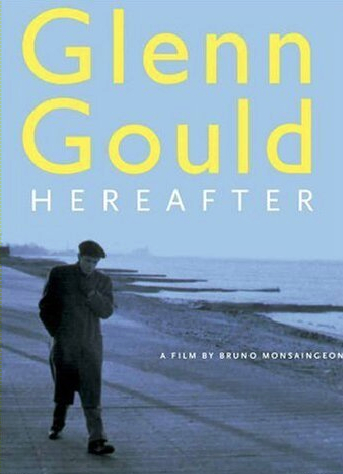
“Glenn Gould: Hereafter”

Paleo Retiree writes:

glenn2

Meditation/reflection from 2005 on the Canadian pianist Glenn Gould by the filmmaker and television producer Bruno Monsaingeon, who knew Gould well and worked with him often. Probably not the movie for newcomers to Gould to start with, but very interesting and enjoyable for a number of reasons. The main one: There’s lots of informal, backstage, end-of-the-roll type footage of Gould, lots of amazing performances (formal and informal), and lots of talks with him — Gould buffs won’t want to miss the film just for its many unusual glimpses of Gould at work and play.

For another, the film’s view of Gould is fascinating. The film isn’t intended to be terribly straightforward or informative; instead, it’s an idea and a vision movie. For Monsaingeon, Gould embodied Eternal Spirit. He arrived here on earth, incarnated in this bodily form; he connected with music (and connected us with music) in a very pure way — music here is the ongoingness through time and across space of Spirit; and then he left. (Gould died in 1982 at the age of 50.) But, thanks to his recordings, he’s still around, still with us, and still helping us make that connection. (The film’s title, “Glenn Gould: Hereafter,” is meant to have several different meanings.)

The movie is deliberately structured to be circular and repetitive — like a fugue — and it makes its case over and over in a number of different ways. But, though it’s as idea-driven as can be, it isn’t overbearing or rigid. And Monsaingeon is smart in a very understated way about what to highlight. Gould makes a comment about how what he wanted to do was turn performance into composition … Gould debates (in a friendly way) with his collaborator Yehudi Menuhin about live performance … It’s a very intelligent, sympathetic (Monsaingeon is an excellent musician himself) and persuasive vision and view. Comprehensive, too: Gould’s abandonment of the stage for the recording studio, his quirks, the games he liked to play, his fascination with Bach and Schoenberg … Everything seems to fit. Life as Idea; Idea as Spirit; incarnate existence as our momentary experience of something much larger; music as a way of evoking and reflecting on the tragicomic state we all inhabit; music as the purest embodiment we can know of Spirit …

All that said — and thoroughly enjoyed and appreciated — as a viewing experience the film is a little dull. It lacks something: sweep, excitement, rapture. It’s a genuine intellectual’s movie: the ideas lead and the filmmaking follows. So we get lots of shots of an actor portraying Gould walking by the side of water, or driving a Lincoln Continental (Gould’s car) through autumnal Northern landscapes … We’re given five or six episodes (they range from semi-staged to interviews) depicting people whose lives have been touched and changed by contact with Gould and/or his music … These passages are more than a little plodding. But, for me, this film was one of those rare cases where dozey and plodding is OK. Monsaingeon is taking his time; he’s letting his thoughts wander off in ways that seem appropriate to Gould. He isn’t pushing things; he’s letting his images and sounds work their own kind of magic. Sometimes they do and sometimes they don’t … but then, soon enough, we’re back to the actual Gould, who always conveys something exciting.

The version of the film that we watched on Amazon Instant lacked subtitles, so the passages where fans from many countries (Italy, Russia, Japan) spoke about Gould were unintelligible to us. If you’re curious about the picture you might want to buy the DVD instead. But we really didn’t mind much not being to follow the words in those stretches.

Related

Posted in Movies, Music, Performers | Tagged , , , , | 3 Comments