The View from the Back of the Theater, Con’t.

Fenster writes:

Former federal prosecutor Andrew McCarthy once again delivers a clear-headed and legally meticulous analysis of the current mess. If you can find fault with his reasoning or facts have at it. If not and you prefer to just grouse, IMHO STFU.

I resist cutting and pasting snippets since the analysis ought to be taken whole.  It is an impressive and closely reasoned argument.

That said, while McCarthy sticks to the facts and builds hypotheses carefully on the basis of what is actually known, he is left hanging, unable to come up with a good answer, on a central question.

As he writes, the country needs an answer to that question. But not from Barr. From Mueller.

A nagging question persists: Why did Mueller allow the investigation to continue for well over a year after it must have been patent that there was no collusion case?

But what to make of the recent cloud of smoke being thrown up by the media: that Barr is the one who has explaining to do, that he is not telling the whole story and that the Mueller people are not happy about it?

On the one hand, it is easy to discount the news reports about the dissatisfaction expressed by the Mueller team about what is happening. Articles in the mainstream press based on anonymous sources have not held up well at all.

Yet if McCarthy’s take is well-founded–and I think it is–grousing by Mueller’s staff is to be expected. They did not get their way on the very weak obstruction argument that in the end was what the whole shebang was about.

In June 2018, Barr had submitted an unsolicited 20-page memo to Rosenstein. Citing the legislative history of the obstruction statutes, leading case law, and longstanding Justice Department policy, he contended that Mueller’s apparent theory of obstruction was legally untenable and practically unworkable. Putting the president aside, the theory would subject to possible prosecution any Justice Department supervisor who made a routine personnel decision during a case (say, reassigning a lawyer from one investigation to another) if some prosecutor later suspected an improper motive. Barr further made what should be an incontestable point: Given the damage such a prosecution can do to the nation’s governance, a president should not be prosecuted in the absence of something all reasonable people can agree is a clear, serious violation of law.

Once Barr was confirmed, Mueller had to see the handwriting on the wall: The new AG was not going to approve a dubious obstruction charge. The special counsel thus had a choice: concede that Barr was right on the law, or fight for the controversial theory his staff had pursued — i.e., recommend an obstruction charge and dare the AG to nix it. But Mueller shrank from making the decision, choosing merely to summarize the evidence and leave the prosecutorial judgment to Barr.

In consultation with Rosenstein, Barr found no prosecutable case. Deftly, he reasoned that even if one accepted the questionable premise that a lawful act can lead to an obstruction charge if corruptly motivated (Mueller’s theory), the case would still fail. Corruption, Barr elaborated, would have to be proved beyond a reasonable doubt, and here, where the president had not colluded with Russia and had cooperated with the investigation, it would be impossible to prove he had a corrupt intent to thwart the investigation.

On the other hand to say that leaking by miffed members of team Mueller is understandable is not the same thing as saying it is defensible, ethically or legally.  John Solomon argues that it is not.

The job of prosecutors is not, as the Times headline suggested, to pen “damaging” narratives about people they couldn’t indict. And it’s not their job to air those people’s dirty laundry, or that of suspects outside of a grand jury room or a courtroom. . . Prosecution isn’t a game of horseshoes or hand grenades where prosecutors get to score points or inflict damage without indicting the target. In fact, the Founding Fathers built a legal system specifically to avoid the tarring of citizens when there wasn’t enough proof to meet a criminal charge.


And then there is the added fillip of the Times coverage. It is OK to publish information unethically or illegally leaked (though you would expect some mercy for Assange on that count; good luck and bon voyage Julian!)

But it is not even clear that the Times ran the story on the basis of a first hand source but rather on the basis of second-hand hearsay. That’s not legally actionable (n.b., that pesky Assange thing again!) But it is arguably not journalistically sound, especially with all the BS the press has thrown around.


Bonus: Kim Strassel on the hollowness of the Times coverage.
Posted in Politics and Economics | 8 Comments

It is Like Losing a Limb

Fabrizio del Wrongo writes:

mast

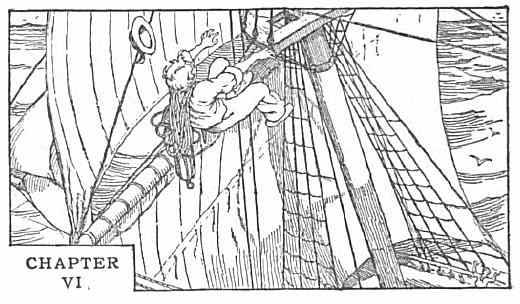
Monday, November 17. This was a black day in our calendar. At seven o’clock in the morning, it being our watch below, we were aroused from a sound sleep by the cry of “All hands ahoy! A man overboard!” This unwonted cry sent a thrill through the heart of everyone, and hurrying on deck, we found the vessel hove flat aback with all her studding sails set; for the boy who was at the helm left it to throw something overboard, and the carpenter, who was an old sailor, knowing that the wind was light, put the helm down and hove her aback. The watch on deck were lowering away the quarter boat, and I got on deck just in time to heave myself into her as she was leaving the side; but it was not until out upon the wide Pacific, in our little boat, that I knew whom we had lost. It was George Ballmer, a young English sailor, who was prized by the officers as an active and willing seaman and by the crew as a lively, hearty fellow, and a good shipmate. He was going aloft to fit a strap round the main topmast head, for ringtail halyards, and had the strap and block, a coil of halyards, and a marlinspike about his neck. He fell from the starboard futtock shrouds, and not knowing how to swim, and being heavily dressed, with all those things round his neck, he probably sank immediately. We pulled astern in the direction in which he fell, and though we knew that there was no hope of saving him, yet no one wished to speak of returning, and we rowed about for nearly an hour, without the hope of doing anything, but unwilling to acknowledge to ourselves that we must give him up. At length we turned the boat’s head and made toward the vessel.

Death is at all times solemn, but never so much so as at sea. A man dies onshore—his body remains with his friends, and “the mourners go about the streets,” but when a man falls overboard at sea and is lost, there is a suddenness in the event and a difficulty in realizing it, which give to it an air of awful mystery. A man dies onshore—you follow his body to the grave, and a stone marks the spot. You are often prepared for the event. There is always something which helps you to realize it when it happens, and to recall it when it has passed. A man is shot down by your side in battle, and the mangled body remains an object and a real evidence; but at sea, the man is near you—at your side—you hear his voice, and in an instant he is gone, and nothing but a vacancy shows his loss. Then, too, at sea—to use a homely but expressive phrase—you miss a man so much. A dozen men are shut up together in a little bark, upon the wide, wide sea, and for months and months see no forms and hear no voices but their own, and one is taken suddenly from among them, and they miss him at every turn. It is like losing a limb. There are no new faces or new scenes to fill up the gap. There is always an empty berth in the forecastle, and one man wanting when the small night-watch is mustered. There is one less to take the wheel and one less to lay out with you upon the yard. You miss his form and the sound of his voice, for habit had made them almost necessary to you, and each of your senses feels the loss.

All these things make such a death peculiarly solemn, and the effect of it remains upon the crew for some time. There is more kindness shown by the officers to the crew, and by the crew to one another. There is more quietness and seriousness. The oath and the loud laugh are gone. The officers are more watchful, and the crew go more carefully aloft. The lost man is seldom mentioned, or is dismissed with a sailor’s rude eulogy—“Well, poor George is gone! His cruise is up soon! He knew his work, and did his duty, and was a good shipmate.” Then usually follows some allusion to another world, for sailors are almost all believers, but their notions and opinions are unfixed and at loose ends. They say, “God won’t be hard upon the poor fellow,” and seldom get beyond the common phrase which seems to imply that their sufferings and hard treatment here will excuse them hereafter—“To work hard, live hard, die hard, and go to hell after all, would be hard indeed!” Our cook, a simple-hearted old African, who had been through a good deal in his day and was rather seriously inclined, always going to church twice a day when onshore, and reading his Bible on a Sunday in the galley, talked to the crew about spending their sabbaths badly, and told them that they might go as suddenly as George had, and be as little prepared.

Yet a sailor’s life is at best but a mixture of a little good with much evil, and a little pleasure with much pain. The beautiful is linked with the revolting, the sublime with the commonplace, and the solemn with the ludicrous.

We had hardly returned on board with our sad report before an auction was held of the poor man’s clothes. The captain had first, however, called all hands aft and asked them if they were satisfied that everything had been done to save the man, and if they thought there was any use in remaining there longer. The crew all said that it was in vain, for the man did not know how to swim, and was very heavily dressed. So we then filed away and kept her off to her course.

The laws regulating navigation make the captain answerable for the effects of a sailor who dies during the voyage, and it is either a law or a universal custom, established for convenience, that the captain should immediately hold an auction of his things, in which they are bid off by the sailors, and the sums which they give are deducted from their wages at the end of the voyage. In this way the trouble and risk of keeping his things through the voyage are avoided, and the clothes are usually sold for more than they would be worth onshore. Accordingly, we had no sooner got the ship before the wind than his chest was brought up upon the forecastle and the sale began. The jackets and trousers in which we had seen him dressed but a few days before were exposed and bid off while the life was hardly out of his body, and his chest was taken aft and used as a store chest, so that there was nothing left which could be called his. Sailors have an unwillingness to wear a dead man’s clothes during the same voyage, and they seldom do so unless they are in absolute want.

As is usual after a death, many stories were told about George. Some had heard him say that he repented never having learned to swim, and that he knew that he should meet his death by drowning. Another said that he never knew any good to come of a voyage made against the will, and the deceased man shipped and spent his advance, and was afterward very unwilling to go, but not being able to refund, was obliged to sail with us. A boy, too, who had become quite attached to him, said that George talked to him, during most of the watch on the night before, about his mother and family at home, and this was the first time that he had mentioned the subject during the voyage.

— Richard Henry Dana

Posted in Books Publishing and Writing | Tagged , , | 2 Comments

Weekend Linkage

Paleo Retiree writes:

Posted in Linkathons | 2 Comments

Weekend Linkage

Paleo Retiree writes:

Posted in Uncategorized | 1 Comment

Wither the Humanities?

Fenster writes:

The very sensible academic Mark Bauerlein has written an article in the very sensible City Journal about a recent program at Clemson aimed at reviving the humanities via a return to a Western core.

Before describing the program he takes a nice jab at other recent attempts to resuscitate the sickly field of humanities via a promotion of its career benefits.  For instance the Humanities Toolkit put out by the National Humanities Alliance is mostly about “valued skills” and “career success”.  Yes, the Toolkit does make reference near the end to “benefits for life”.  But as Bauerlein correctly points out the Toolkit is at its core an antiseptic thing.  No getting down and dirty even mentioning Cicero or Dante.  It’s all quite clean and neat–things that the humanities are most decidedly not.

The lack of any real references in the Toolkit to, you know, actual humanities content no doubt reflects one of the main weaknesses of the field as a whole: at a lot of prestige universities non-STEM fields are almost all infected with postmodern thinking, trendy courses in otherwise stolid fields like history and the exile of the canon.

So Bauerlein is happy to note that Clemson has chosen to tack into the wind, and is offering a program with more of a traditional orientation.

A better approach comes from Clemson University, where a Great Books–style initiative called the Lyceum Program is thriving. Each year, the program admits ten “scholars” out of high school, providing them a $2,500 annual tuition credit. The Lyceum offers eight courses per semester, taught by six professors. The students take the courses as a group, in a set sequence—for example, “Wisdom of the Ancients” for freshman year, “American Political Thought” for sophomore year, and so on. Participants then meet individually every week with their assigned tutors—professors who engage them in Socratic discussion of the readings. After completing the eight required courses, students earn a political science minor. A Lyceum certification may soon appear on transcripts and diplomas.

The program is in my mind completely welcome.  But standing athwart history yelling stop is awfully close to pissing in the wind, and it is worth taking a closer look to see if the program is as promising as Bauerlein makes out.

Alas, I think in Bauerlein’s justified haste to celebrate a program that has resisted giving way to current obsessions the author has oversold a bit. The adjective “thriving” is applied twice to the program and, while all such things are relative, we are still talking about 10 students a year.

That’s always been the problem with the serious humanities programs like St. John’s: admirable but in the end not that many people want them. St; John’s Annapolis enrolls 458 and St. John’s Santa Fe enrolls 322.

Good luck making a dent in the teaching of the humanities, not to mention American life, at ten a year. I don’t mean that as a criticism of the program and if the notion spreads good for that. But the article appears to make somewhat more of the program in that respect than is warranted.

There’s also the fact, not really discussed by the author, that the program is not really a classics and humanities program in the ordinary sense. It is a political science program, and the eight courses that comprise it (one per semester for four years) make up a political science minor, or can be applied to a political science major. Nothing wrong with that either but since the author prefaces his discussion of the program with names like Milton, Beethoven, Bernini and Cervantes, you might miss the fact that the program has a disciplinary focus.

Moreover, the politics on offer is a distinct one: the readings all lead to a conservative, liberty-and-capitalism orientation. Nothing wrong with that either. Indeed three cheers as a corrective to the lopsided approaches that are the norm elsewhere, and at least two cheers for the content itself. But you would not get the flavor of the program from the article.

So what we have year is a program established by one of those rare free-market academic centers devoted to the exploration, and I do not doubt the celebration, of the moral foundations of capitalism. It incorporates some Great Books thinking but it has its own axe to grind. And it draws in ten students a year.

That said, I wish the program well, and if Bauerlein’s slightly lopsided account of it moves the ball forward fine by me.

Bonus: a much noted and terrific 2011 essay by Bauerlein on the “research bust”.  And here is Fenster’s comment on the article, at his now-defunct higher education blog.

Extra Bonus:  At that blog Fenster also further addressed the problem of the ideal model, here.


Posted in Uncategorized | Leave a comment

David French on L’Affaire Ilhan

Fenster writes:

David French has some useful comments on l’affaire Ilhan.

What is going on? Why are we seeing so many prominent voices rally to Omar’s side? This is how intersectionality works. Essentially, the pattern goes like this. Under intersectionality theories, your identity grants you credibility, your experience grants you authority, and the responsibility then of your progressive friends is to act as your allies.

Omar’s identity — as a woman of color, as a Muslim, as a refugee — means that she speaks with great experiential authority. She comes to the public square (as Tlaib and Clyburn indicate) from a position of personal pain and direct experience with marginalization and oppression. Allyship then means that it’s important to elevate her voice and to protect her credibility. To treat her as the GOP (finally) treated Steve King is unthinkable. Direct rebuke (much less direct action, such as stripping her of her committee assignments) is interpreted as an attack not on her ideas but on her very identity

My only quibble is that he describes a better world that is too prim and neat. He writes:
 . . . identity isn’t a substitute for credibility or authority or morality . . .
and that is certainly true. But I fear it is not always a matter of one’s experiential authority failing the morality test. That is a pretty ethnocentric view. I don’t doubt that many people in this sometimes inexplicable world are partisan for very good reasons by their lights. Conflicts inevitably give rise to shared passions that are perfectly sensible in their own terms.

Our default tendency toward universalism–something blazingly apparent on the left but present on the right as well–prompts us to try to make the inexplicable explicable, and  the incommensurable commensurable.  Thus French challenges the idea that Omar’s experiential authority can be moral in its own right.

The particularism of the colonial era bred its own kind of bias and ethnocentrism.  Our universalistic era breeds another, one in which political and cultural differences are discounted if they fail a test of morality that we devise and then blindly promote.

I don’t think there is an easy answer to this conundrum.  It might be enough to reflect on which class of error you seem to be making, and to make adjustments from there.

To me l’affaire Ilhan is a good example of overdoing the diversity thing.  Too many, too much cultural distance, too many collisions on fundamentals, too little assimilation glue.  That argument is, I suspect, not part of the progressive vocabulary.  All the more reason to suspect an imbalance on just that dimension.  When yin is dismissed out of hand, or not even brought to mind, that’s fairly good evidence that yang is on a rampage.

Posted in Uncategorized | 5 Comments

Weekend Linkage

Paleo Retiree writes:

  • So hipsters really are all alike.
  • Why does CalTech, of all places, need an “assistant vice president for equity and equity investigations and Title IX coordinator”?
  • Awesome.
  • Where’s the evidence that supports what the Trans lobby is trying to make us accept is “settled science”?
  • Charlotte Allen argues that trans radicals and the proggressives who support them are today’s real anti-women force.
  • I enjoyed this 50 minute doc about burgers across America. Butter burgers! Burgers fried in 90 year old grease! God, I love Americana.
  • Back in the ’90s I tried to place articles about new non-modernist architecture in magazines and had near-zero luck. For whatever reasons — and don’t get me started — our cultural-journalism authorities didn’t want their readers to know that such work was being done. So it’s very satisfying to see that the world I was fighting to recognize has been flourishing in the years since. Check out this collection of pix of the work of the very talented English New Classicist Peter Pennoyer — and then ask yourself: Why would editors and such not want to let people know about it?
  • A talk by New Classicism pioneer Quinlan Terry.
  • And, by the way: You have every reason to hate most chic contemporary architecture.
  • Young black conservative dynamo Candace Owens talks to brilliant loose-cannon comedian Roseanne Barr.
  • When the carrying-on over America’s history with slavery gets to be too much, this map might come in handy.
  • Gab’s new “Dissenter” browser extension sounds very promising.
  • Meet the real-life wit behind Twitter’s great Titania McGrath.
Posted in Linkathons | Leave a comment

Tyler Cowen on Free Speech, Trump-style

Fenster writes:

Trump has said he will issue an executive order requiring higher education institutions to play by free speech rules or else lose federal research dollars.

While the details are unknown and who knows if he will do it much braying has ensued.

Even at the University of Chicago, the paradigmatic free-speech university, the university president has spoken out in opposition, arguing that a heavy federal hand will hinder the efforts of reasonable people on campuses to figure things out for themselves.

He gets it half right.  Brute force is usually not the first choice, and can backfire.  It would be good if Trump were mindful of the possible ricochet effects.  But c’mon–other than a very few places like Chicago the track record of administrators is not good.  There is essentially zero basis for an argument that universities will self-reform any time soon.

So we may need free speech advocates to mix it up on this one.  Alas, some people you’d think would favor free speech are getting all muddled up themselves. Take libertarian economist Tyler Cowen, who argues in this article as follows:

I’m all for free speech, whether for public or private schools. But the fight has to be won in the hearts and minds of students and workers, not by the federal government.

Libertarians, like some college presidents, always seem to half-get it, and they usually miss the bigger half. We have constitutional protection of free speech so that government can enforce its terms when needed. Duh.

I am sympathetic enough with libertarian ideas that I can see why a threat to withhold research dollars from private institutions might well be viewed as too crude, given that the First Amendment does not reach that far.

But publics? Cowan himself admits that a lot of public universities are not living up to their constitutional obligations. Rather than hound them one by one through the courts why not just set a clear standard–based on the freakin! constitution fer chrissakes — of what public universities must do or else?

Cowen states:

The main correct criticism of university leaders is straightforward: Too often, they do not have the courage to defend free speech. I would suggest, however, that they are more or less rational agents, making concessions to the forces of political correctness because their jobs demand it. They serve up weak, apologetic responses because they fear something worse — escalating protests or further incidents. I think it unlikely that any federal law will strengthen their resolve.

Are you kidding me? It’s not a federal law that we are talking about.  A plain old law might well be flouted. But we are here talking about drying up research funds.  Who cares if student affairs administrators were to resent federal intrusion? Get the research faculty and senior administration by the balls and hearts and minds will follow.

Posted in Politics and Economics | 2 Comments

Weekend Linkage

Paleo Retiree writes:

  • A young evo-psych prof discovers conservatism. Bo Winegard has written such a clear, concise piece that it’s become the standard thing I steer people who are curious about conservatism to.
  • Bo Winegard’s Twitter stream is worth following too.
  • Is it really transphobic to think that it’s nuts to be requiring biologically female athletes to compete against male-to-female trans athetes? I marvel at how quickly the trans lobby has had its political way with normal society, and I’m hoping that a backlash on the trans-athletes issue will prove a corrective.
  • An amazing tale of Political Correctness run amok in the world of Young Adult fiction. More.
  • Back at my old blog I wrote a posting about the history of YA fiction.
  • Emphasizing Social Justice seems to be a surefire way to kill many people’s interest in religion.
  • I’ve always been amazed by the amount of car-related carnage that we as a society tolerate.
  • Congratulations to The Unz Review, whose readership numbers are now on a par with those of the best-known traditional journals of opinion. Hey, maybe promoting a freewheeling approach to politics, thought and opinion is a strategy that suits the web better than one of control, predictability and hyper-partisanship. There’s lots of smart stuff to be enjoyed in Ron Unz’s piece about all this.
  • Speaking of hyper-partisanship: Sober, well-researched pieces like this one are the reason so many of us treasure The Guardian. /s, needless to say.
  • Steve Sailer has some questions for The New York Times.
  • The Times wonders if Hollywood is to blame for Jeff Bezos’ recent p-r missteps.
  • I’m not alone in suspecting that testosterone replacement therapy may be playing a role too.
  • Oopsie du jour.
  • Utopia achieved!
  • Smartest Tweet I’ve read recently.
  • Second smartest.
  • On my daily walks I’m currently listening to “America and the New Global  Economy” by Timothy Taylor. It’s a little out of date — it was recorded before the current nationalism-vs-globalism debate really caught fire — but I’m getting a lot out of it anyway. Taylor (whose other Great Courses series I’ve also enjoyed) has a rare gift for presenting info and insights from the world of econ in a non-autistic, non-grandstanding, humane and helpful way.
Posted in Linkathons | 1 Comment

A Witness Like Homer

Fabrizio del Wrongo writes:

Alexander-Romance


Then [Alexander] came to Phrygia. When he reached the river Scamander, into which Achilles had sprung, he leapt in also. And when he saw the seven-layered shield of Ajax, which was not as large or as wonderful as the description in Homer, he said, “Fortunate are you heroes who won a witness like Homer, and who became great as a result of his writings, but in reality are not worthy of what was written about you.” Then a poet came up to him and said, “King Alexander, we shall write better than Homer about your deeds.” But Alexander replied, “I would rather be a Thersites in Homer than Agamemnon in your poetry.”

— The Alexander Romance

Posted in Books Publishing and Writing, History | Tagged , | Leave a comment