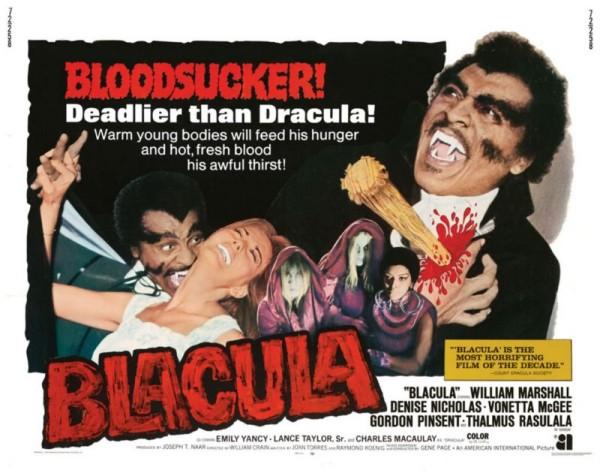
“Blacula”

Paleo Retiree writes:

blacula

Early blaxploitation, directed by William Crain and starring William Marshall as an 18th century African prince who, bitten by Count Dracula, wakes up in 1971 L.A. It’s a surprisingly straightfaced movie — far less of a spoof or a goof than I expected, with Marshall giving a genuinely suave, dignified and intense performance. That said, on the technical and budget level the film is like cheesy ’70s TV. I enjoyed the picture’s gaudiness, its performers (among them: Vonetta McGee, Thalmus Rasulala, and Charles Macaulay), its style and sensibility, and its unhurried storytelling … until the climactic action scenes, which, alas, I found dull, and which finally put me to sleep.

Related

  • Amazon Prime members can stream the movie for free.
  • William Marshall stood 6’5″ tall, and was a director and an opera singer as well as an actor. Judging just from his work in “Blacula,” he was a major talent.
  • Buy a DVD including both “Blacula” and its sequel, “Scream, Blacula, Scream,” for $8.99.
Posted in Movies | Tagged , , , , | 2 Comments

A Photo 4 the Day

Fenster writes:

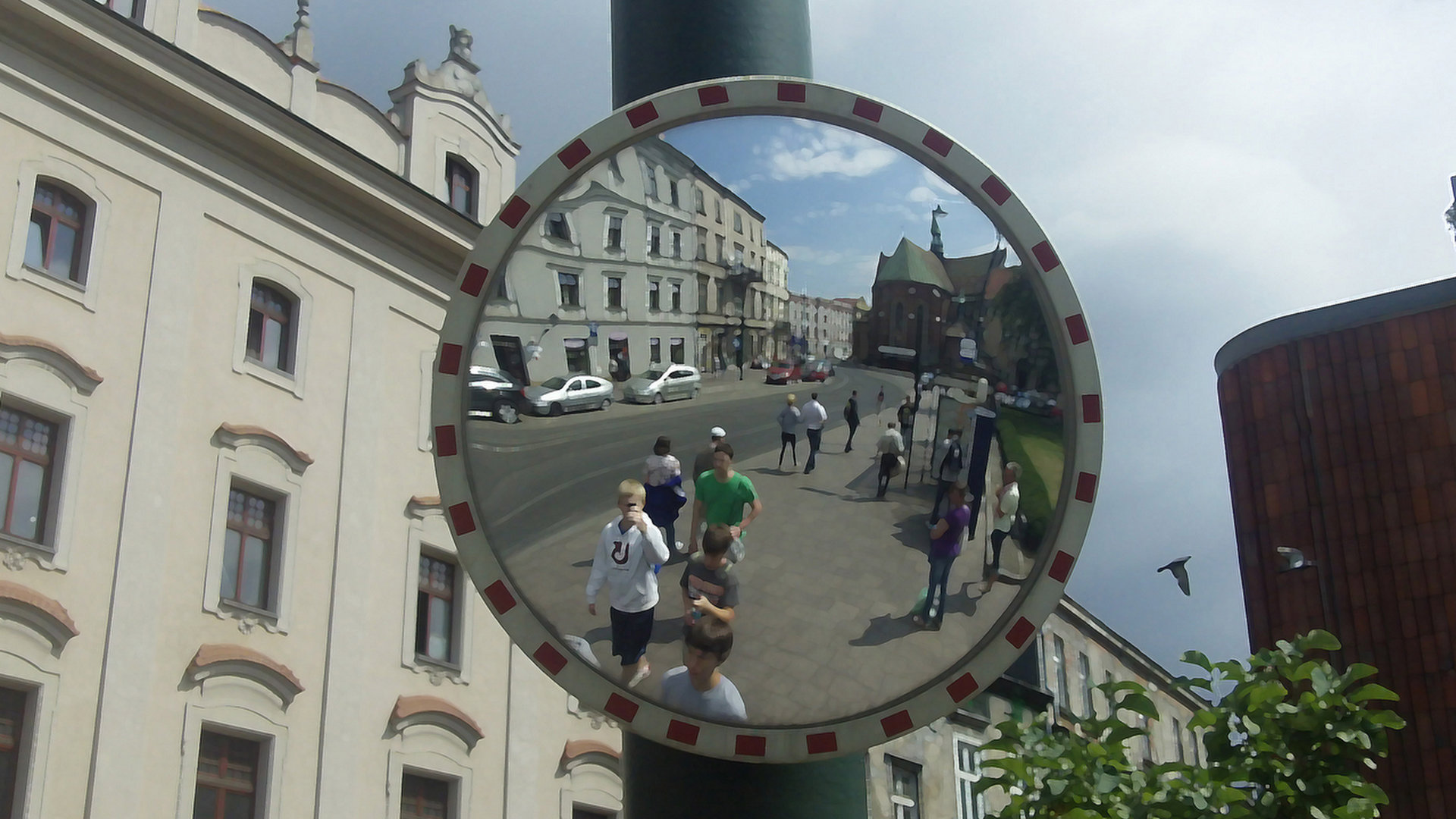
My son in a selfie. Prague, 2011.

prague

Posted in Photography | Leave a comment

The Camera Loves …

Eddie Pensier writes:

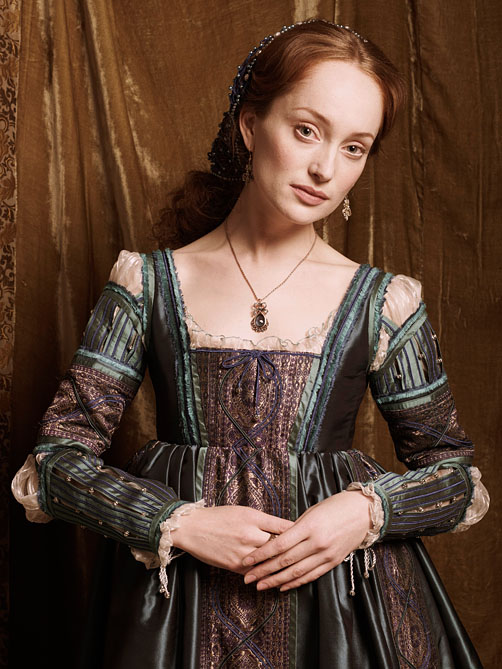
THE BORGIAS

lotte

lotte4

…Dutch actress Lotte Verbeek, best known for indie film Nothing Personal, and as Giulia “La Bella” Farnese in Showtime’s The Borgias.

Posted in Movies, Performers, Television, Women men and fashion | Tagged , , , | 2 Comments

Happy Birthday Karel Čapek

Eddie Pensier writes:

Domin: Ah now, young Rossum; that was the start of a new age. After the age of research came the age of production. He took a good look at the human body and he saw straight away that it was much too complicated, any good engineer would design it much more simply. So he began to re-design the whole anatomy, seeing what he could leave out or simplify. In short, Miss Glory . . . I’m not boring you, am I?

Helena: No, quite the opposite, this is fascinating.

Domin: So young Rossum said to himself: Man is a being that does things such as feeling happiness, plays the violin, likes to go for a walk, and all sorts of other things which are simply not needed.

Helena: Oh, I see!

Domin: No, wait. Which are simply not needed for activities such as weaving or calculating. A petrol engine doesn’t have any ornaments or tassels on it, and making an artificial worker is just like making a petrol engine. The simpler you make production the better you make the product. What sort of worker do you think is the best?

Helena: The best sort of worker? I suppose one who is honest and dedicated.

Domin: No. The best sort of worker is the cheapest worker. The one that has the least needs. What young Rossum invented was a worker with the least needs possible. He had to make him simpler. He threw out everything that wasn’t of direct use in his work, that’s to say, he threw out the man and put in the robot. Miss Glory, robots are not people. They are mechanically much better than we are, they have an amazing ability to understand things, but they don’t have a soul. Young Rossum created something much more sophisticated than Nature ever did – technically at least!

Helena: They do say that man was created by God.

Domin: So much the worse for them. God had no idea about modern technology.

— “R.U.R. (Rossum’s Universal Robots)”, the 1920 play by Čapek that introduced the word robot into the world. (Translation: David Wyllie)

rur

Posted in Technology | 1 Comment

Three Voyeurs in Closets

Blowhard, Esq. writes:

[NSFW so I’ve hidden the post beneath the fold.]

Continue reading →

Posted in Books Publishing and Writing, Movies, Sex | Tagged , , , , , , , , | Leave a comment

Village Du Jour

Blowhard, Esq. writes:

cadaquesspainCadaqués, Spain

Click on the image to enlarge.

Posted in Architecture | Tagged , , | 2 Comments

Divas

Fabrizio del Wrongo writes:

Bessie Smith appeared in only this one movie; it has an all-black cast and runs 16 minutes. Whatever one might say about the limitations of the story line, derived from the W.C. Handy song by the director, Dudley Murphy, and Handy himself (who served as musical director), seems irrelevant. Even in this folklorish film, made when sound recording was still primitive, she comes through. Here she is, the greatest of all our jazz singers, all 5 feet 9 inches and 200 pounds of her, crowned with a little 20s hat, and when she lets out her harsh, thick voice, full of gin and sensuality and humor, she’s one of the most beautiful images that ever filled the screen.

— Pauline Kael

Posted in Books Publishing and Writing, Movies, Music, Performers | Tagged , , , , , , , | Leave a comment

“The Magic Flute” (2006)

 Eddie Pensier writes:

Kenneth Branagh’s film of Mozart’s opera is the first filmed directly for the screen (Ingmar Bergman’s classic version was initially made for Swedish TV). Branagh made several decisions as a filmmaker that would drastically affect the outcome of his project: He commissioned a new English translation of the libretto by actor/writer/polymath Stephen Fry; he decided to cast actual singers in the leading roles, rather than actors with their voices overdubbed; he updated the setting to Europe during World War 1; and he completely stripped the opera of its famous Masonic symbolism.

The last is a big, big problem. Flute stripped of symbolism is a Flute that is twee and nonsensical. Branagh wants to make grand sweeping statements about war and peace, but without an overall thematic structure, the work falls to pieces. It’s interesting and a little distracting to watch Branagh’s vision stagger from gritty war film to ludicrously surrealist fantasy. There are, to be sure, some amazing visuals in the movie: the Queen of the Night’s entrance atop a tank; the scenes of stomach-churning trench warfare during the overture. But the lack of unity makes this a very difficult movie to digest in one sitting. The characters of the Three Ladies and Three Genies are poorly dealt with: their appearances prompted out-loud “What the hell”s from me, so badly were they integrated into the filmed version of events.

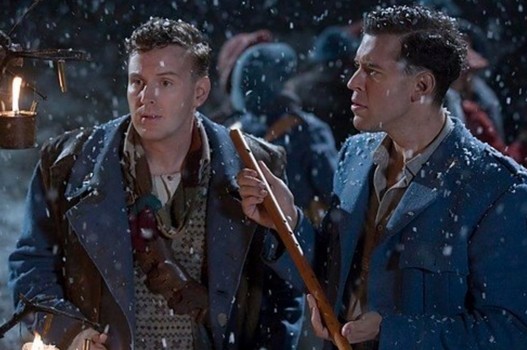
Benjamin and Joseph Kaiser as Papageno and Tamino in Branagh's The Magic Flute.

Benjamin Jay Davis and Joseph Kaiser as Papageno and Tamino in Branagh’s The Magic Flute.

I’ll admit to a bias against opera in translation. However, Fry’s new text is overall pretty good and singable. (It also, mercifully, leaves out the casual racism and sexism that, while funny to audiences in Mozart’s era, cause cringes even among conservative operagoers today.) James Conlon conducts the Chamber Orchestra of Europe in a sprightly and animated rendition of the score.

How are the singers? Mostly good, sometimes great. Joseph Kaiser is a light lyric tenor with a more than passing resemblance to a young Russell Crowe. He plays Tamino with an appealing open freshness, and is a good enough actor that he could have a career in legitimate cinema should he choose it. Amy Carson looks beautiful (perhaps helped along by Branagh’s obvious penchant for shooting her while she’s soaking wet) and has a pleasant voice that is slightly strained in the topmost ranges.

René Pape is probably the opera world’s foremost basso, and he plays the role of the solemn Sarastro as well as anyone ever has (here he’s the chief of a war hospital, rather than a high priest). Weirdly, the role of the Speaker is also sung by Pape…not sure why. His English diction could have used a little help, but otherwise he was a textbook Sarastro.

For me the standout was the awesomely demented Lyubov Petrova as a leather-clad Queen of the Night. Petrova fearlessly attacked the Queen’s two arias, with their famously difficult coloratura and high Fs (that’s REALLY goddamned high), and presented a Queen who was perhaps less purely evil and more Tiger Mother than is the norm. She’s a beautiful woman who barely looked older than Carson, her supposed daughter. I’d pay money to see her sing pretty much anything.

The weak link was a spastic, mugging, weak-voiced Benjamin Jay Davis as Papageno. I had to seriously resist the urge to skip through all his scenes.

Musically, this is a top-notch Flute. Dramatically and cinematically, I’d advise skipping it. But it’s on Netflix if you decide to check it out.

Related

  • Want to watch a brilliantly sung Flute in a legit opera-house production? Try this one from the Met, conducted by James Levine and designed by David Hockney.
Posted in Movies, Music | Tagged , , , , , , , | 7 Comments

“Don’t You (Forget About Me)” Five Ways

Eddie Pensier writes:

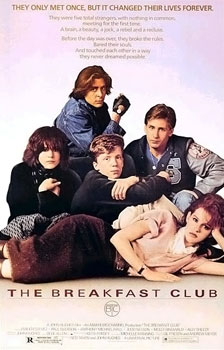
Those of us who grew up in the 1980s probably have fond memories of this song, and the movie it came from: John Hughes’ The Breakfast Club. The original 1985 recording, by Scottish New-Wave band Simple Minds, probably deserves its place as a permanent earworm for my generation.

It’s not well known that producer Keith Forsey (who co-wrote the song with Steve Schiff) offered the song to Bryan Ferry and Billy Idol, who both passed on it. Idol had a change of heart years later, and covered the song for his greatest hits album. Damned if it isn’t a hundred times better than the Minds’ version.

Victoria Justice is done no favors by her producers in this version, who encase the song in a five-inch thick layer of studio Plexiglass. Still, she’s kind of cute.

The Breakfast Club’s star, Molly Ringwald, has reinvented herself as a chanteuse, apparently. She sings it as a jazzy torch song, not very well, but with an endearingly amateurish earnestness. (The recording was dedicated to the memory of Hughes, who died in 2009.) This particular link contains only an excerpt, but if you are for some reason motivated to buy it, her entire album is on ITunes.

Finally, this wretched track from a CD called “Orchestral Rock” by the previously respectable Royal Philharmonic Orchestra, amply demonstrates why symphony orchestras should never put out records called “Orchestral Rock”. I hope the person who arranged this is suffering from a painful and debilitating disease.

We're all pretty bizarre. Some of us are just better at hiding it, that's all.

We’re all pretty bizarre. Some of us are just better at hiding it.

Posted in Movies, Music, Performers | Tagged , , , , , , , , , , , , , , | 9 Comments

Architecture Du Jour

Blowhard, Esq. writes:

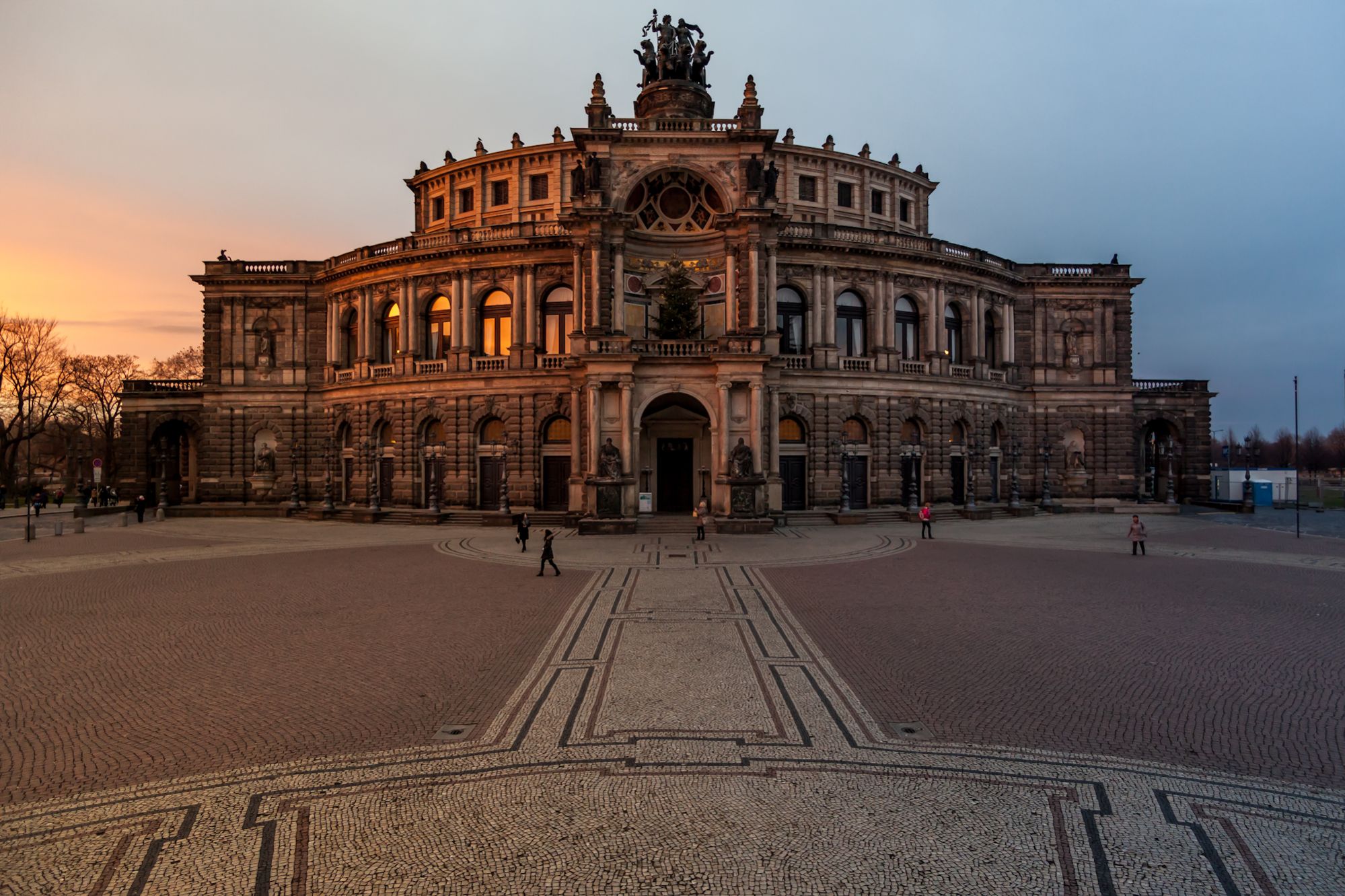
dresdenoperahouseThe Semperoper, Dresden, Germany

Click on the image to enlarge.

Posted in Architecture, Music | Tagged , , , | 1 Comment