Naked Lady of the Week: Taylor Vixen

Fabrizio del Wrongo writes:

taylorheader

Taylor is a bubbly, hazel-eyed Texan who’s posed for a number of upscale men’s magazines and websites. Standing a mere 5’2″ and sporting A-class curves, she looks something like a prettier and less butt-heavy version of Kim Kardashian (no offense, Kanye). I particularly love her pale, lightly dappled skin. And you gotta appreciate her ability to summon a convincing bedroom stare just about every time she looks at the camera. In my opinion, her best photos come from Twistys; their photographers do justice to her overflowing, peaches-and-cream fleshiness — a quality that would likely make Titian run for his palette were he around to see it. I see Taylor was Twistys Treat of the Year for 2012. Well deserved.

Twistys aside, these low-res sample images look like they come from Digital Desire (and their ace photographer Stephen J. Hicks) and FTV. Go there for full resolution.

Images below the jump are NSFW. Happy Friday.

Continue reading

Posted in Photography, Sex | Tagged , , | 3 Comments

“Bernard and Doris”

Paleo Retiree writes:

bernard

There was a lot about this 2006, made-for-HBO movie that I loved. It’s a very small-scale, low-budget rhapsody on a historic fact: late in life, the famous tobacco heiress Doris Duke, who had never managed to have satisfying intimate relations, bonded with Bernard Lafferty, her new butler, a wayward, drunken, gay Irishman. Little seems to be known about the actual facts of their relationship, so the filmmakers (writer Hugh Costello and director Bob Balaban) try to imagine their way into what might have been. 

The result, it seemed to me, had many of the ingredients of a moving and funny small classic. The production — facing the challenge of how to depict on a tiny budget the life of one of the world’s richest people — is amazingly resourceful; and Bob Balaban is a major, even masterly directing talent, in confident command of filmmaking’s many dimensions (design, rhythm, sound, mood, flow, etc). And, as you might expect from his background as a performer, Balaban is a perfectly amazing director of actors. He and his actors wring more emotions, tones and ideas out of flickering interpersonal interactions than most of today’s studio-type filmmakers squeeze out of immense CGI action setpieces.

As Doris Duke, Susan Sarandon gives one of her best performances. As written, Doris is a moneyed lonelygal of a kind I’ve met only a few times: childish and sometimes horrifyingly arbitrary; confident she can get away with more or less anything; carefree but untrusting; more willing to engage with animals and religion than with people; getting by despite a lot of childhood hurt. (“I would look at the way she caressed her furs and diamonds and wish she felt the same way about me,” the real Doris once said about her mother.) It’d be easy not to care a lot about her. But, firing on all cylinders in a role that’s a very unusual one for her, Sarandon does make us care. (Made me care, anyway.) Sarandon connects with something very real and even likable in Doris. Doris is a spoiled brat; she’s an aging diva; she’s a clueless monster … But she’s also an earthbound human being, and one who’s living out a sometimes sadly oddball fate. Plus, it’s always fun to observe Sarandon’s trademark way of making the categories “sexy” and “soulful” seem indistinguishable.

As the drunken butler, Ralph Fiennes was, for me, the movie’s weak link. Maybe I’m wrong, and maybe Fiennes is the greatest actor who ever lived, and maybe the performance he gives here is a marvel. But for me, Fiennes is nearly always a sunken, apologetic presence. At his best he’s sexily hesitant — and, hey, come to think of it, why shouldn’t there be room in the moviemaking world for that too? I really need to be more open to this kind of thing than I am, I suppose. But, as Bernard, Fiennes wasn’t right. He and Sarandon give over to each other very touchingly; he grows the far-out hair and he dons the big jewelry … But we, er, I never felt that Fiennes’ Bernard had a genuinely flamboyant or eccentric soul. (And, despite his recessiveness, Fiennes also came across as ‘way too sexually straight for Bernard.) So, although I could see it, I never managed to feel why Doris bonded with him.

Verdict: one of those “it didn’t totally work” films that’s still a surprisingly satisfying watch.

Related

Posted in Movies | Tagged , , , , , , , | Leave a comment

Linkage

Fabrizio del Wrongo writes:

  • Just how smart is Richard Sherman?
  • David Pogue remains a really terrif tech writer. His stuff is for dummies without being dumb.
  • You’d need half a ’90s-era Radio Shack just to replace your iPhone.
  • If Millennials are so open and carefree about sexual matters, why are they so damn prissy about things like “creep shots“?
  • I laughed at this faux trailer for a clichéd Indie movie.
  • Is it accurate to call this an “anorexic doll”? If a doll that puts up a fuss about eating promotes anorexia, does a doll that spits up its faux carrot goop promote bulimia? Does a doll that wets itself promote golden showers?
  • It’s funny how Bill Gates — a guy who made a lot of money peddling fairly crummy, quasi-monopolistic computer software, and who, as far as I know, has never said anything interesting or worth remembering — has become an Important Voice. No offense intended, Bill — I’m not interested in Sam Walton’s advice either.
  • Related: Gates is predicting that there will soon be no poor countries.
  • Are these the greatest uses of punctuation in literature?
  • Steve McIntyre takes a close look at the chronology of that recent episode in which a bunch of climate researchers got stuck in Antarctic ice. Sure looks like the expedition’s leader is lying.
  • Dennis Mangan asks a question that always inspires a lot of discussion: Why is that contemporary men need to be so involved in the process of their wives giving birth? Personally, while I can see being present when she’s pushing that thing out, I wouldn’t want to be down there watching it, let alone video recording it, sketching it on my iPad, etc.
  • Sailer says the idea that Russians were go-to bad guys in Cold War-era American movies is bunk. I think he’s right. Along similar lines, movie buffs have long known that American Indians have mostly been portrayed in movies as either neutral adversaries or noble exemplars. Yet the common perception is that Hollywood was irredeemably racist towards the Indians.
Posted in Linkathons | Tagged , , , , , | 17 Comments

“Eugene Onegin”, Five Ways

Eddie Pensier writes:

Alexander Pushkin’s 1833 novel-poem is one one the acknowledged masterpieces of Russian literature. Its moodiness, beauty, and sheer Russianness, as well as its themes of irrepressible young love and opportunities missed, have made it popular for adaptations across many art forms.

Charles Johnston’s translation preserves most of the original iambic tetrameter.

James Falen’s translation is available in a free audiobook download, read by Stephen Fry.

The first part of the moving 1999 film version starring Ralph Fiennes as the ultimate jaded rake. Liv Tyler makes a beautiful Tatyana. (Subsequent parts are also on Youtube.)

Probably the most famous adaptation of Onegin is Tchaikovsky’s 1879 opera, here performed at the Met last year by the peerless Russian soprano Anna Netrebko and Polish baritone Mariusz Kwiecen.

A spinoff of sorts from the opera is John Cranko’s 1960 ballet, which is scored with various bits of Tchaikovsky (but oddly, no excerpts from the opera) arranged and orchestrated by Kurt-Heinz Stolze. Here the final scene is danced at the Bolshoi Theater by Diana Vishneva and Marcelo Gomes.

Posted in Books Publishing and Writing, Movies, Music | Tagged , , , , , , , , , , , , , , , | 3 Comments

Art Du Jour

Eddie Pensier writes:

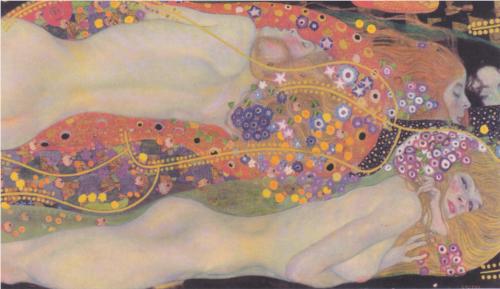
water-snakes-ii.jpg!Blog
Gustav Klimt, Water Snakes II (1907)

Posted in Art | Tagged , | 4 Comments

Irfé

Eddie Pensier writes:

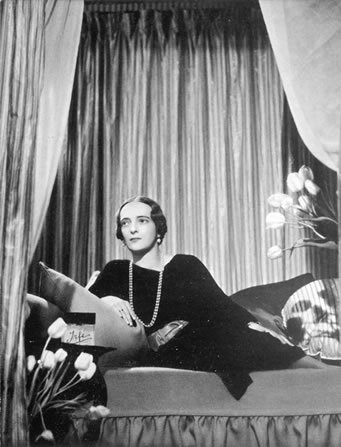
Irfé is a fashion house with a curious history. It was founded in 1924 in Paris by noble Russian expatriates Irina and Felix Youssupov.

irinafelix

Those of you with a head for historical trivia may be wondering where you recognize that name from. Yes, it’s that Felix Youssupov, more famous for murdering Grigori Rasputin. Irina was herself a Romanov, daughter of Grand Duke Alexander Mikhailovich and a niece of the last tsar Nicholas II.

Not long after the murder, Felix and Irina sailed for Malta, loaded with jewels and art (including two Rembrandts) that would finance their life in exile. Eventually they landed in Paris and opened Irfé.

The house was a modest success, mostly derived from the notoriety of the Youssupovs than any outstanding design. A fragrance division brought in more customers. The market crash of 1929 forced the closure  of Irfé’s boutiques in Paris, London and Berlin.

An Irfé perfume advertisement from 1926.

An Irfé perfume advertisement from 1926.

Irina Youssupova, modeling for Irfé.

Irina Youssupova, modeling for Irfé.

It might have remained a historical footnote had the brand not been revived 90 years later by the enterprising Belarussian model Olga Sorokina, and Xenia Sphyris, the granddaughter of Felix and Irina. The house had their first Paris Fashion week show in late September, coinciding with the 400th anniversary of the House of Romanov.

Contemporary Irfé

Contemporary Irfé

A punky yet feminine style from Irfé's S/S 2014 Paris show.

A punky yet feminine style from Irfé’s S/S 2014 Paris show.

Related

Posted in History, Photography, Women men and fashion | Tagged , , , , , , | Leave a comment

“Summer Clouds”

Fabrizio del Wrongo writes:

clouds2

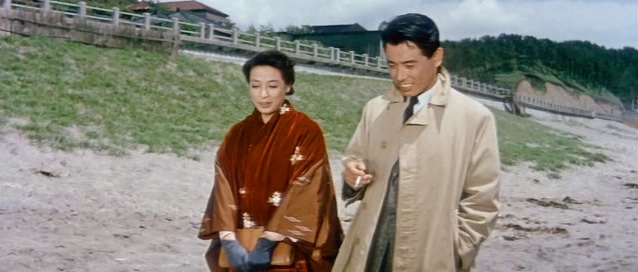
The 1958 “Summer Clouds” is a sprawling but tightly structured work, one that has an almost mathematical precision to it. Chikage Awashima plays Yae, a war widow doing what she can to sustain herself, her son, and her mother-in-law on a private farm on the outskirts of a minor Japanese city. She’s devoted to working the land and to supporting her two siblings — both have families on neighboring farms — but her yearning for independence keeps burbling up, especially when she meets a handsome reporter named Okawa (Isao Kimura). He interviews her for a story, then becomes involved with Yae’s efforts to locate a wife for her nephew. Eventually he helps her land a job writing stories for a local paper, a development that causes her to consider abandoning the farming lifestyle — though Okawa’s marriage stands in the way of Yae’s ultimate happiness.

The way director Mikio Naruse and screenwriter Shinobu Hashimoto weave the characters’ individual and familial stories into a dense narrative network is masterful, though it may grow a bit tedious to those not stimulated by Naruse’s formal gamesmanship. (The movie has one pace and one tone, and it’s over two hours long.) Naruse likes to elide major plot points, forcing the audience to glean them from subsequent conversations — “Summer Clouds” is almost all conversation — or even from the way in which one shot butts up against the following one. This impulse doesn’t seem to derive from a desire to obscure; no thread is left dangling. What it does do is lend a searching, almost thriller-ish quality to the experience of watching the picture, as it’s usually not immediately apparent how a given character, theme, or story element will fit into the larger scheme. (I constantly felt as though I was trying to resolve a diagram in my mind, and when a piece of the plan was made apparent, the resulting flash of understanding felt like a small reward.) This emphasis on mechanics has the twin side effects of thinning the impasto of melodrama and emphasizing those aspects of the movie that Naruse wants us to home in on — namely the characters’ interdependence, which is at turns vivifying and tragic.

Thematically, “Summer Clouds” is concerned with Japan’s transition from a rural, agrarian society to one based on industry and personal services. On top of new mores, the movie’s farmers are dealing with legal reforms restricting the inheritance of land, and these disrupt the already complicated set of rules governing traditional familial relations. The nominal head of the clan, Yae’s older brother Wasuke, has been particularly damaged by these rules, yet he remains fiercely devoted to them. (He’s the counterweight to Yae’s incipient modernism.) Played by Ganjiro Nakamura, the wiley coot from Ozu’s “Floating Weeds,” Wasuke has an old man’s attachment to custom and a child’s susceptibility to self-gratifying capitulation: when his plan for succession is ruined, his opposition collapses as quickly as it does when his ostracized middle son cajoles him with an offer of free sake.

Throughout the film Naruse intersperses scenes of the characters negotiating urban life with images of their toiling in the fields. They’re literally and figuratively caught between two worlds. This is especially true in the case of Yae, whose affair with Okawa brings her into repeated contact with a former college friend — a sort of doppelgänger — who works as a hostess for her commercially prosperous husband. (Fittingly, he owns a theater that screens Western movies.) A polished, fine-featured actress, Awashima certainly looks like she should be strolling through a town rather than squatting in a rice paddy, and Naruse underscores this disjunctive quality when he shows her using modern mechanical field machinery rather than the oxen employed by her more traditional siblings. The film’s final image, showing Yae trudging behind a manual plow, is one of those loaded-to-capacity cappers of which Naruse is so fond. Not only does it tweak the motif of Yae using modern tools (has she sold her machines?), it resolves the romantic and familial strands of her story in one bold gesture. This being Naruse, the pessimism of the moment lingers long after the image has faded.

Posted in Movies | Tagged , , , , , | Leave a comment

Regicide Du Jour

Blowhard, Esq. writes:

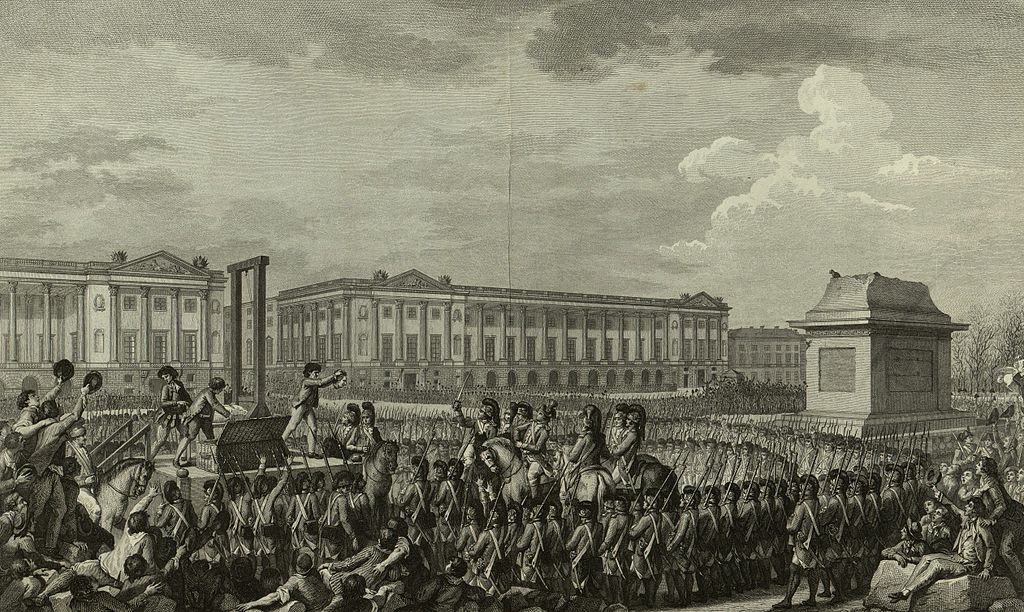
Via these lectures which I’m in the middle of now (and highly recommend), today I learned that 221 years ago yesterday, Louis XVI was executed. Please mourn or celebrate as your politics require.

Execution_of_Louis_XVI

A picture of Louis in happier times. Dude was on the heavy side perhaps in part due to the breakfast he had every morning: one roast chicken, six eggs in sauce, and a slice of ham all washed down with a bottle and a half of champagne. (Although, man, that’s pretty Paleo, isn’t it?)

Antoine-François_Callet_-_Louis_XVI,_roi_de_France_et_de_Navarre_(1754-1793),_revêtu_du_grand_costume_royal_en_1779
Click on the images to enlarge.

Posted in Art, Politics and Economics | Tagged , , , , , , | Leave a comment

A Photo 4 the Day

Fenster writes:

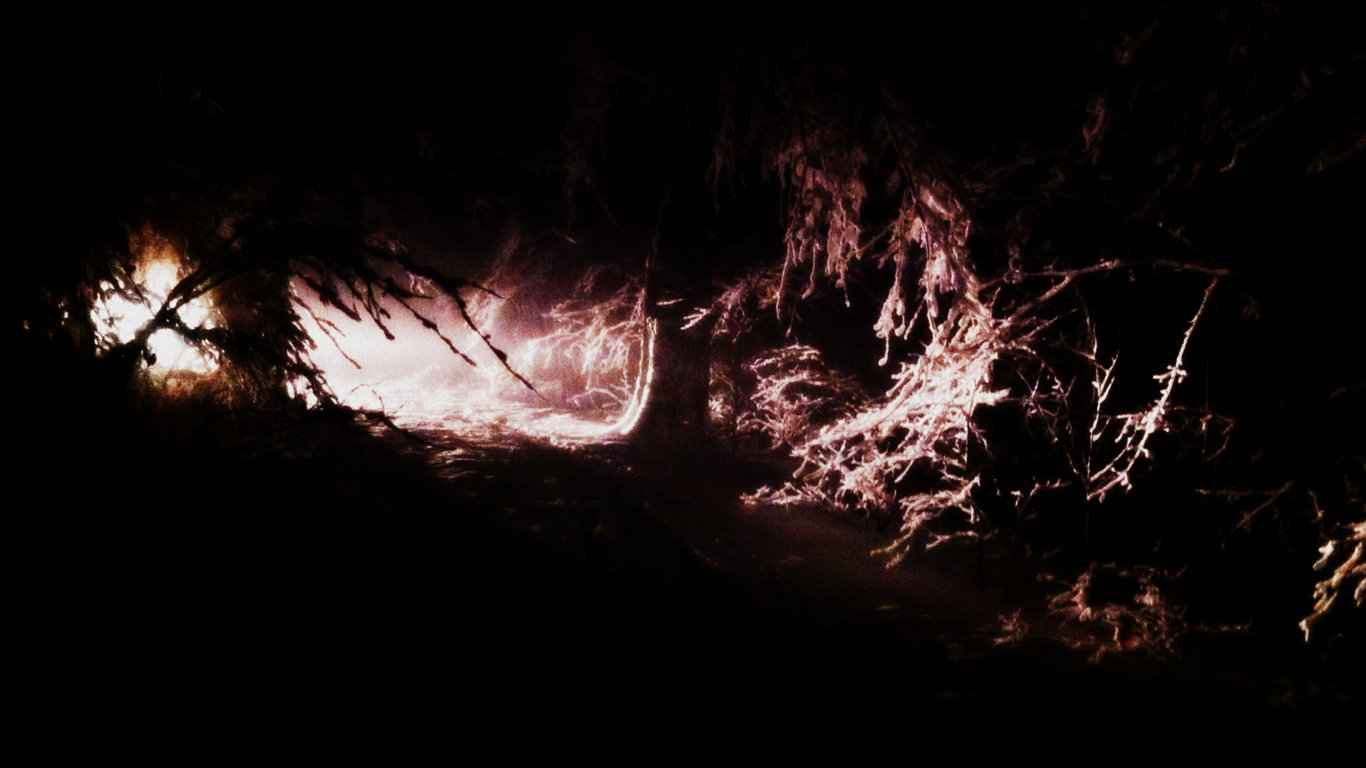
Arriving at our place in upstate NY in a snowstorm, 2 AM, the day before Thanksgiving, 2013.

winterroad

Posted in Photography | 2 Comments

The Poetry of Robert Penn Warren

epiminondas writes:

RPW was primarily known as a prose writer. His masterpiece was All the King’s Men, a uniquely American story of personal and political corruption. It was filmed twice. But his presence in American film and television went far beyond that one novel. So it is not surprising that so many people, otherwise not of a literary persuasion, know his name and associate him with the pantheon of great American writers.

But RPW was really a poet. Poetry is what drove him, and it is through poetry that we begin to see the brilliance of his mind. I’m not here to give a symposium on the poetry of RPW. If you like poetry, you will discover for yourself that RPW was a great poet who also happened to write good prose.  (Faulkner was a great novelist who happened to also write good poetry.)

I direct your attention to two fabulous short pieces by RPW on the two Roman emperors, Tiberius and Domitian. You will appreciate both pieces better after perusing the Wikipedia articles I linked. I hope you enjoy these poems as much as I have.

Image

Image

Posted in Books Publishing and Writing | Tagged , | Leave a comment