To Him Who Meets Eighteen, They Seem Enemies Enough

Fabrizio del Wrongo writes:

edda

Each one singly is called man; 
‘t is twain if they are two; 
three are a thorp; 
four are a group; 
a band is five men;
if there are six, it is a squad; 
seven complete a crew; 
eight men make a panel; 
nine are ‘good fellows;’ 
ten are a gang; 
eleven form an embassy; 
it is a dozen if twelve go together; 
thirteen are a crowd; 
fourteen are an expedition; 
it is a gathering, when fifteen meet; 
sixteen make a garrison; 
seventeen are a congregation;
to him who meets eighteen, they seem enemies enough. 
He who has nineteen men has a company; 
twenty men are a posse; 
thirty are a squadron; 
forty, a community; 
fifty are a shire; 
sixty are an assembly;
seventy are a line;
eighty are a people; 
one hundred is a host.

— Snorri Sturluson

Related

Posted in Books Publishing and Writing, Demographics | Tagged , , , | 1 Comment

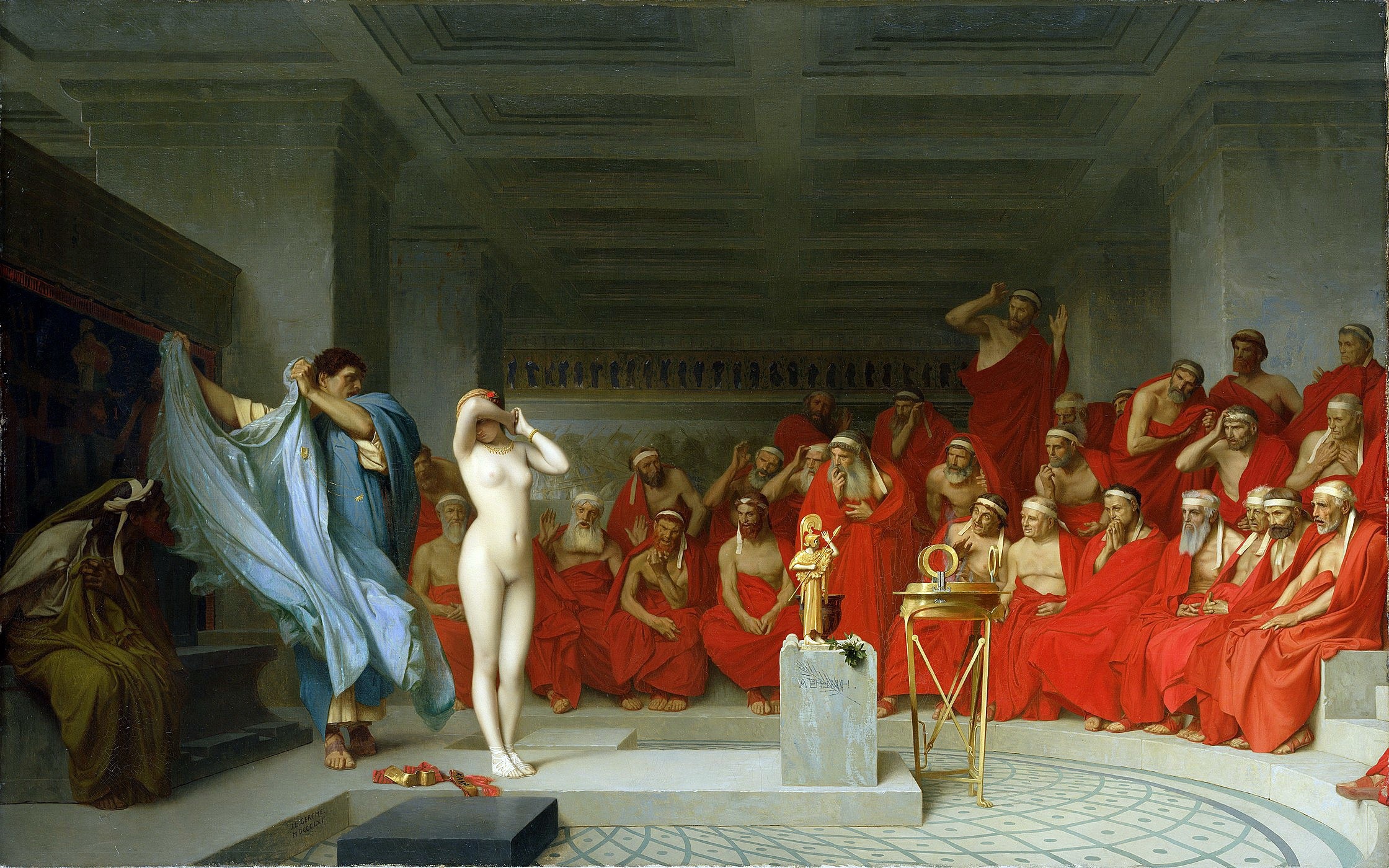
Art Du Jour

Blowhard, Esq. writes:

Click on the image to enlarge.

“Phryne Revealed before the Areopagus” (1861) by Jean-Léon Gérôme

Posted in Art | Tagged , , , | 1 Comment

Melbourne: Where Buildings Go To Die

Eddie Pensier writes:

Melbourne has a justified reputation as one of Australia’s most cosmopolitan cities. The dining, drinking, shopping, and culture scenes can hold their own among any in the world. It’s frequently rated amongst the “most livable” cities, whatever you make of such things.

However, there’s a plague on Melbourne: really, really ugly architecture. I may not be an architecture connoisseur like my fellow Uncouth bloggers, but I know hideous when it bangs me over the head and grinds my nose into the sidewalk.

Photos after the break. Neither I nor the management of Uncouth Reflections will be held liable for retinal damage inflicted by the following horrors.

Continue reading

Posted in Architecture | 14 Comments

Pumpkin Spice Chai

Paleo Retiree writes:

The vogue for everything pumpkin-flavored has now officially gone too far.

ne_nyc_2013_12_shopping_pumpkin_spice_chai01

Posted in Food and health, Shopping, Trends | Tagged , , , | 4 Comments

The Two Sides of Historical Memory

Fenster writes:

We are always reminded that we must remember the past.  True that, but it is still a slippery formulation.  Remember how?  And is it always good to remember, in all ways and under all circumstances?

You can in fact make an argument for the value of historical forgetfulness.  Should the Capulets forever war with the Montagues?  Shiite with Sunni?  Hatfield with McCoy?  When does one need to take the maxim “bury the hatchet” seriously?  And how do you do it, what with all the baying of your kin calling for you to always remember?

And what of the push for reconciliation with respect to conflicts like the one between Tutu and Hutsi?  Is reconciliation a kind of forgetting, or a special kind of remembering?  Or is it both, entwined in a dialectical fashion?  Is it OK to forget, but only after first remembering in some deep way, as in the stages of grief?

I don’t know the answers but I suspect the issue is complicated, more complicated than the one dimensional way we like to treat these things in the public arena.

Consider the death of Nelson Mandela.  That prompted a series of important and interesting discussions of his particular genius at getting South Africa past retribution to some other, imperfect but way preferable, place.  That involved a lot of forgiveness, and the press has been correct in celebrating that.  But the expression is, as I recall, “forgive and forget” . . . forgiveness does imply a particular kind of forgetting, too. But while we cherish forgiveness, its suspect sibling forgetfulness often seems harder to embrace.

Consider too the film 12 Years a Slave.  Sonny Bunch (related to Honey?) wrote recently that, far from contributing to reconciliation, the movie has been “driving people batty.”  He quotes from an article in The Atlantic by Enuma Okoro:

Seeing the movie was hard. But the truth is I had developed my own race problem before the film was even released. And when I look back I see that it has largely come from the slow and painfully growing suspicion that I’m primarily a check-mark in the lives of so many well-meaning, educated white people. Black educated friend: check. African conversation partner: check. Black woman of safe but uncommitted romantic exploration: check. Black articulate friend I can introduce to my family: check. Black internationally reared cultural elite I can relate to without leaving my comfort zone: check. Black emotionally safe friend with whom I can make “black jokes” in the name of familiarity: check. The list could go on.

Is this historical remembrance of a good kind?  Does it push us past the past, to a point where it is safe to let go?  Or is it picking at a scab?

I dunno.  I don’t know Ms. Okoro, and it would help to know her to know.  Maybe her friends are superficial.  Maybe she is, and takes the movie as a wake-up call urging her to give up childish things and take up her rightful place with her people.

But I will tell you where my money is: that she probably actually likes her friends, and that her friends like her.  That if her antennae are sensing things, this has less to do with racism than it does race.  And that she may well pay a personal price for mistaking a siren’s song for a wake-up call.

Posted in Personal reflections | 6 Comments

GIF Du Jour

Blowhard, Esq. writes:

45rpm

Posted in Music, Sex | Tagged | 2 Comments

More Black Buildings

Paleo Retiree writes:

Back here I pointed out how colorless most trendy contemporary buildings are. The percentage of chic buildings that are white, gray or black is amazingly huge once you 1) start noticing it and 2) start noticing how colorful the world of traditional urbanism is by comparison. I took an amble through the Village and Chelsea the other day and, in a vague spirit of documenting these observations, fired off snaps of some of the black buildings I ran across.

First up, black glass-and-geometry in Cooper Square. I suppose its defenders would rhapsodize about its Platonic perfection, and about the bliss they feel watching it dissolve into the sky and reflect its surroundings. Me, I grew tired of those rationales for boring glassy buildings a few decades ago.

ne_nyc_2013_11_arch_astor_place_color01

Continue reading

Posted in Architecture | Tagged , , , | 10 Comments

Architecture Du Jour

Blowhard, Esq. writes:

Click on the image to enlarge.

theatinechurchmunichTheatine Church of St. Cajetan, Munich, Germany

Posted in Architecture | Tagged , , , , | 1 Comment

NOT The Beach Boys 2

Fenster writes:

Another installment: Love Tonight by Andrew Gold.

As you will note, this is less a slavish copy than an homage to a particular approach to songwriting.  And it gets around the Wilson-Love problem Faze discussed in the comments to the first installment by simply siding with Wilson.  If Explorer’s Club mined the first albums of the early sixties, Gold is tipping his hat to later works like Smile, when Brian ruled the roost.

Respectful, listenable.

Posted in Music, Performers | Tagged , | Leave a comment

1920s Motivational Posters

Fabrizio del Wrongo writes:

Related

  • More information.
  • And more.
  • I scavenged most of these images from auction sites like this one. You can probably get hi-res versions by paying them a visit. Maybe bid on a motivational poster as well.
Posted in Commercial art, Education, Politics and Economics | Tagged , , , | 8 Comments