Juxtaposin’: Italian Midlife Crisis Death

Blowhard, Esq. writes:

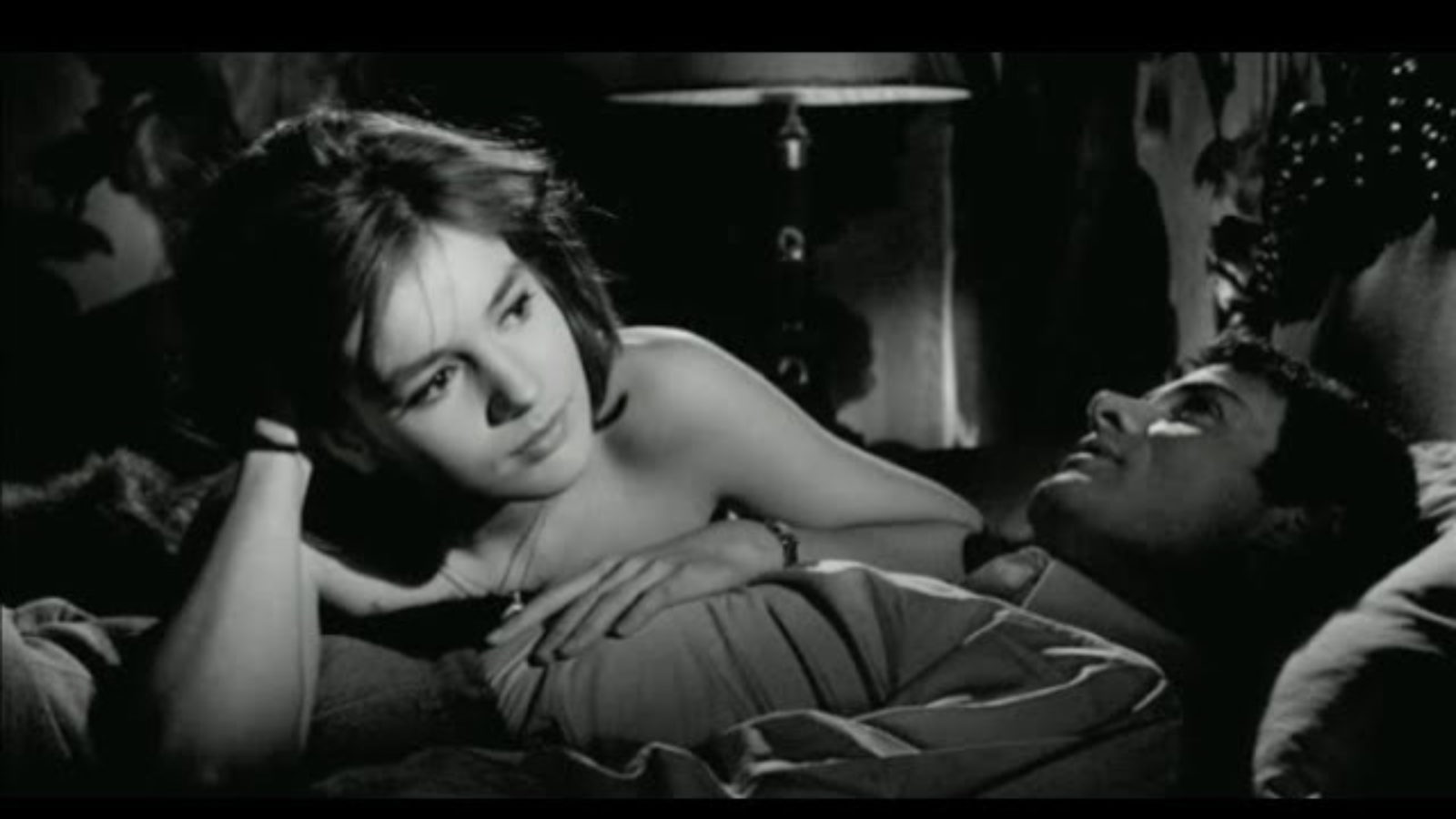
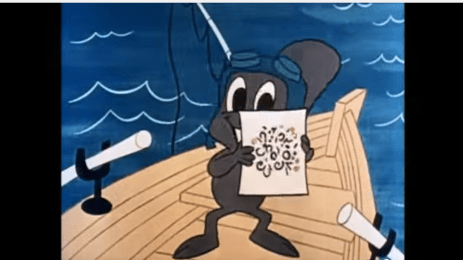
The ending of David Chase’s THE SOPRANOS seems too similar to the ending of Elio Petri’s I GIORNI CONTATI to be a coincidence. Petri’s film was never released in the United States, but given that it’s an Italian film and the main character is a middle-aged man in the throes of an existential crisis named Cesare — which happens to be David Chase’s family name before it was Anglicized (Chase’s daughter goes by the last name DeCesare) — I wonder if Chase hasn’t somehow seen it and borrowed from it either consciously or unconsciously.

Posted in Movies | Tagged , , , | Leave a comment

Movie Du Jour: “Cluny Brown” (1946)

Blowhard, Esq. writes:

Lubitsch’s last completed movie which, for some reason, isn’t discussed or cited as frequently as his other classics. Charles Boyer and Jennifer Jones are excellent. Pauline Kael wrote:

A girl with a passion for plumbing is terribly repugnant to stuffy people who don’t want to admit they have drains. This wonderfully suggestive idea is at the center of Ernst Lubitsch’s mischievous satire of English propriety, set in contemporary rural England. Jennifer Jones is Cluny (it’s her lightest, funniest performance, rivalled only by her dippy blonde in Beat the Devil) and Charles Boyer is a debonair scrounger — a displaced European sophisticate who encourages her to flout social conventions. These two are surrounded by a prime collection of English class and mass types. It’s a lovely, easy-going comedy, full of small surprising touches.

You can watch it on YouTube.

Related

Posted in Movies | Tagged , , | Leave a comment

Architecture and Color

Paleo Retiree writes:

Posted in Architecture | Tagged | 1 Comment

Quote Du Jour: This Is Your Captain Speaking

Blowhard, Esq. writes:

Anyone who travels very much on airlines in the United States soon gets to know the voice of the airline pilot…coming over the intercom…with a particular drawl, a particular folksiness, a particular down-home calmness that is so exaggerated it begins to parody itself (nevertheless! — it’s reassuring)…the voice that tells you, as the airline is caught in thunderheads and goes bolting up and down a thousand feet at a single gulp, to check your seat belts because “it might get a little choppy”…the voice that tells you (on a flight from Phoenix preparing for its final approach to Kennedy Airport, New York, just after dawn): “Now, folks, uh…this is the captain…ummmm…We’ve got a little ol’ red light up here on the control panel that’s tryin’ to tell us that the landin’ gears’re not…uh…lockin’ into position when we lower ’em…Now…I don’t believe that little ol’ red knows what it’s talkin’ about — I believe it’s that little ol’ red light that iddn’ workin’ right”…faint chuckle, long pause, as if to say, I’m not even sure all this is really worth going into — still, it may amuse you…”But…I guess to play it by the rules, we ought humor that little ol’ light…so we’re gonna take her down to about, oh, two or three hundred feet over the runway at Kennedy, and the folks down there on the ground are gonna see if they caint give us a visual inspection of those ol’ landin’ gears” — with which he is obviously on intimate ol’-buddy terms, as with every other working part on this mighty ship — “and if I’m right…they’re gonna tell us everything copacetic all the way aroun’ an’ we’ll jes take her on in”…and, after a couple passes over the filed, the voice returns: “Well, folks, those folks down there on the ground — it must be too early for ’em or somethin’ — I ‘spect they still got the sleepers in their eyes…’cause they say they caint tell if those ol’ landin’ gears are all the way down or not…But, you know, up here in the cockpit we’re convinced they’re all the way down, so we’re jes gonna take her on in…And oh”…(I almost forgot)…”while we take a little swing out over the ocean an’ empty some of that surplus fuels we’re not gonna be needin’ anymore — that’s what you might be seein’ comin’ out of the wings–our lovely little ladies…if they’ll be so kind…they’re gonna go up and down the aisles and show you how we do what we call ‘assumin’ the position'”…another faint chuckle (We do this so often, and it’s so much fun, we even have a funny little name for it)…and the stewardesses, a bit grimmer, by the looks of them, than that voice, start telling the passengers to take their glasses off and take the ballpoint pens and other sharp objects out of their pockets, and they show them the position, with the head lowered…while down on the field at Kennedy the little yellow emergency trucks start roaring across the field — and even though in your pounding heart and your sweating palms and your broiling brainpan you know this is the critical moment in your life, you still can’t quite bring yourself to believe it, because if it were…how could the captain, the man who  knows the actual situation most intimately…how could he keep on drawlin’ and chuckin’ and driftin’ and lollygaggin’ in that particular voice of his —

Well! — who doesn’t know that voice! And who can forget it! — even after he is proved right and the emergency is over.

That particular voice may sound vaguely Southern or Southwestern, but it is specifically Appalachian in origin. It originated in the mountains of West Virginia, in the coal country, in Lincoln County, so far up in the hollows that, as the saying went, “they had to pipe in daylight.” In the late 1940’s and early 1950’s this up-hollow voice drifted down from on high, from over the high desert of California, down, down, down from the upper reaches of the Brotherhood into all phases of American aviation. It was amazing. It was Pygmalion in reverse. Military pilots and then, soon, airline pilots, pilots from Maine and Massachusetts and the Dakotas and Oregon and everywhere else, began to talk in that poker-hollow West Virginia drawl, or as close to it as they could be their native accents. It was the drawl of the most righteous of all the possessors of the right stuff: Chuck Yeager.

— Tom Wolfe, The Right Stuff

Posted in Books Publishing and Writing | Tagged , , , | 1 Comment

A Selfish Mode of Gratification

Fabrizio del Wrongo writes:

376e8622c0b37dc91d2bc5b8ecde5d22

When at length the new house at Fontenay was ready and fitted up in accordance with his wishes and intentions by the architect he had engaged; when nothing else was left save to settle the scheme of furniture and decoration, once again he passed in review, carefully and methodically, the whole series of available tints.

What he wanted was colours the effect of which was confirmed and strengthened under artificial light; little he cared even if by daylight they should appear insipid or crude, for he lived practically his whole life at night, holding that then a man was more truly at home, more himself and his own master, and that the mind found its only real excitant and effective stimulation in contact with the shades of evening; moreover, he reaped a special and peculiar satisfaction from finding himself in a room brilliantly lighted up, the only place alive and awake among surrounding houses all buried in sleep and darkness,—a sort of enjoyment that is not free from a touch of vanity, a selfish mode of gratification familiar enough to belated workers when, drawing aside the window curtains, they note how all about them the world lies inert, dumb and dead.

Slowly, one by one, he sifted out the different tones.

Blue, by candle light, assumes an artificial green tinge; if deep blue, like cobalt or indigo, it becomes black; if light, it changes to grey; it may be as true and soft of hue as a turquoise, yet it looks dull and cold.

Yes, it could only be employed as a supplement to help out some other colour; there could be no question of making blue the dominating note of a whole room.

On the other hand, the iron greys are even more sullen and heavy; the pearl greys lose their azure tinge and are metamorphosed into a dirty white; as for the deep greens, such as emperor green and myrtle green, these suffer the same fate as the blues and become indistinguishable from black. Only the pale greens therefore remained, peacock green for instance, or the cinnabars and lacquer greens, but then in their case lamplight extracts the blue in them, leaving only the yellow, which for its part shows only a poor false tone and dull, broken sheen.

Nor was it any use thinking of such tints as salmon-pink, maize, rose; their effeminate note would go dead against all his ideas of self-isolation; nor again were the violets worth considering, for they shed all their brightness by candle light; only red survives undimmed at night,—but then what a red! a sticky red, like wine-lees, a base, ignoble tint! Moreover, it struck him as quite superfluous to resort to this colour, inasmuch as after imbibing a certain small dose of santonin, a man sees violet, and it becomes the easiest thing in the world to change about at will and without ever altering the actual tint of his wall hangings.

All these colours being rejected, three only were left, viz. red, orange, yellow.

Of these three, he preferred orange, so confirming by his own example the truth of a theory he used to declare was almost mathematically exact in its correspondence with the reality, to wit: that a harmony is always to be found existing between the sensual constitution of any individual of a genuinely artistic temperament and whatever colour his eyes see in the most pronounced and vivid way.

In fact, if we leave out of account the common run of men whose coarse retinas perceive neither the proper cadence peculiar to each of the colours nor the subtle charm of their various modifications and shades; similarly leaving on one side those bourgeois eyes that are insensible to the pomp and splendour of the strong, vibrating colours; regarding therefore only persons of delicate, refined visual organs, well trained in appreciation by the lessons of literature and art, it appeared to him to be an undoubted fact that the eye of that man amongst them who has visions of the ideal, who demands illusions to satisfy his aspirations, who craves veils to hide the nakedness of reality, is generally soothed and satisfied by blue and its cognate tints, such as mauve, lilac, pearl-grey, provided always they remain tender and do not overpass the border where they lose their individuality and change into pure violets and unmixed greys.

The blustering, swaggering type of men, on the contrary, the plethoric, the sanguine, the stalwart go-ahead fellows who scorn compromises and by-roads to their goal, and rush straight at their object whatever it is, losing their heads at the first go-off, these for the most part delight in the startling tones of the reds and yellows, in the clash and clang of vermilions and chromes that blind their eyes and surfeit their senses.

Last comes the class of persons, of nervous organization and enfeebled vigour, whose sensual appetite craves highly seasoned dishes, men of a hectic, over-stimulated constitution. Their eyes almost invariably hanker after that most irritating and morbid of colours, with its artificial splendours and feverish acrid gleams,—orange.

What Des Esseintes’ final choice then would be hardly admitted of a doubt; but indubitable difficulties still remained unsolved. If red and yellow are accentuated under artificial light, this is not always the case with their composite, orange, which is a hot-headed fellow and often blazes out into a crimson or a fire red.

He studied carefully by candle light all its different shades, and finally discovered one he thought should not lose equilibrium or refuse to fulfil the offices he claimed of it.

These preliminaries disposed of, he made a point of eschewing, so far as possible, at any rate in his study, the use of Oriental stuffs and rugs, which in these days, when rich tradesmen can buy them in the fancy shops at a discount, have become so common and so much a mark of vulgar ostentation.

Eventually he made up his mind to have his walls bound like his books in large-grained crushed morocco, of the best Cape skins, surfaced by means of heavy steel plates under a powerful press.

The panelling once completed, he had the mouldings and tall plinths painted a deep indigo, a blue lacquer like what the coach-builders use for carriage bodies, while the ceiling, which was slightly coved, was also covered in morocco, displaying, like a magnified œil-de-bœuf, framed in the orange leather, a circle of sky, as it were, of a rich blue, wherein soared silver angels, figures of seraphim embroidered long ago by the Weavers’ Guild of Cologne for an ancient cope.

After the whole was arranged and finished, all these several tints fell into accord at night and did not clash at all; the blue of the woodwork struck a stable note that was pleasing and satisfying to the eye, supported and warmed, so to say, by the surrounding shades of orange, which for their part shone out with a pure, unsullied gorgeousness, itself backed up and in a way heightened by the near presence of the blue.

As to furniture, Des Esseintes had no long or laborious searches to undertake, inasmuch as the one and only luxury of the apartment was to be books and rare flowers; while reserving himself the right later on to adorn the naked walls with drawings and pictures, he confined himself for the present to fitting up almost all round the room a series of bookshelves and bookcases of ebony, scattering tiger skins and blue-foxes’ pelts about the floor: and installing beside a massive money-changer’s table of the fifteenth century, several deep-seated, high-backed armchairs, together with an old church lectern of wrought iron, one of those antique service-desks whereon the deacon of the day used once to lay the Antiphonary, and which now supported one of the ponderous volumes of du Cange’s Glossarium mediæ et infimæ Latinitatis.

The windows, the glass of which was coarse and semi-opaque, bluish in tinge and with many of the panes filled with the bottoms of bottles, the protuberances picked out with gilt, allowed no view of the outside world and admitted only a faint dim “religious” light. They were further darkened by curtains made out of old priestly stoles, the dull dead gold of whose embroideries faded off into a background of a subdued, almost toneless red.

To complete the general effect, above the fireplace, the screen of which was likewise cut from the sumptuous silk of a Florentine dalmatic, midway between two monstrances of gilded copper in the Byzantine style which had come originally from the Abbaye-aux-Bois at Bièvre, stood a marvellously wrought triptych, each of the three separate panels carved with a lacelike delicacy of workmanship; this now contained, guarded under glass let into the triple frame, copied on real vellum in beautiful missal lettering and adorned with exquisite illuminations, three pieces of Baudelaire’s: right and left, the sonnets called “The Lovers’ Death” and “The Enemy,” in the middle, the prose poem that goes by the English title of “Anywhere out of the World.”

— Joris-Karl Huysmans (translator unknown)

Posted in Architecture, Books Publishing and Writing | Tagged , , , | 1 Comment

Juxtaposin’: Wisdom Literature

Blowhard, Esq. writes:

In the New Yorker, Richard Brody writes:

Of course, “Wonder Woman” is a superhero movie, and it fulfills the heroic and mythic demands of that genre, but it’s also an entry in the genre of wisdom literature that shares hard-won insights and long-pondered paradoxes of the past with a sincere intimacy.

Wikipedia:

Wisdom literature is a genre of literature common in the ancient Near East. This genre is characterized by sayings of wisdom intended to teach about divinity and about virtue. The key principle of wisdom literature is that while techniques of traditional story-telling are used, books also presume to offer insight and wisdom about nature and reality.

The genre of mirrors for princes writings, which has a long history in Islamic and Western Renaissance literature, represents a secular cognate of biblical wisdom literature. In Classical Antiquity, the advice poetry of Hesiod, particularly his Works and Days has been seen as a like-genre to Near Eastern wisdom literature.

…

The most famous examples of wisdom literature are found in the Bible.[1][2]

The term Sapiential Books or “Books of Wisdom” is used in biblical studies to refer to a subset of the books of the Hebrew Bible in the Septuagint version. There are seven of these books, namely the books of Job, Psalms, Proverbs, Ecclesiastes, the Book of Wisdom, the Song of Songs (Song of Solomon), and Sirach (Ecclesiasticus). …

Posted in Movies, Philosophy and Religion | Tagged , , , , | 1 Comment

Couldn’t Do It Today: “Sweet Deceptions” (1960)

Blowhard, Esq. writes:

Via Wikipedia:

The film tells one day in the life of a young adolescent girl who is discovering her sexuality. Francesca (Catherine Spaak), a 17-year-old girl, who has a vivid dream of making love to Enrico (Christian Marquand), a 37-year-old divorced architect and family friend. She skips school to watch lovers as she contemplates whether she should act on her feelings.

And via YouTube, here’s the first four minutes of the movie (it’s not the trailer):

Posted in Movies, Sex | Tagged , , | 1 Comment

“The Mountain Cat”

Fabrizio del Wrongo writes:

wildcat

Released in 1921, Ernst Lubitsch’s “The Mountain Cat” (sometimes called “The Wildcat”) has little of the urbaneness of the director’s later work. It’s one of his Bavarian films, made (at least in part) on sojourns from his home base of Berlin, the body of which have a roughhewn, almost rustic quality that bespeaks a desire to unwind and cut loose. In fact, I take Lubitsch’s earlier “Meyer from Berlin” to encapsulate the aim of these pictures: It’s about a henpecked Berliner who convinces a doctor to prescribe an Alpine retreat  — without his wife. Tellingly, Lubitsch himself played Meyer; it was the last time he acted in a movie. If the much discussed (perhaps overly discussed) Lubitsch “touch” can be described as a crassness that is only barely redeemed by an an overriding sense of propriety, then perhaps the Bavarian films can be taken as an indulgence of crassness; their reliance on knockabout physical comedy is only slightly removed from the work of Mack Sennett.

In “The Mountain Cat” Lubitsch alternates between two worlds, a fantastical fort inhabited by a bumbling army, and the snow-covered mountains, the realm of a band of barbarous robbers. Though the worlds present a visual contrast, their constituents mirror each other, and it’s part of the joke that both parties have the dainty sensibilities of petit bourgeois householders. Rischka, the daughter of the chief robber, is the sole exception. She terrorizes both groups with gusto, and her inevitable neutralization, the expectation that she’ll allow herself to be absorbed into one of these nutty civilizations, gives the plot its principle motivation. Played by the Polish actress Pola Negri, Rischka may be derived from Constance Talmadge’s Mountain Girl from “Intolerance.” Negri expands on Talmadge’s spunkiness by giving Rischka a fervency that seems to pour out of the actress’ enormous eyes. Though she’s little discussed today, Negri was an unlikely combination of Mary Pickford and Theda Bara. This may explain Lubitsch’s attraction to her: She embodied the balance of cheeriness and decadence that characterizes his best work.

Though “The Mountain Cat” is clearly Lubitsch in knockabout mode, it’s not a stripped-to-the-skivvies production like the roughly contemporary “Romeo and Juliet in the Snow.” At this stage in his career Lubitsch was known as the American Griffith, and it’s clear that he wanted his audience to remember why: A crowd scene staged for the introduction of the male romantic lead, in which seemingly thousands of women pour into the streets to get a piece of him, is managed with as much bravado and attention to detail as anything in the director’s earlier “Anne Boleyn” or “Madame DuBarry.” Here, though, Lubitsch uses the crowd scene for comic exaggeration. He presents it as a trope, and he keeps embroidering on it until we’re laughing more at his formal cheek than at the lowbrow sexual gags sprinkled throughout the sequence.

Much of the movie can be taken as an exercise in formal and aesthetic exaggeration. The decor of the fort is wondrously absurd. Phallic cannon poke out of circular portals, one stacked on top of the other, as though intended for decoration rather than defense. And throughout most of the movie the vignetting — vignettes are shapes overlaying the square film image, intended to emphasize certain movements and details — is so absurdly overdone that it’s hard not to wonder what Lubitsch was thinking. Is he encouraging us to laugh at the material within the vignette, or the practice of vignetting itself? (Amusing at first, the vignetting is perhaps too clever; even Lubitsch seems to tire of it after a while.) If it’s hard to determine exactly what in the picture is funny, it may be because much of its humor is generated not by content but by form. Lubitsch has an uncanny ability to draw laughs from the way in which the physical qualities of the film — staging, framing, art direction — interplay with his characters and their situations, and the peculiar rhythm of the editing gets under your skin, makes you feel a little tipsy.

Few silent films seem to yearn so enthusiastically for sound. There are two implicitly musical sequences — an absurd orchestra recital staged on ice; a deliriously baroque ball — and the movie as a whole has the bounce and sway of popular song. This is evident both in its simple back-and-forth structure and the undulating quality of its art direction, the latter almost narcotic in its impact. It’s there, too, in the physical bits, notably one in which actor Paul Heidemann, as Lieutenant Alexis, seesaws on an enormous rocking horse, daintily sampling liqueurs whenever his hand returns to the bottles. Like other Lubitsch comedies of this period, notably “The Doll” and “The Oyster Princess,” “The Mountain Cat” is a precursor of the operettas the director would go on to make at Paramount and MGM; notably, the romantic triangle that develops between Rischka, Alexis, and the daughter of the fort’s commandant anticipates the 1931 “The Smiling Lieutenant.” Unfortunately, Heidemann’s Alexis, the roué whom women cannot resist, has none of the self-aware insouciance of Maurice Chevalier. His chief weapon is a toothy grin that communicates a mixture of coarseness and malice; it’s hard to understand what the ladies see in him. But then the movie is intended to play not as romantic comedy but as slapstick. We don’t yearn for any particular couple to make a go of it, and it doesn’t matter too much that Rischka’s romantic fate is somewhat disappointing. We’re in it strictly for the gags.

Related

Posted in Movies | Tagged , , , , , , , , | 1 Comment

Lessons from Across the Pond?

Fenster writes:

Are there lessons to be learned from the messages from across the pond?

fan mail


Continue reading →

Posted in Politics and Economics, Uncategorized | Tagged , , | Leave a comment

Architecture and Color

Paleo Retiree writes:

Posted in Architecture | Tagged | Leave a comment