
Blowhard, Esq. writes:
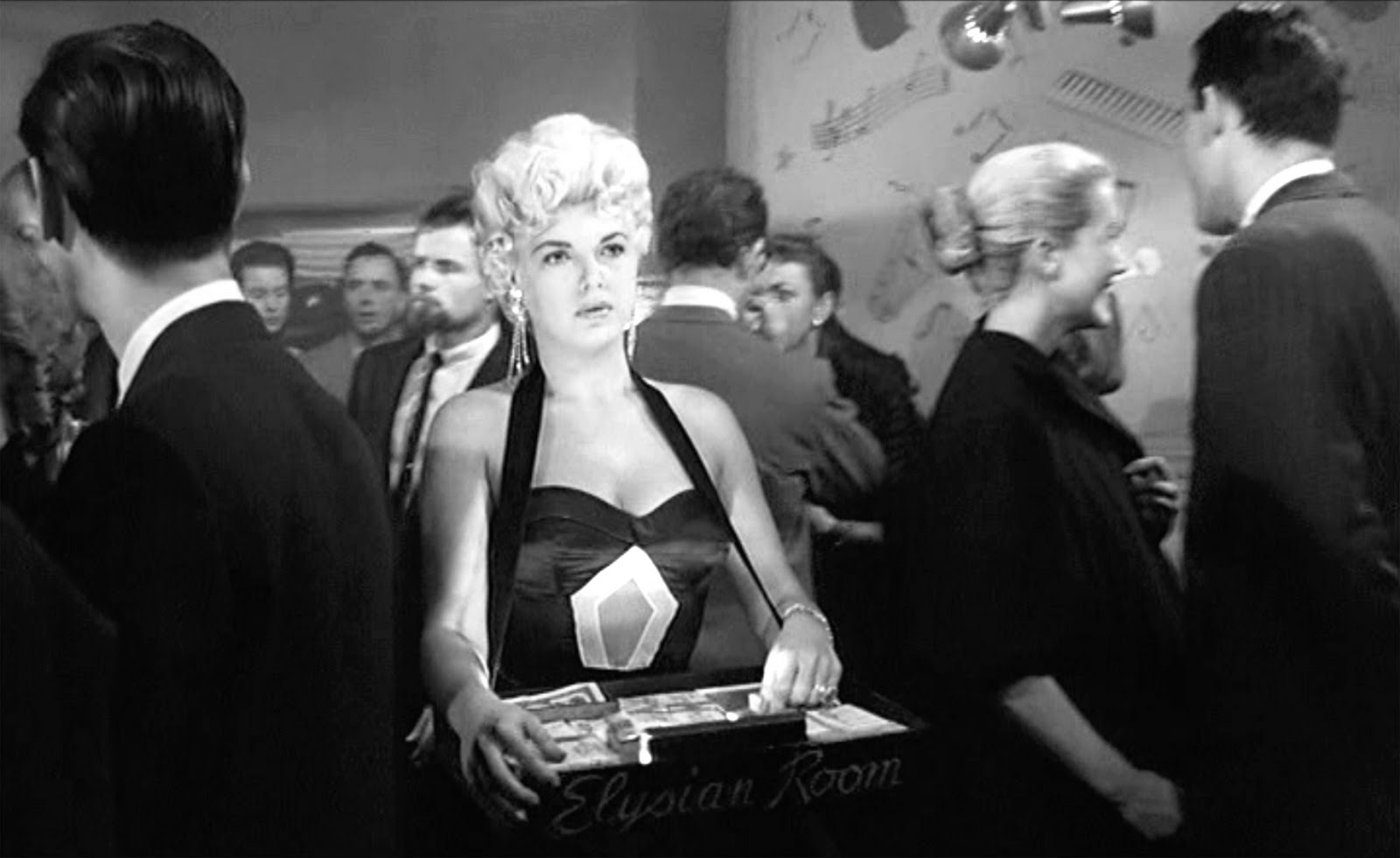
Barbara Nichols as the cigarette girl in SWEET SMELL OF SUCCESS (1957).
Blowhard, Esq. writes:
Barbara Nichols as the cigarette girl in SWEET SMELL OF SUCCESS (1957).
Paleo Retiree writes:
I was taken completely aback by the reaction of much of the mainstream press, as well as of many of my lib/left/Dem friends, to Trump’s recent claim about Sweden and crime. They didn’t just question him or fact-check him. They laughed at him. He wasn’t fumbling and/or exaggerating. No, he was completely wrong. Sweden’s PM himself indulged in some yuks at Trump’s expense. Har har har.
The notion of the Scandinavian paradise seems to die hard in certain crowds. OK, there has been some awkwardness in the Netherlands, and Norway may be getting comfortable with the notion of limits. But in Sweden, everything continues to work out brilliantly. Despite the lies and hysteria of those who are either Nazis or who look occasionally at nonstandard news outlets — same people, really — the international liberal project remains in fine shape. And, of course, it’s in fine hands. If only those wicked ethnonationalists wouldn’t keep throwing dirt in the gears …
Could my impression that the immigration-and-refugee issue has indeed become a fraught one in Sweden really have been so mistaken? Perhaps I’ve been hanging out ‘way too much in the darker, crime-think corners of the web. Time to fact-check myself. So I did some more websurfing and turned up a few links others may find interesting.
I’m thankful Sweden took in my parents as refugees … But the Swedish immigration policies have been way too irresponsible and unsustainable in my opinion (despite its good intentions), and Sweden is now in way over its head. Now I wanna stress that refugees should have the right for asylum, but Sweden can’t take in them all! As much as ‘humanitarian politics’ sound nice it’s not sustainable for such a small country to take in as many has they have, not economically or socially!
It really is a difficult situation with all the refugees, but there are also a bunch of people who have gotten to Sweden (and Europe overall), that don’t fulfil the conditions for asylum; who wouldn’t have gotten here if it wasn’t for (what was) the open borders. I think regulated borders are important both for the countries safety and to not waste the time and money of migrants who aren’t eligible to stay anyway! I also think more effort should be taken to integrate the ones that are already here!
Excuse a quick detour: I find it bewildering how hard the MSM (and my lib/left/Dem friends, who without exception take their cues from the center-left MSM) find it to wrap their minds around Trump. Is he really so hard to understand as a character type?
As far as I can tell, the source of their difficulty is his personal style. The MSM and many of my friends don’t just seem indignant that Trump isn’t a silver-voiced, verbally-slick law school valedictorian — evidently a type they’re comfortable with. They take his style as proof that he’s incompetent, terminally narcissistic and/or crazy.
Now it seems incontrovertible to me that, whatever Trump’s faults, he’s a shrewd guy who’s capable of being effective on a large scale. In other words: I take it as a given that he isn’t incompetent, he isn’t crazy and, though he may well be narcissistic, so is just about every other big-league public figure. Given these assumptions, I find myself wondering: Why is Trump’s style so hard for so many lib/left/Dem people to make sense of?
OK, he blusters. OK, he feints left then goes right. OK, he often says outrageous, hyperbolic things. Even so, it doesn’t seem to me to be terribly hard to square such behavior with the notion that he’s effective and sane, at least so long as we’re allowed to bring a little real-life experience into play. For one thing, as Scott Adams has repeatedly argued, Trump is a “persuader.” (Trump hasn’t exactly kept his deal-making nature a secret.) He’s always manipulating, he’s always playing negotiation games.
For another, it’s completely missing the point to judge Trump by the standards of an Oxbridge debating society. Instead, he’s a man-of-action businessguy. I’ve met plenty of these, and among them the combination of effective, driven and smart AND verbally not-very-dazzling isn’t an unusual one.
I’ll add one notion of my own to the above list. To me, Trump can be usefully pictured as an improv-acting genius. He wings it, he works instinctively, he employs shock and surprise, he makes it up as he goes along … yet he always manages to forge forward. If you’re locked into an idea of performing as a polite, by-the-books thing, improv-style acting can look chaotic, even berserk. But if you’ve had experience with the form you can easily recognize it as its own discipline and art.
My conclusion: Hey, lib/left/Dem colleagues and friends, Trump is a man-of-action businessguy/negotiator with the soul and instincts of a Second City performer.
Just for the record, let me point out that in this posting I’ve said precisely zilch about whether or not I approve of Trump’s actions and policies. I’ve only argued that he’s sane and effective, and that his behavior can be understood without recourse to “He’s crazy.” Glad to agree that there are plenty of reasons to object to Trump, and plenty of reasons to put him down. I’m just arguing that “he’s crazy” is a lousy and misleading argument.
But back to the announced theme of this posting. As the days passed by it was interesting to see that the MSM was beginning to moderate their original hooting and jeering about Trump and Sweden.
(Perhaps these admissions had something to do with that little riot that broke out in a Stockholm suburb the day after Trump’s remarks.) But will my friends-who-take-their-cues-from-the-soft-left-MSM notice these updates, let alone be open to these facts? My best guess: they’ve already moved on to other excuses to proclaim Trump crazy.
All of which reminds me of a book I just finished, Michel Houellebecq’s “Submission.” More on that very amusing, and very alarming, novel soon.
Fenster writes:
. . . is that it permits tenured professors to write what they see. Of course this can cut the wrong way but tenure is a double edged sword. Here, an article skeptical about unlimited low-skill immigration is published in of all places the New York Times and is written by of all people a Harvard professor. And not just any Harvard professor but George Borjas, long considered a leading scholar of immigration.
It seems to me he gets to the nub of it. At least as regards a thoughtful approach.
Now, it could be that some issues are so filled with emotion that there is no need, or room, for sustained thought. People are often not motivated by complex, nuanced and wonky policy arguments. The side that has held the whip hand on immigration has not been afraid to use it, keeping up a steady drumbeat of pro-immigration emotionalism. Emma Lazarus! The Statue of Liberty! We are a nation of immigrants!
In turn the challenge to that was also mounted in emotional terms. Rapists! Terrorists!
So there we are. The argument has been successfully joined in moralistic terms but such terms often do not provide traction for resolution short of warfare. It would be nice, and I hope not naive, to suggest that a reasoned approach may find traction under the current circumstances.
As Borjas’s piece suggests, the truth is that immigration is like any other policy argument. There are winners and losers to whatever approach you want to take. Let’s talk about it dispassionately and see where it goes. That is the “immigration debate we need.”
As far as arguments go, I am persuaded by Borjas’s skepticism. Emma Lazarus did not repeal the law of supply and demand. A large influx of low-skilled low-wage labor likely has several effects:
1. it will depress wages of the least advantaged, like blacks, poor whites and immigrants already arrived.
2. it will differentially benefit capital over labor, increasing inequality.
3. it will reduce pressures for assimilation, leading to ethnic enclaves and less of the social solidarity that the communal impulse requires–i.e., it undercuts what the Left itself most values.
4. there will be negative fiscal effects on government finance given the high cost of benefits provided.
Add to that the looming pressures of technology and automation . . . how again do we benefit by an uncontrolled influx of low skilled labor?
Oh wait, I remember now: we educated liberals get to have our yards maintained for cheap and we get to feel virtuous about it!
Blowhard, Esq. writes:

We’re all arts sophisticates around here, right? We love the good things in life like pro wrestling, Michael Bay movies, and Mickey Spillane novels. We cultivate our refined taste and enjoy bantering with like-minded aesthetes. Ergo, you’d think I’d be in accordance with these lines from HIGH FIDELITY which nerds enjoy chanting as if it’s a maxim of Buddhist wisdom:
What really matters is what you like, not what you’re like. Books, records, films – these things *matter.* Call me shallow, but it’s the fuckin’ truth.
But no, I don’t agree with it, I think it’s absolute bullshit.
First, I’ve noticed that guys (it’s always guys) who quote this line almost invariably have dull, predictable taste. Oh, you like Paul Thomas Anderson and Cormac McCarthy? Well, gosh golly, so does nearly everyone else with a Filmstruck subscription. Second, even if their taste is great, I’d rather talk to someone with an interesting POV than someone who liked a particular list of things. Adopting a particular taste set is the easiest thing in the world. Third, notice how he uses the word “matters” twice but at no point tells us why it matters? You know why he doesn’t tell us? BECAUSE IT DOESNT FUCKING MATTER. Rule of thumb: whenever a person says something “matters” it almost invariably doesn’t. Also, that’s a nice rhetorical trick of blunting criticism by calling yourself “shallow” but it doesn’t make it any less true. Fourth, do they not notice that the protagonist of HIGH FIDELITY is an immature man boy? Why do they want to emulate that? Fifth, not to get all Godwin’s Law, but need I remind everyone that the Nazis loved Beethoven, Wagner, and Bruckner?
While whining about this on Facebook, Fabrizio added:
A dumb quote in that it presupposes that your cultural predilections have not only a moral dimension but a moral dimension that overrides all other considerations. This is basically a nerd’s rationalization of his assumed superiority. He has nothing to offer outside of his list of greatest breakup songs ever, so that’s all that matters. I like the right albums therefore I am.
Fellow UR scribe Enzo then observed that the real reason Rob is a moron who should be ignored is because he went back to Iben Hjejle, that bland third-rate Scandinavian Robin Wright doppleganger, instead of choosing the obviously superior Natasha Gregson Wagner.
Blowhard, Esq. writes:
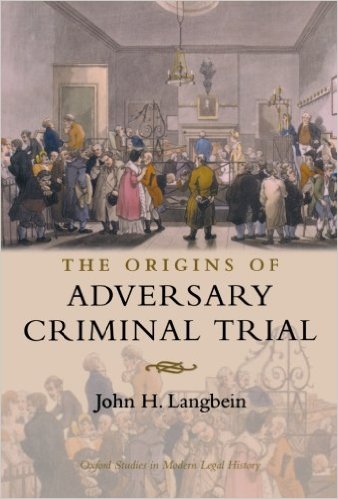
At provincial assize courts in the Elizabethan-Jacobean period (1558-1625) the average duration of a trial, including time for jury deliberations, has been reckoned at between fifteen and twenty minutes. These were cases of felony, which still in Elizabethan times routinely resulted in death sentences upon conviction. …By the mid-eighteenth century the average trial time at assizes may have lengthened slightly, to about a half hour per trial.
The Old Bailey was the London-area equivalent of the provincial assize court. …In the later seventeenth and early eighteenth centuries the Old Bailey, which was the felony trial court for London and the surrounding county of Middlesex, processed between twelve and twenty jury trials per day through a single courtroom. So characteristic was the brevity of trial that when an exceptional criminal trial lasted for some hours, its duration became a subject of remark.
Still in the early nineteenth century [the French observer] Cottu was struck to find ten or twelve trials “may be dispatched in a morning…to a single jury,” whose deliberations typically lasted two or three minutes. The conveyor belt at the Old Bailey ran so monotonously that on one occasion a trial went its course before anybody realized that the court had just tried the wrong man: One John Smith was indicted and tried for stealing nine pounds of raisins. “I am not the person. I know nothing of this matter. I was committed upon suspicion of forgery.” The astonished prosecutor, “looking at the prisoner,” acknowledged that “the man at the bar is not the person.”
Fabrizio del Wrongo writes:

I found myself mulling over a discussion in our class in History and Moral Philosophy. Mr. Dubois was talking about the disorders that preceded the breakup of the North American republic, back in the 20th century. According to him, there was a time just before they went down the drain when such crimes as murder were as common as dogfights. The Terror had not been just in North America — Russia and the British Isles had it, too, as well as other places. But it reached its peak in North America shortly before things went to pieces.
Paleo Retiree writes:
From a terrific piece by Christopher Caldwell:
In our time, as in Jackson’s, the ruling classes claim a monopoly not just on the economy and society but also on the legitimate authority to regulate and restrain it, and even on the language in which such matters are discussed. Elites have full-spectrum dominance of a whole semiotic system. What has just happened in American politics is outside of the system of meanings elites usually rely upon. Mike Pence’s neighbors on Tennyson Street not only cannot accept their election loss; they cannot fathom it. They are reaching for their old prerogatives in much the way that recent amputees are said to feel an urge to scratch itches on limbs that are no longer there. Their instincts tell them to disbelieve what they rationally know. Their arguments have focused not on the new administration’s policies or its competence but on its very legitimacy.
Blowhard, Esq. writes:
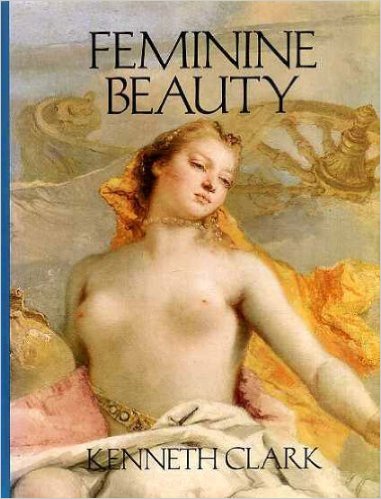
What I appreciated most about this book, aside from the subject matter, was its modest approach. Clark, best known as the writer and host of the TV series “Civilization”, is a highly cultured man but he wears his erudition lightly. The hardcover edition I have is less than 200 pages total and consists mainly of 175 different plates of sculpture, painting, and photographs arranged chronologically from ancient Egypt to post-war Hollywood. The explanatory text accompanying each image is minimal and purely informational, perhaps two to three sentences that tell who the artist was, the circumstances around the creation of the work, and some biographical detail about the model. There is a narrative 25-page introduction — although given the generous margins and numerous illustrations, it’s probably closer to 12-15 full pages — to provide a general framework.
In contrast to the didactic wall text of so many museums, Clark’s book invites the reader to make his own interpretations and connections. It’s as if he’s given us a sketch and is asking us to provide the color and shading. Sure, he has a definite POV and the mere fact that he’s choosing this or that work over another is arguably meant to influence the reader, but his style is nevertheless subtle, unrushed, and unassuming. The entire book can be consumed in a leisurely afternoon but he wants the questions it raises to linger for a lifetime.




“Feminine Beauty” is out of print but you can get a cheap used copy on Amazon and elsewhere.


 Blowhard, Esq.
 Callowman
 Sherbrooke
 Eddie Pensier
 Enzo Nakamura
 Epaminondas
 Fabrizio del Wrongo
 Fenster
 Brundle Guy
 Glynn Marshes
 Paleo Retiree
 Atypical Neurotic
 Question Lady
 Sax von Stroheim
 Sir Barken Hyena
 The Mistaken
