“Lion” (2016)

Blowhard, Esq. writes:

A boy from a tiny destitute Indian village is separated from his family, winds up over 1,200 miles from home on the streets of Calcutta, narrowly escapes sexual predators multiple times, is taken to a Dickensian orphanage, a year later is adopted by a loving Australian couple, grows up in a seaside Tasmanian town with every possible need a person could want, 25 years later decides to track down his biological family, succeeds in locating them, and there is a tearful reunion. The end, roll credits.

The entire time I was watching the movie I kept thinking of this anecdote:

After defeating George Foreman for the heavyweight title in Zaire, Muhammad Ali returned to the United States where he was asked by a reporter, “Champ, what did you think of Africa?” Ali replied, “Thank God my granddaddy got on that boat.”

Posted in Movies | Tagged , | 3 Comments

Quote Du Jour: Moldbug, er Boldmug, is Back

Blowhard, Esq. writes:

mencius-moldbug-full

Thanks to Callowman for alerting me to this. Lots and lots to chew on here, here’s just one (very lengthy, but hey, it’s Moldbug we’re talking about) example:

…do you see the actual organizational structure of Washington, DC as in any way corresponding to the narrative either (a) explained in the literal in the Constitution, (b) matching the narrative you see on CNN, (c) both (a) and (b)?

Because if so, like, wow, man. I mean, if that narrative was true, you should definitely be worried. I mean, if you actually thought the President controlled the executive branch and could make it do whatever he wants. Do you know anything about how DC works?

Basically, under normal circumstances, the President is not in any remote sense in charge of the executive branch of USG, in the way a CEO is in charge of a company. The whole thing is a complete fraud — or at least, has been since FDR died. Not only would DC run perfectly well without a White House at all, it would run better. In fact, that’s pretty much what you elect if you elect a Democrat.

I know that I know what I’m talking about, because both my parents were career civil servants in core DC agencies. Look, don’t trust me. Trust some other dude who sounds like he knows what he’s talking about:

https://foseti.wordpress.com/2011/02/02/on-government-employment/

To put it very simply, the difference between a President and a CEO is that the CEO can change the personnel, structures, and procedures of the institution.

The President can’t fire civil servants, all of whom belong to the other party. He can’t change budgets. He can’t change org charts. He can appoint people, but the people he appoints can’t do any of these things internally. And they are strictly prohibited from any contact with the personnel records or hiring procedures of the civil servants.

They do have to share an office with these people, though. It’s insane. And it can have no possible positive outcome. Honestly, Hillary was probably a better vote for anyone who wants to just replace this whole institution. Trump is just going to annoy it a lot, creating a ton of bullshit media both right and left. Probably a good time to invest in clicks.

There are levers that can be turned, but nothing terribly serious. Remember the line-segment example? Redefining the power position of the White House over USG, to make it much weaker, would be hard. Redefining it to make it exponentially harder (for instance, the power of a CEO) would be incredibly easy. (I mean, of course, to contemplate mentally — not to actually accomplish.)

There are only two possible impacts of a Trump presidency: some kind of insane auto-coup (see below), or a giant nothingburger like the Nixon and Reagan administrations. You might notice that “populism” (or, to those of us less afflicted by No True Scotsman syndrome, “democracy”) elected Nixon and Reagan.

What impact did these hostile “populist” administrations have on the actual USG? Well.. some. Not none. I don’t know – what impact does a storm have on a coral reef? There is certainly more sloshing around, way up at the surface.

You certainly didn’t need to worry about Nixon. I think there were a few budget cuts under Reagan. Being a Schedule C is hazardous, of course, as is being a Hill staffer in a weak / junior district. But this is a very small number of people compared to the total size of DC.

Otherwise… you are being shown the exception to the rule. This illusion is just taking advantage of your instinctive innumeracy. The USG is a huge, gigantic, immense thing. It did 10,000 things on December 30 and another 10,000 on January 30. 9,999 of them are exactly the same as they would have been had Hillary won.

Control of the White House is relevant and has real consequences for real people, sure. But… adjust your eyes, because the rule is always more important than the exception. If the rule looked at all like it was actually changing, don’t you think I’d let you know?

Here’s one way to think about the state of democracy in America. It’s undergoing a common political transition: moving from a functioning power center to a non-functioning one.

This has hilarious linguistic consequences, like a political language in which “democracy” is maximally positive, but “populism” and still worse “politics” carry a severely negative charge. Uh, last time I checked, “democracy” is a property for which it is both necessary and sufficient to put the election winner in charge of the government.

Historically, the transition from a functioning power center to a ceremonial one is common. Think of the difference between Elizabeth I and Elizabeth II.

A simple test is whether we can devise a substantively trivial transformation that removes the suspect institution. If Elizabeth II had passed away at any point in her not-very-useful life, the impact on both Britain and its government would have been minimal. The same cannot be said for Elizabeth I.

Therefore the Tudor Elizabeth is a functioning organ and the Windsor Elizabeth is a non-functioning organ. This doesn’t mean the organ has no use or purpose — ceremonial monarchy is by far the best way to preclude a real monarch. Elizabeth II’s ancestors have served this function since the glorious events of 1688. It just means you don’t intervene substantially in actual governance.

There’s a trivial way to show that Washington is already a non-democracy. Can we construct a nearly-equivalent Washington, which operates under exactly the same rules, but with elected officials who are purely ceremonial? Well, for one thing, Brussels already works this way. So we know it’s possible.

But let’s make a minimal change to Washington, while eliminating elections entirely. We’ll just eliminate all elected officials. Everything else will be the same.

No new “laws,” or rather, giant collections of vaguely-related patches like a Debian update gone terribly awry. So we don’t need a Congress, or any of the army of lobbyists and activists that attends it. The perfect labor force, they’ll build the best north wall. The Supreme Court can appoint its own new members, like Israel’s. I love Israel. They’re the best. They have the best wall.

As for the Presidency, all the agencies can run perfectly well or even better without any sched Cs. The White House is needed in some cases to resolve actual interagency conflicts. These can be handled by a device readily available for $6.99, the Magic 8-Ball.

All three branches eliminated, no enormous impact on reality or even on DC. Ergo: elected officials are a fraud. Ergo: democracy itself is a fraud. And inherently in today’s real world can’t be anything else.

It’s true that the regime (like all regimes, regardless of “democracy”) still has to maintain its popularity; but only its popularity relative to any competitor. It has no competitors. The closest thing is Trump, but Trump is just the President.

So this is a basically useless and nearly ceremonial office to which we’ve in our great wisdom elected Trump. Of course, if he substantially changes the real-world nature of the office, that’s totally different. I don’t see much sign of that yet. And it’s hard to even imagine. Is it even possible?

If Trump or any President can essentially change the quasi-legal form of government, perhaps acting in a Jacksonian way, that would be a true auto-coup in the Alberto Fujimori tradition. He would have no choice but to continue across the Rubicon, and simply govern by EO indefinitely.

Perhaps this would come after some kind of enabling legislation. Perhaps it would just mean ignoring Congress, which after all has a popularity of 10% and consists of a collection of crooks, flacks and hacks with the collective charisma of a senile banana slug. It might even mean defying the much more attractively-dressed judicial branch. Whose popularity is much higher, surpassing that of investment bankers and approaching the common raccoon.

I just don’t think Trump would do it, though. Also — I forget the source of the quote, but it is an actual quote from someone who was somehow connected to DC — “Trump has no people.”

You can’t have regime change without some kind of alternate government, and there is no such thing. There’s nothing within three orders of magnitude of being ready to become the next regime. I mean, is there? If there is, I don’t know about it. Not that I would, obviously.

And again you’re just not looking at this kind of operator here, I think. If it was Elon Musk… he’s not eligible, of course. But perhaps, in the 21st century, that’s just a technicality.

Even Trump 20 years younger might be something different. But really he’s this strange, amazing, wonderful creature from the ’50s. Honestly, I think you should just relax and enjoy the show.

Actual participation in the governance process, should that become genuinely available to you, is one thing. Political doomsaying is another.

You may not believe any of this other stuff, but I really don’t think you should be worrying about Donald Trump at all. I would be super surprised to see any real change in Washington as a result of his administration, and my predictions are often accurate.

Posted in Politics and Economics | Tagged , , , , , | 6 Comments

“Elle”

Fabrizio del Wrongo writes:

elle-movie

Over the last 20 years Paul Verhoeven has displayed a fascination for put-through-the-wringer women. He likes their defiant glamour and their steadfastness in the face of chaos. In “Showgirls,” “Black Book,” and now “Elle” one has the sense he’s using them as lightning rods for his roiling artistic impulses, impulses that might cause his movies to atomize absent the repositories represented by his heroines. Like the authors of romance fiction and Brian De Palma, Verhoeven knows that women are richest in extremis, that their complexities are best revealed through trauma. It’s not mere sensation he’s after; he’s working towards something more elemental. Where “Showgirls” was consciously trashy, a travesty of a travesty, and “Black Book” was chic in the classic Hollywood manner, “Elle” has the austerity and distance of an art film (its tone is reminiscent of the work of Catherine Breillat or Olivier Assayas). It’s the most composed thing Verhoeven has done, a fact which may account for its positive reception.

How else to explain such a reception? Many of those who normally dismiss Verhoeven’s work as grotesque or crude have praised “Elle” as one of the best movies of 2016. Perhaps the commentators haven’t noticed that Verhoeven and lead actress Isabelle Huppert have done everything in their power to offend them. Though “Elle” is dressed up as a thriller, its motives are those of a woman’s picture — it’s closer to “Stella Dallas” than “Psycho.” The whodunit that runs through the narrative is interesting, but it’s merely a form on which Verhoeven and screenwriter David Birke (adapting a novel by Philippe Dijan) hang a melodramatic essay on the topics of sex, violence, and relationships. Possibly it’s this decentralized approach that throws the trigger brigade for a loop. They can’t determine what the movie is about, so they fall back on appreciating its poise and Huppert’s courageous performance. But though Verhoeven is drawn to satire, he’s not a political filmmaker; his movies don’t make simplistic points. And I think the suggestiveness of “Elle” constitutes its own form of content. Its unresolvedness is in the service of a vision.

Huppert’s Michele Leblanc heads a company that produces video games. She’s the modern independent woman, the woman who imagines that she reorders civilization through her actions — or perhaps her very being. The atraditional city of the 21st Century is an environment in which such a woman thrives, but her standing is without roots. This is especially true of Michele: At an early age her place in traditional society was obliterated by her father, whose serial murders, in which he involved Michele, made pariahs of his family. The specter of paternal violence hangs over Michele; sometimes if even seems to animate her. Random Parisians insult her upon recognizing her, her marriage foundered in the wake of a spat that turned physical, and her sexual proclivities tend toward the rough — even the games she produces have violent sexual overtones. When Michele’s mother (a very amusing Judith Magre) suggests that the crimes of Michele’s father are responsible for the entropy that has overtaken her life, Verhoeven immediately cuts to a bloody sequence in which Michele fantasizes about brutally smashing the skull of an attacker. It’s the one moment in the picture in which she’s able to step fully outside of her victimization.

Verhoeven does all he can to foreground both Michele’s persecution and her masterful negotiation of it. The movie opens with a shocking scene in which she is raped on the floor of her living room, after which she calmly proceeds with the rest of her day. There’s defiance in this, but also a kind of participation. As Michele ponders the identify of her masked attacker, and Verhoeven and Birke tease us with possibilities, one gets the sense she’s not investigating the crime so much as flirting with it. There’s no shortage of suspects: Nearly all the men in Michele’s life are connected to her through sex, and the one who isn’t — a neighbor who is a practicing Catholic — is the object of her amorous machinations. (In one of the movie’s most suggestive scenes, she vigorously masturbates while watching him and his wife install a nativity scene in their front yard.) Even the character of Michele’s son, Vincent, is loaded with Oedipal suggestiveness. As mothers will, Michele projects her desires onto Vincent’s spoiled girlfriend, and she’s disturbed more by her jealousy than her dissatisfaction. Her genes are jealous too: She’s painfully aware that Vincent has been cuckolded.

The relentless focus on sex, violence, family, and heredity makes “Elle” feel something like Greek theater — more Euripides than Eszterhas. Huppert’s performance, at turns grave and coquettish, is certainly the stuff of great drama. Her composure is almost flamboyant in its delicacy; there’s never a moment when you’re not fully aware of the extent to which her resolve is an outgrowth of a quivering vulnerability. And it’s something of a miracle that she’s able to project her analytical qualities onto the material, to make the movie feel as though it’s poring over itself, rearranging its shards to proffer new meanings, new suggestions.

Verhoeven declines to dramatize any particular suggestion at the expense of another. He’s more interested in the way Michele assimilates all of them while maintaining the face she displays to the world. Ultimately, the movie asks: What strange amalgams are we? To what extent is civilization a front for our most primal impulses? Michele, particularly in the movie’s quiet moments, when she’s comforting an injured bird or fixing a cup of tea, seems absorbed by these very questions.

Posted in Movies, Performers | Tagged , , , , | 2 Comments

Happy Valentine’s Day

Blowhard, Esq. writes:

shvd

Posted in Media | Tagged | Leave a comment

Architecture and Color

Paleo Retiree writes:

Posted in Architecture | Tagged | 2 Comments

What Bannon Reads

Fenster writes:

Here is an interesting read about what Steve Bannon reads, and what may be on his mind.

One of his favorite books is The Fourth Turning.  I was fascinated by the book when it came out in the nineties.  The authors posit a generational theory of history.  They describe American history in terms of twenty year “turnings” that have a predictable rhythm and structure.  Four of them over around 80-100 years (having to do with generations) and then back round again.  Under the theory, the fourth turning, due around now, will be a real doozy–a meltdown like the Civil War and Great Depression and World War 2.

These fourth ones tend to end badly and so it is of note that a senior presidential counselor is thinking that we are headed toward tougher times.  Should presidential counselors be thinking about inevitable historical cycles even if they are true?  Does that make them agents of alleged inevitability, captive of their thoughts? Or might it allow the cycles to be better managed?  Dunno.  But take a look: the authors still have a website that presents the basics.

Then there’s the neoreactionary thinker Mencius Moldbug (Curtis Yarvin).  I have some Zelig history here too.  Moldbug did some of his first writing as a commenter at the 2Blowhards website where I was a contributor for a time.  Here is the site’s ringmaster, Michael Blowhard, on Mencius, his commenting, and his thinking as of 2007. As you may know, M. Blowhard is better known in these parts as Paleo Retiree.

I do not share Moldbug’s anti-democratic sentiments but have come to have sympathy with some of his critique of our current system–mainly that what he calls The Cathedral (the mainstream press, academia, financial elites) pretty much call the shots and do a good job of keeping the herd in line with a constant diet of approved opinions, and by keeping the Overton Window good and shut.

Moldbug stopped writing at his own blog awhile back but it is still up.  He is way too verbose, much more than me, and he is a dense writer when I think I strive for clarity.  So the blog can be hard to follow.  Here is a good short guide to Moldbug and reactionary political theory.  I am interested that Bannon likes The Fourth Turning but worry more if he is leaning on Moldbug rather than just reading him.

For the record, as time goes by I find myself more and more of a small-r republican, meaning someone in favor of the republic as envisioned by Madison, Hamilton and the others, and that Franklin joked that we might not be able to keep.

I see Franklin’s point that republics are fragile and that their success is not simply a question of law and structure but that they depend on the character of the people that comprise them.  And that we may have already blown it with too much diversity, growth in bad character traits not helpful to republican habits and elite self-serving behavior.  That may all lead to authoritarianism irrespective of what your opinion on the matter might be.  We might have already gone past the point of where decent self-government of the type I intellectually favor is possible.  In that case events are likely to take a . . . turn.

Which brings us to the article’s discussion of Michael Anton, the guy who penned a very well-read article on just this point during the election under the pseudonym Publius Decius Mus, or just Decius to his friends.  If you haven’t read it you should.  It is an amazing read whether you agree with its dark conclusions or not.  He is a gifted writer and thinker.  Here’s The Flight 93 Election.

Bannon not only read Decius; on the suggestion of Peter Thiel he was brought into the White House where he is on the foreign policy staff.  So with Decius the influence on Bannon has gone past a general interest piqued by inquiry. It is worth noting here, and possibly a good thing, that for all of the darkness in Decius’s piece he has not concluded that we have gone too far to reclaim a semblance of republican government. Sometimes optimism is best viewed through the prism of pessimism and perhaps Bannon is thinking this way too.

And on the question of republics being fragile, I see Bannon is also reading Nassim Nicholas Taleb, the guy who pushed the notion that institutions need to be “anti-fragile”.  I haven’t read Taleb’s books but I have read about his thinking from articles and interviews.  He seems an insufferable know-it-all but there is a lot to his concept of antifragility. It is encouraging that a presidential counselor would carry the concept of antifragility around in his head. It is a better general purpose tool than invade-the-world-invite-the-world.

So Bannon is an interesting dude for sure.  I don’t buy that he is an evil Nazi or anti-Semite by any means.  In a sense I think the Cathedral is out to get Trump, and Bannon is in the crosshairs since he is thinking disturbing thoughts.  Some of what he is reading is troubling since I am not in favor of neoreaction.  And I worry when any political leader concludes that we are pawns in a game of historical inevitability, and that the drama is imminent.  Apocalypse Soon.

On the other hand, he is a voracious reader and who is to say that he subscribes to all of the views noted here?  The Cathedral has an interest in making him seem dangerous after all.

One way or another it is always possible that we are in fact at a historical hinge point.  They do happen every now and again.

nb.  If this guy is right Bannon is no populist and we are all useful idiots.

And here is Bannon’s documentary Generation Zero that relies on Fourth Turning thinking.

Posted in Politics and Economics | Tagged | 8 Comments

It Takes Two Sides to Make a Bell Curve

Fenster writes:

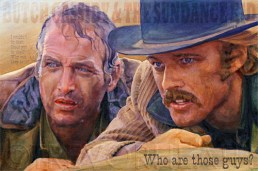
There’s an extraordinary amount of talk going around about the alt-right.  But who are those guys?

who-are

Language is a tool for unclarity even in the best of circumstances and things get even dicier when the phenomenon to be considered (in this case, the alt-right) is fluid and uncertain.  Things get worse when language users have an agenda, and positively value the unclarity that language can bring.  So this will be an exercise in the rectification of names.

Consider a bell curve of political views on the alt-right. No, for this discussion let’s bear down on just one issue that the alt-right is concerned with: race.  There are others (immigration for one).  But for now let’s consider race.

At the far right edge we find the most extreme views.  From what I can tell the numbers here are small, though they grow as you get closer to the middle.

From the edges in we find:

1. White supremacy. That’s the Nazi-like view that not only are whites superior to other races they must also have the power to keep other races down if not out.

2. White nationalism. Nationalists do not assert superiority but their view of “race realism” compels them to conclude that the races will never get along well. And since whites ought to have the same rights as other ethnic groups to self-segregate whites should favor a formal political affiliation, one that is separate racially but that is not bound to assert superiority and to promote associated objectionable measures.

3. White identity. As with #2 race realism compels a kind of self-segregation but of a softer sort.  A separate political structure is not required. Under this view whites should feel free to voluntarily self-segregate as other groups do without fear of social approbation or the heavy hand of government requiring integration at every turn.

4. “Citizenism”. This is more or less nationalism, without most of the blood in blood and soil. A diverse nation is accepted as a fact but one can be skeptical about more difference always being better. The “historic nation” is respected but less out of white pride than a belief that most of the “proposition” in the term “Proposition Nation” derives from Western European ideas, and we risk losing the powerful thread of those ideas when we celebrate difference as a god thing in itself. Where race is concerned BLM and other movements are disfavored but not because of notions of white superiority. Rather the argument is that identity politics as practiced is ultimately divisive and does not support development of a coherent national sentiment, one that is based on the historically and geographically contingent ideas that inform the “proposition”.

It also needs to be noted that the bell curve continues on to the left, with most on the left closer to the center.  Those nearer the center on the left can be thought of as close cousins to non-extremist citizenists–though the center left for the moment is not co-mingling very well with the center right.  And as with the right side so with the left: one finds more extreme views (and fewer numbers) the further one progresses in a progressive direction.

Both sides of the center of the bell curve have things in common.  And that’s where the people, and the votes, are.  But when there’s a war on, each core gives credence and voice to more extreme parts of their own side of the bell curve.  They think that is fine to do so with their own extremes but get very upset when they see the other side doing the same thing. 

Moderate or liberal Democrats think it is fine to give up their microphone to members of BLM who take over the stage, and are often loath to condemn rioting if it is for a good (i.e., progressive) cause. 

The alt-Right has the same tendencies, with the recent National Policy Institute Conference in Washington providing a good example.  Richard Spencer, a white nationalist (#2 above), tried for some of the time to dominate the proceedings, appearing to speak on behalf of people like Jared Taylor, a white identitarian (#3) and Peter Brimelow, a citizenist (#4).  Those closer to the center did not want to disavow those closer to the edge since the idea of the conference was to look for things in common and to work towards a kind of coalition.  But there were no disavowals of white nationalism, just as there are no disavowals of the left fringes by elements closer to the center.  

In this way, the edges have more visibility than their actual numbers warrant, and each side gets to score hate points against the other by lumping center and fringe together.  

The system cannot help but create a gap where there should be co-mingling: right in the center of things. Each side feels confident that is has “the people” with it and since the extremes on each side are emboldened neither side is interested in re-occupying the middle.  But nature abhors a vacuum.

If Trump was brilliant about anything in this election it was letting his business instincts loose in a vortex of political action that can only think politically, and that can’t help but make mistakes along a political dimension.  Politicians instinctively think: how can my side gain tactical advantage? Businessmen instinctively think: buy low sell high!  Look for the undervalued stock, the arbitrage opportunity, the vacuum that nature abhors but that the shortsighted  cannot see.

In this election the vacuum to be filled consisted of all of the constituencies that the parties had stranded for their own political reasons and all of the voices that were choked off and strangled as a result.  Trump won with that key business insight.  But now we are in a new world, one that Trump helped create by capitalizing on his buy low sell high insight.

Where is the new gap, the new vacuum, the new buy low sell high?  It is at the interface of the two center parts of the bell curve, still a no-man’s land but destined for a gold rush some time soon.  Whoever fills that space wins the next election.

tulsi-gabbard-promoted-major   ?

Posted in Uncategorized | 5 Comments

Quote Du Jour: James M. Cain on Titles

Blowhard, Esq. writes:

hell_or_high_water

James M. Cain had wanted to call his first novel “Bar-B-Que.” Alfred Knopf quite rightly thought that was a terrible title. Cain suggested “Black Puma” or “The Devil’s Checkbook.” The publisher disliked those, too, and proposed calling it “For Love or Money.” Then Cain thought of a title he really liked: “The Postman Always Rings Twice.” Knopf said he still preferred “For Love or Money.” Cain got angry. “There is only one rule I know on a title,” he wrote Knopf. “It must sound like the author and not like some sure-fire product of the title factory.” He suggested that “For Love or Money” might do very well for a musical comedy or a movie, or just about anything. He went on to name more all-purpose titles that sounded typical of the title factory, like “Hold Everything” or “Hell and High Water.” Knopf knew when to retreat.

— City of Nets: A Portrait of Hollywood in the 1940’s by Otto Friedrich

Posted in Books Publishing and Writing, Movies | Tagged , | 1 Comment

Linkage

Blowhard, Esq. writes:

carcassonne

Posted in Linkathons | 5 Comments

Architecture and Color

Paleo Retiree writes:

Posted in Architecture | Tagged | Leave a comment