
Fenster writes:
ere is a video on the subject of tea. Oh, and sex, too, since they go together like love and marriage. Check it out.
Fenster writes:
ere is a video on the subject of tea. Oh, and sex, too, since they go together like love and marriage. Check it out.
Blowhard, Esq. writes:
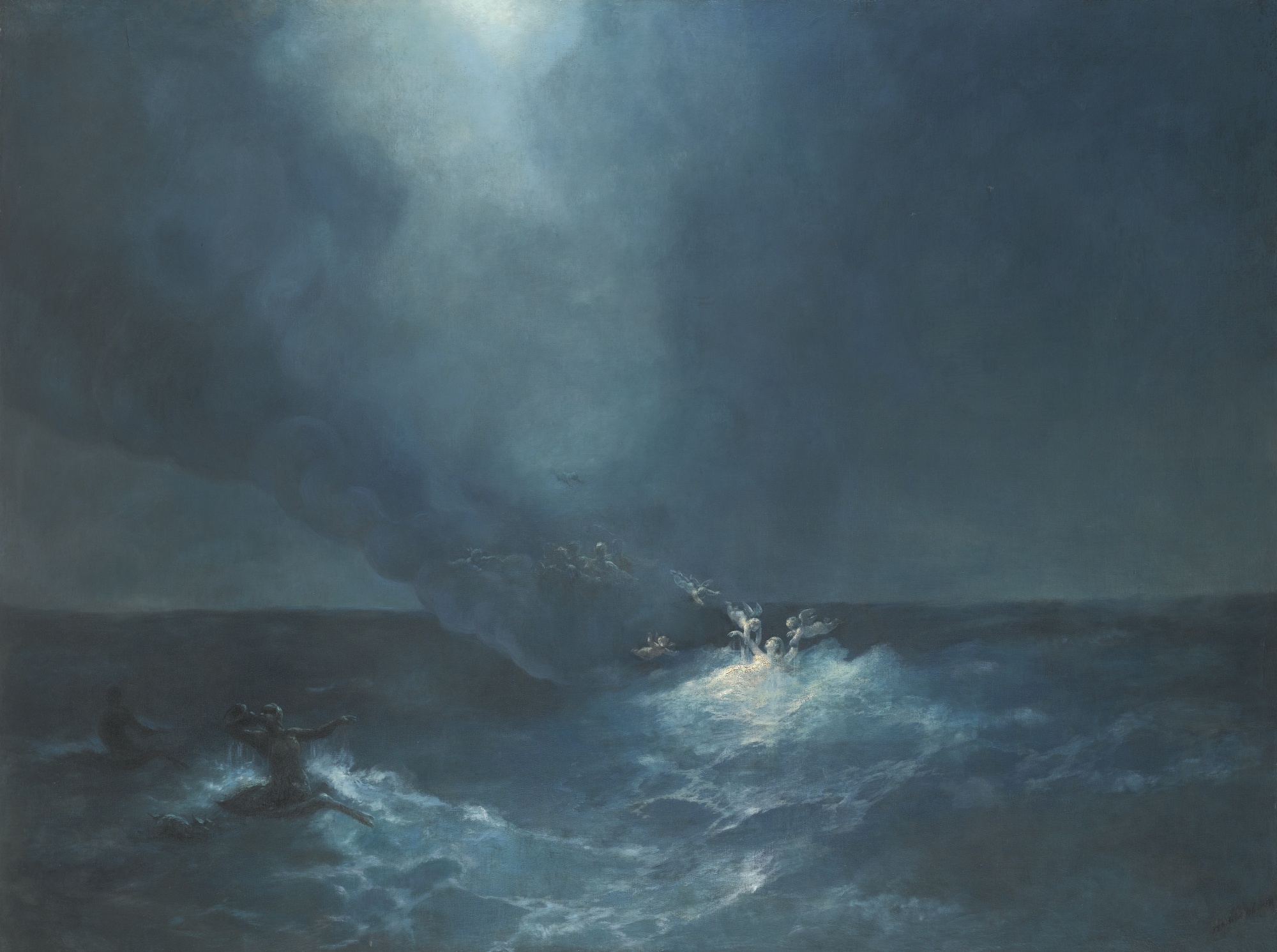
Ivan Aivazovsky, “The Birth of Aphrodite,” 1887.
Click on the image to enlarge.
Related
Fenster writes:
Perhaps you thought James Brown’s famous disrobing-and-falling-down routine was sui generis? Maybe maybe not.
Fenster writes:
Perhaps as punishment for having been a manager for so long, or maybe simply as a form of cosmic social justice, I find myself at a relatively advanced age a union member. I got to be a faculty member late in my career, and at a heavily unionized public university.
Fenster writes:
The Boston Globe front page tells two tales that, to me at least, reveal something about delayed reactions on the part of institutions.
People are creatures of habit, and prone to both cognitive error and poor judgment of risk. Institutions all the more so. After all, if as the saying goes it takes only one to make an argument by the time you get to two a fight is quite possible. With three and above it is a wonder that chaos does not reign universal.
Having worked a lot in organizations I have often observed that people’s sense of what is bulletproof is derived too much from an internal sense of safety and danger. If influential person x is viewed as having the back of person y then person y is pretty safe. If group cohesion suggests an arrangement is safe then people will conclude it will stay intact.
Blowhard, Esq. writes:

Yesterday, Paleo Retiree kicked off part one of our two-part interview with Sue Mengers biographer Brian Kellow. Today we conclude our conversation. We cover, among other topics, how to write a biography, Brian’s reaction to Janet Maslin’s pan of the book in the New York Times, and being insulted by Cathy Moriarty.
***

Brian Kellow
Blowhard, Esq.: It took you three years to research and write this book. How do you keep up your energy through such a long project?
Brian Kellow: In the first place, I was getting to talk to so many incredible people that it just kept propelling it forward. It was very exciting to be getting such great stuff from so many people. I remember very well, when I interviewed Fran Lebowitz, that night I realized Sue was right — everyone really is a star fucker. Because Fran dazzled me so completely for an hour and a half. I got on the street when we were finished and I called my partner and said, “I have just spoken to the most brilliant woman.” I mean, my head was spinning. I said very little. I asked about seven questions! It was fantastic. Then you think, “Well, if I’ve got this person, maybe I can get that person.” Then the whole game of who you can get becomes very exciting. You have to figure out how to approach them.
Paleo Retiree writes:
Yesterday I raved about Brian Kellow’s new book about the legendary Hollywood agent Sue Mengers. It’s a smart and fun biography, an informative joyride through the life of a colorful and fascinating character who peaked during the 1970s, one of Hollywood’s mythical eras. Today Uncouth Reflections is pleased to present a special treat to our visitors: part one of a two-part interview with Brian.
Brian joined Blowhard, Esq. and me for lunch at Greenwich Village’s superfine Cornelia Street Cafe, and the three of us gabbed happily for a couple of hours about Sue Mengers, Hollywood, the ’70s, Pauline Kael, divas and the art of biography. Brian’s a big, good-humored, ebullient man with a sly sense of humor, and our conversation was punctuated with regular bursts of laughter.
***

Brian Kellow at Cornelia Street Cafe
Paleo Retiree: The thing that struck me the most about your new book was the similarity between Sue Mengers and Pauline Kael, the subject of your last biography. Did you go into the project knowing in advance that there’d be similarities between them?
Brian Kellow: Not at all. I didn’t know anything about Sue. I really didn’t. Just what I’d read in newspapers and magazines ‘way back. I knew about her husband directing “All Night Long,” and that marking the end of her relationship with Barbra Streisand. But I didn’t know anything of a personal nature, or what the profile of her personality was like at all. Except that she was tough. She was a tough dame. So I thought, Maybe this is the latest in my cycle of tough dames. “The Broad’s Biographer.” (Laughs.)
Blowhard, Esq: What were the similarities between Pauline and Sue that struck you most?
Brian Kellow: Coming to their fields with the feeling of being an outsider, definitely. That’s a big one. Thinking that by telling the unvarnished truth to everyone around them they were doing them all a world of good, and not understanding when people got upset by it — that was a strong point of similarity between them too. And a certain lack of introspection. As brilliant as they both were, they were not inner-directed people to any great degree at all. In fact, I think Sue was a little more introspective than Pauline, because she was in analysis. I don’t think it did her much good, though.
PR: What were some of their more striking differences?
Brian Kellow: I think Pauline had an unlimited appetite for anything artistic or intellectual. Well, not completely unlimited but definitely broad and wide-ranging. And Sue did not. Sue thought a lot of what was being offered up was bullshit, and she had no interest in it. I only learned late in the game that her friend Gore Vidal got her reading the great books of the world and broadening her horizons. And she did read like a fiend, but she tended to do professionally-directed reading. She would read the hot novel that might make a good movie. She would read the newspapers forward and backwards because she wanted to be informed at her next dinner party.
Blowhard, Esq. writes:
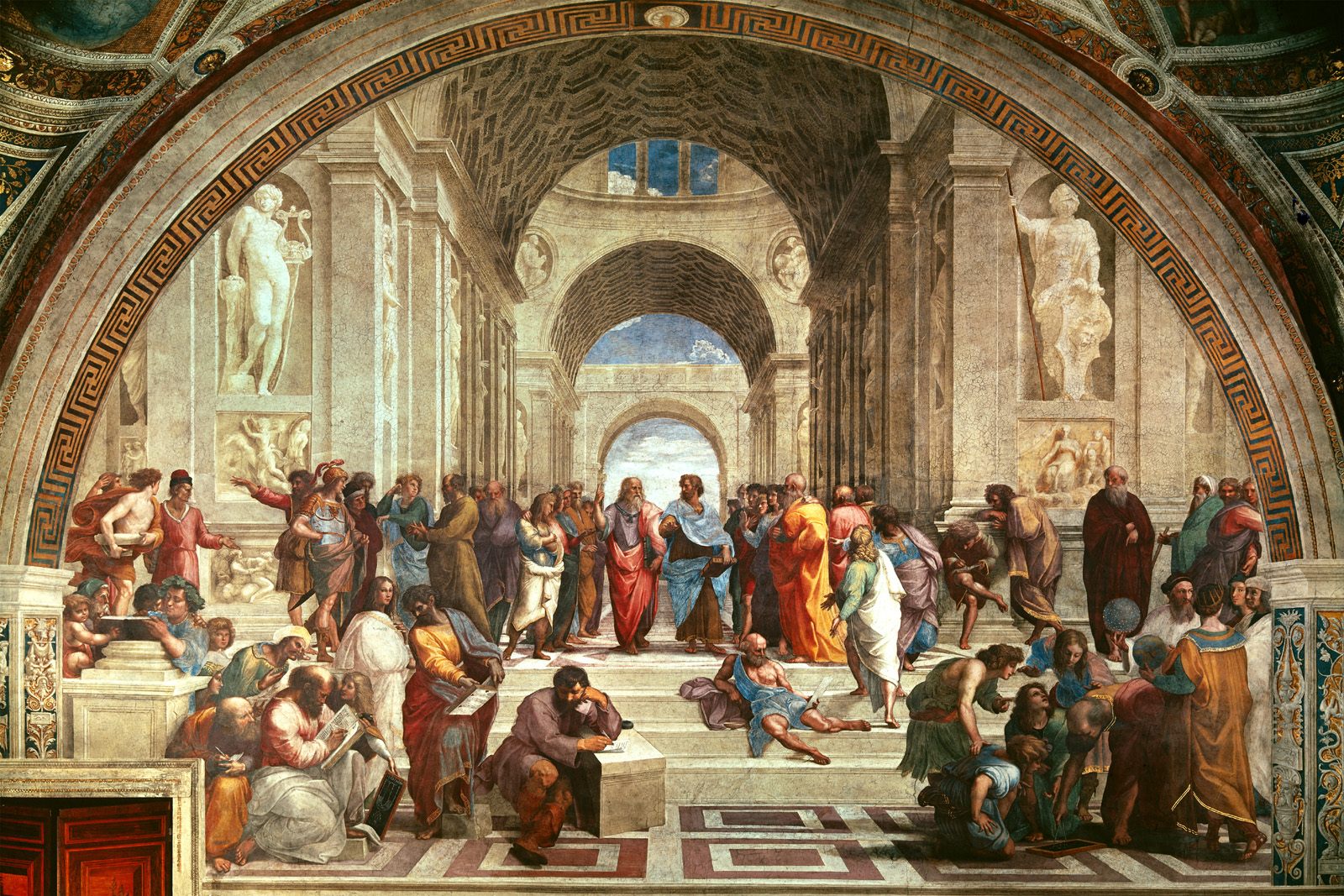
Lawyers never secured a stable foothold in the societies of ancient Greece. Athenians showed little enthusiasm for the practice of law, although they enthusiastically indulged in philosophical speculations about the nature of legal systems. Indeed, they sought to discourage the formation of a legal profession. The Stoic philosopher Zeno even advocated that the courts should be abolished altogether. Among the charges levied against Socrates was the accusation that he encouraged friends who were involved in lawsuits to secure the services of advocates. Litigants in ancient Athens required permission from the jury to call in an orator to speak on their behalf, and although such requests were rarely refused, the advocate could not be paid for his services and was forbidden to appear in that capacity more than once.
Despite these obstacles, advocates did manage to practice before Athenian courts, and by the middle of the fourth century BCE litigants regularly employed them. By that time, formal restrictions on legal practice had relaxed to the point that they were routinely ignored. Athenian advocates, however, never showed great interest in legal analysis. They concentrated instead on rhetorical skills, which they cultivated with considerable success. They apparently considered legal expertise a shade undemocratic.
— James Brundage, The Medieval Origins of the Legal Profession
Another point worth mention is that the notion of law does not include of necessity the existence of a distinct profession of lawyers, whether as judges or as advocates. There cannot well be a science of law without such a profession; but justice can be administered according to settled rules by persons taken from the general body of citizens for occasion, or in a small community even by the whole body of qualified citizens; and under most advanced legal systems a man may generally conduct his own cause in person, if so minded. In Athens, at the time of Pericles, and even of Demosthenes, there was a great deal of law, but no class of persons answering to our judges or counsellors. The Attic orator was not a lawyer in the modern sense.
— F.W. Maitland, The History of English Law Before the Time of Edward I
Paleo Retiree writes:
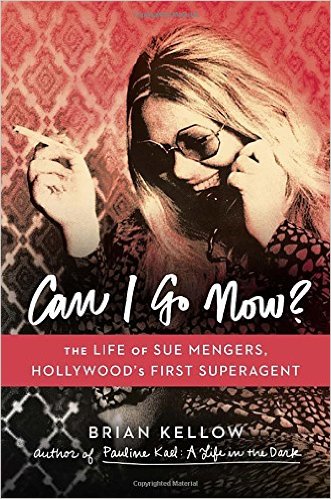
Like Robert Evans (who produced “The Godfather” and ran Paramount), Sue Mengers was one of the great behind-the-scenes figures of ’70s Hollywood. The agent (first at Creative Management Associates, then at ICM) for many of the era’s biggest stars — at various points she represented Barbra Streisand, Peter Bogdanovich, Ali MacGraw, Candice Bergen, Gene Hackman, Michael Caine and Faye Dunaway — she was a larger-than-life character herself, known for her profane wisecracks, her parties and dinners, her battles with her weight, her giant rose-tinted eyeglasses and her chutzpah. She had an instinct for the kinds of talent and chemistry that resonated during those tumultuous years, a near-pathological lust for the bigtime, and a wayward personality that combined bullying rudeness with a lot of babygirl charm. She was one of the first agents to become a media star in her own right; 60 Minutes did a profile of her, and a character in the 1973 film “The Last of Sheila” was based on her.
Fenster writes:
You can tell things about your surroundings by taking a closer look at objects you’d ordinarily overlook. I was at my local YMCA today, hanging in the lounge waiting for the end of my wife’s workout rather than prolonging my own unnecessarily.
 Blowhard, Esq.
 Callowman
 Sherbrooke
 Eddie Pensier
 Enzo Nakamura
 Epaminondas
 Fabrizio del Wrongo
 Fenster
 Brundle Guy
 Glynn Marshes
 Paleo Retiree
 Atypical Neurotic
 Question Lady
 Sax von Stroheim
 Sir Barken Hyena
 The Mistaken
