
Fenster writes:
I don’t doubt too much that the IRS’s special treatment of Tea Party organizations had political motivations, ideological if not partisan. And that’s bad, bad bad let’s all agree.
And maybe Ross Douthat is right that the story is darker yet:
Where might an enterprising, public-spirited I.R.S. agent get the idea that a Tea Party group deserved more scrutiny from the government than the typical band of activists seeking tax-exempt status? Oh, I don’t know: why, maybe from all the prominent voices who spent the first two years of the Obama era worrying that the Tea Party wasn’t just a typically messy expression of citizen activism, but something much darker — an expression of crypto-fascist, crypto-racist rage, part Timothy McVeigh and part Bull Connor, potentially carrying a wave of terrorist violence in its wings.
Could be, though I’d prefer no wholesale rush to judgment on motivations. It is possible that a more nuanced explanation will emerge, if you will forgive me preferring fact to spin in the age of Shawn Hannity and The Daily Kos.
But why are political outfits like Tea Party groups tax-exempt to begin with? Ezra Klein, whom I often disagree with, has it right, I think, in arguing that it was not a good idea in the first instance to have awarded tax-exempt designations to those groups.
Tea party organizations were given tax-exempt status not under the more well-known Section 501(c)(3) of the tax code–this is the category designed for honest to God charities and such–but under the nearby 501(c)(4). This section allows a tax exemption for “social welfare organizations” that according to the IRS “promote social welfare (and) should primarily promote the common good and general welfare of the people of the community as a whole.” Where such organizations are concerned, some politicking is allowed, but the IRS view (in theory more than practice) is that any political advocacy and activity must be subservient to, and ancillary to, the social welfare goals.
Karl Rove was one of the first to see in this language enough running room to make a larger political play. So 502(c)(4)s went on to morph into quite political agents. Political entities both left and right especially liked the fact that donors to such groups may remain anonymous.
Now, the process of designating and monitoring tax-exempt status is dicey from the get-go. We are thankfully not like China, where government decrees, and where nonprofits are in essence part of the state apparatus. In keeping with our tradition of (relative) liberty, here it is up to the nonprofit to basically state, under the honor system, that it fits in the law. And what does the IRS know if such statements are true or not?
So it is often the case that the IRS gets it wrong in designating even the true charities under 501(c)(3). Scientology, for instance, is an actual charity under this stricter section of the tax code, and the IRS is loath to take them on.

The Face of Charity 1
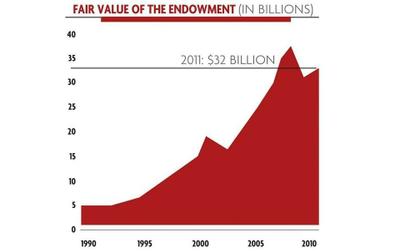
You can also make an argument that a lot of actual charities that seem like they are doing good things are questionable when you think of them in terms of the public subsidy inherent in the tax benefits. Should Harvard get a public subsidy? Isn’t it rich enough? Doesn’t it confer benefits at least as much private as public?
The Face of Charity 2
The point here is that the IRS is not very good at defining what is meant under the language of the tax code, and policing entities to ensure tax monies are not being given away willy-nilly. To me at least, that seems the case with respect to 501(c)(4)s at issue in the Tea Party dust-up.
A libertarian’s argument here (and I think some of those folks might read this site) is that this is what happens when government gets involved. Congress passes a law designed to help but things gang aft aglay, especially after the bureaucrats enter the scene and mangle things. What is a charity? What constitutes religious? What is ancillary? Over time the small tear in the legal and regulatory fabric sensed by Rove becomes a large hole through which you can drive a truck filled with cash.
Both liberals and conservatives drove their trucks through, too. But who has been the biggest abuser? The Right. The ironic twist here, considering the loud caterwauling from the Right, is that spending by right-leaning “social welfare” groups in 2010 outstripped left-leaning ones by 5 to 1 ($78 million to $16 million). That is, the folks screaming the loudest now about the evil IRS have done the most to corrupt the process. Does the term prestidigitation made sense here? I think so.
What is the outcome? Here’s Klein:
The danger is that this (Tea Party) experience will simply make the IRS even more terrified of regulating 501(c)4s. Recall that none of the tea party groups scrutinized by the agency actually lost the 501(c)4 designation. Even at their most attentive, the IRS is treating these groups with kid gloves. Now they’re going to be tempted to leave them almost entirely alone.
If that what happens, that would be too bad. The Right is right to want to find out if the Tea Party groups were targeted, and if lefty bureaucrats took it on themselves to save the Republic out of a misplaced fear of homegrown populism, the Right will be right to call for some heads.
But after all the soul-satisfying venting, let’s spare some time and energy for the roots of the problem. The tax-exempt process needs some scrubbing. What should that scrubbing consist of?
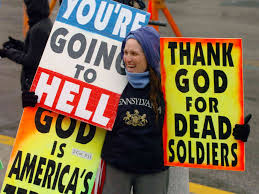
Maybe the problem is government involvement in the first place. Maybe the thing to do is to withdraw from the subsidy business altogether so that government does not have to concern itself with distinguishing between a church soup kitchen and the loathsome Westboro Baptist Church (also tax-exempt).
The Face of Charity 3
But if we are going to have a process in which Congress sets out general rules for tax-exempt status and the IRS has responsibility for monitoring, then the IRS has a job to do. They shouldn’t target right-leaning groups only (note: even if the numbers suggest right-leaning groups have 5 times the opportunity to cross the line!) They should be getting tougher with all the charlatans taking advantage any of the subsections of 501.

 Blowhard, Esq.
 Callowman
 Sherbrooke
 Eddie Pensier
 Enzo Nakamura
 Epaminondas
 Fabrizio del Wrongo
 Fenster
 Brundle Guy
 Glynn Marshes
 Paleo Retiree
 Atypical Neurotic
 Question Lady
 Sax von Stroheim
 Sir Barken Hyena
 The Mistaken
 Uncouth Reflections
Leave it to the Left to criticize one of the few vehicles the Right has to counteract the Left’s massive predominance in our institutions. Do you honestly think that the world of non-profit activism is doninated by the Right, Fenster? Really?
How very disappointing to hear a typical “yes, but” response from you over something that should be as big a slam-dunk as politicizing the IRS.
LikeLike
I think the law says it is OK for a nonprofit to influence government policy but it balks at electioneering. It looks to me that this distinction has been abused. If so, the IRS should do something about it rather than look away. As I said, this was done poorly if not illegally and heads should roll. And if this goes to the front office of the IRS or further, that’s a much bigger deal, too. But again let’s see where the facts take us.
Meantime there’s your argument, too, which seems to be that politicized 501(c)(4)s are a necessary corrective left-tilting institutions. At least I conceded that if wrong had been done by the IRS, attention should be paid. You seem to be a little blinkered yourself, as it seems you are saying don’t look over there too hard at those groups since they are doing things that need to be done. My view: the law in both instances–abuse of discretion and abuse of the tax code.
LikeLike
although i do have to say, having just gotten up here in china and checking the news, that the facts are taking this to tougher territory, up from cincinatti to dc.
LikeLike
Personally, I think that any group that takes “tax-exempt” status from the government is crazy, for this very reason, churches included. And no, I’m certainly not non-partisan. But I find your argument (or at least implication) that right-leaning 501(c)(4) organizations might deserve more scrutiny than left-leaning ones because there are more of them to be a bit partisan in its own right. I mean, there’s a reason that there are more of them. I agree, the “tax-exempt” business has gotten out of hand, but the root of the problem is the wall-to-wall “progressive” dominance of our institutions. You can’t really blame conservatives for using anything that comes to hand, although of course, no one should violate the law.
LikeLike
OK I admit my parting shot about right leaners outnumbering left leaners in that “social welfare organization” crowd was maybe a little cute. But I meant it as a jab not an argument–in fact I was honestly attempting to argue that there really should be no bias in investigating whether 501(c)(4) have morphed too far from their legislative purpose. But it was a jab since I am distressed by the overt politicization.
Some, like Megan McArdle, argue that even if (c)(4)s are a problem it is not the right time to dwell on the matter since it could be framed as a distraction from the pressing business at hand, which is the problem of the politicization of the police. The more the facts come out the more I agree with this, which I take to be somewhat aligned with your own view.
Fine–but I do think at some point the underlying 501(3)(4) problem should be dealt with. In fact some commentators argue that the Right will rue the day if it overreaches on this since the 501(c)(4) shell game is not well known, and may wither under scrutiny. We’ll have to see about that.
LikeLike
I agree that the Right may very well regret going the whole “tax-exempt” route, for reasons that are becoming increasingly obvious, but, on the whole, I agree with McArdle – I’m far more concerned about IRS politicization than whether some 68 year old woman, of any political persuasion, is in perfect compliance with America’s Byzantine tax laws.
LikeLike
sorry to continue a conversation when everyone has left the room. but here goes. while i expressed concern above that the buck might stop well about cincinatti, that does not seem quite as clear now in the wake of the i.g.’s report, which suggests more confusion than conspiracy.
in turn the wall street journal’s kimberly strassel is forced back into making what seems to me to be an exceedingly weak anti-obama argument.
http://online.wsj.com/article/SB10001424127887324767004578487332636180800.html?mod=WSJ_Opinion_LEADTop
since the new report demonstrates no smoking gun at the white house, strassel’s argument is this: that by criticizing right leaning groups, and the right generally, he was sending all the message he needed to send to the irs. and that they got nefarious as a direct result.
huh? the president is political, kimberly, and sending out partisan messages is part of his job. republican politicians do it too. if the irs took that as license to do the wrong thing, that’s bad and heads should roll–as they already have. but it is ludicrous to suggest that presidents need to bite their tongues on political matters for fear that someone not authorized to be political may be tempted to act that way. sauce for the goose: no republican president would ever want to be hamstrung the way strassel suggests obama should be.
LikeLike
Agreed, this is as bad as Clinton blaming Rush Limbaugh for the Oklahoma City bombing. One expects such antics from sophomoric liberals , but we conservatives are supposed to be the grown-ups…
But of course, if all this had happened under Bush, or Reagan, the reaction from the establishment press would be much different, and we all know it. Confusion not conspiracy, indeed!
Do you really believe, Fenster, that it was simply an accident that conservative groups were targeted, and liberal groups were not? Really? I don’t believe it, and I’d be willing to bet that you don’t believe it either.
LikeLike