
Blowhard, Esq. writes:
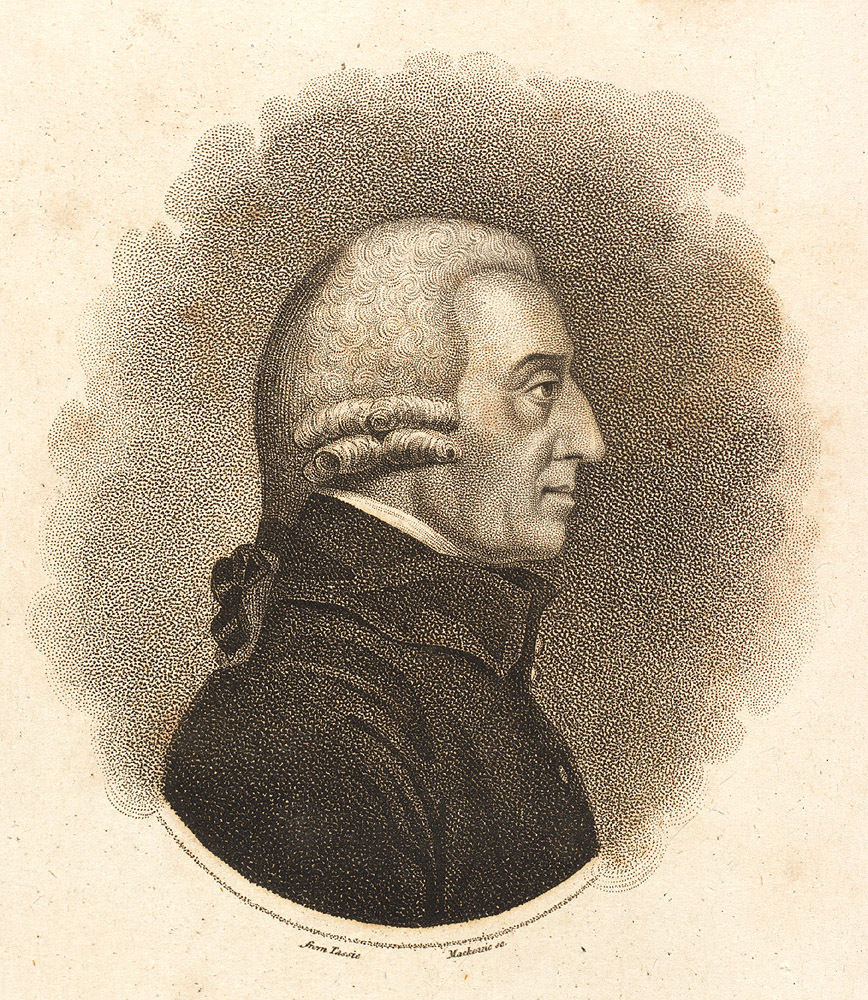
The man of system, on the contrary, is apt to be very wise in his own conceit; and is often so enamoured with the supposed beauty of his own ideal plan of government, that he cannot suffer the smallest deviation from any part of it. He goes on to establish it completely and in all its parts, without any regard either to the great interests, or to the strong prejudices which may oppose it. He seems to imagine that he can arrange the different members of a great society with as much ease as the hand arranges the different pieces upon a chess-board. He does not consider that the pieces upon the chess-board have no other principle of motion besides that which the hand impresses upon them; but that, in the great chess-board of human society, every single piece has a principle of motion of its own, altogether different from that which the legislature might chuse to impress upon it. If those two principles coincide and act in the same direction, the game of human society will go on easily and harmoniously, and is very likely to be happy and successful. If they are opposite or different, the game will go on miserably, and the society must be at all times in the highest degree of disorder.
— Adam Smith, The Theory of Moral Sentiments
(H/T Sir Barken Hyena)

 Blowhard, Esq.
 Callowman
 Sherbrooke
 Eddie Pensier
 Enzo Nakamura
 Epaminondas
 Fabrizio del Wrongo
 Fenster
 Brundle Guy
 Glynn Marshes
 Paleo Retiree
 Atypical Neurotic
 Question Lady
 Sax von Stroheim
 Sir Barken Hyena
 The Mistaken
 Uncouth Reflections
“He believes, of course, in the open mind, the mind free from prejudice and its relic, habit. He believes that the unhindered human ‘reason’ (if only it can be brought to bear) is an infallible gUide in political activity. Further. he believes in argument as the technique and operation of ‘reason’; the truth of an opinion and the ‘rational’ ground (not the use) of an institUtion is all that matters to him. Consequently, much of his political activity consists in bringing the social, political, legal and institutional inheritance of his society before the tribunal of his intellect; and the rest is rational administration, ‘reason’ exercising an uncontrolled jurisdiction over the circumstances of the case. To the Rationalist, nothing is of value merely because it exists (and certainly not because it has eXisted for many generations), familiarity has no worth, and nothing’s to be left standing for want of scrutiny.
…
This is aptly illustrated by the rationalist attitude towards a tradition of ideas. There is, of course, no question either of retaining or improving such a tradition. for both these involve an attitude of submission. It must be destroyed. And to fill its place the Rationalist puts some. A faithful account of the politics of rationalism (with all Its confusions and ambivalences) thing of his own making—an ideology, the formalized abridgment of the supposed substratum of rational truth contained in the tradition.
…
He waits upon circumstance to provide him with his problems, but rejects its aid in their solution.
…
Thus, political life is resolved into a succession of crises, each to be surmounted by the application of ‘reason’. Each generation, indeed. each administration, should see unrolled before it the blank sheet of infinite possibility. And if by chance this tabula rasa has been defaced by the irrational scribblings of tradition-ridden ancestors, then the first task of the Rationalist must be to scrub it clean; as Voltaire remarked, the only way to have good laws is to bum all existing laws and to start afresh.”
Michael Oakeshott, Rationalism in Politics
(tip of hat to Paleo R.)
LikeLike