
Fenster writes:
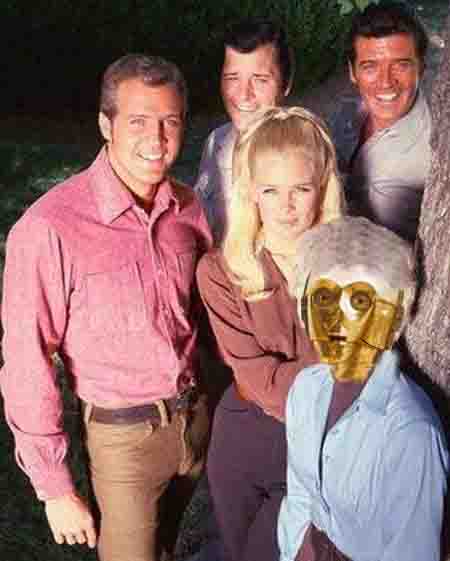
Maybe y’all knew this one, but it is a new one on me.
I have wondered for a while why kids (adults too) often prefer cartoons that depict characters in highly stylized ways — in some ways the less human the better.
Part of the answer may lie in the concept of the “uncanny valley.” According to Wikipedia “the uncanny valley is a hypothesis in the field of human aesthetics which holds that when human features look and move almost, but not exactly, like natural human beings, it causes a response of revulsion among human observers.”
The phenomenon can be measured but, as is the case with aspects of behavior with likely roots in our evolutionary history, the ability to measure at present seems to be running ahead of theoretical understanding much beyond conjecture.
A number of theories put forth to explain the phenomenon. Just on the basis of surface appeal, and in thinking about my own reactions, this one seems credible:
The uncanny valley may “be symptomatic of entities that elicit a model of a human other but do not measure up to it”. If an entity looks sufficiently nonhuman, its human characteristics will be noticeable, generating empathy. However, if the entity looks almost human, it will elicit our model of a human other and its detailed normative expectations. The nonhuman characteristics will be noticeable, giving the human viewer a sense of strangeness. In other words, a robot stuck inside the uncanny valley is no longer being judged by the standards of a robot doing a passable job at pretending to be human, but is instead being judged by the standards of a human doing a terrible job at acting like a normal person.

 Blowhard, Esq.
 Callowman
 Sherbrooke
 Eddie Pensier
 Enzo Nakamura
 Epaminondas
 Fabrizio del Wrongo
 Fenster
 Brundle Guy
 Glynn Marshes
 Paleo Retiree
 Atypical Neurotic
 Question Lady
 Sax von Stroheim
 Sir Barken Hyena
 The Mistaken
 Uncouth Reflections
The Uncanny Valley effect would certainly help explain my reactions to movies like “Beowolf.” Man that flick creeped me out.
LikeLike
Pingback: How Blue is My Valley? | Uncouth Reflections
Pingback: Streetcar Suburb Summer | Uncouth Reflections
Pingback: Notes on “The Revenant” | Uncouth Reflections