
Sir Barken Hyena writes:
Lately at Casa Barken, where the rattlesnakes bask in the blinding sun, we’ve had the platters spinning like a veritable Martian invasion of frisbees. Here’s a sampling of some of the aural delights, with an 80’s theme this time.
Le Mystere Des Voix Bulgares 1987
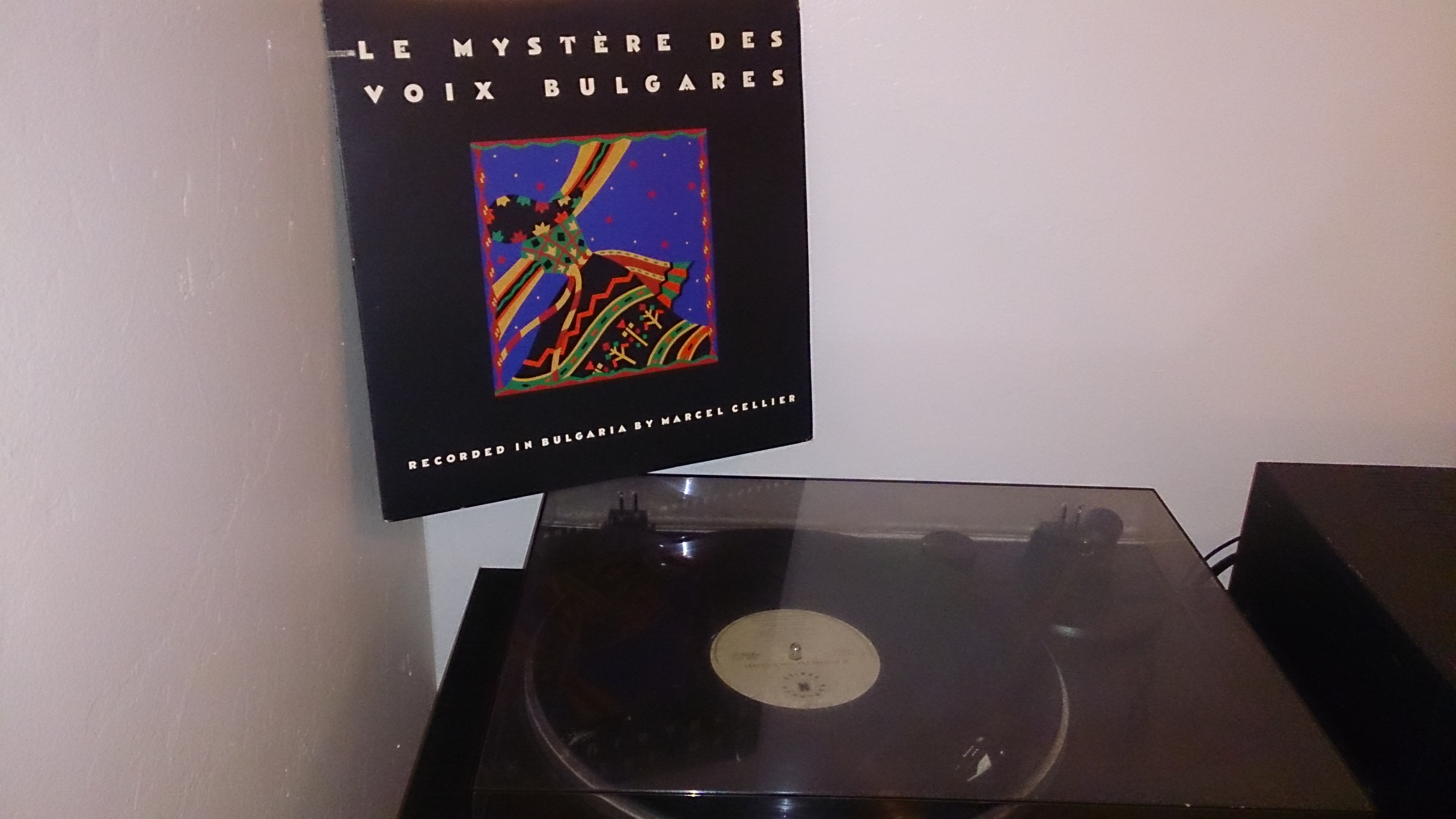
More than bleating babushkas
Behind the Iron Curtain a new style of music emerged in Bulgaria, a labor of composers working for state radio, mostly with women’s choirs. Hints of this music had leaked out to the West, and Glasnost brought the masters to 1980s impressario Ivo-Watts Russell. Released on his famed 4AD label, home of Cocteau Twins, Modern English, Pixies and others in that phalanx, it might have seemed a stretch. It’s basically classical music, but the aesthetic works.
I imagine these Bulgarian composers faced similar problems as Eisenstein, Shostakovich or Tarkovsky. What they produced was worth their struggle because the result was a unique fusion of the ancient Middle Eastern music that Ottoman conquest brought, and 20th Century tonal techniques from Bartok and Stravinsky.
Not that anybody needs to know that to enjoy this record. The tonalities that in the 1980s seemed so stringent are more familiar now, because of an army of samples marching through the culture. But not that much more, it’s not all softened with reverb, Lord of the Rings style in these original and raw recordings. It’s a richly emotional journey, with some of the pieces having a touch of gospel, almost, while others are like windows to the ancient. This record was pretty important to me, back in the day. This and Jon Hassell pointed me to explore world music, which was a mighty big and fruitful nut to crack.
Still is, but the promise of a world music fusion in the West has been deeply disappointed. It descended to little more than sitar and muezzin samples layered over jungle drums, meekly provided by emasculated drum machines. Bah!
Kraftwerk / Computer World 1981
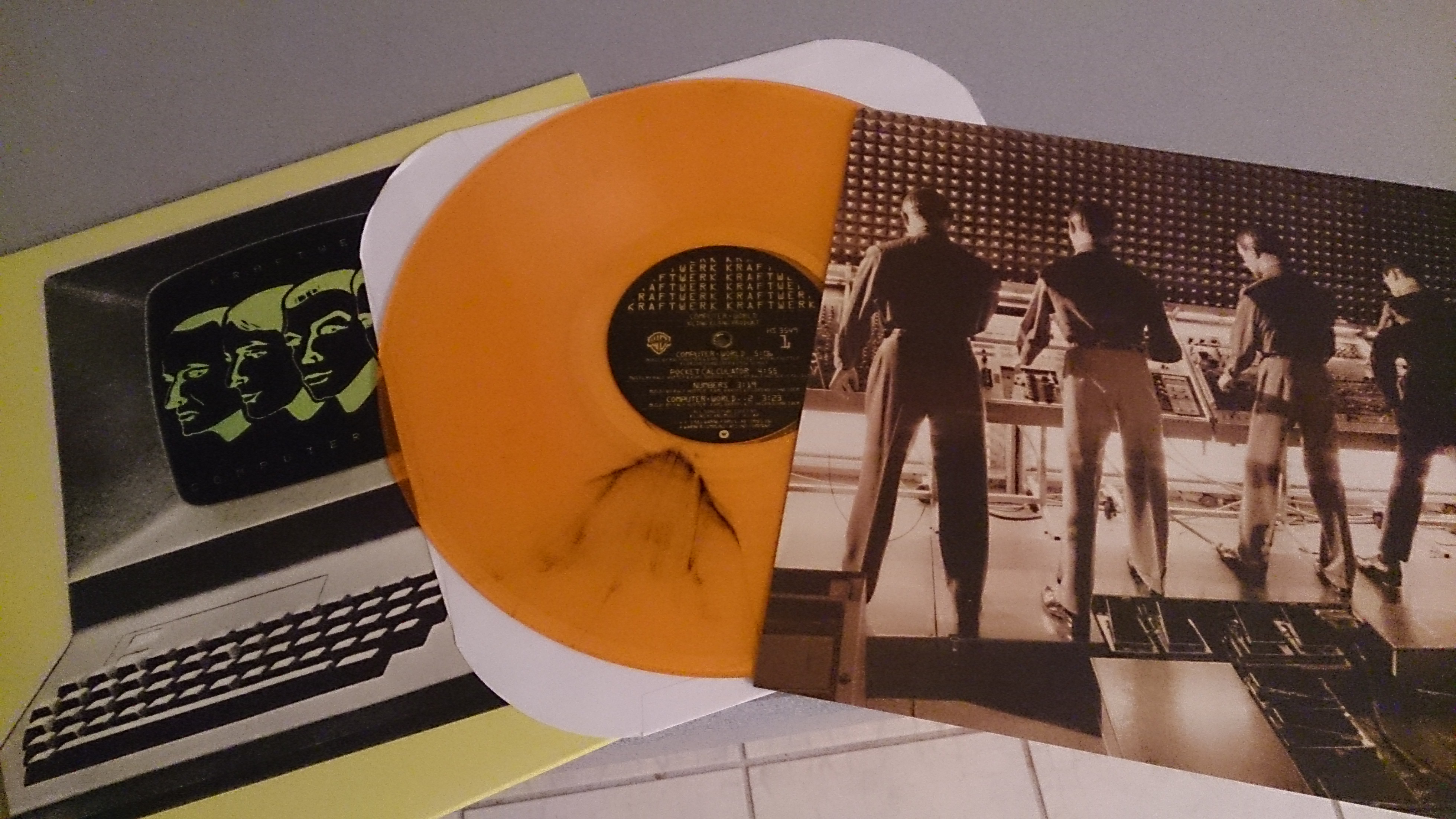
Kraftwerk is a miracle. How does a group of musicians pursue a vision over decades to it’s outer reaches without misstep or stylistic gearshift? And keep it interesting, and fresh. And downright tuneful. And, come on, “we are robots making music” is plain stupid as a premise. But they pull it off, and actually make a statement with it.
It’s pretty clear techno and it’s fecund spawn would not be here but for these krautbots, not in anything like its current form. It might have stunted at the Donna Summer/Giorgio Moroder stage, catchy, fun, cool, maybe, but flat. But from Kraftwerk techno got a generous shot of the conceptual, one of the forces that (occasionally) lifts that form above the mundane level of the dance club.
But, like with Mystere, you don’t need to know any of that to enjoy it because Kraftwerk is fun, and they write great tunes. That’s part of their secret. They balance intellectualism with heart, and no matter how robotic, that heart is always present. Part of their statement, and why Kraftwerk inspires such love.
You’ll hear more from me about Kraftwerk, I am set to see them in Los Angeles later this month, along with some Uncouthers. Expect a full report.
Bill Nelson / The Love That Whirls 1982
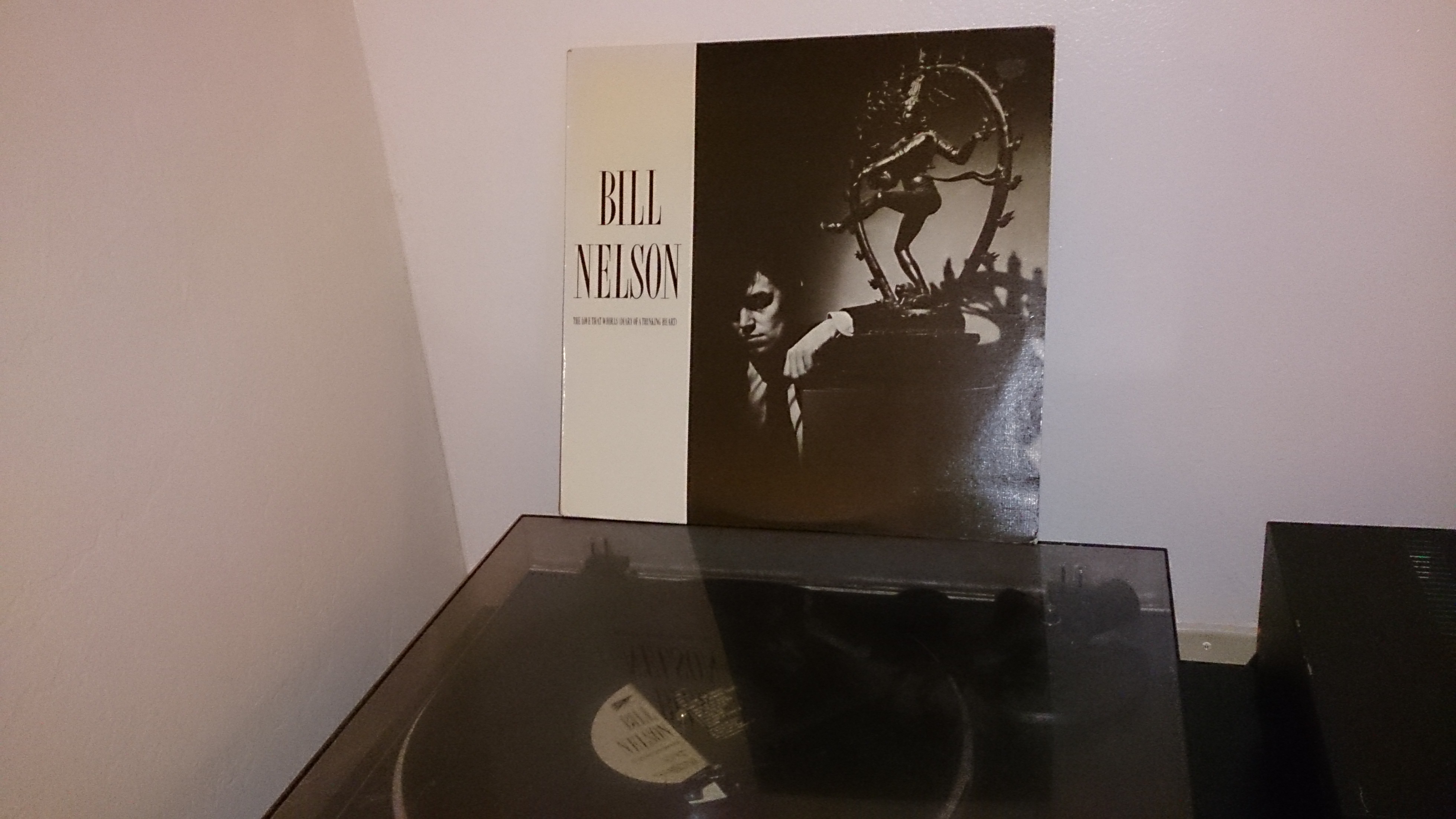
If nothing else, I hope a few people discover this incredible artist from my chicken scratchings. Nelson is known as leader and guitarist of semi-proggers Be Bop Deluxe, a gig he walked away from to start an abrasive pre-New Wave band called Red Noise. From there he proudly went underground, starting his own label to sell his records by mail order in the late 1970s. He’s been at the front, or even a bit before, of several important moments in music, one of them being ambient.
Another is technopop, of which this record is a pinnacle. The sound is a layered swirl of analog squiggles and blips and zips, yet oddly catchy and infectious. Nelson’s lyrics are intriguing and personal throughout, and show his unaffected enthusiasm for, well pretty much everything. But sex is high on that list:
Sea creature/sex creature, woman in love
A slip of the tongue or the hand in the glove
Kiss me and wound me again and again
Faster than beauty our beast is unchained
In addition to his pop confessionals, there are some lovely instrumental interludes, some quite ambient and all deeply, sensually evocative. Nelson’s music is never an intellectual exercise in spite of some of the farther reaches of the art he touches. It’s entirely an affair of his passions, and the simple daring he shows by always being so peculiarly himself. An essential artist.
Jon Hassell / Brian Eno / Possible Musics 1980
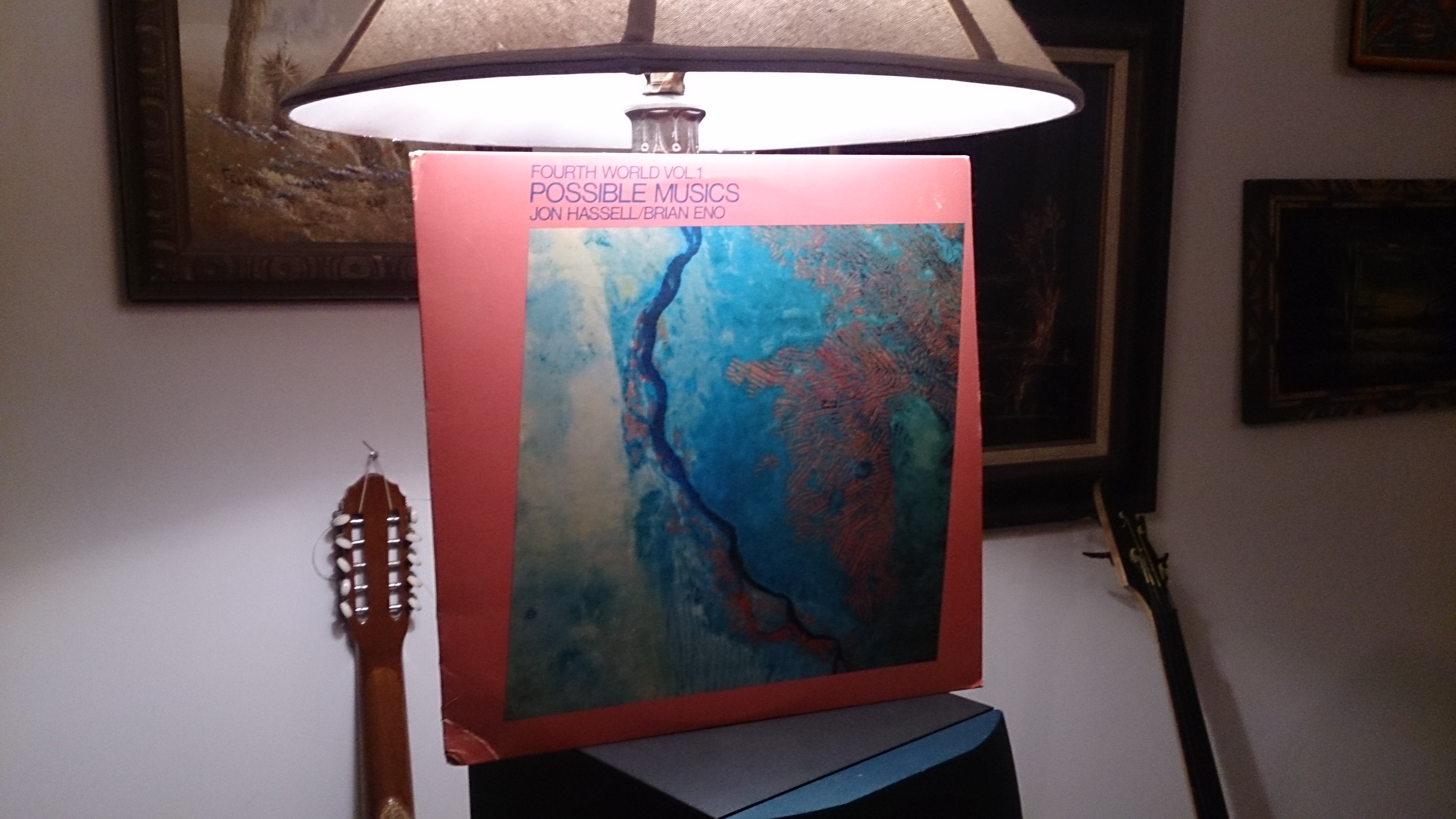
The album that truly cemented trumpeter Hassell’s sound, and placed him on the map as another essential artist. Before this 1980 release, he had bounced around different avant garde scenes, graduating from Eastman and playing with minimalists Lamonte Young and Terry Riley. But he wasn’t finding what he really wanted, it was to all too dry, and lofty, lacking the dirt and sex of his native Memphis, and his real love, Miles in his electric period.
The early 70s introduced Hassell to Indian music via singer and sage Pandit Pran Nath. He reinvented the trumpet as an instrument capable of the tonal twists and smoke trails of Indian vocal music, virtually relearning his instrument. He discovered that by holding it like a conch shell he could elicit a breathy and vocal range of tones never heard from this instrument. Tape loops of African drummers and Hollywood soundtracks provided a bed of sound akin to the droning of the tamboura.
Then Eno provided the last, missing element: a halo of electronic voices derived from the trumpet and set to float in an intensely evocative echoland. A device called a Harmonizer, an early digital sound processor, made chords of the solo trumpet voice, bringing the strange parellel harmonies of Stravinsky to the mix.
Well, this is just about the most original thing I’ve ever heard, outside of Harry Partch maybe. But it’s intensely sensual music, a music that always has a fire burning deep and low in it’s dark heart. “Possible Musics” well preceeded the World music craze, which Hassell unwittingly helped bring on by getting Eno and Talking Head’s frontman David Byrne excited about it. Their 1979 collaboration My Life in the Bush of Ghosts was a direct antecedent of Hassell’s experiments in world fusion, only it sold probably a zillion times more. From there, see the above comments about “world music”. Bah!
Every album Hassell made after is a masterpiece. Check him out.
Glenn Gould / The Goldberg Variations 1981
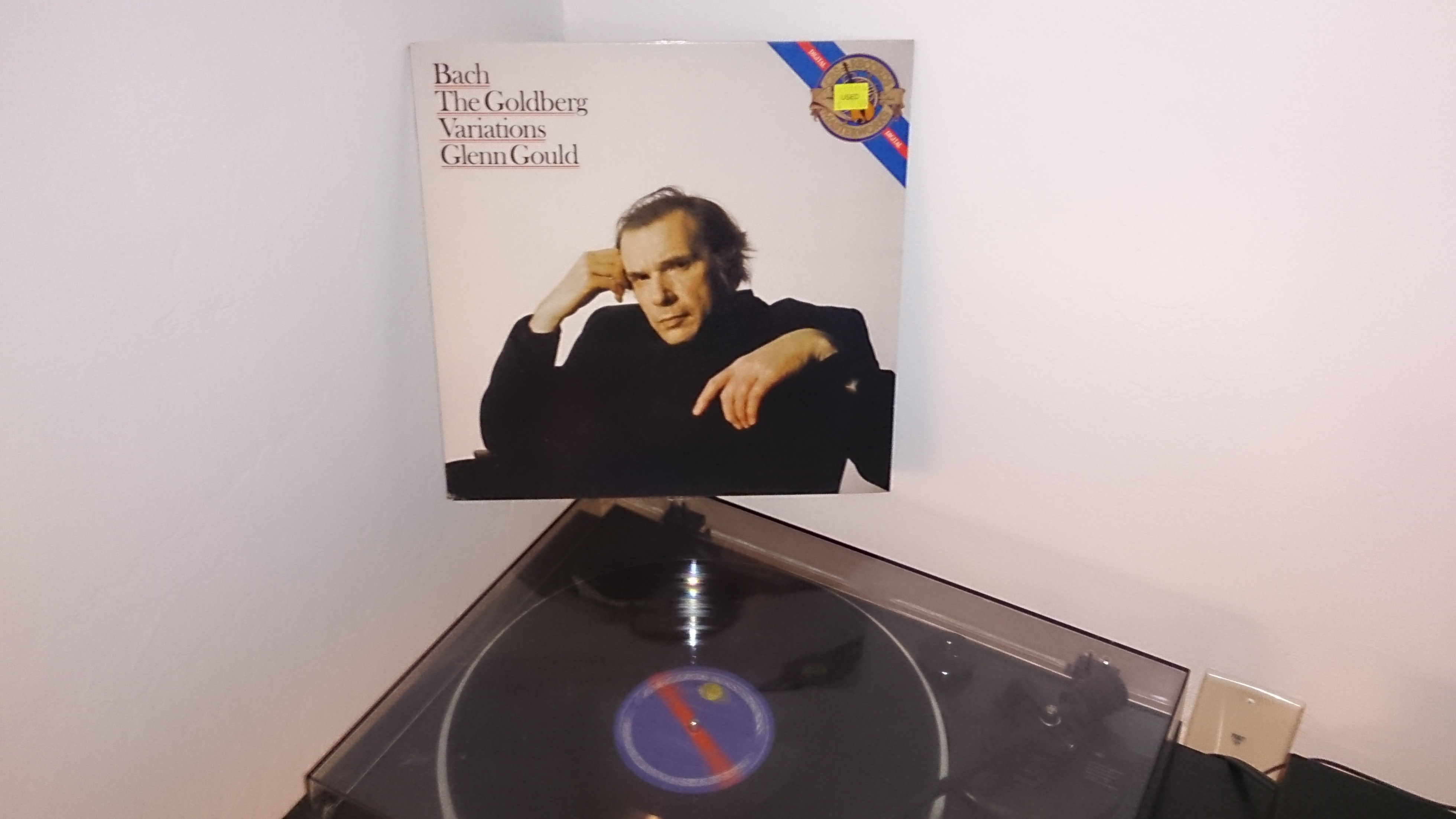
Gould died just before his second release of the piece that started his meteoric career in 1955, 26 years earlier. People have their favorite, this later, slower and more spacious rendition being mine. I’m not going to say any more because the combination of Bach and Gould is just too sublime. Yeah, I know it’s a cop out. Go ahead, ask for a refund. Just get this record.

 Blowhard, Esq.
 Callowman
 Sherbrooke
 Eddie Pensier
 Enzo Nakamura
 Epaminondas
 Fabrizio del Wrongo
 Fenster
 Brundle Guy
 Glynn Marshes
 Paleo Retiree
 Atypical Neurotic
 Question Lady
 Sax von Stroheim
 Sir Barken Hyena
 The Mistaken
 Uncouth Reflections
Love that Bill Nelson record. Had that and Chimera in high school in the 80s. Unreal.
LikeLike
I listened to La Mystere constantly in 87 and 88. I was very hot to see Eastern Europe at the time, and read my way through a lot of Havel, Kundera and Timothy Garton Ash. Ended up taking a long train trip through the East in the summer of 1989, from Istanbul up to Sassnitz, where we got the ferry to Malmö. As an American, it was expensive and time-consuming getting all the visas. My Swedish girlfriend didn’t need any. The trip was exhausting and disabused me of any remaining notion that Eastern Bloc communism might not be a very bad thing indeed. The soundtrack of the trip was La Mystere, Ofra Haza, the first Negresses Vertes album, and some Zülfü Livaneli tapes I bought in Turkey.
LikeLike
Nice way to listen to that stuff, more evocative than my suburban Maryland bedroom I’m sure 🙂
LikeLike
You had a lot better sound. Remember the cassette tape phenomenon of “wow”?
LikeLike
Cassettes were just plain awful.
LikeLike