Showtune Saturday: “Everybody Wants To Be A Cat”

Eddie Pensier writes:

From “The Aristocats” (1970), one of Disney’s lesser-known animated features, comes this delightfully jazzy number with Scatman Crothers, Eva Gabor, and Phil Harris. It’s got some trippy color-swirling visuals, a snappy beat, some rather gulp-inducing double-entendres, and a bucktoothed Siamese cat uttering some “Chinese”-accented lyrics which will either make you wince in discomfort or laugh hysterically, depending on your frame of mind.

Posted in Movies, Music | Tagged , , , , , | Leave a comment

Naked Lady of the Week: Yulia Nova

Blowhard, Esq. writes:

ynheader

Like Fabrizio last week, I reached back into the Naked Lady vault for today’s selection, Russian model Yulia Nova. Although some sites say she’s still active, she seems to have had her heydey in the early 00s modeling primarily (exclusively?) for Japanese sites like Tokyo Topless and photographer Satoshi Kizu, the dude who discovered her. Kizu also discovered Sha Rizel — some guys have the whole “life” thing figured out.

Besides her lovely green eyes, bangs, long brown hair, and slim figure, Nova is notable for breasts that look like they belong on the figurehead of an Imperial Russian Naval ship leading a flotilla into the Black Sea. She can be expressive too, so it’s disappointing that there doesn’t seem to be many photosets of her available. Too bad none of the guys at Met-Art or Femjoy have been able to get ahold of her.

NSFW boobage below. Happy Friday.

Continue reading

Posted in Sex, The Good Life | Tagged , , , , | 2 Comments

Architecture Du Jour

Blowhard, Esq. writes:

Arlington_Row_Bibury

Bibury, England.

Click on the image to enlarge.

Posted in Architecture | Tagged , | Leave a comment

The Art of Contempt and Delight, Pt. II

Sir Barken Hyena writes:

Now, having just had a nice rant about the “New York Art Scene” and implying that LA is so much better, a correction is in order: I don’t think any such thing, and I’m not in any position to make such judgements to begin with. I spent a few days bopping around each place seeing stuff, and I’m responding to some of what I saw. I’m just trying to illustrate a point here, not sum up these cities as cultural entities. And I don’t go for this coastal rivalry nonsense, I am proud as an American of both of these fine cities and visit them every chance I get, and find them both full of fine and interesting folks, and love them for their differences. I hear you can even get good tacos in NYC these days.

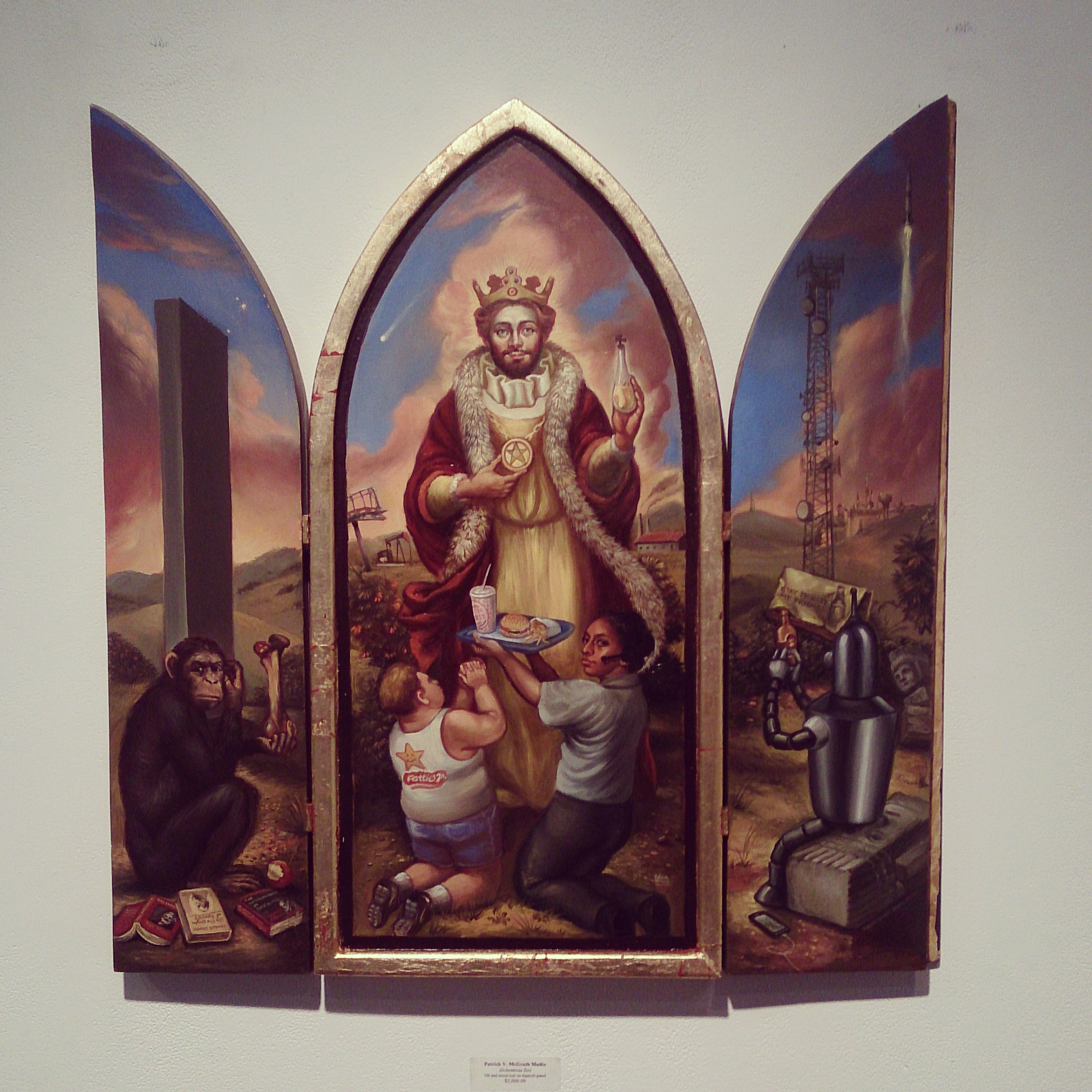
So much in the way of mea culpa. Los Angeles has historically positioned itself as an anti-New York, in addition to being the heartland of American pop culture, so I expected a lighter touch, and that’s what I saw. I visited Los Angeles this time with my daughter Lady Leonora Barken, who has ambitions in the arts, and great poise as well. We had a good time at the La Luz de Jesus gallery in Los Feliz, Vermont and Hollywood.

La Luz de Jesus Gallery, Los Angeles

La Luz de Jesus Gallery, Los Angeles

Pop culture figures and themes have been famously incorporated into fine art since the 50’s, and this has all been accepted by the art establishment. But the low brow art that emerged in the 70’s and 80’s did it the other way around: it brought fine art to pop culture. A prime mover here was Robert Williams, who began as an illustrator for hot rod magazines, was a key figure in the underground comics of the late sixties, and moved on to paint and canvas in the 1970s. He self consciously incorporated themes and techniques from the old masters into this pop culture low brow landscape, with spectacular and influential results. But Williams never stood on bended knee before the art establishment, begging acceptance for his innovations, and he sure as hell never got it. He just gave them the finger and went about his business.

That ethos was a natural fit for the early LA punks who found a kindred spirit in Williams. This genre spoke to an audience of its own, and moved on a path free from the constraints and poses of the contemporary art world. They could express what was absolutely off limits there: exuberant delight.

IMG_20141201_101730

So we have a home grown movement in art, one of the few thriving new genres of the last 20 years or so, that has gotten virtually no recognition from the art establishment. Which is no surprise. What after all would they do with all of this unapproved exuberance and delight? Brilliant colors, dynamic compositions, painted and drawn with skill, wit and most of all a blazing sense of delight and fun. What good is this stuff in separating the one percenters from the hoi polloi? Where is the contempt of the common and low to elevate the expression? Where is the challenge to…to…I don’t know, the bourgeoisie or something?

One consequence is the lack of money in the low brow art world. Not a lot in the way of grant money seems to be flowing that way. At La Luz de Jesus were two paintings by prominent and established artists, Camille Rose Garcia and Shag, whose small works were priced at $3800 and $6000 respectively. Yes, they had price tags on them, and were hung in a hallway next to the toilet. I have no reason to think anyone minds this state of affairs, they seem to be having too much fun.

La Luz de Jesus Gallery, Los Angeles

La Luz de Jesus Gallery, Los Angeles

La Luz de Jesus Gallery, Los Angeles

La Luz de Jesus Gallery, Los Angeles

Posted in Art | 5 Comments

Couldn’t Do It Today

Blowhard, Esq. writes:

RIP Bobby Keys who died today at 70. In the documentary STONES IN EXILE, Keys comes off as even more rock ‘n roll than Mick and Keef. Here’s Richards, from his excellent autobiography Life, explaining why Keys was fired in the early 70s:

Bobby went down in a tub of Dom Perignon. Bobby Keys, so the story goes, is the only man who knows how many bottles of it it takes to fill a bath, because that’s what he was floating in. This was just before the second-to-last gig on the ’73 European tour, in Belgium. No sign of Bobby at the band assembly that day, and finally I was asked if I knew where my buddy was — there had been no reply from his hotel room. So I went to his room and said, Bob, we gotta go, we gotta go right now. He’s got a cigar, bathtub full of champagne and this French chick in with him. And he said, fuck off. So be it. Great image and everything like that, but you might regret it, Bob. The accountant informed Bobby afterward that he had earned no money at all on that tour as a result of that bathtub; in fact he owed. And it took me ten goddamn years or more to get him back in the band, because Mick was implacable, and rightly so. And Mick can be merciless in that way. I couldn’t answer for Bobby. All I could do was help him get clean, and I did.

Posted in Music | Tagged , , | 5 Comments

The Art of Contempt and Delight, Pt. I

Sir Barken Hyena writes:

Hola amigos, sorry it’s been so long since I’ve rapped at ya, but I’ve been quite the traveler lately, ever on the trail for potential new Lady Barkens. Most recently, this sweetly-scented trail has brought me to our most prominent and cultured cities, New York and Los Angeles, back to back within weeks of each other.

Now, due to my fame it’s best to travel a bit incognito, Peter the Great style, so that I can observe the true state of our nation without being deceived by sycophants and inconvenienced by the constant genuflecting of the masses. Also, my companion in New York, Princess Lady Bacon-Love of Batavia, is wanted by the FBI and several foreign governments, so we kept a low profile.

And as for the state of that nation — and culture — one good barometer is the kind of art that’s being made today. The view from New York is one of contempt. Do I mean I find the art contemptible? Yes, I certainly do, but more than that I feel that contempt is the only emotion conveyed by this art, the only emotion felt by its creators, and indeed the full intent and compass of the works.

And when you look at it that way, they are doing a fine job.

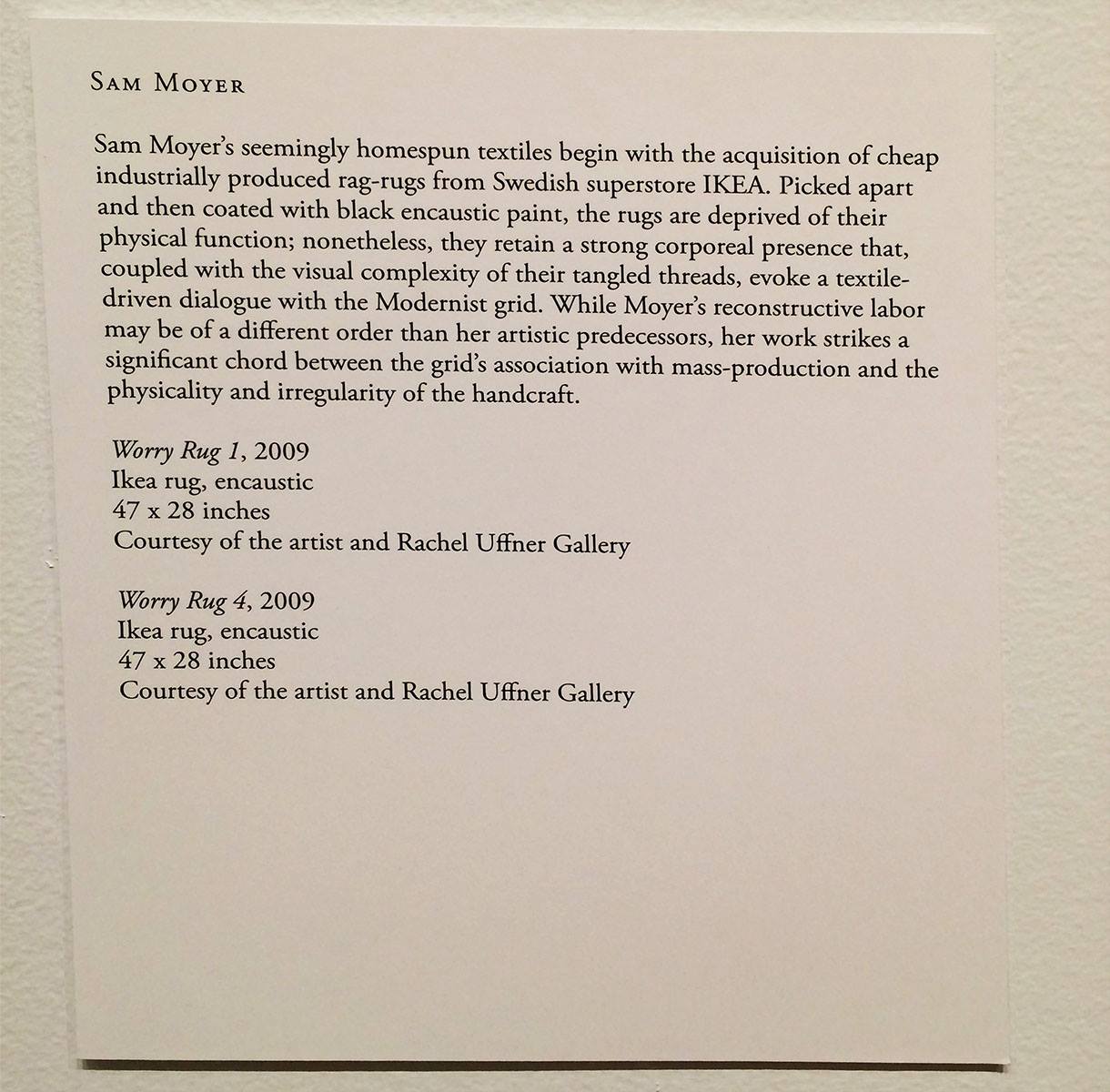
My experience at The Drawing Center in SoHo sums it up. There was precious little of anything you could call “drawing” there, but I suppose breaking boundaries is a given these days. Mostly on show were textiles ranging from unimpressive to insipid to downright silly. What art there was could be found on the placards explaining the works. One choice example:

Say what now?

Say what now?

Well, I didn’t see any “dialog”, though I’m not sure how I would have recognized it. The work itself looked like a melted stack of black Glad bags over a dog-chewed rag rug, no need to show it here, there’s nothing in it.

Nothing but contempt that is. Remember, this was in One Percent Central, an august zone of stratospheric wealth. This is the art that serves the global elite, as much as the Sistine ceiling served the Pope. They fund the galleries and foundations that make this possible, and perhaps even buy these works from time to time to display on their own walls. I have to assume that they find it expressive of their thoughts and feelings, though of course the primary purpose is to show their wealth by its profligate waste (I can get them a version of Worry Rug I for $14.95, though I can’t promise it’ll have the flair of the original).

The elites of the past used art as propaganda to display their superiority and cement their rule. The pharaohs overawed the simple with pyramids and monoliths, while medieval cathedrals offered them a vision of heaven. Louis XIV had his Versailles, even communists found it necessary to create Socialist Realism. But how does Worry Rug I serve this goal? These poor sad one percenters of today are joined at the hip to an ideology of liberal equality, for some reason, which really must be deeply galling to those conscious of their superior merit. How to show it? Contempt! Contempt for you and me, contempt for the eye, and the sensual, which can never be bought but only felt.

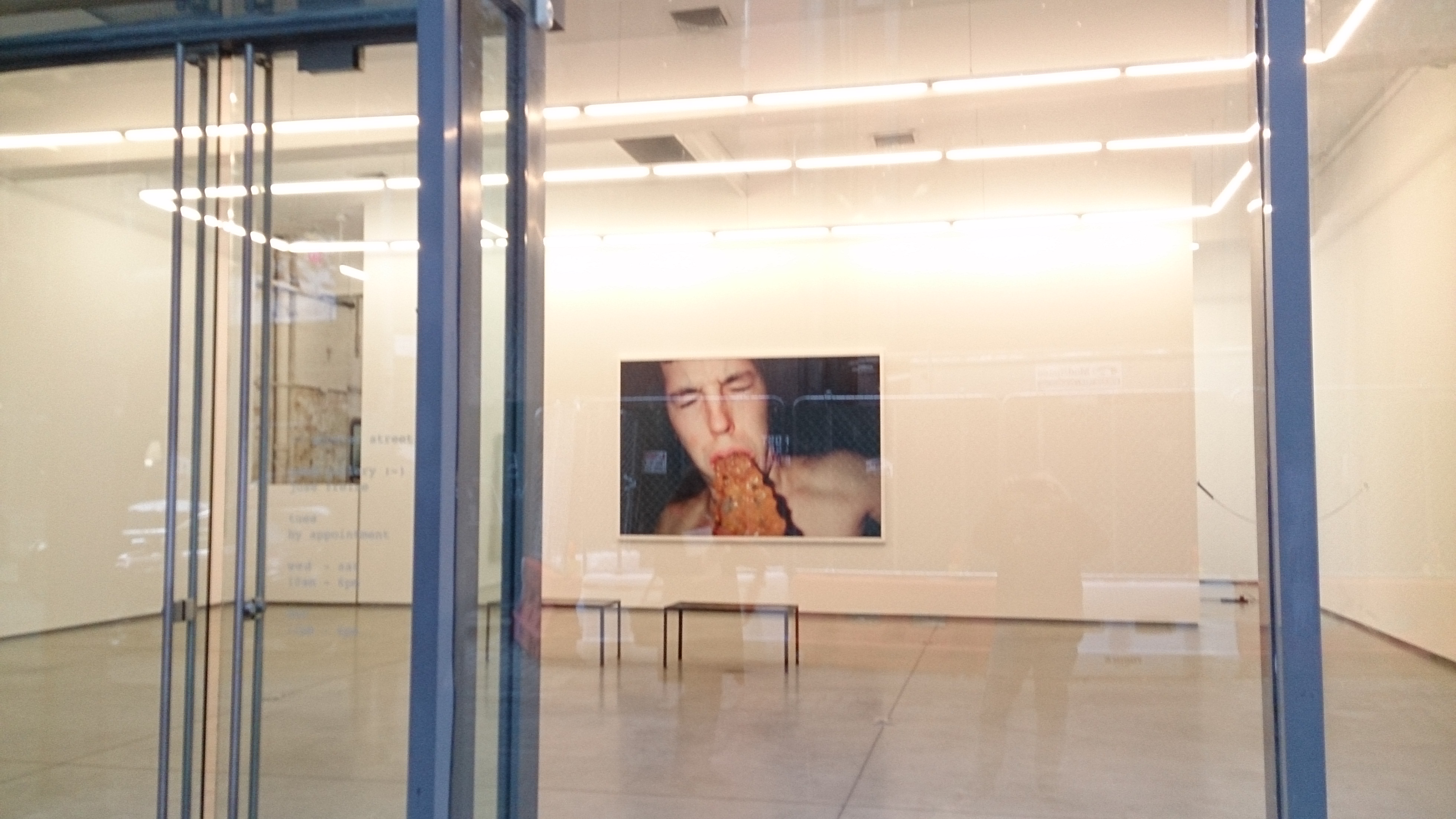
And just down the street from The Drawing Center, an unnamed gallery offers the pièce de résistance, the ultimate in contempt:

Tell us how you really feel

I know how you feel

Social criticism has long been a part of art, since the Romantics at least, but it’s been with a view to improving society, to curing its ills and bettering mankind. In other words, to further the promise of the Enlightenment and liberalism generally. I don’t think the above explosive critique of society has any such noble sentiment, because it’s quite clear to me that nobody really believes in this vision any more, and the ultimate failure of this multi-century program can only be due to the masses’ failure to step up to the challenge. So fuck off losers! The elites deserve their rule not because of their superiority but because the rest of us are losers. Thanks, thanks for that.

In my next post I’ll talk about Los Angeles and the art of delight.

Posted in Art | 34 Comments

Billionaires Dig Frank Gehry

Fabrizio del Wrongo writes:

I recently watched a video of George Lucas being interviewed by Charlie Rose in Chicago. The topic: Lucas’ recently announced plans for a museum devoted to narrative art. Those plans were adopted by Chi-Town officials after Lucas’ native San Francisco turned up its nose at the project.

Lucas is an interesting figure. Personality-wise, he’s always struck me as less of a traditional artist and more of a businessman/Yankee tinkerer. I don’t mean that as a put-down. I think his peculiar set of personality traits is what makes him interesting as a filmmaker, even if those traits are partly to blame for a fair number of movies that are virtually lifeless in terms of drama, personality, and performance. Filmmaking talents aside, there’s no doubt that he’s a thoughtful and independent-minded guy. When Marin County residents objected to his plans to expand his movie studio, Lucas told them to buzz off and threatened to sell the land to a low-income housing concern. Suck it, snooty hand-wringers.

Some have rolled their eyes at Lucas’ museum idea: I’ve heard it referred to semi-derisively as the “Star Wars Museum.” But, kook that I am, I see some merit in his plans. He wants to create a venue for the appreciation of all the populist art that existing museums tend to ignore or keep hidden away in their basements. That means work by 20th-century painters like Norman Rockwell and Andrew Wyeth, as well as material related to commercial art, movies, and comic books. If you’re like me you harbor a suspicion that a lot of this stuff is culturally more meaningful (whatever “meaningful” might end up implying in this context), and might very well last longer than, much of the Modern and Post-Modern stuff that’s been sold to us as praise-worthy by the cultural establishment.

So I listened with interest as Lucas described his plans, all the while thinking, “Right on! Screw the establishment, brother!”

Then, about midway through the interview, Rose asked Lucas who would design the building that is to house the collection. Without missing a beat Lucas changed course and charged headlong into a boilerplate let’s-plan-a-museum spiel. He talked about the need to find someone “leading-edge” who would design something “iconic” and “avant-garde,” something “no one has ever seen before” — sort of like what Frank Gehry has built in Bilbao.

Ack!

So, in Lucas’ mind, the proper form for this cathedral to traditional storytelling, representational art, and man-on-the-street Americana is . . . a hodgepodge of steel and glass that looks like one of Michael Bay’s giant robots stalled in mid-transformation. What a weird disconnect!

Actually, I just Googled the museum, and it seems the planned look is closer to Disneyland circa 1975 than it is to either Gehry or “Transformers.” The Star Wars Museum, it turns out, will be housed in Space Mountain. How’s that for living down to your critics’ least charitable assumptions? (The design is by MAD, the folks responsible for this monstrous beached whale.)

Lucas isn’t without architectural good sense. Years ago I visited his Skywalker Ranch, where I found myself tickled by the very precise blend of the high-tech and the bucolic. There isn’t a car in sight (parking is underground), the main building is charmingly Victorian, and the various facilities are sprinkled across the rolling landscape among things like vineyards and man-made swimming holes. The overall effect is one of carefully planned organicness — something much closer to Frederick Olmstead than to Corporate Architecture Inc. The Ranch’s stunning library, an Arts-and-Crafts box topped by an enormous stained-glass dome, is one of the more inviting spaces I’ve been in.

So why, when talking about designing his museum, does Lucas reject what seems to be his default set of sensibilities and start babbling about iconic and avant-garde leading edges? Why, if his goal is to “challenge the way people think about museums,” is he rushing to build a routinely flashy showbauble rather than something that might compliment the populist, down-to-earth art he’s so keen to celebrate?

Lucas explained some of his thinking to Rose. He feels that, since modern architects tend to design on computers, their work is a natural complement to the “digital art” that his museum aims to showcase. Indeed, the museum’s website features a whole section devoted to buildings that were designed using software. This strikes me as a pretty weak alibi. For one thing, I’m not sure it’s possible to adequately present a building inside of a museum. (Do they intend to exhibit the plans on a bank of monitors? If so: Yuck.) For another, how the hell is Koolhaas’ imitation of the evil robot snake from “Demon Seed” narrative in nature?

My suspicion: The museum’s focus on digital architecture is a sort of post-hoc rationalization: It will feature ugly digital architecture in order to justify its own digital ugliness.

I’m also guessing that, though Lucas has thought a lot about what he wants to feature in the museum — he’s a collector of Rockwell, Maxfield Parrish, movie posters, and other things that are not contemporary art — he hasn’t devoted much thought to architecture. And so he’s comfortable relying on accepted practice where the design of the building is concerned. Of course, this theory fails to account for the meticulous loveliness of  Skywalker Ranch. But then maybe Lucas doesn’t look at what he did there as architecture. When you plant hedges and arrange flower-beds in your yard, do you think of yourself as an architect? When it comes to our everyday environments we often fail to think aesthetically. And we often think of architecture in heroic terms rather than as the stuff we live with each and every day.

Ultimately, I suppose it shouldn’t come as a surprise that Lucas is going the starchitect route. He’s a rich and powerful dude, and hiring a starchitect to build “important” buildings is simply one of the things that rich and powerful dudes enjoy doing. Maybe he’s entering a more conformity-minded stage of his life, one in which he’s eager to stop selling action figures and start moving in high-falutin’, non-entertainment circles. If so, he’s probably also eager to keep up with the Joneses. I see that he recently married Mellody Hobson, a Princeton grad and Chicago bigwig. I also note that he’s wont to refer to Chicago’s mayor as “Rahm.” Lucas, I suppose, is enjoying his clout and making new friends, and perhaps we should let him do it without snickering too much.

I see that Paleo Retiree shared some similar thoughts in the comments section of a recent Steve Sailer post. They’re worth quoting here:

The rich-and-powerful tend to do what other rich-and-powerful people do. Where big-ticket stuff goes, they don’t think deeply about it. They don’t have a lot of quirky personal tastes and preferences. They just choose from the same short list of sources and creators that everyone else like them chooses from. “Everyone else — everyone else like me, that is — is wearing Alexander McQueen, driving a Tesla, commissioning a Zaha Hadid and buying a Jeff Koons? Then I will too.”

In other words: Lucas might be an iconoclastic billionaire, but a billionaire is a billionaire. And billionaires dig Frank Gehry.

Related

  • Predictably, the saner residents of Chicago have complained about Lucas’ Space Mountain. Even more predictably, Frank Gehry has called them misguided.
Posted in Architecture | Tagged , , , , , , | 7 Comments

Vintage Photos Du Jour

Eddie Pensier writes:

dadfamily

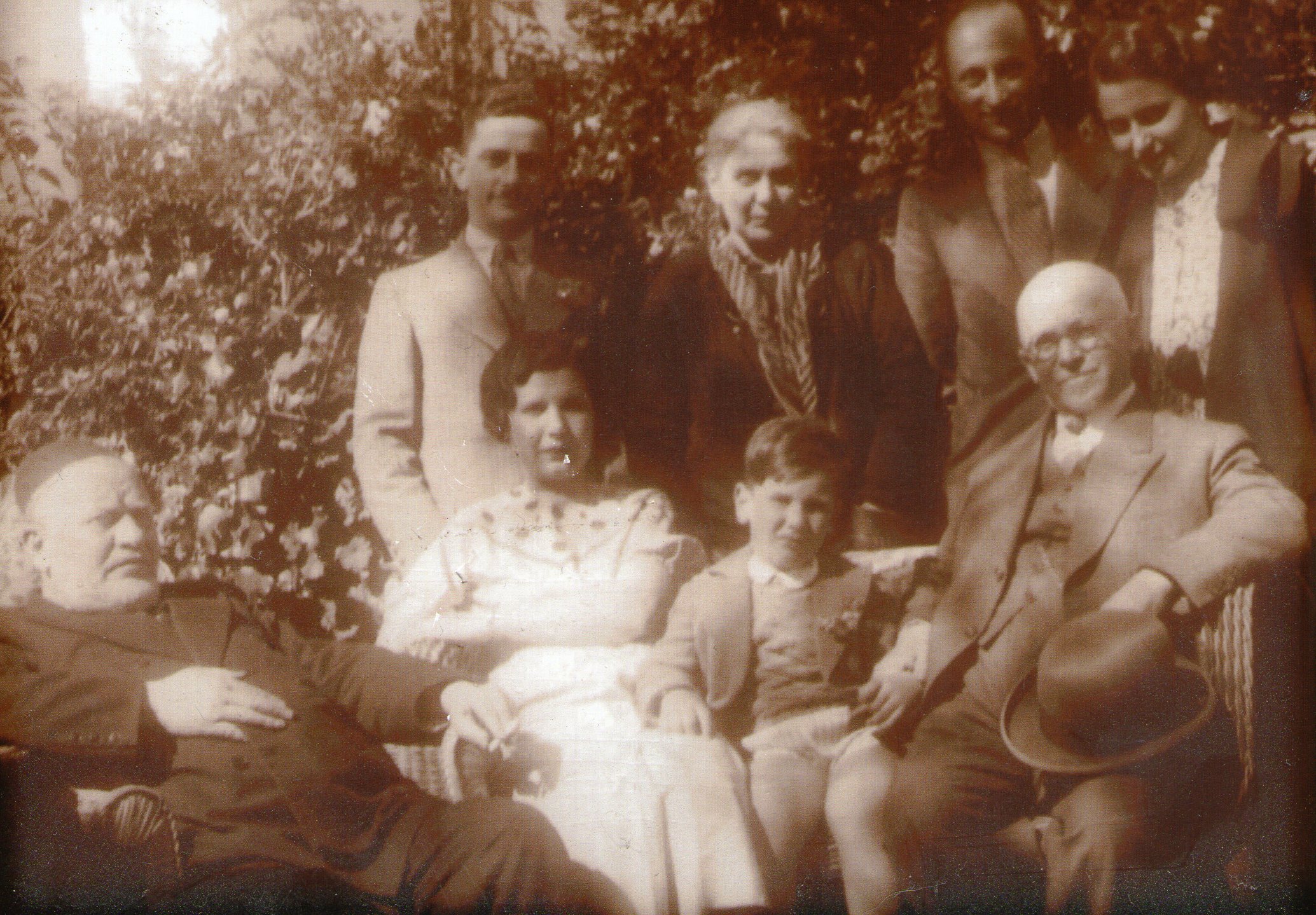
Papa Pensier (squinting little boy) and family. Lisbon, Portugal c.1935

momfamily

Mama Pensier (squealing baby) and family. Buenos Aires, Argentina, c.1936.

Related

Posted in Personal reflections, Photography | Tagged , | 1 Comment

“Straight White Men”

Paleo Retiree writes:

When I saw that NYC’s Public Theater was presenting a show entitled “Straight White Men,” my interest was piqued, to say the least. Since the Public has long been one of the city’s foremost purveyors of Politically Correct theater, I couldn’t resist wondering: What kind of awful, myopic, aggressive, stylish, grandstanding mess were they going to make of this particular theme? And when I saw that the play was written and directed by Young Jean Lee — a woman, and a hyphenate-American woman at that — my theatergoing fate was set. I had to buy tickets and take this thing in. Oooooo, was I looking forward to indulging my inner wounded reactionary. Oooooo, was I ever sharpening my knives and (to be frank) looking forward to writing a grumpy and droll blogposting.

Continue reading

Posted in Performers, Politics and Economics, Theater | Tagged , , | 6 Comments

Architecture Du Jour

Blowhard, Esq. writes:

hungarianparliament

Hungarian Parliament Building, Budapest.

Click on the image to enlarge.

Posted in Architecture | Tagged , , | 1 Comment