Showtune Saturday: “Dentist”

Eddie Pensier writes:

Certainly the best song sung by Steve Martin playing a sadistic biker-dentist in a musical horror movie about a cannibalistic plant based on a stage musical derived from a Roger Corman film, ever.

From Frank Oz’s Little Shop Of Horrors (1986), with music and lyrics by Alan Menken and Howard Ashman. Martin is a gleeful, malicious riot. Trigger warning to those with dentist phobias…which includes me, but I laughed anyway.

Posted in Movies, Music, Performers | Tagged , , , , | 1 Comment

Movie Poster Du Jour: “1941”

Fabrizio del Wrongo writes:

100_8965

With art by David McMacken.

Posted in Commercial art, Movies | Tagged , , , , , , , , | 3 Comments

Naked Lady of the Week: Lexi Belle

Blowhard, Esq. writes:

lbheader

Porn star Lexi Belle, AVN nominee for best three-way sex scene (G/G/B) and winner of the award for best three-way sex scene (B/B/G), knows about the good life:

Along with her vegetarianism, she involves herself in animal volunteering, expressing a specific interest in moose and snow owls. She is a fan of Star Wars, with her favorite film being Attack of the Clones.

Belle identifies as bisexual.

Vegetarianism, snow owls, Attack of the Clones, and bisexuality — what more do you need?

After perusing the NSFW gallery below, if you are so inclined, head to any tube site where Ms. Belle’s Southern naughty-girl enthusiasm is amply displayed. Happy Friday.

Continue reading

Posted in Performers, Sex | Tagged , , | 1 Comment

Art Du Jour

Blowhard, Esq. writes:

Frank_Frazetta_EgyptianQueen

“Egyptian Queen” by Frank Frazetta, 1969.

Click on the image to enlarge.

Posted in Art | Tagged | 1 Comment

Five Things I Learned From Watching 37 Episodes Of “Yes, Minister”

Eddie Pensier writes:

Nigel Hawthorne (Sir Humphrey Appleby), Derek Fowlds (Bernard Wooley), Paul Eddington (The Rt. Hon. Jim Hacker)

Illness has struck the Pensiers: at least two members of our household have spent the last six days walking around in various states of poor health. To fill up the gaping maw of daylight hours while I cough, snort, wheeze, and expel various unpleasant substances from my person, I decided to take advantage of the fact that a user at video site Veoh has uploaded 37 episodes from the series “Yes, Minister” and its sequel, “Yes, Prime Minister”. Here are some things I took away from the experience.

1. You don’t need to be British to enjoy it.

The archetypes of the dim-but well-meaning politician and  the cunning-and-territory-protecting bureaucrat are pretty well universal. A few details may be particular to Britain (discussion of honours) but most of the situations are exportable to any nation and political culture. Not being a generally huge fan of Brit TV, I was surprised at how little perspective-shifting was required.

2. You could replace every political-science department in every university with a YM/YPM marathon, and impart vastly more useful information.

This would not only reduce costs substantially, but it would teach the same thing: the basic role of politicians is to get worried about an issue and promise to “Do Something About It” (bonus points if it’s done “For The Children” in squealing, tremulous Helen Lovejoy voice; extra votes for real-looking tears). The basic role of the bureaucrats is to oppose them, because change is a threat to their positions and budgets. The status quo cannot be upset: any real change that occurs is likely due to a huge screw-up, a national crisis, or mutual back-scratching that leaves all the civil servant players in much the same position as before. PoliSci departments, being concerned with ideal situations and theories, rarely mention this: the necessary work of actually running stuff in the real world tends to fall through the cracks. Truly, if every aspiring politico were required to watch YM/YPM before running for office, some bright thing might come up with a way things can actually change, rather than paying lip-service to Change(tm), the slogan.

3. The business of politics is all about ego and ambition: it has nothing to do with moral convictions or (heaven forbid) expertise on a subject.

Many episodes, perhaps the majority, of YM/YPM episodes have a basic structure:

-Crisis comes to Hacker’s attention. He resolves to address it.
-Sir Humphrey superciliously says something along the lines of “well, we’d love to, but it just can’t be done”.
-Hacker insists, Sir Humphrey makes several behind-the-scenes deals with other civil servants that makes Hacker’s preferred course of action either politically untenable or a public-relations disaster.
-Hacker retreats to the status-quo position for what he believes are his own reasons, to which Sir Humphrey replies with a slimy “Yeesss, Minister”.
-Roll credits.

The only point at which the right, correct or proper thing to do is ever discussed is to mock it for being a colossal faux pas. The business of government should never be confused with actual, you know, governING. This is encapsulated perfectly in the YPM episode “The Smoke Screen”, in which ministerships and portfolios are handed out alternately as rewards for good behavior and gags to prevent “incorrect” action.

 4. It’s really, really funny. Funny in ways that might not be considered funny today.

The writing (mostly by series creators Antony Jay and Jonathan Lynn) matches a keen ear for poli-speak with rueful acceptance of the stony Oxbridge monoculture of the Civil Service. (Sir Humphrey, an Oxford man, is constantly needling Hacker for his supposedly less well-rounded education at the London School of Economics.). There wasn’t an episode I watched without at least one laugh-out loud moment, and more usually two or three. “The Moral Dimension” is a masterpiece of Britwit. Mocking of foreigners and lower classes is gleefully indulged in, stereotypes are reinforced, and currently-acceptable standards of political correctness are flouted with delightful regularity.

5. The question “What is to be done?” often has no answer, and that is sometimes (gasp) okay.

To a generation raised on protests, petitions, sit-ins, “the personal is political”, and loudly-expressed indignation, the thought of a wrong going un-righted is unspeakable. For serious issues, this is a mark of principle to be sure, but today’s “social justice”-types the tiniest slight is the moral equivalent of slavery or witch-burning, showing a lack of proportion. Is it not wiser to save one’s  protest capital for the more important fights? Our collective outrage threshold as a society has been depressed to the point that we’re so exhausted from fighting the little fights, that the big ones get overlooked.  We’re so concerned with micro-aggressions that the macro-agressions are never seen, let alone addressed. The right thing should be what we strive for. If we achieve it, that’s great. But if we don’t, is it necessarily the end of the world?

A healthy sense of proportion, a dry sense of humor, a very impolite realism about the way things are versus the way they ought to be. It’s hardly a mere sitcom anymore, but an important guide to how to conduct ourselves. Am I crazy for thinking so?

Yes, Eddie.

Posted in Humor, Politics and Economics, Television | Tagged , | 4 Comments

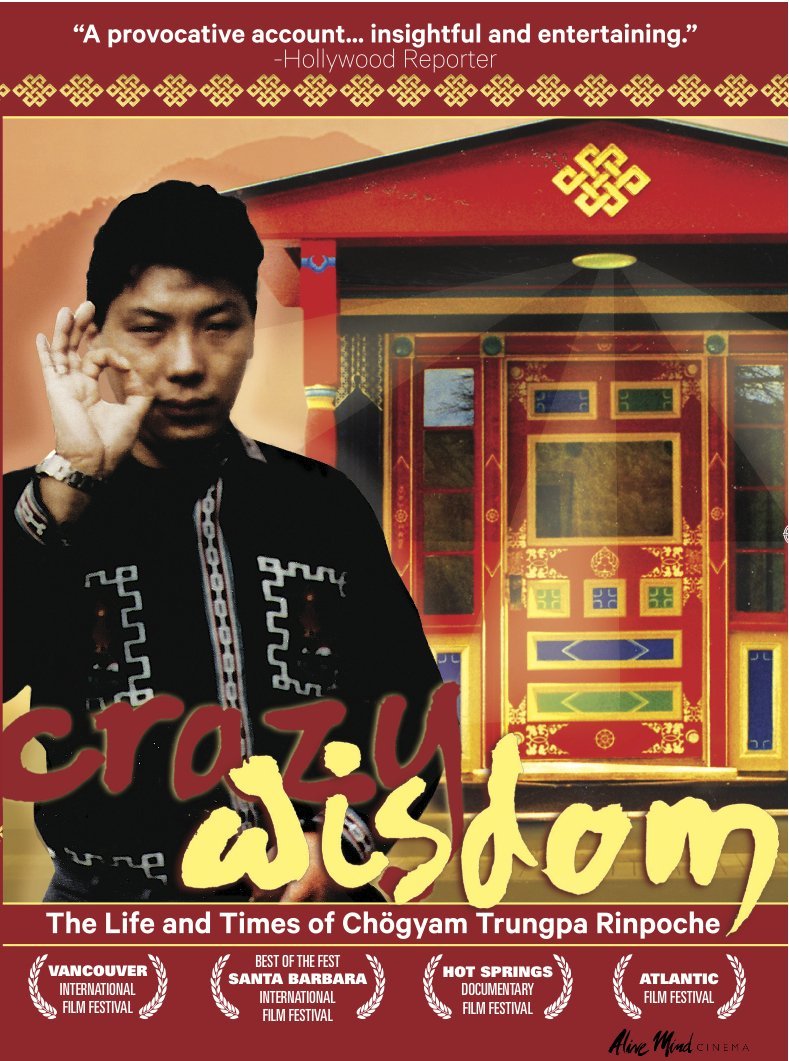
“Crazy Wisdom”

Paleo Retiree writes:

crazy

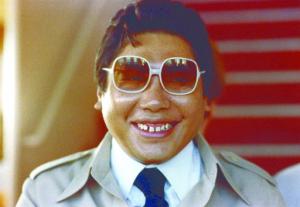
Doc about Chogyam Trungpa Rinpoche, the Tibetan monk who was mostly responsible for bringing Tibetan Buddhism to the west. He was a big figure in the counterculture from the ’60s through the ’80s (he died in 1987 at the age of 47). He established study and meditation centers in Scotland, Canada and the U.S.; he helped create Naropa Institute, the Boulder, CO school devoted to Buddhism and the arts; he attracted thousands of followers; and when he died, big deals from around the world attended his cremation. But he was famous almost as much for his epic drinking, his thoughtless-seeming behavior and his sexual adventures with female followers as for his expositions of the dharma. Was there some cosmic point he was making with his often outlandish behavior? Or was he an egomaniacal con artist run amok, living high on the hog and abusing the trust of gullible followers?

Though it’s very frank about Trungpa’s drinking and fornicating, and though it certainly leaves room for a variety of responses, the movie takes quite a reverent point of view: it makes the case that Trungpa not only talked but lived his brand of wisdom. If he was unpredictable, if he began the day with large tumblers of gin, if he staggered and slurred because he was so drunk, if at one point he even formed a small militia and enjoyed making them march in formation, it wasn’t because he was a Jim Jones-like nut; it was because he was selflessly determined to shake people’s assumptions up. Who really knows what the case was? He was quite a character, in any event. His English wife, whom he married when she was 16, both expresses no regrets and confides that she never really knew who or what he was. And a handful of women who talk openly about having had affairs with him don’t report feeling abused or assaulted. Quite le contraire, in fact.

The film basically alternates between telling Trungpa’s story via archival footage and present-day memories and testimony from people who interacted with him, mostly followers who are still keeping the flame alive. The music is very emotional, and the imagery often very rich.

It seemed to me that the film could have done a better job of conveying the impact of Trungpa’s insights. We’re given a lot of attractive, intelligent people telling us about Trungpa’s effect on them. (Tibetan Buddhism in the west doesn’t attract idiots.) But the footage of Trungpa’s talks that the filmmakers include didn’t impress me much. As far as I could tell, the filmmakers hoped that invoking a bit of mysticism with their filmmaking would help convey the feelings of transport and enlightenment that people in the film discuss. Me, I’d have preferred a harder-edged style. The film is a little genteel and conventional — a little goopy in ways that’ll be familiar to anyone who has spent five minutes in western Buddhist circles — for something that wants to to convey the magic of a harsh and bewildering figure who used a lot of absurd behavior to make his points.

crazy2

To my mind, the film could also have done a better job of conveying two things: what a really incredible life this guy led (seriously, imagine: from a small village in Tibet to celebrity-guru status in the west!), and what a phenom, whether of a positive or a negative sort, Trungpa was as a person. We’re presented with both of these things, we just don’t experience them as vividly as I felt we might have. As someone who’s a little susceptible to gurus and who spent many years in the orbit of one particular guru-esque figure, I know that there’s a lot that can be said about these people. They really aren’t like the rest of us; and as a consequence there really are times when the normal rules don’t seem to apply to them. At one point someone in the doc, musing about Trungpa’s uniqueness, says that he has known monks and gurus who have tried to live at Trungpa’s always “on” intensity-level, and they found they couldn’t sustain it for more than a year or two. These guru figures aren’t everyday intelligent and/or talented people with something to contribute. Instead, they arrive on the scene with an overwhelming feeling of having something to give to the world, and they burn very bright until they just can’t burn any longer. Is it simply personal charisma we’re experiencing when we’re around them, or are we really connecting through them with Ultimate Reality? (Fwiw, I take this question quite seriously.) But the film, while it makes many of these points, makes them in ways that I don’t think are likely to help anyone not already sympathetic see what was magnetic or even remarkable about Trungpa.

But these are all very minor misgivings. It’s a very interesting, very informative, well-researched, attractively-made movie that marvels at a fascinating character, supplies a lot of amazin’ social history, and triggers off a lot of fun-to-wrestle-with thoughts. Warmly recommended. If you’re intrigued by gurus or by the era, why not give it a look?

We watched the film on Netflix Instant; you can buy a DVD of the film from Amazon, where the viewer-reviews of the film are very interesting.

Related

Posted in Movies | Tagged , , , , , , , | 3 Comments

Crusades

Fabrizio del Wrongo writes:

“Zero for Conduct, “Jean Vigo’s rough-hewn, poetic evocation of youth under the strain of institutionalized education, is nearly impossible to summarize in words. Among other things, it’s perhaps the greatest expression of the anarchic impulse ever put on film. In this scene, an after-curfew convocation transforms from a semi-formalized protest — an aping of adult forms — into a slapstick pillow fight reminiscent of the “Our Gang” shorts. Then, upon the interruption of an authority figure, the action turns purely poetic — it becomes a reverie, like something out of the dream-time world of Jean Cocteau. The kids coalesce, magically, into an absurd procession that’s made almost stately by the use of slow motion and the eerie vocalizations that play on the soundtrack. Brandishing makeshift crosses — where did they come from? — the boys march from the room as Crusaders, feathers billowing about their heads like confetti. It’s clear: The adult world has been overthrown; we’ve entered a reality ruled by children. Exactly what Vigo means to communicate here is anyone’s guess; I don’t think there’s a single right answer. But for me the sequence evokes boys coming to contentious terms with their burgeoning manhood. It’s simultaneously touching and unnerving. In just a few years they’d be marching off to war.

Related

  • I wrote about a scene from another Jean Vigo film here.
  • “Zero for Conduct” is one of those movies that has been referenced in a multitude of other works. Bellocchio’s “In the Name of the Father” is one of my favorites. Lindsay Anderson’s “If…” is one that I’m not very fond of.
  • I’d guess the overhead shots in this sequence gave Truffaut a few ideas.
Posted in Education, Movies | Tagged , , , , | 2 Comments

The Camera Loves…

Blowhard, Esq. writes:

Bacall In Beads

…Lauren Bacall, 1924-2014. RIP. 

Posted in Movies | Tagged | 8 Comments

Jewish Music and the Blues

Fenster writes:

If you have not seen it, the PBS special on Jews and Broadway is very much worth watching.  It’s entitled Broadway Musicals: a Jewish Legacy.  Jews often seem to want to downplay their prominence in various fields, or at least their cultural influence.  Here, that influence is brought unabashedly front and center.

The full-throated kvelling is well deserved.  There’s no getting around the fact that Jews essentially created and sustained the Broadway musical.

One of my favorite bits in the special concerns the relationship between Jewish composers working in the black vernacular.  What’s especially interesting, and fun to listen to, are the things Jewish and black music have in common.  The clarinet solo that starts Rhapsody in Blue, for instance. Growing up without much in the way of Jewish culture, I understood this as the introduction of the blues idea at the outset.  But it owes klezmer music at least as much.

The clip below includes some interesting commentary on the similar but different use of the minor key in Jewish and black music.

Of the commenters, I liked Marc Shaiman’s take the best.  That Jewish music is “all minor” while the blues plays on the tension between the major and minor keys, with the song itself often being in major with a lot of the melody working with the flatted third (the minor) as well as the flatted fifth and seventh.

I just never heard it explained before as the tension between hope and resignation, which I always more or less apprehended musically but not intellectually.

Posted in Music | Tagged , , | 4 Comments

Linkage

Blowhard, Esq. writes:

Posted in Linkathons | 10 Comments