“The Magic Flute” (2006)

 Eddie Pensier writes:

Kenneth Branagh’s film of Mozart’s opera is the first filmed directly for the screen (Ingmar Bergman’s classic version was initially made for Swedish TV). Branagh made several decisions as a filmmaker that would drastically affect the outcome of his project: He commissioned a new English translation of the libretto by actor/writer/polymath Stephen Fry; he decided to cast actual singers in the leading roles, rather than actors with their voices overdubbed; he updated the setting to Europe during World War 1; and he completely stripped the opera of its famous Masonic symbolism.

The last is a big, big problem. Flute stripped of symbolism is a Flute that is twee and nonsensical. Branagh wants to make grand sweeping statements about war and peace, but without an overall thematic structure, the work falls to pieces. It’s interesting and a little distracting to watch Branagh’s vision stagger from gritty war film to ludicrously surrealist fantasy. There are, to be sure, some amazing visuals in the movie: the Queen of the Night’s entrance atop a tank; the scenes of stomach-churning trench warfare during the overture. But the lack of unity makes this a very difficult movie to digest in one sitting. The characters of the Three Ladies and Three Genies are poorly dealt with: their appearances prompted out-loud “What the hell”s from me, so badly were they integrated into the filmed version of events.
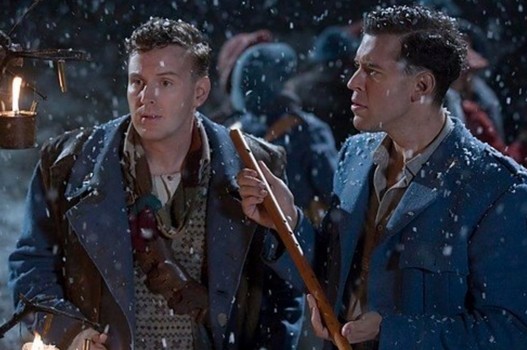
Benjamin and Joseph Kaiser as Papageno and Tamino in Branagh's The Magic Flute.

Benjamin Jay Davis and Joseph Kaiser as Papageno and Tamino in Branagh’s The Magic Flute.

I’ll admit to a bias against opera in translation. However, Fry’s new text is overall pretty good and singable. (It also, mercifully, leaves out the casual racism and sexism that, while funny to audiences in Mozart’s era, cause cringes even among conservative operagoers today.) James Conlon conducts the Chamber Orchestra of Europe in a sprightly and animated rendition of the score.

How are the singers? Mostly good, sometimes great. Joseph Kaiser is a light lyric tenor with a more than passing resemblance to a young Russell Crowe. He plays Tamino with an appealing open freshness, and is a good enough actor that he could have a career in legitimate cinema should he choose it. Amy Carson looks beautiful (perhaps helped along by Branagh’s obvious penchant for shooting her while she’s soaking wet) and has a pleasant voice that is slightly strained in the topmost ranges.

René Pape is probably the opera world’s foremost basso, and he plays the role of the solemn Sarastro as well as anyone ever has (here he’s the chief of a war hospital, rather than a high priest). Weirdly, the role of the Speaker is also sung by Pape…not sure why. His English diction could have used a little help, but otherwise he was a textbook Sarastro.

For me the standout was the awesomely demented Lyubov Petrova as a leather-clad Queen of the Night. Petrova fearlessly attacked the Queen’s two arias, with their famously difficult coloratura and high Fs (that’s REALLY goddamned high), and presented a Queen who was perhaps less purely evil and more Tiger Mother than is the norm. She’s a beautiful woman who barely looked older than Carson, her supposed daughter. I’d pay money to see her sing pretty much anything.

The weak link was a spastic, mugging, weak-voiced Benjamin Jay Davis as Papageno. I had to seriously resist the urge to skip through all his scenes.

Musically, this is a top-notch Flute. Dramatically and cinematically, I’d advise skipping it. But it’s on Netflix if you decide to check it out.

Related

  • Want to watch a brilliantly sung Flute in a legit opera-house production? Try this one from the Met, conducted by James Levine and designed by David Hockney.
Posted in Movies, Music | Tagged , , , , , , , | 7 Comments

“Don’t You (Forget About Me)” Five Ways

Eddie Pensier writes:

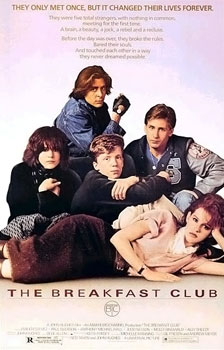
Those of us who grew up in the 1980s probably have fond memories of this song, and the movie it came from: John Hughes’ The Breakfast Club. The original 1985 recording, by Scottish New-Wave band Simple Minds, probably deserves its place as a permanent earworm for my generation.

It’s not well known that producer Keith Forsey (who co-wrote the song with Steve Schiff) offered the song to Bryan Ferry and Billy Idol, who both passed on it. Idol had a change of heart years later, and covered the song for his greatest hits album. Damned if it isn’t a hundred times better than the Minds’ version.

Victoria Justice is done no favors by her producers in this version, who encase the song in a five-inch thick layer of studio Plexiglass. Still, she’s kind of cute.

The Breakfast Club’s star, Molly Ringwald, has reinvented herself as a chanteuse, apparently. She sings it as a jazzy torch song, not very well, but with an endearingly amateurish earnestness. (The recording was dedicated to the memory of Hughes, who died in 2009.) This particular link contains only an excerpt, but if you are for some reason motivated to buy it, her entire album is on ITunes.

Finally, this wretched track from a CD called “Orchestral Rock” by the previously respectable Royal Philharmonic Orchestra, amply demonstrates why symphony orchestras should never put out records called “Orchestral Rock”. I hope the person who arranged this is suffering from a painful and debilitating disease.

We're all pretty bizarre. Some of us are just better at hiding it, that's all.

We’re all pretty bizarre. Some of us are just better at hiding it.

Posted in Movies, Music, Performers | Tagged , , , , , , , , , , , , , , | 9 Comments

Architecture Du Jour

Blowhard, Esq. writes:

dresdenoperahouseThe Semperoper, Dresden, Germany

Click on the image to enlarge.

Posted in Architecture, Music | Tagged , , , | 1 Comment

Art Du Jour

Blowhard, Esq. writes:

7actsofmercyCaravaggio, The Seven Works of Mercy, 1607

Click on the image to enlarge.

Posted in Art | Tagged , , | 7 Comments

Notes on “That’s My Man”

Fabrizio del Wrongo writes:

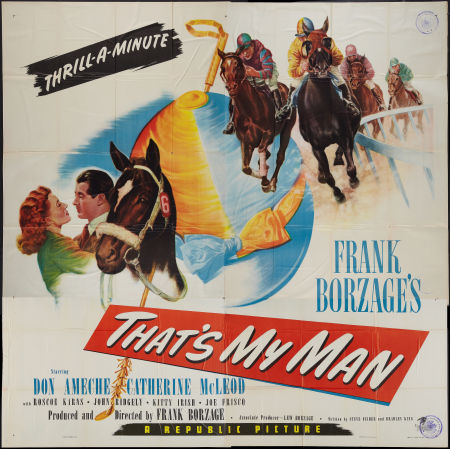
thatsmyman

This late Frank Borzage picture is about a compulsive gambler (Don Ameche) whose mojo is all bound up with the fate of a thoroughbred that he raises from a colt. Borzage and screenwriters Steve Fisher and Bradley King treat Ameche’s failings tenderly: his gambling is an extension of his pride — his belief in his own worth — and even when he’s acting like a jerk you understand what it is that’s driving him. It helps that Ameche treats the horse, which is named Gallant Man, so, well, gallantly: he continually goes out of his way to spare the animal the humiliations that he so readily takes upon himself. (The horse is a projection of Ameche’s noblest instincts, a proxy for the part of himself that he won’t allow to be hurt or sullied.) As you’d expect of a movie made by Borzage, “That’s My Man” is lovingly directed, and several scenes have the self-contained quality of a good piece of music. Of particular note are Ameche’s wedding night with bride Catherine McLeod, which is set in a shabby hotel room overlooking a twinkling amusement park (shades of “7th Heaven”), and a relaxed introductory sequence in which the couple meet cute while attempting to arrange overnight lodging for the young Gallant Man. The latter sequence, wherein the kick-happy colt destroys McLeod’s China while Ameche slyly romances her, plays like very serene screwball comedy. The end is predictable enough, and much of the summing-up dialog is woeful in its let-me-tell-you-what-you’ve-just-seen obviousness, yet there’s satisfaction in watching Borzage draw up the threads of his story and make a neat bow of them.

Related

Posted in Animals, Movies | Tagged , , , , , | Leave a comment

Three 21st Century Songs About War

Glynn Marshes writes:

That is to say, post 9-11.

These are no Country Joe McDonald call-to-action polemics. On the contrary, here we have reflectiveness; meditations on the reasons for and cost of war; personal narrative.

All come from the indie folk/bluegrass/country side of the musical spectrum.

Steeldrivers, Sticks That Made Thunder (2008)

The Civil War Battle of Nashville from the perspective of a tree — a mournful song that brings to mind Americana land’s “beautiful sadness” that Robbie Robertson captured in The Night They Drove Old Dixie Downalthough Sticks reflects on the tragedy of Union as well as Confederate suffering.

Colors flew high and they danced in the sky
As I watched them come over the hill;
Then to my wonder, sticks that made thunder
Such a great number lay still.

Those that have fallen come when I call them
And answer the best that they can,
But all they can see is what they used to be
And that’s all that they understand.

Continue reading

Posted in Music, Politics and Economics | 7 Comments

Yo!

Paleo Retiree writes:

Fun keeping track of body language, both in real life and in the media. Gestures and postures really do change over time. Think, for instance, of all the ways people have of interacting with their smartphones. We take these postures and ways-of-behaving for granted now, but 15 years ago they weren’t even a  small part of our lives.

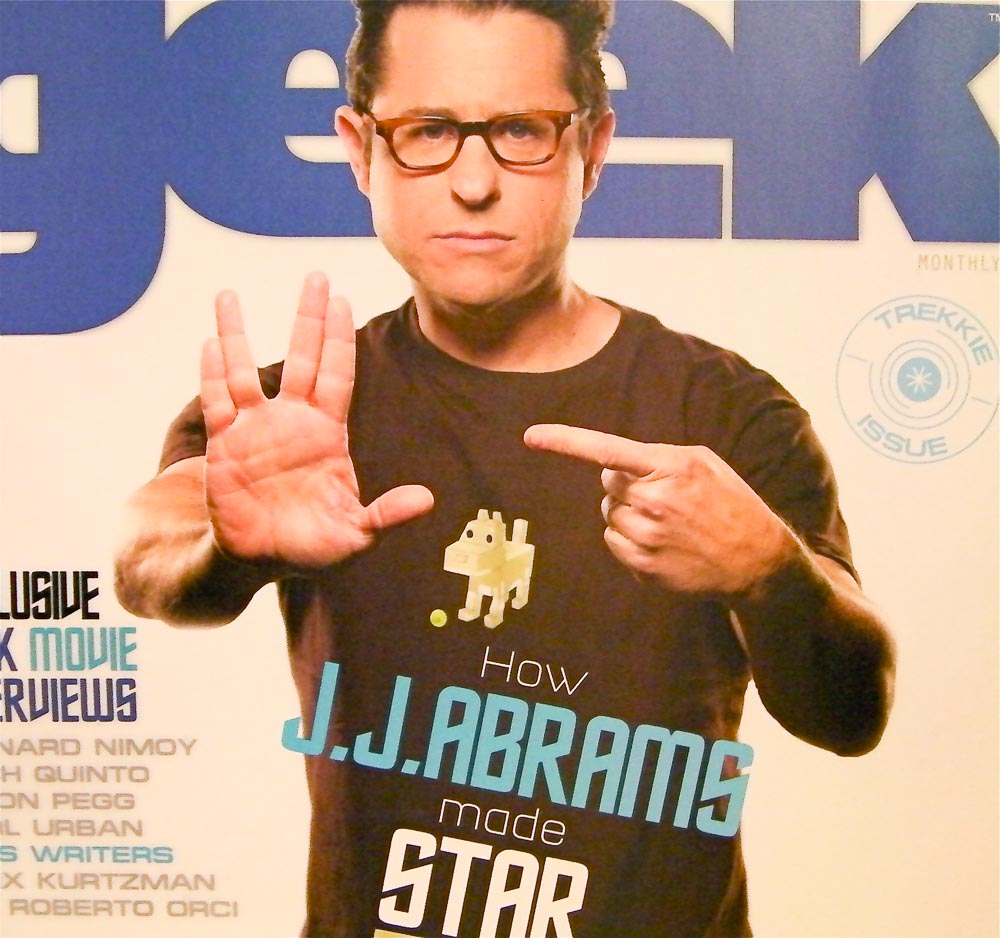
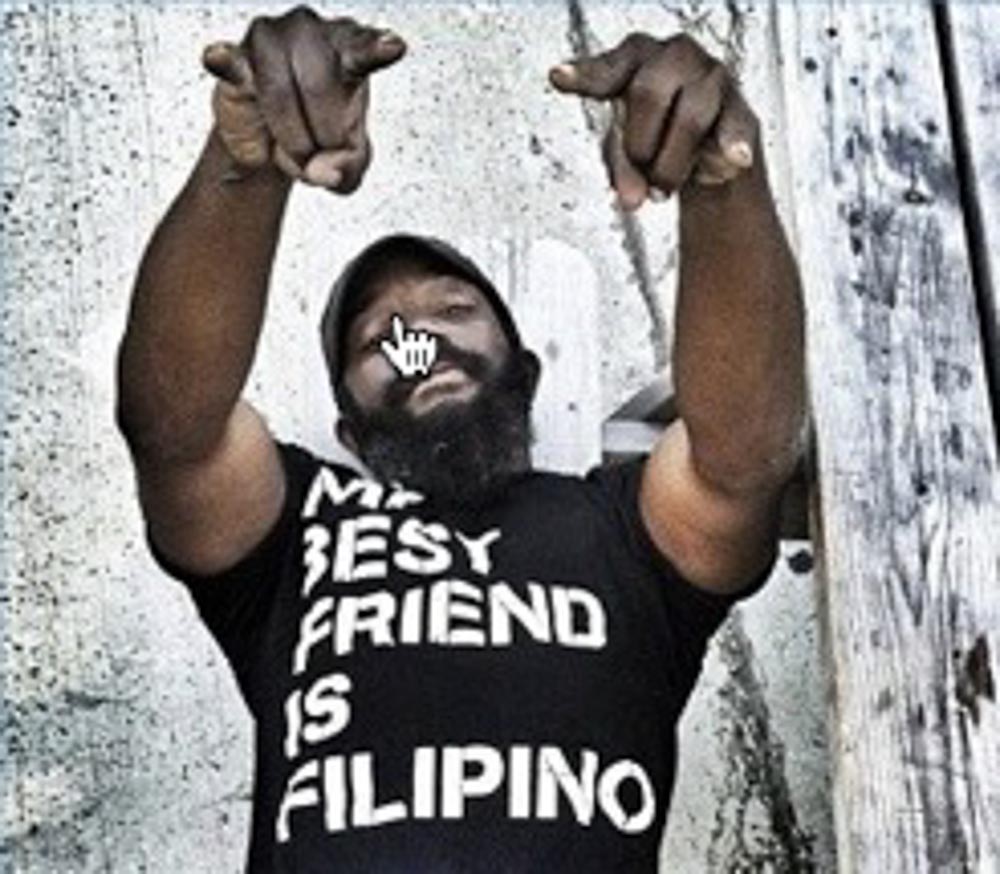
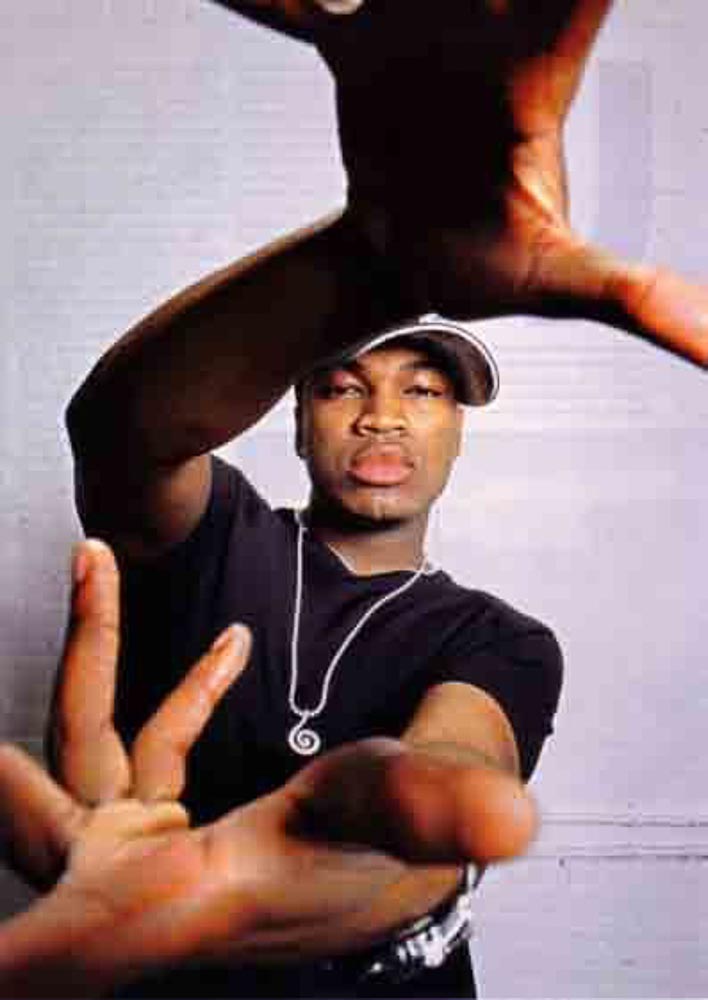
Another set of gestures and postures that we now accept as a routine part of normal is the foreshortened hand/fist/thing-you’re-holding. I think of it as the “comin’ at ya” or “yo!” gesture. It’s very prominent in ads; I observe variants of it in real life nearly every day too. Here’s a small sampling.

comin_at_ya4 comin_at_you004 comin_at_ya01 comin_atya7 comin_atya05 comin_atya635 comin_atya20

For a little while T-Mobile was using the gesture as an ongoing theme in their ads:

SANYO DIGITAL CAMERA yo_gesture9000

This gesture is such a common part of today’s visual language that it can be hard to remember that playing the in-your-face card wasn’t always considered an attractive thing.

Where does the move come from? My theory is that it has to do with four main influences. The first is the commonplaceness of video. As people horse around with video cameras, it seems to be a common — and for all I know a natural — thing for people to try to dominate and aggress towards the video lens — to attack it as though trying to crawl inside it. The second is video games. Cartwheeling, disorienting changes in scale and perspective seem to be the expected thing in videogames. (Why? I have no idea.) The third is the increasing miniaturization of everything. As devices and cards and such become smaller, how else to make them prominent, let alone to emphasize that they’re bursting with power, glamor and desirability?

The fourth is hiphop. Now this is a subject I know next to nothing about. Don’t like the music (though I recognize the talent); find the styles occasionally amusing but often repellant; can’t help feeling appalled by a lot of the vulgarity and aggressiveness … I’ve largely avoided hiphop. But I’m semi-aware that kids who are into hiphop like making lurching, alarming gestures and throwing their hands around as though they’re half gang member and half boxer.

comin_at_ya300 comin_at_ya02No idea what the general significance of this trend is. Anybody got any decent theories about where the gesture comes from? And what it might tell us about Life Today?

Posted in Personal reflections, Photography, Trends, Women men and fashion | Tagged , , , | 10 Comments

NOT The Beatles

Fenster writes:

The Knickerbockers’ Lies doesn’t sound all too much like the Beatles to my current day ears, but when it came out in 1965 it had most people fooled.

Posted in Music, Performers | Tagged , , | 1 Comment

Objects Of Beauty

Eddie Pensier writes:

1900 ball gown
Ball gown by Charles Frederick Worth, c.1900

artdecobookcaseArt Deco bookcase, c.1919

pistols
Dueling pistols belonging to Catherine the Great of Russia, 1786

vase with peaches qing dynasty
Vase with peaches, China, 18th century

hermesglove
Hermès leather baseball and mitt, 2011

Posted in The Good Life | Leave a comment

Art Du Jour

Eddie Pensier writes:

napoleon

Max Ernst, Napoleon in the Wilderness (1941)

Posted in Art | Tagged , , , , | 1 Comment