
Atypical Neurotic writes:
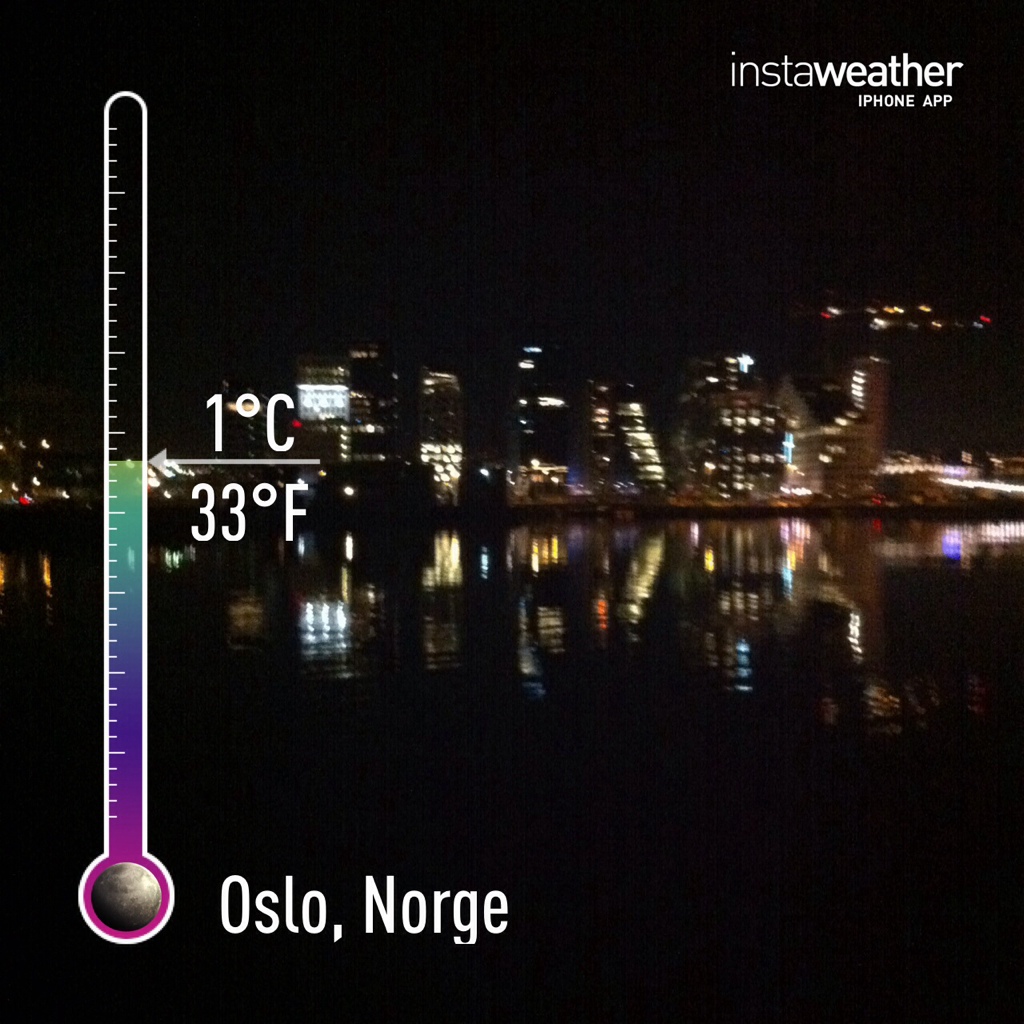
Taken from the pontoon bridge linking the Opera House with the Sørenga development. As I walked back toward the Opera House, I was struck by how quiet it is without the roar of traffic.
Atypical Neurotic writes:
Taken from the pontoon bridge linking the Opera House with the Sørenga development. As I walked back toward the Opera House, I was struck by how quiet it is without the roar of traffic.
Paleo Retiree writes:

Though L.A. partisan Blowhard, Esq. has been urging the Question Lady and me to give Umami Burger a try for a couple of years, we’ve never found time during our L.A. visits to indulge. So how convenient that Umami Burger recently expanded its franchise to Manhattan. I’ve been to the Greenwich Village branch twice now and my verdict is: Blowhard, Esq. has first-rate taste in burgers.
“What’s with the weird name?” some of you non-foodies may ask. Well, umami is a Japanese word for one of the five primary tastes, the other four being sweet, sour, bitter and salty. The actual taste of umami is notoriously hard to nail down. Experts and academics like to say that the experience of umami is “savoriness,” but I always find myself thinking “succulent woodsy mushroomy” and “tamari sauce” instead. In any case, you probably get the idea.
Blowhard, Esq. writes:
If you absolutely must build something of glass and steel, this is the model you should be following.
Click on the image to enlarge.
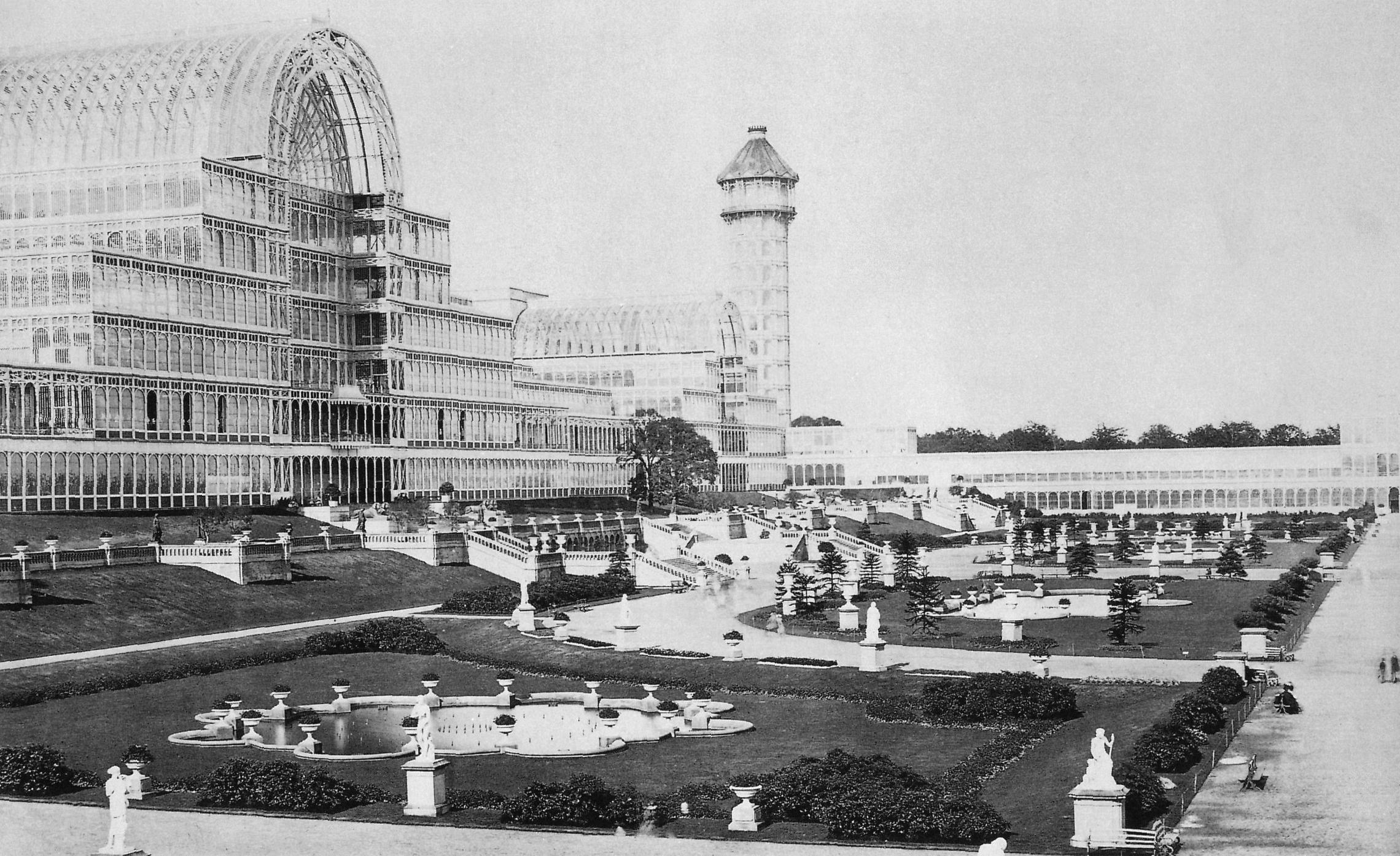 London’s Crystal Palace, built in 1854 and destroyed by a fire in 1936.
Eddie Pensier writes:
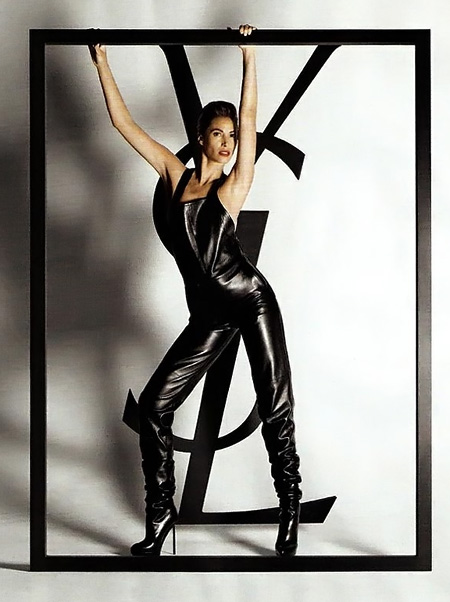
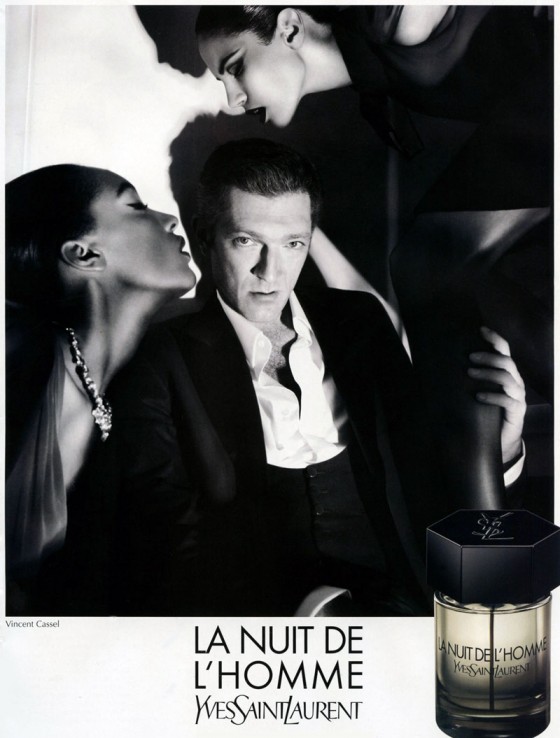
The fashion and fragrance house of YSL has produced some memorable and controversial advertisements. Here are a few of the best for your ogling pleasure.
The gorgeous nude Sophie Dahl, for Opium:
 The equally gorgeous, nude Samuel de Cubber, for M7:
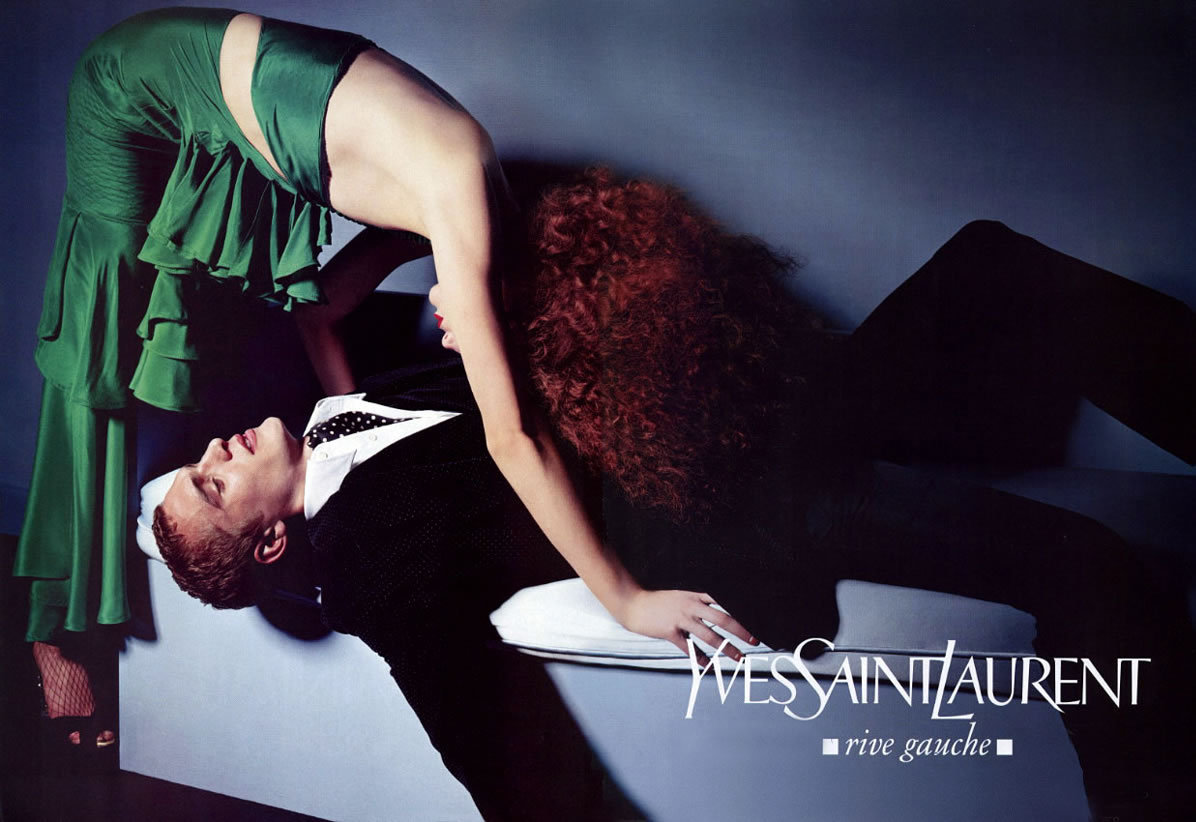
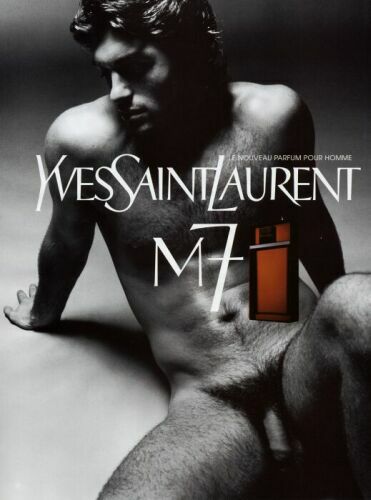 And one of each, clothed but bawdy, for the S/S ’03 Rive Gauche collection:
 The ageless Christy Turlington in leather and stiletto boots for F/W ’09, because, well, Christy Turlington in leather and stiletto boots.
The saturnine Vincent Cassel surrounded by babes for Le Nuit de L’Homme, photographed by Darren Aronofsky:
 And finally Opium again, with Emily Blunt keeping the bottle in a safe and warm place.

Eddie Pensier writes:
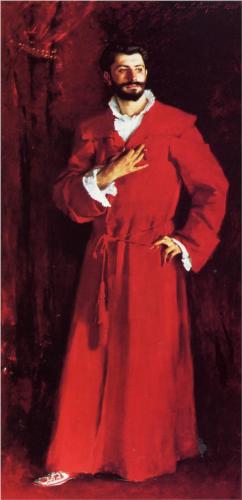
John Singer Sargent, Dr. Pozzi at Home, 1881
Sargent’s adoring portrait of the infamous Dr. Samuel Jean de Pozzi (3 October 1846 – 13 June 1918), pioneering gynecologist, lover of Sarah Bernhardt (and it is rumored, of Sargent himself), defender of Alfred Dreyfus, friend of Marcel Proust, insatiable sexual explorer, and victim of one of the more flamboyant deaths of the early 20th century:
On June 13, 1918, Maurice Machu, former patient from two years before, approached Pozzi in his consulting room. Pozzi had had to amputate his leg and he had become impotent. Machu asked him to operate again. When Pozzi refused because he could not remedy the situation, Machu shot him four times in the stomach. Pozzi ordered himself to be taken to the Historia Hospital but the emergency laparotomy was unsuccessful. He asked to be buried in his military uniform and died shortly afterwards. Machu committed suicide later.
Blowhard, Esq writes:

The UR crew heads off to prepare a feast.
Glynn Marshes writes:
Some interesting discussion breaking out within the paleo crowd: is it possible that paleo dieters have overlooked the benefits of a class of carbohydrates called resistant starches?
Richard Nikoley of the blog Free the Animal is leading the way on the pro resistant starch argument. Here’s his primer on the topic.
According to Nikoley, potential benefits of consuming resistant starches — a type of starch that isn’t digested in the small intestine, but instead passes to the large intestine where it is fermented by that organ’s resident microflora — include increased production (in the gut) of shortchain fatty acids. These, in turn, lower intestinal pH, which inhibits the growth of pathogenic bacteria and and increases the absorptive potential of minerals, among other benefits.
Sir Barken Hyena writes:
What a zippy headline! Rolls off the tongue like honey. But a lot of people will be saying those words in the coming years, as Bitcoin is now poised to launch into the mainstream, to go as they say “to many zeros, or one”.
Many Bitcoin early adopters are web developers. That’s because we understand and trust the technology. For the average slob though, we need a sort of Dummies Guide to the Heart of Bitcoin.
Bitcoin uses cryptography to provide the trust that in today’s financial world comes from third parties. It does this by an ingeniously stacking up a Jenga-like tower of encrypted transactions that comes crashing down with the slightest tampering. You don’t have to be a geek to understand how it does this, no math required. Let’s jump in!
Hashing is a process that makes a unique identifier from anything digital. Feed in a picture of Dali’s anteater, and out comes JFsf3f93k0fkv5HHfmvv. A different picture will give another identifier, say h9YYYedkkw583hfl5qG. Each picture can only ever produce one particular string when hashed. So it’s a digital fingerprint. And you can make a hash from an audio recording, a text document, a CAD design, as long as it’s in digital form.
One use of this is to tell if two documents are the same with out actually having the documents in question, only the hashes of them. If even one comma is different, the hashes won’t match. Bitcoin uses hashing to compare transactions to see if one might be counterfeit. Which brings us to the Blockchain.
Bitcoin is strange, really strange. For one thing, there is no such thing as a bitcoin. There are only transactions recorded in a ledger, with debits and credits to wallets. That’s it!
The unit of account is the satoshi, 100 million satoshis equal one bitcoin. That’s all a “bitcoin” is: a transaction, recorded at a certain wallet, at a certain time, for 100,000,000 satoshis.
But this is no ordinary ledger, in fact it’s a cloud of ledgers. The Bitcoin software runs on something like 40,000 computers. Every ten minutes all the new transactions are sprayed out by the software across the internet to every computer running Bitcoin. This data is examined and synchronized. Once the collating is done and there is complete agreement across all systems, a new row is made in the global ledger and copied out across the network.
Each of these rows is a called a block, and they stack up over time to form the blockchain.
Now suppose I want to fake an entry, give myself a nice 30,000 BTC out of thin air. Since it’s Open Source, I can modify the Bitcoin software, create a fake transaction, and send it to the cloud and hope it gets taken up by the network.
Not so fast! A block is just digital characters like a text document, and Bitcoin hashes each entire block. This hash is then passed along to become part of the next block, and so on to each new block as it’s created. So all blocks are linked together by this chain of recorded hashes, hence the blockchain. The secret here is that changing any hash along the way will cause all other blocks after to process to different hashes!
So my faked block will create a different blockchain than the real one, recorded out there in the cloud, even if every other transaction but my fake one is the same. When my forgery is processed it will be found to have different hashes from the globally accepted ledger stored in the cloud. The phony is outed by the magic of cryptography, no third party to guarantee authenticity required. The entire blockchain breaks and falls apart like a jenga pile.
Boy, says Bitcoin, that shit just don’t add up.
While the blockchain hashing prevents fraud and counterfeiting, public key cryptography makes bitcoin secure. People think that any code can be broken, and they’re probably right. Public key cryptography goes around the problem by making it possible to break, but so insanely computationally expensive as to be pointless. Let’s just trust this and move on since it’s been used since the 1970s and has born the brunt of what hackers and the NSA can give it. It’s what’s already behind secure transactions on the internet, so you already depend on it without knowing it.
How it works within bitcoin is what’s interesting, because it controls your wallet. Symmetric cryptography, like Hitler’s engima machine, uses the same key to get stuff in and out. Capture one and you can not only decode messages, but send your own fake ones.
Public key cryptography in Bitcoin has two keys, a public key which is given out, and a private key held by the owner of the wallet. The public key is for encryption only, so it’s one way. Anyone can use this key to send money to your wallet, so it’s like an email address.
But only the holder of the private key can get access to what’s in the wallet to spend. The only security that is ever needed is to protect the private key. This means that identity theft is impossible in a Bitcoin world, one more benefit of the trust that cryptography provides.
The essence of this innovation is that third parties are no longer needed to guarantee trust, and better yet, since it is done by what in essence is a mechanism, it’s incorruptible. And that’s something you can trust more than any human agency. This is what makes Bitcoin, whatever it’s ultimate fate (and price!), a truly epochal and potentially world remaking phenomenon.
Imagine there are no Bankers…you can do it if you try…


 Blowhard, Esq.
 Callowman
 Sherbrooke
 Eddie Pensier
 Enzo Nakamura
 Epaminondas
 Fabrizio del Wrongo
 Fenster
 Brundle Guy
 Glynn Marshes
 Paleo Retiree
 Atypical Neurotic
 Question Lady
 Sax von Stroheim
 Sir Barken Hyena
 The Mistaken
