Movie Posters of the French New Wave (Italian Edition)

Fabrizio del Wrongo writes:

As in France, the appearance of New Wave films in Italy coincided with the advent of new techniques for the creation of movie posters. Designs became hipper, more au courant, and gradually the use of photographic images began to supplant the painterly tradition of Anselmo Ballester and Luigi Martinati. (If in France poster making was closely allied with the tradition of printmaking, in Italy it was always aspiring to the splashier effects of painting.)

One thing remained constant: The Italians’ love of sex, heat, and drama. It’s a predilection that caused even the grim films of Ingmar Bergman to be marketed in Italy as colorful, hot-house extravaganzas. (You expected the sun-loving Italians to cotton to all that Scandinavian brooding and angst?) This resulted in some rather incongruous New Wave posters, such as Angelo Cesselon’s hysterical take on Rivette’s rather staid “La Religieuse,” or Piovano’s dual interpretations of “Week End,” both of which emphasize sex over Godard’s analytical brand of doomsaying. On the other hand, the unsigned cartoon-style image used to represent the lunatic “Zazie in the Metro” is very appropriate, and Giuliano Nistri’s image of Bardot on his “Contempt” poster gets the smoldering side of the star in a way French posters often don’t. And Enrico DeSeta’s large poster for “The 400 Blows” is simply one of the loveliest designs of the era: it’s less a representative image of the film than an advertisement for an emerging continental style — one characterized by tousled hair, Vespa scooters, and jaunty modernist typefaces.

As I did in the first entry in this series, I’ve included posters for some films that don’t qualify as New Wave in the strict sense, but which derive from the same period and set of attitudes. I’ve also included some posters for films that can be considered part of Italy’s own new wave — movies made by men like Bernardo Bertolucci and Marco Bellocchio. Because . . . well, why not?

I apologize for the variable quality of the photos. Some of these posters are over six feet in length, making them hard to photograph.

Related

Posted in Commercial art, Movies | Tagged , , , , , , , , , | 5 Comments

Seeing What is in Front of One’s Nose

Fenster writes:

I wrote here that, just as the Left is right to struggle with the possibility of too much diversity, the Right is left to struggle with the possibility of too much inequality.

It’s a struggle all right, and a familiar one.  As Orwell wrote (and as writers as diverse–and unequal–as Steve Sailer, Paul Krugman and Andrew Sullivan have re-posted), “to see what is in front of one’s nose needs a constant struggle.”

Which Orwell?  Door #1, door #2 or door #3?

Which Orwell? Door #1, door #2 or door #3?

Why is this?  Faced with this kind of question I suggest doing what I usually do–resort to some good old fashioned evolutionary biology just-so stories.

People apprehend social ideas in binary terms, as black/white, good/bad.  But ideas are like all things in an ultimately Darwinian universe improvisations made up for adaptive traction.  We can’t help but be beguiled by them–that’s part of the trick that makes them work–but improvisations they are nonetheless (IMHO as a Darwinian–all are free to disagree).

So we promote diversity, fairly, as a way to cope with inevitable cultural complexity–but close our eyes to an honor killing in a Western nation.  We say, fairly, that inequality is a good and necessary thing for growth–but is that a guillotine I see before me?

Accordingly ask not whether something is good if it promotes diversity, or if it signifies growth because there is an unequal outcome.  Ask what the situation demands.

Assuming you can see beyond your own nose.   If you are predisposed a certain way, it is likely you have already decided what you will see past your nose, even while bravely quoting Orwell.  It’s a problem.

What is the way out?  Keeping to the Darwinian theme, I suspect what happens is that sooner or later some underlying forces and issues become unavoidable, and cause various styles of reinterpretation, as advocates attempt to square their past shaky assumptions with new challenges.  That puts a premium on the ability to fit the shocking new in with the comfortable old.

I think we are seeing that now on the Right where inequality is concerned. epiminondas and I both linked to a Weekly Standard story in which fretting about inequality was manifest.  But the author, in true contempo partisan style, needed to come up with a way to raise the issue without conceding anything to the opposing camp (we are all in camps nowdays donchaknow?).  So the concern about inequality was framed in the context of the hypocrisy of left-leaning, green Silicon Valley millionaires.

It’s like the Fifites, where one only had to say what you were not.  An anti-communist, or an anti-anti communist.  Figuring out where one truly stands, well . . . well, that requires a constant struggle now, don’t it?

Now comes Mark Steyn, by far the most entertaining pundit around and one who is very often . . . er . . . right.  But even Steyn is not immune from the anti-anti spin mentioned above.  From time to time he too can take something that truly matters and convert it into anti-matter.  Such must be the pressures of punditry in the modern era . . . you get invited to show up on a radio show hosted by a hyper-partisan like Hugh Hewitt and soon you are spewing and spinning with the best of them.  IT’S ALL ABOUT OBAMA!!!  RUN!!!

panic

So here is Steyn tackling inequality.  A very interesting column.  As with the Weekly Standard article, the concern over inequality is manifest.  Give Steyn a lot of credit for bearing down on an important aspect of the problem, which is whether our economy is headed for a situation in which capital does not need labor.  Tyler Cowen and others have been pushing the notion of the inevitability of increased inequality, and it is a real topic.  But Steyn can’t help it.  Rather than embrace the problem and take a stand, it is all once again reduced to a problem manufactured by the other side’s mendacity.  But how does his conclusion that the problem is all about government dependency square with the notion that there may well be deeper structural components?

That will have to wait for another day, a day when score settling and one-upsmanship take a back seat to problem solving.  If I were a Hegelian, I’d say it is a dialectic, one being worked out as we speak.

Posted in Personal reflections, Politics and Economics | Tagged , , , , , , | 11 Comments

Neon & Cocktail Du Jour

Blowhard, Esq. writes:

colesneon

Their sandwiches are amazing and the Old Fashioneds are pretty good too.

colesoldfashioned

Click on the images to enlarge.

Posted in Food and health, Photography, The Good Life | Tagged , , | 2 Comments

Linkage

Paleo Retiree writes:

Posted in Linkathons | Tagged , , , , , , , | 3 Comments

GoPro Hijinks

Paleo Retiree writes:

If people are going to persist in amusing themselves by doing physically risky things, may there at least be a GoPro camera attached.

Posted in Movies, Sports, The Good Life | Tagged , , | 1 Comment

NOT The Beatles

Fenster writes:

I posted my first NOT The Beach Boys earlier.  Here is the first NOT The Beatles.  It is another truly shameless rip-off, but enjoyable.

There is an entire genre of music that rips off the Beatles in one fashion or another. Sometimes this is done strictly for amusement, as with Eric Idle’s Rutles.  Sometimes it is a more respectful homage, as with Todd Rundgren and Utopia’s Deface the Music.  The link below is to Mr. Greedyman, a cut by the Vinyl Kings.  They just want to sound like The Beatles.  Not bad.

Posted in Music, Uncategorized | Tagged , , | 4 Comments

City Hall

Atypical Neurotic writes:

20131207-134429.jpg

Posted in Architecture, Photography | 4 Comments

Art Du Jour

Eddie Pensier writes:

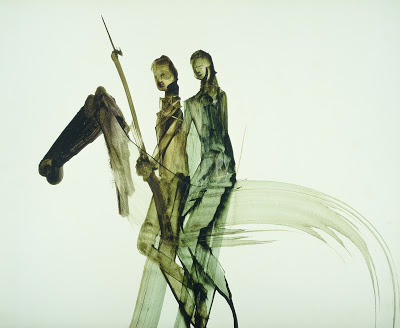
Gallipoli Riders

Sir Sidney Nolan, Gallipoli riders, 1963

textile dye on coated paper, Australian War Memorial

Posted in Art | 2 Comments

Art and Booze Together

Eddie Pensier writes:

Here’s a curious little article detailing the mutually beneficial yet uneasy relationship between the businesses of trend-setting art and liquor. Interesting, though, to note what the arty folks consider to be a downside:

Spirits sponsors want signage at an art event, sometimes tons of it, notes Jeffrey Lawson, head of Miami’s Untitled Art fair. Worse yet can be the arrival of scantily clad girls wearing a brand’s banner and serving shots, a visual that doesn’t quite jive with classy contemporary art sales.

Sure thing. I can see how that would be a, um, problem.

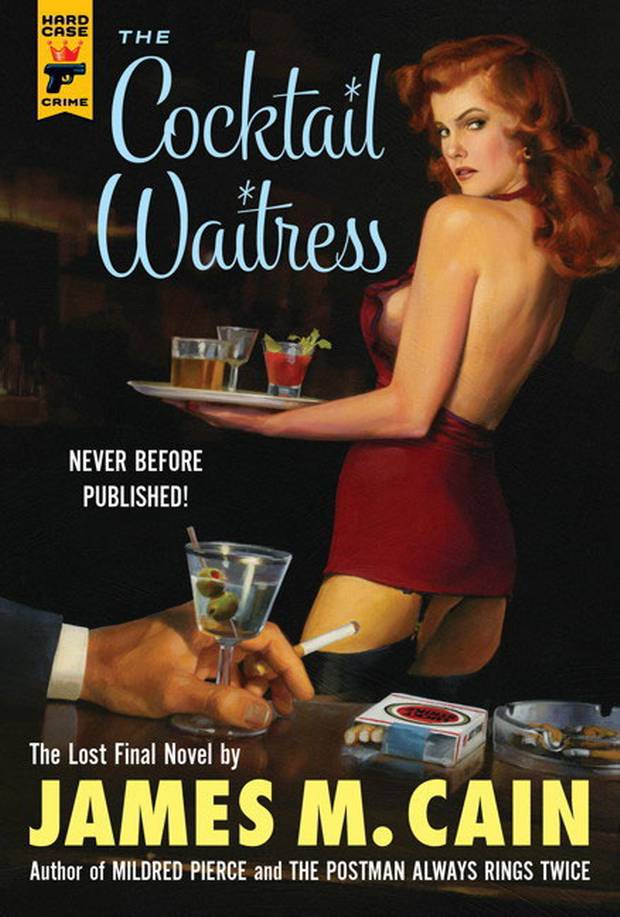
CocktailWaitress_Cvr_r1(The article is from DuJour magazine, and you don’t know how hard I struggled not to title this post DuJour Du Jour.)

Posted in Art, The Good Life | 6 Comments

Juxtaposin’: We Happy Few

Fabrizio del Wrongo writes:

Posted in Movies, Performers | Tagged , , , , , , , | 2 Comments