Meanwhile, Back at Stately Wayne Manor…

Sax von Stroheim writes:

I had been hearing good things about the new Batman comics written by Scott Snyder and drawn (mostly) by Greg Capullo. They were offered at a steep discount on one of the read-your-comics-on-an-iPad-apps so I thought I’d give the first dozen issues a try.

978-1-4012-3541-3

Spoiler alert: I really disagree with whoever it was that wrote that blurb at “Complex Magazine”

Continue reading

Posted in Art, Books Publishing and Writing | Tagged , , | 5 Comments

The LAX Theme Building

Blowhard, Esq. writes:

LAXT

OK, so how much of my trad architecture cred do I lose by saying that I love this Jetsons-Googie-Jet Age-swoopy-blobby work? Has SHAG ever had an art show here? If not, why not?

First, a few shots of the exterior.

Here’s the courtyard surrounding entrance.

The elevator ride up plays some fun mid-century lounge music. If the interior looks a bit Tomorrowland to you that’s because it was renovated by Walt Disney Imagineering in 1997.

Related

Posted in Architecture | Tagged , , , , | 6 Comments

“In its death throes, the mega state is gonna make a lot of mess.”

Glynn Marshes shares

. . . an interview with Louis Rossetto, co-founder of Wired magazine, by Reason‘s Nick Gillespie. Starts with predictions Rossetto made in the 1990s about the impact of Internet technology and then moves to what’s happened since, touching on the impact on mainstream media, political discourse, and (yay) human consciousness 😉

Despite the “lot of mess” comment, Rossetto is generally positive:

Continue reading

Posted in Politics and Economics, Television | 2 Comments

JFK

Fenster writes:

The world wants to know: what does Uncouth Reflections think of the 50th anniversary of JFK’s assassination, JFK’s legacy, JFK the man, JFK the womanizer, JFK the tax-cutting conservative, JFK the secretly emerging heroic liberal, and so forth.

Well, probably not.  So on to the real issue: where were you when he got shot?

I was in a high school assembly.  Oddly enough, some famous violinist had agreed to come to our nondescript suburban high school for a daytime recital for the kids (classmates recall it being Vladimir Horowitz but, as a commenter below noted, he was a pianist).  Unreliable memories notwithstanding, there is also general consensus as to what happened.  He came on stage acting irritated and complained about too much sound in the space.  His behavior somehow prompted the unawed and unsophisticated high school crowd–who’s Horrorwish?–to start giggling and laughing.  This got Horowitz even more irritated, and he began denouncing the audience, and quickly strode off stage before playing a note.

I was in the back of the auditorium and I turned to look out the back door leading to the corridor to see him angrily marching out to the street.  The principal then came on stage and told us to return to our home rooms, where we got the news.

My first reaction, and that of many other of the freshmen: ohmigod that bad man Lyndon Johnson will be president.  It was a kind of mirror image to the many stories of school kids in the south who were reported to have celebrated at the news.  Recall, this was pre-Vietnam War LBJ.  Whatever bile we felt as 9th graders to Lyndon would have been entirely due to a kind of regional bias inherited from our elders.

Reliable high school friends generally confirm this account, though no one really knows whether it was the news of the assassination that prompted Horowitz to be irritated, and to storm off stage.  Probably.

As to more current manifestations of the JFK issue.

1.  I continue to be amazed at how mainstream reporting so quickly resorts to the kind of hagiography that for the most part went the way of the dodo after Watergate.  Diane Sawyer’s coverage on the ABC Nightly News was downright smarmy in an excruciating way.  Here’s hoping that Peggy Noonan is right:

The television coverage has been excessive, and some have found it grating. Fair enough, but we’ll never do it like this again. There won’t be any such attention paid to the 60th and 70th; those who were there will be gone, as will be many of those who were not there but remember.

Though who knows?  A Google search for “new generation Kennedy family” turns up 56 million hits, roughly one for each member of the new generation to whom the tawch will be pahsed.

2. While the MSM is sticking with its Oswald story for the most part, conspiracy stuff is, as always, just under the surface.  Republican operative Roger Stone is saying that Oliver Stone’s account has a lot of truth to it, especially as regards the involvement of LBJ.  And James Douglas is making the rounds with his account of CIA involvement.

3.  As Steve Sailer and others have been fond of pointing out, the Dallas/Hate meme has been on bounteous display.  And, further, how odd that that meme is so strong considering the official version is that of a lone Marxist assassin, a story that renders whatever right-wing anger existed in Dallas for Kennedy somewhat beside the point.

At one level I agree that the Oswald/Marxist and Dallas/Hate memes are in conflict, and that they might comprise an almost perfect form of Orwellian doublethink.  On the other hand, though, might there be an Occam’s Razor-style argument that is capable of squaring this particular circle?  Maybe.  

Consider that the media constantly promote the lone assassin theory as gospel, and regularly “diagnose” skepticism as though it were a psychological ailment (see here and here).   Yet almost since the beginning most Americans have been highly skeptical about that lone Marxist gunman.   A lot of Americans seem to buy that Kennedy was in fact done in by powerful evil people–not necessarily John Birch style haters, but certainly forces arrayed against an emerging liberal impulse domestically and a softer tone internationally.

Now of course Dallas does not really own any collective guilt for its Hating Ways.  But at the level of the collective unconscious it could well be a stand-in for those whom the American public consider to be the real murderers.  In that sense, the irony disappears, as it often does, under the microscope.

Posted in Politics and Economics | Tagged , , , | 5 Comments

The Mighty Saturn V

epiminondas writes:

The Saturn V was the most powerful rocket ever built and it powered many lunar and earth orbit expeditions. In this fascinating eight minute clip produced by a high-speed camera, we see a beautiful display of its awesome power.  The voiceover explains what you are seeing.

Posted in Photography, Science | Leave a comment

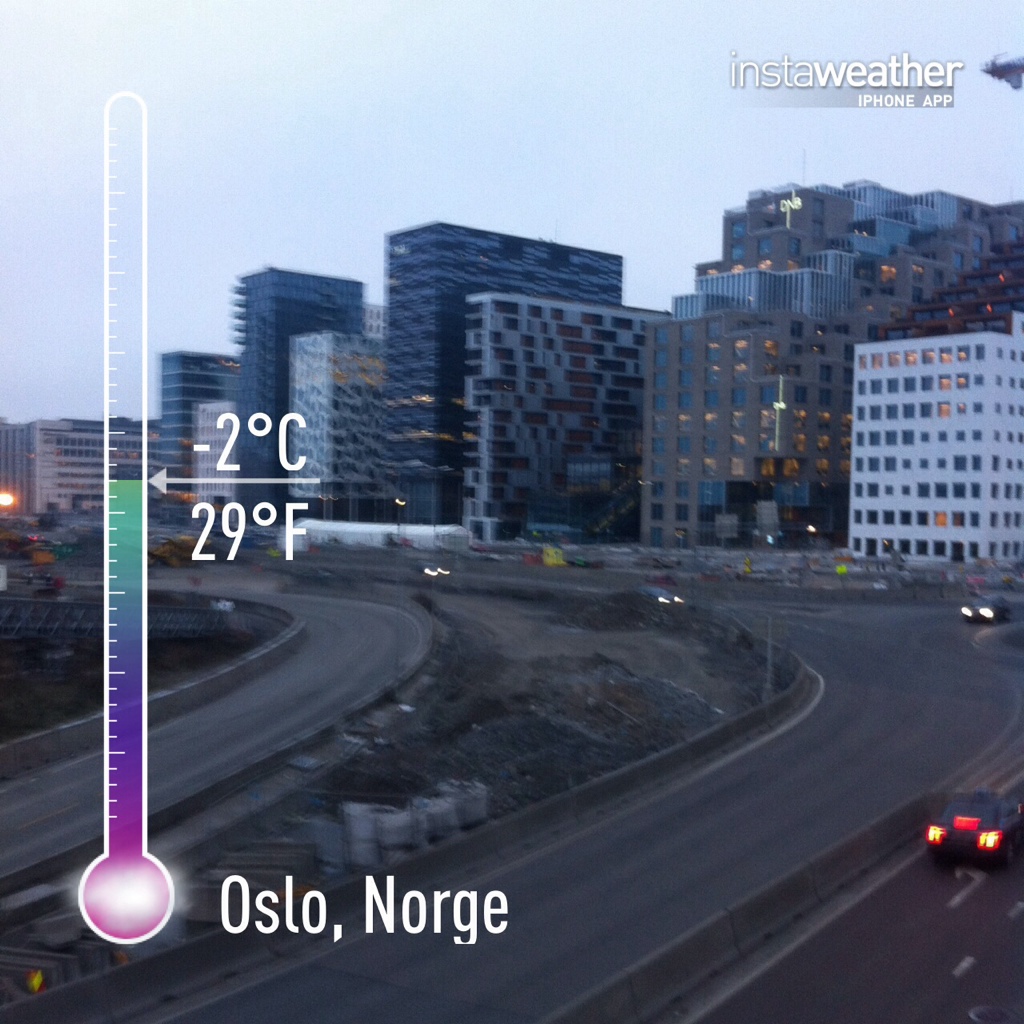
Bjørvika

Atypical Neurotic writes:

20131123-153841.jpg

A chilly, cloudy afternoon in Oslo.

Posted in Architecture, Photography | 2 Comments

The Camera Loves…

Blowhard, Esq. writes:

haydenwinters…Hayden Winters

Posted in Performers, Sex | Tagged , | 9 Comments

A Quick Jaunt Back to the 80s, and to Ireland and Spain

Fenster writes:

For me, the 60s was music and the 70s was film and the 80s were . . .

. . . the 80s were . . .

. . . Bueller? . . . Bueller? . . . . Bueller?

But it wasn’t all bad.

Heck, twenty years on she is still looking good, this time with the Latin sound able to come front and center.

You know it’s a funny thing.  In the 80s I was partial to various kinds of world music, especially Brazilian.  But Irish music, too.  Latin music (other than Brazilian) not so much–too brassy and showy.

I still like Brazilian music but Latin and Irish have reversed.  I suspect the simple, but slow and steady, integration of Latin influences into our culture overall has caused me to warm, slow and steady, to Latin music.  I didn’t get it before; now I think I do.

Meantime, I have lost the thread where Irish music is concerned.  Of course there’s still a lot there, and I know the lost thread is about me.  But what went on?

PBS fundraisers.

Posted in Music, Personal reflections | Tagged , , | 2 Comments

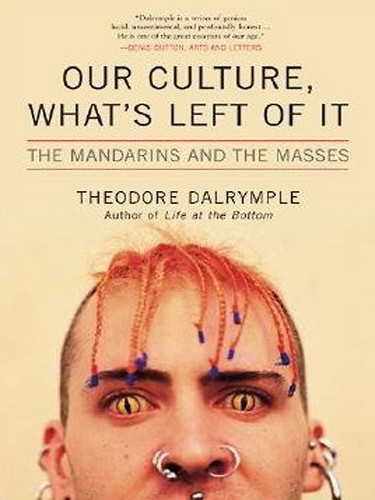
Calling Dr. Dalrymple

Fenster writes:

Theodore Dalrymple is a political and cultural commentator whose opinions I often but do not always share.  He is also, or he can be, an insufferable prig with Tory tendencies.

I like to think when he exhibits these tendencies is when we part company but honesty compels me to admit that this is not always the case.  Most of the time, not always.  At the least, when he goes full-bore Tory, so to speak, I do get a fingernail-on-chalk reaction, and I count this as a good thing.  Sometimes I can be down with da peepul.

dal

But Dalrymple is, in his day job, also a physician, by the name of Anthony Daniels.  Very often he is able to weave his cultural views and medical experience together to make for a seamless argument.  I expect that is not always the case, though.  Sometimes medicine might take you one way and cultural commentary somewhere else.

It is for this reason that I await word from Daniels the Doctor what Ted the Tory thinks about this, from The Atlantic:

The Fist Bump Manifesto

Bumping fists has a negative bro-stigma, but it’s better than shaking hands—in that it transmits significantly fewer bacteria. At a time of global concern that our antibiotics are becoming obsolete, new research shows how fist bumping could save lives.

fb2

C’mon  Ted, I know you can do it!

dalrymple

Posted in Food and health, Science | Tagged , | 2 Comments

“Pacific Rim”

Fabrizio del Wrongo writes:

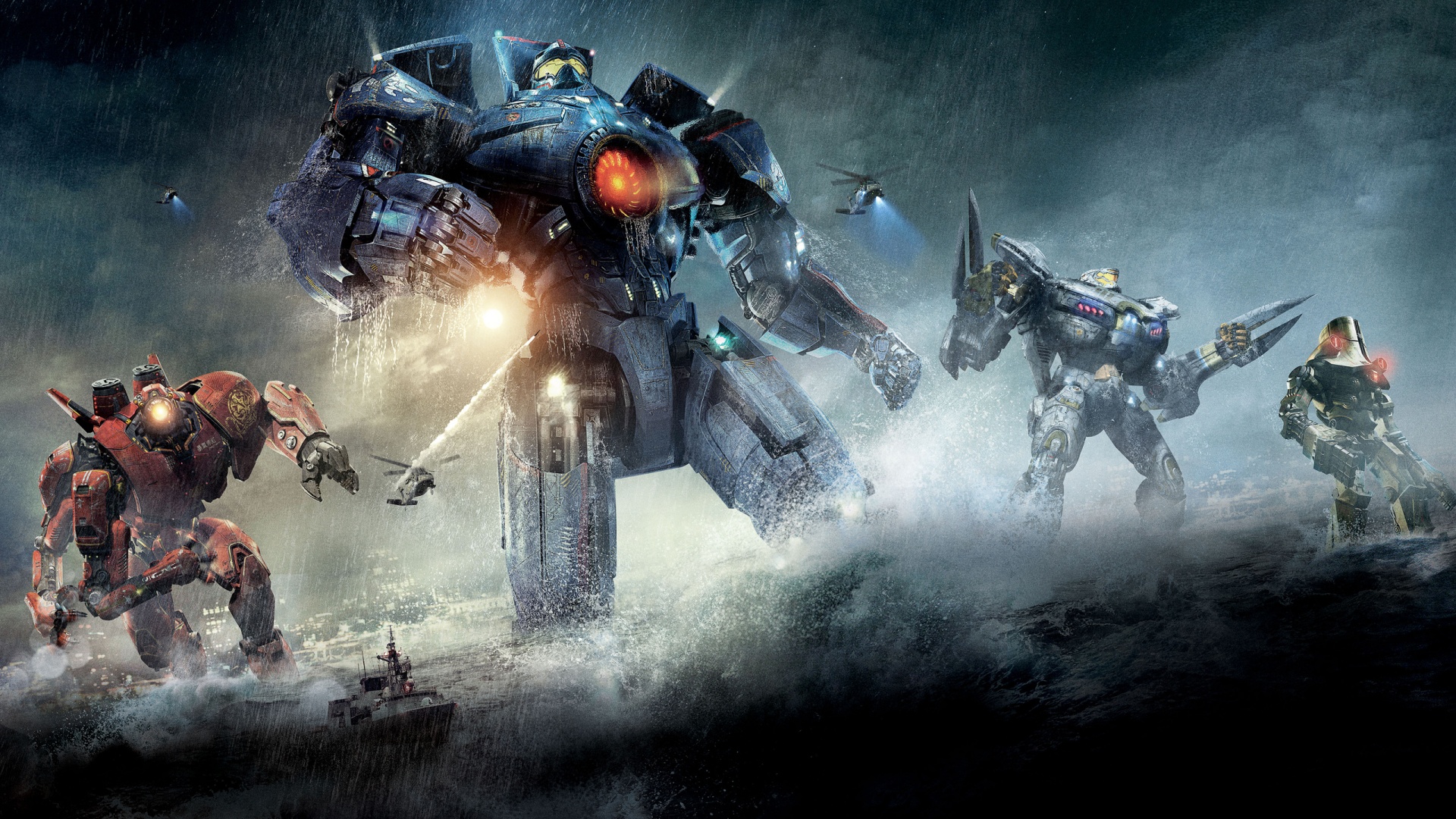
pacific rim

The ad campaign features more cool images than the movie.

“Pacific Rim” comes across as a dream project for director Guillermo del Toro, his chance to blow his geek-visionary load while fireworks explode on the soundtrack. The concept is suitably awesome: giant robots battle giant monsters in an apocalyptic showdown. It’s strange, then, that the movie is so lacking in basic virtues, like verve and excitement.

Del Toro made his name with atmospheric creep-outs like “Cronos” and “The Devil’s Backbone,” and his flair for baroque design and organic yuckiness brought pulse to routine projects like “Mimic” and “Blade II.” But he’s not much of an action director, a fact made clear by his two “Hellboy” pictures, both of which fall apart as soon as they turn into big-canvas extravaganzas. Some filmmakers — del Toro’s friend Peter Jackson, Robert Zemeckis — find their voice in complexity; they’re natural-born jugglers. Del Toro, on the other hand, is best when he hones in: the most memorable bits in the “Hellboy” movies are those set in the heroes’ underground lair (a sort of geek Shangri-La), because the director is able to bring out the passion and tenderness inherent in the characters’ eccentricities (it’s clear that del Toro identifies with these freak outcasts). That kind of intimacy is vital to del Toro’s effectiveness: He’s essentially a miniaturist, a curator of details and curiosities. When broadened in scope his work retains the fetish for detail but loses the intensity of focus that made it seem so alive. It’s as though a piece of medieval marginalia had been copied to a mural at a scale so large the eye can’t take it in. When this happens del Toro’s movies turn to mush; you can almost feel the director flailing.

“Pacific Rim” is virtually all big-canvas, and much of it is a mess. The narrative, which centers on the efforts of a robo-pilot named Raleigh to prove himself to the brass (there are echoes of “Top Gun”), is both overly familiar and poorly engineered. Del Toro and co-screenwriter Travis Beacham blur the storyline with complications, and they end up detracting from the ding-a-ling appeal of the concept. A romance between Raleigh and his co-pilot, a wee Japanese woman who — too predictably — is a whiz at martial arts, is bloodless from the get-go (Maverick and Goose generated more heat), and a subplot in which a scientist attempts to mind-meld with the beasties has more weight in its build-up than in its payoff. I was grateful for Idris Elba, who plays the good-guy honcho; he has a sturdiness that keeps you oriented, even though his character’s motivations often seem to be hovering about his head like comic-book thought balloons. And Ron Perlman is amusing in a role that’s too small. (His name made me giggle: he’s called Hannibal Chau.) But it’s not enough to compensate for the hole at the movie’s center. As Raleigh, Charlie Hunnam has no cockiness or charm, leaving you with nothing to root for. And del Toro allows the actor to look foolish: When Hunnam wants to communicate bravado, he hooks his thumb behind his belt and does a self-conscious saunter. He looks like a bar douche preparing an approach.

For a movie dedicated to Ray Harryhausen and Ishiro Honda, the behemoths of “Pacific Rim” are strangely lacking in personality, something you’d never think to say of the Ymir or Godzilla. Del Toro doesn’t invite the eye to linger: the monsters are shown in a blur of bits and pieces, the robots mostly in crowded hangars as they’re tinkered on by futuristic garage mechanics. When the combatants galumph into action the images are shrouded in computer-assisted water and darkness, presumably to conserve on the effects budget. I spent the movie straining my eyes, trying in vain to appreciate the wonders that had been promised by the ad campaign. It doesn’t help that the editing is jumbled and close-in, failing to give these giants the breath and space they need to live in the imagination. At nearly every turn, “Pacific Rim” substitutes chaos for awe.

We’re twenty years into the CGI revolution. Is it possible the products of computer animation have become less satisfying? The dinos of “Jurassic Park,” created by practical effects gurus like Dennis Muren and Phil Tippet, were made in conscious emulation of Harryhausen’s style, his tinkerer-magician’s spirt. That T-Rex may have been compiled by a computer, but it had presence — it performed. Now effects are split up among digital factories (at least eight on “Pacific Rim”) and carried out by teams of computer jockeys who specialize in minutia (one might do skin textures, another hair). This has resulted in movie monsters that feel cranked out and impersonal — that lack soul.

Soullessness wouldn’t be fatal if del Toro had the visuospatial instincts necessary to give his sequences majesty and scale. That’s what made moments in Michael Bay’s “Transformers” films so jaw-dropping. Bay is a crass opportunist, but he has a gift for working big. And there’s nothing in “Pacific Rim” that can touch the best bits of “Dark of the Moon,” like the incredible skydiving sequence, or the scene in which a giant roboticized drain snake pulverizes a building in a cyclone of destruction. Bay is reviled by critics and large swathes of the filmgoing public because he makes movies that have the sensibility of big-budget beer commercials. Del Toro, by contrast, is beloved for his fanboy rhapsodizing and his sensitivity towards genre archetypes. But Bay’s giant robot movie accomplishes something del Toro’s doesn’t: it transforms pixels into genuine spectacle.

Visually, “Pacific Rim” is most notable for its use of light and color: del Toro and his team have given the film a look that is consistent throughout the story’s settings, from the heroes’ militarized hangar to the streets of a “Blade Runner”-inspired Hong Kong. Here the movie’s darkness is effective: the glowing neon lights and the monsters’ bioluminescence create the impression of a nighttime world alight with hidden marvels (it’s like the deep-sea exploration footage familiar from nature documentaries). But there’s a downside to this kind of fussiness: the digitally shot film has been so tweaked through color-grading that its teal-orange palette is oppressive. It’s there in shot after shot; I couldn’t get it out of my consciousness. Digital technology was supposed to open up new possibilities for the look and design of movies, and in many ways it has. But it’s also resulted in a depressing sameness. Like their CGI monsters, the look of summer blockbusters is both technologically impressive and devoid of something essential, something perhaps related to the hard-to-pin-down set of qualities that gave traditional film its complexity and suggestiveness. Is it possible we’re witnessing the auto-tuning of movies?

The best thing in “Pacific Rim” might be the prologue, which fills in the picture’s back story with big, semi-satirical strokes that made me think of Paul Verhoeven. Here the movie is light on its feet, knowingly tongue-in-cheek, and smart. We even get a great “holy shit” image of a monster dismantling the Golden Gate Bridge (it’s an homage to Harryhausen). This sequence made me yearn for a “Pacific Rim” more in line with del Toro’s strengths — one that isn’t trying so hard to rock your world. Maybe we’ll see it in the prequel.

Related

Posted in Computers, Movies, Technology | Tagged , , , , , , , , , , , | 10 Comments