I suppose Mika here qualifies as an unconventional beauty. Her teeth are too much, her chin too little, and her nose too topographical. And yet I’m quite taken with her. She has poise and personality. Okay, her cyan eyes don’t hurt. Neither do her legs. I didn’t claim she was entirely unconventional.
She’s Ukrainian. I don’t know her real name, but this looks like a pro modeling site.
America’s very own Maoist Cultural Revolution gathers steam:
Allen frustrates people because he seems to relish dancing on the edge of the outrage. There’s nothing criminal about an 82-year-old’s fixation with 18-year-olds, and it’s not whip-out-your-penis, button-under-the-desk bad. But it’s deeply, anachronistically gross. More than that, he seems not to care about bettering or changing himself in any way. He lives and thinks and creates as he did in the 1970s, nearly a half-century ago. He’s a reminder that our future, however woke it becomes, will not be full of social-justice valedictorians quoting James Baldwin and Roxane Gay. There will be 22nd-century dunces lagging by a half-century or more. Allen is worse than an augury of those trolls of tomorrow; he is a model for them, a validation.
Why is a reputable — OK, somewhat still reputable — outlet like the Washington Post publishing such a wet-behind-the-ears, grandstanding, self-righteous piece?
It’s very strange for someone who has spent a long lifetime assuming that the main role of most art is to supply a realm where we get to explore and play out all kinds of urges, kinks and drives to wake up and find that, No, from now on what art is for is to give us moral examples and scoldy little SJW lessons.
There came a day when the round of decorous pleasures and solemn gaieties in which Mr. Jos Sedley’s family indulged was interrupted by an event which happens in most houses. As you ascend the staircase of your house from the drawing towards the bedroom floors, you may have remarked a little arch in the wall right before you, which at once gives light to the stair which leads from the second story to the third (where the nursery and servants’ chambers commonly are) and serves for another purpose of utility, of which the undertaker’s men can give you a notion. They rest the coffins upon that arch, or pass them through it so as not to disturb in any unseemly manner the cold tenant slumbering within the black ark.
That second-floor arch in a London house, looking up and down the well of the staircase and commanding the main thoroughfare by which the inhabitants are passing; by which cook lurks down before daylight to scour her pots and pans in the kitchen; by which young master stealthily ascends, having left his boots in the hall, and let himself in after dawn from a jolly night at the Club; down which miss comes rustling in fresh ribbons and spreading muslins, brilliant and beautiful, and prepared for conquest and the ball; or Master Tommy slides, preferring the banisters for a mode of conveyance, and disdaining danger and the stair; down which the mother is fondly carried smiling in her strong husband’s arms, as he steps steadily step by step, and followed by the monthly nurse, on the day when the medical man has pronounced that the charming patient may go downstairs; up which John lurks to bed, yawning, with a sputtering tallow candle, and to gather up before sunrise the boots which are awaiting him in the passages—that stair, up or down which babies are carried, old people are helped, guests are marshalled to the ball, the parson walks to the christening, the doctor to the sick-room, and the undertaker’s men to the upper floor—what a memento of Life, Death, and Vanity it is—that arch and stair—if you choose to consider it, and sit on the landing, looking up and down the well! The doctor will come up to us too for the last time there, my friend in motley. The nurse will look in at the curtains, and you take no notice—and then she will fling open the windows for a little and let in the air. Then they will pull down all the front blinds of the house and live in the back rooms—then they will send for the lawyer and other men in black, &c. Your comedy and mine will have been played then, and we shall be removed, oh, how far, from the trumpets, and the shouting, and the posture-making. If we are gentlefolks they will put hatchments over our late domicile, with gilt cherubim, and mottoes stating that there is “Quiet in Heaven.” Your son will new furnish the house, or perhaps let it, and go into a more modern quarter; your name will be among the “Members Deceased” in the lists of your clubs next year. However much you may be mourned, your widow will like to have her weeds neatly made—the cook will send or come up to ask about dinner—the survivor will soon bear to look at your picture over the mantelpiece, which will presently be deposed from the place of honour, to make way for the portrait of the son who reigns.
Which of the dead are most tenderly and passionately deplored? Those who love the survivors the least, I believe. The death of a child occasions a passion of grief and frantic tears, such as your end, brother reader, will never inspire. The death of an infant which scarce knew you, which a week’s absence from you would have caused to forget you, will strike you down more than the loss of your closest friend, or your first-born son—a man grown like yourself, with children of his own. We may be harsh and stern with Judah and Simeon—our love and pity gush out for Benjamin, the little one. And if you are old, as some reader of this may be or shall be old and rich, or old and poor—you may one day be thinking for yourself—”These people are very good round about me, but they won’t grieve too much when I am gone. I am very rich, and they want my inheritance—or very poor, and they are tired of supporting me.”
The period of mourning for Mrs. Sedley’s death was only just concluded, and Jos scarcely had had time to cast off his black and appear in the splendid waistcoats which he loved, when it became evident to those about Mr. Sedley that another event was at hand, and that the old man was about to go seek for his wife in the dark land whither she had preceded him. “The state of my father’s health,” Jos Sedley solemnly remarked at the Club, “prevents me from giving any large parties this season: but if you will come in quietly at half-past six, Chutney, my boy, and fake a homely dinner with one or two of the old set—I shall be always glad to see you.” So Jos and his acquaintances dined and drank their claret among themselves in silence, whilst the sands of life were running out in the old man’s glass upstairs. The velvet-footed butler brought them their wine, and they composed themselves to a rubber after dinner, at which Major Dobbin would sometimes come and take a hand; and Mrs. Osborne would occasionally descend, when her patient above was settled for the night, and had commenced one of those lightly troubled slumbers which visit the pillow of old age.
The old man clung to his daughter during this sickness. He would take his broths and medicines from scarcely any other hand. To tend him became almost the sole business of her life. Her bed was placed close by the door which opened into his chamber, and she was alive at the slightest noise or disturbance from the couch of the querulous invalid. Though, to do him justice, he lay awake many an hour, silent and without stirring, unwilling to awaken his kind and vigilant nurse.
He loved his daughter with more fondness now, perhaps, than ever he had done since the days of her childhood. In the discharge of gentle offices and kind filial duties, this simple creature shone most especially. “She walks into the room as silently as a sunbeam,” Mr. Dobbin thought as he saw her passing in and out from her father’s room, a cheerful sweetness lighting up her face as she moved to and fro, graceful and noiseless. When women are brooding over their children, or busied in a sick-room, who has not seen in their faces those sweet angelic beams of love and pity?
A secret feud of some years’ standing was thus healed, and with a tacit reconciliation. In these last hours, and touched by her love and goodness, the old man forgot all his grief against her, and wrongs which he and his wife had many a long night debated: how she had given up everything for her boy; how she was careless of her parents in their old age and misfortune, and only thought of the child; how absurdly and foolishly, impiously indeed, she took on when George was removed from her. Old Sedley forgot these charges as he was making up his last account, and did justice to the gentle and uncomplaining little martyr. One night when she stole into his room, she found him awake, when the broken old man made his confession. “Oh, Emmy, I’ve been thinking we were very unkind and unjust to you,” he said and put out his cold and feeble hand to her. She knelt down and prayed by his bedside, as he did too, having still hold of her hand. When our turn comes, friend, may we have such company in our prayers!
Perhaps as he was lying awake then, his life may have passed before him—his early hopeful struggles, his manly successes and prosperity, his downfall in his declining years, and his present helpless condition—no chance of revenge against Fortune, which had had the better of him—neither name nor money to bequeath—a spent-out, bootless life of defeat and disappointment, and the end here! Which, I wonder, brother reader, is the better lot, to die prosperous and famous, or poor and disappointed? To have, and to be forced to yield; or to sink out of life, having played and lost the game? That must be a strange feeling, when a day of our life comes and we say, “To-morrow, success or failure won’t matter much, and the sun will rise, and all the myriads of mankind go to their work or their pleasure as usual, but I shall be out of the turmoil.”
So there came one morning and sunrise when all the world got up and set about its various works and pleasures, with the exception of old John Sedley, who was not to fight with fortune, or to hope or scheme any more, but to go and take up a quiet and utterly unknown residence in a churchyard at Brompton by the side of his old wife.
Major Dobbin, Jos, and Georgy followed his remains to the grave, in a black cloth coach. Jos came on purpose from the Star and Garter at Richmond, whither he retreated after the deplorable event. He did not care to remain in the house, with the—under the circumstances, you understand. But Emmy stayed and did her duty as usual. She was bowed down by no especial grief, and rather solemn than sorrowful. She prayed that her own end might be as calm and painless, and thought with trust and reverence of the words which she had heard from her father during his illness, indicative of his faith, his resignation, and his future hope.
Yes, I think that will be the better ending of the two, after all. Suppose you are particularly rich and well-to-do and say on that last day, “I am very rich; I am tolerably well known; I have lived all my life in the best society, and thank Heaven, come of a most respectable family. I have served my King and country with honour. I was in Parliament for several years, where, I may say, my speeches were listened to and pretty well received. I don’t owe any man a shilling: on the contrary, I lent my old college friend, Jack Lazarus, fifty pounds, for which my executors will not press him. I leave my daughters with ten thousand pounds apiece—very good portions for girls; I bequeath my plate and furniture, my house in Baker Street, with a handsome jointure, to my widow for her life; and my landed property, besides money in the funds, and my cellar of well-selected wine in Baker Street, to my son. I leave twenty pound a year to my valet; and I defy any man after I have gone to find anything against my character.” Or suppose, on the other hand, your swan sings quite a different sort of dirge and you say, “I am a poor blighted, disappointed old fellow, and have made an utter failure through life. I was not endowed either with brains or with good fortune, and confess that I have committed a hundred mistakes and blunders. I own to having forgotten my duty many a time. I can’t pay what I owe. On my last bed I lie utterly helpless and humble, and I pray forgiveness for my weakness and throw myself, with a contrite heart, at the feet of the Divine Mercy.” Which of these two speeches, think you, would be the best oration for your own funeral? Old Sedley made the last; and in that humble frame of mind, and holding by the hand of his daughter, life and disappointment and vanity sank away from under him.
Consciousness is such a given that one would not think to consider it as a problem. It is just there. But the fact that it is there, and what it means that there is a there there, does pose a knotty set of problems for philosophers and scientists.
Some brave souls think the problem can be solved, or has been. Philosophers like Daniel Dennett hold that consciousness is nothing other than an artifact that results when “100 trillion little cellular robots” in our brains do whatever it is that they do. . . .
and that in turn consciousness is just a kind of illusion.
Stalin said “no person, no problem.” The same might be said of consciousness. The problem goes away if it is a nothing more than a by-product.
Indeed, the modern view seems to be that consciousness is a function of brain activity and that’s that. But is it?
Adam Frank, a professor of Astronomy at the University of Rochester, argues that such a conclusion is almost certainly premature and could easily be wrong. Taking a more agnostic view in comparison with Dennett’s well-known hard atheism, Frank argues more modestly that the materialist position appears to rest on shaky ground.
I suppose to do justice to summarizing Frank’s argument you would have to have a grasp of the quantum mechanics that underlie it, and I don’t have that grasp. But while I am an amateur to the science of the issue, the implications of the science argument can be grasped by a non-scientist and so the article is worth a read if this is an issue that interests you. For sure it is worth noting that any philosophical argument of the type Dennett poses is based on science. That we have 100 trillion little robots inside our heads is an impressive and even intimidating fact worth noting, but whether they do what Dennett says that do in the manufacture of the consciousness illusion is another . . . matter.
The gist of Frank’s argument relates to measurement.
When I was a young physics student I once asked a professor: ‘What’s an electron?’ His answer stunned me. ‘An electron,’ he said, ‘is that to which we attribute the properties of the electron.’ That vague, circular response was a long way from the dream that drove me into physics, a dream of theories that perfectly described reality. Like almost every student over the past 100 years, I was shocked by quantum mechanics, the physics of the micro-world. In place of a clear vision of little bits of matter that explain all the big things around us, quantum physics gives us a powerful yet seemly paradoxical calculus. With its emphasis on probability waves, essential uncertainties and experimenters disturbing the reality they seek to measure, quantum mechanics made imagining the stuff of the world as classical bits of matter (or miniature billiard balls) all but impossible.
When dwelling on the weirdness of it all he was reminded of the advice given to young physicists with similar hang-ups: “shut up and calculate.”
Frank approvingly cites the work of David Chalmers, who argues that there is an easy problem of consciousness and a hard problem. The easy side relates to things that science currently knows how to measure:
• the ability to discriminate, categorize, and react to environmental stimuli;
• the integration of information by a cognitive system;
• the reportability of mental states;
• the ability of a system to access its own internal states;
• the focus of attention;
• the deliberate control of behavior;
• the difference between wakefulness and sleep.
The hard part?
The really hard problem of consciousness is the problem of experience. When we think and perceive, there is a whir of information-processing, but there is also a subjective aspect.
Chalmers acknowledges Dennett’s materialistic view that experience is an artifact of brain activity . . .
but how is it that we know that? Are those who hold this view merely extrapolating from the easy questions to the hard one?
Chalmers doesn’t mention words like spirit and owns up to his bias as a scientist in favor of finding naturalistic answers to the hard problem. And he sketches out some directions.
My gut responses to this? First, I would think that one line of research could relate to how experience emerges through gestation and birth. At least we have here a situation in which at one point in time there is no experience and then there is.
The other way of solving the problem is if we able to manufacture experience in machines or animals. If we do that by means of matter alone, and not by, say, manipulating some emergent property of consciousness that we find, then it adds weight to the notion that our own consciousness is a function of gray matter.
But there is a limiting factor in a way, and that is that just as we live and die alone we experience alone. People talk about a ‘shared experience’ but the problem is that there is no such thing. I know what experience is because I experience it. You have to believe me on that. I only “know” your experience by observing you report on it, not via actual experience.
Black Mirrortoys with this theme in the new season, speculating on ways that experiences can be merged. If that is possible then we might be better off judging whether our smart and emotionally capable robots are actually feeling what we feel. Short of that it is the tragedy of Speilberg’s AI. Is David actually feeling things? And does our experience amount to more than an illusion?
There has been a dust-up over a Scientific American column about evolution and male-female behavioral differences. The author, John Horgan, drew first blood by arguing that “evolutionary psychology, a modern instantiation of Darwinian theory, still provides justification for female inequality.” Horgan acknowledges the claim that “natural selection made males more aggressive in their pursuit of status than females”. But as a rejoinder he makes several arguments, including that “anthropological research has revealed that hunter-gatherer societies were remarkably egalitarian.”
The article triggered various Neanderthals like Steve Sailer, Jordan Peterson, Michael Shermer and Charles Murray, who didn’t bother to waste a lot of ink on what they thought was a ridiculously anti-scientific article, dismissing it bluntly and with dispatch.
Horgan could have reconsidered his adaptive strategy but opted instead to double down, and is back in Scientific American with a defense of his first column. If there was any doubt at all about whether his first article was preposterous he gives the lie to that claim in the second article. This one goes there, all the way.
Let’s say you were an archeologist with the single aim of proving the presence of gender equality in prehistory. If you found no evidence of your claim in your excavation your most prudent move might be to stop digging. Horgan should have considered that option. Here, in the follow-up article, he digs the hole deeper.
His defense is in two parts. The first part reiterates the scientific argument:
. . . the theory is poorly supported by anthropological evidence. Studies suggest that our pre-civilization ancestors, who were nomadic hunter-gatherers, were relatively peaceful and egalitarian.
This is something that Sailer took on in his response to the first article.
Except for that whole hunter-gatherer part of the hunter-gatherer societies, but otherwise …
Additionally, even if such societies were egalitarian about how they divided work by gender how would that insight be all that relevant to the societies that have developed since prehistory? That amount of time is more than enough to allow for the development of behavioral differences not rooted in the male cultural power of the moment.
But let’s give Horgan the benefit of the doubt here that his critics have fallen for a just-so story.
The problem is where he goes next, which is to detour completely away from science and to counter an allegedly problematic just-so story with a just-not-so story of his own.
Another problem with the sexual-selection theory of male dominance is that it suggests women have been complicit in their own oppression.
And we can’t have that, can we?
We live in a hyper-competitive, male-dominated culture because women prefer the “tough guy” to the “self-effacing” guy. Women are bullied into submission by loud-mouthed, domineering men because, historically, women have “selected” men who are loud-mouthed and domineering, thus propagating these traits. Women dig mansplainers.
And remember that women’s preference for domineering men is supposedly instinctual, rather than a rational response to a male-dominated world. The sexual-selection theory of male dominance is a form of victim-blaming. It is an especially insidious just-so story, because it feeds the male fantasy that women want to be dominated.
Proponents of biological theories of sexual inequality accuse their critics of being “blank slaters,” who deny any innate psychological tendencies between the sexes. This is a straw man. I am not a blank-slater, nor do I know any critic of evolutionary psychology who is. But I fear that biological theorizing about these tendencies, in our still-sexist world, does more harm than good. It empowers the social injustice warriors, and that is the last thing our world needs.
Talk about a straw man argument! Horgan gives better than gets. He says he is being accused of being a blank-slater but he is not, and the straw man here is the bogus blank slate charge. But having delivered this bogus argument with the appearance of moral force I guess we are expected to slide right over the totally specious conclusion: we should not think these things because they do “more harm than good”.
I would not mind this sentiment in, say, the Journal of Right Thinking Ideas but this is . . . .ummmm . . . .a science magazine.
Look, there is nothing wrong with arguing that our morality need not flow from our biology. “Is” and “ought” are separate, but related, things. Put in terms of natural selection, what is seemingly true need not bear any direct relationship to what is adaptive.
And so I have a tiny bit of sympathy for Horgan’s plea. It is indeed odd that the defense of Darwinian logic in all things, favoring the science of the matter, glosses over the fact that the very theory being advanced suggests that people will naturally defend non-true ideas. Some of these ideas will be adaptive and worth holding on to in the face of compelling claims to truth. An article exploring that conundrum might be worthy of a publication entitled Scientific American. Horgan’s article is not.
Quillette magazine is always thought provoking and what good would a thought provoking publication be if you didn’t disagree with it from time to time?
Here’s a piece from Quillette defending representative democracy and criticizing the populist urge as undermining it. It is well written and I agree with the basic premise about the virtues of representative government, so the article does not deserve my censure. However the crooked timber spirit suggests that humanity is incapable of devising anything perfectly straight, and that goes not only for representative democracy but for arguments about it as well. So in that spirit I offer some healthy criticism.
First, read the article. The author makes the argument that representative democracy is a superior form of government and that there is nothing wrong with it that cannot be fixed, if you will, from the inside, through the workings of representative government. Is that so?
In theory, a qualified yes. In practice, a qualified no.
The author is dwelling in the world of abstract design, arguing as did the framers of the US Constitution that representative democracy is a sturdy design for living. But consider Franklin’s warning just after the drafting: a republic is not a wind-up toy that you design, enable and let run. It needs to be “kept”, and that calls for certain habits, values and frames of mind. The framers understood this fragility too.
It seems to me that the author leans to heavily on a wind-up toy argument. “Hey, representative democracy works better in theory so let us forgive its faults in practice since it makes for, despite those faults, the best of all possible worlds by definition.”
Because they are composed of fallible human beings political elites are capable of being corrupted in many ways. If things start to go wrong they are likely to break along the fault line of, well, faction, as the political elites that are inherently part of a representative system take their own various kinds of self-interest into account, and game the system accordingly. That is why no representative system will be stable without the presence of certain specific human virtues such as restraint and public-mindedness. Of course since the stock of such virtues can never be stable no representative system can truly be stable over the long run, and we are back to Franklin’s conundrum.
So it is entirely possible–indeed inevitable over the longer run–that representative democracy will falter and not deliver on its theoretical promise of the best possible governance. And when that happens it is likely that the public will be justifiably angry.
One can argue–and the author does–that the public’s best and perhaps only recourse is the ballot box, and they can always turn out their local representatives. But just as political systems can be brilliantly designed the corruption of such systems can also be ingenious and diabolical. In such instances I doubt that a call for a return to status quo representative democratic institutions, as the author has done, will do the trick.
No one is saying nation states ought to revert to direct democracy. But from time to time though the tree of representative government needs to be nourished by the blood of those would would corrupt it–even if they are not, strictly speaking, tyrants.
Hint, he is writing for The Imaginative Conservative so I think his answer will be yes, don’t you?
And I think I agree with him. Don’t you?
On the topic of having a way with words Kozinski quotes the always-readable Anthony Esolen, someone who has a way with words himself:
The writing of most students is irreparable in the way that aphasia is…. The students make grammatical errors for which there are no names. Their experience of the written language has been formed by junk fiction in school, text messages, blog posts, blather on the airwaves, and the bureaucratic sludge that they are taught for ‘formal’ writing, and that George Orwell identified and skewered seventy years ago. The best of them are bad writers of English; the others write no language known to man.
Kozinski continues:
Wyoming Catholic College has been consciously acting to shape our rapidly degenerating discourse for almost a decade now by a sequence of courses called the Trivium, Latin for the “three ways” of grammar, logic, and rhetoric. In the words of the great trivium Master, Sister Miriam Joseph: “Grammar prescribes how to combine words so as to form sentences correctly. Logic prescribes how to combine concepts into judgments and judgments into syllogisms and chains of reasoning so as to achieve truth. Rhetoric prescribes how to combine sentences into paragraphs and paragraphs into a whole composition having unity, coherence, and the desired emphasis, as well as clarity, force, and beauty.”
This seems reasonable to me but it is time for a bias check. Language pedants we will have with us always, and perhaps I am one, and perhaps it is even OK that I am. But are the objections above only language pedantry, or do they have real weight?
Linguists often say that all complete languages are generally capable of transmitting thoughts and we should not be so quick to condemn things like slang or language change or even Ebonics. Linguists acknowledge that pidgins, or truncated languages that occur temporarily as two language systems meet for the first time and blend, are not complete languages and cannot do what complete languages do. But they also contend that human beings being what they are all pidgins will morph eventually into complete languages, even if they carry forward combination aspects as so-called creoles.
I get that but.
For one, even if Ebonics is as many linguists argue a complete language does that mean it is OK to say that’s all the language you need?
Sure “I be” might be a perfectly acceptable way of saying “I am” or “I was”.
But though I have not studied the matter it is hard to see how Ebonics would express something like “I would have wanted to have done so.” I suppose it would do it in a truncated way and the context and delivery might make it clear how to distinguish from a meaning of “I would want to do so.” But I am not sure about that, and would have wanted a linguist to ‘splain to me how Ebonics would do the trick.
Then there’s vocabulary. Ebonics may be a complete language in how it allows its speakers to communicate–there’s a word for potato and a way to say you want one. But is there a word for hyperventilate? Precocious?
Even in standard English the full vocabulary is hypothetical. Only a specialized few will know the meaning of tmesis. But some will. Is it fair to say that since Ebonics is a variant of English that tmesis is part of the vocabulary of Ebonics? No, not really. If no one speaking Ebonics knows what tmesis is then it is not in the vocabulary, and the concept cannot be expressed in a word.
Maybe this no big deal since some words can be explained with other words. Tmesis, for example is
cutting a word in two and sticking another word in the middle – and the other word is usually a swear. As in “abso-fucking-lutely”. From the Greek tmēsis, “cutting”.
A person could practice tmesis in Ebonics and could explain it in the event it came to that.
There are other English words that connote states of mind and subtleties that cannot be explained easily, and if you don’t have a word for it (if it is not necessary in your culture to express the concept) then you can’t express the thought.
But Esolen is not writing about Ebonics or other languages as much as he is about bad English, and that is a separate, but related, matter.
Yes, some bad writing is explicable in a somewhat parallel manner to how Ebonics is explicable. Some usages that drive grammar pedants crazy are just newfangled and slang ways of saying things. As such, they may be perfectly understandable to the writer and perfectly understood by a “like minded” reader.
For instance, bad writers have always use the plural “their” when referring to a singular. That was incorrect but clear to most readers, and preferred by many to the proper “his”. Now, of course, “their” for “his” is for the most part considered correct, so as not to produce distress to the fairer sex.
Can’t have fainting in class.
Further, a good deal of bad writing is not even this. It is as Esolen suggests just unclear writing. Bad because it is inherently unclear, with the lack of clarity a function of the writer either not having a cogent thought in the first place, or having a cogent thought without the requisite skill to get it out in ways that make it understandable.
I see a lot of this as a professor.
Finally, as the trivium concept suggests good writing is not just about correct grammar. Style? Structure? Persuasiveness? Argumentation?
These things are among the highest products of civilization. If and when they get left by the side or the road they are very, very hard to find. But the effort should be made given that there are no reasonable alternatives.
Viktoriia’s bio at a site called Yonitale, where she is known as Jane Y, reads:
Do you remember the movie of Jean-Jacques Annaud ” The Lover” with Jane March. It was one of the most exciting movie ever. And this was because of Jane March. She was so hot, juvenile and ready to experiment and enjoy sex. Jane Y looks like her! She has this same smile, mouth and hunger to try new things. She is really all what we like at Yonitale. Jane Y, Jane March, we love you.
I offer that not because it says anything particularly revealing about Viktoriia, but because I can’t resist the comparison to Jane March in “The Lover.” Do you remember “The Lover”? It’s a great example of the kind of high-toned erotic movie which used to be enjoyed widely by adults, but which would surely never be released today.
Hey, now that outfits like Netflix and Amazon are producing their own content, and the distribution and ratings system no longer present insurmountable obstacles, why aren’t we seeing more sophisticated (or even just “sophisticated”) erotic movies? Has porn made people uninterested in that kind of thing?
To my eye Vicktoriia bears only a slight resemblance to Jane March, but there’s no denying that, like Ms. March, she’s an intriguingly minxy little thing. I find her Asiatic, just-arrived-from-the-steppes quality mighty appealing. According to the internet, she’s a native of Kiev.
As you will quickly notice, we’re a grouchy, grumpy lot, all of whom are too old to keep up with new things, so this list consists of our favorite things we encountered this year whether or not they actually debuted in 2017. We hope you enjoy our choices and commentary. If you give any of them a shot, come back and let us know what you think. And don’t forget to tell us your favorites of the year in the comments.
Above is Ansel Elgort in Baby Driver, our pick for best movie of the year. Haha, just kidding, it sucked and (most of us) hated it. Anyway, because my name is first alphabetically, not to mention I put this whole goddamn post together, we’ll start with my picks:
A Disease in the Public Mind: A New Understanding of Why We Fought the Civil War by Thomas Fleming
I Dolci Inganni (Sweet Deceptions) (Lattuada, 1960) Welcome to New York (Ferrara, 2015)
Rocco (Demaizière & Teurlai, 2016) I Love You, Daddy (C.K., 2017)
There’s more honesty and insight about men, women, sex, and power in these four movies than in the entire MSM reporting and commentary on the Hollywood sex scandals.
“Finding Frances,” the season 4 finale of Nathan For You. Could’ve easily been on my best movies list. Season 1 of Mindhunter. A show that seems like it’s about serial killers, but it’s really about the slow, frustrating pace of institutional change. Worth it just for the performances by Jonathan Groff and Holt McCallany. Season 3 of Better Call Saul. Bob Odenkirk > Bryan Cranston. Season 5 of The Americans. Why don’t more people watch this show?
Honorable Mention: The Orville
Not being a Seth MacFarlane fan, I was prepared to hate this, but actually ended up enjoying it quite a bit. The critical reaction was fascinating. Many reviewers slammed it for wobbling back between drama and comedy, even though — from M*A*S*H, to Ally McBeal, to Freaks & Geeks — the comedy/drama has been a critical darling for decades. I think they mainly hate MacFarlane and resent that a crude frat boy comedian (or should I say “alleged crude frat boy comedian”) is doing Star Trek better than the actual companies in charge of Star Trek .
French Touch by Carla Bruni
I hardly listened to any new music this year. My beloved Taylor Swift let me down with Reputation, even if after a few listens I don’t quite hate it as much as I did the first time. Of the few things I sampled this year, this album of covers by Bruni was my favorite. Cool, smooth, lithe, and sexy.
Derren Brown: Secret at the Atlantic Theater
Brown, a UK-based magician and mentalist, made his American theater debut here in NYC and it was a real mindblower. For some reason he hasn’t taken it on the road, which is too bad, because he’s compelling performer with a repertoire of incredible tricks.
The Jazz Age at the Cooper Hewitt
Proof, if any was needed, that modern need not be Modernist. You can browse the exhibit and buy the catalog here.
Ciabatta with Liuzzi ricotta, lavender by the bay, honey and extra virgin olive oil at Eataly NYC Flatiron
That description is a mouthful for such a delicate appetizer. As soon as I got home I started working on how to make my own version. Order it at this restaurant.
Tacos at Taqueria Emilio
There are lots of good hipster tacos to be had in NYC, but these — sold at a store owned and run by Mexican immigrants — are the real deal. The lunch special, which consists of three tacos and a soda for $8, is just about the best food deal in NYC aside from the falafel sandwich at Mamoun’s. Make sure you order them with everything.
Trump & Russia
In the early ’50s, Joseph McCarthy accused the United States government, particularly the State Department, of harboring Communist spies and infiltrators. The media were horrified that anyone could suggest such a thing, promptly dragged his name through the mud, hounded him out of office, and drove him to an early death. Decades later, “McCarthyism” is still trotted out as a shorthand for “paranoid, dangerous demagogue,” even though we’ve known since the early ’90s that McCarthy was fucking right. Now, in 2017, the major media do a complete 180 and commit the very thing they accused McCarthy of doing but, unlike McCarthy, without the tiny, little, admittedly relevant detail of being right about anything. Some day, someone will write an interesting book contrasting and comparing these events.
If you needed proof that our media overlords are morons, look no further than these pieces in The Guardian and BuzzFeed that are deeply concerned because Swift — a girly-girl who sings pop songs about boys giving her the sadz — has not weighed in on the vital political issues of our day. But, in their defense, they were reacting to a symbol that they invented out of whole cloth. For many, Swift isn’t a real person, she’s an avatar for “whiteness” that exists to be denounced. She’s the flipside of Beyoncé, who is also not a real person to The Guardian and BuzzFeed set so much as she’s an avatar for “blackness.” Swift exists to be criticized just like Beyoncé exists to be lauded so as to signal to your cohort that you’re a Good Person.
* * *
Fabrizio del Wrongo writes:
I’ve mostly stopped seeing new movies, and I find most of contemporary culture depressing. For one thing, it’s too ideological. Have you noticed? Increasingly, the culture things that are widely praised are noteworthy mostly for the positions they take on race, gender, identity, or whatever. So take this as a list of things I enjoyed in 2017, none of which were released in 2017.
My Life as a Zucchini
Of the newish movies I saw in 2017, this Swiss one was my favorite. Director Claude Barras’ handling of the material manages to radiate the characters’ tenderness until you’re permeated by it, as you are in certain films directed by De Sica or Truffaut. It’s a neat trick, particularly for a work of stop-motion animation. The technique may be essential to the movie’s effect. Certainly, its touch-and-go hesitancy is ideal for a story about orphans attempting to formalize their connections to the world. Although the movie has a happy ending, there’s a voracious chill creeping around the edges of every scene. The kids coexist with this chill; they can’t forget it, at least not permanently. By the end of the movie, neither could I.
Frantz
Less a war movie than a vision of Europe as a land straddling the realms of the living and the dead, “Frantz” is severe, insistent, and sparklingly mournful. Writer-director Francois Ozon uses the raw material of Ernst Lubitsch’s 1932 “Broken Lullaby” to fashion a searching, unnerving work shot through with loneliness and existential anxiety. Anna, a young German whose fiancé (the Franz of the title) was killed in the First World War, is still grieving when she meets Adrien, a Frenchman whom she believes to be a prewar acquaintance of her deceased beloved. The relationship allows her to reengage with life — until a second loss pushes her to the brink of despair. Death is never less than a marginal presence in “Frantz”; sometimes it’s right there in your consciousness, as when Anna visits the Louvre to view Manet’s “The Suicide,” or when she glimpses the bombed-out hulk of a village during a train ride between Germany and France. Ozon’s ability to maintain the grave-yet-silvery tone, and to keep you tuned in to the material as he executes variations on his several themes, may be the real subject of the movie. The picture is nothing if not composed. Perhaps that’s why Ozon continually references music. My favorite such reference: Beethoven’s Ninth, or the ghost of it, emerging plaintively from the strains of Philippe Rombi’s score, only to lose confidence and then dissipate. “Frantz” might be subtitled “Ode to Sorrow.”
Life Story
Released in 2014, Life Story is among the most recent entries in the BBC’s series of expansive nature documentaries. (I have yet to see Planet Earth II or Blue Planet II, released in 2016 and 2017 respectively.) Presented by David Attenborough and assembled by what must be an army of technicians, creatives, and naturalists, these multi-episode works are the closest thing we have to filmmaking in a heroic mode. The epic scale never overwhelms the dramatic content or spoils the delicacy of the vignettes. The approach is beguilingly human, even if the subjects are not. Watching these programs I often find myself marveling at the documentary power of movies and thinking of the French theorist Andre Bazin. In an age of digitization, it’s easy to become alienated from the appeal of the basic elements of traditional moviemaking, and to forget that a significant portion of the movies’ power resides in their ability to record an engagement with reality. For the things in “Life Story” to exist on film, they had to happen. And someone had to be there to film them.
Trump vs. CNN
One of my favorite memes of 2017 and additional proof (as though you needed it) that regular people are hipper, funnier, and smarter than the eunuchs who occupy our media class.
P.S. CNN is fake news.
The CounterTrumpening
Was anything in 2017 more entertaining than the spectacle offered by the establishment’s frenzied efforts to console itself in the wake of President Trump? I include among these efforts not only the Russia narrative (a transparently bogus attempt at reality engineering that has caused me to wonder how much of what I know about previous presidents is utter and complete bullshit), but also the ongoing “pervnado” that’s swept a bevy of pussy-grabbing Trump surrogates into the dustbin of history, the Great Confederate Iconoclasm of 2017, and the bizarre hype surrounding the utterly routine and rather silly movie Wonder Woman. In particular, Trump’s election seems to have disengaged whatever safety mechanism checks the insanity of women. Approximately one quarter of them are working overtime in pursuit of the Ashley Judd Nasty Woman Seal of Approval. Where will it end? My guess: In total societal collapse and sex robots.
Apple’s Notes App
I don’t have many kind things to say about Apple’s recent software efforts, but I do love the company’s Notes app. I use it regularly to jot down ideas, thoughts, jokes, etc. New content syncs effortlessly across my Apple devices. And although the voice-to-text functionality can sometimes be annoying, the feature is often useful. Let’s hear it for the simple, workaday things that make our lives easier.
Ta-Nehisi Coates
I love Ta-Nehisi Coates because he reveals the utter emptiness at the core of contemporary American culture. With the possible exception of Lena Dunham, he’s the ultimate emperor-has-no-clothes intellectual. I read him not to scoff at his dopiness (that’d be mean) but to scoff at the dopiness of his supporters. Watching white pundits gesticulating in praise of Coates is like watching generals in North Korea stand ramrod straight before Kim Jong-un, saluting him and nodding in agreement as he reminds us that he invented the hamburger or something. They’re afraid that if they allow their enthusiasm to flag everyone will realize how stupid they’re being. And then the scaffold on which they’ve constructed their reputations will collapse faster than a Rolling Stone rape story or the Soviet Union. Look, I get it: We need black intellectuals because they make us feel better about being white. Can’t we choose one who can actually write?
Submission by Michel Houellebecq
The reviews call it a satire, but Michel Houellebecq’s 2015 novel about a Parisian literature prof, named Francois, who gradually succumbs to traditional Islam is too heartfelt and mournful to read as an expose or critique. Like the hero of Huysmans’ “À rebours” (a work that is referenced continually in Submission), Francois’ decadence — his detachment — represents an investment in nothingness. Despite his success as an academic, he’s contemplating suicide soon after we’re introduced to him. His moribund situation mirrors that of post-Catholic France. The gentle, gradual way in which Houellebecq posits Islam as the inevitable endpoint of the West’s decline is the key to the novel’s effectiveness. We accede to it as Francois does — almost without noticing it. If you admit Houellebecq’s sensibility, his way of seeing things, it’s hard to deny his conclusions. It’s a work of devilish cogency.
Memoirs of Service Afloat During the War Between the States by Raphael Semmes
I’d rank this 1869 work among the coolest things I’ve ever read. It’s equal parts adventure novel, war history, travelogue, and philosophical-legal treatise on the topics of war and government. If that isn’t enough for you, author Raphael Semmes has a thing for natural history, and he’s wont to theorize about the weather or ocean currents in long, Melville-like digressions. (What is it about the seafaring novel that lends it to meandering philosophizing?) Semmes, a Southerner, was a lawyer and an officer in the United States Navy who honored his allegiance to Alabama when the Southern States seceded. As the captain of first the Sumter and then the Alabama, he cruised the oceans of the world for several years, raiding and burning Northern ships, doing substantial damage to the Northern economy in the process. The entire first portion of the book is devoted to a defense of the South, and I think it’s fair to say that the work as a whole is among the best representations of the Confederate mindset. Semmes is proud, honorable, principled, and tough. He loves the ladies, hates pussies and liars. He admires gallantry, detests intrigue and “tricks.” In his view the war was a battle between Puritans and Cavaliers, the former devoted to commerce (Semmes uses “thrifty” as an insult) and moralistic posturing, the latter to the Constitution and self-rule. His descriptions of Yankees are always amusing: they’re hardworking and money-grubbing, lean and bony, and utterly devoid of a sense of honor. I wonder: How much of the Civil War can be described as a conflict between honor and morality? The South prioritized the former, the North the latter.
The Fremantle Diary: A Journal of the Confederacy by Arthur Fremantle
Arthur Fremantle was a lieutenant colonel in the British Army who, just for the fun of it, decided to use his leave to tour the Confederacy during the American Civil War. He’d become interested in the conflict upon meeting Raphael Semmes while Semmes’ vessel, the Sumter, was docked at Gibraltar. Fremantle exited the Gulf of Mexico via the Rio Grande, neutral waters and therefore not subject to the Northern blockade, and then traveled through Texas and up to Virginia, most of the way by horse or wagon. In the process he visited several Confederate strongholds, met most of the Confederacy’s leaders, and viewed the Battle of Gettysburg through a looking-glass while perched in a tree. Then, on his way home through New York, he witnessed the Draft Riots. His reflections on the American frontier are almost as valuable as his reflections on the war. The Texas through which he traveled was the Texas of lore — of Westerns and lynch law. And the South he experienced was closer to the South of Twain than to that of the postwar period. Fremantle’s outsider’s perspective makes him an ideal companion for the modern reader: Because he was a stranger to the South, his observations have a vividness and a candor that are sympathetic, that draw you in; you stay near him for fear of getting lost.
The Narrative of Arthur Gordon Pym of Nantucket by Edgar Allan Poe
Poe’s lone novel, published in 1838, is a fascinating object: a mixture of seafaring tale, horror, and absurdist hoax. Like a lot of Poe’s work, it’s a formalization of the death urge: It seems intended as a journey into the actual and figurative underworld. The story it tells feels inevitable, yet nothing in it fits together. (At some point you may ask, “What happened to the dog?”) It’s not hard to understand why the novel was appreciated by the surrealists and symbolists: It effortlessly casts an unworldly spell. I couldn’t get it out of my mind for weeks.
* * *
Fenster writes:
Amateur critics have no obligation to make a comprehensive account of a year in culture. We read what we read and we see what we see, with no obligation to an editor, and with the jagged path through both Culture and the culture mostly a reflection of current interests and obsessions. Sometimes we are not fully conscious of these interests and obsessions. That’s the way it was for me this year. It was only after a review of my reading and viewing histories that I was able to make sense of what was on my mind in 2017.
There was entertainment, of course. But most of my culture consumption seemed to be aimed elsewhere. I was especially interested in the past, the present and the future.
First, the past. 2017 was the year that I took the full dose of the mini-series A French Village, which details life in a small commune before, during and after World War II. The first season was broadcast in 2009 so it is hardly new but neither is it over. The last season available in the US portrayed the impact of the end of the war on the village but one additional season remains in which the characters we have come to know and love/despise/pity will be shown later in life, and the effects of the war years made manifest. It’s a terrific series.
The phrase “the personal is the political” has gotten quite a workout over the last 50 years, and has now pretty much jumped the shark courtesy of the Social Justice Warrior set. But there is a deep truth to the notion. It must be tempting as a writer for TV or film to resort to melodrama, plot contrivances, MacGuffins, ultra-irony, plot twists and fake endings. When that happens in a historical film the history recedes into the background and costume drama results. It is a challenge to remain true to broad historical forces without giving into such temptations. A French Village does it admirably.
After seeing the last season I went off to read The Vichy Syndrome: History and Memory in France Since 1944 by Henry Rousso. It is a nice counterpart to the series. The book is concerned not with the history of the war but rather the history of the history of the war. What do we choose to remember and what do we choose to forget when we think about the past? We tell ourselves stories about the past not just to dig for the truth but for a number of other very human reasons as well. As a result the telling of history is by necessity always a retelling, one in which we aspire this time to find the truth but end up to some extent retelling a story in another way.
Francois Ozon’s Frantz is another meditation on war and the effects it has on real people. Here, we are in France and Germany in the immediate aftermath of the Great War, and the survivors are having a very hard time coping with what just happened. I won’t discuss the plot here save to mention it concerns a German soldier who died in the war, his fiancée and a French soldier who comes to town for a reason related to the death of the German. I kept holding my breath watching Frantz, hoping that the story would not take a predictable turn to melodrama. Many opportunities arose to introduce clever plot elements. Were the two soldiers lovers? Will the French soldier return to his hotel room to find a couple of angry Germans ready to jump him and beat him to a pulp? Will things get tied neatly together at the end? Thankfully, in every instance the film opts for nuance, subtlety and restraint.
A few other items dealing with the past are worth noting. I very much like The Modern Scholar audiobook Wars That Made the Modern World: The Persian Wars, the Peloponnesian War by Timothy Shutt. What could be more modern, and relevant, than these ancient wars? The tales dealing with the entertaining and talented rogue Alcibiades are worth the price of admission. Someone needs to do a mini-series on him.
Moving forward in time, I liked some of the selections from a book on the cultural politics of the sixties, the last time the United States was coming unglued. Here is a link to the book, and to the chapter that I found most interesting. It is a first person account of the radical anarchist commune Up Against the Wall Motherfuckers, a group that I happened to see in their furious and angry social realist glory at an event they crashed at the time. Osha Neumann’s account of what the hell was going through his mind at the time is lucid, honest, unsparing but also sympathetic to, and forgiving of, the person he once was and the times that shaped him.
We sometimes forget that Sixties exuberance and Seventies hangovers were separated by only a very few short years. The hangover, at least as it was felt in the prosaic world of municipal finance is captured nicely in the book Fear City by Kim Phillips-Fein. New York’s fiscal crisis is to some extent down a memory hole, which is another way of saying something like it will be back before you know it.
That’s it for the past. What about the present?
Mark Lilla’s Once and Future Liberal did an excellent job skewering identity politics from a more or less conventional liberal point of view. Much more of that is needed, though it remains to be seen whether the Democrats can wean themselves of the impulse. Grabbing hold of the moral high ground worked as a strategy for decades but things have gotten ossified, and it is hard to change habits.
The documentary Shadows of Liberty, from 2012, is a very interesting left-leaning account of the dangers of media consolidation and manufactured consent. It is all very Chomskyan in a way that appeals now to elements of the right as well as some progressives. Lefties like Amy Goodman and Danny Glover are featured but then so is Philip Giraldi, someone not closely tied to the left. And of course there’s Julian Assange, then-lionized by the left but now, a few short years later, pathologized as a Russian fellow traveler by so-called progressives.
And here’s another case of how quickly things can change: the term “Deep State” was fringe stuff just a couple of years ago and now it is the stuff of the nightly news. It is good in a way that people can talk openly about the threats to democracy posed by non-accountable forces. On the other hand the term has now been watered down to some extent, and is often tossed around to describe mid-level bureaucrats fretting about Trump. But go back to read Peter Dale Scott’s accounts of what he originally termed the Deep State in books like Deep Politics and the Death of JFK. It’s more powerful stuff than some guy at the Department of the Interior finessing regulatory policy.
And if you want a good scare about the interaction between Deep State actors and technology you should check out Alex Gibney’s documentary Zero Days. Fighting cyberwars is different than fighting regular wars. Each time we send out rogue code to disable some Iranian centrifuges the code might be caught and captured even if the attack is successful. Then the code can be sent back our way. It is as though we have a better bomb but after we use it the other side, if it is still around, can recycle it and send it back to us.
OK, the present day is a little scary but surely the future is bright, right? I am not at all sure of that either.
In The Demon in Democracy: Totalitarian Temptations in Free Societies, Ryszard Legutko neatly describes how seemingly liberal and good-thinking institutions like the EU are in effect forms of soft totalitarianism.
The future relationship between humans and technology was also the subject of Homo Deus: A Brief History of Tomorrow by Yuval Harari. The latter parts of the book are pretty scary.
I also very much like Marjorie Prime, a Black Mirror-like take of the near future, one in which we are able to summon up digital representations of loved ones who have passed away. I thought Spielberg’s A.I. to be a great movie, one that married Spielbergian schmaltz with Kubrickian aridity. Marjorie Prime mines some of the same territory. In A.I. we are invited to consider that a technological simulacrum of a human might actually have human qualities — the heartwarming take of Pinocchio retold. But the flip side of the story is sterner stuff: that if a robot can be human are humans much more than robots made of meat? Something similar is at work in Marjorie Prime, and the result is unsettling and, like A.I. a bit profound.
I didn’t completely skip entertainment this year. Heck, I really enjoyed Catfight. There was more than enough stuff in the ludicrous premise to justify a lot more than a sketch on SNL. On the other hand it was a little thin for a feature film, and by the end you had more than enough of fisticuffs from Sandra Oh and Anne Heche. But oh those fisticuffs in the first act! The energy supplied by the fight scenes and the arch dialogue carried me thought quite happily to the end.
* * *
Richard Marxist writes:
I used to do a full top 10, however as I’ve gotten older my listening habits have changed. Finding new music, or just keeping up with old standbys can be a chore. The top 5 just seems to be the way to go from now on. I also didn’t want to pigeonhole any of these albums into a numbered spot. They could all be moved around from one to five. The joy comes from seeing how someone else may rank them (or maybe include something completely different). Take a listen to these, because there’s something for everyone; from soul to rock to folk and indie-pop. Enjoy!
Aromanticism by Moses Sumney Face Your Fear by Curtis Harding Preservation by Nadia Reid Lotta Sea Lice by Courtney Barnett & Kurt Vile Willowbank by Yumi Zouma
Something by Chairlift. An almost perfect pop record. “I Belong In Your Arms” belongs on any mix tape you give to a special someone.
Dev and Francesca in Season 2 of Master of None
Friendship leading to romance set in NYC. Classic and heartbreaking. The scene of Dev riding in the back of a taxi by himself after a night out with Francesca is heart-wrenching. Who knew Soft Cell had another song?
Urban sketching
Therapy for stress. Plus I get to improve my terrible drawing skills.
A growing interest in architecture
The space we use and how we use it matters a lot. To some people it matters a little less. Looking at you Frank Gehry.
Well made chicken salad on a toasted bagel
It’s really hard to find a proper bagel in Central Florida. Don’t cry for me. I’ll get through this tough time.
Gascón Malbec
Cheap and delicious. Heavy blackberry with slight cocoa on the back end. You don’t need to spend over $20 for a good bottle of red.
Tim Hortons’ coffee
The Canadians know how to do at least one thing right.
HQ Trivia
Live trivia game show on your iPhone. Win some money, but only if you can answer 12 questions correctly. Makes you realize you’re not that smart.
Books Released In 2017 That Seem Like They Will Be Great But I Probably Won’t Read Until Some Time In 2020
Tenements, Towers and Trash: An Unconventional Illustrated History Of New York City by Julia Wertz Meet Me in the Bathroom: Rebirth and Rock and Roll in New York City 2001-2011 by Lizzy Goodman Autonomous: A Novel by Annalee Newitz Otis Redding: An Unfinished Life by Jonathan Gould Chai, Chaat & Chutney: A Street Food Journey Through India by Chetna Makan The Storm Before the Storm: The Beginning of the End of the Roman Republic by Mike Duncan The Year I Was Peter The Great: 1956 – Khrushchev, Stalin’s Ghost, and a Young American in Russia by Marvin Kalb Solid State by Matt Fraction and Jonathan Coulton, illustrated by Albert Monteys Easternization: Asia’s Rise And America’s Decline From Obama To Trump And Beyond by Gideon Rachman The New Analog: Listening And Reconnecting In A Digital World by Damon Krukowski The Secret Lives Of Color by Kassia St. Clair
* * *
Sax von Stroheim writes:
I didn’t set out at the beginning of last year to turn so fully to the past, but looking over my “favorite things” list for 2017, what jumps out at me is that I must be suffering from a severe case of nostalgia. Whether it’s because I’ve lost my ability to maintain interest in new works of art and culture or the world lost its ability to create works of art and culture worthy of my interest, I can’t say. 5 years ago maybe I would have been worried, but in 2017 I’ve learned to stop worrying and love Seth MacFarlane.
Filmstruck
The newish streaming service from the folks behind the Criterion Collection and Turner Classic Movies played a more important part of my arts and culture life over the last year than any new movies or TV shows. From a movie lover’s point of view, it is by a wide margin the best subscription streaming service on the market, not only because of the quantity of good to great movies, but because the folks putting it together have curated it with exceptional thoughtfulness. As a bonus, they’ve provided the kinds of special features usually available only on Criterion DVDs. As with the Criterion Collection itself, the catalog is built around the mid-century canon of art house classics — Bergman, Kurosawa, Ozu, Fellini, Godard — though there’s much, much more there as well. Alone among the streaming services it satisfies the needs of both the hardcore, longtime cinephile as well as more casual movie fans who are interested in diving into the canon. Which is to say, alongside its well-known, stone-cold classics are enough lesser known flicks and offbeat oddities to keep things interesting for people who’ve already worked their way through Bergman’s filmography.
Among the movies I watched on Filmstruck: Ralph Bakshi and Frank Frazetta’s sword & sorcery pastiche Fire & Ice, the ultra-rare late Renoir Picnic on the Grass, Jonathan Demme’s screwball neo-noir Something Wild, Jim Henson’s late ‘60s experimental telefilm The Cube, Blake Edwards’s The Party (among my favorite Hollywood comedies of all time), and The Silent Partner (an early work from Curtis Hanson).
Twin Peaks: The Return
My favorite new work of the year was a continuation, of sorts, of an almost 30 year old TV show. Having said that, while nostalgia hooked people into signing up for the new season of Twin Peaks, if that was the only reason you were there, though, I expect you ended up disappointed. David Lynch used the occasion of having more freedom than he’s ever had in his career to create the most ambitious (maddeningly so at times) work of film to grace the American Screen in years: an exploration of birth, death, and everything in between. Most prestige television since The Sopranos has followed its footsteps and aimed for marrying the pleasures of big, long novels to Hollywood movie production values: Lynch followed his own path and made a 17-hour version of an Eraserhead-like combination of midnight movie/art film hybrid
Split
On the one hand, a move forward: M. Night Shyamalan follows up on The Visit with another attempt to put his own spin on contemporary horror movie cliches. On the other hand, even while watching, I got the sense that he was reaching back to the kind of movie he had last made with Unbreakable: a genuinely mythic comic book super-hero movie, completely in tune with contemporary sensibilities, made in a style that reaches backwards through movie history. A movie that is at once obvious and mysterious, it manages to perfectly express and, simultaneously, call into question one of the principal planks of the Current Year’s platform: that victimhood equals power.
Sandy Wexler and The Meyerowitz Stories (New and Selected)
Of the three major, popular comic actors of the 1990’s who channeled Jerry Lewis’ man-child act — Jim Carrey, Will Ferrell, and Adam Sandler — Sandler alone is able to inspire Lewisian levels of embarrassment in the American movie fan. In the interview section of Chris Fujiwara’s book on Jerry Lewis, Jerry talks about how he learned very early on in his movie acting career, the difference between a director who is actually a filmmaker (his example is Frank Tashlin) and a director who isn’t much more than a cog in a machine (his example is Norman Taurog). Adam Sandler’s greatest failing as major comic actor isn’t so much that he hasn’t noticed the difference but, rather, that he probably wouldn’t care even if he did. Even his funniest movies, with his best characterizations and best gags (Billy Madison, The Waterboy, Jack and Jill) tend to be sloppily made. And the lack of attention to and concern for craft leads to an overriding feeling that Sandler doesn’t even really care that much about entertaining his audience; that his movies are ways for him to hang out with his friends and cash a paycheck (which is probably the most charitable way to look at something like Grown-Ups). Which brings me to Sandy Wexler. It isn’t especially well made by the standards of movies-in-general: we are still far, far away from the kind of genuine comedy filmmaking practiced by a Frank Tashlin or a Blake Edwards. But it’s a step or two or three above other Adam Sandler movies; and the sense I get from the relatively care with which it has been made (not to mention all the favors Sandler seems to have called in to get cameos from every funny person in Hollywood) is that Sandler really cares about this movie more than he does one of his usual outings. It isn’t as funny as his funniest movies, but it is one of his most fully human movies — one that seems to be reaching out to an audience composed of real people. In that, this is his most Lewisian film — and one of his most Lewisian performances — of his career. Which is to say, leaving aside Punch Drunk Love (which is kind of a ringer), this is the greatest movie of his career. And if that sounds like I’m damning with faint praise, I don’t mean to. I really loved this, while recognizing that it still falls short of the kind of comedy filmmaking I’d like to see.
Sandler also anchored Noah Baumbach’s The Meyerowitz Stories (New and Selected), also for Netflix. Baumbach returns to some of the themes of The Squid and the Whale and ends up making what I think is probably his best movie since The Squid and the Whale.
Netflix’s Wet Hot American Summer
I don’t actually have too much nostalgia for the original Wet Hot American Summer film. I think it’s a very funny movie, but I understand why that’s a minority opinion. It has always struck me as a movie that fully deserved its cult status, and one that didn’t transcend this status: its sense of humor was the whole point, so if you weren’t on its wavelength there wasn’t much point in trying to watch it. The prequel and sequel series have the same sense of humor, so would still be off-putting to folks who didn’t laugh at the original, but they’re brilliantly, inventively profound in a way that makes sticking with it worth it even if that instantaneous connection isn’t there. These series take one of the organizing principles/themes of many of the gags from the movie — the way that movies dramatically compress events so that we watch an entire adolescence’s worth of events transpire over a single day — and use that as a springboard for all the different ways film and TV plays around with time. I’d rank them right below the new Twin Peaks in terms of thematically and formally ambitious, through-composed long-form TV/movie-style storytelling and above just about anything else from that category that I can think of (like, say, True Detective).
The Orville
Superficially, a Star Trek parody, but Seth MacFarlane’s new series is closer in spirit to both the original Star Trek series and The Next Generation than anything currently bearing the actual Star Trek name. The impression I get with much of the new brand name Star Trek work is that they have been trying their damnedest to appeal to people who don’t like Star Trek: MacFarlane has stepped in and made a show for people who love Star Trek, warts and all. And while there are jokes, the show’s strength is that it takes its science fiction premises and moral dilemmas seriously. It isn’t a perfect show by any means and, by design, it really isn’t trying anything new. Yet, it doesn’t feel like a safe show either: it isn’t so much retreating into nostalgia as it is reviving something that’s been lost from the TV-scape.
Stranger Things 2
Having used the first season to map the boundary of its idiom, the Duffer Bros, free from having to continually remind the audience that, yes, we all love E.T., create a work of suburban fantasy that ranks alongside and does not merely echo its inspirations. Has real thematic depth, and manages to gift, in retrospect, some of that to the first season.
20 Years in a Montana Missile Silo by Pere Ubu
I’ve come to love just about every Pere Ubu album, but I haven’t found all of them immediately lovable, or, sometimes, even immediately likable. They rarely repeat themselves, and so each new album can fees less like they’re building on the last one and morel like David Thomas leading them into a different corner of the wilderness. Each of their albums from 1998’s Pennsylvania through 2013’s Lady from Shanghai struck me, on my initial listen, to be too obscure for their own good, and it wasn’t until I became more familiar with the tunes (and heard some live versions) that they really cohered for me. Which is to say, if I wasn’t already sold on Pere Ubu (my favorite American rock band after the Beach Boys), these albums probably wouldn’t have done it for me. But 2014’s Carnival of Souls, with its return to a 60s garage rock-inspired groove, grabbed me from the first track, and, now, with 20 Years in a Montana Missile Silo, they’ve released an album that is closer to the punk rock spirit of 1977 than their own Modern Dance. The title comes from the song “Toe to Toe”, about a Cold Warrior who spent 20 years “toe to toe” with Uncle Joe Stalin: though that’s the most explicit it gets, the whole album plays like a half-remembered nightmare from the height of the Cold War, a musical equivalent of the experimental “Episode 8” from the new Twin Peaks.
Super Powers by Tom Scioli
A back-up feature in the new Cave Carson series: where the main event in that book is Gerard Way’s nostalgia-driven throwback to the proto-Vertigo weird super-hero comics of the late 80s/early 90s (Alan Moore’s Swamp Thing; Grant Morrison’s Doom Patrol and Animal Man; Peter Milligan’s Shade), this is a throwback to Coober Skeber #2-style alt comix/mainstream super-hero mash-ups, along the lines of Bizarro Comics and Strange Tales. For his jumping-off point, Scioli uses the Jack Kirby Super Power comics from the 1980s (which, if you don’t remember the details of your 1980’s pop ephemera, were meant as direct tie-ins to a line of action figures and cartoons): and he gores straight to the stratosphere. Interestingly (for me at least), Scioli’s major prior works — his “original” works if you will — can be accurately described as Kirby pastiche, but here, working directly from Kirby’s originals, his style has transformed into something else: a strange blend of science-fiction and pulpy fantasy, with a faux primitive vibe that makes the whole thing feel more like Fletcher Hanks or Jack Katz than anything by Kirby.
I thinks there’s a major, built-in criticism to any/all of these alt-takes on corporate super-heroes, which can be phrased in a number of ways, but boils down to “why bother?” That is, is it more than just preying on nostalgia? Is the cartoonist able to leverage enough thematic oomph from the source material to make it worth being tied down to that source material in the first place? And I would say most of the time they can’t: maybe it ends up as an amusing riff (more often as a not-so-amusing riff), but rarely as something that feels vital; something that succeeds both as an “alt” comic and a super-hero comic. Scioli’s Super Powers, though, captures the free-wheeling weirdness of early (1940s) super-hero comics, while adding various Kirby-inspired ideas in thematically compelling ways. I think it’s a really great book, and I hope it gets collected in some form that makes it easier to access than it is right now. (Having said that, I think the Cave Carson series itself is quite good, so you can’t really go wrong getting the whole package).
Fante Bukowski by Noah Van Sciver
OK, so this came out a few years ago and I’m only now catching up. But it was my other favorite “newish” comic book of the year: another throwback to the alt-comix of my youth, in this case, a satirical look at a talentless, blowhard Bukowski wannabe. It’s in the “pox on all your houses school” of Peter Bagge’s Hate or Dan Clowes’ Eightball, though what I really love about it is the underlying generosity towards its hero. Yes, Fante Bukowski is goofy and self-deluded, but Sciver allows him a relative nobility compared to the careerists and cynics in his orbit.
* * *
Sir Barken Hyena writes:
Histories by Tacitus
The Roman historian, not the rapper. Regarded as one of the great literary voices of all time. I haven’t read them all but I think he can take that title. His voice is almost beyond belief in its power. You feel his presence as though he’s in the room with you, and you alone are the audience of a Roman senator. The criticisms of Tacitus as historian are numerous and valid. He’s certainly partisan, and though evidently careful with his facts, his view is that of a Patrician, only. Yet that is precisely why he’s so valuable. His penetrating assessment of men and women, his feel for the wild dynamics of the mob, and the surging passions of armies in the field, are the real meat of this book. And his insights are eternally valid, armed with them the daily news can take on a different and fuller light.
Cluster
This year I learned I was totally ignorant about Krautrock, in which by all rights I should have been expert. This documentary set me straight:
Kraftwerk and Klaus Schulze (Jesus, all those Ks) are both prime influences of mine as a musician, but stupidly I never really explored the other Krautrock bands beyond a superficial level. So I didn’t know that so much of my own music really had its roots in Cluster and their incredibly unique approach to music. A lot of it came second hand through Brian Eno’s Another Green World, which takes it cue from Cluster modified with an infusion of pop sensibility. But this was no “theft” of Eno’s, he extended their spirit and planted this new approach to music in the wider world. “Freedom” is the one word to cover this approach. They can make a song out of anything it seems, melodies can be maudlin or mystical, soundscapes smooth as glass or pure junk, rhythms funky, martial or just awkward, they’re all just pins for them to juggle. And they have a vast catalog covering every decade from the 70s up to the present, both as Cluster and as solo artists. Again and again, standard electronic music tropes find first expression in Cluster; most striking is the distorted and filtered drum machine they used as early as 1972. This is almost the sound of today’s techno scene, very few of whom have ever heard Cluster.
VCV Rack
This is a simulation of analog modular synthesizers that runs on a computer. This kind of thing has been done before but VCV Rack gets it right, and best of all has an open architecture that allows third parties to create new modules. And create them they have, at such a clip that the VCV Rack blog has posts like: “Tonight’s release of new modules has offerings from Vult and Audible…” Tonight’s?! Oh, and it’s free.
But what I really want to talk about is how VCV Rack reveals the state of software development in 2017. This software is only at version 0.5, and was first released in September of this year, but is has already created a vast ecosystem of its own. People are actually selling these modules! And the thing isn’t even in beta. Mein Gott, things happen fast in this new world. Western Culture is most definitely in decline, and not a little bit into it. But tech has a life of its own and seems strangely unstoppable. What next?
Radiohead at the Santa Barbara Bowl
I attended this with the Daughter of Barken, after an awesome Asian dinner with Paleo Retiree, prepared by Question Lady, seasoned with their company. It was as ball-blasting a show as I’ve ever seen. Hours of complete transcendent Dionysian release. What a breath of fresh air!
I won’t say any more about that except that it is entirely possible that it will become my least favorite thing in 2018, or perhaps even by the end of the year.
Podcasts
This was the year that I extremely belatedly began listening to podcasts. I don’t know how I held out so long, but I sampled a variety of different shows and the single one that blew my mind the most was this interview of Paul Stamets, one of the world’s leading mycologists and promoter of strange ideas about fungal intelligence, by Joe Rogan.
The Strange Death of Europe by Douglas Murray
It isn’t a pleasant book to read, but it is I think an exceptionally honest one.
Icarus Fallen and The Paris Statement by Chantal Delsol
While Icarus Fallen was written in 2003, I first read it in 2017. It is part of a trilogy by French Catholic conservative philosopher Chantal Delsol, all of which are beautifully written and thought provoking on every page. Delsol was also a principal writer of the The Paris Statement, which while completely ignored by the press is the most important political manifesto of the year, and probably decade.
Dunkirk
This was not a great year for movies or music for me personally. Of course Christopher Nolan’s movie was an intense and amazing spectacle and its box office success demonstrates that film isn’t dead yet. The fact that various idiots criticized it for not having women, Africans, Indians, or Asians in it made its success all the sweeter.
Slowdive by Slowdive
I enjoyed the layers of echoed guitars on this record by the reformed British ’90s band of the same name, released 22 years after their last CD.
Season 9 of Curb Your Enthusiasm
After a few years break, Larry David returned but about three times more politically incorrect than usual. Despite David’s reputation as a liberal there is no way you can watch the first episode of Season 9 and not see him for the ingenious master troll that he is.







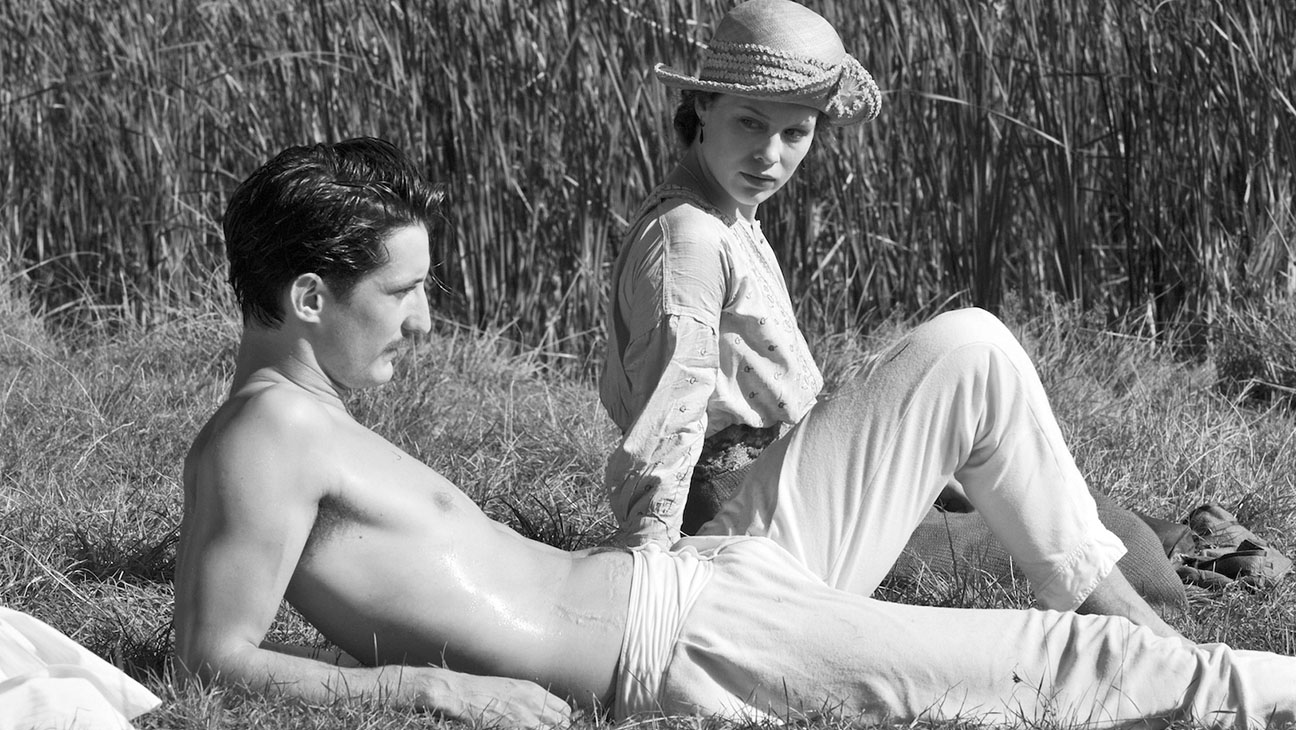

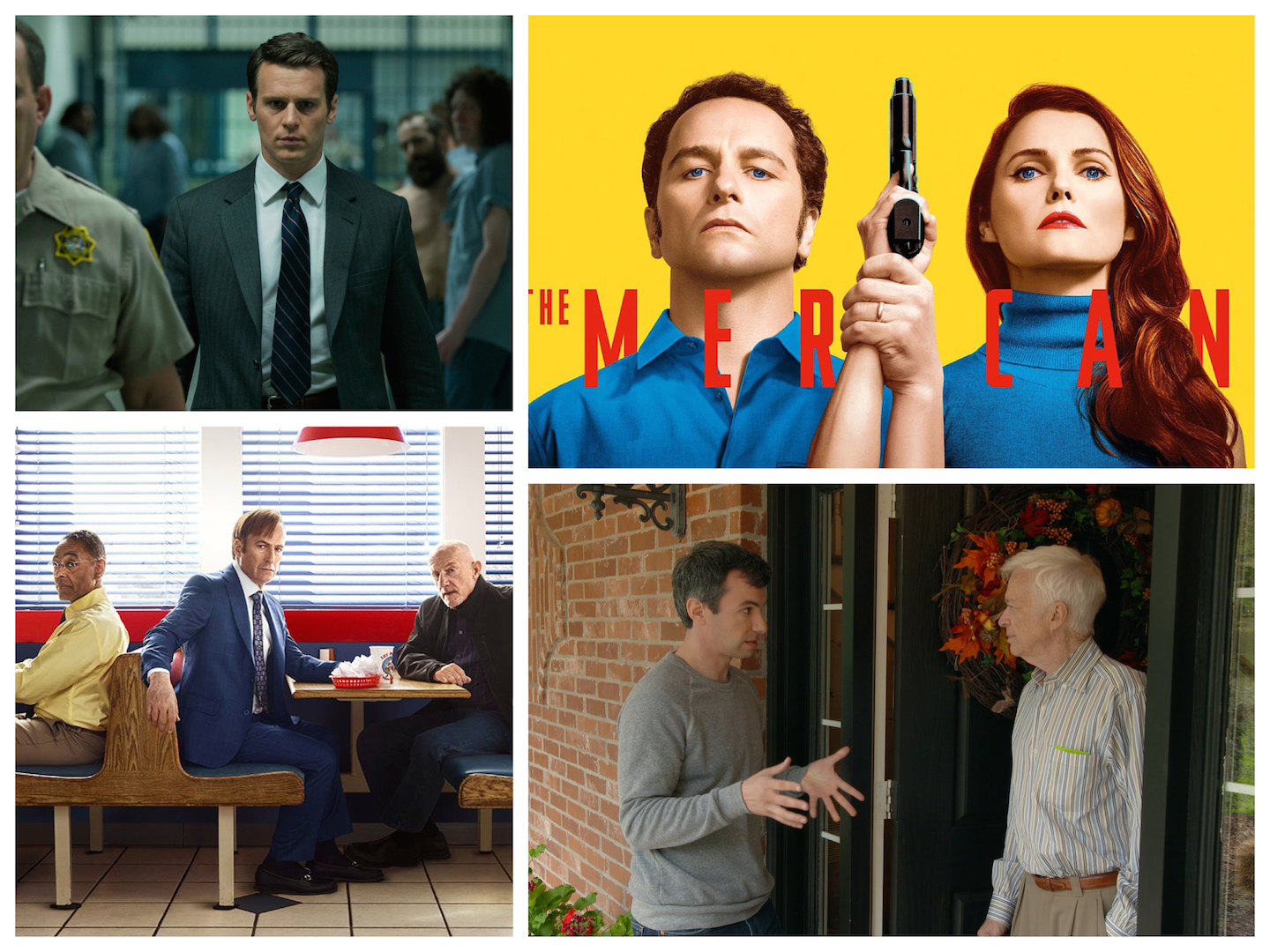













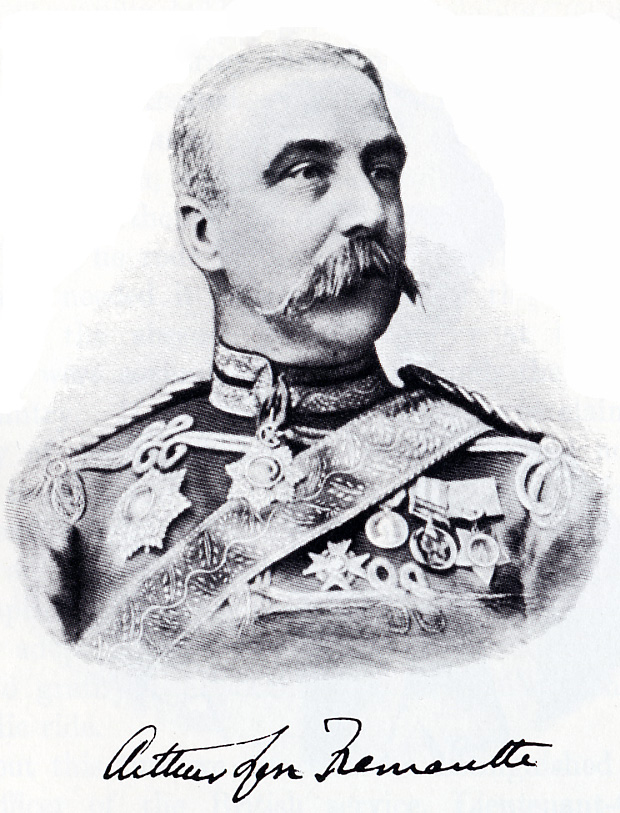







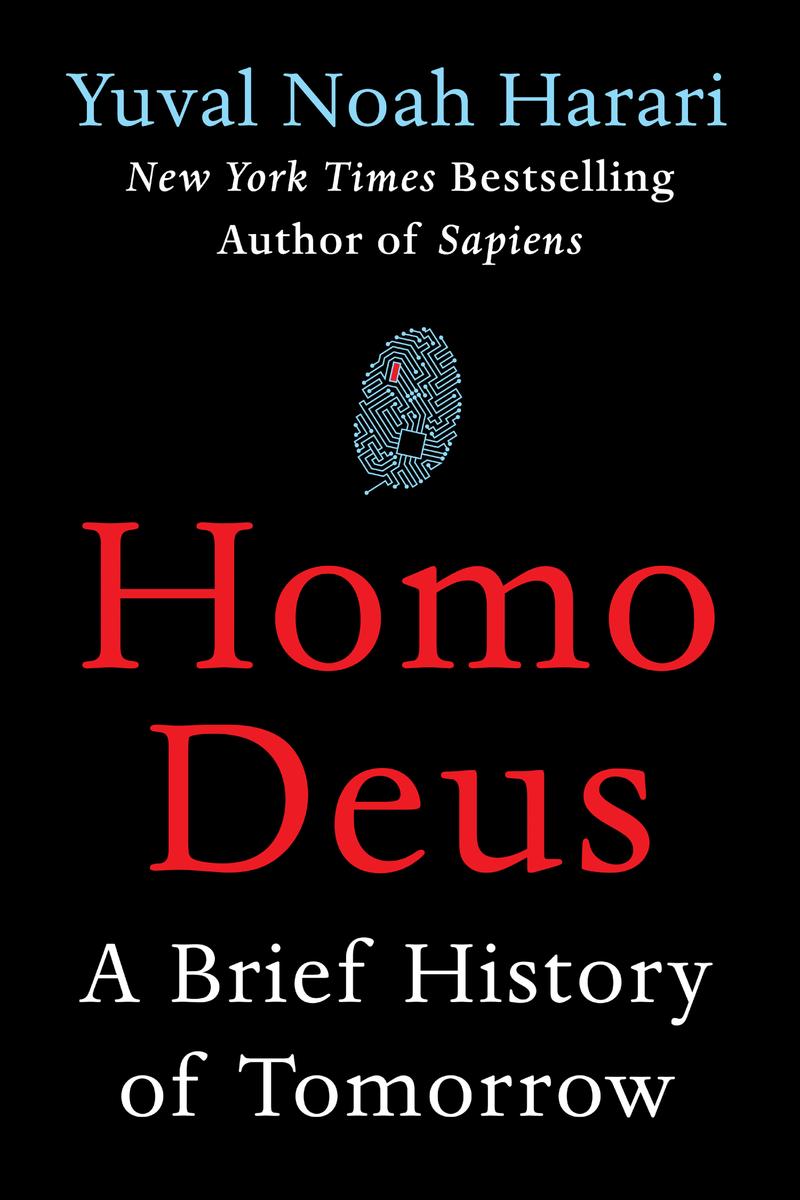


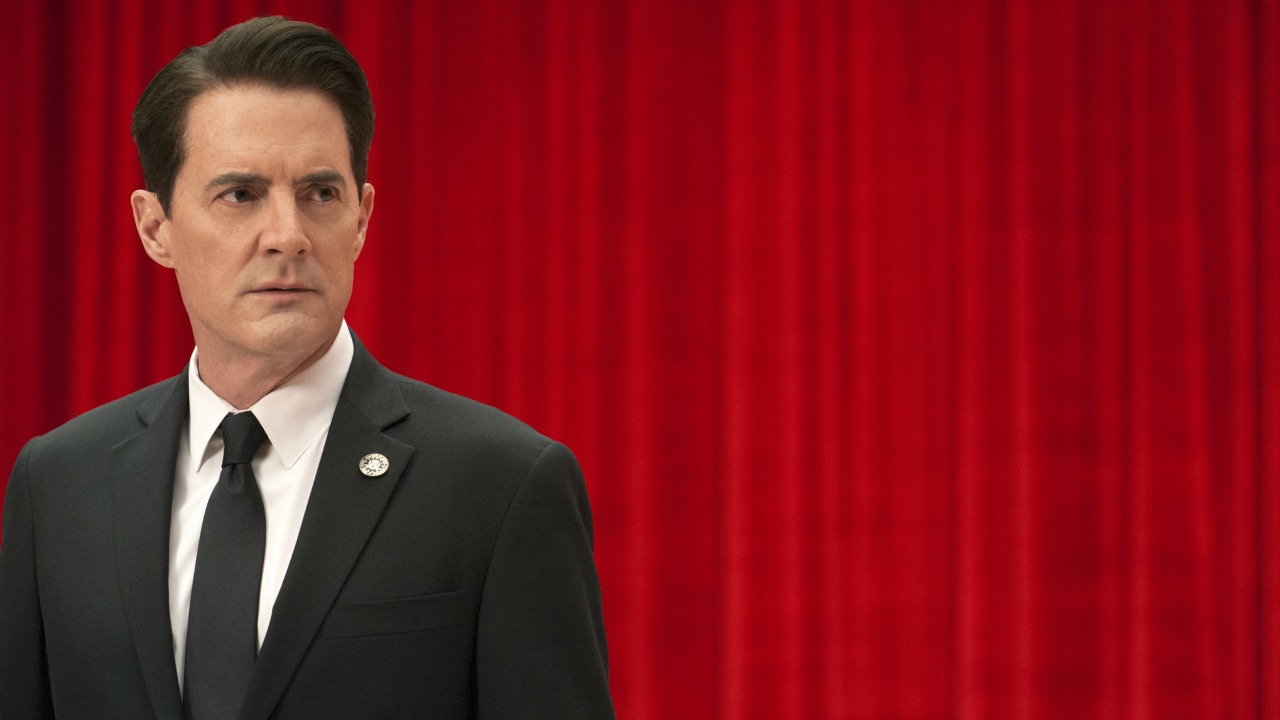
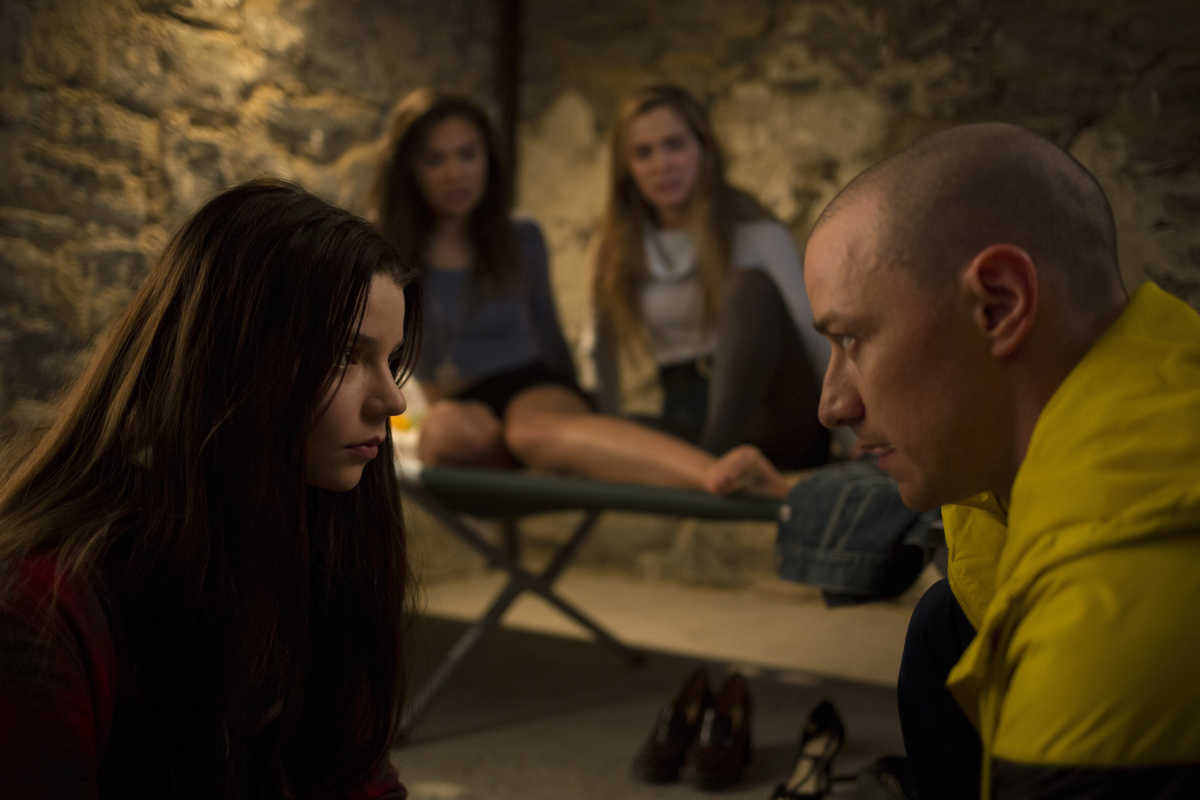





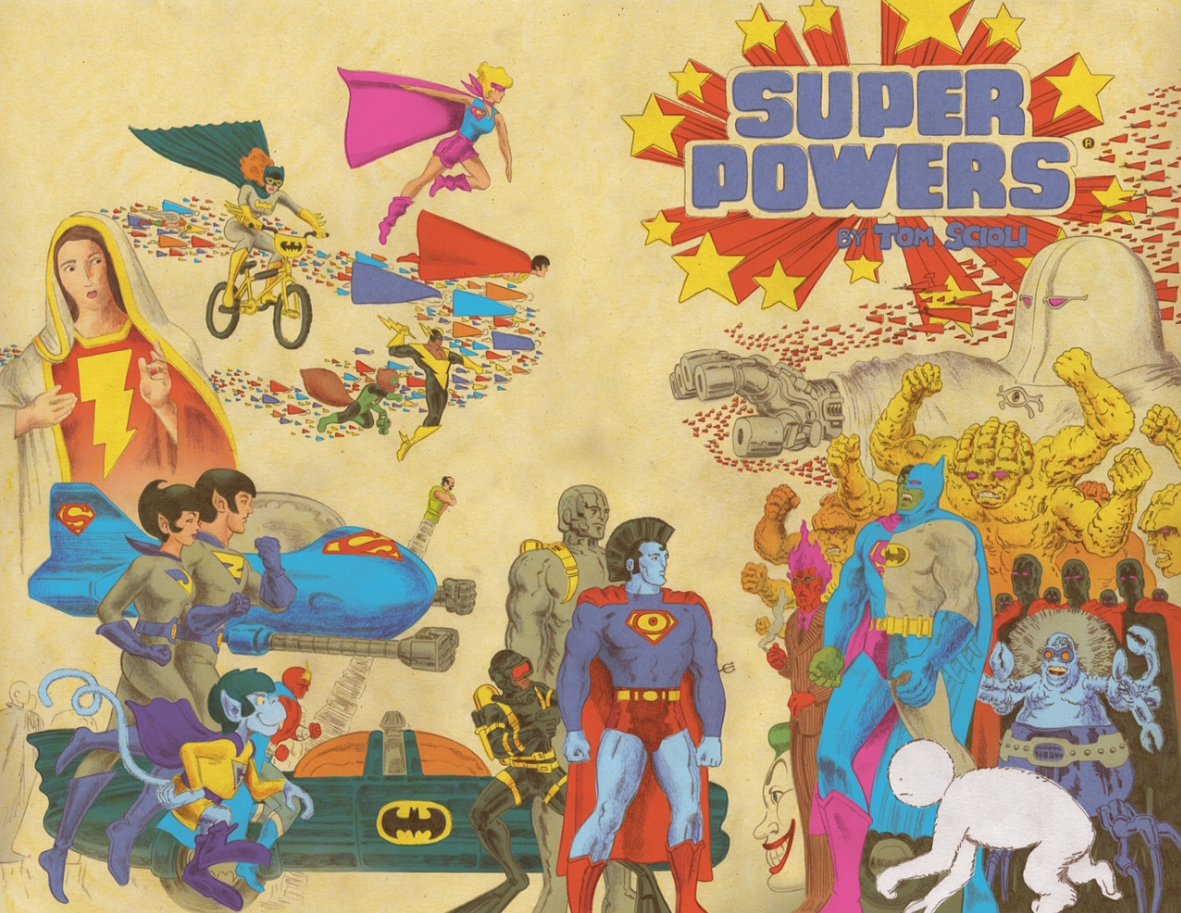


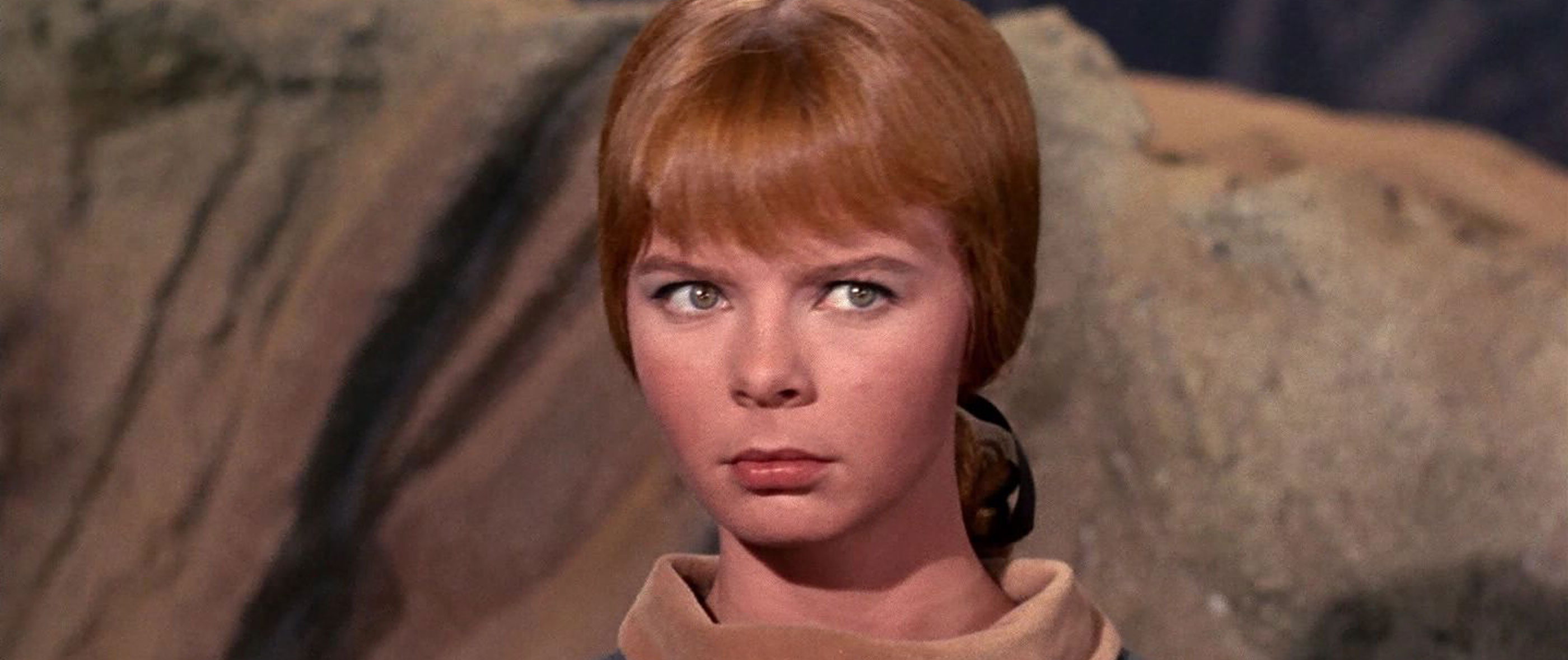



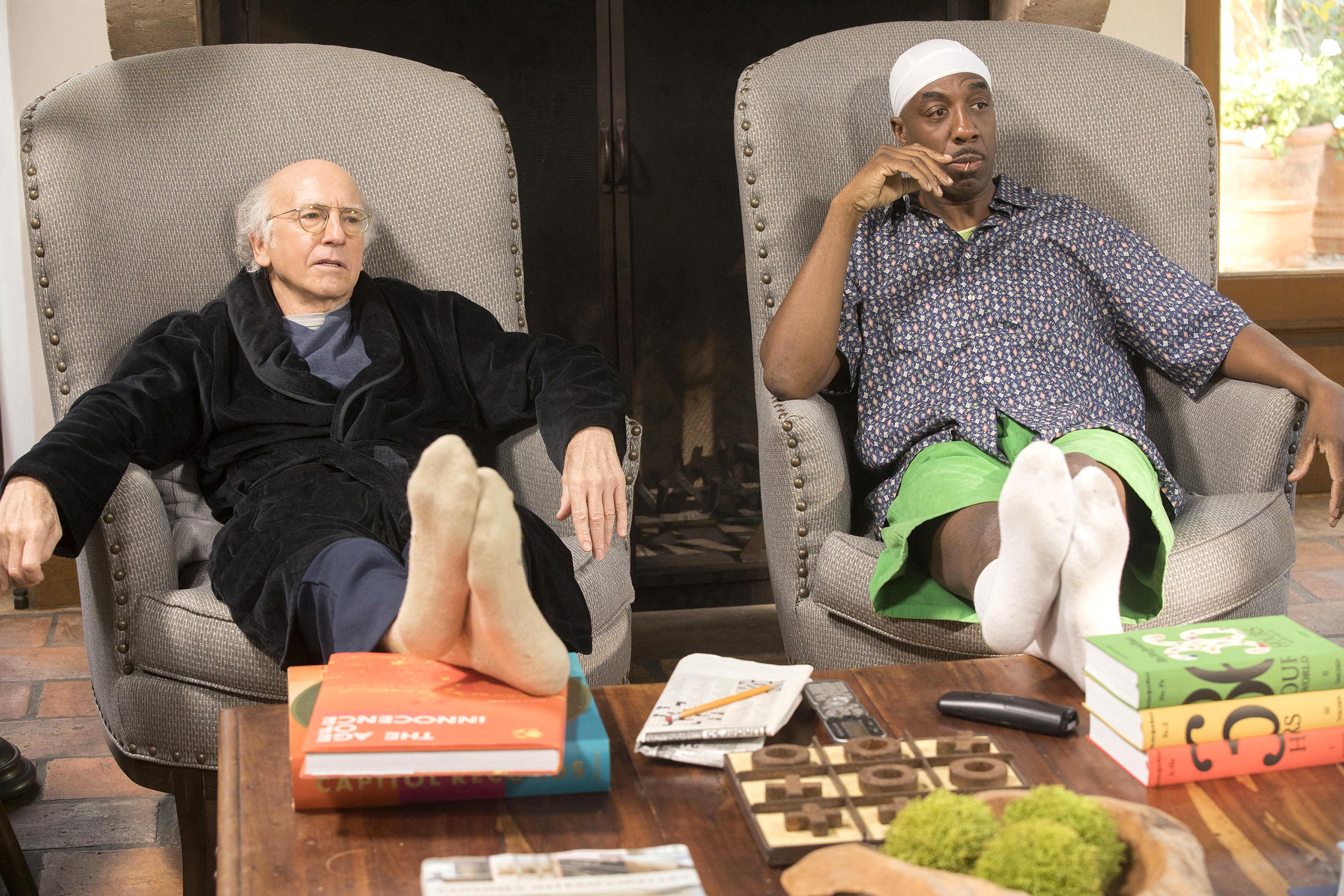
 Blowhard, Esq.
 Callowman
 Sherbrooke
 Eddie Pensier
 Enzo Nakamura
 Epaminondas
 Fabrizio del Wrongo
 Fenster
 Brundle Guy
 Glynn Marshes
 Paleo Retiree
 Atypical Neurotic
 Question Lady
 Sax von Stroheim
 Sir Barken Hyena
 The Mistaken
 Uncouth Reflections
The author is dwelling in the world of abstract design, arguing as did the framers of the US Constitution that representative democracy is a sturdy design for living. But consider Franklin’s warning just after the drafting: a republic is not a wind-up toy that you design, enable and let run. It needs to be “kept”, and that calls for certain habits, values and frames of mind. The framers understood this fragility too.
It seems to me that the author leans to heavily on a wind-up toy argument. “Hey, representative democracy works better in theory so let us forgive its faults in practice since it makes for, despite those faults, the best of all possible worlds by definition.”
Because they are composed of fallible human beings political elites are capable of being corrupted in many ways. If things start to go wrong they are likely to break along the fault line of, well, faction, as the political elites that are inherently part of a representative system take their own various kinds of self-interest into account, and game the system accordingly. That is why no representative system will be stable without the presence of certain specific human virtues such as restraint and public-mindedness. Of course since the stock of such virtues can never be stable no representative system can truly be stable over the long run, and we are back to Franklin’s conundrum.
So it is entirely possible–indeed inevitable over the longer run–that representative democracy will falter and not deliver on its theoretical promise of the best possible governance. And when that happens it is likely that the public will be justifiably angry.
One can argue–and the author does–that the public’s best and perhaps only recourse is the ballot box, and they can always turn out their local representatives. But just as political systems can be brilliantly designed the corruption of such systems can also be ingenious and diabolical. In such instances I doubt that a call for a return to status quo representative democratic institutions, as the author has done, will do the trick.
No one is saying nation states ought to revert to direct democracy. But from time to time though the tree of representative government needs to be nourished by the blood of those would would corrupt it–even if they are not, strictly speaking, tyrants.