Naked Lady of the Week: Mona

Fabrizio del Wrongo writes:

m-cover

Mona, sometimes called Monika, was a popular internet model of the ’00s, appearing solely (as far as I know) on the European “art” sites. The broad bridge of her nose and her somewhat hooded brown eyes gave her a smoldering quality — a quality that was happily exploited by her photographers. No matter how they presented her, though, the guileless Czech girl was never far from the surface.

She was discovered by photographer Richard Murrian, who took a lot of fab pictures of her. Her work for Petter Hegre is also good.

Nudity below. Have a great Black Friday. Hope you weren’t wounded trying to get $75 off a flat-screen TV.

Continue reading

Posted in Photography, Sex, The Good Life | Tagged , , , | Leave a comment

Happy Thanksgiving

Blowhard, Esq. writes:

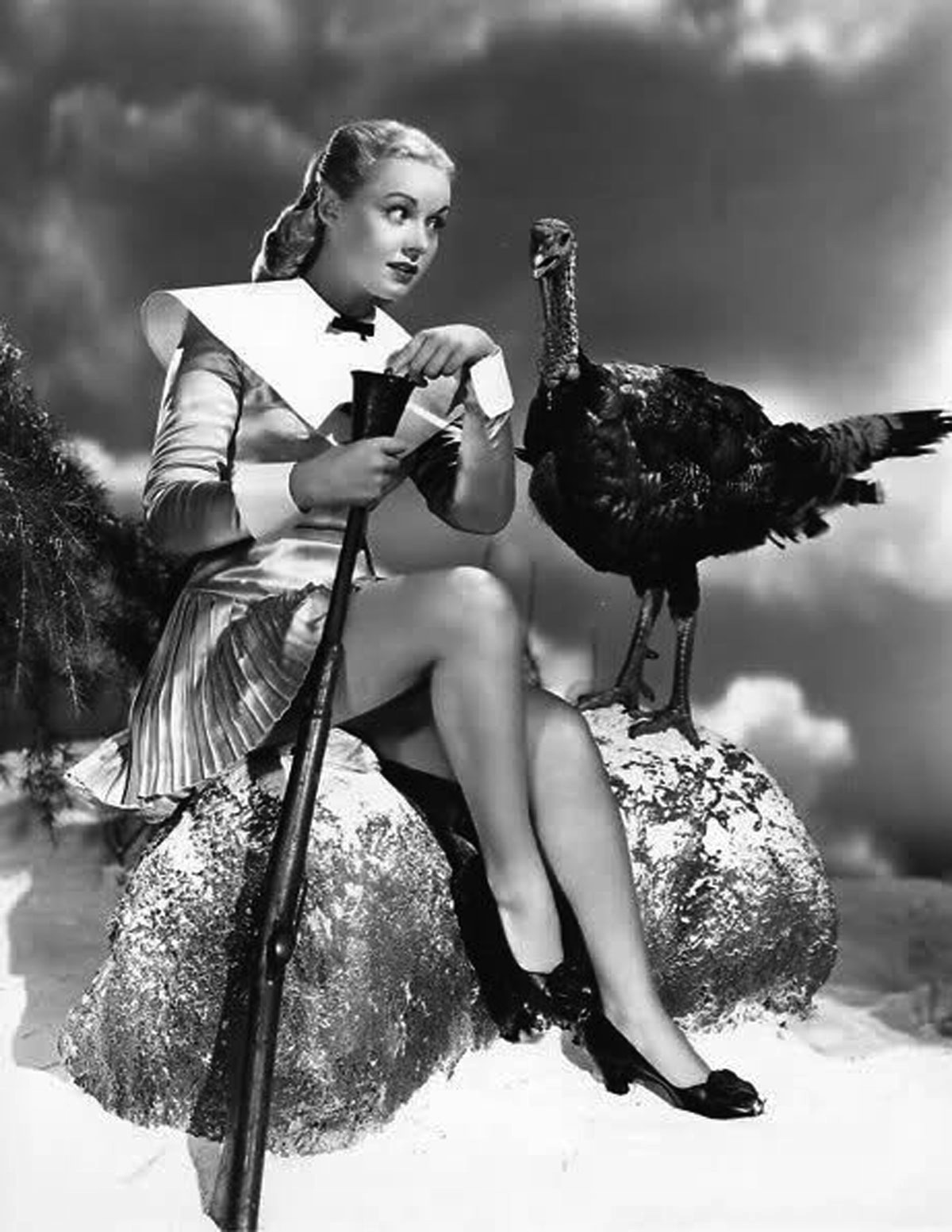
vintage-pinup-musket-turkey-thanksgiving

Posted in The Good Life | Tagged , | 4 Comments

Monsters of Depravity

Fabrizio del Wrongo writes:

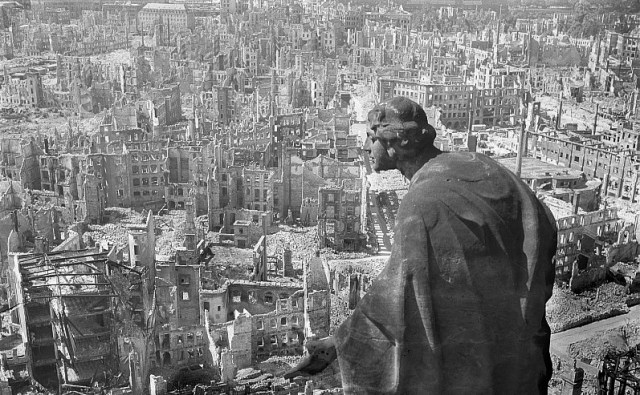
cropped-fotothek_df_ps_0000010_blick_vom_rathausturm

[A] political chain reaction was set in motion by the French Revolution. Deprived of the services of the professional army officered by aristocrats of the Monarchy, the revolutionary government had recourse to a levée en masse of the population. The people of the countries overrun by the French armies, after their own professional armies had been shattered, achieved liberation by means of similar armies of conscripted civilians. The European wars waged between 1792 and 1815 were the first of the Peoples’ Wars, so called because they were fought between peoples in arms and not as hitherto by professional armies maintained in peacetime by the rulers to enforce their wishes.

At first appeals to simple patriotism proved sufficient to inspire conscripted civilians with military ardour. Later the discovery was made that conscripted civilians fought better if they had been induced to hate the enemy against whom they were fighting. So gradually was evolved and perfected the modern science of emotional engineering, the purpose of which is to convince the average citizen that the citizens of the state against which it has been decided to wage war were monsters of depravity, barbarous, perfidious and cruel, with whom any thought of peace was impossible, to overcome whom no personal sacrifice would be too great.

Inevitably warfare conducted in an artificially inspired frenzy of fear and hatred changed its character. Thus began the period of so-called Total War to use the term adopted to describe hostilities waged regardless of the Rules of Civilized Warfare. Naturally the average civilian serving as a soldier, knowing nothing and caring less of military traditions, and having been taught that it was his patriotic duty to believe that the enemy was committing atrocities of every description, felt himself free to act as he had been assured the enemy was acting. Hate propaganda always lays the greatest stress on the contention that the enemy is solely responsible for the outbreak of hostilities in order to generate in the mind of every individual soldier a personal grievance against the enemy for having wantonly forced him to leave home and endure the hardships and dangers of a campaign.

The act which may be cited as marking the end of the age of civilized warfare and the beginning of the age of Total War was the acceptance of the Lindemann Plan on the 30th March 1942.

The last stage of the chain reaction was the adoption of war-crimes trials as a method of disposing of captured leaders of the vanquished side which inevitably must make the future conduct of warfare more ruthless than ever. Now that every general knows that in the event of defeat he will assuredly be done to death by the victors if he falls into their hands, he can hardly be expected to hesitate to order the commission of any enormity which seems to him to offer some hope of staving off defeat.

— F.J.P. Veale

Posted in Books Publishing and Writing, History | Tagged , , | Leave a comment

Notes on “Eight Days a Week”

Fabrizio del Wrongo writes:

beatles_indianapolis

“Eight Days a Week,” Ron Howard’s new documentary on the Beatles’ touring years, isn’t anything new, and yet it caused me to see its subject in a new light. Like similar works it uses the Beatles as a proxy for what we think of as the ’60s. Yet that familiarity has a purpose. Because of it, and because the character and dramatic arc of his subject are so well known, Howard never has to push his POV; his themes emerge organically — and perhaps only semi-intentionally — from the material, so that you become aware of them almost before you’ve had a chance to make mental note of them. It’s the kind of picture that’s all the more suggestive for being so straightforward.

The movie is most novel when it’s striking semi-sinister notes. Howard gives us the Beatles not just as a force of youth and vitality, but as agents of entropy, anxiety, and fin-de-siècle enervation. Their American performances in particular are presented so as to foreground their ominous elements. Watching them I found myself wondering: Is it possible that what made the foursome so exciting was their packaging of irresistible and overwhelming force within a container so outwardly benign? There are moments during their live performances when this modest container seems inadequate, as though it were bulging outward in a futile attempt to accommodate whatever it is that’s roiling inside of it. And the kids screaming in the audience do more than anticipate the impending explosion; they incarnate their idea of it.

The Beatles entered America in New York greeted by what seemed like an outpouring of joy. Three years later, after their last American performance in Chicago, they exited the venue in what one member describes as an “armored meat wagon.” They’d come to embody a societal change that neither they nor anyone else had the power to anticipate let alone control — and they were scared for their safety. By the time they quit touring that change threatened to tear the country apart. Woodstock and Altamont loomed on the horizon. In “War and Peace” Tolstoy wonders if Napoleon was an agent of the Revolution or merely a particle in the wave caused by its energy. Ultimately he abandons the question, declaring it impossible to identify the mysterious force by which a people is made to move. In “Eight Days a Week” one can see the people moving, and the Beatles being swept along with them.

Posted in Movies, Music, Performers | Tagged , , , , , , , | Leave a comment

Architecture and Color

Paleo Retiree writes:
Posted in Architecture | Tagged | 1 Comment

Rory Stewart’s “Afghanistan: The Great Game”

Paleo Retiree writes:

brits

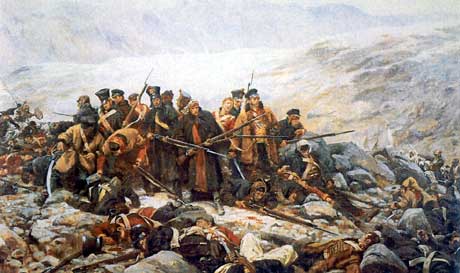
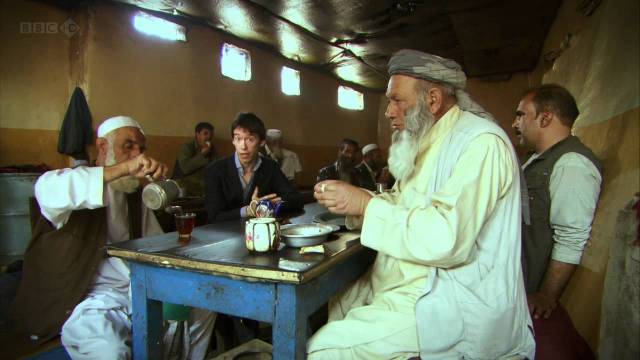
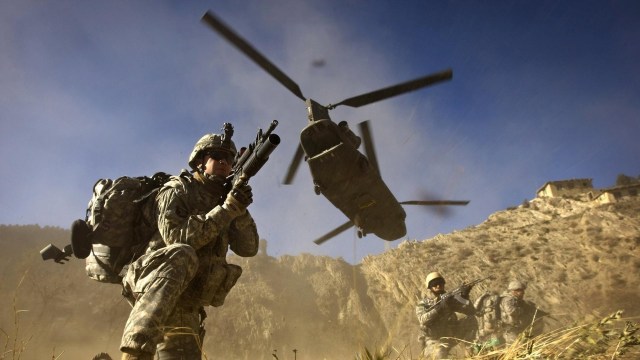
Really good. This two episode British doc is billed as “a personal view” by Rory Stewart — in other words, it isn’t a wannabe-objective news feature. But it supplies a lot of worthwhile and interesting information anyway. If that part of the world is a bit of a blur to you, this show ain’t a bad way to start bringing it into focus. It’s about how three different empires — the British in the 19th century, the USSR from 1979 to 1988, and the USA and its coalition in the post 9-11 era — invaded Afghanistan and came a-cropper.

Despite the overt topic, Stewart (who has a lot of experience in the area) is very good at reminding us that Afghanistan has its own existence independent of our interests and invasions, as well as its own story to tell. He supplies lots of solid stuff about Afghanistan itself — geography, history, culture, tribes and people — and he returns over and over again to the experiences of the Afghan people.
rory

As for the stories of the imperial invasions: In each case, the campaign was inspired by conference-room geopolitical calculations and abstractions as well as public passions, then turned in practice into something humiliating, unwinnable and near-impossible to withdraw from. Why on earth do we do these things? Why can’t we learn? Why are we so in love with our scheming and dreams and so blind to the simple human factors — the death and  destruction we inflict on others as well as on ourselves?

Stewart and his Afghan interviewees ask over and over: Why do we outsiders carry on as though the Afghans (awesome warriors and cool-looking people, btw) should enjoy being invaded and occupied? Why don’t we have the sense to understand that our actions make them hate us, let alone to realize that with each interference we drive them further into Islamic extremism?
us

My bullshit meters didn’t detect any partyline ideology, and not for the first time, I marveled at how crisp, confident and stylish-yet-informal British TV documentaries can be. Watching the show is like reading a really good long feature (in the “personal essay” mode) in the Sunday supplement of an upscale British newspaper. It makes for quite a contrast to what we’re used to as intelligent journalism in the States — the slow and mournful house style at PBS, and the (let’s be frank) self-consciously, self-importantly thoughtful pieces that run in the NYTimes and The New Yorker. Good as our American docs and articles sometimes are, there’s really no reason something smart, provocative and informative shouldn’t also avoid lugubriousness and pomposity and move at a wide-awake pace, is there?

The skinny, dark-haired Stewart — dressed in a rumpled dark sport coat and slim-fit jeans, he’s like an offbeat hipster friend who ran a punk band back in the day — sometimes seems like an unlikely TV-show host. But he’s also intelligent, articulate, helpful, informed, confident and open. I’m eager to watch more of his work. Stewart was fun to research too. He’s had such a breathtakingly, almost comically adventurous career that he’s like a character out of the Flashman novels.

Related

Posted in Movies, Politics and Economics | Tagged , , , | 1 Comment

Architecture and Color

Paleo Retiree writes:

Trad vs. modernist. Why do our developers and designers want us to inhabit a colorless, reflecty, non-tactile world?

Posted in Architecture | Tagged | 4 Comments

The Meme War and its Victors

Fabrizio del Wrongo writes:

tggk3yg

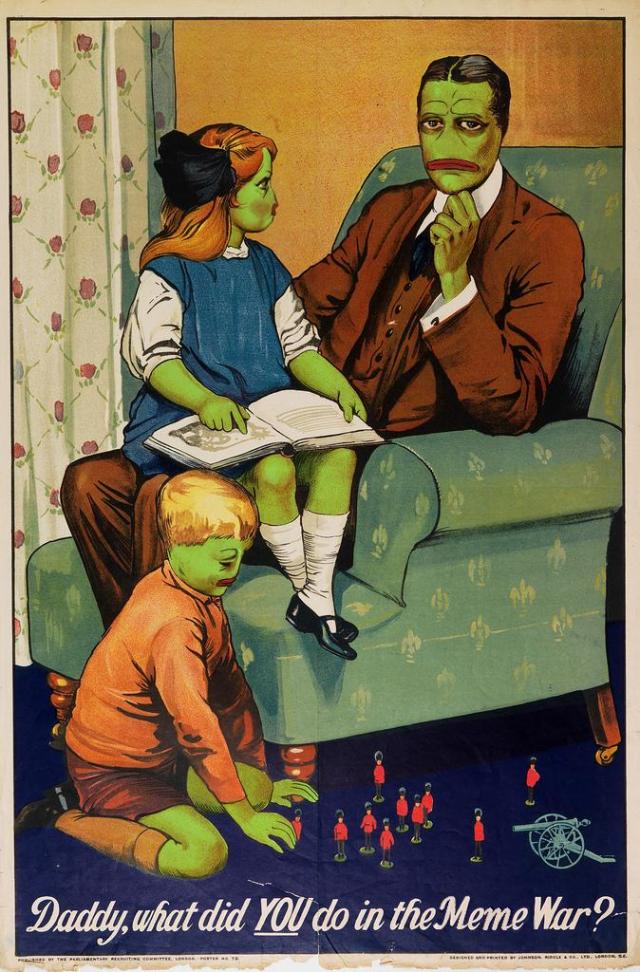
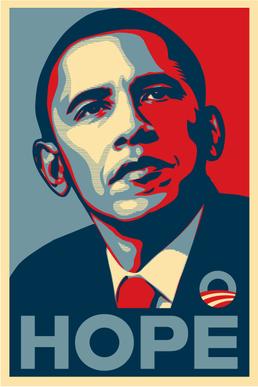
One thing Hillary didn’t tell you about the Deplorables: they produced a whole lot of fascinating political art. And it’s all the more fascinating for being so off-the-cuff, so anonymous, so — uh — dank. In my opinion much of it is more spirited and incisive than Shepard Fairey’s literally iconic Obama poster, which to me looks a lot like the front panel of a box of communist-themed cereal.

The kids (are they mostly kids?) on Reddit’s r/The_Donald are already referring to the election as The Meme War. They view themselves as this war’s victors. I find it hard to deny them the title or the consequent gloating.

Below are some of my favorite examples of the memes that won the Meme War.

More here.

Posted in Art | Tagged , , , | 3 Comments

Naked Lady of the Week: Niki Mey

Fabrizio del Wrongo writes:

nm-cover

Do you suppose Niki Mey favors Hillary or The Donald?

I don’t know about you, but I, for one, don’t give a shit.

Nudity below. Have a great weekend.

Continue reading

Posted in Photography, Sex, The Good Life | Tagged , , , , | Leave a comment

Advocacy, Not Reporting, at the NYT

Blowhard, Esq. writes:

Via Paleo Retiree, an insider gives us a peek into how things really work at the New York Times:

Having left the Times on July 25, after almost 12 years as an editor and correspondent, I missed the main heat of the presidential campaign; so I can’t add a word to those self-assessments of the recent political coverage. But these recent mornings-after leave me with some hard-earned thoughts about the Times’ drift from its moorings in the nation at-large.

For starters, it’s important to accept that the New York Times has always — or at least for many decades — been a far more editor-driven, and self-conscious, publication than many of those with which it competes. Historically, the Los Angeles Times, where I worked twice, for instance, was a reporter-driven, bottom-up newspaper. Most editors wanted to know, every day, before the first morning meeting: “What are you hearing? What have you got?”

It was a shock on arriving at the New York Times in 2004, as the paper’s movie editor, to realize that its editorial dynamic was essentially the reverse. By and large, talented reporters scrambled to match stories with what internally was often called “the narrative.” We were occasionally asked to map a narrative for our various beats a year in advance, square the plan with editors, then generate stories that fit the pre-designated line.

Reality usually had a way of intervening. But I knew one senior reporter who would play solitaire on his computer in the mornings, waiting for his editors to come through with marching orders. Once, in the Los Angeles bureau, I listened to a visiting National staff reporter tell a contact, more or less: “My editor needs someone to say such-and-such, could you say that?”

This sounds exactly like my experience as a junior attorney. The senior partner assigns you a position to argue and it’s your job to conduct the necessary legal research to find the existing precedents that support their argument. You reason backwards starting with their conclusion. Whether their preferred conclusion has any basis in reality is a separate, and sometimes irrelevant, issue.

I’ve had to tell the senior partner on more than one occasion that, sorry, the law doesn’t support your position. They inevitably get angry. Sometimes, after they’ve thrown their little tantrum, they adjust to the new reality and proceed accordingly. Other times, you are asked to make an argument that you know is bad. But even this can be understandable because there are inevitably instances where your best argument is still a losing one. You proceed with the losing argument anyway because, well, you’re being paid to advocate as strongly as you can on behalf of your client.

It’s been fascinating to watch the NYT and other mainstream organs operate like paid lawyers for Hillary Clinton and the Democratic Party. Mr. Cieply’s quote above is yet more evidence that they’re not reporters, they’re advocates.

Posted in Politics and Economics | Tagged , , , | 3 Comments