
Fenster writes:
An article from The Atlantic on How Airline Ticket Prices Fell 50% in 30 Years (and Why Nobody Noticed).
And one on the shake-up in intercity bus travel.
And one on how Airbnb is changing the market for accomodations.
News you can use!
What does this mean in practical terms?
My itinerary next weekend:
New York to Philadelphia on Yo Bus. Downtown to downtown, wifi, electricity, more legroom than the airplane.

$11.
Airbnb in Philadelphia for one night at the so-called Perle Mesta Inn.

$65
Flight from Philadelphia to Boston, US Air.
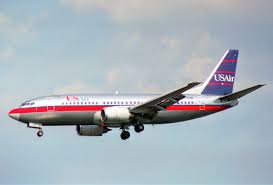
$55.
Total cost travel and accomodations-NYC-Phil-Bos:
$131.
OK there’s dinner, too. But you don’t need deregulation to land a deal on an $8.50 cheese steak from Geno’s.


 Blowhard, Esq.
 Callowman
 Sherbrooke
 Eddie Pensier
 Enzo Nakamura
 Epaminondas
 Fabrizio del Wrongo
 Fenster
 Brundle Guy
 Glynn Marshes
 Paleo Retiree
 Atypical Neurotic
 Question Lady
 Sax von Stroheim
 Sir Barken Hyena
 The Mistaken
 Uncouth Reflections
Back when the Barnes Foundation was in Merion, my friends and I would take a road trip to see Mr. Barnes’ paintings then have a Geno’s cheese steak before driving back to NYC. Enjoy.
LikeLike
Ah the Barnes. What a story. I teach, and have used the voluminous literature on the whole escapade as an open-ended case study, asking people to draw what they will from it. Interestingly, my classes tend to split down the middle, with half saying heck it was his property and the other half saying art needs to be for all. There’s no obvious answer, and good case of when the reasonable man standard works poorly–when reasonable men split down the middle. I should do a post on the Barnes.
LikeLike
I was surprised to see no data in that Atlantic post about deregulation causing falling prices. Their data series begins in 1979, the year after the Airline Deregulation Act. Hence, we have no picture of what the trend in prices was doing *before* deregulation. It’s the laziest kind of post-hoc reasoning with a time series graph.
For all we know, prices had been falling from 1958 (the year of “Come Fly With Me”) through 1978. Y’know, 20 straight years of constantly high, or even increasingly higher, prices would have been unusual for a burgeoning industry. If nothing else, they get better at their jobs, find ways to save, and pass that along to consumers, prodded perhaps by the government regulators.
Just because government regulates prices doesn’t mean they can’t be falling. Obvious example: the minimum wage, which has been plummeting since a peak in the Johnson years.
And the ’58-’78 period was part of the Great Compression, where government acted to reduce inequality and prevent the elite from gouging the little guy (like forcing collective bargaining between labor and management). The other big cases of deregulation in the period of rising inequality have jacked up prices (cable TV) and enriched the elite while having the public bail them out (banking).
It would therefore be a huge anomaly if airlines not only were not part of that pattern, not budging much, but actually went in the other direction.
I checked the entry on airline deregulation at EconLib, a libertarian encyclopedia, and they don’t say anything about pre-1978 data either. The trend in airline prices before deregulation is knowledge that man was not meant to know.
Difficulty of obtaining data, estimating things, etc., is no excuse either — you can do the best you can with what data there are, and provide confidence intervals in case you can’t get a really fine-grained estimate. Still, I’d bet there was a falling trend in that confidence interval pre-’78. And I’m sure the airlines kept records before then, which researchers could do archival work on today. Again, this just looks like one of those things we’re not supposed to know about.
LikeLike
NB: I’m not claiming a high degree of certainty about that falling trend before deregulation, just that it’s the most sensible thing to assume given everything else we know about reality (not theory). It is a critical weakness in the argument — not showing what was happening before an alleged cause of decline kicked in — that they do not even address, let alone try to assuage us as to why we should still believe their conclusion.
LikeLike
I have a hunch that the price declines not only began way before 1979, but were dropping at a faster rate. It’s diminishing marginal returns — first you find the really big, obvious places to make improvements that save money that you can pass along. After several decades, that gets harder and harder, so the declines are shallower.
LikeLike
My sense is that it wasn’t reported in those places because it is taken as a given. But it’s not that there’s nothing out there. I plugged terms like airline deregulation and cost of air travel into Google Scholar and got back more articles and books than I could handle.
I don’t mean to say that since it is taken nowadays as a given it must be true. But there is a huge amount of scholarly and press stuff out there on the effect of deregulation with the basic idea being that the overly detailed regulatory environment pre-reform resulted in sky high prices. Can I quote you a data set off the top of my head? No. But just a short time back I recall reading a credible account (Economist?) discussing the average cost of air travel per mile in the Sinatra era, and it was sky high. How could there have been incentives for the drops you surmise when the entire regulatory scheme conspired against it? That was what made the Carter era changes under Kahn so remarkable. Prices were high under regulation and then they started to drop as competition kicked in, hub-and-spoke took the place of mandated direct routes and the era of the cattle car began.
LikeLike
We shouldn’t take anything as a given when it comes from economists cheerleading for a set of public policies.
The weakness is not that prices were higher before deregulation — I’ve granted that. They are arguing something further: that the trend in prices was either flat or rising. If the trend was that prices were already falling well before deregulation, then deregulation did not cause falling prices. It would have been something else that began long before, such as low-hanging tech improvements during the first few decades of a brand-new industry.
They’re using the same line of reasoning, and the same limited time-frame of data, that people use when pointing the the effect that the women’s movement and 1970s feminism had on women entering the workplace… except that that trend had begun decades earlier. If you look at the long-term trend in women’s labor participation, the feminist movement is utterly invisible.
If there are data that make the “yay deregulation” case air-tight, why don’t they show them? If they aren’t there, then we don’t have much real-world reason to believe their conclusions. If they are there, then they’re giving a poor presentation in limiting the time-frame. Imagine seeing a graph that showed rising prices before deregulation, then falling prices afterward — slam dunk. Or flat prices before, and falling after — another slam dunk.
I’ll be poking around the library stacks today to see what comes out. Something just doesn’t smell right.
LikeLike
OK, I can cancel that trip to the stacks. Kevin Drum in an article for Mother Jones, which actually has a graph going back to 1950:
“Beyond that, you might be surprised to learn that it’s an open question whether deregulation was such a boon for the flying public in the first place. In a 2007 paper, David Richards looked at airline fares since 1950 and concluded that deregulation accomplished little. Fares had been going down before 1978 and they kept going down afterward. Yield per passenger-mile showed no change before and after deregulation (see chart on right). Growth in passenger miles traveled actually slowed after deregulation, and fares were mostly about the same as they would have been under the old CAB formulas. His conclusion: “This paper makes clear that the grant of pricing freedom to the airline industry has generally resulted in average prices being higher than they would have been had regulation continued under the DPFI rate-setting policies.”
“What did happen, Richards found, was that fares decreased on routes between big cities and increased on routes between smaller cities. That may or may not have been a good thing on net, but it’s certainly a far different story than the one we usually hear about deregulation. For more on this, see “Terminal Sickness,” a fascinating look at airline deregulation and the death of the mid-tier market by Phillip Longman and Lina Khan.”
http://www.motherjones.com/kevin-drum/2013/08/deregulation-may-not-have-been-boon-airline-passengers-after-all
Just as I guessed, the trend line is steadily down from 1950 through 1980, and deregulation is invisible. Also called it with the rate of decline being slower post-deregulation.
What I didn’t guess was the rising inequality angle — fares fell between big cities, favoring the elite, and rose between smaller cities, pinching the rabble.
LikeLike
I’ll say the Richards article is interesting, as is the Drum piece in Mother Jones. Thanks for bringing up that there is another side to what is usually described just one way.
That said, I think you are a little triumphalist on the basis of a paper and a Mother Jones article. If you are as interested in this as you seem to be I think you relieved yourself too quickly of the need for more trips to the library. There are in my mind too many articles out there maintaining the opposite for me to say sure, the looking-glass view is the right one.
Even Drum, after quoting Richards approvingly, describes the issue as “open”. And how do I know what is going on in the trend data from Richards on yield since 1950? For one, in the pre-regulation environment prices were set. Now they vary widely, meaning business travelers (the elite) get socked and the smart vacation shopper in the middle seat flies for far less. Traveling is certainly cheaper for the second guy, even if the elite guy (the guy in your theory who ought to be benefitting) is paying more.
In your own post on this at your own blog, you close with on a nostalgic note that we had it better in the good old days.
“This all jibes with how most folks feel about how much worse off they are economically than their parents or grandparents’ generation.”
I dunno, in my middle class family we were able to drive to Cape Cod for vacations at best. No flying for me until I went on a junior year abroad and then none after that for pleasure until I was in grad school. Until I stepped out of a plane in the Bahamas in my late 20s I’d never been out of the cold in the winter. Before they got to high school my kids had been to Europe, Mexico, Florida, Puerto Rico, Texas and California. Shall I tell them about the good old days?
FYI I don’t mind keeping up the discussion but since this is more of interest to you than me, I’ll swing by your place to comment if the debate continues. Chill a beer for me.
LikeLike
You know, from the big picture perspective, I’m not sure if the drop in prices has been a good thing. The airline industry has crappy profitability which means that there are continual pressures on airlines to cut costs. What this translates to in the real world is worse in flight service, pressure on pilots, cutting maintenance and safety to bare bones, etc. Consumers my cheer but the long term viability of the industry is at stake. If capital doesn’t get adequate return then capital investment in the industry falters and eventually the industry dies.
I had the unfortunate situation of having to treat a flight safety engineer who was under a lot of pressure to “sign off” on aircraft he felt uncomfortable doing so. The airline was faltering and management was trying to save every cent that it could. I didn’t want the guy to lose his job but on the other hand, I was made aware of serious breaches in safety standards of the airline. I was mulling over the issue overnight and decided to call the local aviation authorities. Fortunately, the airline ceased operations the very next day and I didn’t have to make the call. This was an airline with an excellent safety reputation, btw.
LikeLike
Worth a read.
http://www.theguardian.com/business/2006/dec/19/theairlineindustry.travel
LikeLike
Pingback: Elsewhere | Uncouth Reflections