Cocktail Du Jour

Paleo Retiree writes:

Our Cocktail Du Jour series is mainly intended as a way to celebrate the pleasures of leisure, class, elegance, funkiness and getting a little high, as well as an ongoing tip of the hat to the cocktail renaissance we Americans are fortunate enough to be experiencing. (It’s not like you get to choose which artistic/cultural golden eras you live through — nothing you can do about when and where you were born. So why not take note of, explore and enjoy the ones that do come your way?) Man oh man, are there ever a lot of good bartenders out there, from solid traditionalists to flashy innovators and inventors.

Sad to say, though, that not all the news from the “craft cocktail” world is good. The other night, the Question Lady and I were out and about in Tucson and settled on a stylish-seeming, upscale place for dinner. I proceeded to be served the two worst “signature cocktails” I’ve ever had.

The first abomination — sadly, I was too stunned by its clueless awfulness to remember to take a snapshot of it — was the place’s variant on a Sazerac. The first bad idea was infusing the rye with apple and cinnamon — two flavors which are not meant to play nice with Pernod. The second bad idea was to hang an orange wedge on the edge of the glass. It turns out that there are good reasons why you’re never served a glass of orange/apple/licorice juice. The welcome harshness of the rye wasn’t nearly sufficient to mask the mixture’s really epic badness.

Hoping that a return to basics would redeem the drinks dimension of the evening, I ordered an Old Fashioned. What I was served was the place’s variant. By now I was on the alert and morbidly curious. Here’s a shot of the thing:

image

The color in the shot is accurate — the drink was more pink-red than amber. It had struck the place’s barmaster as a good idea to, essentially, fill the glass with as much cherry liquid as booze. Drinking it reminded me of nothing so much as going through one of those cans of Hawaiian Punch that many Boomers will remember from childhood. Hard for me to imagine that the words “Old Fashioned” would occur to anyone making their way through this cocktail.

But, given that the food was as fancy-yet-clueless as the drinks, maybe these concoctions please the place’s clientele. Despite the place’s chic appearance and chic-seeming menu, the crowd was far more caught up in the U of A basketball game on the TVs than in the food. So maybe this is the sort of thing people with no tastebuds but reasonably full wallets and a desire to feel up to date really enjoy. Hard to know — and I certainly won’t be asking the place’s bartender for insights.

Posted in Food and health, The Good Life, Travel | Tagged , , , , | 8 Comments

Atheism, Anti-theism and Apatheism

Fenster writes:

There’s been an open moderated thread running at Andrew Sullivan’s blog on various approaches to atheism and their overall relation to belief.  It was kicked off via a link to an article by Thomas Wells on why he is not an atheist.  Wells is not a believer but he doesn’t want to call himself an atheist because he sees no reason to define himself in opposition to something he finds non-relevant to his life.

There are many supernatural things that some people believe in that I don’t, including Santa Claus, UFOs, crop circles, witches, ghosts, homeopathy, gods, fairies, and astrology. I see no particular reason to select out my non-belief in gods from that list of non-beliefs for special attention and justification. I see no no more reason to describe myself as an atheist, than as an afairieist, ahomeopathist, etc. To put it another way, my non-belief is apathetic: the nonexistence of God/Gods is a matter of great insignificance to me. And isn’t that how it should be?

That stance got a lot of pushback, including from more aggressive atheists who argue for more pro-active Dawkins-style assertiveness.  In the pushback to the pushback, these folks got termed “dickhead atheists”–people who have nothing better to do than rain on the parade of believers when they ought not to care.

I agree raining on parades is dickhead behavior.  I have too much respect for most believers–and too little fuel for any fire on my own account–for anything more than a general policy of live and let live.

I will note, though, that most of those folks arguing for greater voice did not argue for dickhead disruption just to make believers’ lives miserable, or to convert them to non-belief.  Rather, most arguing for assertiveness based their arguments on politics–i.e., atheists ought to be willing to stand up and be counted, lest the assumption that we are all similarly religious produce outcomes, both cultural and in terms of public policy, that are not to our liking.

I suspect these points of view can be reconciled.  As I see it Wells is making somewhat more of an aesthetic or psychological argument.  He is indifferent, and thinks those making too much of a stink reveal themselves as caring too much about something they profess not to care about.  But one can have the generally indifferent attitude Wells advocates to belief per se yet still be mindful of the tension between belief and non-belief in the public square, and to take action, including using one’s voice, in that square as needed.

Posted in Philosophy and Religion | 1 Comment

Westboro Baptist Founder is Sick

Fenster writes:

In the news:

TOPEKA, Kan. — The Rev. Fred Phelps Sr., who founded a Kansas church widely known for its protests at military funerals and antigay sentiments, is in a health care facility, a church spokesman said.

Phelps, 84, is being cared for in a Shawnee County health center, Westboro Baptist Church spokesman Steve Drain said Sunday. Drain would not identify the facility.

I can see why the facility remains unidentified.  It would be awfully tempting for people to show up with signs thanking God for the development.

Posted in Philosophy and Religion | Tagged | 4 Comments

And This Was Stillwood Heights

Fabrizio del Wrongo writes:

raymondchandler

We curved through the bright mile or two of the Strip, past the antique shops with famous screen names on them, past the windows full of point lace and ancient pewter, past the gleaming new nightclubs with famous chefs and equally famous gambling rooms, run by polished graduates of the Purple Gang, past the Georgian-Colonial vogue, now old hat, past the handsome modernistic buildings in which the Hollywood flesh-peddlers never stop talking money, past a drive-in lunch which somehow didn’t belong, even though the girls wore white silk blouses and drum majorettes’ shakos and nothing below the hips but glazed kid Hessian boots. Past all this and down a wide smooth curve to the bridle path of Beverly Hills and lights to the south, all colors of the spectrum and crystal clear in an evening without fog, past the shadowed mansions up on the hills to the north, past Beverly Hills altogether and up into the twisting foothill boulevard and the sudden cool dusk and the drift of wind from the sea.

It had been a warm afternoon, but the heat was gone. We whipped past a distant cluster of lighted buildings and an endless series of lighted mansions, not too close to the road. We dipped down to skirt a huge green polo field with another equally huge practice field beside it, soared again to the top of a hill and swung mountainward up a steep hillroad of clean concrete that passed orange groves, some rich man’s pet because this is not orange country, and then little by little the lighted windows of the millionaires’ homes were gone and the road narrowed and this was Stillwood Heights.

The smell of sage drifted up from a canyon and made me think of a dead man and a moonless sky. Straggly stucco houses were molded flat to the side of the hill, like bas-reliefs. Then there were no more houses,  just the still dark foothills with an early star or two above them, and the concrete ribbon of road and a sheer drop on one side into a tangle of scrub oak and manzanita where sometimes you can hear the call of the quails if you stop and keep still and wait. On the other side of the road was a raw clay bank at the edge of which a few unbeatable wild flowers hung on like naughty children that won’t go to bed.

Then the road twisted into a hairpin and the big tires scratched over loose stones, and the car tore less soundlessly up a long driveway lined with the wild geraniums. At the top of this, faintly lighted, lonely as a lighthouse, stood an eyrie, an eagle’s nest, an angular building of stucco and glass brick, raw and modernistic and yet not ugly and altogether a swell place for a psychic consultant to hang out his shingle. Nobody would be able to hear any screams.

— Raymond Chandler

Related

  • It’s hard to imagine Cormac McCarthy’s prose absent the example of Chandler, especially the descriptions of landscape. Blowhard, Esq. tore into Cormac the Great back here.
Posted in Books Publishing and Writing | Tagged , , , | 5 Comments

Movie Still Du Jour

Blowhard, Esq. writes:

chantal-goyaChantal Goya and Jean-Pierre Léaud in Jean-Luc Godard’s MASCULIN FÉMININ (1966)

Click on the image to enlarge.

Related

  • Check out the trailer here.
  • Read Pauline Kael’s review of the movie here.
Posted in Movies, Performers | Tagged , , , , , | 7 Comments

Ads Everywhere 6

Paleo Retiree writes:

20140316-165112.jpg

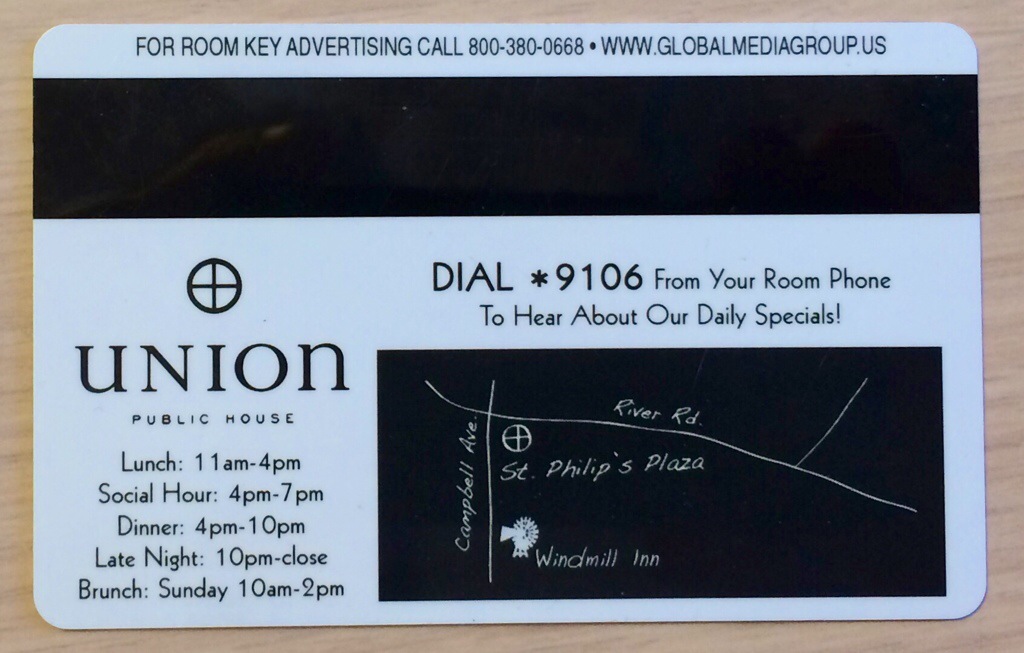
That’s an ad on the plastic credit-card style room key we’re using at a Tucson hotel. In addition to being a little insulting, the visuals make the key hard to read where its main function goes: I routinely waste a few seconds fiddling with the key, feeling mildly miffed by unnecessary inconvenience, as I try to figure out which end goes in the doorslot. Why is my brain being forced to wade through commercial clutter (and the irritation generated by it) in order to accomplish something so everyday and trivial?

Is the money made (presumably by the ad agency and the hotel renting out space on its keys) worth it? Does the restaurant doing the advertising really get many customers for its money? There’s evidently some kind of business there. Take a look at the top of the other side of the key.

20140316-172014.jpg

Is there no place Americans won’t put an ad? And how do we feel about living in a culture ever on the lookout for fresh places to deface with advertising?

Related

Posted in Commercial art, Media, Shopping, The Good Life, Travel | Tagged , , | 4 Comments

Linkage

epiminondas writes:

Posted in Linkathons | 2 Comments

Daily Life in Ancient Egypt

Blowhard, Esq. writes:

Sowing-and-Ploughing-in-the-Fields-wall-painting.-Tomb-of-Sennedjem-13th-century-B.C.I’m currently working my way through the Teaching Company course called The Other Side of History: Daily Life in the Ancient World by Prof. Robert Garland. I finished the lectures on ancient Egypt and thought I’d share some interesting facts:

  • It took approximately 10,000 men (who were likely not slaves) 20 years to build each of the great pyramids. They did so on a diet of bread, onions, and beer.
  • Scribes started training around age 5. If they attained full literacy, it was considered a highly respectable accomplishment. Such men were permitted to wear long skirts, while most male workers wore short skirts.
  • Literacy was an important stepping stone to a good career. We have a record of a father writing to his son, “I will make you love books more than your own mother.”
  • Engineers were required not only to be literate, but they also had to learn mathematics. For ancient Egyptians, “mathematics” consisted solely of addition and subtraction – they did not know multiplication or division. In other words, all of those incredible monuments that have amazed and astounded millions of people for thousands of years were built with math no more sophisticated than what your average 8 year-old knows.
  • Ancient Egyptians had no money, so all payment was in kind. They also had no word for “art”.
  • Death of course meant embalming. There were packages available for all price points. For the rich, the organs (liver, lungs, entrails, etc.) were carefully removed and placed in jars so that a person could be reunited with them in the afterlife. The brain tissue was removed through the nose via a long needle. For the poor, an oil was squirted up the anus and plugged up. After a few days the plug was removed so the liquefied viscera could pour out. Sorry, 99%ers, you’re not reunited with your organs in the world to come.
  • There was a court proctologist who had a title that translates as “herdsman of the anus.” This is objectively the greatest job title in the history of human civilization and possibly galactic civilization, too.

herodotus

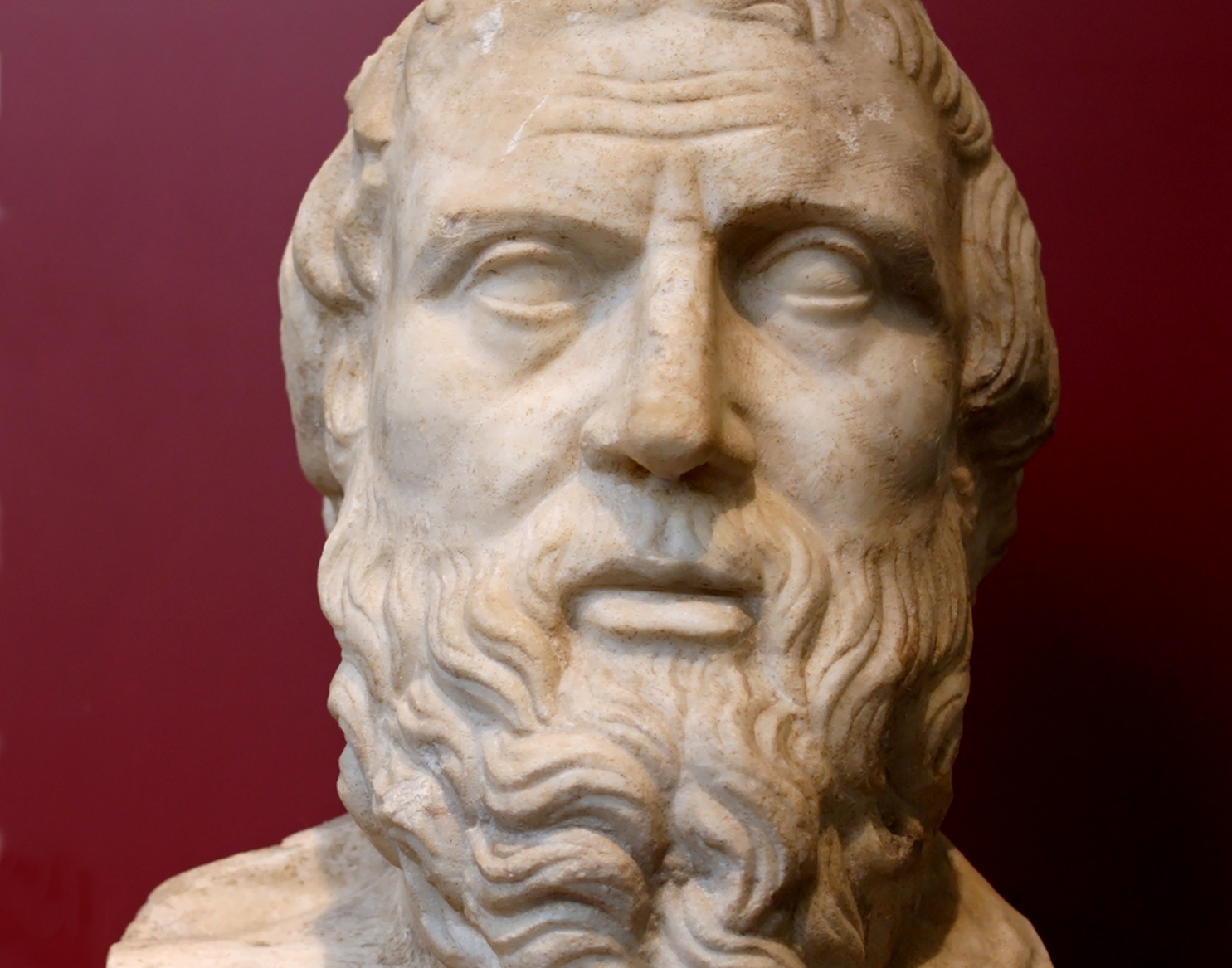
Herodotus, who personally observed the Egyptians, was fascinated by them. Here’s an excerpt from The Histories:

The Egyptians who live in the cultivated parts of the country, by their practice of keeping records of the past, have made themselves much the most learned of any nation of which I have had experience. I will describe some of their habits: every month for three successive days they purge themselves, for their health’s sake, with emetics and clysters, in the belief that all diseases come from the food a man eats; and it is a fact — even apart from this precaution — that next to the Libyans they are the healthiest people in the world. I should put this down myself to the absence of changes in the climate; for change, and especially change of weather, is the prime cause of disease.

They eat loaves made from emmer — ‘cyllestes’ is their word for them — and drink a wine made from barley, as they have no vines in the country. Some kinds of fish they eat raw, either dried in the sun, or salted; quails, too, they eat raw, and ducks and various small birds, after pickling them in brine; other sorts of birds and fish, apart from those which they consider sacred, they either roast or boil.

When the rich give a party and the meal is finished, a man carries round amongst the guests a wooden image of a corpse in a coffin, carved and painted to look as much like the real thing as possible, and anything from eighteen inches to three feet long; he shows it to each guest in turn, and says: ‘Look upon this body as you drink and enjoy yourself; for you will be just like it when you are dead.’

Posted in History | Tagged , , , , | 5 Comments

Knickers Watch

Fenster writes:

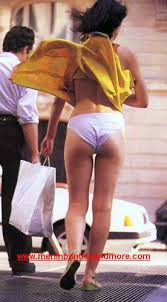
So many interesting cross-cuts on the creepshot issue.

Massachusetts passed a law with practically no objection that creates a reasonable expectation of privacy with respect to private parts.  I don’t doubt your average constituent, male or female, thinks it is unseemly for a guy to snap away at a woman with her skirt hiked up inadvertently.  But I doubt it is that simple.  What are some of the cross-cuts?

For one, what about a guy with a skirt flying, the functional equivalent of Paleo’s last shot?

Under-the-kilt
Offensive or just funny?  Should the guy in the kilt have a right to sue?  Was the photography itself intrusive even if nominally legal?

Another possible male-female disparity: butt cracks.  Paleo has asked about whether the taking of butt crack shots would also be deemed creepy.

The taking of guy butt crack shots may or may not be creepy, but the shots themselves can be.

The taking of guy butt crack shots may or may not be creepy, but the shots themselves can be.

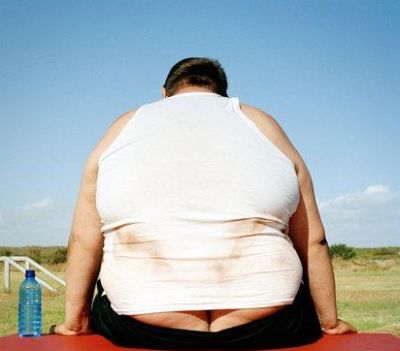
The initial answer might be no.  For one, you could argue that a typical butt crack is not more than a kind of cleavage of the sort that, on top, is made public all the time.

Top cleavage is often more generous.

Top cleavage is often more generous.

Certainly a guy in speedos is showing a kind of cleavage.

tumblr_mldpcokzt71s5fzsno1_1280

So maybe butt cracks are all right since they only show what any reasonable person might see if one were wearing a bathing suit, which is no big deal.

Maybe, but the element of sexuality now creeps into an otherwise neutral discussion.  Even if both men and women routinely show the first, say, inch or two of butt cleavage, is it troublesome if and when there is a sexual dimension?

bc2

bc3

And does that dimension go away mysteriously when the butt in question has little sex appeal?

bc5

So is this a neutral discussion, or is it inextricably bound up with things that cannot be neatly defined, parsed, analzed and bottled.  Like sex.

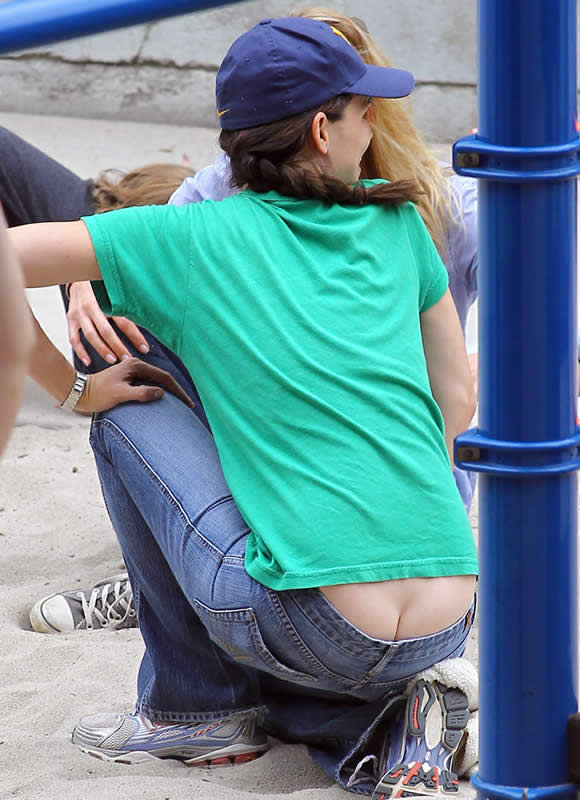
Women’s bodies are often sexualized but not all are sexy.  How about this female butt crack shot?

bc6

I think she had every chance in the world to cover that but was intent on skinny jeans.  Funny?  Yes.  Sexy?  No.  Should the woman be able to take offense?  Put it to a vote.  My guess is that while a majority of Massachusetts residents would support the new law, they would chuckle at this, and say that this is not what they had in mind, even if a reasonable distinction in law would be hard to make.

There’s also the issue of the intrusiveness of the camera man, or woman.  Cleavage is fine, but are there limits to how close you should get to secure a shot?

Go Paleo!

Go Paleo!

or on the angle the shot is taken from?

tumblr_ml7kvwltlP1s5fzsno1_1280

Take the famous shot of Marilyn.

LIBRARY IMAGE OF SEVEN YEAR ITCH

Is this about modesty?  In a way, yes.  After all, she is, like these women, struggling to cover herself with her dress.

windy2

But, like this woman, she is hardly assiduously single minded about the task.

windy

Both modesty and its opposite are present.

So lurking under the surface of all of this is a likely non-rational social undercurrent having to do with sexuality, and in two dimensions:

–Female more than male

–Sexier more than less sexy

And if sex is present, expect the irrational.  Very hard to draw legal bright lines when matters sexual are present.  It forces one to be logical when logic is not at the heart of it.

Hard to bottle that.  I suspect that as long as sex will have its contradictory qualities–which is, roughly, forever–we will struggle with clarity on both codes of behavior and neutral laws.

Of course, this is not only about sex.

Posted in Art, Photography | 8 Comments

Going Deep

Fenster writes:

David Brooks is more open than the next pundit to considering the world in terms that go beyond the political, and to endorse the notion that while culture and politics are symbiotic, the former often trumps the latter.

So here he is on that theme today, in a column entitled The Deepest Self.  In it, he acknowledges that we rely greatly in today’s world on an evolutionary account of human behavior, but expresses some caveats nonetheless.  One has to do with the reductive ends to which evolutionary thought can be put: this is what the genes suggest underlies our behavior therefore this is who we are.  Of course, we are a lot more than our programming, and much of what we are, and what we have, has come as a result of fighting against instintive tendencies.

So he also frets over a related tendency to view underlying instinctives drives, being “deep down” if you will, as being the deep part of what we are.  No, he argues, that’s the easy part.  The hard part–the part that rightly should be called “deep”–is the part that does the hard work of transcending, or attempting to transcend, our reptile selves.

This evolutionary description has become the primary way we understand ourselves. Deep down we are mammals with unconscious instincts and drives. Up top there’s a relatively recent layer of rationality. Yet in conversation when we say someone is deep, that they have a deep mind or a deep heart, we don’t mean that they are animalistic or impulsive. We mean the opposite. When we say that someone is a deep person, we mean they have achieved a quiet, dependable mind by being rooted in something spiritual and permanent. . . .

There’s great wisdom embedded in this conversational understanding of depth, and it should cause us to amend the System 1/System 2 image of human nature that we are getting from evolutionary biology. Specifically, it should cause us to make a sharp distinction between origins and depth.

We originate with certain biological predispositions. These can include erotic predispositions (we’re aroused by people who send off fertility or status cues), or they can be cognitive (like loss aversion).

But depth, the core of our being, is something we cultivate over time. We form relationships that either turn the core piece of ourselves into something more stable and disciplined or something more fragmented and disorderly. We begin with our natural biases but carve out depths according to the quality of the commitments we make. Our origins are natural; our depths are man-made — engraved by thought and action.

This amendment seems worth making because the strictly evolutionary view of human nature sells humanity short. It leaves the impression that we are just slightly higher animals — thousands of years of evolutionary processes capped by a thin layer of rationality. It lops off entire regions of human possibility.

So much of what we call depth is built through freely chosen suffering. People make commitments — to a nation, faith, calling or loved ones — and endure the sacrifices those commitments demand. Often this depth is built by fighting against natural evolutionary predispositions.

I could not agree more that there’s far too much of a kneejerk tendency to treat biology as destiny.  But I finish Brook’s column with a nagging feeling that he is eliding too neatly over the way it really works.

There’s a kind of ghost in the machine quality to Brooks’ argument.  There’s the machine–that’s the predispositions–and then there is this magical self, too, the mysterious being capable of “freely chosen suffering”, enduring sacrifices and the like.  Could be.

But isn’t a fully naturalistic account a more reasonable one?  One in which both our animal urges and our saintly corrections are bonded together as one?  Isn’t the whole magillah part of the evolutionary process?

Posted in Politics and Economics, Science | Tagged , | 1 Comment