Gratuitous Swoopy-Doopiness Du Jour

Paleo Retiree writes:

Back here, Blowhard Esq. took note of a particularly absurd new piece of blobitecture. The fad for wibbly-wobbly, objets d’art-style design seems to be spreading; ridgey, “organic” pieces of this-‘n’-that are cropping up all over the place.

I present to you something I spotted a few days ago near Santa Barbara, CA, in — of all places — a men’s room (and not even the men’s room of a fashionable hotel or restaurant):

swoopy_mens_room001Though it pains me to make this concession, it isn’t the end of the world that a fashion-conscious design firm persuaded a building owner to chic up his/her property with some of-the-moment design touches. Still, and even so: what’s the point? These wavy ridges will be a pain for some maintenance person to keep relatively dust-free; they’re unlikely to age well in a material sense; and five’ll get ya ten that in a few years this men’s room will look as silly as a trendy haircut whose time has passed.

A little more interesting, it seems to me, are a handful of more general questions: Why is ridginess currently a style thing at all? Are regular people really clamoring for new buildings (and men’s rooms) to resemble pieces of glazed millefeuille pastry? And why are swoopy-doopiness and wibbly-wobbliness what all the cool kids are trying to impose on the rest of us anyway?

Posted in Architecture | Tagged | 11 Comments

Architecture Du Jour

Blowhard, Esq. writes:

alexnevskycathedral

Alexander Nevsky Cathedral, Sofia, Bulgaria.

Click on the image to enlarge.

Posted in Architecture | Tagged , , , , , | 2 Comments

Notes on “Red Dawn”

Fabrizio del Wrongo writes:

RedDawnWOLVERINES

  • Though ostensibly a combat film, “Red Dawn,” it seems to me, is built on a foundation of tropes related to ’50s sci-fi and exploitation. In some ways it’s as much a tribute to small-town monster movies as Joe Dante’s “Gremlins,” released the same year — though “Red Dawn” is much less cheeky, more solemn, and more self-important. I doubt this is the result of a conscious decision on the part of director John Milius and co-writer Kevin Reynolds. Rather, it’s the result of their riffing on the same conservative-reactionary values that made many of those mid-century pictures so memorable. Like the townspeople in the 1953 “The War of the Worlds,” the inhabitants of the town in “Red Dawn” are forced to fight off an external threat — and this makes them more unified, more American. People have been seeing reactions to Communism in those old sci-fi movies nearly since the day they came out. Milius and Reynolds make that reaction explicit.
  • The movie might play best as a metaphor for the encroachment of Cultural Marxism. Milius and Reynolds stack the screenplay with appreciations of things that are calculated to drive the Left nuts: flyover country, football, hunting, gun ownership, patriarchy, retaliation, moonshine. The movie is a call to arms aimed at those who still hold these things in reverence. Milius is encouraging them to tell the establishment — the tastemakers — to fuck off. I suspect the extreme reactions to the movie derive more from this aspect of its point of view than from its supposed bellicosity. Similar elements turn up in Milius’ 1975 “The Wind and the Lion,” in which kidnapped American children are shown — approvingly — learning to fight using weapons borrowed from their Berber captors.
  • In Milius’ mind, Europe is already too rotten to fight back. When one of his kids asks a commando why European countries aren’t coming to America’s aid, he says, “They figured twice in one century was enough. They’re sittin’ this one out.”
  • “Red Dawn” is also a pretty overt appreciation of guerrilla insurgencies, particularly those involved in the contemporaneous Afghan-Soviet conflict. The most interesting character in the film is a former Cuban freedom fighter turned Soviet tool who begins to rethink his position upon observing the ferocity of the American fighters. (He sees himself in them.) The movie is most definitely not the jingoistic, let’s-nuke-the-Soviets exercise it’s often made out to be. In fact, Milius seems uninterested in nukes, which play no part in “Red Dawn,” and he’s clearly skeptical of imperialist displays of power. Rather, he’s interested in the pugnacious individual, the brave man of character who stands against the world. “Red Dawn” goes out of its way to make America seem little, weak, defenseless, in part because Milius sees America as culturally, if not militarily, weakened, but also because he needs that underdog, mano-a-mano element to work himself into the warrior mindset.
  • There’s a healthy dose of James Fenimore Cooper in the movie’s portrayal of survivalism as an essential coming-of-age rite. How often do you see that in popular culture these days? There’s the recent “After Earth.” Do the “Hunger Games” movies qualify?
  • The look of the film is flat, gray, uninspired. So is its general tone. Milius and cinematographer Ric Waite may have intended all that bland straightforwardness to serve as a counterpoint to the looniness of the concept, but I think a movie like this needs to seethe — to get under your skin — to be effective, and that just isn’t the case. “Red Dawn” is a disappointingly clinical and on-the-surface affair.
  • A few memorable moments and images: 1) The inspired opening, in which scores of paratroopers in gray-white camo suddenly appear in the sky outside a classroom window and then descend, alien-like, into the middle of the playground. 2) The kid with the rifle in his hand standing like an Indian brave on a rock and yelling the name of the high school mascot — “wolverines!” 3) The band of children ambushing the reds by popping out of the ground like trapdoor spiders. Probably, these are the bits that everyone who’s seen the movie remembers most clearly.
  • When the kids visit Ben Johnson — it’s Ben Johnson playing Ben Johnson — there’s an amusing moment when he opens his root cellar to reveal very nubile incarnations of Jennifer Grey and Lea Thompson. He then gives them to the boys. No greater gift was ever bestowed upon a group of healthy young men. But rather than allow the bit to blossom into something funny or sexy, Milius just lets it hang there. And the expected sexual tension between the girls and the guys — the ratio is around 2:8 — never develops. To the extent Milius is interested in the females, it’s in showing their capacity to act like boys. Sex never really enters into it.
  • Come to think of it: Has Milius ever been interested in sex? I guess “Conan” has some Frazetta-derived oomph to it. But one of the disappointing things about “The Wind and the Lion” is its refusal to build on the attraction between Sean Connery’s ornery pirate and Candace Bergen’s uptight patrician mom. Their relationship never gets off the page. Possibly, Milius is so in love with masculinity and bravado that he has difficulty thinking himself into a female perspective.
  • Given Milius’ involvement, it’s odd that there are almost no compelling characters in “Red Dawn.” The kids are barely differentiated, and most of the adults are too schematized to be interesting.
  • It doesn’t help that Milius fails to get vivid performances out of the teens. You can understand why the director shows them crying — he wants to chart a progression from softness to manly stoicism — but it’s probably a mistake to ask Patrick Swayze and C. Thomas Howell to weep on camera. It’s probably a mistake to ask them to do much of anything.
  • There’s a very clever ideological juxtaposition when the commie invaders encounter a historical sign that recounts, semi-triumphantly, the defeat of Indians by white settlers. When a Russkie translates the sign for his comrades, he changes the emphasis so that it’s the victimized Indians, not the whites, who are the heroes. His subtitled speech runs below the sign’s text; we see both versions simultaneously. It’s a moment worthy of Chris Marker.
  • When these kids are out in the woods, the guys talking about guns and ammo and hunting, the girls wearing berets and coolly shouldering rocket launchers, they almost suggest Bizarro World versions of the young leftists in “La Chinoise.” I wish Milius had gone further with that. It’s amusing.
  • At two hours, “Red Dawn” is longer than its exploitation premise warrants. Milius is an amusing and often provocative character, but he sometimes takes himself too seriously.

Related

  • The recent documentary on Milius, called simply “Milius,” is worth checking out. It’s your standard filmmaking-in-the-’70s myth engine, but that’s okay as far as I’m concerned. It’s currently available to stream via Netflix. I was sad to hear that Milius, who must be one of the great talkers in Hollywood history, has lost the ability to speak due to a stroke. Here’s hoping he recovers soon.
  • PR on the recent remake of “Straw Dogs,” which, bizarrely, especially given its source material, plays a bit like the anti-“Red Dawn.”
Posted in Movies, Politics and Economics | Tagged , , , | 16 Comments

Movie Still Du Jour

Blowhard, Esq. writes:

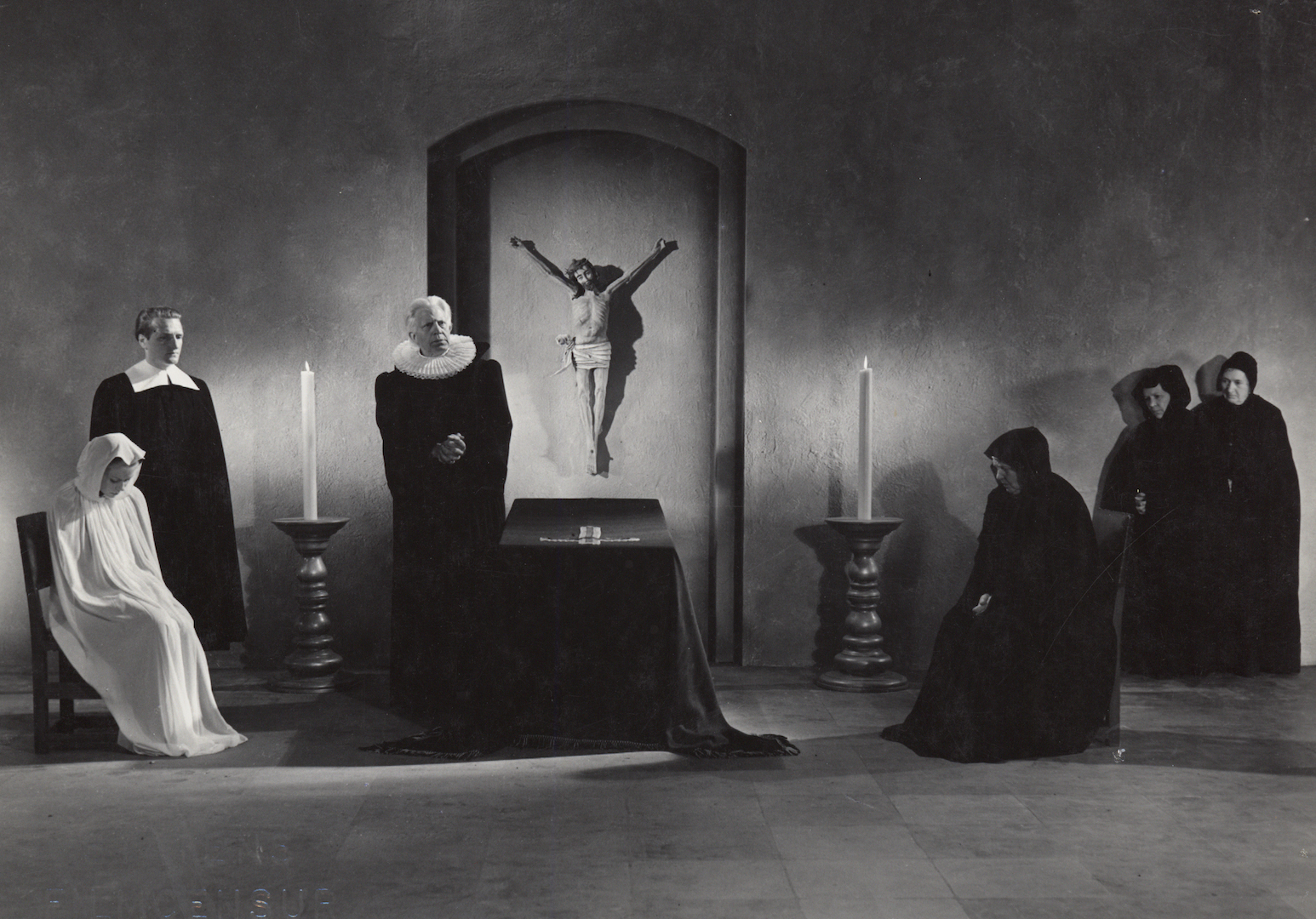
Carl Dreyer’s DAY OF WRATH (1943). The Criterion version is currently streaming on Hulu+.

Click on the image to enlarge.

Posted in Movies | Tagged | 2 Comments

Movie Poster Du Jour: “…And God Created Woman”

Fabrizio del Wrongo writes:

100_8934

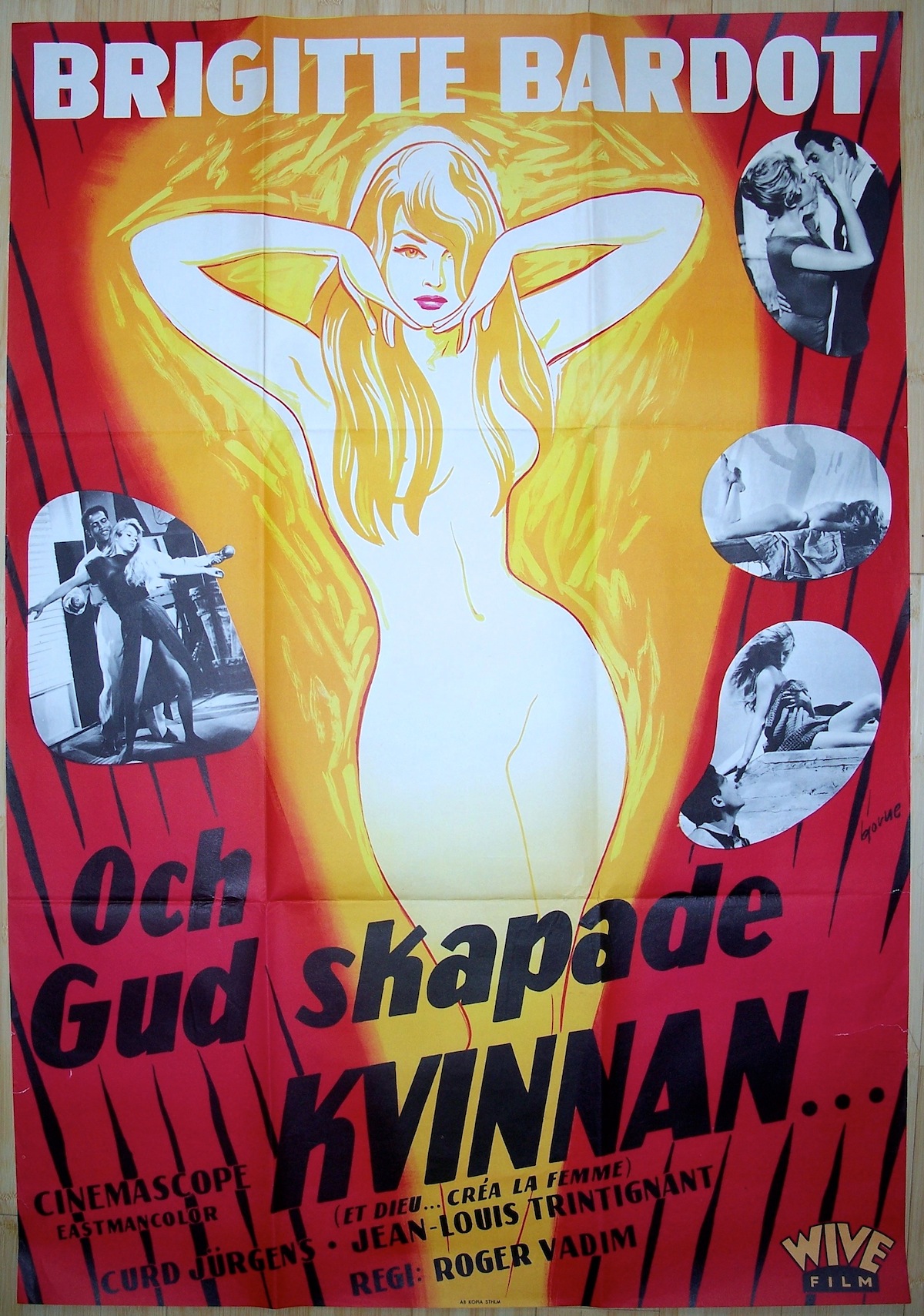
Taking the Bardot-as-sex-goddess idea rather literally. From Sweden.

Related

  • I posted a bunch of Bardot posters back here.
Posted in Commercial art, Movies, Sex | Tagged , , , , | 2 Comments

Sunday Jazz Selection

Fenster writes:

Tony Bennett and Bill Evans, Waltz for Debby

Posted in Music | Tagged , , | Leave a comment

Linkage

Blowhard, Esq. writes:

venndiagram

To lessen the sting, have a picture of Emily Ratajkowski:

emily

Posted in Linkathons | Tagged , , , , , , | Leave a comment

Architecture Du Jour

Blowhard, Esq. writes:

garni

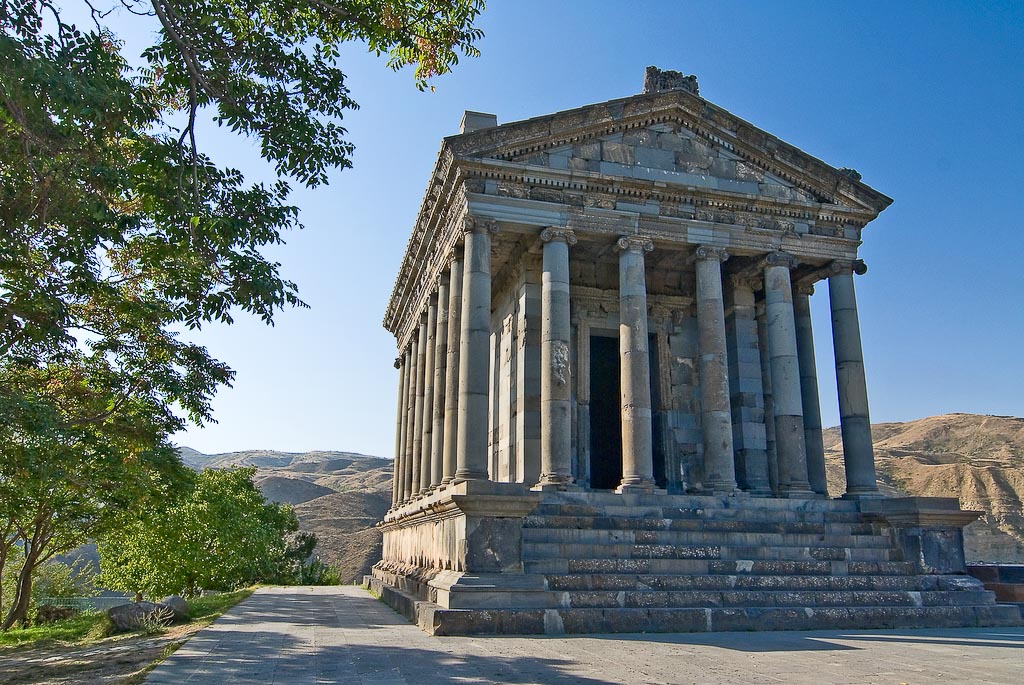
Garni Temple, Armenia.

Click on the image to enlarge.

Posted in Architecture, History | Tagged , , | Leave a comment

Blues Guys I Like More than Robert Johnson

Fabrizio del Wrongo writes:

Lonnie Johnson

T-Bone Walker

Blind Willie McTell

Son House

I could name others.

Don’t get me wrong — Johnson is great. Still, I think music writers have gone a little overboard in praising him. Many seem to love all that devil-at-the-crossroads silliness more than they do the music.

Some disc/download recommendations:

Posted in Music, Performers | Tagged , , , , , | 2 Comments

Idioms I Don’t Understand

Eddie Pensier writes:

My usage of the cliché “paying through the nose” in my previous Linkage led me to ponder the origins of some idioms, similes and metaphors whose meanings are more obscure than perhaps they ought to be. I imagine “paying through the nose” implies a painfully high price, but how did it get started? And would any merchant of anything accept a payment that came to them covered in snot?

happy as a clam–Really, are they happy? Happier than humans, or are we using other molluscs as the happiness baseline? How would we know? Would they be happy if they knew they were about to be deep fried or drowned in pasta sauce?

clean as a whistle–I wouldn’t think whistles would be very clean, what with all the germs and spit. Kind of disgusting, actually.

easy as pie–The person who first said this has obviously never made a pie: they’re really difficult.

getting along like two cats in a sack–I value my own blood and prefer that it remain inside my body, so I have not actually tested this. But I have a sneaking suspicion that if I were to place my two cats in a sack, they would be (not to put too fine a point on it) distressed.

as sick as a dog–Dogs in my experience don’t sicken as much as humans do.

they robbed me blind–Has anyone in history, ever, gone blind as a result of being robbed?

Share other examples of senseless sayings in the comments. If you have plausible explanations for the ones above, share those as well.

Posted in Language | 8 Comments