A Day in the Life of an Ancient Athenian Citizen

Blowhard, Esq. writes:

ancientgreece

It’s the 5th century BC. Because Athens’s allies pay the city tribute (i.e. protection money in exchange for Athens shielding them from the Persians), you are sufficiently wealthy that you don’t need to work for a living. You are a man of leisure, so most of your days are spent relaxing.

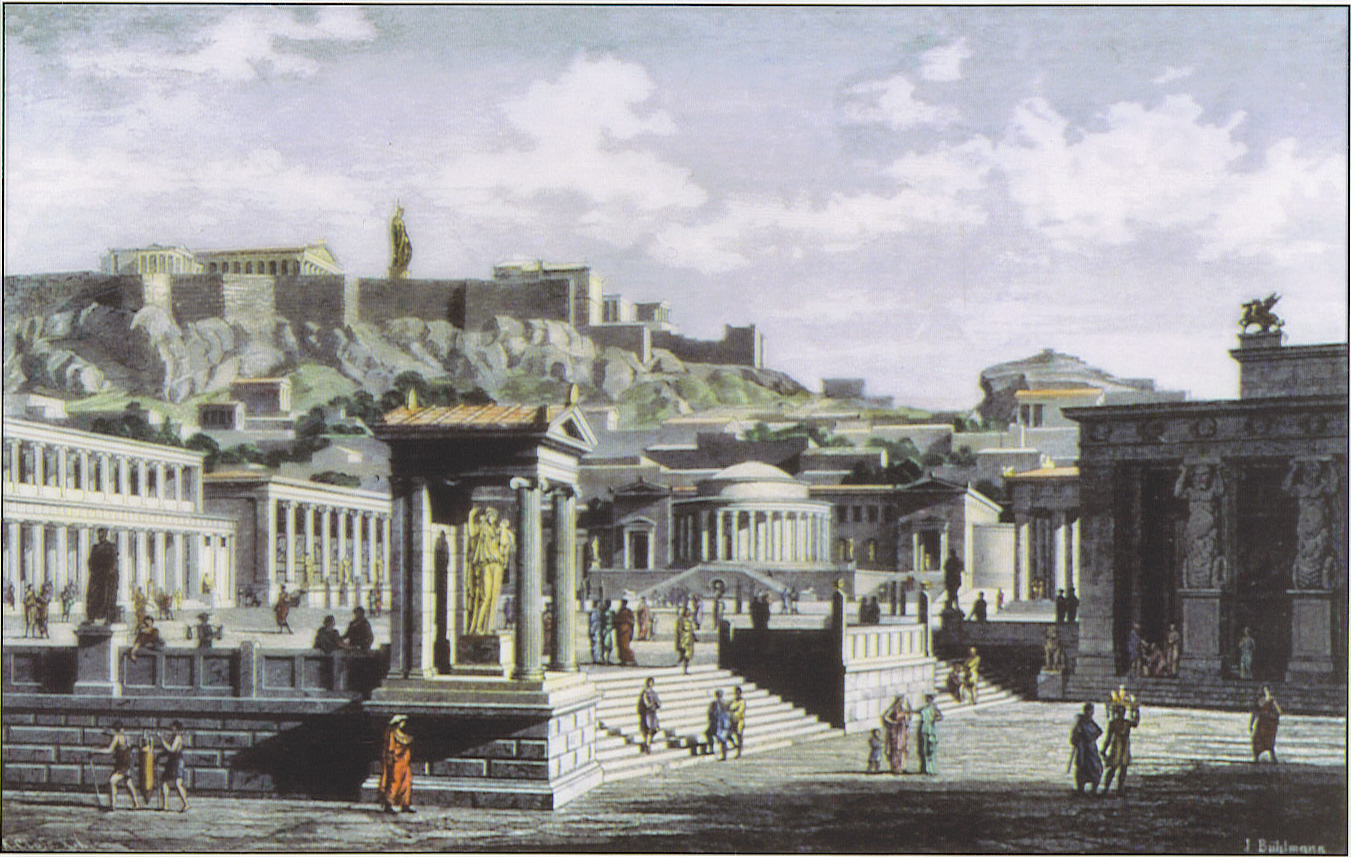
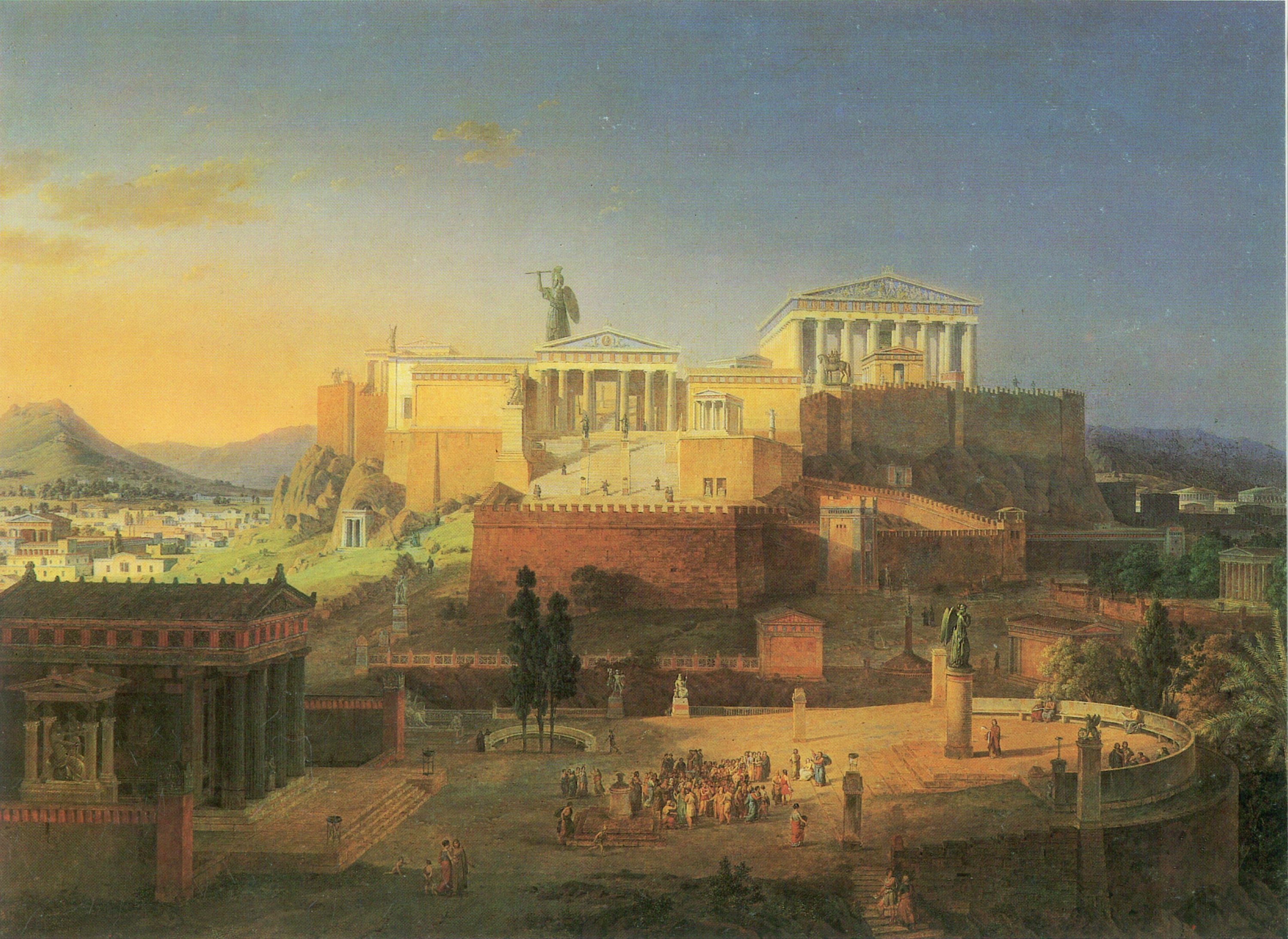
You rise before dawn and walk down to the agora north of the Acropolis. Your slave accompanies you. The agora is the civic, legal, religious, commercial, and social hub of Athens. It’s a level, open space, but a number of buildings surround it on all four sides. The agora is the location of much of the city’s official and unofficial business, as well as a place to merely hang out. At the center of the agora is the Monument of Eponymous Heroes, erected in honor of the men who gave their names to the ten tribes of Athens. On this morning there is a large group gathered around the monument looking at various documents — the agenda giving details of the next Assembly, a list of lawsuits, and another document listing the tribes being called for military service. You avoid the crowd and head over the philosophers’ area, perhaps join in the conversation for a little while. Everyone knows the Athenians love to argue. Socrates can be spotted here most days. Perhaps after that you go to the market stalls to shop for a while. Your slave will carry your purchases.

the-agora-in-ancient-athens

Next, you go to the gymnasium, literally “place of nakedness.” The gymnasium is a pleasure center — it has a wrestling ground, running track, bath, and lecture room for education. The most famous gymnasia of the classical period were Plato’s Academy and Aristotle’s Lyceum. The gymnasia are mainly patronized by young men, but elderly Greek men are known to hang out there too. You’d probably spend a few hours here.

Plato's_Academy_mosaic_from_Pompeii

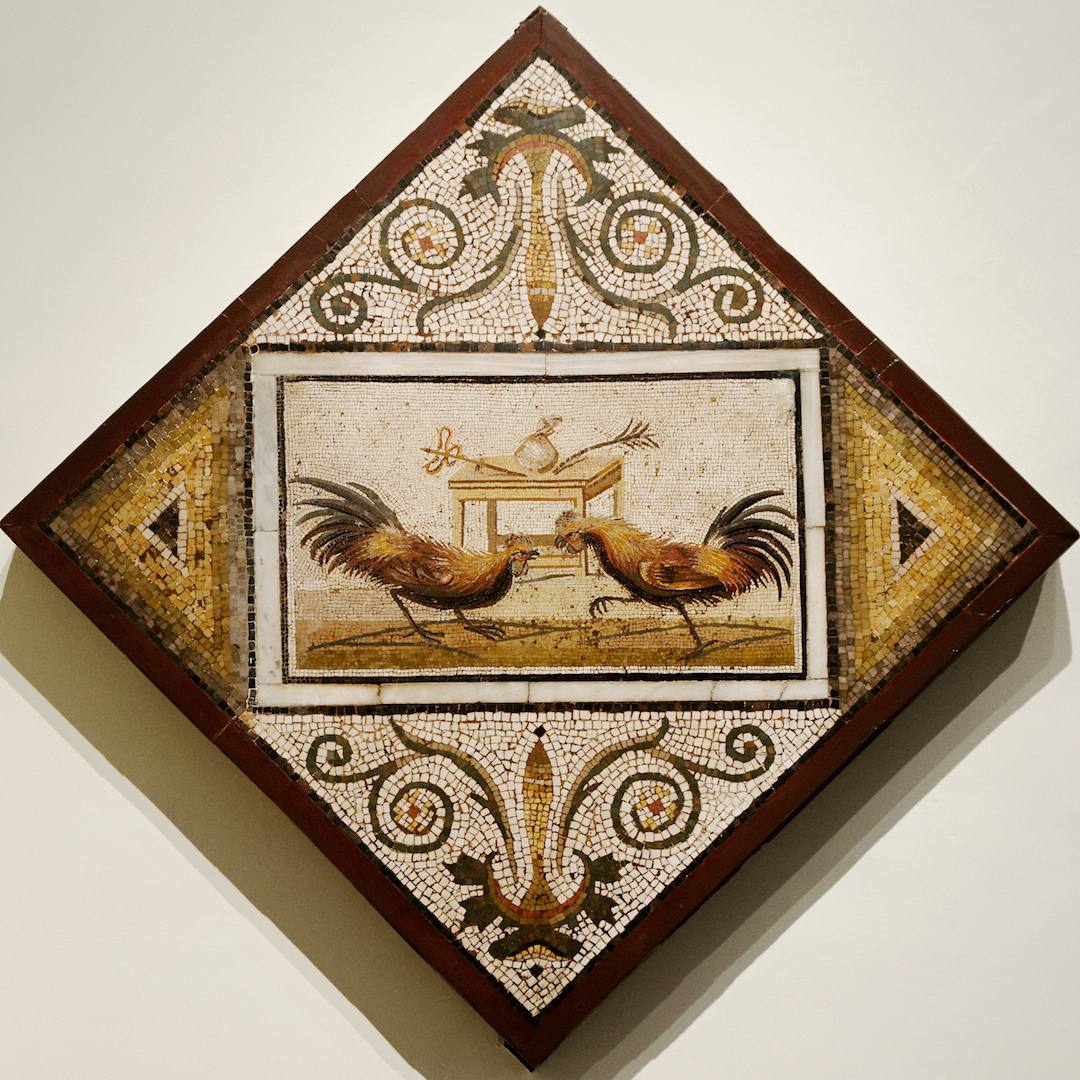
At midday you head home for lunch, visit with your kids for a while. If you’re tired, you take a nap. Or, if you’re feeling more energetic, you might go hunting or go to the cockfights.

Cockfight_Santangelo

By now it’s evening time. You could head down to the local tavern for a few jars of wine, but taverns are for the lower classes, not your sort of crowd. You prefer to drink at home or at a friend’s home in a semi-form setting, an activity known as a symposium, literally “drinking together.” Plutarch described a symposium as a “passing of time over wine which, guided by gracious behavior, ends in friendship.”

At the symposium you don’t sit, you recline on a couch that you share with two other men. You prop yourself up on your left elbow so can eat and drink with your right hand. A table was placed in front of you with food. Although drinking was the primary reason for the gathering, a full meal was served first. After dinner religious libations were poured and a hymn was song to the gods, usually Dionysus. The symposium proper began with a sip of neat wine to consecrate the proceedings. Just a sip, though. The wine served to the guests was diluted with water as no sophisticated Greek would ever consume wine neat because it was thought to make one go insane. Only barbarians drank wine straight.

There were different kinds of symposia. Perhaps the host would hire a flute-girl to entertain his guests. Perhaps, as famously documented by Plato, the guests would philosophize. Or, the host might hire some hetaira, female courtesans, usually ex-slaves, skilled in the arts of music, conversation, and sex. If Greek vases are to be believed, symposia frequently turned into orgies.

Symposia were also important transmitters of culture. The “capping game” was a popular activity: one person would quote a line of poetry, the next person would quote the next line, etc. Or, the first person would quote a line of poetry and the next person would quote a line that began with the the last letter of the line previously quoted. When guests got drunk, they played the decidedly more lowbrow kottabos, in which participants flung drops of wine at targets.

cottabos_player_louvre

Classical Greek culture was heavily male-centered. Respectable Greek women were not only barred from symposia, they were excluded from most of public life. They spent most of their time at home tending to the children and domestic duties. Women in public were chaperoned at all times. As for relaxing, Greek women were permitted to host or visit other female friends, attend certain religious festivals, or spend time with their husbands.

greekwomen

Related

Posted in History, The Good Life | Tagged , , , , , , | 7 Comments

Sunday Tune

Fabrizio del Wrongo writes:

Posted in Music | Tagged , | Leave a comment

Village Du Jour

Blowhard, Esq. writes:

greece

Molyvos, Lesbos, Greece. Source.

Click on the image to enlarge.

Posted in Architecture, The Good Life, Travel | Tagged , , | Leave a comment

Movie Poster Du Jour: “A Married Woman”

Fabrizio del Wrongo writes:

100_8802

Posted in Commercial art, Movies | Tagged , , , , , , | Leave a comment

Gallery: L’Wren Scott

Eddie Pensier writes:

Scott, née Laura Bambrough, may not be remembered in the long run as a groundbreaker or even much of a trendsetter in the world of fashion design. But one talent she indubitably possessed in spades, and it’s one that is ironically overlooked in the perpetually speeded-up world of fashion. One might even call it politically incorrect.

She knew how to make women look beautiful.

Scott, who took her own life earlier this month, designed dresses that flattered their wearers (no small thing: suggesting that women buy well-fitting clothes can get you fired these days). They were feminine, appealing, and sexy without being sluttish. The simplicity of their design was a virtue: they all spoke of a sleek understated elegance with no gimmickry. Possibly due to her background as both a model and a stylist, she understood the importance of dresses that fit a variety of female bodies: two of her best-known fans were the lithe Nicole Kidman and the ultra-voluptuous Christina Hendricks. (Scott herself was 6’3″, which is why she appears to tower over partner Mick Jagger in photos. Legs for days!)

We here at UR like beautiful women: be they naked or stylishly dressed. Scott did her part in making womankind a little more chic and lovely, and for that, she has earned my sincerest gratitude. RIP Ms. Scott.


Posted in Media, Performers, Women men and fashion | Tagged , , , , , , , , , , , , , , | 3 Comments

Art Du Jour

Eddie Pensier writes:

800px-Bronnikov_gimnpifagoreizev

Fyodor Bronnikov, Pythagoreans Celebrate Sunrise, 1869

Posted in Art | Tagged , , , | Leave a comment

Naked Lady of the Week: Charlotte Stokely

Fabrizio del Wrongo writes:

cs-cover

Charlotte is a freckle-faced, butt-heavy porn actress and model who’s got a plush, Louisiana-jailbait-meets-California-golden-girl appeal. When she started she was charmingly fleshy, almost plump; these days the baby fat has been replaced by a chic, model-like leanness. I think I prefer the baby fat. She and her photographers tend to emphasize her butt. It’s a nice one. Probably, it deserves its own rap video.

But why not let her describe herself? She rhapsodizes:

I’m made of two scoops, of angel kisses. The evidence seen in my freckles. Hair golden as the sun. Perky rosey-pink nipples.
Raised near the purple mountains. ASTRONOMER- MOON STARER. Year of the Tiger combined with LEO LION makes me a LIGER. I study Ancient Egyptian Hieroglyphics. Stroking paint onto wood or canvas makes me smile. All American Girl Next Door to the girl next door.

You may have noticed Charlotte in American Apparel’s ad campaign, some examples of which can be seen on her blog. Blowhard, Esq. posted a photo of her in his tribute to AA semi-nakedness last week.

I believe these photos come from Bare Maidens, ATK, AMK, FTV, Digital Desire, and Stunners.

Don’t even think of viewing the below naked pictures at work. But what the hell are you doing at work anyway? It’s Friday.

Continue reading

Posted in Photography, Sex, The Good Life | Tagged , , , | 7 Comments

“Cheers” Star in the News

Fenster writes:

The ex-Cheers star and perenially overweight/overwrought actress is back in the news, this time making claims that the overweight/overwrought New Jersey Governor knew about the lane closures at the GW Bridge.

That’s what the headline says, anyway, though I could find no mention of Cheers in the article.  Odd.

And what is all this stuff about Soviet Jewelry?

And what is all this stuff about Soviet Jewelry?

Posted in Humor, Politics and Economics | Tagged | Leave a comment

Quote Du Jour: On the French Sidewalk Café

Blowhard, Esq. writes:
the-bakery-girl-of-monceau

It would be hard to imagine a more recognizable third place than a French bistro. Traditional third places tend to have physical features that unmistakably indicate what they are — these are sometimes called signal fittings. Thus, the American saloon had its swinging doors and brass spittoons, the English pub its beer pump handles and dart boards, and so on. The equipment that makes le bistro unmistakable consists of its outdoor wicker chairs, its small, marble-topped tables (about eighteen inches in diameter and pedestal based), and an overhead awning rolled up or down according to the angle and intensity of the sun’s rays. As these key visual elements protrude into the street, they as clearly bid the passerby welcome as they proclaim the place’s identity. Most of its customers do not really enter a bistro. By taking the preferred seating on the sidewalk, one remains as much out as in.

Bistros normally have no signs outside indicating their names, and for the best reason — most have no names. Naming something is the first step toward advertising it, and the French have always been admirably suspicious of advertising – only in recent years have they permitted it on television. But the major reason for not naming a bistro is simply that the neighborhood café doesn’t need a name. Its patron has filled a local niche and is content with his small, steady business. He has little interest in making his place a port of call to outsiders. The bistro belongs to everyone who lives in or happens by the neighborhood. It is as familiar to its regulars as one of the rooms of their apartments; its unmistakable and protruding presence into the street provides all the advertising that another enterprise might need. The no-name bistro also attests to the intense loyalty of its regular customers. The French are not pub crawlers or bar-hoppers, as are their English and American counterparts. A Frenchman has his place, and he confines himself almost exclusively to it. His place is referred to merely as le bistro, and when he tells his wife that he’s going to the café, she knows exactly where he may be found.

Ray Oldenburg, The Great Good Place. Thanks to Lloyd for tipping me off about this book.

Posted in Architecture, The Good Life, Travel | Tagged , , , , | 5 Comments

Movie Still Du Jour

Blowhard, Esq. writes:

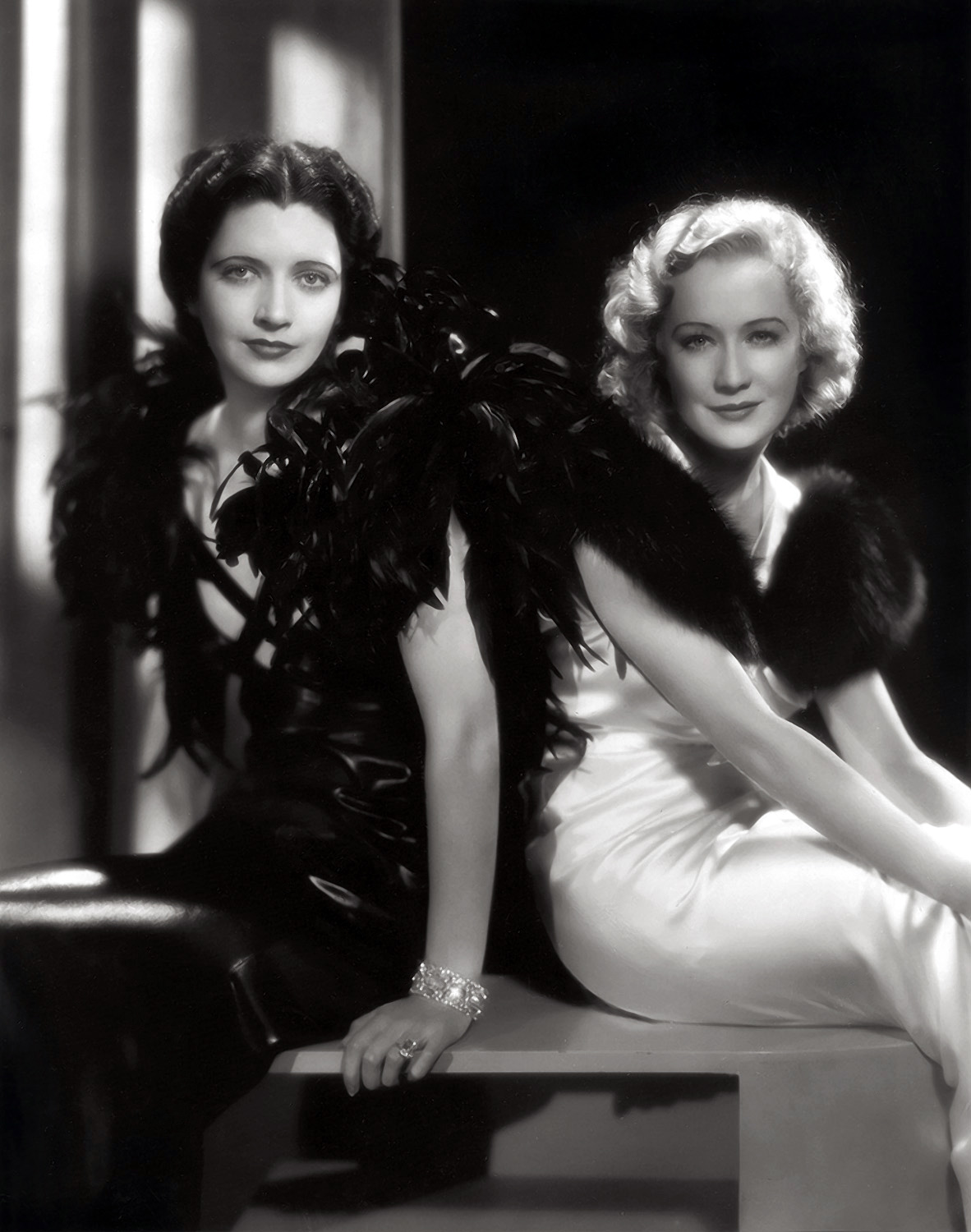
Kay Francis & Miriam Hopkins-The Trouble in Paradise 1932

Kay Francis and Miriam Hopkins in Ernst Lubitsch’s TROUBLE IN PARADISE (1932)

Click on the image to enlarge.

Posted in Movies, Performers, Women men and fashion | Tagged , , | 10 Comments