
Blowhard, Esq. writes:
Click on the image to enlarge.
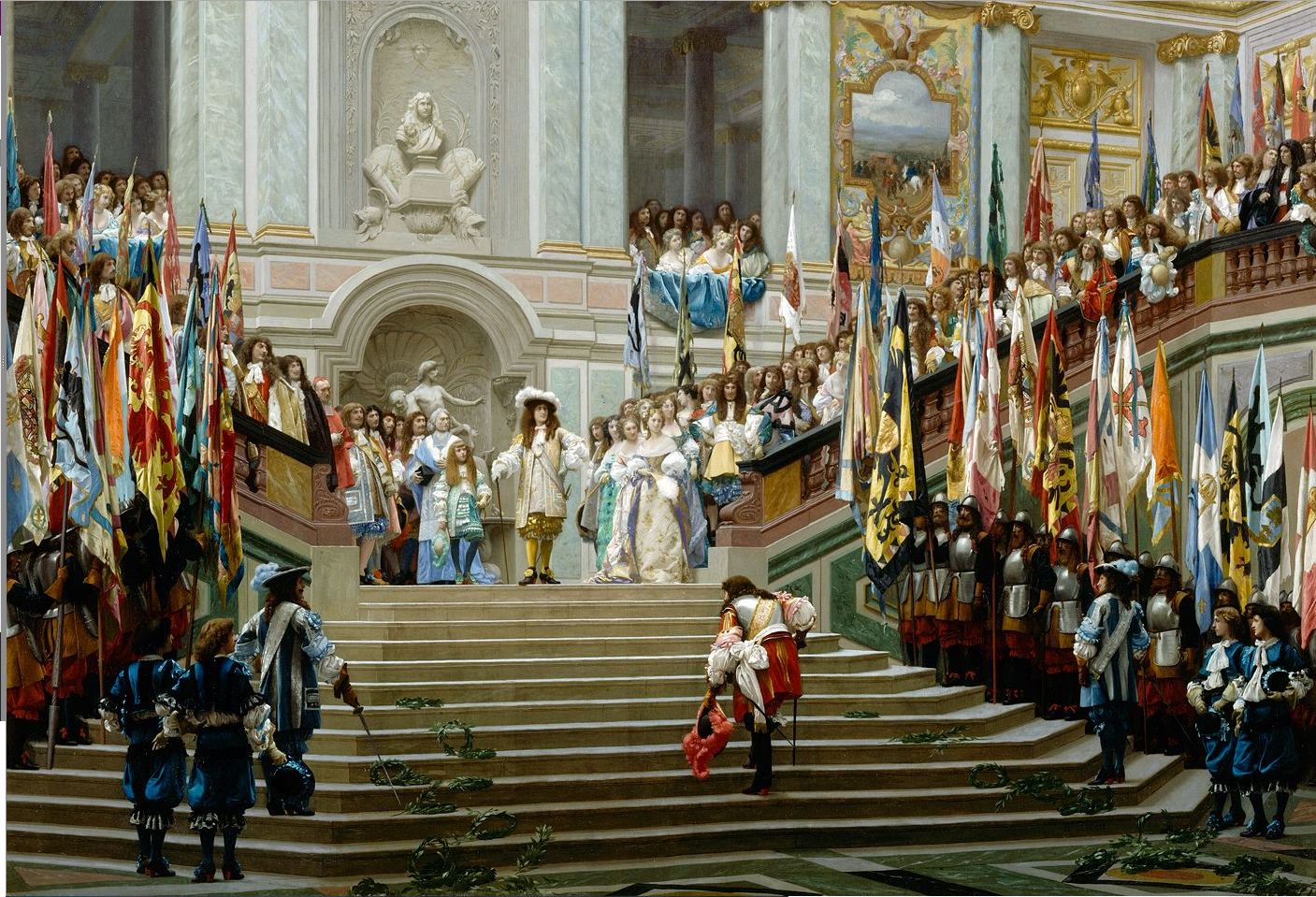
“Reception of Le Grand Condé at Versailles” (1878) by Jean-Léon Gérôme
Blowhard, Esq. writes:
Click on the image to enlarge.
“Reception of Le Grand Condé at Versailles” (1878) by Jean-Léon Gérôme
epiminondas writes:
The road to hell is surely paved with good intentions. Maybe even with liberal ones.
epiminondas writes:
Fabrizio del Wrongo writes:

I saw that Tom Laughlin died the other day. He was mostly known for playing Billy Jack in a series of films, the most famous being the first two: the 1967 “The Born Losers” and the 1971 “Billy Jack.” You don’t hear much about Billy Jack these days, but as heroes go he was a pretty interesting figure. A tough-guy cowboy type who was part Indian, he was devoted to defending the helpless and the marginalized. Though a peace-loving man, he wouldn’t hesitate to whoop your ass if you were acting like a jerk. I guess you can say he was a prototype for the good-guy badass characters of later years, like Buford Pusser (portrayed Joe Don Baker in “Walking Tall”), Dirty Harry, John Rambo, and Steven Seagal. (Billy Jack was a martial arts master at a time when Seagal was still growing out his ponytail.)
If, like me, you didn’t live through the ’60s and early ’70s, you might take “Losers” and “Billy Jack” as good introductions to the popular attitudes of the day and the way in which they were rapidly changing. In the earlier film Billy Jack helps maintain social order by walloping on a gang of degenerate counter culture types, just like the stalwart sheriff wallops on the desperadoes in an old-school Western. But by the release of the later film he’d gone full-on hippy; now he was fighting on the side of the counter culture and against the social order, represented by a group of dudes who can only be referred to as “The Man,” in order to save a Feminist school teacher and her progressive kumbaya school. I guess you can say that whereas “Losers” is a conservative Western in the tradition of “The Virginian,” “Billy Jack” is a liberal Western more in line with “The Oxbow Incident” and “High Noon.”
Laughlin wasn’t just an actor: he directed the “Billy Jack” movies, and he was a notable independent-minded filmmaker of the era. When the studios failed to support “Billy Jack,” Laughlin took over distribution himself, turning it into a huge moneymaker. For what it’s worth, I think he was a pretty talented director, one with a good eye for composition and a feel for the simple oppositions to which popular audiences tend to respond most strongly. And you have to respect Laughlin for giving such weight to his female co-stars. Elizabeth James actually wrote the screenplay for “Losers,” and Delores Taylor co-wrote “Billy Jack” with Laughlin. This gives both movies an unusually female perspective, especially in the scenes showing women being menaced by male aggressors. Taylor, in particular, has a harrowing rape scene — it’s the consummation of the almost-rapes that James endures (and is saved from) in “Losers.”
Oh, I also love the poster for “Billy Jack.” Designed by Piero Ermanno Laia, it captures the essence of the character as well as the over-burdened, roiling vibe of the era. It’s featured at the top of this post.
Related
Blowhard, Esq. writes:
Click on the image to enlarge.
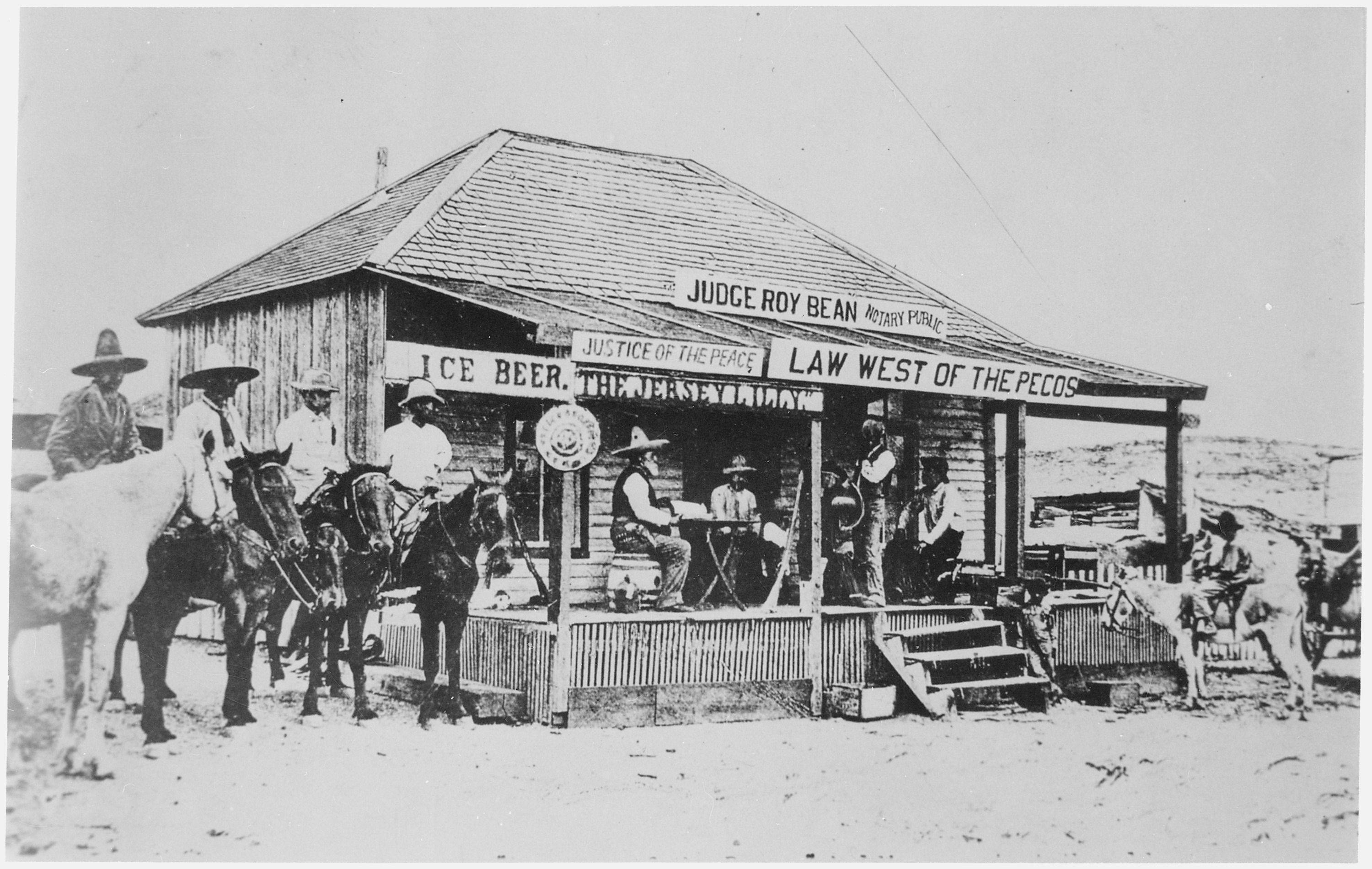
Judge Roy Bean, known as the “Law West of the Pecos,” holding court in the town of Langtry, Texas in 1900. Pictured is the trial of a horse thief. The courthouse doubled as a saloon.
Paleo Retiree writes:
Fenster writes:
Eddie quotes Cole Porter. My rejoinder: Ersatz Cole Porter.
PARIS IN THE OFF-SEASON
I
The Prices
I ask for another stiff boisson
when a seafood repast que nous choissisons
almost breaks my whole bank-ly,
deux mille francs! I say, “francly,
one man’s fish is another man’s poisson”.
II
The Weather
In Paris it’s really quite rainya
than the proverbial plainya in Spainya.
But it couldn’t be better!
After all we’d be wetter,
if we’d traveled the ship Lusitania.
III
Ensemble
So though Paris is lovely and fair,
for more francs and soleil do I care.
And though it may embarrass,
here’s my Judgment of Paris:
Although it’s not sunny, it’s cher.
Blowhard, Esq. writes:

Time for a little hatethink, you guys! Did you hear the story about the dude in Ohio going around trying to steal peoples’ homes? He claimed the owners, some of whom were on vacation, had abandoned them and thus he was free to take ownership via a legal concept called adverse possession. Now, adverse possession is a valid cause of action, but the statutory period for asserting a claim is usually many years. In the case of Ohio, an owner must not use his property for 21 years before someone else may adversely possess the property.
But this criminal-trespassing troll’s misunderstanding of the law isn’t what interested me. As this other story points out, the troll is a member of the Sovereign Citizens movement. Huh? That was a new one to me, so I followed the link to the Southern Poverty Law Center to read about this extremist group.
Sherbrooke writes:
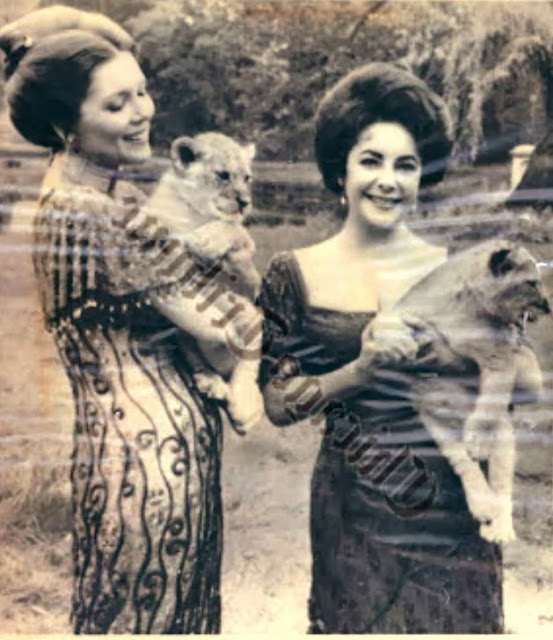
Records of why this photo was taken remain undiscovered, but surely the cause of Big Cats was involved. Diana Rigg and Elizabeth Taylor (meeting for the first time?) show the kitties some love.
Blowhard, Esq. writes:
Click on the image to enlarge.
 Cobb Hall at the University of Chicago
Related
 Blowhard, Esq.
 Callowman
 Sherbrooke
 Eddie Pensier
 Enzo Nakamura
 Epaminondas
 Fabrizio del Wrongo
 Fenster
 Brundle Guy
 Glynn Marshes
 Paleo Retiree
 Atypical Neurotic
 Question Lady
 Sax von Stroheim
 Sir Barken Hyena
 The Mistaken
 Uncouth Reflections