
The Question Lady writes:
Are you ever nostalgic for some of the really terrible food you ate as a kid?
The Question Lady writes:
Are you ever nostalgic for some of the really terrible food you ate as a kid?
Blowhard, Esq. writes:
Designed by Gordon F. Powers in 1969. Unlike many of his contemporaries, he was thankfully not taken in by Brutalism.
 Compare to Boston City Hall at the Wikipedia link, also built in 1969. Which would you rather work in or look at every day?
Blowhard, Esq. writes:
Dear Sir Barken Hyena,
For me, The Black Swan was a primer on skeptical empiricism. It gives the reader the intellectual tools to question and doubt experts. As you said, technocratic solutions have wreaked incredible havoc over the years from the economy, to nutrition and health, to my profession, the law. One very helpful way of looking at the world is that those in power are primarily concerned with amassing and maintaining power irrespective of any supposed good intentions, and one of their primary methods for doing so (at least in the West) is donning the mantle of The Expert. “I’ve studied this problem, I have many advanced degrees, all my friends over here have advanced degrees, and you would do best to listen to us.” I mean, fuck those guys, right?
So any book that reveals these charlatans for what they are gets my ringing endorsement. That is, the limits of our knowledge, the ways in which human beings fool themselves into a false confidence, cannot be emphasized enough. Here are a few of the philosophical/psychological concepts I found the most interesting and helpful:
All of these concepts, as well as a few others, add up to a worldview that is highly suspicious of top-down, technocratic, trust-me-I’m-an-expert thinking. I completely agree with you that the danger of this type of thinking cannot be overestimated. I’m familiar with the technocratic perspective in finance and health, but I’m curious to hear you talk about it with respect to the arts. Also, what do you think about Taleb’s style? I’m sure many find his arrogance off-putting, but I think it’s a hoot. I laughed out loud more than a few times while reading. And should I be embarrassed to admit I skimmed a few sections? Once he started going on about the Great Intellectual Fraud of the Bell Curve, I kinda tuned out…
Anyway, looking forward to hearing more about your reaction. In my next response, I’ll also pick out a few choice quotes.
Paleo Retiree writes:
Can’t resist passing along this Mark Knopfler song that I just ran across. You’ll have to click through the embed to watch and listen to it on YouTube. It’s worth the effort:
Such an evocative murky/clear, tender/sad, droning/melodic performance: a little “Local Hero” and a little “McCabe & Mrs. Miller” … and all of it over in less than five minutes. Amazing the spell that popular music can cast.
Bonus track: another of my Knopfler favorites.
Fenster writes:
The Wire is, by a wide margin, my favorite television show ever.
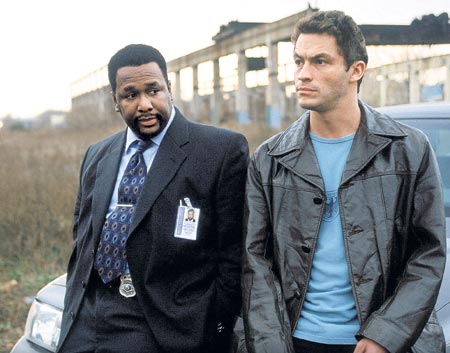
Or, to put it in the currently fashionable way: my favorite. television. show. ever.
Over at The National Interest, Francis Fukuyama writes a very nice appreciation of the show. Over the course of his career, Fukuyama has been up, down and all around but I think you have to say this: he is a very serious thinker who does his best to be intellectually honest about his subjects. That makes him a little slippery and hard to categorize–which in my book is fine. We have altogether too many people with answers and not enough people poking around trying to find the right way of thinking about the questions.
In any event, during the current silly season, one in which Ayn Rand has been brought back almost to the point of respectability, it is wise to step back and look at what is right in front of your face, as Fukuyama does with the lessons of The Wire. I won’t summarize–read it if interested and comment here.
The Question Lady writes:
Where do you go for your news?
Paleo Retiree writes:
The estimable Blowhard, Esq. and I are involved in a quest to direct the attention of architecture fans (and potential architecture fans) to the modest pleasures of what are called “arbor gates” — trellised, usually overgrown, garden gates, that are often to be found in front of Craftsman-style bungalows and cottages. Here’s Blowhard, Esq.’s latest find. Here’s mine:

What a goofy, sweet, lopsided beauty, eh?
I find that the message these structures convey is a pleasing combo of “stay out” and “welcome,” “open” and “contained,” with the tangled-but-shaped vegetation and the hand-hammered wood conveying a nice human/creaturely touch: the structure and rationality of the manmade world interacting generously with the wildness, abundance and irregularity of nature. Something like that, anyway.
FWIW, I feel that I run across these charming micro-structures far more often on the West coast than on the East. I wonder if that’s really the case, and if so, why.
Another question: Who was the genius architect who came up with the arbor gate? That’s a trick question, actually, because the answer is: as with many architectural wonders, we don’t know. The general lesson I’m dying to share: architecture is like cooking, a practical art/craft to which many, many thousands of practitioners, most of them unknown, have made positive contributions. God how I love it when the arts clearly happen in a bottom-up, self-organizing way.
Here’s another, if only half-related, thing I often wonder about. Although I’ve been a fan of architecture and urbanism for decades, I’ve always had a terrible time remembering architectural terms. Even the term “arbor gate” is a tough one for me to recall. I’ll reach for it and come up with something like “trellised arched entryway” instead. Why? Why?
Any idea why it’s so hard to recall architectural terms? Do you have that trouble too?
Paleo Retiree writes:
I’m still in California, and I continue to get a lot of pleasure out of the well-preserved old cars that abound out here. Back in the northeast, it’d be a rare treat to run across something like this:

Well preserved.
Out here in CA, seeing a nifty old piece of automotive design like this is a daily blast.
Blowhard, Esq. writes:
Curiosity is one of the lowest of the human faculties. You will have noticed in daily life that when people are inquisitive they nearly always have bad memories and are usually stupid at bottom. The man who beings by asking you how many brothers and sisters you have, is never a sympathetic character, and if you meet him in a year’s time he will probably ask you how many brothers and sisters you have, his mouth again sagging open, his eyes still bulging from his head. It is difficult to be friends with such a man, and for two inquisitive people to be friends must be impossible. Curiosity by itself takes us very little way, nor does it take us far into the novel — only as far as the story.
— E.M. Forster, Aspects of the Novel
Given that quote, it probably won’t surprise you that Forster isn’t much of a fan of story, either. I’ve been browsing through this collection of lectures Forster gave on fiction and the chapters on “story” and “plot” in particular deserve a takedown.
Brundle Guy writes:
A couple of months ago a good friend of my family’s passed away. I helped partake in a search through her house for her will, and while we didn’t find the legal papers in question, I did find an unread copy of a collection of posthumously published Kurt Vonnegut short stories. I was told the family friend would have loved for me to have, as I am a huge fan of Vonnegut, so I took the book home as a little memento.
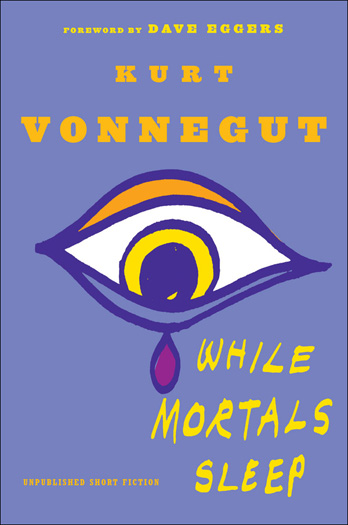
The collection, entitled While Mortals Sleep, has a forward by Dave Eggers in which he describes Vonnegut’s early prose as “mousetrap stories”:
A mousetrap story exists to trick or trap the reader. It moves the reader along through the complex (but not too complex) machinery of the story, until the end, when the cage is sprung and the reader is trapped. And so in this kind of story, the characters, the setting, the plot–they’re more or less a means to an end.
This isn’t to say the characters aren’t real-seeming, aren’t believable or sympathetic or any of the other things we might want characters to be. On the contrary, Vonnegut is masterful at quickly sketching a character who you instantly recognize and are immediately willing to follow. But in the end, their routes are determined by the master mousetrap maker, their fates in service to the larger point.
He contrasts this with the current style of literary short fiction:
We’re now in an age of what might be called photorealistic stories. What we have with most contemporary short stories is a realism, a naturalism, that gives us roughly what a photograph gives us. A gifted photographer will frame reality in a way that seems both real and novel. His or her work will “hold a mirror” to our lives, but in such a way that we see ourselves anew. All art forms attempt this mirror-holding, but photography, and the contemporary short story, are particularly well-designed delivery devices for this aim. And thus the contemporary short story gives us characters who breathe, who seem three-dimensional, who live in real places, have real jobs and struggles and pain. The stories are to a great extent in service to these characters. The characters make realistic moves in their lives, realistic choices, and the outcomes are plausible and perhaps even pedestrian.
Is it just me, or does that read more than a little self-aggrandizing, and a bit like talking down to the fairly recently deceased literary heavyweight whose book you’re introducing? Elsewhere in the intro Eggers notes that Vonnegut’s work has something else particularly old-timey and not in fashion about it: a moral point of view. Not moralistic, necessarily, but simply a point of view.
Apparently contemporary short stories have The Two Verboten P’s — Plot and Perspective.
Showing my biases here, I can hardly think of a less-appealing sounding story than the one described in Eggers rundown of contemporary short-story tropes. I’ve never understood why people want capital R Realism, photo or otherwise, in their art. I see plenty of realistic, pedestrian outcomes in my life, if I’m going to devote my time and attention to a piece of art, I feel like it had damn well better take me somewhere, and I’d prefer that be a bit farther than my own backyard.
As I was reading the enjoyable, well-constructed stories that night after my friend’s funeral and letting my mind ruminate on big, important (moral?) questions while also being thoroughly entertained, I remember thanking my lucky stars that my deceased friend wasn’t a Dave Eggers fan.
 Blowhard, Esq.
 Callowman
 Sherbrooke
 Eddie Pensier
 Enzo Nakamura
 Epaminondas
 Fabrizio del Wrongo
 Fenster
 Brundle Guy
 Glynn Marshes
 Paleo Retiree
 Atypical Neurotic
 Question Lady
 Sax von Stroheim
 Sir Barken Hyena
 The Mistaken
