Linkage

Paleo Retiree writes:

Posted in Linkathons | 2 Comments

Quote Du Jour: Usage Which is Reasonable Generates Usage Which is Unreasonable

Blowhard, Esq. writes:

The usages which a particular community is found to have adopted in its infancy and in its primitive seats are generally those which are on the whole best suited to promote its physical and moral well-being; and, if they are retained in their integrity until new social wants have taught new practices, the upward march of society is almost certain. But unhappily there is a law of development which ever threatened to operate upon unwritten usage. The customs are of course obeyed by multitudes who are incapable of understanding the true ground of their expediency, and who are therefore left inevitably to invent superstitious reasons for their permanence. A process then commences which may be shortly described by saying that usage which is reasonable generates usage which is unreasonable. Analogy, the most valuable of instruments in the maturity of jurisprudence, is the most dangerous of snares in its infancy. Prohibitions and ordinances, originally confined, for good reasons, to a single description of acts, are made to apply to all acts of the same class, because a man menaced with the anger of the gods for doing one thing, feels a natural terror in doing any other thing which is remotely like it. After one kind of food has been interdicted for sanitary reasons, the prohibition is extended to all foods resembling it, though the resemblances occasionally depends on analogies most fanciful. So, again, a wise provision for insuring general cleanliness dictates in time long routines of ceremonial ablution…

Posted in Books Publishing and Writing, Law | Tagged , | 1 Comment

Naked Lady of the Week: Angelika Wachowska

Fabrizio del Wrongo writes:

aw-cover

According to the internet, Petter Hegre, noted purveyor of high-rent porn, considers the body of this week’s naked lady to be the best he’s photographed. Who are we to disagree?

Is Angelika better described as classically composed or rotely mannequin? Hegre anticipates each tendency, formalizes it, and puts a frame on it.

Her Polishness is evident in her face. I’m not entirely sure what makes a face look Polish, but close-set eyes, a nose whose contours become bulbous around the nostrils, and flagrantly uncouth lips all seem to play a part.

The proportions of her face make me think of Scarlett Johansson. I found this odd, until I remembered that Scarlett has some Polish ancestry. Of course, it’s Jewish-Polish ancestry. But still…

Nudity below. Have a great weekend.

Continue reading

Posted in Photography, Sex, The Good Life | Tagged , , , , | 1 Comment

Juxtaposin’: First-Person Shooters

Fabrizio del Wrongo writes:

Posted in Computers, Games, Movies, Trends | Tagged , , , , , , , | 2 Comments

Naked Lady of the Week: Kika

Fabrizio del Wrongo writes:

k-cover

This Ukrainian model is known by Kika, Calida, and several other names. She has green eyes and a face that’s almost too composed. Maybe it’s that face that makes her seem a bit remote? Brancusi would envy such finish.

I perused some of the comments generated by her fans. My favorite comes from a guy who calls himself Bulldog:

Calida, you are so brave to give us this pose but it gives me a great thrill. To see a pretty girl’s anus is very special.

I wouldn’t have put it that way myself, but I can’t say I disagree with the sentiment.

Nudity below. Have a great long weekend.

Continue reading

Posted in Photography, Sex, The Good Life | Tagged , , , , , | 1 Comment

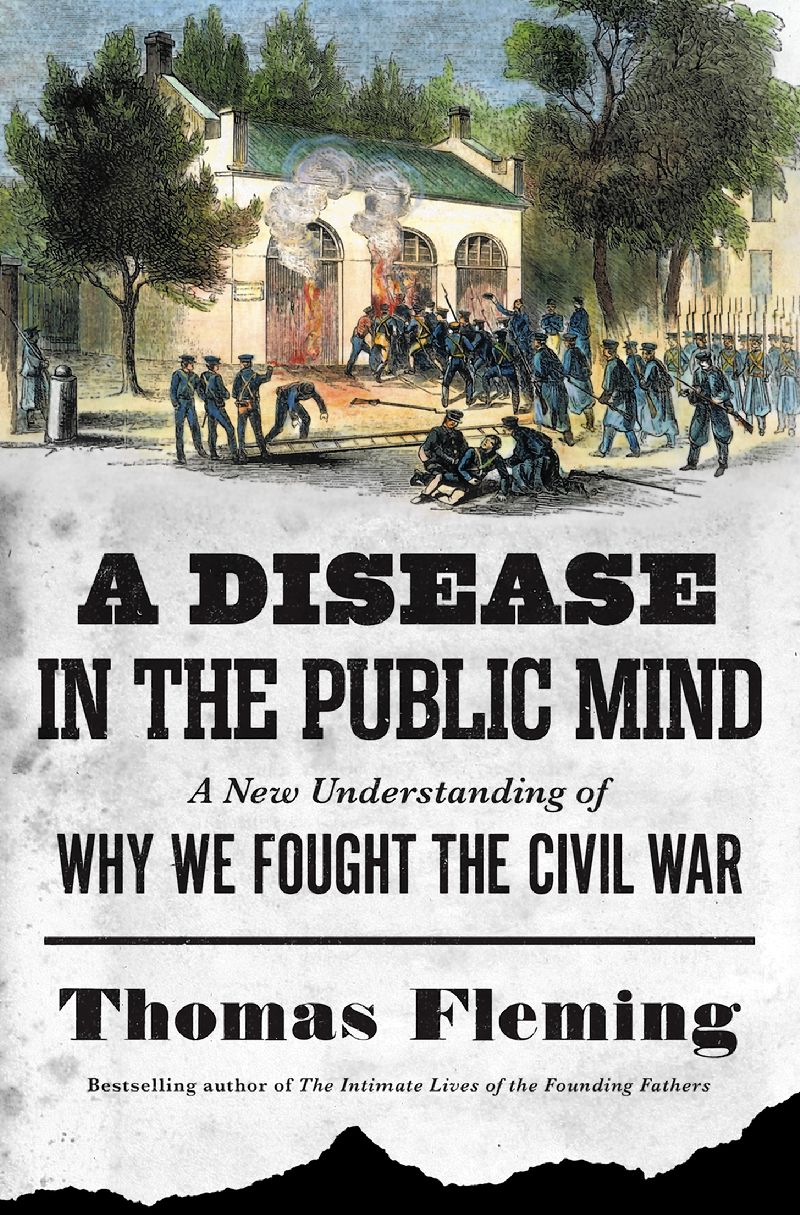
Book Notes: “A Disease in the Public Mind”

Blowhard, Esq. writes:

All of the brouhaha over Confederate statues has rekindled my interest in the Civil War, so I decided to work my way through some of the books that have been cluttering my shelves. The first one is this volume by Thomas Fleming on the intellectual origins of the War Between The States. Actually, “intellectual origins” sounds too highfalutin. It’s more like a chronicle of the propagandistic origins of the war. Fleming traces the history of thinking about slavery and abolitionism in the United States from the colonial era until the surrender at Appomattox. Seeded throughout are vivid profiles of key actors like John Quincy Adams, John Brown, William Lloyd Garrison, Theodore Weld, and Harriet Beecher Stowe. In Fleming’s view, the war resulted from a clash of two great narratives: the Northern fear of the Southern “Slave Power” versus the Southern fear of slave insurrection or, to put it bluntly, race war.

Both narratives were based in fact yet each side allowed its reason to be overwhelmed by emotion. In the South, the great fear was emancipation would lead to the kind of race war that ensued in Saint Domingue (Haiti) after the slave revolt led by François Dominique Toussaint-Louverture and Jean-Jacques Dessalines. While Toussaint-Louverture was a moderate, Dessalines was a radical who slaughtered as many white French as he could. Jefferson, who previously supported the gradual emancipation of slaves, switched to supporting the continuation of slavery out of fear that similar race war would erupt in the United States. His resistance to abolitionism would color Southern attitudes for generations, even if many Southerners admitted that slavery was an evil institution.

The North, on the other hand, was gripped by the righteous religious fervor of abolitionism. Puritan ideas about the North’s moral and spiritual superiority compared to the South dominated. Northerners refused to sympathize with their Southern brethren and saw it as their holy mission to bring the corrupt, decadent society to heel. Compromise, say compensated emancipation or permitting slavery in new territories, was anathema. I liked this bit about Garrison, publisher of the abolitionist newspaper The Liberator:

He did not analyze and refute his opponents’ arguments; he denounced them, sneered at them, dismissed them. He found no conflict between this style and his religious beliefs because they both nicely complemented the prevailing attitude of New England Federalists. They were inclined to believe in the moral depravity of anyone who disagreed with them.

This attitude was deeply rooted in the New England soul, thanks to the sermons they and their ancestors had heard for the previous century. A Puritan preacher’s favorite rhetorical form was the “jeremiad,” a shorthand term for style and content inspired by the biblical prophet Jeremiah. Jeremiads combined lamentation and condemnation of the spiritual and moral shortcomings of a people for their sinfulness and selfishness. Only a handful of mankind, stained by Adam’s primary sin, would ever merit salvation.

Although abolitionists provided the moral justification that fueled the war, they were nevertheless despised by many of their fellow Northerners. Boston-born brahmin Oliver Wendell Holmes Jr., a Union captain and later associate justice of the Supreme Court, reflected after the war that, “Communists show in the most extreme form what I came to loathe in the abolitionists — the conviction that anyone who did not agree with them was either a knave or a fool.”

A common propagandistic, er, journalistic technique in the 19th century press was lying, er, embellishing the truth. For example, the New York Tribune, a leading abolitionist newspaper, reported that John Brown, on his way to the gallows, kissed a black child as a sign of his deep, Christ-like affection for black people. Lithographs of the incident became popular, one of which was published by Currier & Ives. The Quaker poet John Greenleaf Whittier immortalized it in verse. Too bad it was a complete fabrication that never happened. Thankfully, this sort of fake news from the mainstream press, along with all-or-nothing fanaticism from the North, are relics of a less enlightened age that we contemporary Americans need not worry our pretty little heads about.

Related

Posted in Books Publishing and Writing, History, Politics and Economics | Tagged , , , | 16 Comments

A Bit of a Sea-Dandy

Fabrizio del Wrongo writes:

Captain_Raphael_Semmes_and_First_Lieutenant_John_Kell_aboard_CSS_Alabama_1863

As I passed the wake of the steamer, I wheeled in pursuit, fired a blank cartridge, and hauling down the Federal, threw the Confederate flag to the breeze. It was amusing to witness the panic which ensued. If that old buccaneer, Blue Beard, himself, had appeared, the consternation could not have been greater. The ladies screamed one of those delightful, dramatic screams, half fear, half acting, which can only ascend from female voices — and scampered off the deck in a trice; the men running after them, and making quite as good, if not better time. The effect of my gun, and change of flags on the steamer herself, seemed to be scarcely less electric. She had no intention, whatever, of obeying my command to halt. On the contrary, I could see from the increased impetus with which she sprang forward, and the dense volumes of black smoke that now came rushing, and whirling from her smokestack, that she was making every possible effort to escape. She had gotten a little the start of me, as I was wheeling to pursue her, and might be now, some three or four hundred yards distant.

The reader has been on the race-course, and seen two fleet horses, with necks and tails straightened, and running about “neck and neck.” This will give him a pretty good idea of the race which is now going on. We had not stretched a mile, when it became quite evident that the stranger had the heels of me, and that, if I would capture her, I must resort to force. I ordered my “persuader,” as the sailors called my rifled bow-gun, to be cleared away, and sent orders to the officer, to take aim at the fugitive’s foremast, being careful to throw his shot high enough above the deck not to take life. When the gun was ready to be fired, I yawed the ship a little, though the effect of this was to lose ground, to enable the officer the better, to take his aim. A flash, a curl of white smoke, and a flying off of large pieces of timber from the steamer’s mast, were simultaneous occurrences. It was sufficient. The mast had not been cut quite away, but enough had been done to satisfy the master of the steamer that he was entirely within our power, and that prudence would be the better part of valor. In a moment after, we could see a perceptible diminution in the motion of the ” walking-beam,” and pretty soon the great wheels of the steamer ceased to revolve, and she lay motionless on the water.

We “slowed down” our own engine, and began to blow off steam at once, and ranging up alongside of the prize, sent a boat on board of her. It was thus we captured the steamer Ariel, instead of going to muster, on Sunday, the 7th of December, 1862. But Fortune, after all, had played us a scurvy trick. The Ariel was indeed a California steamer, but instead of being a homeward-bound steamer, with a million of dollars in gold, in her safe, I had captured an outward-bound steamer, with five hundred women and children on board! This was an elephant I had not bargained for, and I was seriously embarrassed to know what to do with it. I could not take her into any neutral port, even for landing the passengers, as this was forbidden, by those unfriendly orders in council I have more than once spoken of, and I had no room for the passengers on board the Alabama. The most that I could hope to do, was to capture some less valuable prize, within the next few days, turn the passengers of the Ariel on board of her, and destroy the steamer. Our capture, however, was not without useful results. The officers and soldiers mentioned as being on board of her, were a battalion of marines, going out to the Pacific, to supply the enemy’s ships of war on that station. There were also some naval officers on board, for the same purpose. These were all paroled, and deprived of their arms. The rank and file numbered 140.

When my boarding-officer returned, he reported to me that there was a great state of alarm among the passengers on board. They had been reading the accounts which a malicious, and mendacious Northern press had been giving of us, and took us to be no better than the “plunderers,” and “robbers” we had been represented to be. The women, in particular, he said, were, many of them, in hysterics, and apprehensive of the worst consequences. I had very little sympathy for the terrors of the males, but the tear of a woman has always unmanned me. And as I knew something of the weakness of the sex, as well as its fears, I resorted to the following stratagem to calm the dear creatures. I sent for my handsomest young lieutenant — and I had some very handsome young fellows on board the Alabama — and when he had come to me, I told him to go below, and array himself in his newest and handsomest uniform, buckle on the best sword there was in the ward room, ask of Bartelli the loan of my brightest sword-knot, and come up to me for his orders. Sailors are rapid dressers, and in a few minutes my lieutenant was again by my side, looking as bewitching as I could possibly desire. I gave him my own boat, a beautiful gig, that had been newly painted, and which my coxswain, who was a bit of a sea-dandy, had furnished with scarlet cushions, and fancy yoke and steering ropes, and directed him to go on board the Ariel, and coax the ladies out of their hysterics. “Oh! I ll be sure to do that, sir,” said he, with a charming air of coxcombry, “I never knew a fair creature who could resist me more than fifteen minutes.” As he shoved off from the side, in my beautiful little cockleshell of a boat, with its fine-looking, lithe and active oarsmen, bending with the strength of athletes to their ashen blades, I could but pause a moment, myself, in admiration of the picture.

A few strokes of his oars put him alongside of the steamer, and asking to be shown to the ladies cabin, he entered the scene of dismay and confusion. So many were the signs of distress, and so numerous the wailers, that he was abashed, for a moment, as he afterward told me, with all his assurance. But summoning courage, he spoke to them about as follows: — “Ladies! The Captain of the Alabama has heard of your distress, and sent me on board to calm your fears, by assuring you, that you have fallen into the hands of Southern gentlemen, under whose protection you are entirely safe. We are by no means the ruffians and outlaws, that we have been represented by your people, and you have nothing whatever to fear.” The sobs ceased as he proceeded, but they eyed him askance for the first few minutes. As he advanced in their midst, however, they took a second, and more favorable glance at him. A second glance begat a third, more favorable still, and when he entered into conversation with some of the ladies nearest him — picking out the youngest and prettiest, as the rogue admitted — he found no reluctance on their part to answer him. In short, he was fast becoming a favorite. The ice being once broken, a perfect avalanche of loveliness soon surrounded him; the eyes of the fair creatures looking all the brighter for the tears that had recently dimmed them.

Presently a young lady, stepping up to him, took hold of one of the bright buttons that were glittering on the breast of his coat, and asked him if he would not permit her to cut it off, as a memento of her adventure with the Alabama. He assented. A pair of scissors was produced, and away went the button! This emboldened another lady to make the same request, and away went another button; and so the process went on, until when I got my handsome lieutenant back, he was like a plucked peacock — he had scarcely a button to his coat! There were no more Hebes drowned in tears, on board the Ariel.

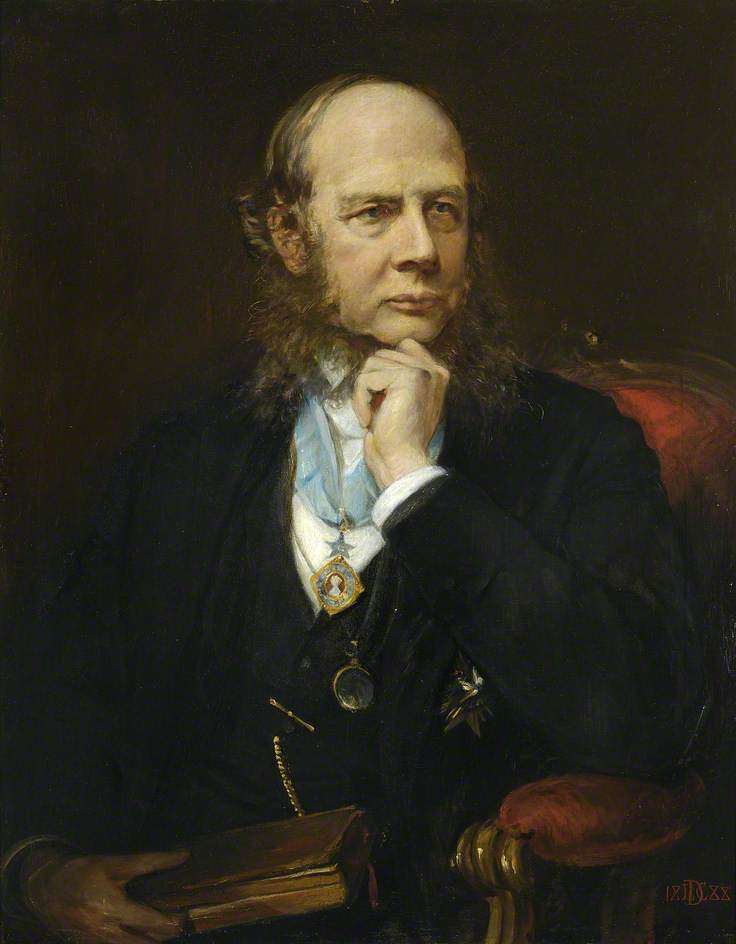
— Raphael Semmes

Posted in Books Publishing and Writing, History | Tagged , , , | Leave a comment

Book Notes: “Vanishing New York”

Blowhard, Esq. writes:

Jeremiah Moss, sole proprietor of the Vanishing New York blog since 2007, tells the history of New York City over the last 20+ years in terms of, what he calls, “hyper-gentrification.” Hyper-gentrification is “gentrification on speed, shot up with free-market capitalism” which results in a landscape of “luxury condos, mass evictions, hipster invasions, a plague of tourists, the death of small local businesses, and the rise of a corporate monoculture.” As revealed recently, “Jeremiah Moss” is the pseudonym of psychoanalyst Griffin Hansbury and his adoption of “Jeremiah” isn’t a coincidence as the book takes the form of an extended jeremiad. Moss, a native of Massachusetts who has resided in NYC since 1994, burns with the fire, brimstone, and righteous indignation of a Puritan preacher as he condemns and laments how drastically New York has changed since he moved here. But while his passion is admirable, his historical analysis is naive and simplistic, resulting in a book that is a frustrating, frequently exasperating, read.

Moss basically alternates between two narratives. In the “micro” history chapters, he tells how particular neighborhoods have had their unique characters virtually wiped out. The East Village, Lower East Side, Bowery, Little Italy, Greenwich Village, Meatpacking District, Chelsea, Times Square, and Harlem are all profiled. These are the chapters, where Moss acts like a medical examiner explaining a viral infection, that I got the most out of. How the East Village went from an Eastern European/bohemian enclave to a mecca for trendy bars and shimmering glass condos. How the Lower East Side’s history of socialist rabble-rousing was corrupted by the Red Square luxury complex. How the opening of the Bowery Bar and Cooper Square Hotel spelled the beginning of the end of the Bowery, culminating in the closing of CBGB. And, perhaps most famously, how Times Square went from a seedy den of sex shops and strip clubs to glitzy outdoor mall of chain restaurants and clothing stores. Moss describes these neighborhood devolutions with sufficient detail that I want to revisit the areas to reconstruct their deaths myself.

The personal, memoir-like approach of the “micro” chapters is contrasted with “macro” how-the-hell-did-we-get-here? history of the “macro” chapters. In attempting to give the Big Picture, Moss falters badly. These chapters call out for a good historian or investigative reporter, but all Moss has to offer is more moral condemnation. Hyper-gentrification, you see, is caused by rich racist reactionary whites screwing over poor progressive blacks, Puerto Ricans, the working class, socialists, gays, queers, and other fringe groups. His Manichean worldview colors the last 150 years of the city’s history, so New York City from the end of the Civil War until today is one long narrative of the Obviously Evil oppressing the Obviously Good. Could it be that Hansbury, a transgender man who fled his small New England town for the freedom of the big city, so identifies with the oddballs and marginalized that he’d rather root for his side than even attempt an objective analysis?

Moss, like many New Yorkers, idealizes the gritty city of the 70s and 80s. On the one hand, I can appreciate why so many people cherish that era. I remember talking to Paleo Retiree about those good ol’ bad ol’ days once. He said during that period, anyone that could afford to flee the city did, leaving, for those who stayed behind, a “middle-class playground.” On the other hand, the city was notoriously dangerous during that era and it’s no wonder why the citizens eventually voted in a law-and-order Republican like Giuliani. More importantly, contrary to Moss’s reading of history, the economic and social shocks that New York City suffered weren’t all the result of rich white racist reactionaries. During the period from 1946 to 1993, Democrats held the mayoralty for all but about four years. The disaster that was urban renewal, which in NYC can trace its lineage back to at least Jacob Riis, was a progressive project. Liberal Democrats pushed the Immigration Act of 1965. Moss purposefully ignores how Democrats and progressives were significantly responsible for much of the city’s decline. But what about the causes of hyper-gentrification, our ostensible subject? While Moss concedes that gentrification is part of the normal lifecycle of a city, what does he blame for the explosion of chain stores and outrageous rents since roughly the mid-90s? Milton Friedman. I’m only exaggerating slightly. Neoliberalism gets a well-deserved drubbing, but in his eagerness to condemn conservatives and libertarian economics, Moss neglects to notice that NAFTA and globalization have just as many fans on the left side of the aisle as the right. Also, I’m not sure how you spend over 400 pages talking about the collapse of mom-and-pop stores and not once say the word “Amazon”.

Defenders of gentrification usually respond that there isn’t much to be upset about because change, especially in dynamic cities, is inevitable. They’re of course correct but Moss’s argument might be stronger if he conceded that point on some issues, instead of merely acknowledging and dismissing it. For example, the demise of the diner/coffee shop. While a good diner is a beautiful thing, I think it’s also true that the American palate has improved substantially over the past 30+ years and many diners are still serving indifferent or just plain bad food. Moss may love Eisenberg’s, but the one time I went there and ordered one of their signature dishes I was disappointed by the bland sandwich I received. Does this mean I want Eisenberg’s to close? Absolutely not, I hope it’s around forever. And hey, maybe my visit there was an off day. But I don’t blame people at all for passing it up for the hipster Italian foodhall Eataly or Madison Square Eats, both one block north.

Despite my differences with Moss, I think his heart is basically in the right place, so I kept reading the book even though I felt like giving up more than a few times. I’m glad I stuck with it because there’s an interesting bit in the final chapter: a defense of nostalgia. He writes:

Nostalgia is not a bad thing. It’s an important part of mental health. In a mortality salience study from the United Kingdom, researchers found nostalgia to be a “meaning-providing resource” and a form of “terror management.” When instructed to think about death, subjects prone to nostalgia were less disturbed by their own mortality. In another study from China, nostalgia was found to decrease feelings of loneliness. “Nostalgia,” wrote the authors, “is a psychological resource that protects and fosters mental health.” A third study showed that “[n]ostalgia increases empathy toward those in need, which, in turn, increases charitable intentions and giving.” In short, nostalgia can be a positive emotion that bolsters our sense that life is meaningful, decreases our fear of death, increases self-esteem, strengthens social bonds, and boosts empathy, which then leads to helping others. If only New York had more nostalgics.

Why are some people so invested in getting us to forget the past? Many probably profit from the new New York. Or they like it and don’t want to feel bad about liking it. They want to enjoy guilt-free lattes, bike lanes, and nice restaurants without having to think about the impact. Or else they just can’t bear the pain of loss. Some are nostalgics of a different sort. At the end of Times Square Roulette, Lynne Sagalyn names five types of nostalgics or “voices of lament.” …If it’s not yet abundantly clear, I’m an outraged Retrograde. I get impatient with the Wistfuls, Skeptics, Reminders, and Resilients with their “Oh, well, everything changes” shrug of futility and forgetting. New Yorkers need to remember and get angry. I know it’s hard. We’re all stumbling through a smoke screen of propaganda and doublespeak. Around the world, people feel helpless watching their cities get squeezed by the same money-drunk global monoculture and winner-take-all drive to compete. With a force so ubiquitous, it’s difficult to recall that urban life was ever different. Writing in 2015 on the death of bohemian Paris, Luc Sante nailed it when he said, “We have forgotten what a city was.” We must remember.

Proudly declaring himself retrograde? Arguing that nostalgia — and, by extension, the old things he wants to preserve — connects us to the great chain of being thus giving our lives meaning? Does Moss not realize he’s making a small-c conservative, perhaps even reactionary, argument? (Robert Conquest’s First Law of Politics: “Everyone is conservative about what he knows best.”) For those of us who have ever defended traditional architecture at forums like ArchDaily or Reddit’s r/architecture, one of the modernists’ favorite insults is to dismiss any interest in traditional forms as know-nothing nostalgia. Does Moss realize his veneration of nostalgia puts him at odds with many intellectual progressives? He also seems unaware that the glass-and-steel style indicative of the current era of hyper-gentrification — the preferred architecture of the “money-drunk global monoculture,” as he puts it — is the architecture of progressive neoliberalism. Moss’s call to curtail foreign investment will also earn him the scorn of universalists but endear him to us nationalists localists.

Related

Posted in Books Publishing and Writing, History | Tagged , , | 4 Comments

RESIST!

Sir Barken Hyena writes:

resist

It’s only 15 minutes into the rally and you’re pooped already? Come on sugar, you got a long climb ahead of you if THE NAZIS! are going to be defeated.

Posted in Politics and Economics | 2 Comments

Happy All American Family Stock Photos

Sir Barken Hyena writes:

Try it yourself!

googlesearch-screencap

Posted in Politics and Economics | 7 Comments