Rant Du Jour: Why Rob from “High Fidelity” Sucks

Blowhard, Esq. writes:

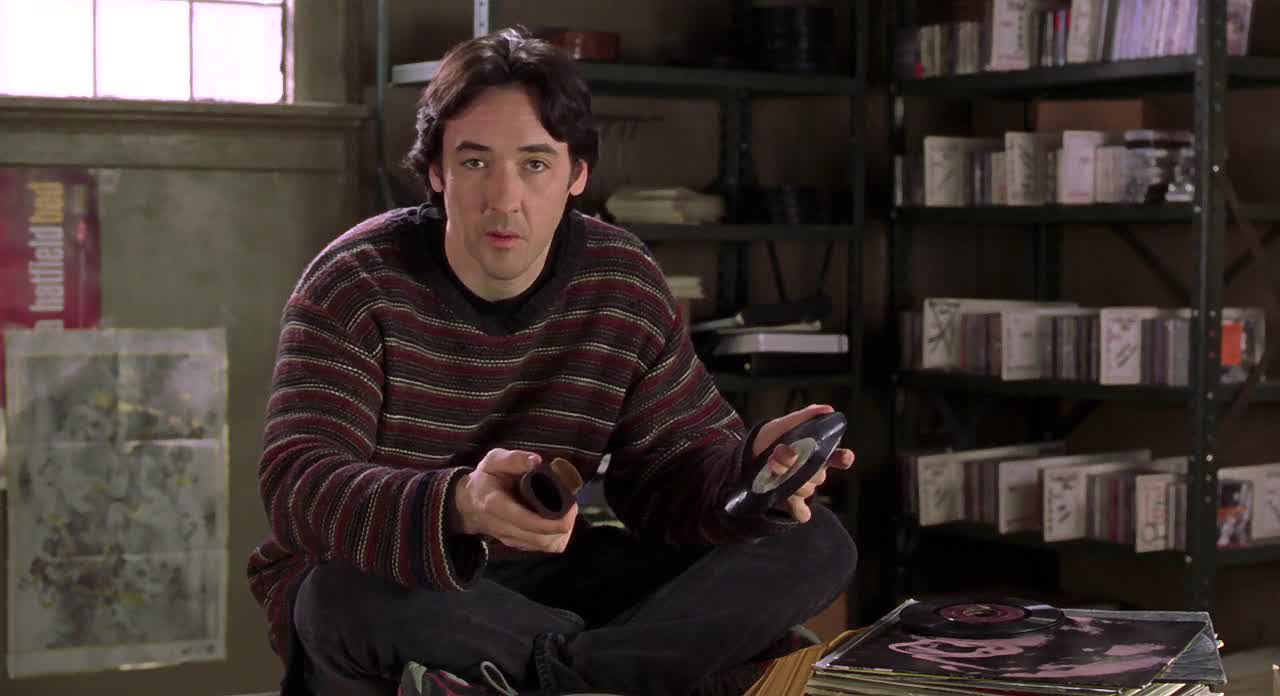
cusackhighfidelity

We’re all arts sophisticates around here, right? We love the good things in life like pro wrestling, Michael Bay movies, and Mickey Spillane novels. We cultivate our refined taste and enjoy bantering with like-minded aesthetes. Ergo, you’d think I’d be in accordance with these lines from HIGH FIDELITY which nerds enjoy chanting as if it’s a maxim of Buddhist wisdom:

What really matters is what you like, not what you’re like. Books, records, films – these things *matter.* Call me shallow, but it’s the fuckin’ truth.

But no, I don’t agree with it, I think it’s absolute bullshit.

First, I’ve noticed that guys (it’s always guys) who quote this line almost invariably have dull, predictable taste. Oh, you like Paul Thomas Anderson and Cormac McCarthy? Well, gosh golly, so does nearly everyone else with a Filmstruck subscription. Second, even if their taste is great, I’d rather talk to someone with an interesting POV than someone who liked a particular list of things. Adopting a particular taste set is the easiest thing in the world. Third, notice how he uses the word “matters” twice but at no point tells us why it matters? You know why he doesn’t tell us? BECAUSE IT DOESNT FUCKING MATTER. Rule of thumb: whenever a person says something “matters” it almost invariably doesn’t. Also, that’s a nice rhetorical trick of blunting criticism by calling yourself “shallow” but it doesn’t make it any less true. Fourth, do they not notice that the protagonist of HIGH FIDELITY is an immature man boy? Why do they want to emulate that? Fifth, not to get all Godwin’s Law, but need I remind everyone that the Nazis loved Beethoven, Wagner, and Bruckner?

While whining about this on Facebook, Fabrizio added:

A dumb quote in that it presupposes that your cultural predilections have not only a moral dimension but a moral dimension that overrides all other considerations. This is basically a nerd’s rationalization of his assumed superiority. He has nothing to offer outside of his list of greatest breakup songs ever, so that’s all that matters. I like the right albums therefore I am.

Fellow UR scribe Enzo then observed that the real reason Rob is a moron who should be ignored is because he went back to Iben Hjejle, that bland third-rate Scandinavian Robin Wright doppleganger, instead of choosing the obviously superior Natasha Gregson Wagner.

Posted in Books Publishing and Writing, Movies, Personal reflections | Tagged , , | 7 Comments

Quote Du Jour

Blowhard, Esq. writes:

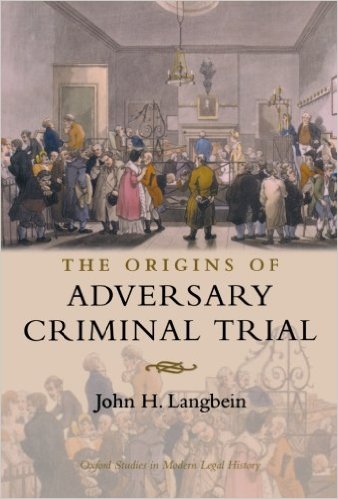
adversarylangbein

At provincial assize courts in the Elizabethan-Jacobean period (1558-1625) the average duration of a trial, including time for jury deliberations, has been reckoned at between fifteen and twenty minutes. These were cases of felony, which still in Elizabethan times routinely resulted in death sentences upon conviction. …By the mid-eighteenth century the average trial time at assizes may have lengthened slightly, to about a half hour per trial.

The Old Bailey was the London-area equivalent of the provincial assize court. …In the later seventeenth and early eighteenth centuries the Old Bailey, which was the felony trial court for London and the surrounding county of Middlesex, processed between twelve and twenty jury trials per day through a single courtroom. So characteristic was the brevity of trial that when an exceptional criminal trial lasted for some hours, its duration became a subject of remark.

Still in the early nineteenth century [the French observer] Cottu was struck to find ten or twelve trials “may be dispatched in a morning…to a single jury,” whose deliberations typically lasted two or three minutes. The conveyor belt at the Old Bailey ran so monotonously that on one occasion a trial went its course before anybody realized that the court had just tried the wrong man: One John Smith was indicted and tried for stealing nine pounds of raisins. “I am not the person. I know nothing of this matter. I was committed upon suspicion of forgery.” The astonished prosecutor, “looking at the prisoner,” acknowledged that “the man at the bar is not the person.”

John H. Langbein, The Origins of Adversary Criminal Trial

Posted in History, Law | Tagged , , , , | 3 Comments

A Vested Interest In Disorder

Fabrizio del Wrongo writes:

126491

I found myself mulling over a discussion in our class in History and Moral Philosophy. Mr. Dubois was talking about the disorders that preceded the breakup of the North American republic, back in the 20th century. According to him, there was a time just before they went down the drain when such crimes as murder were as common as dogfights. The Terror had not been just in North America — Russia and the British Isles had it, too, as well as other places. But it reached its peak in North America shortly before things went to pieces.

Continue reading

Posted in Books Publishing and Writing, Philosophy and Religion, Politics and Economics | Tagged , , , | 9 Comments

Architecture and Color

Paleo Retiree writes:

Posted in Architecture | Tagged | 1 Comment

Caldwell on Trump

Paleo Retiree writes:

From a terrific piece by Christopher Caldwell:

In our time, as in Jackson’s, the ruling classes claim a monopoly not just on the economy and society but also on the legitimate authority to regulate and restrain it, and even on the language in which such matters are discussed. Elites have full-spectrum dominance of a whole semiotic system. What has just happened in American politics is outside of the system of meanings elites usually rely upon. Mike Pence’s neighbors on Tennyson Street not only cannot accept their election loss; they cannot fathom it. They are reaching for their old prerogatives in much the way that recent amputees are said to feel an urge to scratch itches on limbs that are no longer there. Their instincts tell them to disbelieve what they rationally know. Their arguments have focused not on the new administration’s policies or its competence but on its very legitimacy.

Posted in Politics and Economics | Tagged , , | 4 Comments

Naked Lady of the Week: Daniel Sea

Fabrizio del Wrongo writes:

ds-cover

Daniel is a boy’s name, but no one would take the model known as Daniel Sea for a boy. Not on visual evidence, anyway.

She looks a bit like a deluxe version of Elle Fanning. A commenter on MetArt calls her “blonde pastry.” I like that. You can get your fill of hyperbolic commenting here.

According to the internet, she’s from Belarus.

Nudity below. Happy President’s Day weekend.

Continue reading

Posted in Photography, Sex, The Good Life | Tagged , , , , | 1 Comment

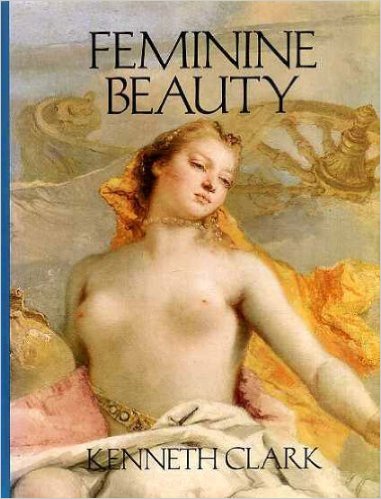
“Feminine Beauty” by Kenneth Clark

Blowhard, Esq. writes:

fembeauty

What I appreciated most about this book, aside from the subject matter, was its modest approach. Clark, best known as the writer and host of the TV series “Civilization”, is a highly cultured man but he wears his erudition lightly. The hardcover edition I have is less than 200 pages total and consists mainly of 175 different plates of sculpture, painting, and photographs arranged chronologically from ancient Egypt to post-war Hollywood. The explanatory text accompanying each image is minimal and purely informational, perhaps two to three sentences that tell who the artist was, the circumstances around the creation of the work, and some biographical detail about the model. There is a narrative 25-page introduction — although given the generous margins and numerous illustrations, it’s probably closer to 12-15 full pages — to provide a general framework.

In contrast to the didactic wall text of so many museums, Clark’s book invites the reader to make his own interpretations and connections. It’s as if he’s given us a sketch and is asking us to provide the color and shading. Sure, he has a definite POV and the mere fact that he’s choosing this or that work over another is arguably meant to influence the reader, but his style is nevertheless subtle, unrushed, and unassuming. The entire book can be consumed in a leisurely afternoon but he wants the questions it raises to linger for a lifetime.

“Feminine Beauty” is out of print but you can get a cheap used copy on Amazon and elsewhere.

Posted in Books Publishing and Writing, The Good Life | Tagged , , , , , | Leave a comment

“Lion” (2016)

Blowhard, Esq. writes:

A boy from a tiny destitute Indian village is separated from his family, winds up over 1,200 miles from home on the streets of Calcutta, narrowly escapes sexual predators multiple times, is taken to a Dickensian orphanage, a year later is adopted by a loving Australian couple, grows up in a seaside Tasmanian town with every possible need a person could want, 25 years later decides to track down his biological family, succeeds in locating them, and there is a tearful reunion. The end, roll credits.

The entire time I was watching the movie I kept thinking of this anecdote:

After defeating George Foreman for the heavyweight title in Zaire, Muhammad Ali returned to the United States where he was asked by a reporter, “Champ, what did you think of Africa?” Ali replied, “Thank God my granddaddy got on that boat.”

Posted in Movies | Tagged , | 3 Comments

Quote Du Jour: Moldbug, er Boldmug, is Back

Blowhard, Esq. writes:

mencius-moldbug-full

Thanks to Callowman for alerting me to this. Lots and lots to chew on here, here’s just one (very lengthy, but hey, it’s Moldbug we’re talking about) example:

…do you see the actual organizational structure of Washington, DC as in any way corresponding to the narrative either (a) explained in the literal in the Constitution, (b) matching the narrative you see on CNN, (c) both (a) and (b)?

Because if so, like, wow, man. I mean, if that narrative was true, you should definitely be worried. I mean, if you actually thought the President controlled the executive branch and could make it do whatever he wants. Do you know anything about how DC works?

Basically, under normal circumstances, the President is not in any remote sense in charge of the executive branch of USG, in the way a CEO is in charge of a company. The whole thing is a complete fraud — or at least, has been since FDR died. Not only would DC run perfectly well without a White House at all, it would run better. In fact, that’s pretty much what you elect if you elect a Democrat.

I know that I know what I’m talking about, because both my parents were career civil servants in core DC agencies. Look, don’t trust me. Trust some other dude who sounds like he knows what he’s talking about:

https://foseti.wordpress.com/2011/02/02/on-government-employment/

To put it very simply, the difference between a President and a CEO is that the CEO can change the personnel, structures, and procedures of the institution.

The President can’t fire civil servants, all of whom belong to the other party. He can’t change budgets. He can’t change org charts. He can appoint people, but the people he appoints can’t do any of these things internally. And they are strictly prohibited from any contact with the personnel records or hiring procedures of the civil servants.

They do have to share an office with these people, though. It’s insane. And it can have no possible positive outcome. Honestly, Hillary was probably a better vote for anyone who wants to just replace this whole institution. Trump is just going to annoy it a lot, creating a ton of bullshit media both right and left. Probably a good time to invest in clicks.

There are levers that can be turned, but nothing terribly serious. Remember the line-segment example? Redefining the power position of the White House over USG, to make it much weaker, would be hard. Redefining it to make it exponentially harder (for instance, the power of a CEO) would be incredibly easy. (I mean, of course, to contemplate mentally — not to actually accomplish.)

There are only two possible impacts of a Trump presidency: some kind of insane auto-coup (see below), or a giant nothingburger like the Nixon and Reagan administrations. You might notice that “populism” (or, to those of us less afflicted by No True Scotsman syndrome, “democracy”) elected Nixon and Reagan.

What impact did these hostile “populist” administrations have on the actual USG? Well.. some. Not none. I don’t know – what impact does a storm have on a coral reef? There is certainly more sloshing around, way up at the surface.

You certainly didn’t need to worry about Nixon. I think there were a few budget cuts under Reagan. Being a Schedule C is hazardous, of course, as is being a Hill staffer in a weak / junior district. But this is a very small number of people compared to the total size of DC.

Otherwise… you are being shown the exception to the rule. This illusion is just taking advantage of your instinctive innumeracy. The USG is a huge, gigantic, immense thing. It did 10,000 things on December 30 and another 10,000 on January 30. 9,999 of them are exactly the same as they would have been had Hillary won.

Control of the White House is relevant and has real consequences for real people, sure. But… adjust your eyes, because the rule is always more important than the exception. If the rule looked at all like it was actually changing, don’t you think I’d let you know?

Here’s one way to think about the state of democracy in America. It’s undergoing a common political transition: moving from a functioning power center to a non-functioning one.

This has hilarious linguistic consequences, like a political language in which “democracy” is maximally positive, but “populism” and still worse “politics” carry a severely negative charge. Uh, last time I checked, “democracy” is a property for which it is both necessary and sufficient to put the election winner in charge of the government.

Historically, the transition from a functioning power center to a ceremonial one is common. Think of the difference between Elizabeth I and Elizabeth II.

A simple test is whether we can devise a substantively trivial transformation that removes the suspect institution. If Elizabeth II had passed away at any point in her not-very-useful life, the impact on both Britain and its government would have been minimal. The same cannot be said for Elizabeth I.

Therefore the Tudor Elizabeth is a functioning organ and the Windsor Elizabeth is a non-functioning organ. This doesn’t mean the organ has no use or purpose — ceremonial monarchy is by far the best way to preclude a real monarch. Elizabeth II’s ancestors have served this function since the glorious events of 1688. It just means you don’t intervene substantially in actual governance.

There’s a trivial way to show that Washington is already a non-democracy. Can we construct a nearly-equivalent Washington, which operates under exactly the same rules, but with elected officials who are purely ceremonial? Well, for one thing, Brussels already works this way. So we know it’s possible.

But let’s make a minimal change to Washington, while eliminating elections entirely. We’ll just eliminate all elected officials. Everything else will be the same.

No new “laws,” or rather, giant collections of vaguely-related patches like a Debian update gone terribly awry. So we don’t need a Congress, or any of the army of lobbyists and activists that attends it. The perfect labor force, they’ll build the best north wall. The Supreme Court can appoint its own new members, like Israel’s. I love Israel. They’re the best. They have the best wall.

As for the Presidency, all the agencies can run perfectly well or even better without any sched Cs. The White House is needed in some cases to resolve actual interagency conflicts. These can be handled by a device readily available for $6.99, the Magic 8-Ball.

All three branches eliminated, no enormous impact on reality or even on DC. Ergo: elected officials are a fraud. Ergo: democracy itself is a fraud. And inherently in today’s real world can’t be anything else.

It’s true that the regime (like all regimes, regardless of “democracy”) still has to maintain its popularity; but only its popularity relative to any competitor. It has no competitors. The closest thing is Trump, but Trump is just the President.

So this is a basically useless and nearly ceremonial office to which we’ve in our great wisdom elected Trump. Of course, if he substantially changes the real-world nature of the office, that’s totally different. I don’t see much sign of that yet. And it’s hard to even imagine. Is it even possible?

If Trump or any President can essentially change the quasi-legal form of government, perhaps acting in a Jacksonian way, that would be a true auto-coup in the Alberto Fujimori tradition. He would have no choice but to continue across the Rubicon, and simply govern by EO indefinitely.

Perhaps this would come after some kind of enabling legislation. Perhaps it would just mean ignoring Congress, which after all has a popularity of 10% and consists of a collection of crooks, flacks and hacks with the collective charisma of a senile banana slug. It might even mean defying the much more attractively-dressed judicial branch. Whose popularity is much higher, surpassing that of investment bankers and approaching the common raccoon.

I just don’t think Trump would do it, though. Also — I forget the source of the quote, but it is an actual quote from someone who was somehow connected to DC — “Trump has no people.”

You can’t have regime change without some kind of alternate government, and there is no such thing. There’s nothing within three orders of magnitude of being ready to become the next regime. I mean, is there? If there is, I don’t know about it. Not that I would, obviously.

And again you’re just not looking at this kind of operator here, I think. If it was Elon Musk… he’s not eligible, of course. But perhaps, in the 21st century, that’s just a technicality.

Even Trump 20 years younger might be something different. But really he’s this strange, amazing, wonderful creature from the ’50s. Honestly, I think you should just relax and enjoy the show.

Actual participation in the governance process, should that become genuinely available to you, is one thing. Political doomsaying is another.

You may not believe any of this other stuff, but I really don’t think you should be worrying about Donald Trump at all. I would be super surprised to see any real change in Washington as a result of his administration, and my predictions are often accurate.

Posted in Politics and Economics | Tagged , , , , , | 6 Comments

“Elle”

Fabrizio del Wrongo writes:

elle-movie

Over the last 20 years Paul Verhoeven has displayed a fascination for put-through-the-wringer women. He likes their defiant glamour and their steadfastness in the face of chaos. In “Showgirls,” “Black Book,” and now “Elle” one has the sense he’s using them as lightning rods for his roiling artistic impulses, impulses that might cause his movies to atomize absent the repositories represented by his heroines. Like the authors of romance fiction and Brian De Palma, Verhoeven knows that women are richest in extremis, that their complexities are best revealed through trauma. It’s not mere sensation he’s after; he’s working towards something more elemental. Where “Showgirls” was consciously trashy, a travesty of a travesty, and “Black Book” was chic in the classic Hollywood manner, “Elle” has the austerity and distance of an art film (its tone is reminiscent of the work of Catherine Breillat or Olivier Assayas). It’s the most composed thing Verhoeven has done, a fact which may account for its positive reception.

How else to explain such a reception? Many of those who normally dismiss Verhoeven’s work as grotesque or crude have praised “Elle” as one of the best movies of 2016. Perhaps the commentators haven’t noticed that Verhoeven and lead actress Isabelle Huppert have done everything in their power to offend them. Though “Elle” is dressed up as a thriller, its motives are those of a woman’s picture — it’s closer to “Stella Dallas” than “Psycho.” The whodunit that runs through the narrative is interesting, but it’s merely a form on which Verhoeven and screenwriter David Birke (adapting a novel by Philippe Dijan) hang a melodramatic essay on the topics of sex, violence, and relationships. Possibly it’s this decentralized approach that throws the trigger brigade for a loop. They can’t determine what the movie is about, so they fall back on appreciating its poise and Huppert’s courageous performance. But though Verhoeven is drawn to satire, he’s not a political filmmaker; his movies don’t make simplistic points. And I think the suggestiveness of “Elle” constitutes its own form of content. Its unresolvedness is in the service of a vision.

Huppert’s Michele Leblanc heads a company that produces video games. She’s the modern independent woman, the woman who imagines that she reorders civilization through her actions — or perhaps her very being. The atraditional city of the 21st Century is an environment in which such a woman thrives, but her standing is without roots. This is especially true of Michele: At an early age her place in traditional society was obliterated by her father, whose serial murders, in which he involved Michele, made pariahs of his family. The specter of paternal violence hangs over Michele; sometimes if even seems to animate her. Random Parisians insult her upon recognizing her, her marriage foundered in the wake of a spat that turned physical, and her sexual proclivities tend toward the rough — even the games she produces have violent sexual overtones. When Michele’s mother (a very amusing Judith Magre) suggests that the crimes of Michele’s father are responsible for the entropy that has overtaken her life, Verhoeven immediately cuts to a bloody sequence in which Michele fantasizes about brutally smashing the skull of an attacker. It’s the one moment in the picture in which she’s able to step fully outside of her victimization.

Verhoeven does all he can to foreground both Michele’s persecution and her masterful negotiation of it. The movie opens with a shocking scene in which she is raped on the floor of her living room, after which she calmly proceeds with the rest of her day. There’s defiance in this, but also a kind of participation. As Michele ponders the identify of her masked attacker, and Verhoeven and Birke tease us with possibilities, one gets the sense she’s not investigating the crime so much as flirting with it. There’s no shortage of suspects: Nearly all the men in Michele’s life are connected to her through sex, and the one who isn’t — a neighbor who is a practicing Catholic — is the object of her amorous machinations. (In one of the movie’s most suggestive scenes, she vigorously masturbates while watching him and his wife install a nativity scene in their front yard.) Even the character of Michele’s son, Vincent, is loaded with Oedipal suggestiveness. As mothers will, Michele projects her desires onto Vincent’s spoiled girlfriend, and she’s disturbed more by her jealousy than her dissatisfaction. Her genes are jealous too: She’s painfully aware that Vincent has been cuckolded.

The relentless focus on sex, violence, family, and heredity makes “Elle” feel something like Greek theater — more Euripides than Eszterhas. Huppert’s performance, at turns grave and coquettish, is certainly the stuff of great drama. Her composure is almost flamboyant in its delicacy; there’s never a moment when you’re not fully aware of the extent to which her resolve is an outgrowth of a quivering vulnerability. And it’s something of a miracle that she’s able to project her analytical qualities onto the material, to make the movie feel as though it’s poring over itself, rearranging its shards to proffer new meanings, new suggestions.

Verhoeven declines to dramatize any particular suggestion at the expense of another. He’s more interested in the way Michele assimilates all of them while maintaining the face she displays to the world. Ultimately, the movie asks: What strange amalgams are we? To what extent is civilization a front for our most primal impulses? Michele, particularly in the movie’s quiet moments, when she’s comforting an injured bird or fixing a cup of tea, seems absorbed by these very questions.

Posted in Movies, Performers | Tagged , , , , | 2 Comments