Architecture Du Jour

Paleo Retiree writes:

A spectacularly cushiony and lacy column capital from the 1899 Bayard-Condict Building, the only project that the legendary Chicago School architect Louis Sullivan ever built in New York City:

Could that mofo draw or what? Intense training in drawing used to play a major role in the education of architecture students. No longer.

By the way, I have no idea if this particular column capital is an original or a reproduction. In 2000, when renovation work was begun on the building, it was found that only one of the original column capitals had survived, so the others were modeled on it.

One of the more demented assertions that was peddled in the Modernism-besotted architecture history classes I attended back in the ’70s was the notion that the Bayard-Condict Building (as well as other Louis Sullivan works) were great because they were proto-Modernist. I remember thinking that one over really hard. Impossible to dispute that Sullivan’s buildings were often, for their era, tall; that they sometimes stirred up controversy; and that they were built on steel frames. Otherwise … Well, it seemed perfectly apparent to even Youthful Idiot Me that what Sullivan was mainly up to was exploring the possibilities that new technologies and materials offered while simultaneously folding his buildings into their contexts and harmonizing them with their surroundings. Which would put him on the side of continuity, extension and respect — ie., traditional architecture and urbanism — and most definitely not on the side of Modernism, which was (and which remains) theory-driven, geometry-obsessed, determined to make creations that stand out instead of fit in, and defiantly determined to break with the (awful/evil/oppressive/unenlightened/etc) pre-1930s past. But if your whole point is to maintain that all of architecture history leads inexorably, unavoidably to your one personal favorite style, then I guess it’s unavoidable that you’ll be overlooking an awful lot of what’s perfectly obvious to anyone with a non-brainwashed eye.

Related

Posted in Architecture | Tagged , , | 5 Comments

Linkage

Blowhard, Esq. writes:

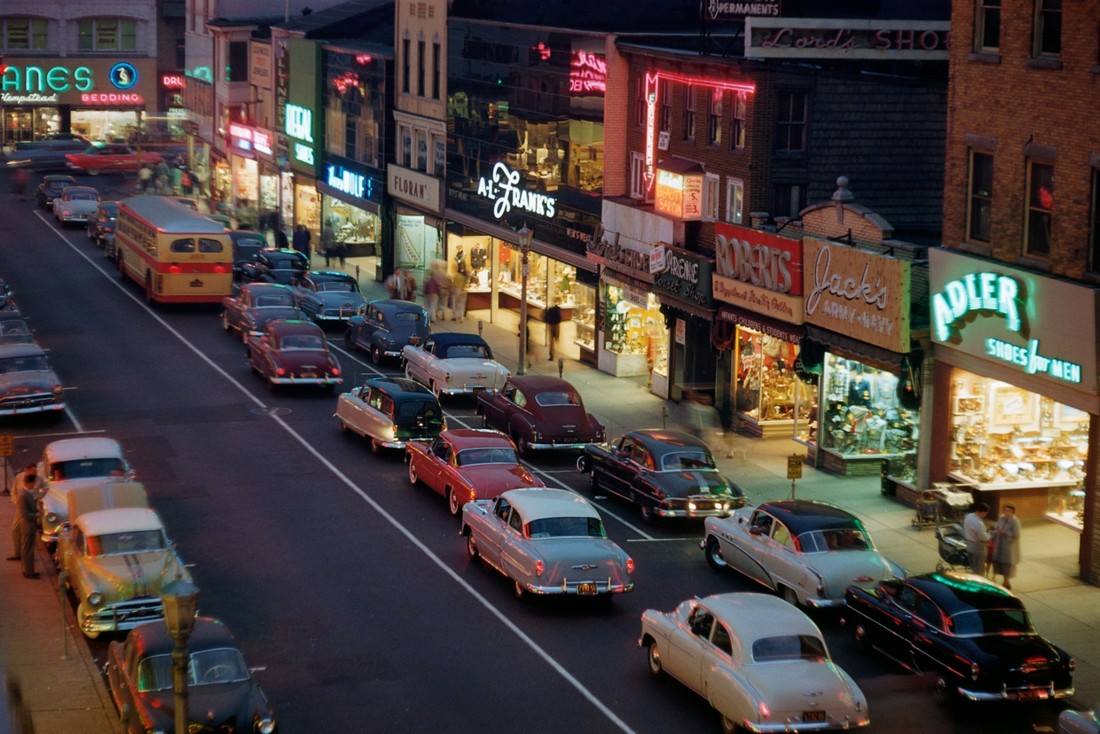
fremontvegas50s

Posted in Linkathons | Leave a comment

Like a Holy Candle

Fabrizio del Wrongo writes:

There are four sorts of scenes alternated: (1) the particular history of Judith; (2) the gentle courtship of Nathan and Naomi, types of the inhabitants of Bethulia; (3) pictures of the streets, with the population flowing like a sluggish river; (4) scenes of raid, camp, and battle, interpolated between these, tying the whole together. The real plot is the balanced alternation of all the elements. So many minutes of one, then so many minutes of another. As was proper, very little of the tale was thrown on the screen in reading matter, and no climax was ever a printed word, but always an enthralling tableau.

The particular history of Judith begins with the picture of her as the devout widow. She is austerely garbed, at prayer for her city, in her own quiet house. Then later she is shown decked for the eyes of man in the camp of Holofernes, where all is Assyrian glory. Judith struggles between her unexpected love for the dynamic general and the resolve to destroy him that brought her there. In either type of scene, the first gray and silver, the other painted with Paul Veronese splendor, Judith moves with a delicate deliberation. Over her face the emotions play like winds on a meadow lake. Holofernes is the composite picture of all the Biblical heathen chieftains. His every action breathes power. He is an Assyrian bull, a winged lion, and a god at the same time, and divine honors are paid to him every moment.

Nathan and Naomi are two Arcadian lovers. In their shy meetings they express the life of the normal Bethulia. They are seen among the reapers outside the city or at the well near the wall, or on the streets of the ancient town. They are generally doing the things the crowd behind them is doing, meanwhile evolving their own little heart affair. Finally when the Assyrian comes down like a wolf on the fold, the gentle Naomi becomes a prisoner in Holofernes’ camp. She is in the foreground, a representative of the crowd of prisoners. Nathan is photographed on the wall as the particular defender of the town in whom we are most interested.

The pictures of the crowd’s normal activities avoid jerkiness and haste. They do not abound in the boresome self-conscious quietude that some producers have substituted for the usual twitching. Each actor in the assemblies has a refreshing equipment in gentle gesticulation; for the manners and customs of Bethulia must needs be different from those of America. Though the population moves together as a river, each citizen is quite preoccupied. To the furthest corner of the picture, they are egotistical as human beings. The elder goes by, in theological conversation with his friend. He thinks his theology is important. The mother goes by, all absorbed in her child. To her it is the only child in the world.

Alternated with these scenes is the terrible rush of the Assyrian army, on to exploration, battle, and glory. The speed of their setting out becomes actual, because it is contrasted with the deliberation of the Jewish town. At length the Assyrians are along those hills and valleys and below the wall of defence. The population is on top of the battlements, beating them back the more desperately because they are separated from the water-supply, the wells in the fields where once the lovers met. In a lull in the siege, by a connivance of the elders, Judith is let out of a little door in the wall. And while the fortune of her people is most desperate she is shown in the quiet shelter of the tent of Holofernes. Sinuous in grace, tranced, passionately in love, she has forgotten her peculiar task. She is in a sense Bethulia itself, the race of Israel made over into a woman, while Holofernes is the embodiment of the besieging army. Though in a quiet tent, and on the terms of love, it is the essential warfare of the hot Assyrian blood and the pure and peculiar Jewish thoroughbredness.

Blanche Sweet as Judith is indeed dignified and ensnaring, the more so because in her abandoned quarter of an hour the Jewish sanctity does not leave her. And her aged woman attendant, coming in and out, sentinel and conscience, with austere face and lifted finger, symbolizes the fire of Israel that shall yet awaken within her. When her love for her city and God finally becomes paramount, she shakes off the spell of the divine honors which she has followed all the camp in according to that living heathen deity Holofernes, and by the very transfiguration of her figure and countenance we know that the deliverance of Israel is at hand. She beheads the dark Assyrian. Soon she is back in the city, by way of the little gate by which she emerged. The elders receive her and her bloody trophy.

The people who have been dying of thirst arise in a final whirlwind of courage. Bereft of their military genius, the Assyrians flee from the burning camp. Naomi is delivered by her lover Nathan. This act is taken by the audience as a type of the setting free of all the captives. Then we have the final return of the citizens to their town. As for Judith, hers is no crass triumph. She is shown in her gray and silvery room in her former widow’s dress, but not the same woman. There is thwarted love in her face. The sword of sorrow is there. But there is also the prayer of thanksgiving. She goes forth. She is hailed as her city’s deliverer. She stands among the nobles like a holy candle.

Providing the picture may be preserved in its original delicacy, it has every chance to retain a place in the affections of the wise, if a humble pioneer of criticism may speak his honest mind.

— Vachel Lindsay

Related

  • Lindsay’s “The Art of the Motion Picture” is one of the essential movie books. Accessible here.
  • “Judith of Bethulia” was in many ways Griffith’s warm-up for the Babylonian sequences in his later “Intolerance.”
Posted in Books Publishing and Writing, Movies | Tagged , , , , , , | Leave a comment

Naked Lady of the Week: Olivia Rabanal

Fabrizio del Wrongo writes:

or-cover

Reports conflict regarding this model’s nationality. Some claim she’s English, others Spanish. To me her face has a Spanish look about it, though I’m not sure what makes me say that. Something about the cheeks and the slightly uncouth way in which the mouth interacts with the jawline…

Of course, she may be a little of both. That would help explain the porcelain skin and the grayish eyes.

In an event, she’s delightfully plush and pliable looking. And though she’s no waif, she communicates girlishness and an art-nouveau-style flowiness. In fact, I think those two qualifies bump up against each other in charming ways: she’s pantomiming a girl’s idea of grace. I find her face particularly fetching when she wears thick mascara and false eyelashes; it gives her the look of a faux Egyptian.

These images come from BabeFox, Femjoy, and DOMAI.

Nudity below. Enjoy your weekend.

Continue reading

Posted in Photography, Sex, The Good Life | Tagged , , , , , | 2 Comments

Neon Du Jour

Blowhard, Esq. writes:

nathansconeyisland

Nathan’s at Coney Island, Brooklyn, New York. OK, it would’ve looked a lot better lit up at night, but we bailed before it got dark.

Click on the image to enlarge.

Posted in Commercial art | Tagged , , , , , , | 1 Comment

Juxtaposin’: Fredric Wertham Lives!

Blowhard, Esq. writes:

laurahudson

Comics nerd and intersectional feminist Laura Hudson thinks that “Rape Scenes Aren’t Just Awful. They’re Lazy Writing”:

A small but terrifying study conducted on college-age males earlier this year found that around one in three men said they would be willing to rape a woman if there were no consequences—but only if you didn’t call it “rape.” For these men, the resistance or disinterest of women was viewed as insincere or inconsequential, and the use of force or coercion was seen as either acceptable, or a nebulous “gray” area—but not “rape rape.” That’s why definitions of rape and consent are so crucially important: They literally encourage people to commit acts of rape by redefining them into social acceptability. Simply put, any form of media that reinforces any of these ideas actively enables sexual assault.

The impulse to sexualize women is so knee-jerk and compulsive that sexiness becomes functionally mandatory, which sets the stage for maximum creepiness any time those characters suffer, and particularly when they suffer sexual violence.

As Rachel Edidin wrote in her critique of sexualized rape scenes, “Women are exaggeratedly—and always—sexy. They’re sexy on the phone. Sexy on the job. Sexy fighting. Sexy tortured. Sexy dead. Sexy raped.”

If you’re a woman in media, you’re basically the sexy Halloween costume of human beings in a world where Halloween never ends. Again, I cannot believe I have to say this, but if a movie or TV show can’t visualize a woman in non-sexual terms even for the brief duration of a rape scene, it has no business depicting rape scenes.

One of the reasons that creators of media like to include rape in their work is specifically because it elicits strong feelings, even when divorced from all context and consequences. Think of it as a recipe for cheap drama: Take a story, add one rape, stir vigorously, and presto—instant emotional reaction! This is both incredibly lazy and incredibly callous, but it works, so people keep doing it. Rape has been so overused and misused in popular media that adding yet another manipulative sexual assault to the world just to heighten the stakes of a story or have a Very Special Episode is not just one of the most offensive things a writer can do, it is also one of the most boring.

Photo-Of-Fredric-Wertham-16

From Wikipedia’s entry on Fredric Wertham:

Fredric Wertham (March 20, 1895 – November 18, 1981) was a German-born American psychiatrist and crusading author who protested the purportedly harmful effects of violent imagery in mass media and comic books on the development of children. His best-known book was Seduction of the Innocent (1954), which suggested that comic books were dangerous to children. Wertham’s criticisms of comic books helped spark a U.S. Congressional inquiry into the comic book industry and the creation of the Comics Code. He called television “a school for violence“, and said “If I should meet an unruly youngster in a dark alley, I prefer it to be one who has not seen Bonnie and Clyde.”

From Wikipedia’s entry on Seduction of the Innocent:

Seduction of the Innocent is a book by German-American psychiatrist Fredric Wertham, published in 1954, that warned thatcomic books were a negative form of popular literature and a serious cause of juvenile delinquency. The book was taken seriously at the time, and was a minor bestseller that created alarm in parents and galvanized them to campaign for censorship. At the same time, a U.S. Congressional inquiry was launched into the comic book industry. Subsequent to the publication of Seduction of the Innocent, the Comics Code Authority was voluntarily established by publishers to self-censor their titles.

I love the incredulity of the clause “The book was taken seriously at the time…” Imagine that someone would take such arguments earnestly! We know better now!

Related

Posted in Art, Movies, Television | Tagged , , , , , , | 9 Comments

Naked Lady of the Week: Foxy Di

Fabrizio del Wrongo writes:

fd-cover

This twenty-year-old Russian seems to be all over the internet these days. She is a cute little thing — not that that’s stopped her from doing hardcore.

I like this quote from an anonymous appreciator:

WOW! This girl’s in a hurry! Only a year in the biz and already she’s on the outer edge of extreme. Such a beautiful girl in a race for sexual immortality…it’ll all end in tears!

That’d make good marketing copy for a wild exploitation film. But let’s hope it doesn’t, in fact, all end in tears…

Images seem to come from 21Naturals, DOMAI, Goddess Nudes, Femjoy, Showy Beauty, Twistys, and Karups.

Nudity below the jump. Have a great holiday.

Continue reading

Posted in Photography, Sex, The Good Life | Tagged , , , , | 1 Comment

Linkage

Paleo Retiree writes:

Posted in Linkathons | 5 Comments

Taste Thrill Du Jour

Paleo Retiree writes:

After lunch in Chinatown at this good place, Blowhard Esq. and I couldn’t resist sampling a specialty flavor at The Original Chinatown Ice Cream Factor nearby:

Durian ice cream! “Is it really popular?” I asked the woman behind the counter. She nodded. “A lot of people want to try it,” she said. “It’s not as repulsive as the real thing.”

“Not so bad!” said Blowhard Esq. after his first plastic spoonful. I concurred. The flavor reminded me of apricots, only ranker. (In all fairness, I was also reminded of a couple of classic descriptions of the joys of consuming durian. One: “It’s like eating vanilla ice cream while sitting in an outhouse.” The other, from Anthony Bourdain: “It’s like French-kissing your dead grandma.”) Blowhard, Esq. ate another plastic spoonful. “There’s definitely something off about it,” he mused. “But not in the worst way.”

Posted in Food and health | Tagged , | 2 Comments

Quote Du Jour: Travel Narrows the Mind

Blowhard, Esq. writes:

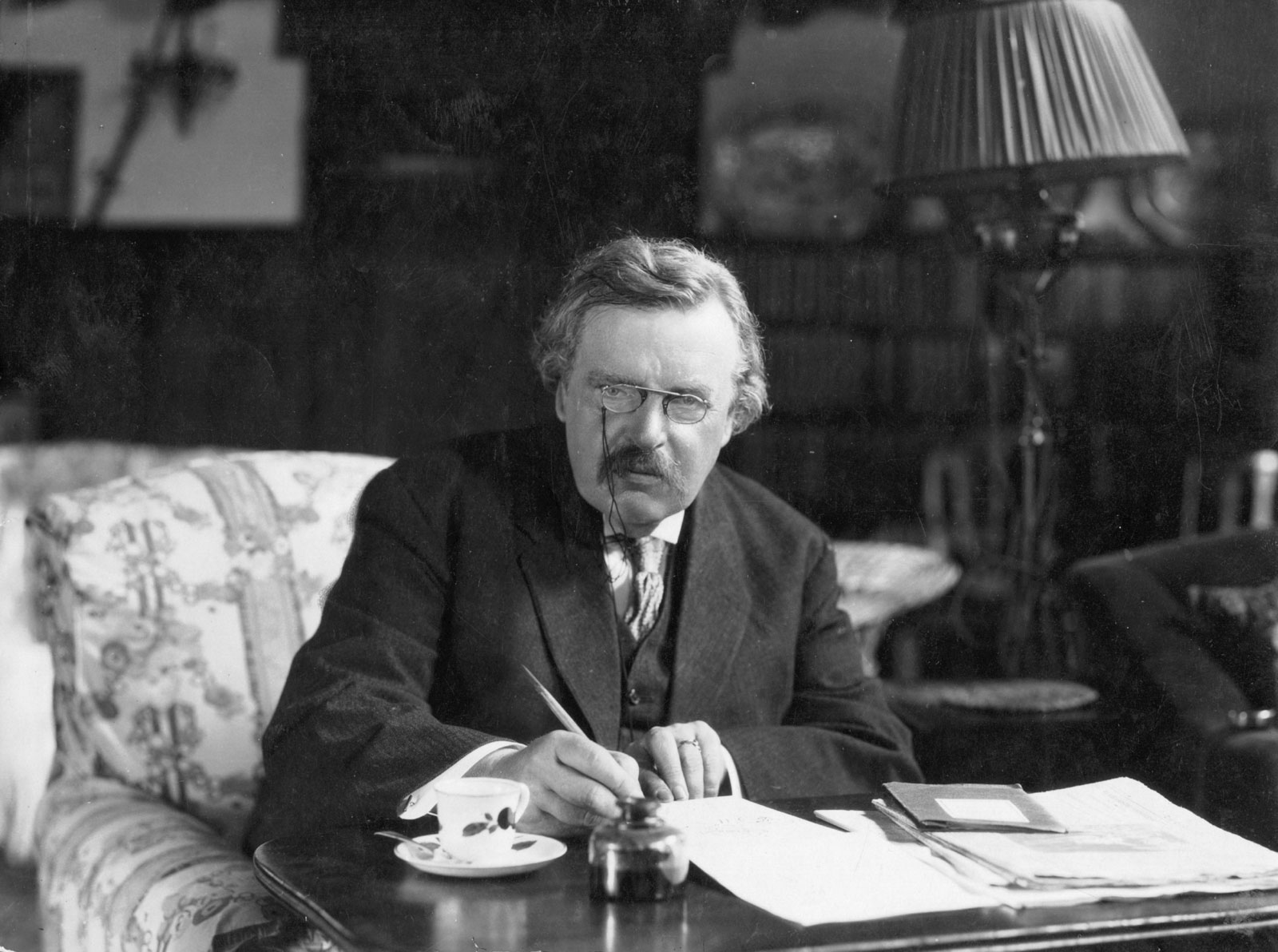
g-k-chesterton

I have never managed to lose my old conviction that travel narrows the mind. At least a man must make a double effort of moral humility and imaginative energy to prevent it from narrowing his mind. Indeed there is something touching and even tragic about the thought of the thoughtless tourist, who might have stayed at home loving Laplanders, embracing Chinamen, and clasping Patagonians to his heart in Hampstead or Surbiton, but for his blind and suicidal impulse to go and see what they looked like. This is not meant for nonsense; still less is it meant for the silliest sort of nonsense, which is cynicism. The human bond that he feels at home is not an illusion. On the contrary, it is rather an inner reality. Man is inside all men. In a real sense any man may be inside any men. But to travel is to leave the inside and draw dangerously near the outside. So long as he thought of men in the abstract, like naked toiling figures in some classic frieze, merely as those who labor and love their children and die, he was thinking the fundamental truth about them. By going to look at their unfamiliar manners and customs he is inviting them to disguise themselves in fantastic masks and costumes. Many modern internationalists talk as if men of different nationalities had only to meet and mix and understand each other. In reality that is the moment of supreme danger–the moment when they meet. We might shiver, as at the old euphemism by which a meeting meant a duel.

Travel ought to combine amusement with instruction; but most travelers are so much amused that they refuse to be instructed. I do not blame them for being amused; it is perfectly natural to be amused at a Dutchman for being Dutch or a Chinaman for being Chinese. Where they are wrong is that they take their own amusement seriously. They base on it their serious ideas of international instruction. It was said that the Englishman takes his pleasures sadly; and the pleasure of despising foreigners is one which he takes most sadly of all. He comes to scoff and does not remain to pray, but rather to excommunicate. Hence in international relations there is far too little laughing, and far too much sneering. But I believe that there is a better way which largely consists of laughter; a form of friendship between nations which is actually founded on differences.

— G.K. Chesterton, What is America?

Posted in Travel | Tagged , , | 3 Comments