
Blowhard, Esq. writes:


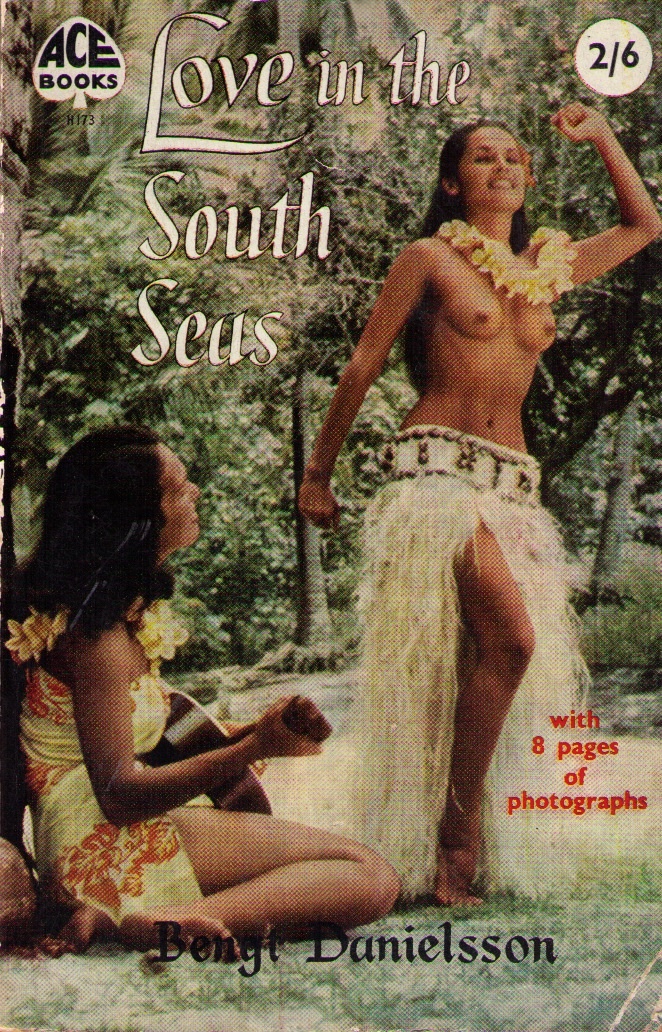

Do “cultural appropriation”-obsessed SJWs know about the Tiki craze? Is that their version of the Holocaust?
Blowhard, Esq. writes:
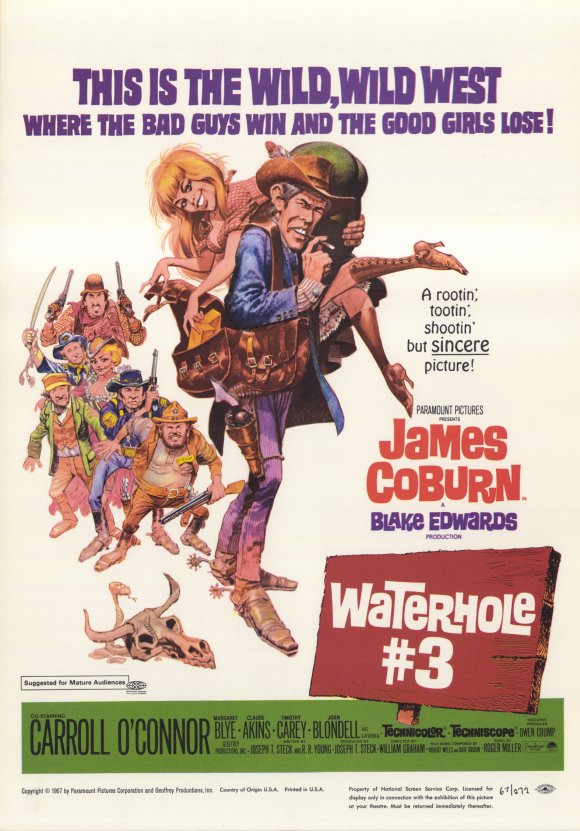
A friend notes that it’s a comedy in which rape is dismissed as “assault with a friendly weapon.”
Paleo Retiree writes:
Paleo Retiree writes:

I recently enjoyed (if with some reservations) the three-part BBC documentary series “Filthy Cities,” which recently became available on Netflix Instant. Medieval London, revolutionary Paris and industrial-age New York City are the filthy cities covered by the show, which asks the question: What did old cities do with the animal shit, human waste and workplace effluents that they produced in huge quantities?
The history itself is BBC-progressive and conventional, and I sometimes found the re-enactments (done in the style of shakeycam torture porn) so stomach-turning that I had to take breaks from watching. It’s not hard imagining the filmmakers amusing themselves figuring out historically responsible ways to gross their viewers out. But it’s a great topic, and the story and information are presented with the kind of gusto, cleverness, confidence and flair that has so often made me wonder: How did England manage to develop such a distinctive and stylish brand of documentary television?
Related
Fabrizio del Wrongo writes:
Is it just me, or do rolls of Scotch tape come with less product these days?

Blowhard, Esq. writes:
As Paleo Retiree likes to say, “It was the 70s.”
“We’d like to undress him and watch his fashion turn to passion,” drool the editors of Playgirl, under a photo of — Calvin Klein! What is the blue-eyed, blue-jeaned designer doing in the pages of feminists’ answer to Playboy? Calvin’s on their list of the 10 “most sensational, sexiest” men in the world. Along with Woody Allen, O.J. Simpson, Ted Kennedy, Jerry Brown, and such.
— The gossip page of Women’s Wear Daily, October 12, 1979
I’m not the only one to notice this.
Fabrizio del Wrongo writes:

The train reached Ogden at two o’clock, where it rested for six hours. Mr. Fogg and his party had time to pay a visit to Salt Lake City, connected with Ogden by a branch road; and they spent two hours in this strikingly American town, built on the pattern of other cities of the Union, like a checker-board, “with the sombre sadness of right-angles,” as Victor Hugo expresses it. The founder of the City of the Saints could not escape from the taste for symmetry which distinguishes the Anglo-Saxons. In this strange country, where the people are certainly not up to the level of their institutions, everything is done “squarely” — cities, houses, and follies.
— Jules Verne
Fenster writes:
It is said film is all about the action and given the current state of the box office who could argue?
Still, a nice turn of phrase in film can be appealing. Good dialogue is not all that uncommon but good monologues–few and far between. The better ones can often be found in films adapted from the stage or from screenplays written by dramatists. As in this case–Christopher Walken from Harold Pinter’s screenplay for Paul Schrader’s The Company of Strangers. His mannered reading about his father starts about a minute in but the lead-in is worth seeing for context.
Some additional monologues to come. Suggestions welcome.
Fabrizio del Wrongo writes:

Heidi, who has posed under a bunch of different names, seems to be one of the hotter nude models around. She’s posed for most of the big photographers. I love the expressive kitty-cat face, the green eyes, and that beguiling mole above her lip. But it’s the hair that really does it; it’s a Pre-Raphaelite’s dream.
I can’t figure out whether she’s Latvian or Russian. Reports vary.
I am fond of a photo she posted on Facebook in which she is sitting on a park bench and looking down at her outstretched feet in a way that is both pensive and slightly mournful. It’s a pose that only young women affect. What is the import of this pose? My sense is that the girls who assume it have for a moment stepped outside of themselves and are contemplating their beauty in the semi-detached manner that everyone else does. And perhaps somewhere in that contemplation lies an inkling of the inevitability of its fading. Or maybe they’re just identifying with their shoes.
These scaled-down photos come from Wow Girls and related sites, MetArt, and Hegre-Art. I’m sure you can find lots of more of Heidi at any of those fine establishments.
Nudity below. Happy summer.
Paleo Retiree writes:
I’m pretty sure I’d never heard of Marty Stuart until very recently, but in the last month I’ve become a huge fan.
Stuart is a country-western singer/songwriter/performer/photographer in the keeper-of-the-flame mode, and I think he’s terrific. He makes recordings, hosts a TV show, takes photos and does a generally great job of promoting traditional country-music entertainment values: soul, down-home unpretentiousness, courtliness ‘n’ congeniality. Though all the elements and trappings are lovingly in place — the cornpone humor, the hollers and whoops, the storytelling and rhymes, the familiar bundle of sounds (chicken scratches, twangs, close harmonies, etc), the glittering outfits, the themes (home, trains, temptation) — there’s nothing studied, meta or po-mo about his approach. Country music is a performance form to be respected and enjoyed, not mocked or dealt with ironically. His work is all about authenticity in the feelings and the experience — an early wife of Stuart’s was one of Johnny Cash’s daughters, and his current wife is the legendary Connie Smith, and if that ain’t country … — and I find it hard to resist the exuberant, un-slick, bar-band/dance-floor, honky-tonk/gospel pleasures he and his fantastic band The Fabulous Superlatives (Kenny Vaughan, Harry Stinson and Paul Martin) regularly deliver.
The spirits and echoes of Hank, Buddy, Porter, Buck, Merle, Johnny and early Elvis are never far away, but Marty and the boys have a sizable and distinctive contribution of their own to make. I’d love to see them live.
Here’s a little taste of their work:
Related
 Blowhard, Esq.
 Callowman
 Sherbrooke
 Eddie Pensier
 Enzo Nakamura
 Epaminondas
 Fabrizio del Wrongo
 Fenster
 Brundle Guy
 Glynn Marshes
 Paleo Retiree
 Atypical Neurotic
 Question Lady
 Sax von Stroheim
 Sir Barken Hyena
 The Mistaken
 Uncouth Reflections