
Blowhard, Esq. writes:

Click on the image to enlarge.
Blowhard, Esq. writes:
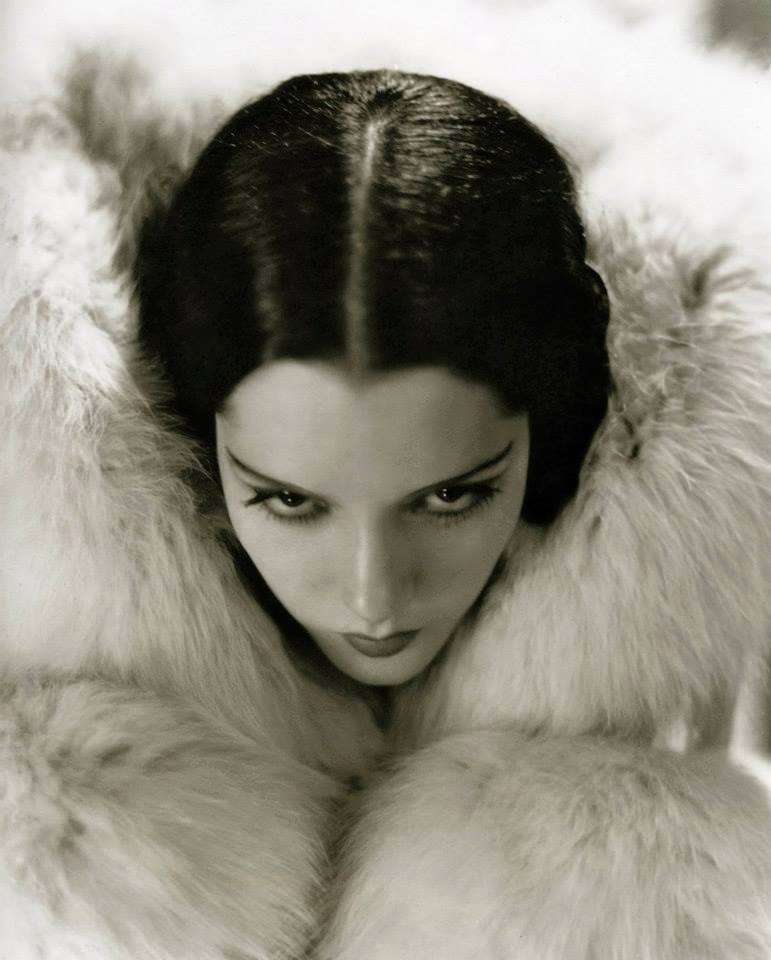
…Lupe Vélez.
Click on the image to enlarge.
Blowhard, Esq. writes:
Fabrizio del Wrongo writes:

What’s your take on tattoos on girls? A turn-on? A turn-off? I have trouble with them myself. Not that they’re a deal-breaker, mind you. But where evaluations of attractiveness go, a tattoo isn’t a feature that my reptilian hindbrain tends to sort into the plus column. I wonder what women think when they’re getting them. Probably, the act of getting inked is more a display of attitude than anything else. And aren’t modern girls all about attitude? Their attractiveness aside, that’s what they seem to be selling.
On the other hand, maybe some girls aren’t thinking at all when they get tattooed.
I had this girlfriend who had a tramp stamp. From what I could gather — I didn’t give a shit either way, so she must have taken it upon herself to tell me about it — she got it while in college during an epic bout of “you go girl” drunkenness. Mostly she seemed to like the idea that her father hated it: he’d caught a glimpse of it while she was getting out of the passenger seat of his car one day, which gave him an opportunity to express his displeasure regarding her life choices. Which in turn gave her an opportunity to act out the endless cycle of rebellion and repentance that, like mimosa-flavored jet fuel, kept her going in life.
Anyway, lots of girls have tramp stamps, so no big whoop as far as that goes. But I was semi-bothered by the fact that I could never figure out what the damn thing was supposed to represent. When doing her from behind I’d look down and wonder, What the hell is that? Dolphins swimming around a sunset? Some acid-fried hairstylist’s idea of a dreamcatcher? Mermaids trading Tupperware during a sit-in at a flower shop? The flowery new-ageyness of the thing bypassed the more rational components of my sense perceptions, causing it to be filed in the mental drawer labelled “fruity nonsensical girl shit,” where everything looks more or less the same, like Asians. (Just kidding!)
None of this has much to do with Emma Mae or her tattoos, which seem a lot more thoughtful than my ex-gf’s tramp stamp. Emma, as you can see, is a wee slip of a blond thing from North Carolina. (Well, you can’t see the North Carolina part — unless you have special glasses.) I suspect the tattoos set her apart from her competition. She does hardcore. Or did? The internet seems to suspect she’s retired.
Nudity below. Have a good weekend.
Blowhard, Esq. writes:

Lloyd Fonvielle — writer, artist, friend to many of us here, our fifth Beatle — died earlier this week at his home in Las Vegas. His creativity, humor, intelligence, and generosity will be deeply missed.
I heard a voice from heaven, saying unto me, Write, From henceforth blessed are the dead which die in the Lord: Even so, saith the Spirit, for they rest from their labours.
Lord, have mercy upon us. Christ, have mercy upon us.
— The Book of Common Prayer
Blowhard, Esq. writes:

Detail from the Louisiana Supreme Court. Source.
Click on the image to enlarge.
Fenster writes:
Society and culture:
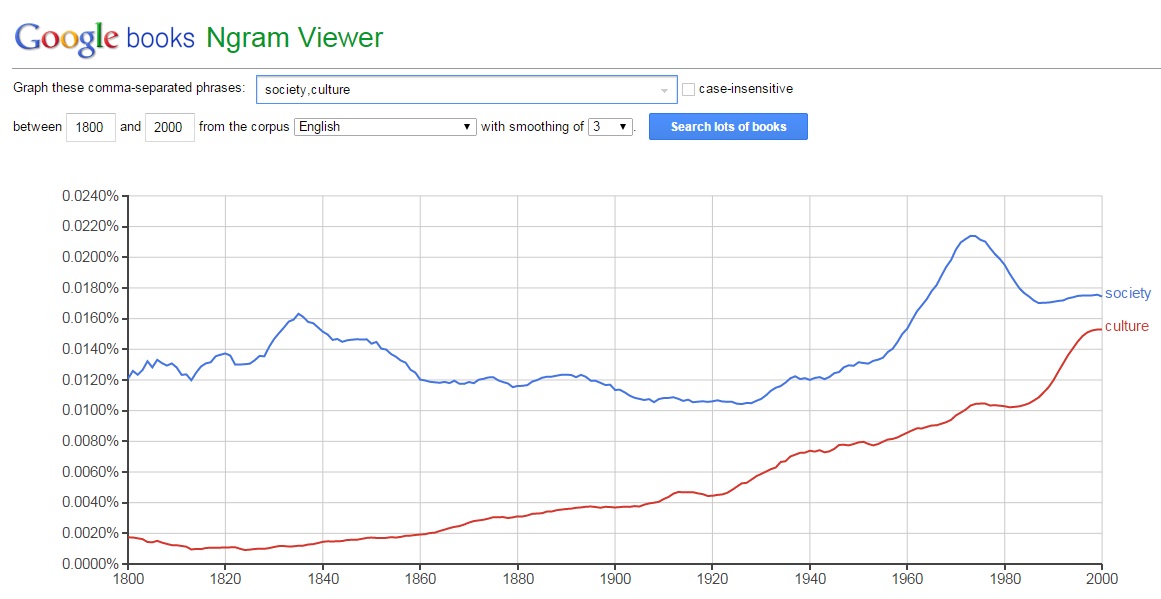
From a current day academic point of view society and culture are separate but related concepts. Culture tends to refer to the values and beliefs of a group of people and the material surroundings that evidence those values and beliefs. Society tends to refer to the group itself, defined by the cultural infrastructure. But there’s a lot of overlap in academic use. And popular use is even more complicated.
Society when I was growing up had a values connotation: why do I have to do what society says? This is the use of the word in Janis Ian’s Society’s Child. Why should “society” tell me not to love who I want to love?
Then there was also the use of the word as shorthand for “high society”. This was the use of the word in Cleveland Amory’s Who Killed Society? That book came out in 1960 but was about the decline of Gilded Age fortunes earlier in the century.
As the Ngram indicates society has a longer history of common use than culture. Culture has always had it own “high” side, with high culture (Beethoven) contrasted with pop culture (Beatles). But we see a steady ascent in the early 20th century, and this may be due to the rise of popular anthropological ideas from people like Margaret Mead and Franz Boas. There’s also a morphing that has taken place with the mash-up between high culture and low culture (see: Warhol) with the net result being a rise in the use of the word culture as an all-purpose descriptor of things related to the arts, literature, music (as in “culture blog”). So you can see a rise in term culture and that it begins to put pressure on the term society.
Then, with culture still steadily on the rise, society sees a big spike in the sixties through the mid-seventies. I expect this was the high point of the Janis Ian, counterculturally-inflected use of the term as one of disparagment. Then society heads into a tailspin as culture makes a large leap, continuing to the present day.
Ngram is of course able to track usage and can’t track shifts in meaning quite as well. Perhaps you have to use proxies like debutante versus income inequality.
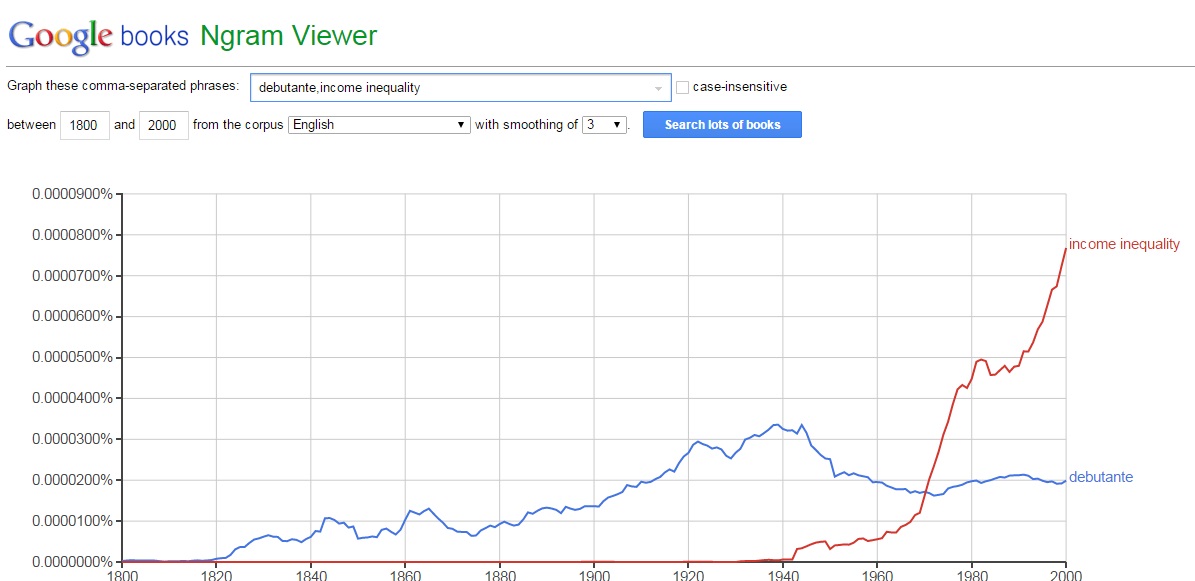
Mickey Kaus writes that we focus too much on income inequality and not enough on a growing but still not-remarked-upon social inequality. The return of “society” perhaps, in the Amory sense of the term? Maybe the lines will shift again.
Blowhard, Esq. writes:
Blowhard, Esq. writes:
Miriam Hopkins and Claudette Colbert sing “Jazz Up Your Lingerie” from Ernst Lubitsch’s THE SMILING LIEUTENANT (1931).
Sir Barken Hyena writes:
Cultural memory is a roulette wheel, and there’s no telling who will survive to be one of the “deathless greats”. Some come and go, as Shakespeare has, and some never get a shot at the big time. In the latter category, prominent is Polish sculptor Stanislav Szukalski.
Despite his obvious genius, it’s not hard to understand why. A deeply irascible man, he seems to have had a gift for pissing off everyone he ever met, within minutes. Pair this with his iconoclastic and politically untenable self-developed mythology of Zermatism and it’s clear he was destined for the memory hole.
But, since he’s dead now and can’t further alienate anyone, and since the tenets of high modernism have been revealed as garbage, it might just be his time to ride high.
From his Wikipedia article:
Zermatism, Szukalski’s concept of world history, postulated that all human culture derived from post-deluge Easter Island and that in all human languages one can find traces of the original, ancient mother-tongue of mankind. In his view, humanity was locked in an eternal struggle with the Sons of Yeti (“Yetinsyny”), the offspring of Yeti and humans, who had enslaved humanity from time immemorial. He claimed that the figures of the god Pan on Greek vases depict creatures that actually existed, the product of Yeti apes raping human women.
Hmm. Ok.
Equally anti-fascist, anti-communist, anti-capitalist and anti-catholic, he never had a prayer. And so he was too penniless to actually build his visions, at least on the scale he envisioned, so mostly his surviving works are drawings of proposed sculptures, or small renditions of them. What we see is a stunningly original conception, though fully grounded in early 20th century modernism.
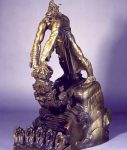


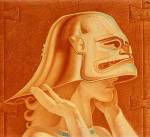


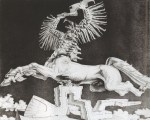

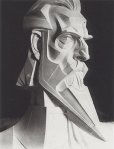
Szukalski had some early success, having a museum dedicated to him in Poland, but it was destroyed and his work stolen in WW II. He spent the rest of his life living in obscurity in Los Angeles, until his death in 1989.
Oh the ones that got away!
 Blowhard, Esq.
 Callowman
 Sherbrooke
 Eddie Pensier
 Enzo Nakamura
 Epaminondas
 Fabrizio del Wrongo
 Fenster
 Brundle Guy
 Glynn Marshes
 Paleo Retiree
 Atypical Neurotic
 Question Lady
 Sax von Stroheim
 Sir Barken Hyena
 The Mistaken
 Uncouth Reflections